Epic Similes Examples: From Classic Literature and Poetry
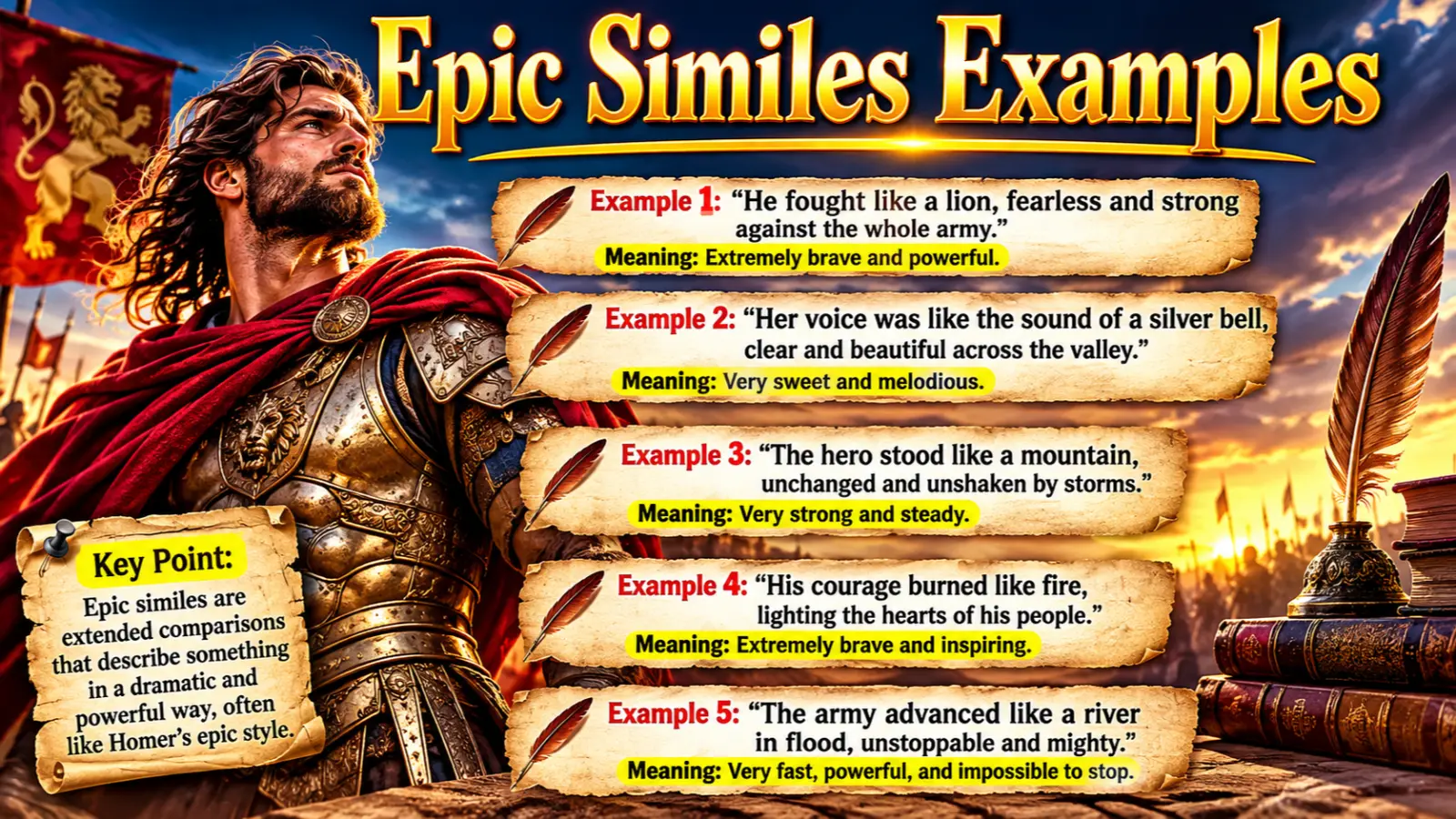
Epic Similes Examples are extended comparisons that do more than describe one thing. They slow the reader down, build a vivid scene, and connect an idea to a larger image or experience. Unlike a short simile such as “the warrior was brave like a lion,” an epic simile can ...
Read more
Pain Similes: With Meanings and Easy Examples
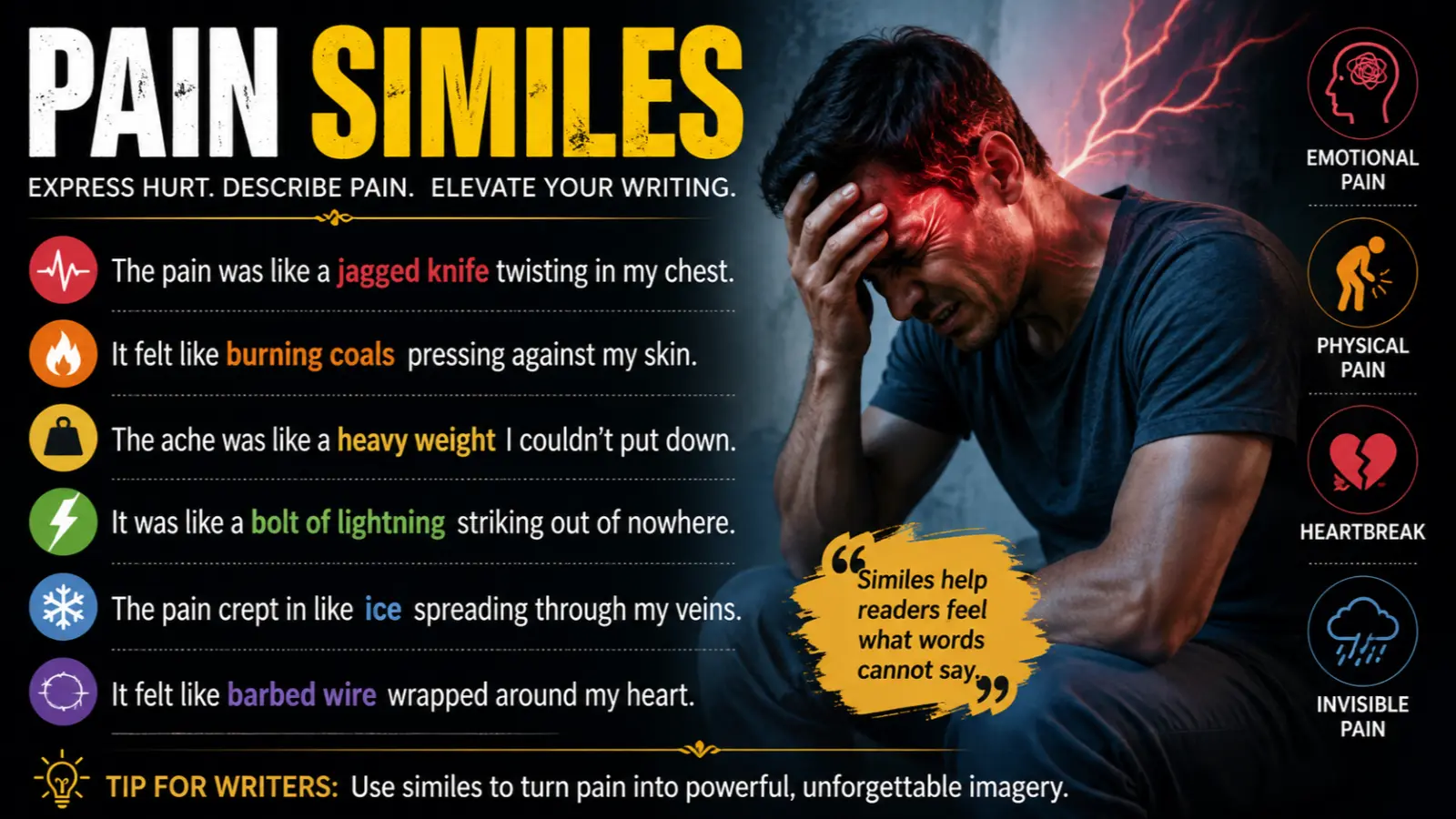
Pain Similes is difficult to describe because it is often invisible. A writer cannot simply point to pain and show the reader exactly what it feels like. Instead, strong writing gives pain a shape, movement, sound, or image. That is where pain similes become useful. A simile compares two ...
Read more
Similes vs Metaphors: Key Differences,and How to Use Them
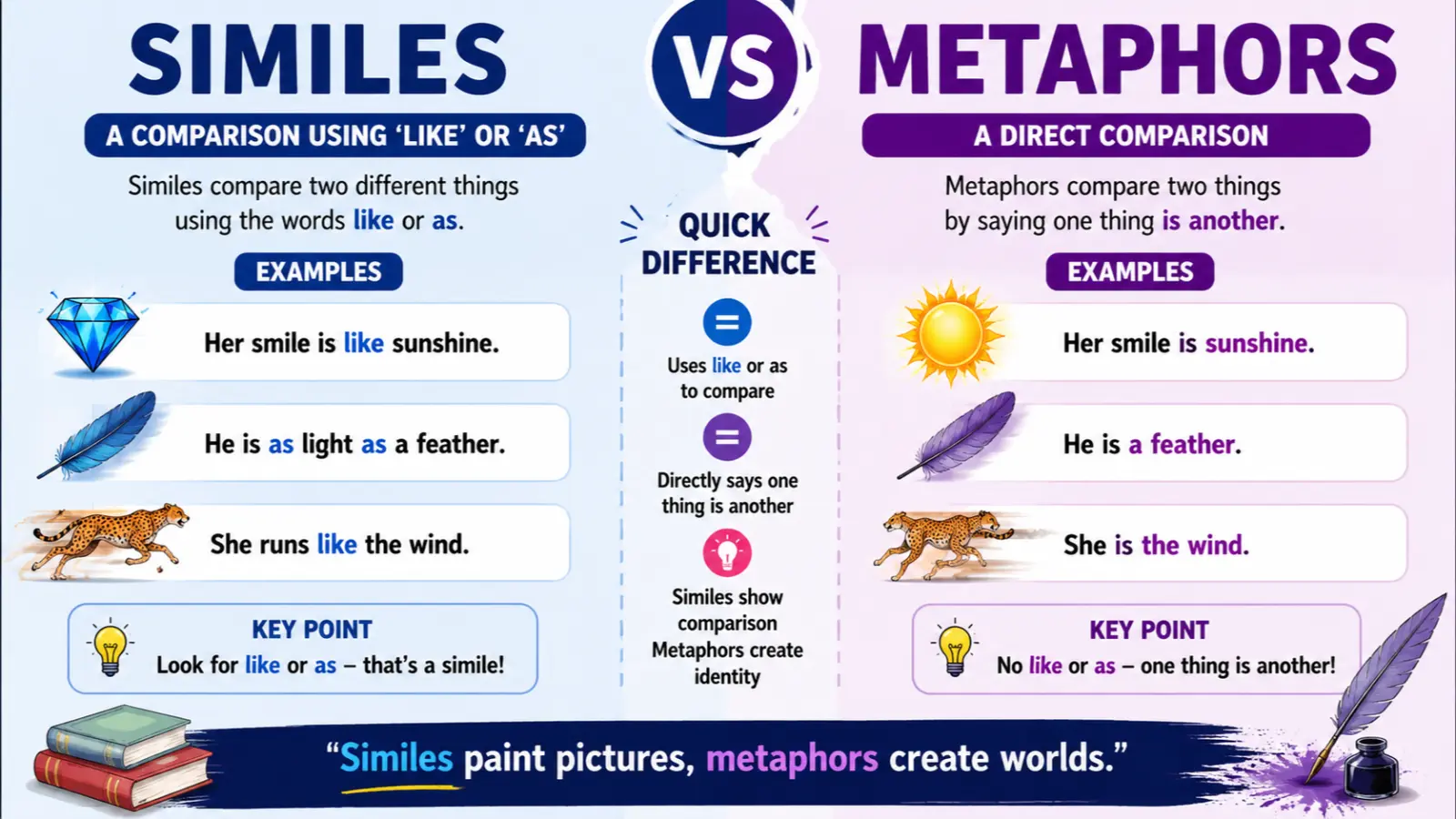
A Similes vs Metaphors compares two different things using words such as “like” or “as.” A Similes vs Metaphors makes a direct comparison by saying one thing is another. Both literary devices create imagery, but they produce different effects. For example: The Similes vs Metaphors signals the comparison clearly. ...
Read more
Love Similes Examples: for Romantic Writing and Poetry
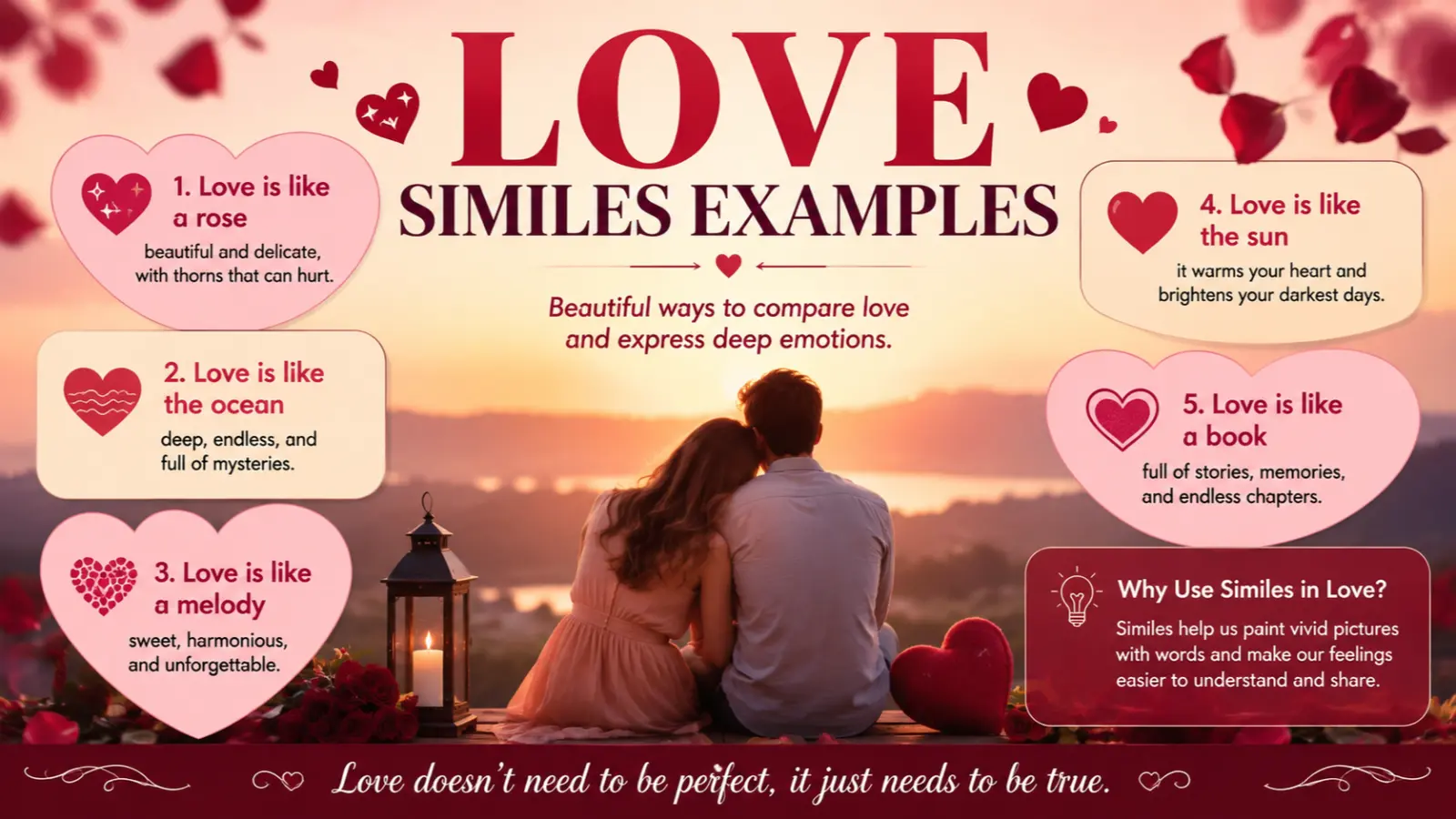
Love Similes Examples can be difficult to describe because it is both emotional and deeply personal. A Love Similes Examples gives that feeling a shape readers can imagine by comparing love to something familiar, such as light, music, weather, nature, or a treasured object. For example, saying “Her Love ...
Read more
Similes for Hard: Meaning, Examples, and Writing Ideas
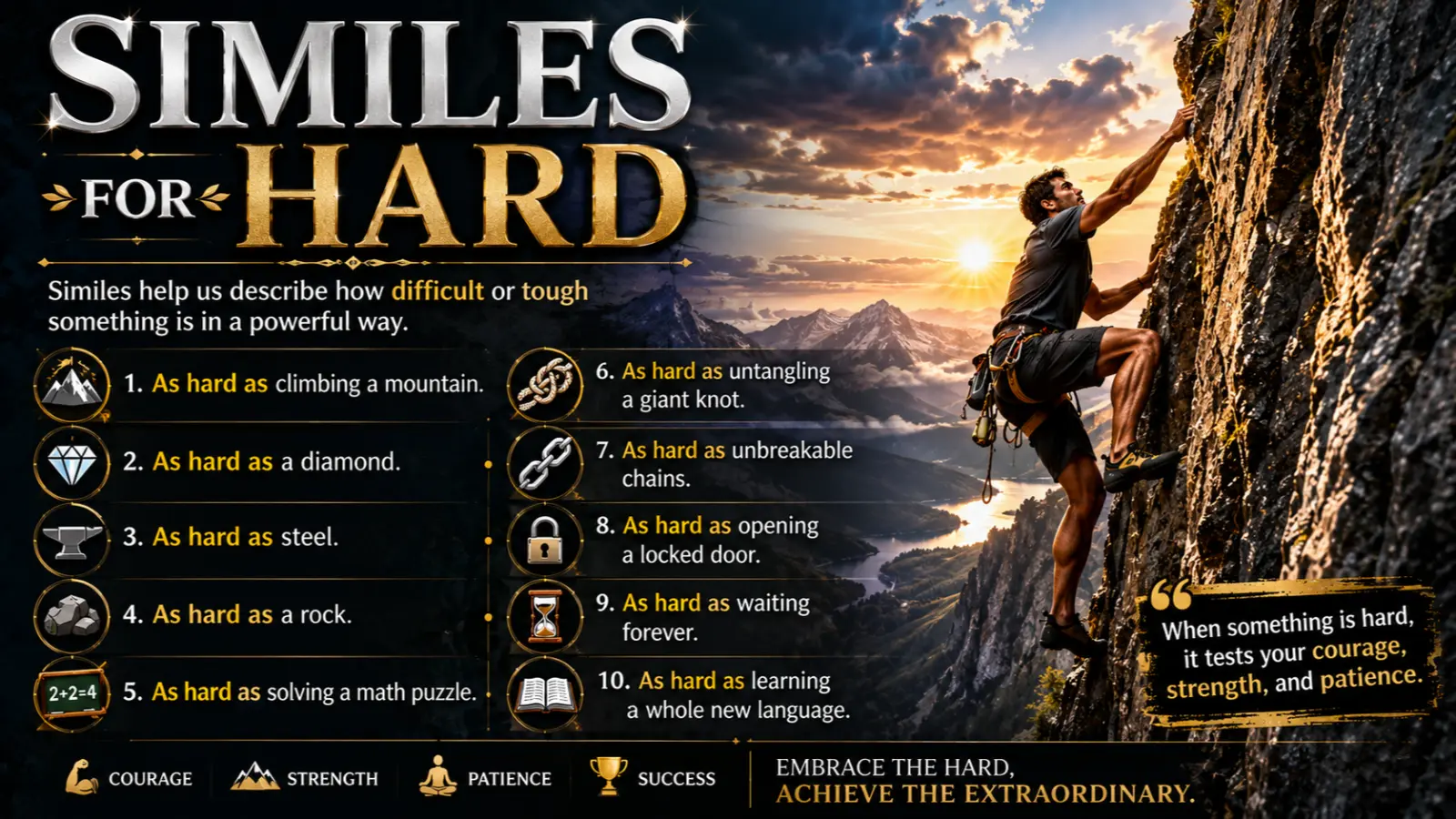
A Similes for Hard compares two different things using words such as like or as. Instead of simply saying, “The exam was hard,” you could write, “The exam was like a locked door with no handle.” The comparison gives the reader an image rather than just a label. Similes ...
Read more
War Similes: With Meanings and Creative Examples
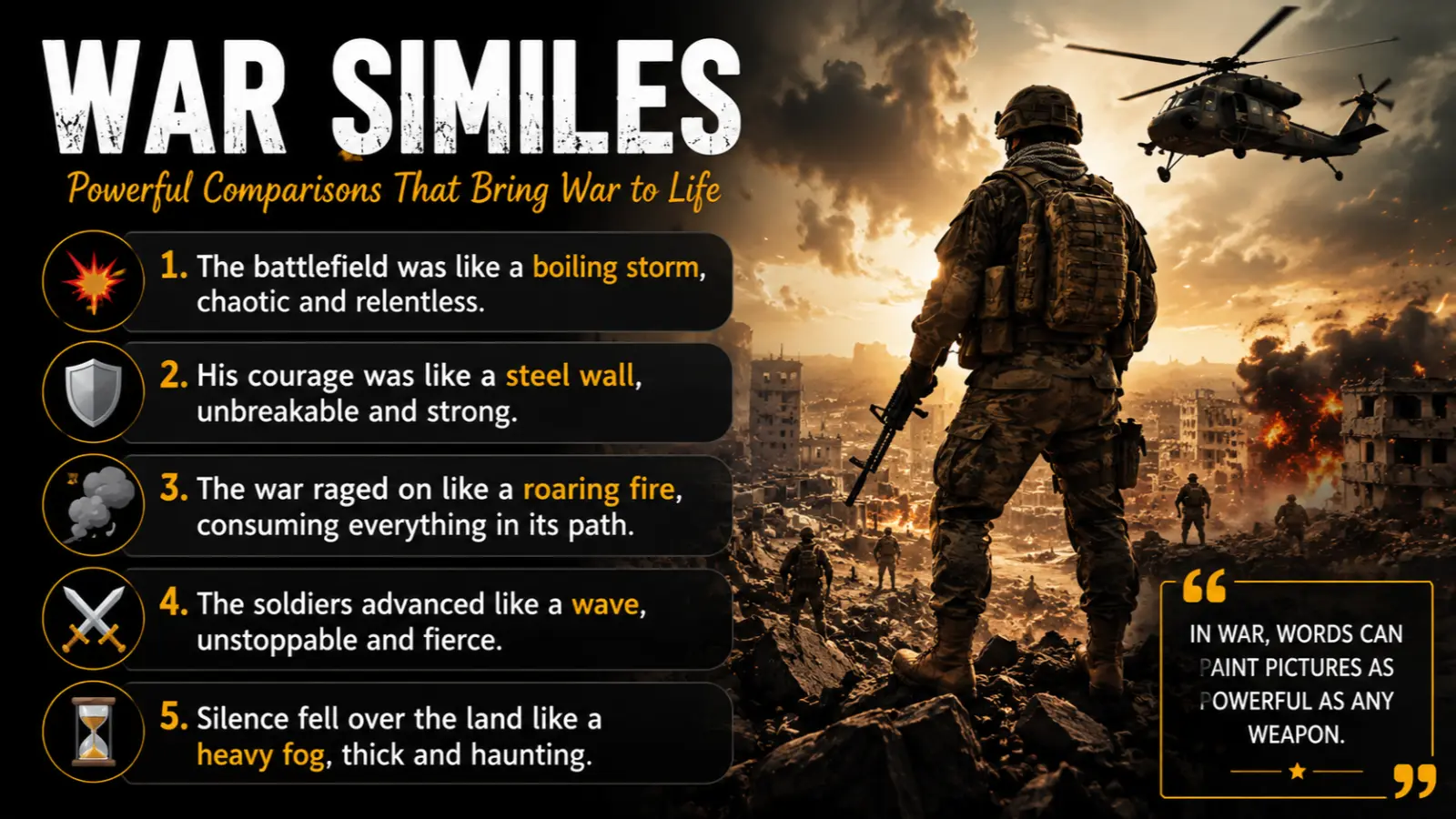
War is difficult to describe because it involves more than action. It can bring fear, confusion, courage, separation, destruction, uncertainty, and moments of unexpected hope. Writers often use war similes to communicate these complicated experiences through familiar images. A simile compares two different things using words such as like ...
Read more
Similes for Angry: Examples That Show Strong Emotion
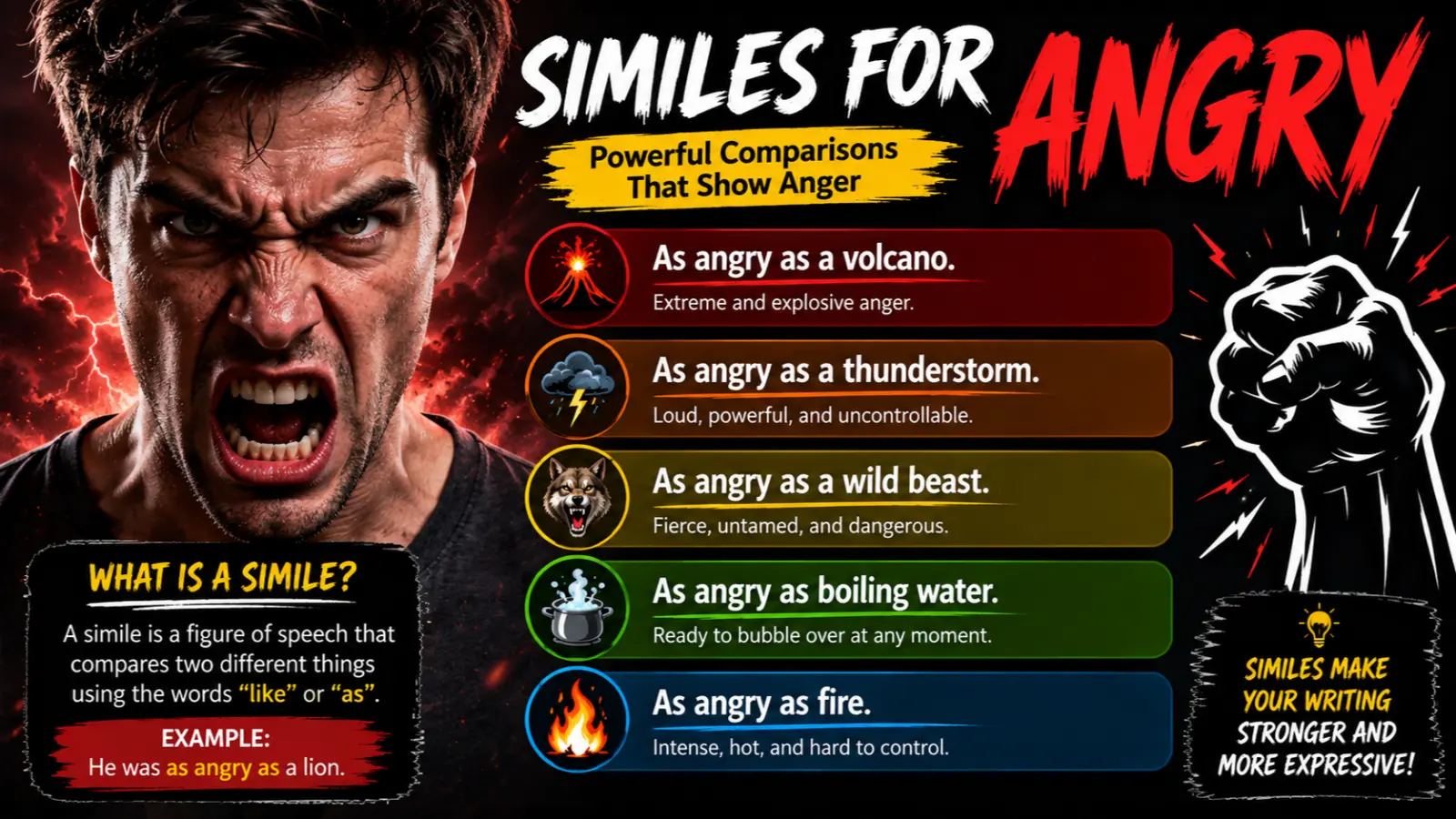
Similes for Angry can be difficult to describe because it is more than simply saying someone is “mad.” It can simmer quietly, flash suddenly, or build until a person struggles to control their words. Similes for angry feelings give writers a way to turn those invisible emotions into images ...
Read more
Similes for Quick: Fast, Fresh, and Fun Examples
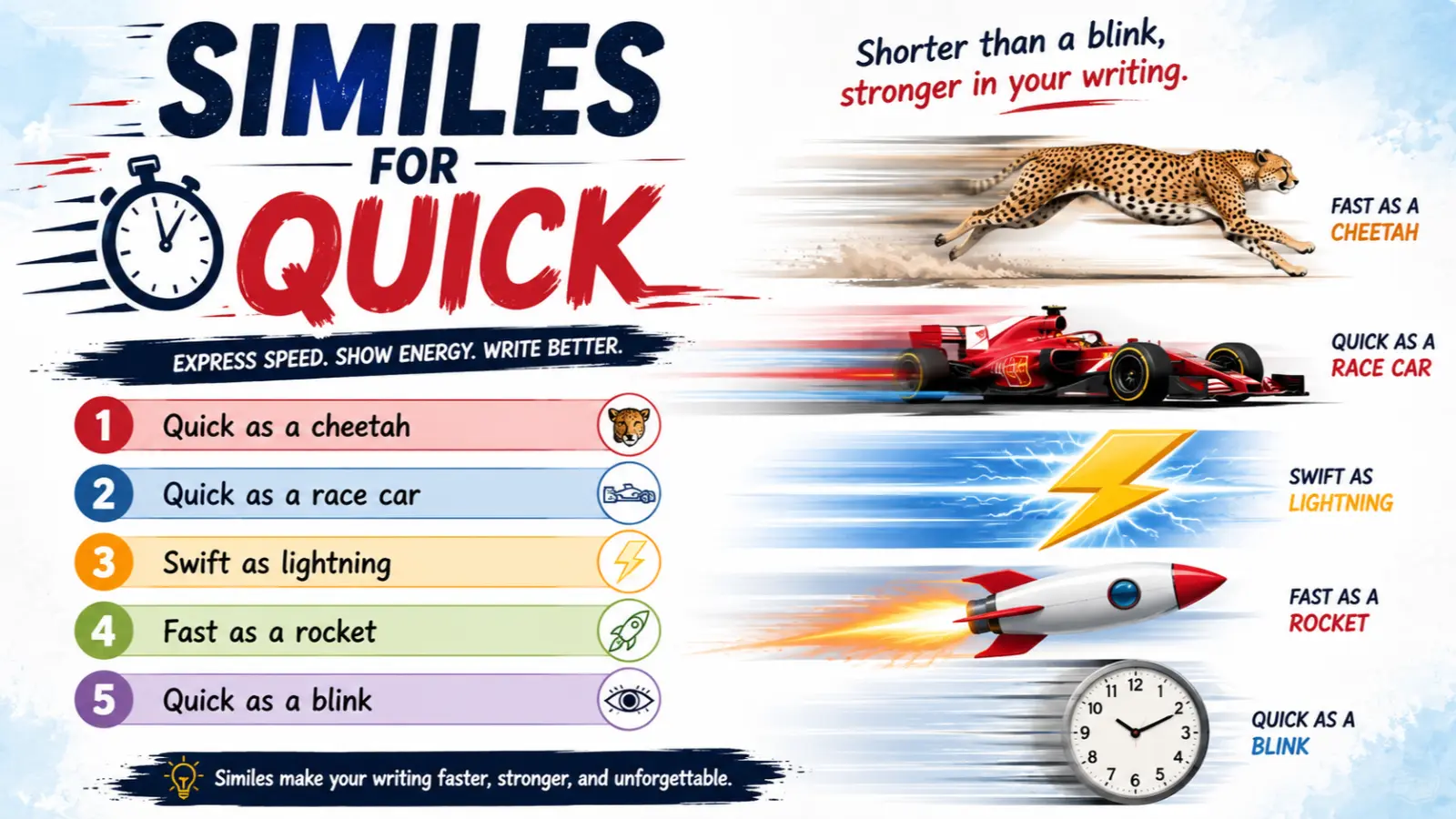
When something happens quickly, simply saying “it was fast” does not always give readers a strong picture. A well-chosen comparison can make speed feel visible, almost as if the reader is watching the action happen. Similes for quick describe speed, rapid movement, sudden reactions, or anything that happens in ...
Read more
Anger Similes: for Creative Writing and Storytelling
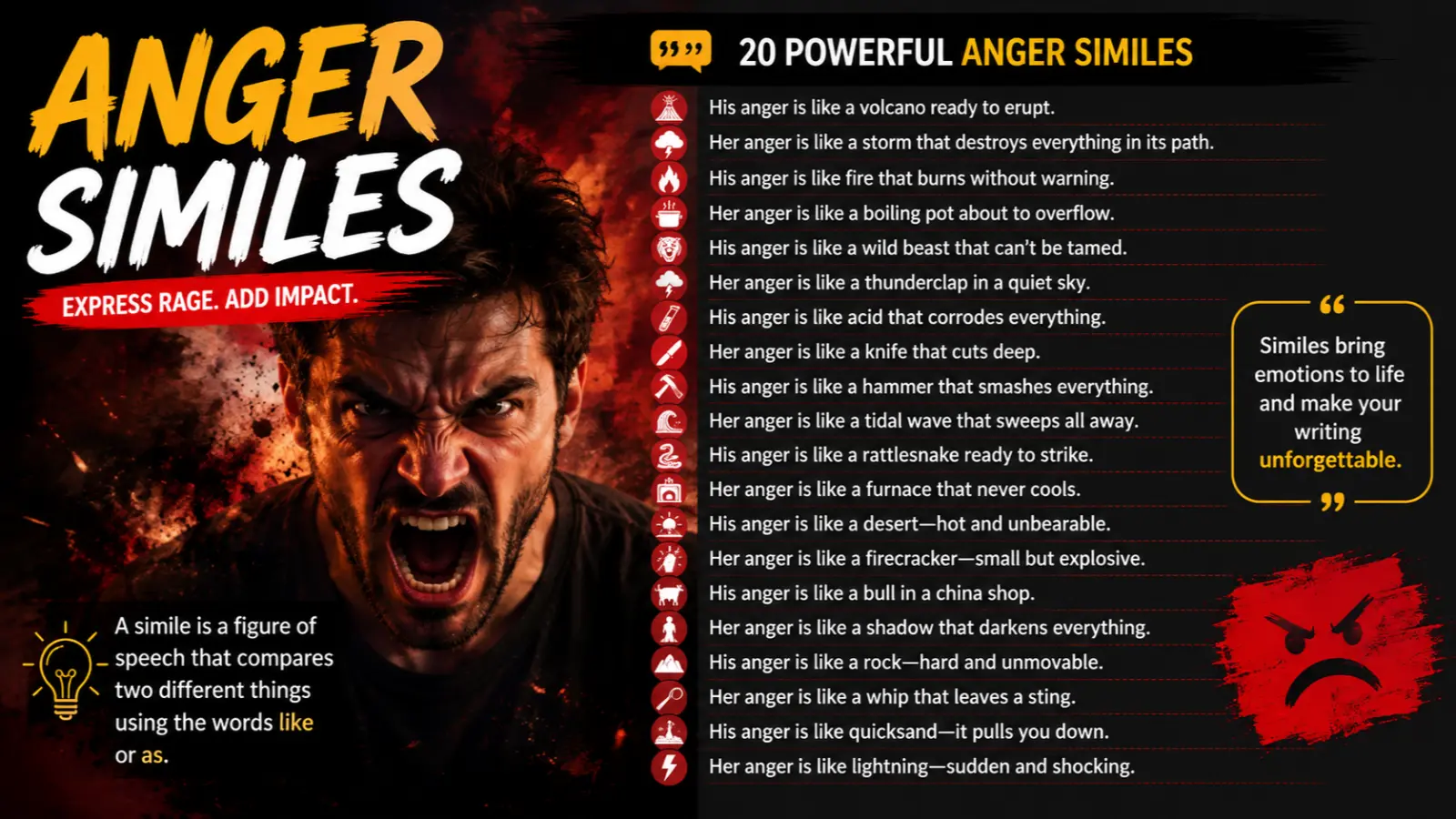
Anger Similes is one of the strongest emotions people experience, and describing it well can instantly make writing more believable. Instead of simply saying someone was “angry,” a carefully chosen simile paints a clearer picture that readers can see and feel. A simile compares two different things using words ...
Read more
5 Similes Examples: A Practical Guide for Better Writing
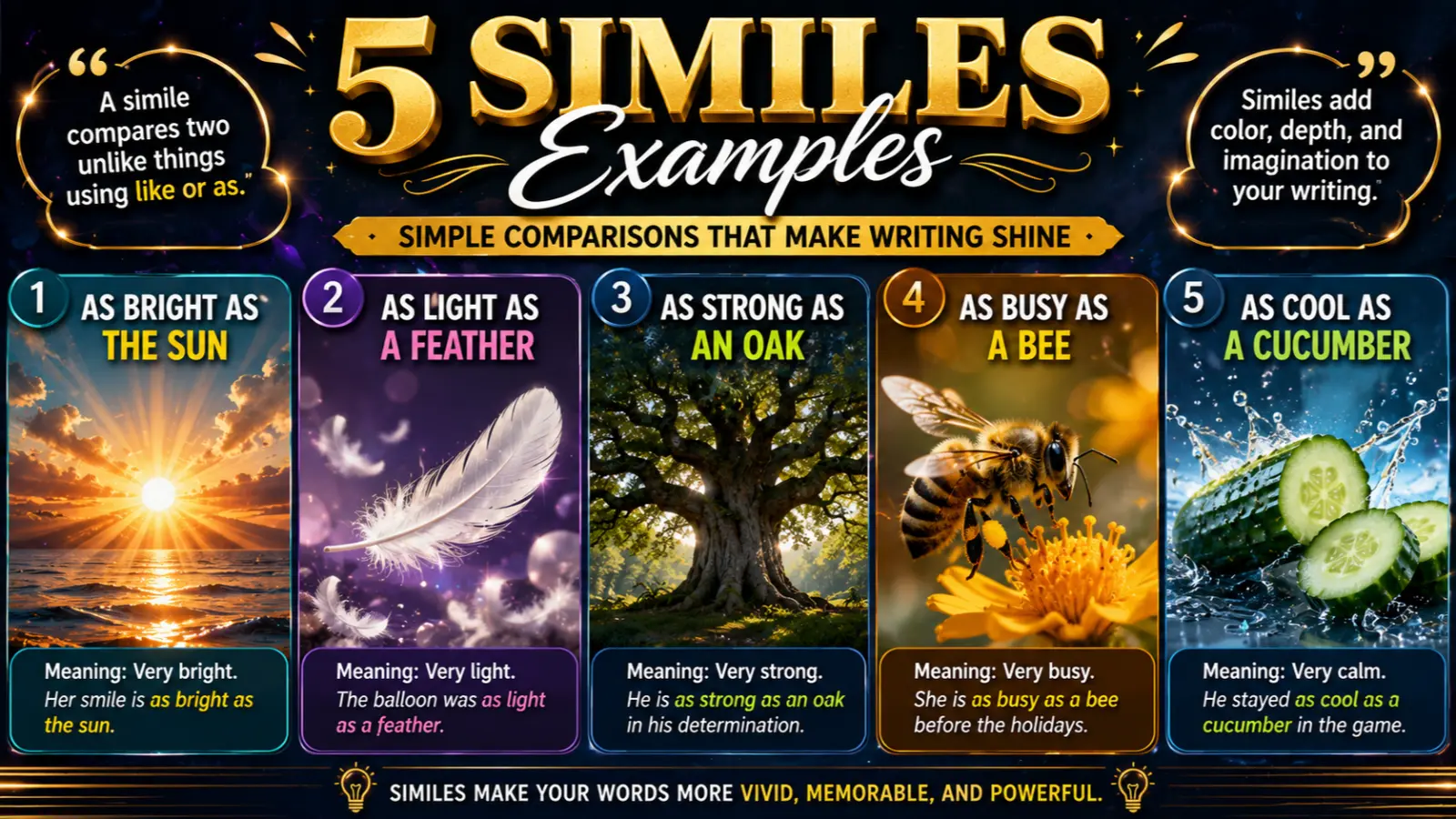
5 Similes Examples are one of the easiest ways to make writing more colorful and engaging. Instead of simply telling readers how something feels, looks, or sounds, a 5 Similes Examples simile paints a picture by comparing two different things using the words “like” or “as.” You’ll find similes ...
Read more