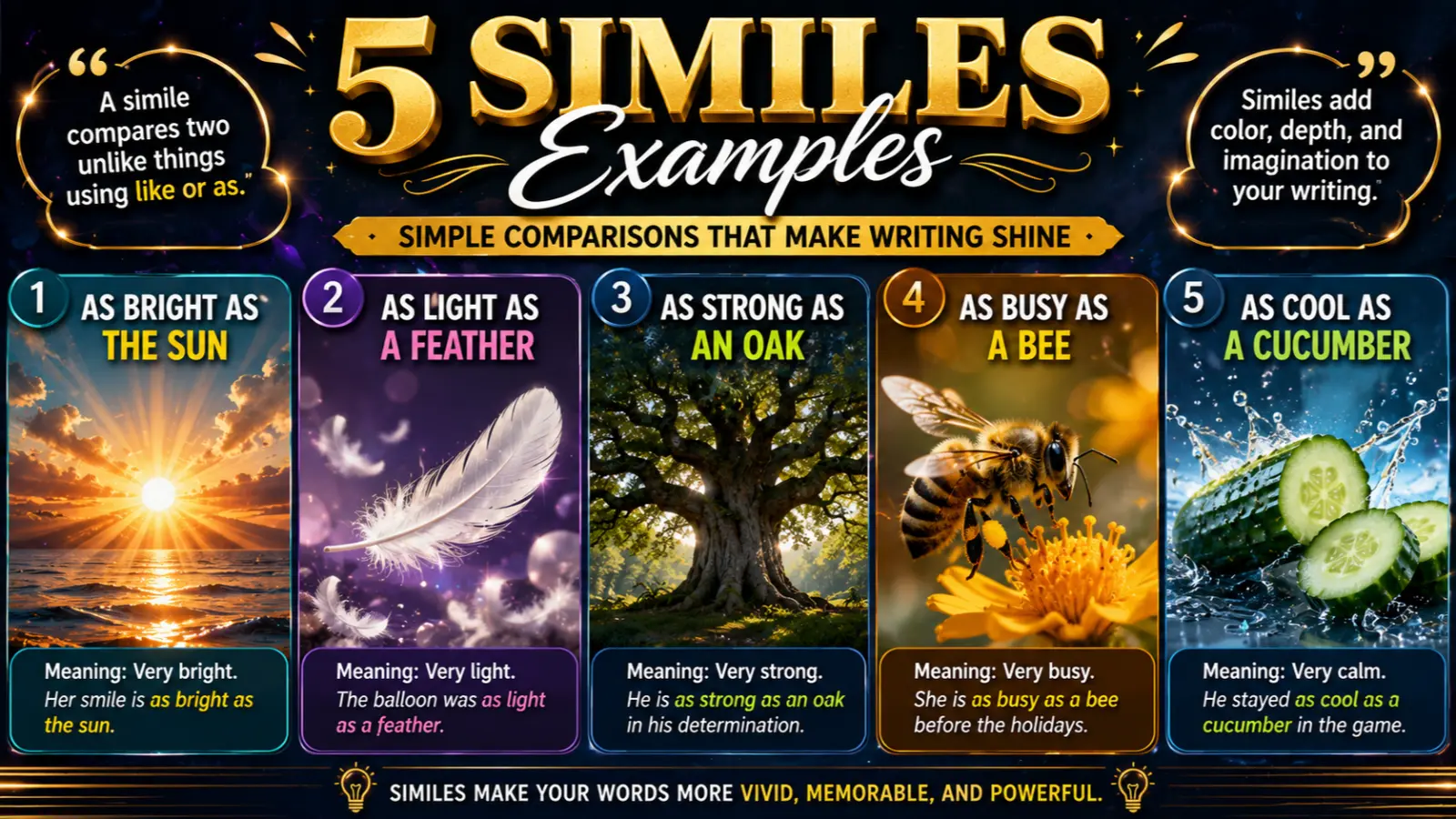
5 Similes Examples are one of the easiest ways to make writing more colorful and engaging. Instead of simply telling readers how something feels, looks, or sounds, a 5 Similes Examples simile paints a picture by comparing two different things using the words “like” or “as.”
You’ll find similes in novels, speeches, conversations, advertisements, poems, and even everyday text messages. They help readers visualize ideas and connect emotionally with your words.
In this guide, you’ll discover 5 similes examples in depth, learn 5 Similes Examples why each comparison works, explore fresh writing techniques, and practice creating your own memorable similes.
Quick Answer
A simile is a figure of speech that compares two different things using like or as to create a vivid image.
Five original similes examples are:
- Her confidence spread like sunrise across a quiet valley.
- The rain whispered like careful hands on old paper.
- His patience was as steady as a lighthouse through fog.
- The classroom buzzed like bees discovering fresh flowers.
- Their friendship grew like roots beneath ancient trees.
These comparisons help readers imagine emotions and scenes more clearly.
What Makes a Good Simile?
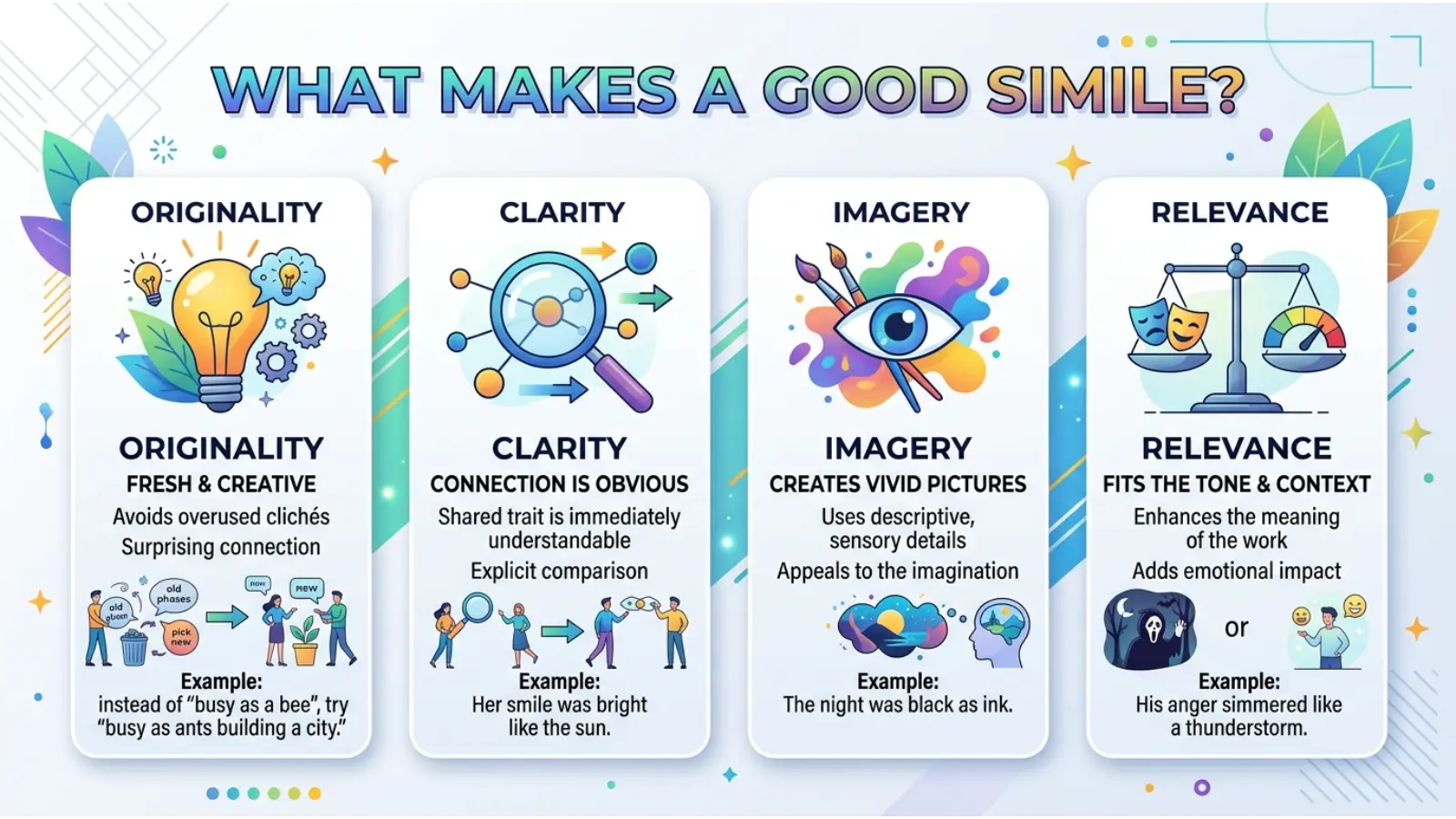
Not every comparison creates strong imagery. Effective similes do more than compare two things—they reveal something surprising while still feeling believable.
Strong similes usually:
- Create a clear mental picture.
- Match the mood of the writing.
- Feel fresh instead of overused.
- Add emotion without confusing readers.
- Fit naturally into the sentence.
A weak simile simply decorates a sentence. A strong one helps readers experience it.
1. Her Confidence Spread Like Sunrise Across a Quiet Valley
Meaning
Confidence slowly filled every moment until everyone noticed it.
Why It Works
Sunrise naturally suggests warmth, hope, and gradual change. The comparison feels calm rather than dramatic.
Example Sentences
- Her confidence spread like sunrise across a quiet valley after she finished her presentation.
- As she entered the room, her confidence spread like sunrise across a quiet valley.
Emotional Effect
Creates optimism and quiet strength.
Formal Example
Her confidence spread like sunrise across a quiet valley, inspiring the entire team.
Conversation Example
“You looked so relaxed today. Your confidence spread like sunrise.”
Storytelling Example
One smile was enough. Her confidence spread like sunrise across the silent crowd.
Poetry Example
Her courage rose like sunrise,
warming every waiting heart.
Writing Tip
Use this simile when describing gradual emotional growth rather than sudden excitement.
Best Context
- Speeches
- Personal essays
- Character development
- Inspirational writing
2. The Rain Whispered Like Careful Hands on Old Paper
Meaning
The rainfall sounded soft, gentle, and delicate.
Why It Works
Old paper suggests quietness and tenderness, creating peaceful imagery.
Example Sentences
- The rain whispered like careful hands on old paper throughout the evening.
- We listened while the rain whispered like careful hands on old paper.
Emotional Effect
Creates calmness and reflection.
Storytelling Example
The empty cabin seemed alive as the rain whispered like careful hands on old paper.
Poetry Example
Rain whispered softly,
folding silence into the night.
Writing Tip
Sound-based similes often create stronger atmosphere than visual ones.
Best Context
- Nature writing
- Fiction
- Poetry
- Memoirs
3. His Patience Was as Steady as a Lighthouse Through Fog
Meaning
Someone remained dependable despite uncertainty.
Why It Works
A lighthouse symbolizes reliability when everything else feels unclear.
Example Sentences
- His patience was as steady as a lighthouse through fog during the long meeting.
- Even under pressure, his patience stayed as steady as a lighthouse through fog.
Emotional Effect
Suggests trust, security, and calm leadership.
Formal Example
His patience remained as steady as a lighthouse through fog despite repeated setbacks.
Conversation Example
“I don’t know how you stay so calm. You’re as steady as a lighthouse.”
Writing Tip
Choose comparisons that reflect emotional qualities rather than physical appearance.
Best Context
- Leadership
- Character descriptions
- Business writing
- Personal narratives
4. The Classroom Buzzed Like Bees Discovering Fresh Flowers
Meaning
Everyone became excited and energetic.
Why It Works
The comparison captures movement, sound, and shared excitement.
Example Sentences
- The classroom buzzed like bees discovering fresh flowers before the science fair.
- Students buzzed like bees discovering fresh flowers after hearing the surprise announcement.
Emotional Effect
Creates energy and enthusiasm.
Storytelling Example
As the doors opened, the classroom buzzed like bees discovering fresh flowers.
Poetry Example
Young voices gathered,
buzzing toward tomorrow.
Writing Tip
Movement similes help readers feel the pace of a scene.
Best Context
- School writing
- Children’s stories
- Educational articles
- Classroom scenes
5. Their Friendship Grew Like Roots Beneath Ancient Trees
Meaning
The friendship became stronger over time, even when unnoticed.
Why It Works
Roots represent stability, growth, and lasting support.
Example Sentences
- Their friendship grew like roots beneath ancient trees over many years.
- Trust formed quietly, and their friendship grew like roots beneath ancient trees.
Emotional Effect
Creates warmth, loyalty, and permanence.
Formal Example
Their friendship grew like roots beneath ancient trees despite living far apart.
Conversation Example
“We’ve been friends forever—it just kept growing.”
Storytelling Example
They barely noticed the years passing as their friendship grew like roots beneath ancient trees.
Writing Tip
Hidden growth often makes stronger imagery than obvious comparisons.
Best Context
- Friendship essays
- Novels
- Family stories
- Inspirational writing
How Professional Writers Create Strong Similes
Experienced writers rarely choose the first comparison that comes to mind.
Instead, they ask:
- What emotion should readers feel?
- Which image naturally creates that emotion?
- Is the comparison original?
- Does it fit the character’s perspective?
The best similes support the story instead of drawing attention to themselves.
How to Make Similes More Vivid
Improve your comparisons by focusing on specific details.
Instead of writing:
The wind was like music.
Try:
The wind drifted through the trees like a slow violin warming up before a concert.
Specific imagery creates memorable writing.
Avoiding Common Clichés
Some similes appear so often that readers barely notice them.
Examples include:
- As busy as a bee
- As cold as ice
- As light as a feather
- As brave as a lion
- As quiet as a mouse
Rather than copying familiar comparisons, look for details from everyday life, nature, hobbies, or personal experiences.
Fresh imagery leaves a stronger impression.
Related Literary Devices
Metaphor
A metaphor compares two things without using like or as.
Simile: Her smile was like sunshine.
Metaphor: Her smile was sunshine.
Imagery
Imagery appeals to the senses through descriptive language. Similes often strengthen imagery by making descriptions easier to picture.
Personification
Personification gives human qualities to non-human things.
Example:
The wind danced across the field.
It can work beautifully alongside similes.
Hyperbole
Hyperbole intentionally exaggerates.
Example:
I waited forever.
Unlike similes, hyperbole isn’t always based on comparison.
Symbolism
Symbols carry deeper meaning.
A lighthouse may symbolize hope, while a tree can symbolize growth. Symbolic objects often make similes richer.
Create Your Own Similes
Follow these simple steps.
Step 1
Choose the subject.
Example:
A nervous student.
Step 2
Identify the strongest quality.
Shaky hands.
Step 3
Think of something with the same quality.
Leaves in autumn.
Step 4
Combine them.
The student’s hands trembled like autumn leaves in a light breeze.
Creative Exercise
Write one simile for each of these topics:
- Joy
- Winter morning
- New friendship
- Thunderstorm
- Graduation day
Try using images that people don’t usually compare.
Common Mistakes to Avoid
Using Overused Comparisons
Readers notice originality.
Replace familiar comparisons with fresh observations.
Mixing Imagery
Avoid combining unrelated images.
Poor example:
The idea bloomed like a rocket.
The images don’t naturally connect.
Forcing Similes
Only compare things that genuinely share a quality.
Natural writing always comes first.
Confusing Metaphors with Similes
Remember:
Similes use like or as.
Metaphors do not.
Adding Too Many Similes
One strong comparison often creates more impact than five average ones.
Frequently Asked Questions
What is a simile?
A simile compares two different things using like or as to make writing more descriptive.
Why are similes important?
They help readers visualize ideas, understand emotions, and remember descriptions.
Where are similes commonly used?
They’re used in stories, poems, speeches, songs, essays, advertisements, and everyday conversations.
How can I make my similes more original?
Observe real-life details, avoid clichés, and compare ideas in unexpected but believable ways.
What’s the difference between a simile and a metaphor?
A simile uses like or as, while a metaphor states that one thing is another.
Should every paragraph include a simile?
No. Similes are most effective when they appear naturally and support the message.
Can children learn similes easily?
Yes. Simple comparisons based on familiar objects make similes fun and easy to understand.
Conclusion
Learning 5 similes examples is only the beginning of writing with stronger imagery. The most memorable comparisons come from careful observation rather than copying familiar phrases. As you read books, notice how authors compare emotions, people, sounds, and places. Then practice creating your own fresh comparisons inspired by everyday life. With time, your similes will become more vivid, more original, and far more memorable for your readers.
I am Helena Frost, a writer captivated by the beauty of language and the art of comparison. Through my words, I explore the world by turning ordinary moments into vivid similes and reflections. I enjoy crafting phrases that spark imagination, evoke emotion, and linger in the mind. My writing celebrates the subtle connections between people, nature, and the stories we live. For me, every sentence is an opportunity to reveal the extraordinary in the everyday.