Iliad Similes: Powerful Examples, Meanings, and Writing Lessons
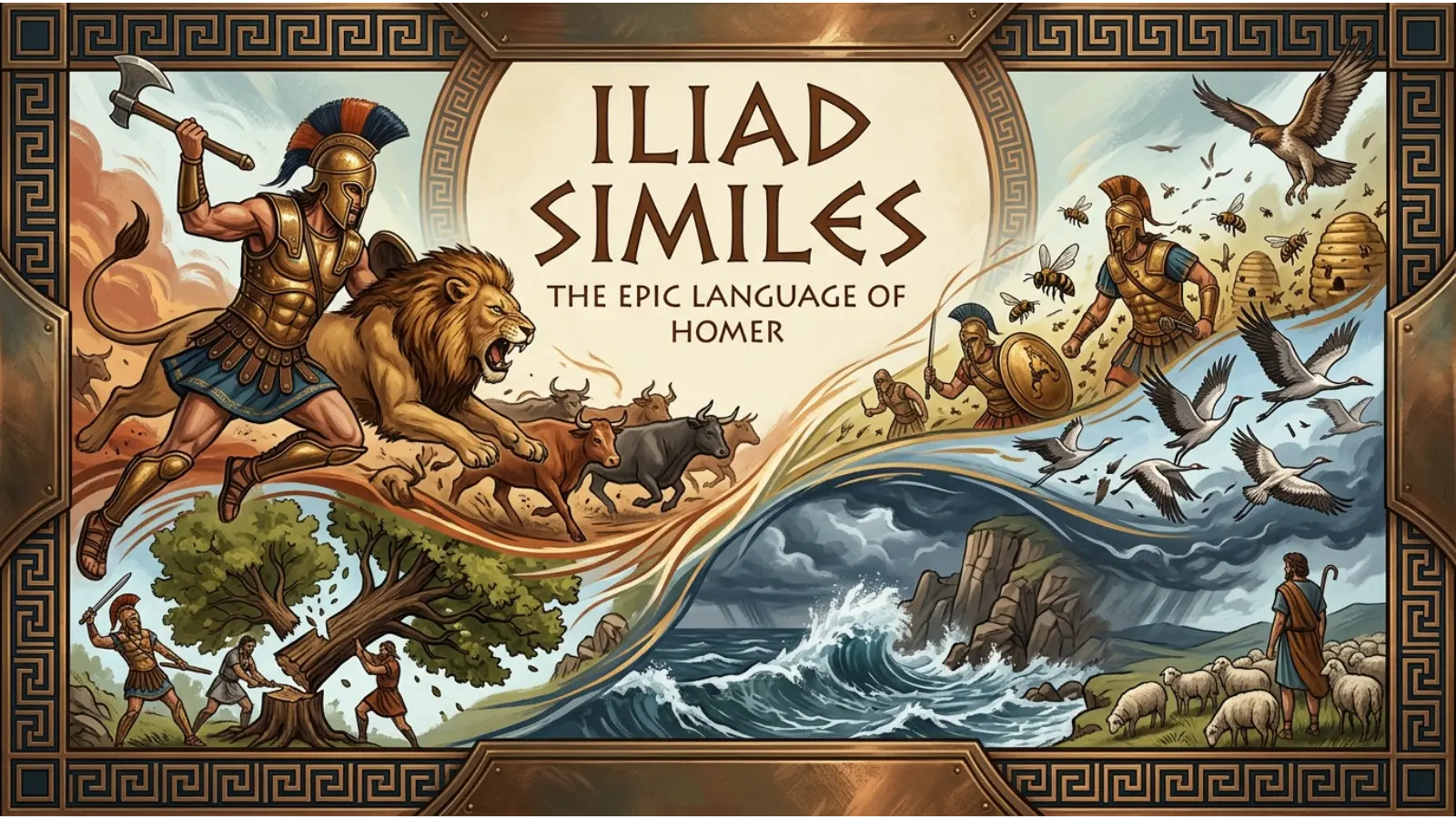
Iliad Similes traditionally attributed to the ancient Greek poet Homer, is famous for its vivid descriptions of warriors, battles, nature, animals, and human emotion. One Iliad Similes of its most distinctive literary features is the epic simile—an extended comparison that explains one scene by comparing it with something familiar ...
Read more
Homeric Similes Examples: Powerful Comparisons in Epic Poetry
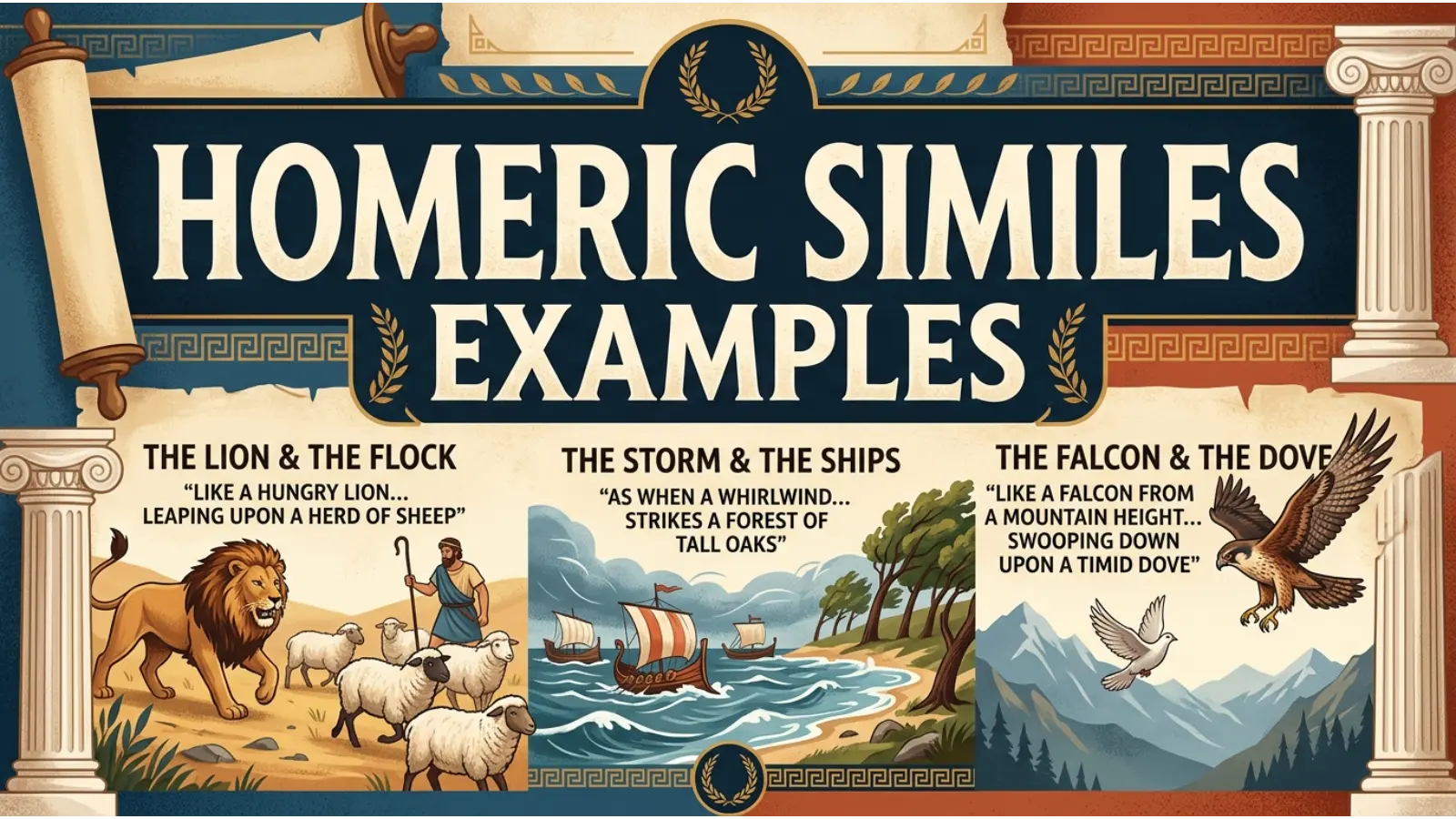
A Homeric Similes Examples is an extended comparison that explains a person, action, emotion, or scene by comparing it with something familiar from everyday life or nature. These comparisons are especially associated with Homer’s Iliad and Odyssey, where a brief battlefield action can suddenly expand into an image of ...
Read more
Anxious Similes: to Make Your Writing More Expressive
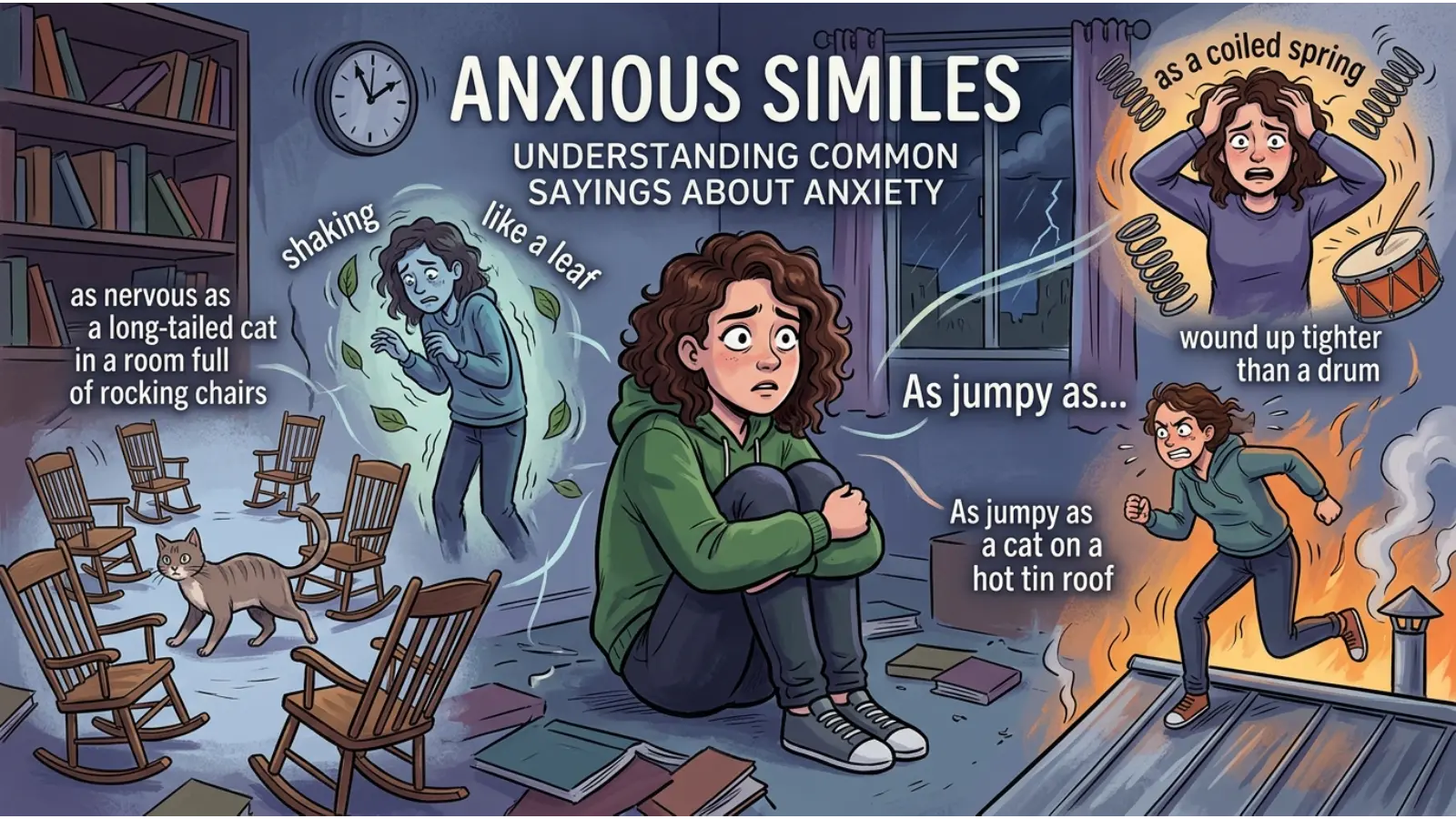
Anxious Similes can be difficult to describe because it is often invisible. A character may look calm while their thoughts race, their attention narrows, or every small uncertainty feels unusually important. This is where a strong simile can help. A simile compares two different things using words such as ...
Read more
Anxiety Similes: to Make Your Writing More Emotional
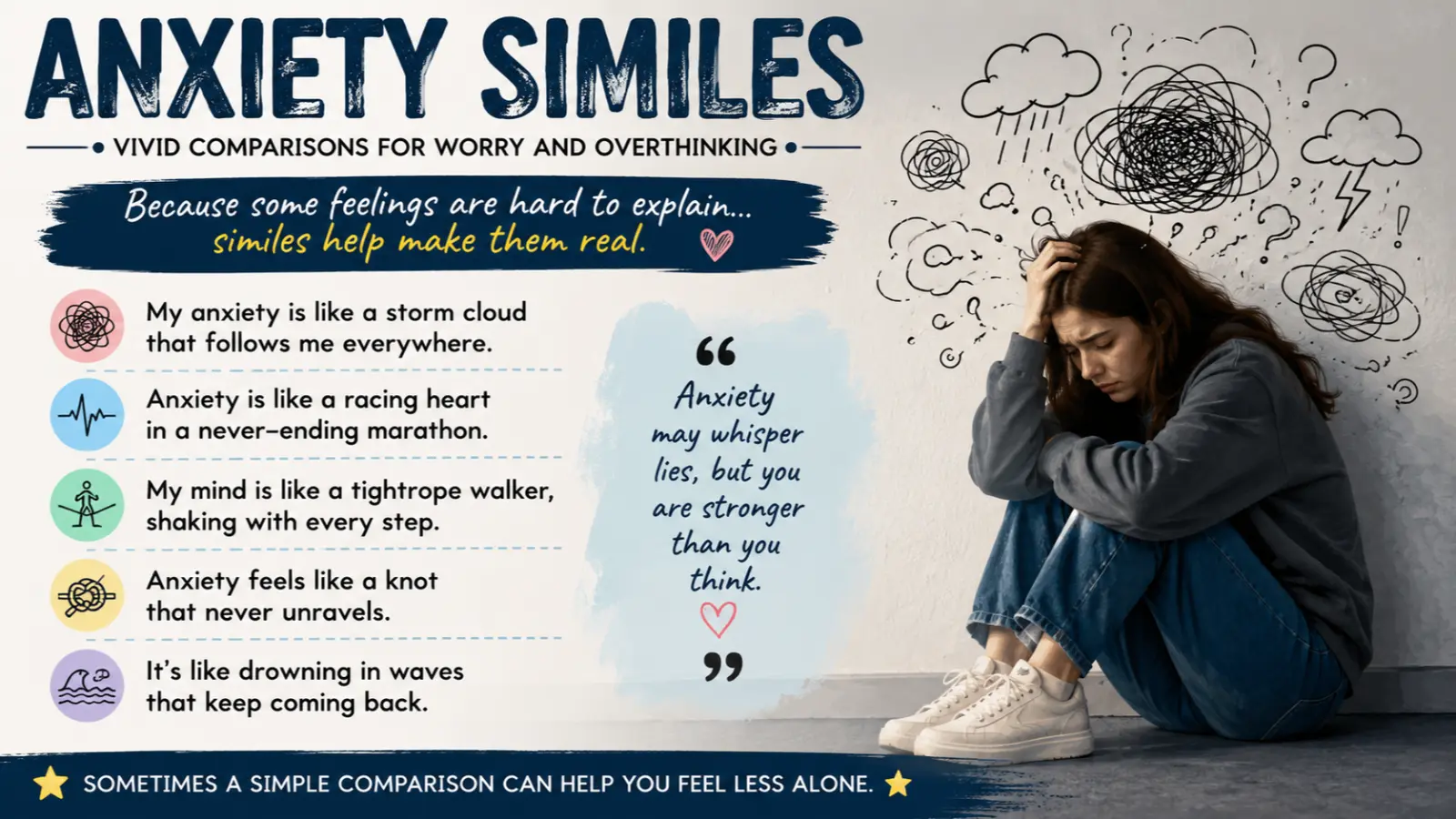
Anxiety Similes can be difficult to describe because it is often invisible. A person may look completely calm while their thoughts feel crowded, restless, or uncertain. A well-chosen simile gives that hidden feeling a concrete image readers can understand. A simile compares two different things using words such as ...
Read more
Similes for War: Powerful Comparisons, Meanings & Examples
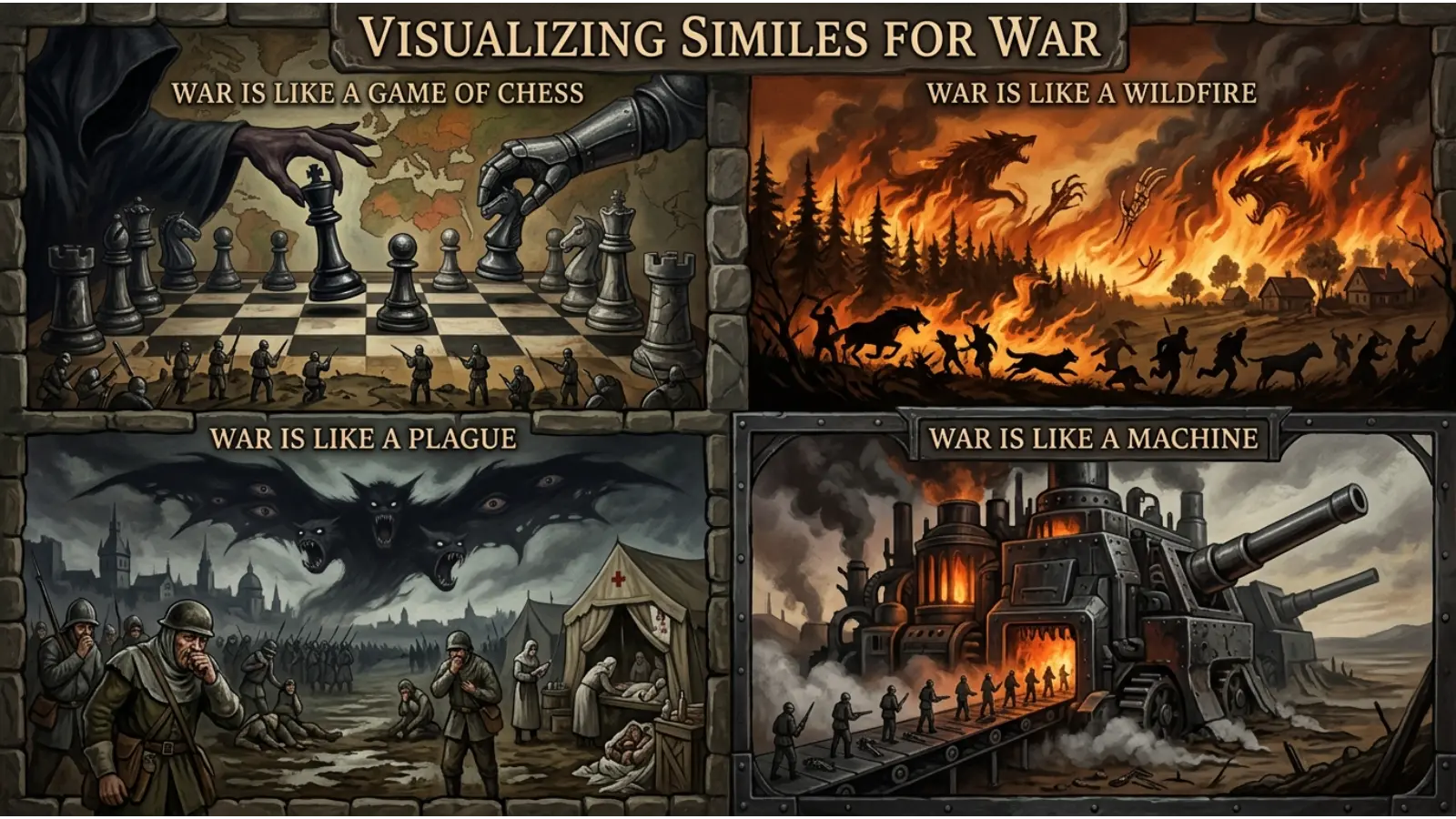
Similes for War is difficult to describe because its reality contains many conflicting emotions: fear and courage, chaos and silence, destruction and hope. A well-chosen simile can help readers understand those emotions by connecting something unfamiliar or overwhelming to something they can imagine. A simile compares two different things ...
Read more
Fast Similes :With Meanings and Examples
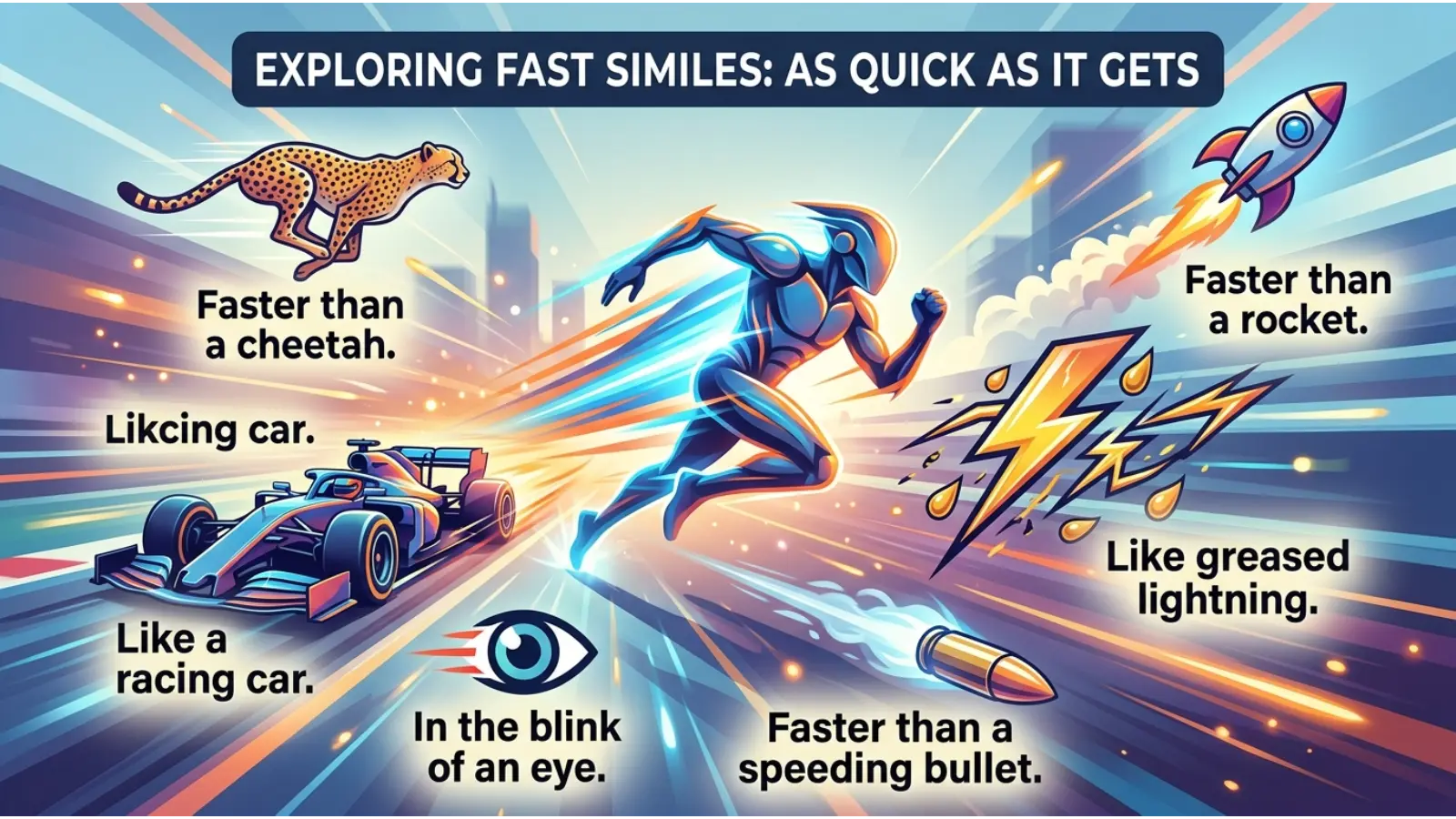
Fast Similes make ordinary language easier to picture. By comparing one thing to another with words such as like or as, writers can turn a plain statement into something readers can see, hear, or feel. A sentence such as “The rain was heavy” gives information. A sentence such as ...
Read more
Similes for Sleeping: Funny, Cute, and Creative Ideas
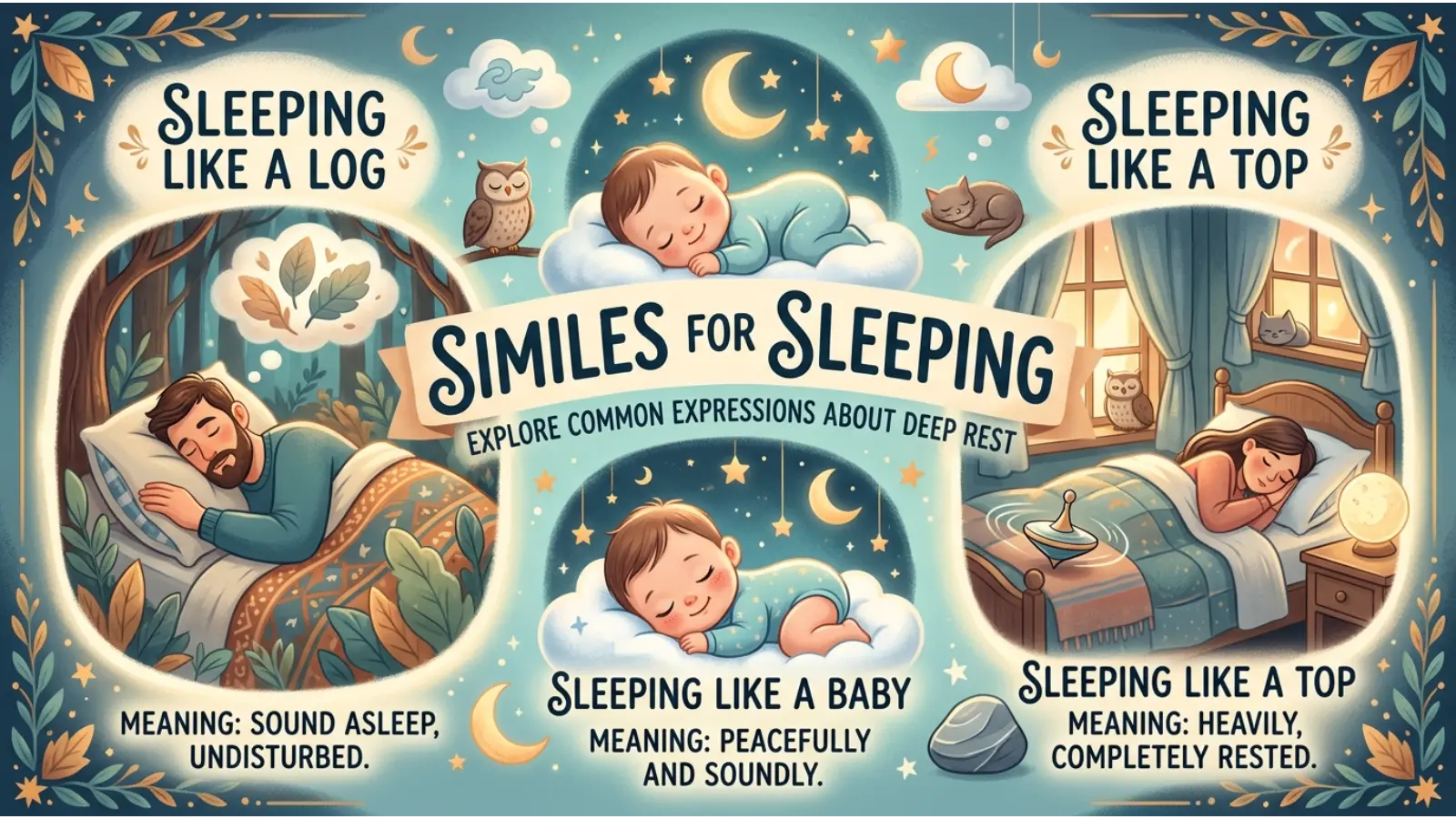
A Similes for Sleeping is a comparison between two different things using words such as “like” or “as.” Writers use similes to make an idea, feeling, person, sound, or scene easier to picture. For example: The Similes for Sleeping rain fell like silver threads across the window. The Similes ...
Read more
Similes for Loneliness:Creative Comparisons for Writing and Poetry
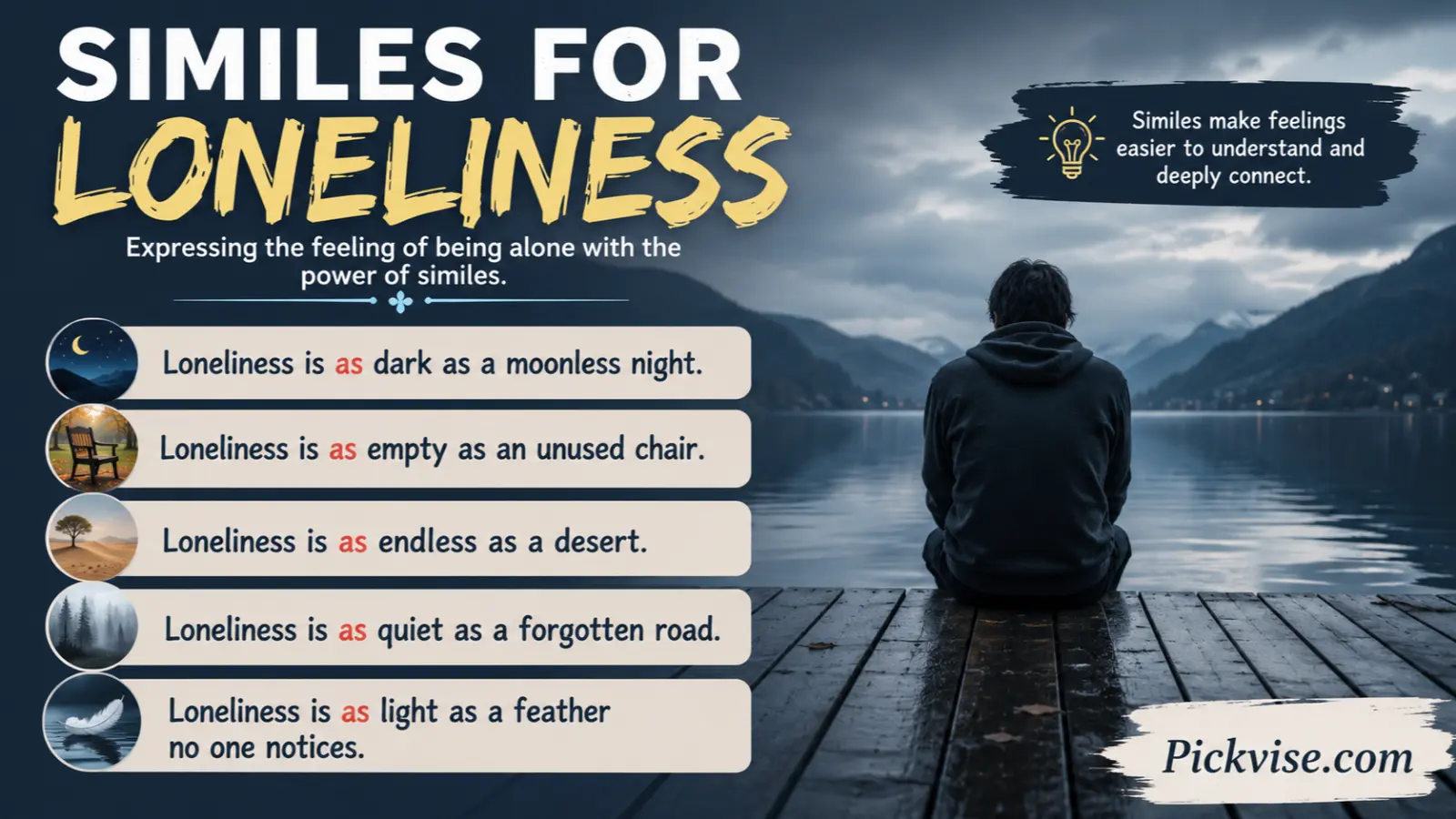
Similes for Loneliness can be difficult to describe because it is an invisible feeling. A writer cannot simply point to loneliness the way they can point to a storm, a broken window, or a crowded street. That is why a well-chosen simile can make the emotion easier for readers ...
Read more
Fear Similes: Examples for Stories, Poems, and Creative Writing
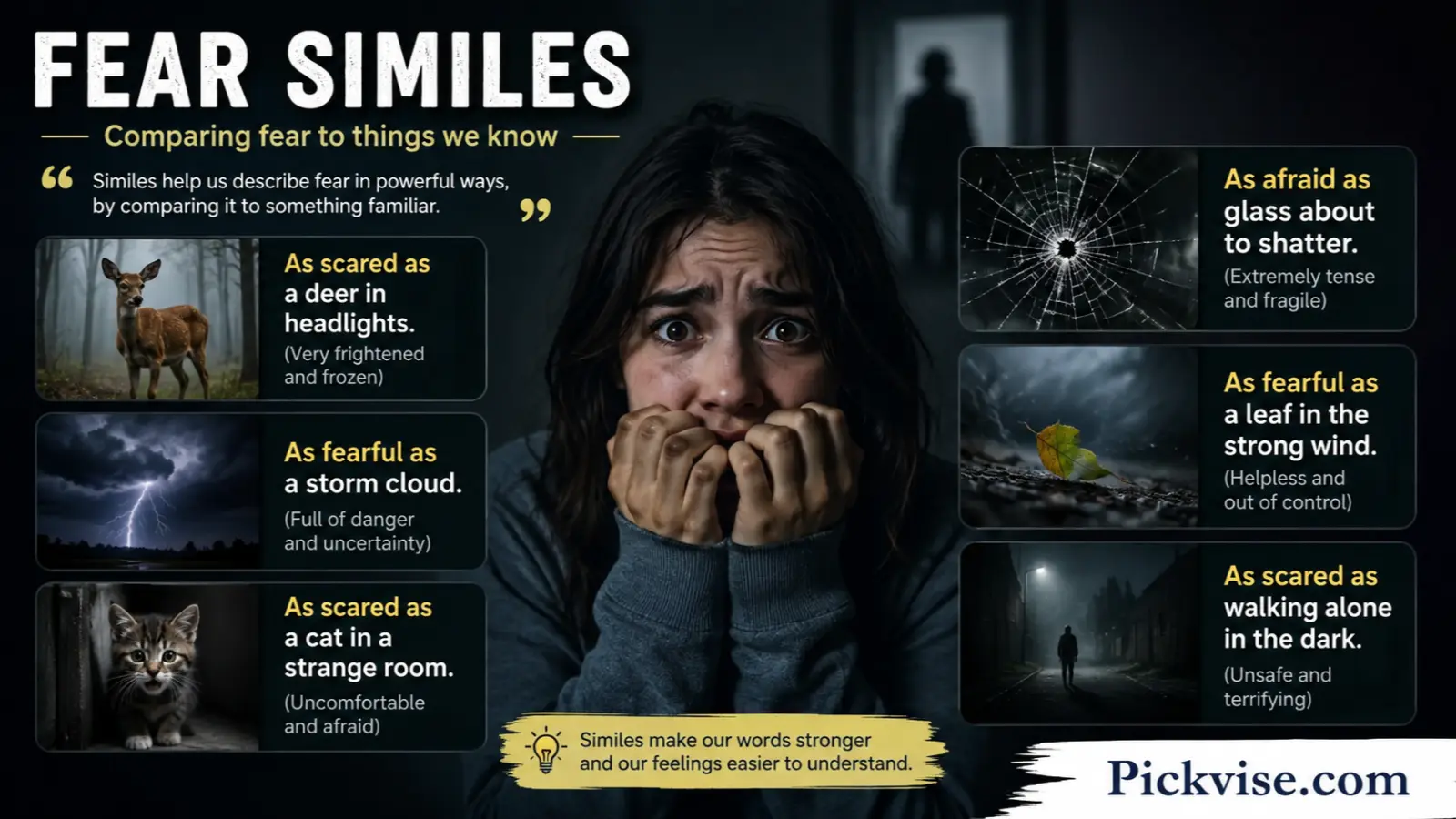
A Fear Similes compares two different things using words such as “like” or “as.” Writers use similes to turn an abstract feeling into something readers can see, hear, or almost experience. Fear is especially well suited to comparison. Instead of simply writing “She was scared,” a writer can compare ...
Read more
Similes Unscramble: Game: Solve, Learn, and Master Similes
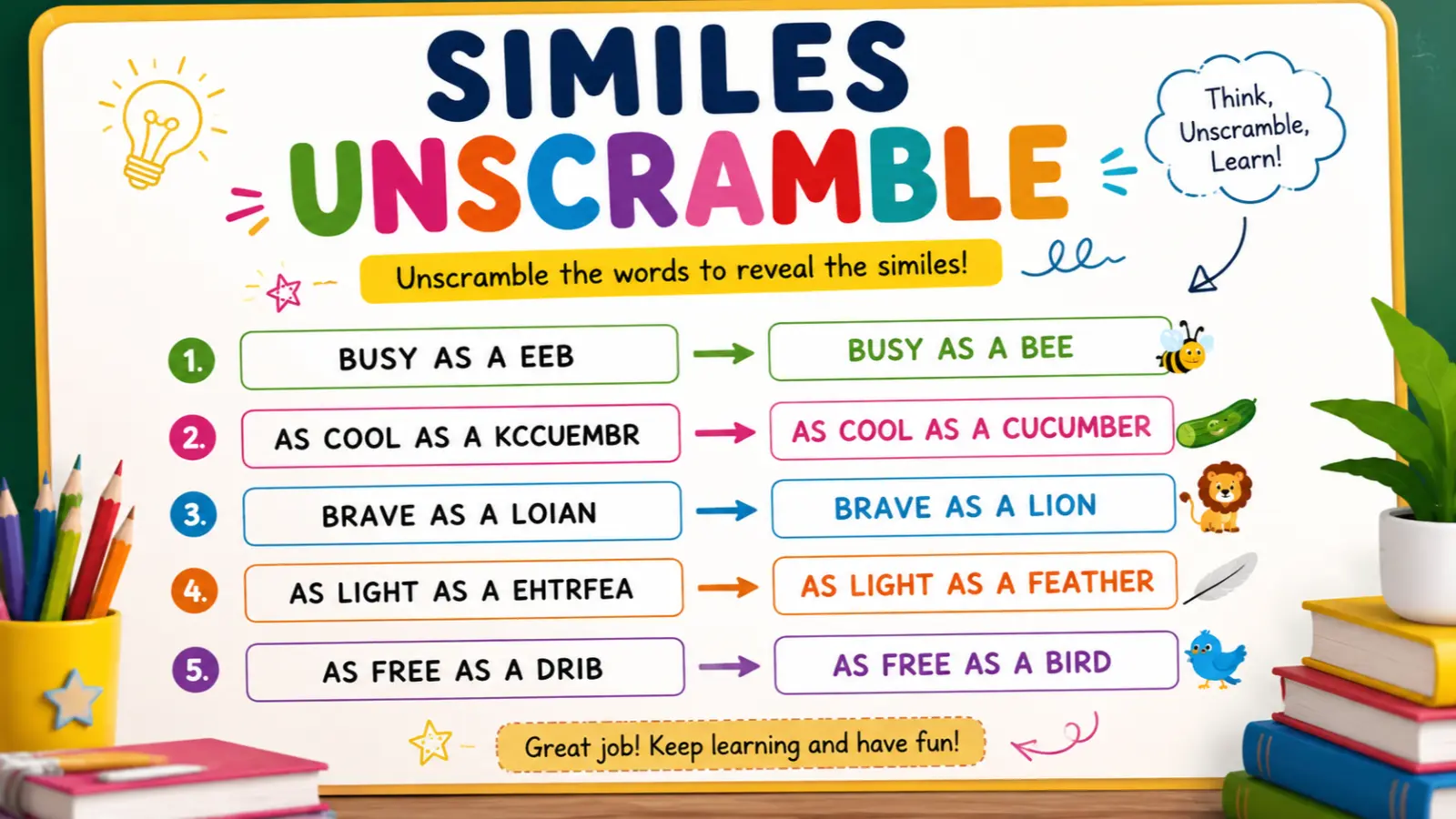
Similes Unscramble make writing more vivid by comparing one thing to another using words such as like or as. They help readers picture an idea, understand an emotion, or feel the mood of a scene. A similes unscramble activity takes that idea one step further. Instead of simply reading ...
Read more