Dark Similes: for Stories, Poems & Essays
Dark Similes has fascinated writers for centuries because it can represent mystery, fear, sadness, danger, peace, or the unknown. One of the best ways to describe darkness without sounding repetitive is through similes. A simile compares two different things using words such as like or as. A strong simile ...
Read more
Homeric Similes:Epic Examples, Meanings & Writing Tips
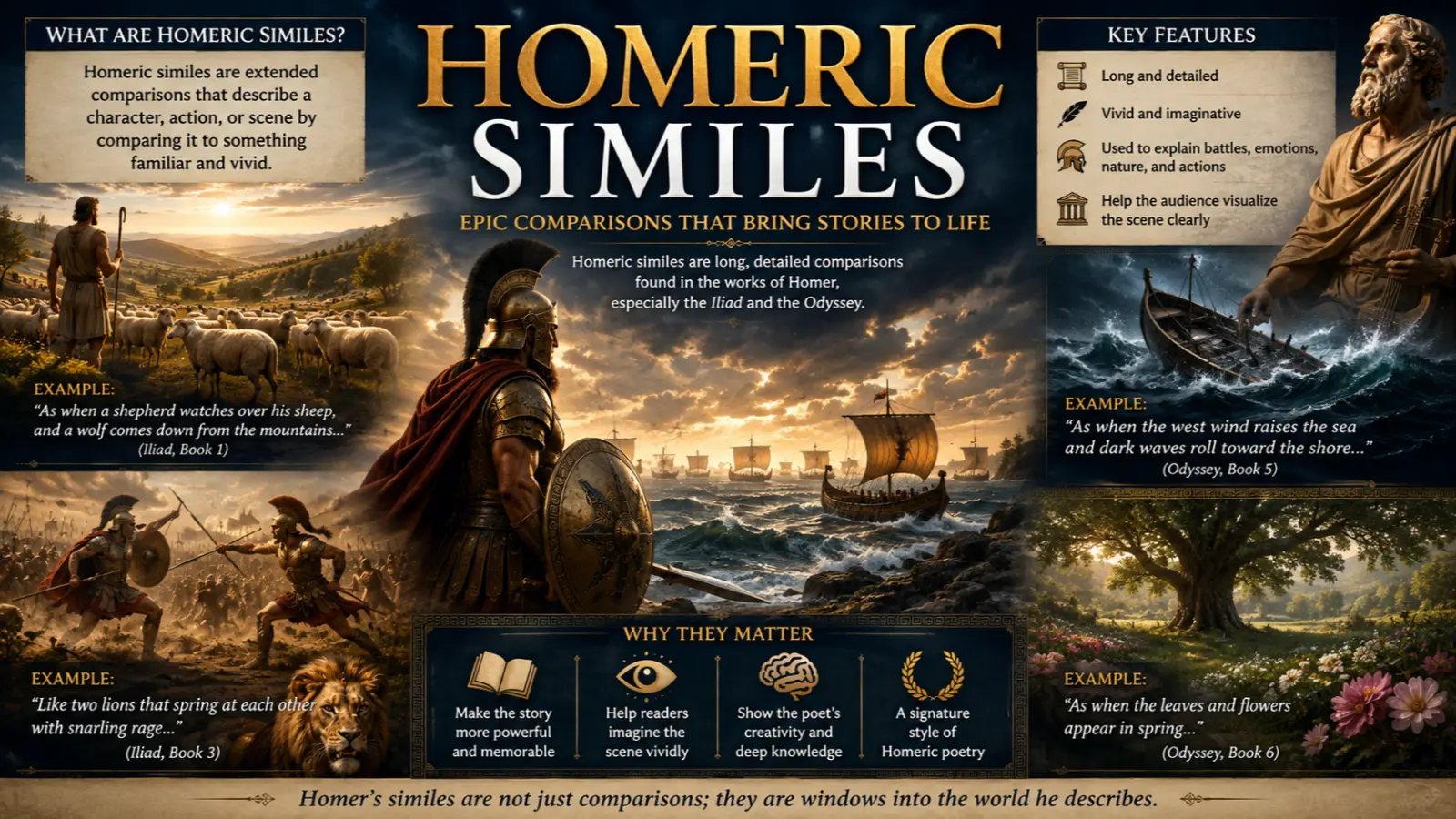
Homeric similes are among the most powerful tools in storytelling. Unlike a short comparison, they expand an image into a vivid scene that helps readers picture emotions, actions, and ideas in remarkable detail. They first became famous through the epic poems traditionally attributed to Homer, where battles, journeys, and ...
Read more
Spooky Similes: with Meanings and Creative Examples
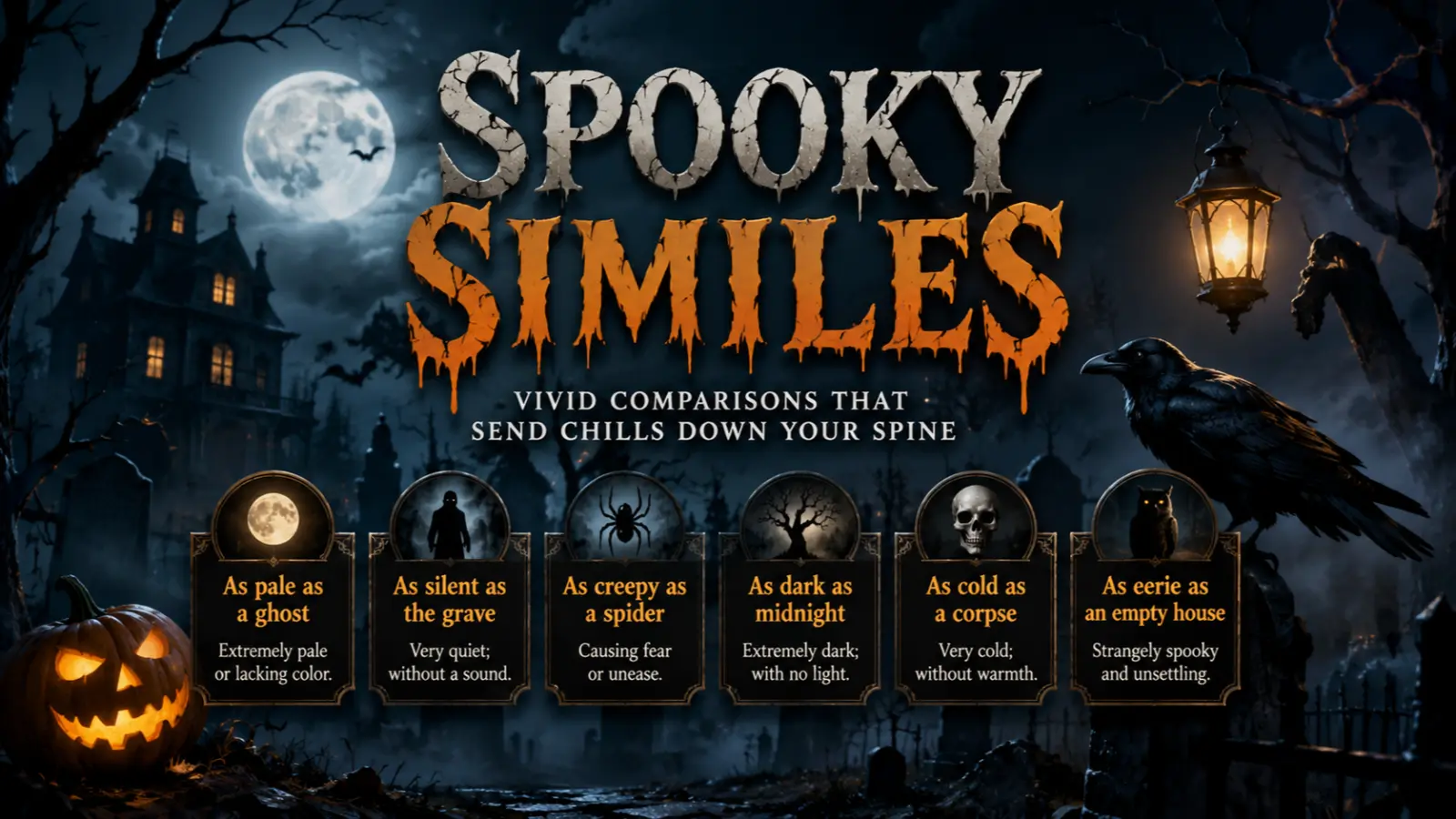
Spooky stories stay with us because they spark curiosity, suspense, and imagination. One of the easiest ways to create that feeling is through similes. A well-crafted simile paints a clear picture in the reader’s mind without overexplaining the scene. A simile compares one thing to another using “like” or ...
Read more
Similes for Death: Meaning, Examples, and Creative Uses
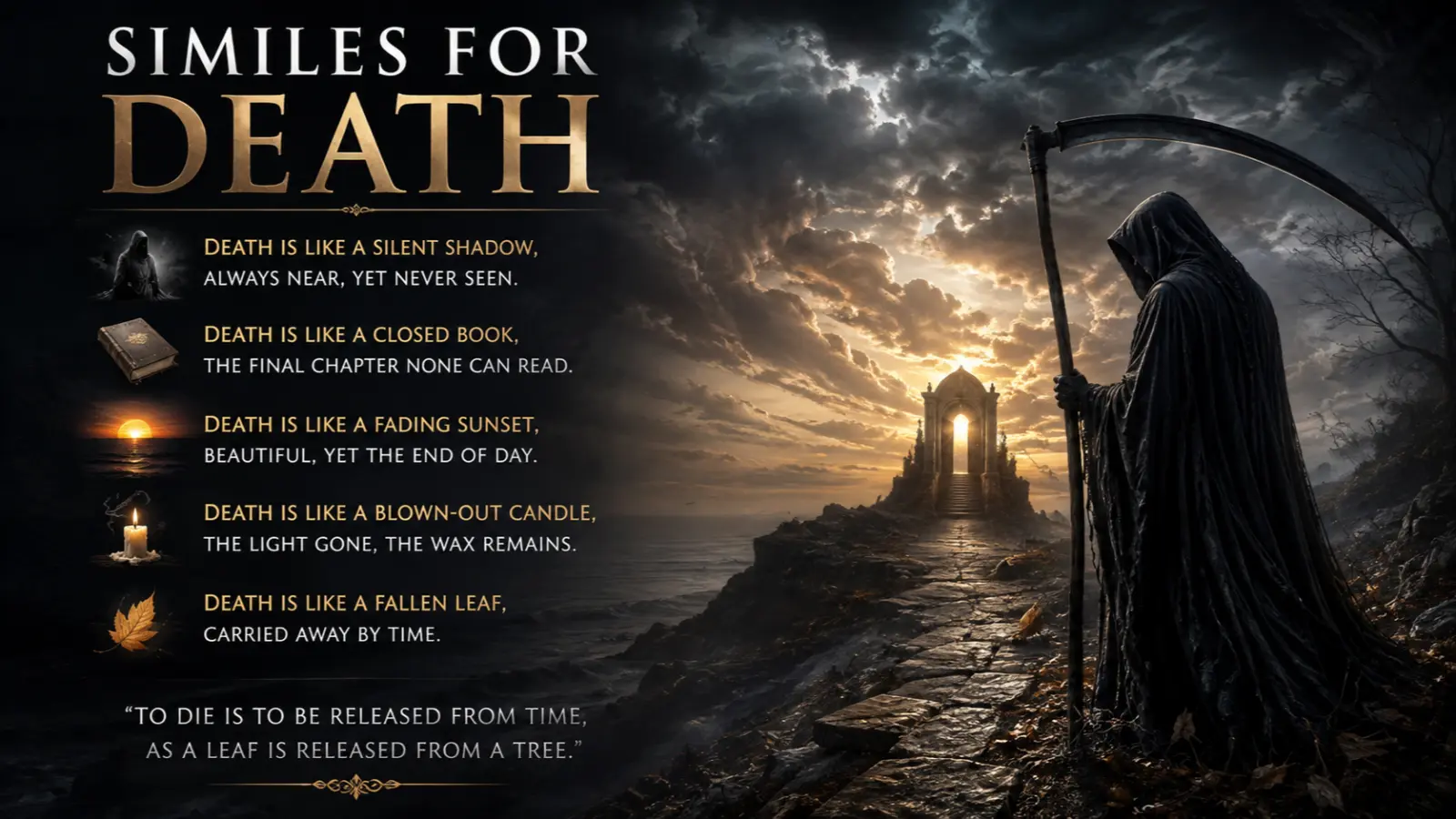
Death is one of the most difficult subjects to describe in writing. Whether you’re creating fiction, poetry, speeches, or reflective essays, finding the right comparison can help readers connect with emotion without relying on graphic or predictable language. A simile compares two different things using the words like or ...
Read more
Romantic Similes: for Poems, Stories, and Love Letters
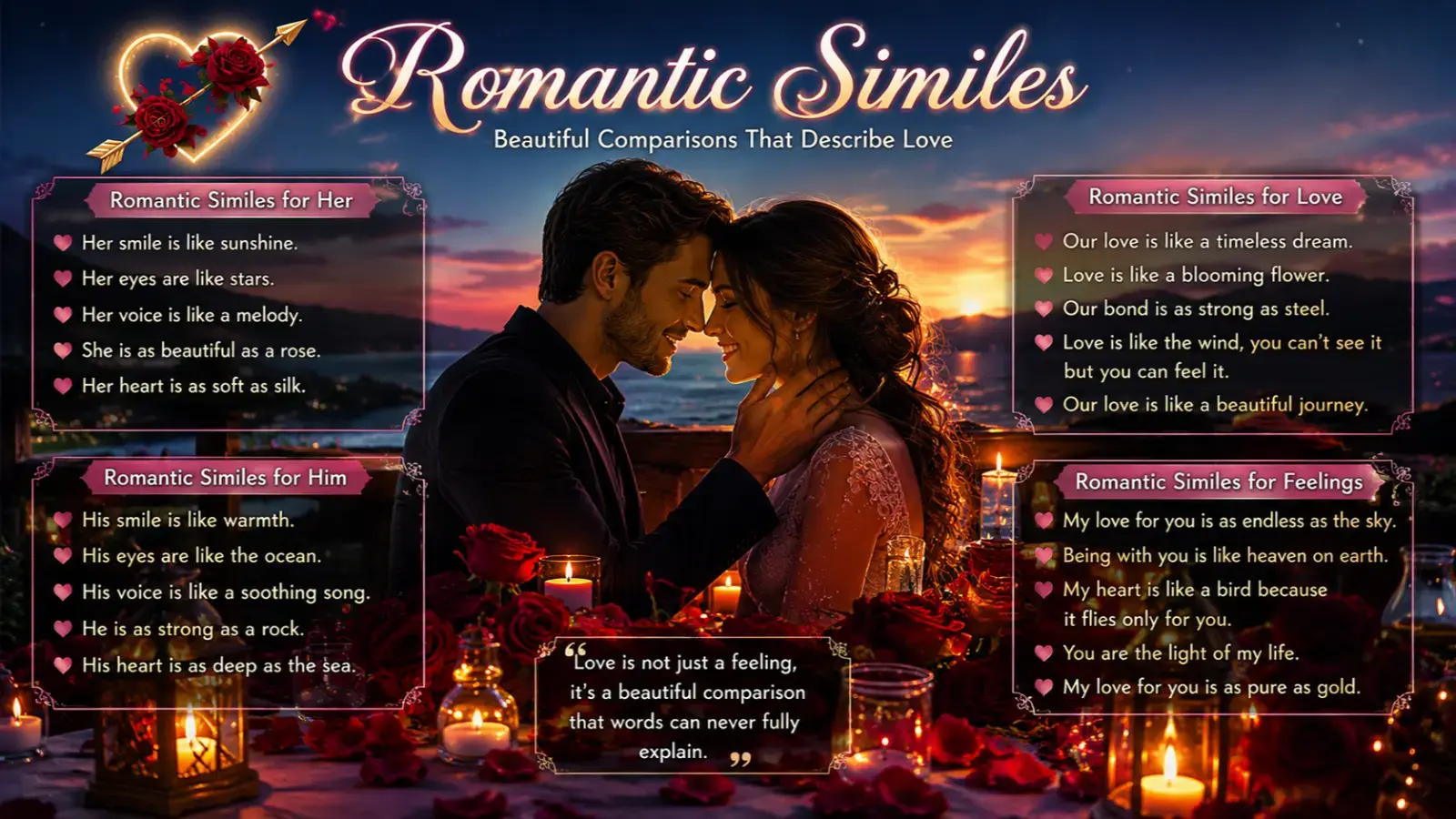
Love is one of the most powerful emotions people try to describe, yet it is also one of the hardest. Simple words like happy, excited, or in love rarely capture the full feeling. That’s where similes become valuable. A simile compares one thing to another using like or as, ...
Read more
Snow Similes: with Meanings and Examples
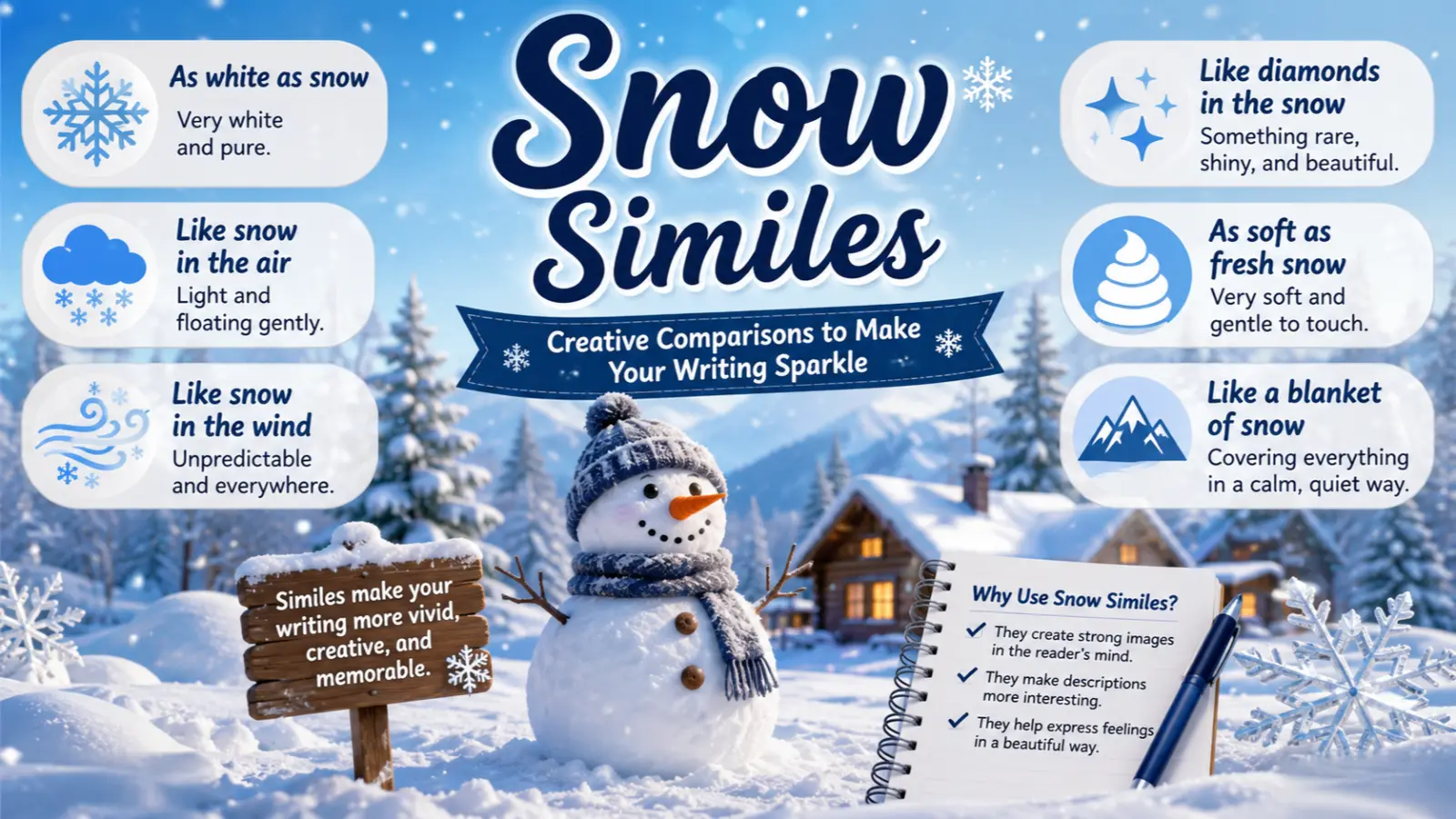
Snow has inspired writers for centuries because it can feel peaceful, dangerous, magical, lonely, or joyful depending on the moment. One well-crafted simile can transform an ordinary winter scene into something readers can picture instantly. A simile compares two different things using “like” or “as.” Instead of simply saying, ...
Read more
Fire Similes:Powerful Comparisons for Creative Writing
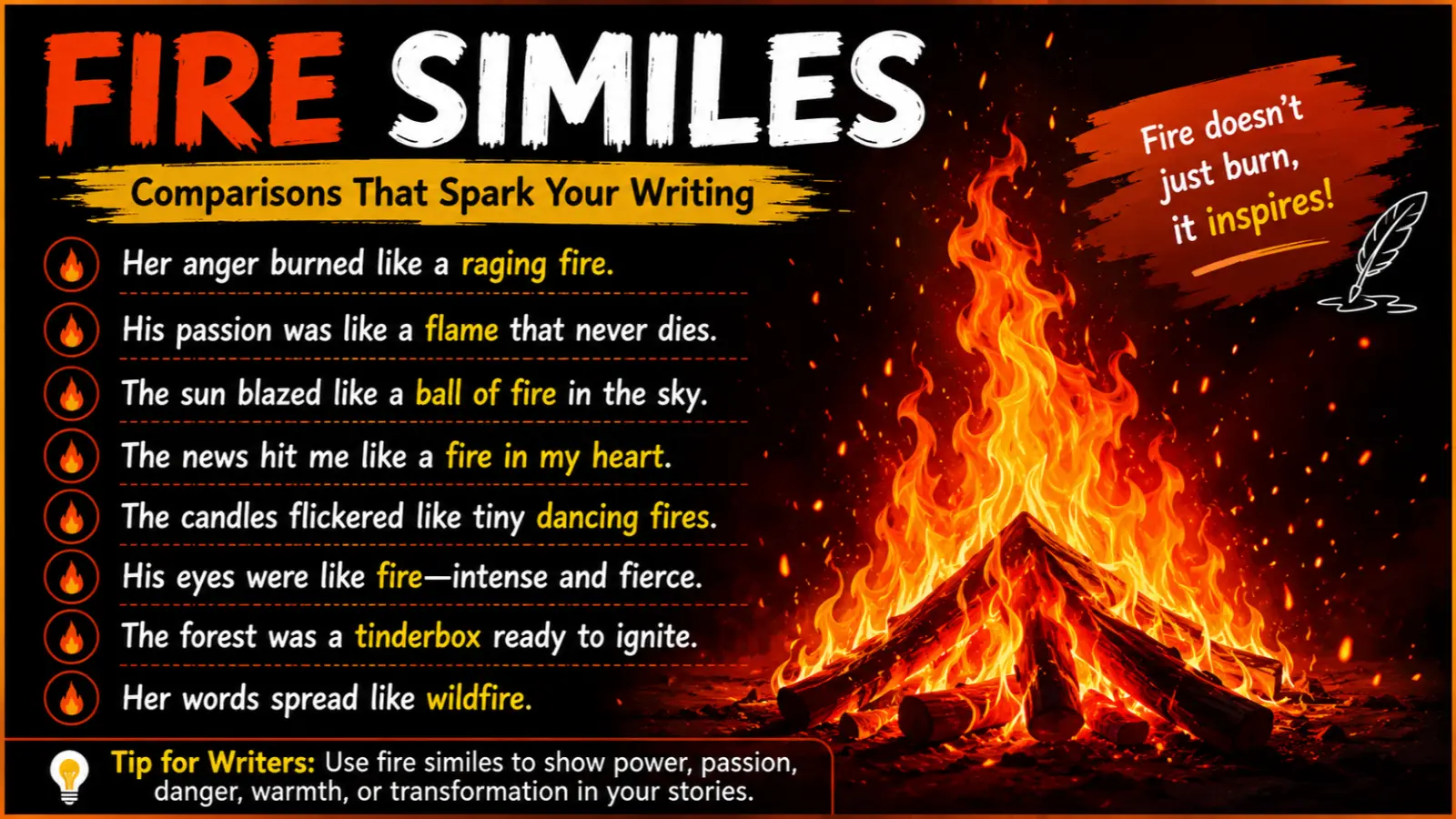
Fire has fascinated people for centuries. It can represent warmth, destruction, passion, hope, anger, courage, and transformation. Because of its rich symbolism, fire appears in stories, poems, speeches, and everyday conversations. A simile compares two different things using the words like or as. A well-crafted simile helps readers picture ...
Read more
Similes for Slow: Creative Comparisons for Everyday Writing
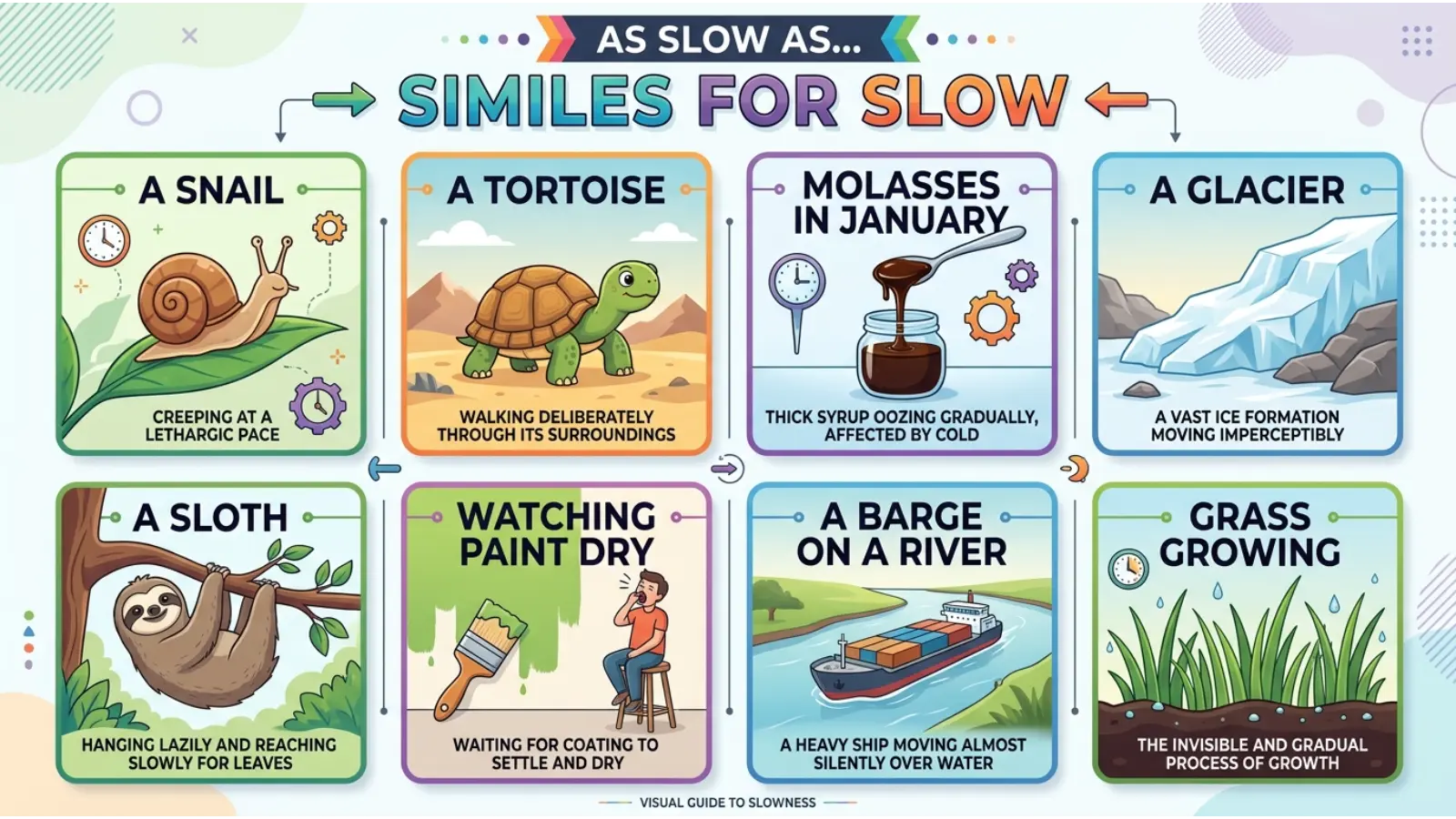
Describing something as “slow” may seem simple, but the right simile can transform an ordinary sentence into one readers remember. Whether you’re writing a story, poem, essay, speech, or conversation, a creative comparison helps readers picture movement, emotion, and atmosphere more clearly. A simile compares two different things using ...
Read more
Nervous Similes: to Make Your Writing More Expressive
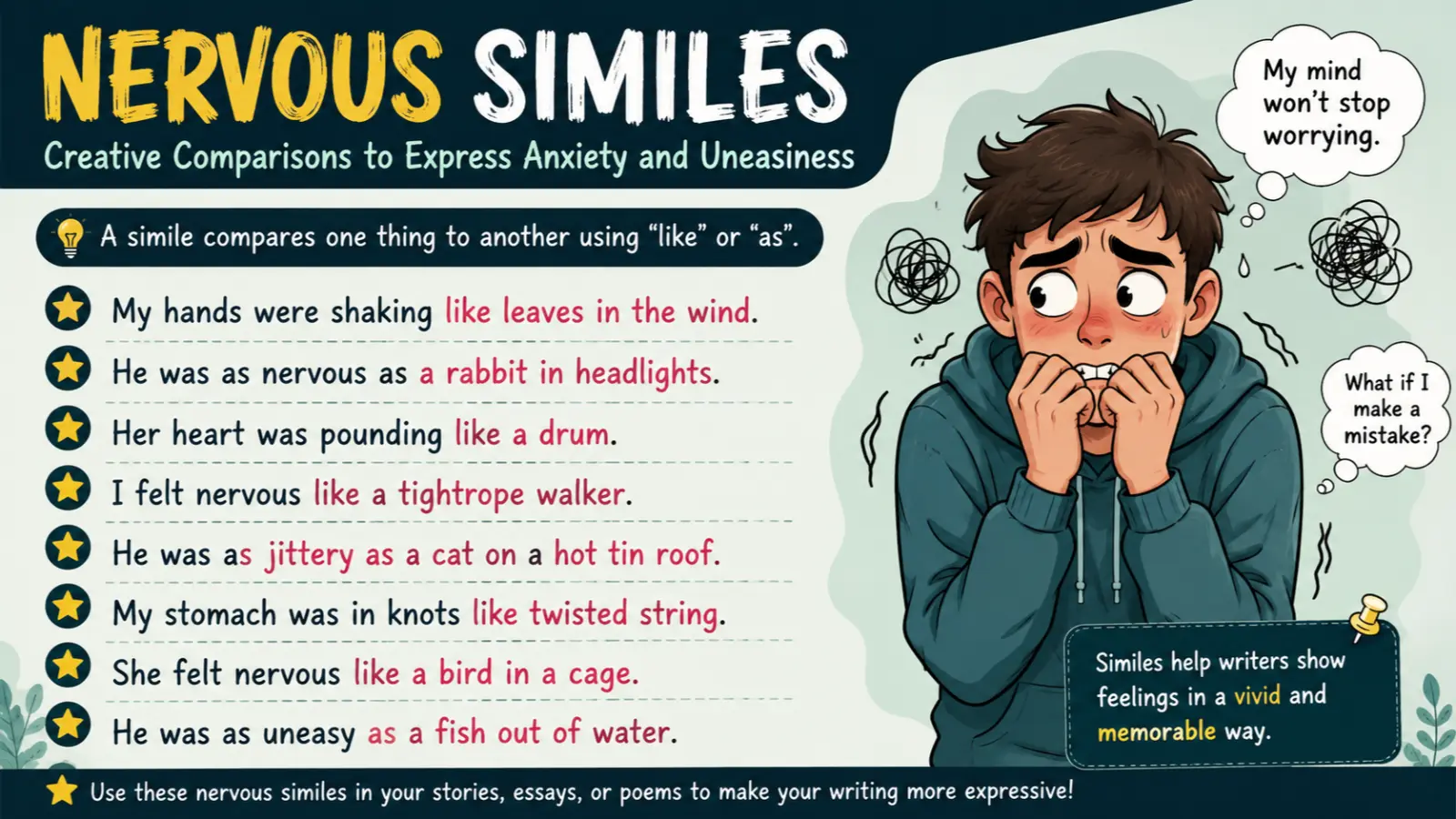
Every writer has faced the challenge of describing a nervous character without repeating words like worried, anxious, or afraid. That’s where nervous similes become valuable. They transform ordinary descriptions into memorable images that readers can instantly picture and feel. A simile compares two different things using “like” or “as.” ...
Read more
Similes for Confused: with Meaning and Examples
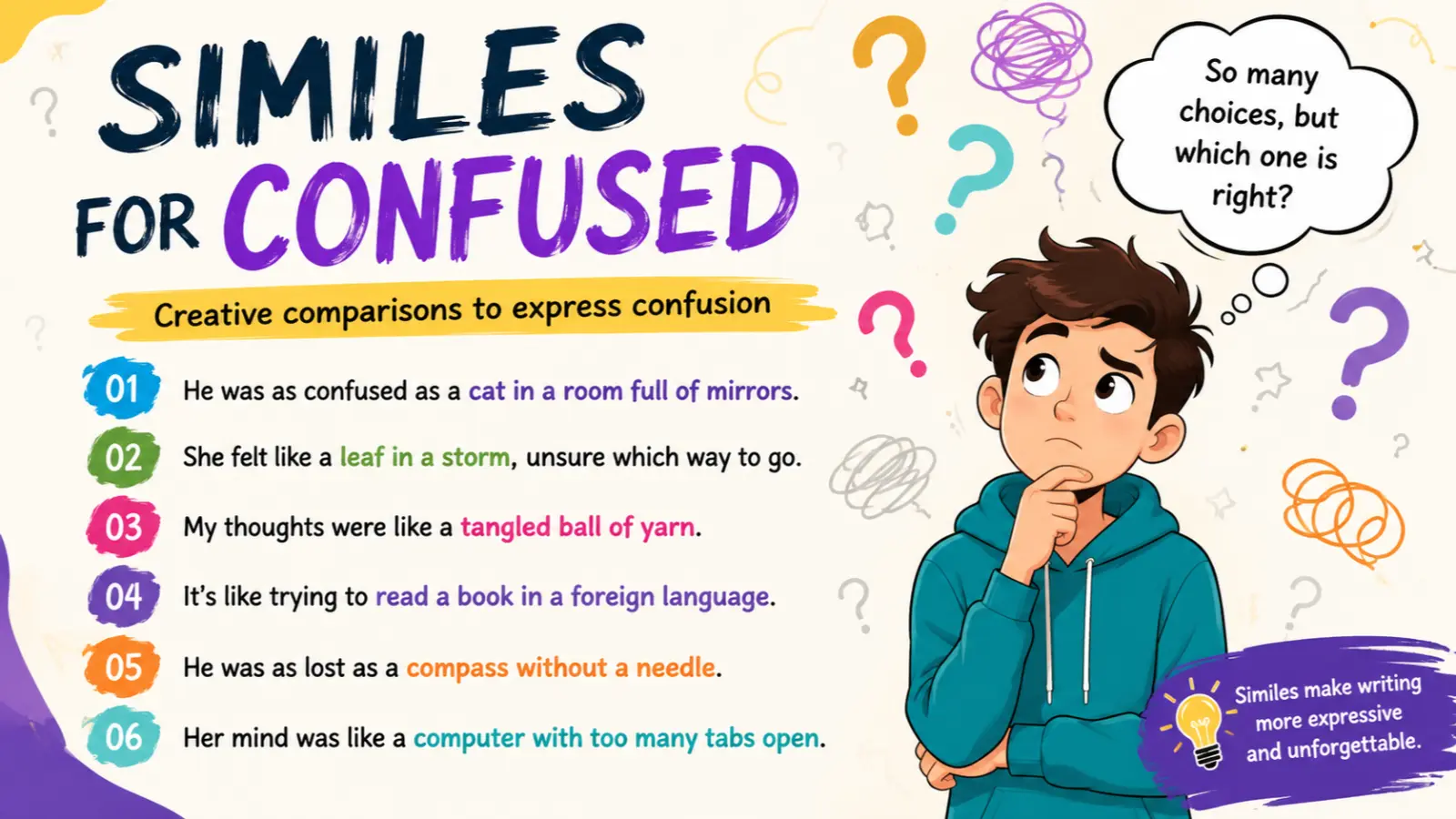
Similes for Confused is one of the most relatable human emotions. Everyone has experienced moments when thoughts become tangled, decisions feel impossible, or answers seem just out of reach. Describing that feeling effectively can make your writing more engaging and realistic. A simile compares one thing to another using ...
Read more