Angry Similes: with Meanings and Examples
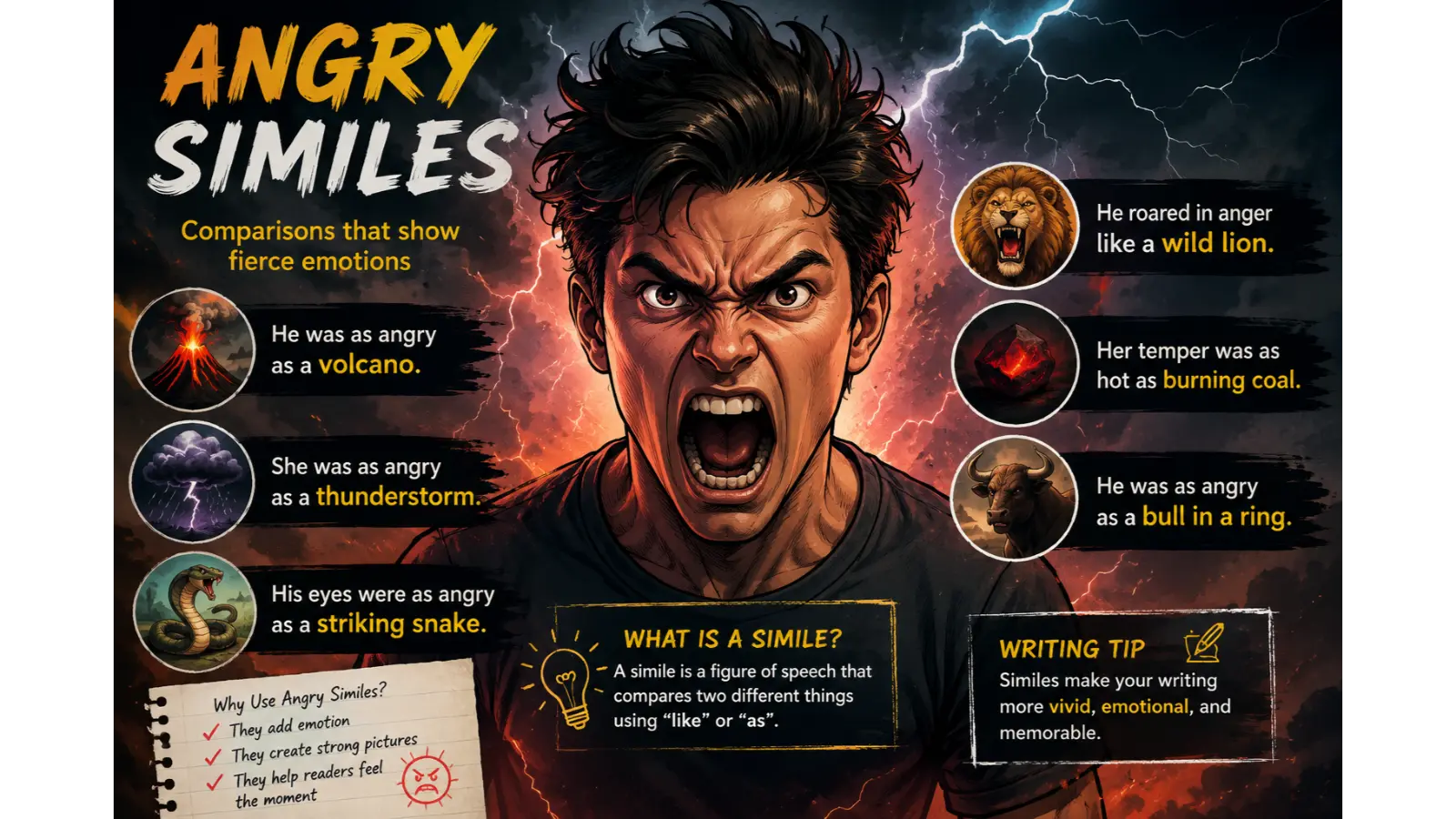
Anger is one of the strongest emotions a writer can describe, but simply saying someone was “angry” rarely leaves a lasting impression. This is where similes become powerful. A well-crafted simile paints a picture that readers can instantly imagine, making emotions feel more vivid and believable. A simile compares ...
Read more
Great Similes: for Students, Writers, and Storytelling
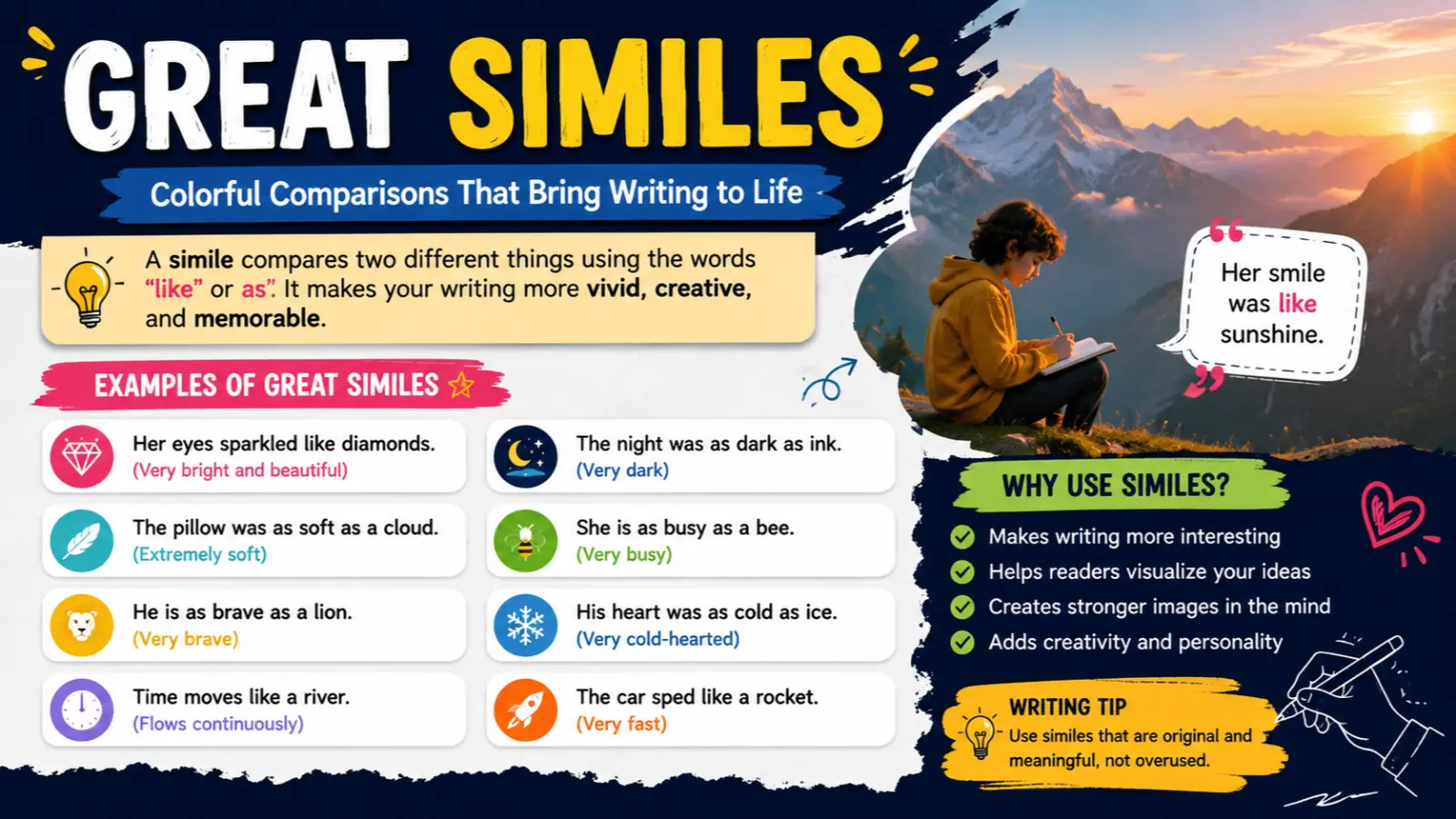
Great similes do more than compare two things—they help readers see, hear, and feel an idea in a memorable way. Whether you’re writing a story, poem, speech, essay, or even a social media caption, a well-crafted simile can transform ordinary writing into something readers remember. In this guide, you’ll ...
Read more
Similes in Beowulf: Powerful Examples and Meanings
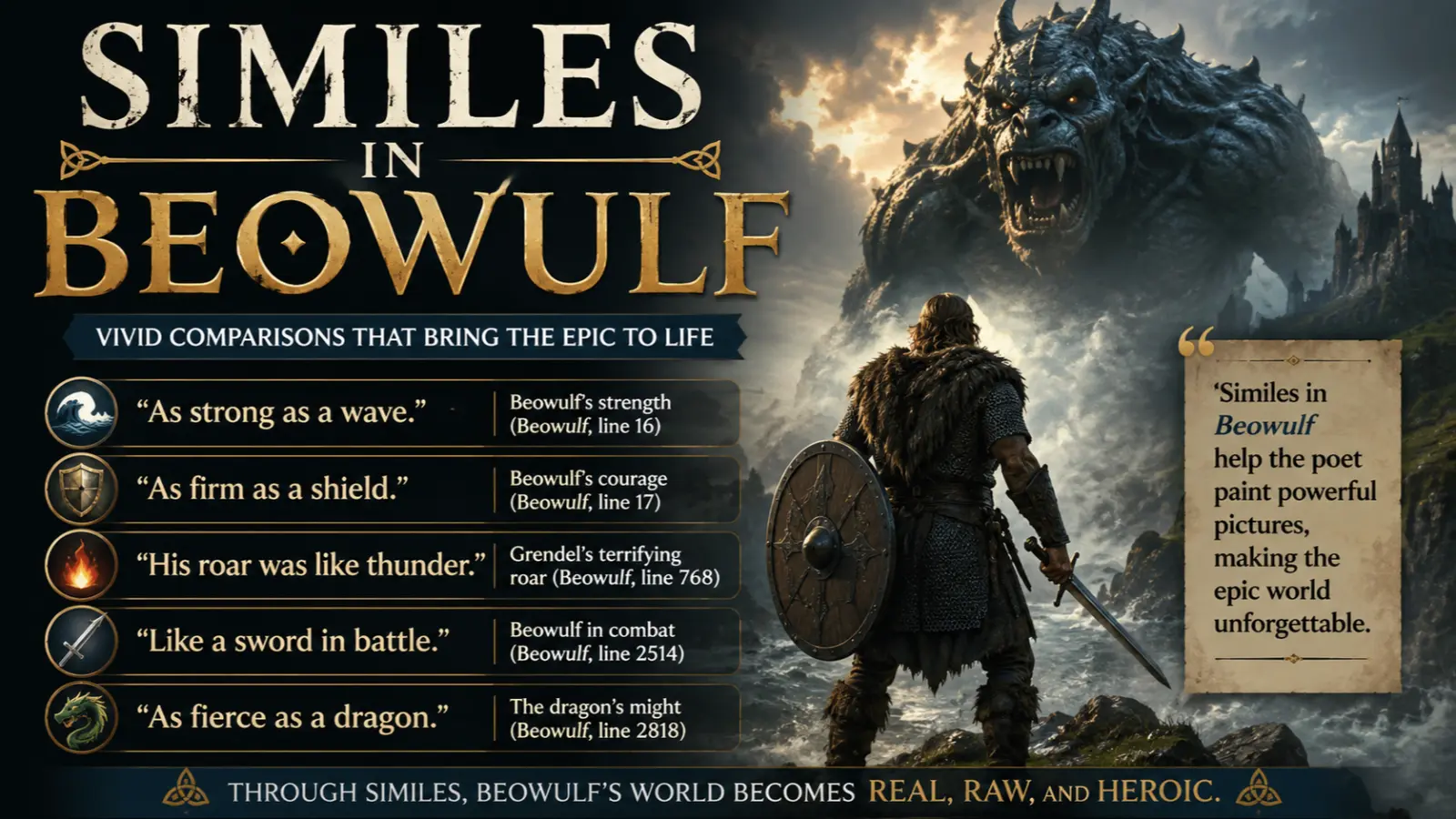
Beowulf is one of the oldest surviving works of English literature. Although it relies more heavily on metaphors, kennings, and vivid imagery than on frequent similes, the few comparisons inspired by its style help readers picture heroic battles, dangerous monsters, and unforgettable characters. A simile compares two unlike things ...
Read more
Similes About Life: for Students, Writers, and Poets
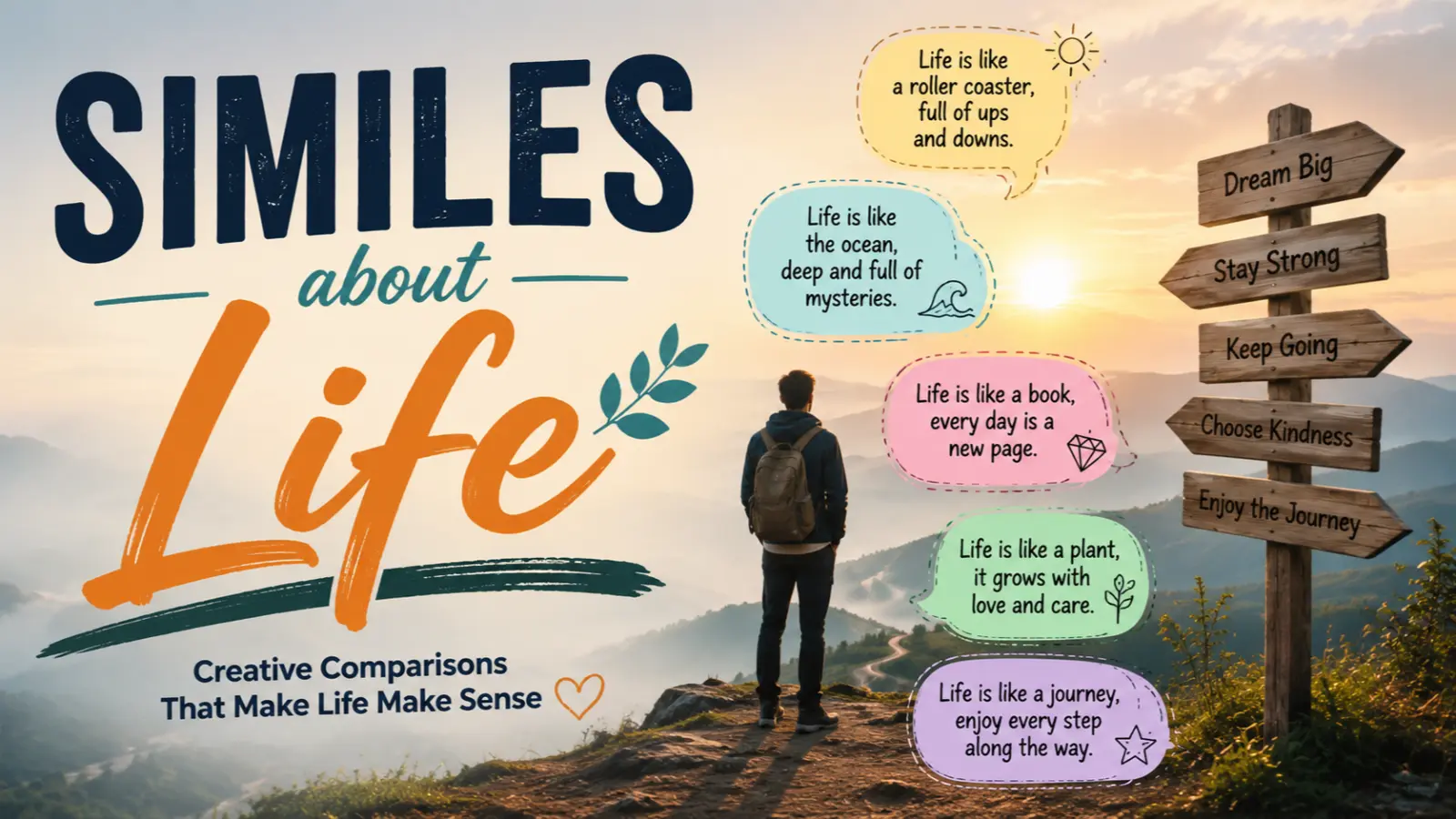
Life is difficult to describe because everyone experiences it differently. That is why writers often turn to similes—comparisons that help readers picture emotions, challenges, dreams, and personal growth in a fresh way. A simile compares two different things using words such as “like” or “as.” Instead of simply saying ...
Read more
Epic Similes: for Stories, Poems, and Creative Writing
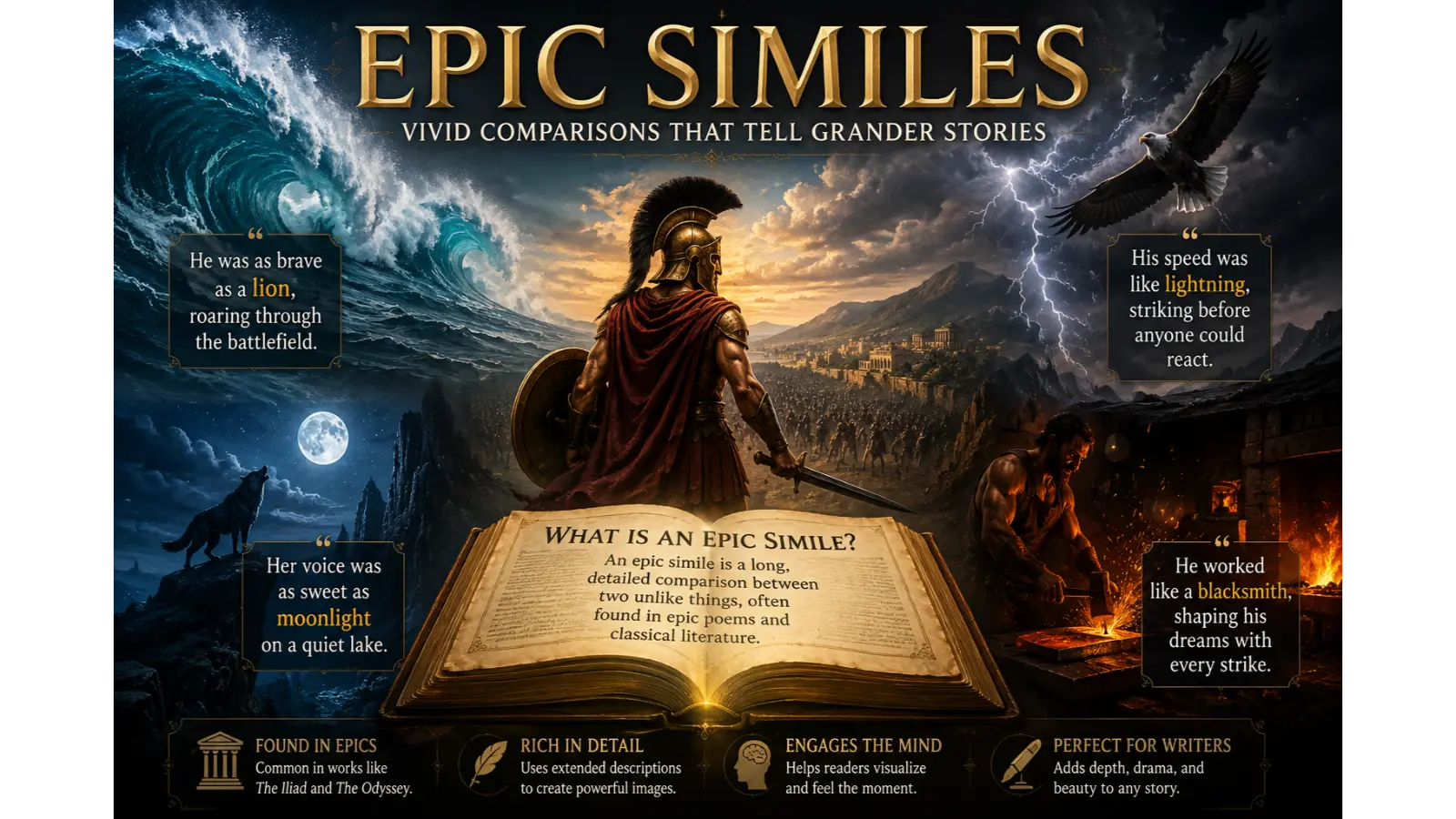
Epic similes are more than simple comparisons. They slow a moment down, paint a vivid picture, and make readers feel as though they are standing inside the story. Unlike short everyday similes, epic similes expand an image with rich detail, helping emotions, actions, and settings come alive. Writers often ...
Read more
Similes for Tired: Funny, Sad, and Descriptive Examples
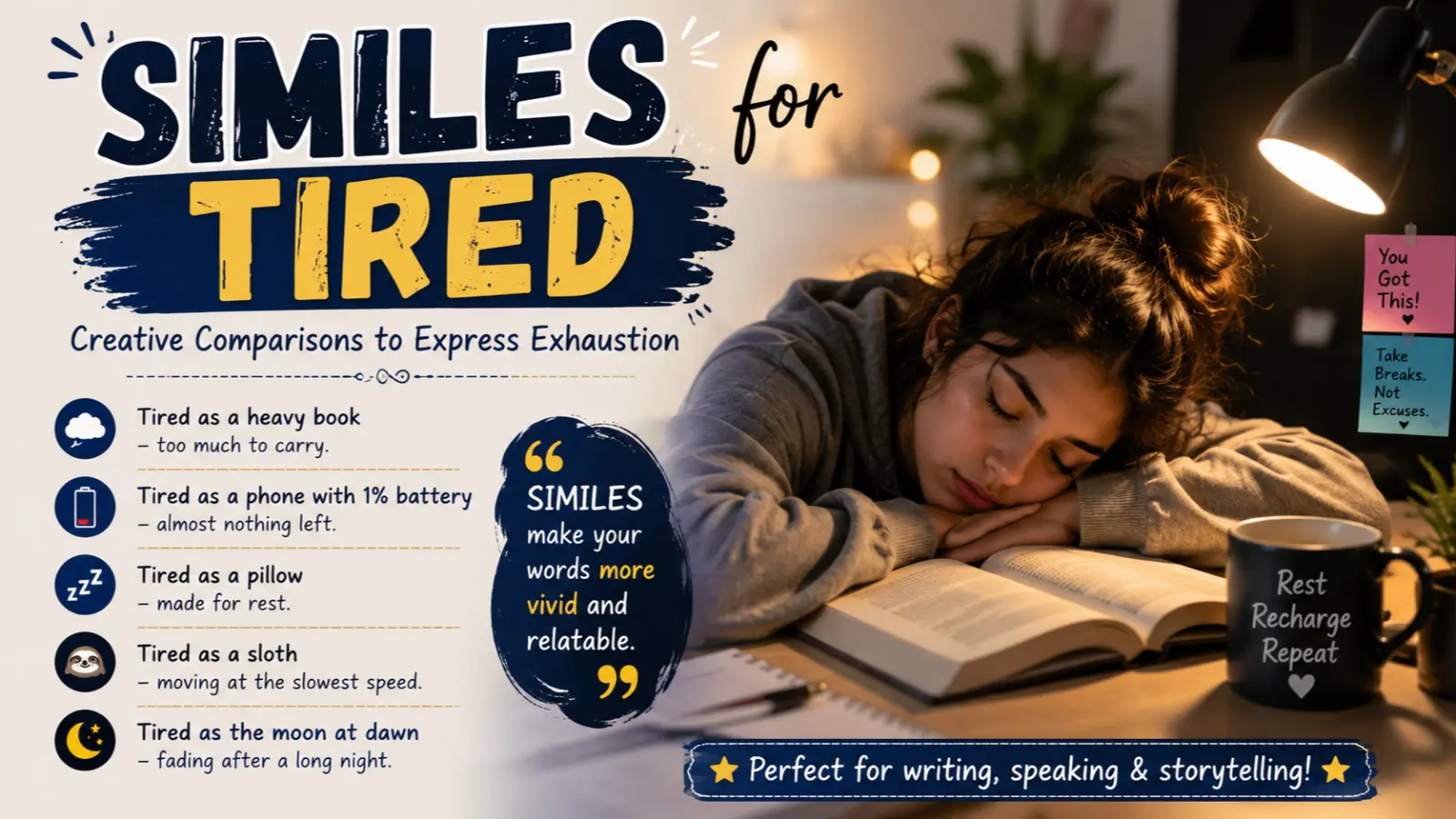
Feeling tired is something everyone experiences, but simply writing “he was tired” or “she felt exhausted” rarely paints a memorable picture. That’s where similes come in. A well-crafted simile helps readers see and feel a character’s fatigue instead of merely reading about it.Whether you’re writing a story, poem, essay, ...
Read more
Simple Similes: Explained with Easy Examples
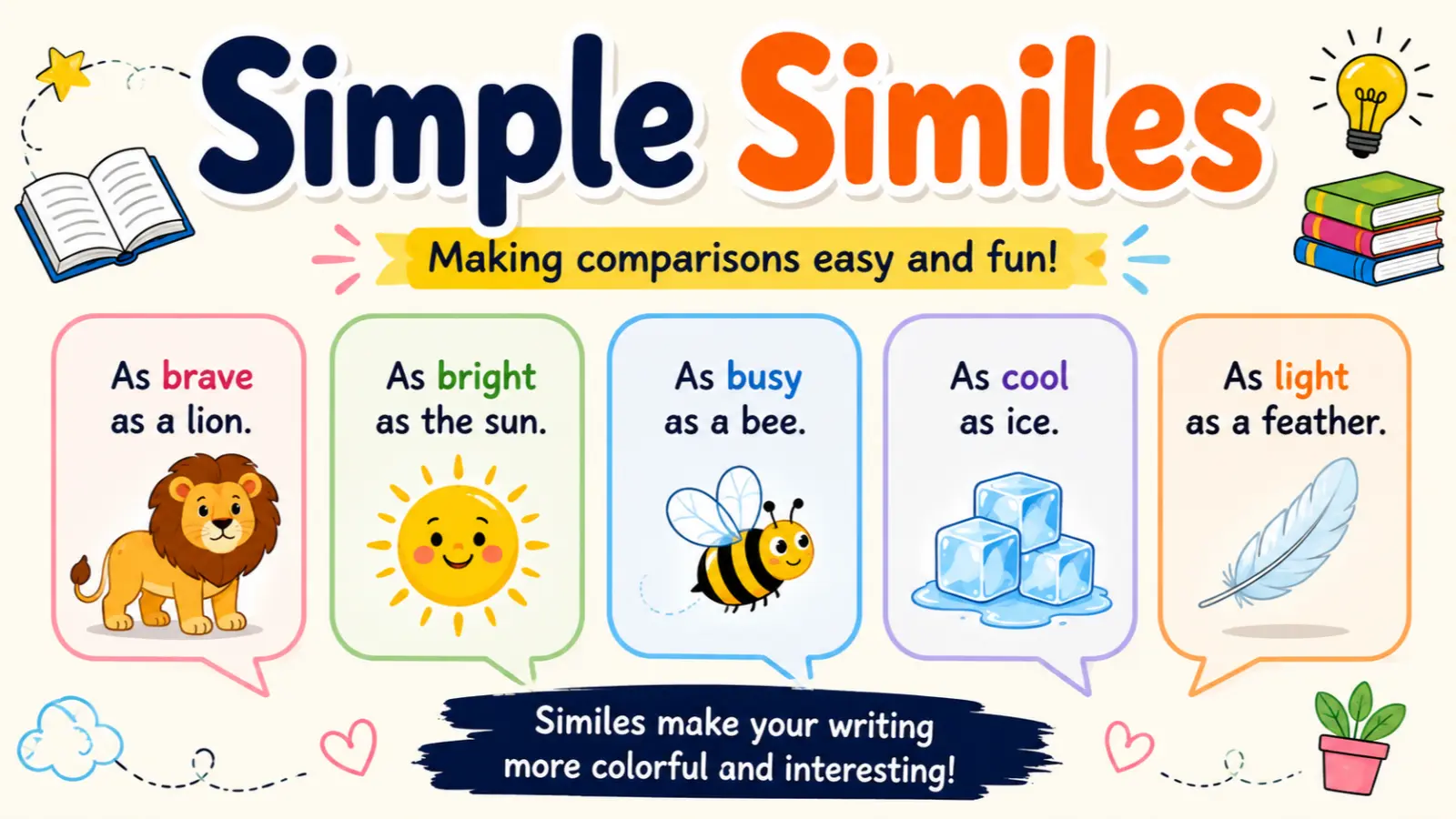
Simple similes are one of the easiest ways to make writing clearer, more colorful, and more memorable. Whether you’re writing a school assignment, a poem, a story, or even a social media post, a well-crafted simile helps readers picture exactly what you mean. A simile compares two different things ...
Read more
Similes for Excited: Fun, Creative, and Powerful Examples
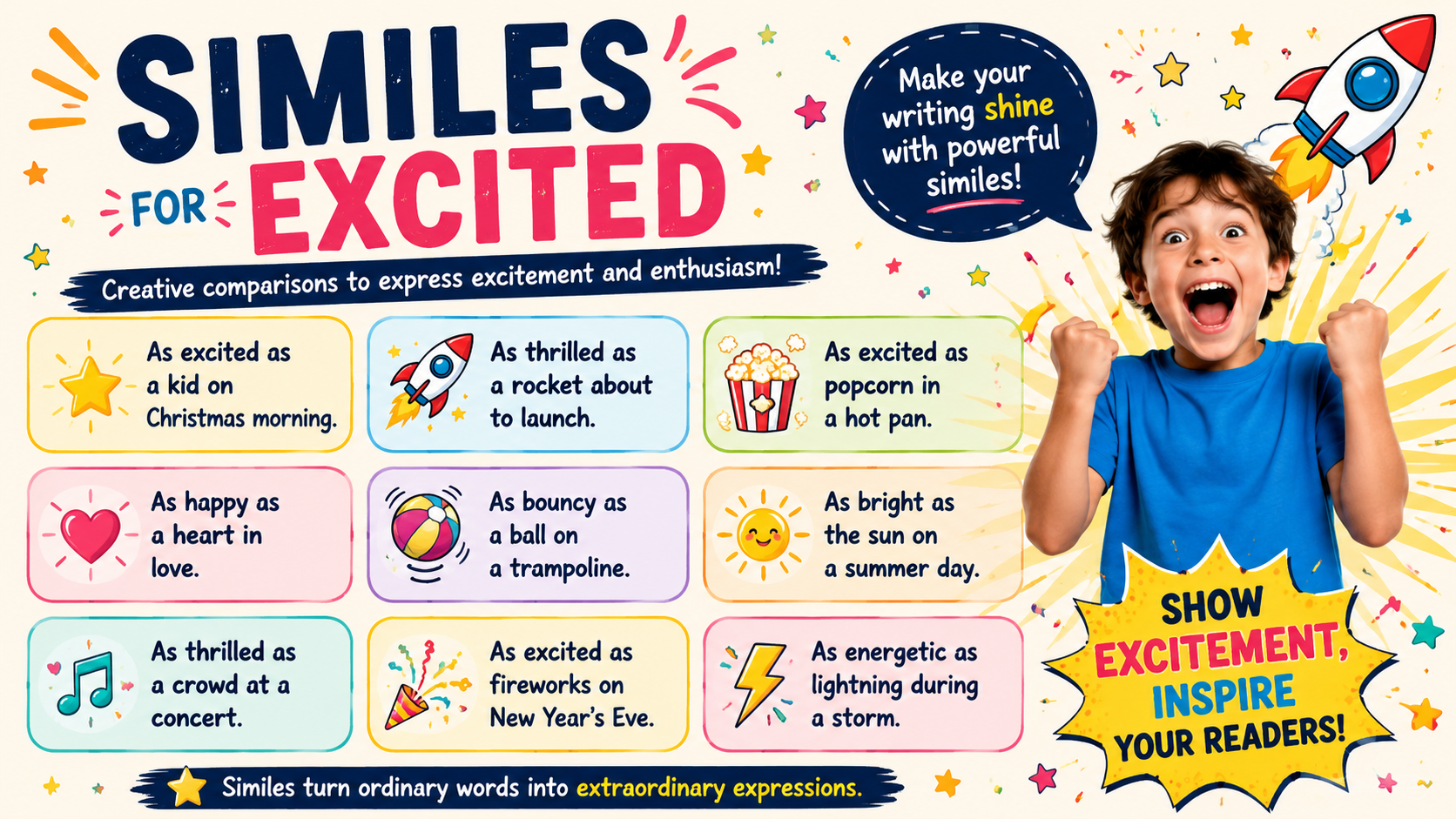
Excitement is one of the easiest emotions to feel but one of the hardest to describe well. Simply saying someone was “very excited” rarely captures the rush of anticipation, nervous energy, or overwhelming happiness.That’s where similes help. A simile compares one thing to another using like or as, helping ...
Read more
Friendship Similes: Original Examples for Students

Friendship is one of the easiest emotions to recognize but one of the hardest to describe well. Simply saying two people are “close friends” rarely captures trust, loyalty, humor, or shared history. That’s where friendship similes become powerful. A well-crafted simile compares friendship to something familiar, helping readers instantly ...
Read more
Scary Similes: Powerful Examples for Stories, Poems & Writing
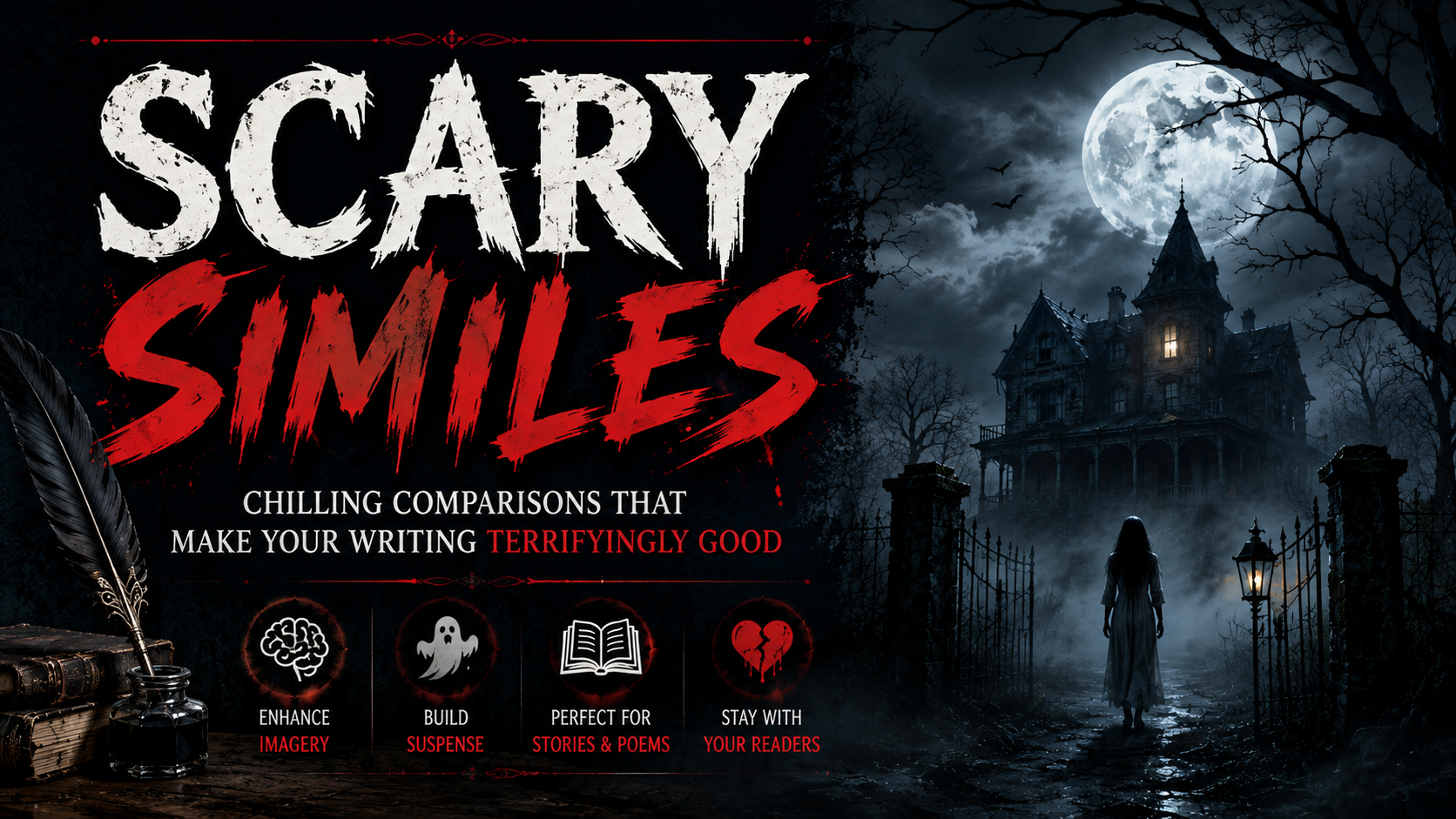
Fear is one of the strongest emotions a writer can create, but simply saying something was scary rarely leaves a lasting impression. That’s where similes become powerful. By comparing one thing to another using like or as, writers transform ordinary scenes into unforgettable moments. Scary similes appear in horror ...
Read more