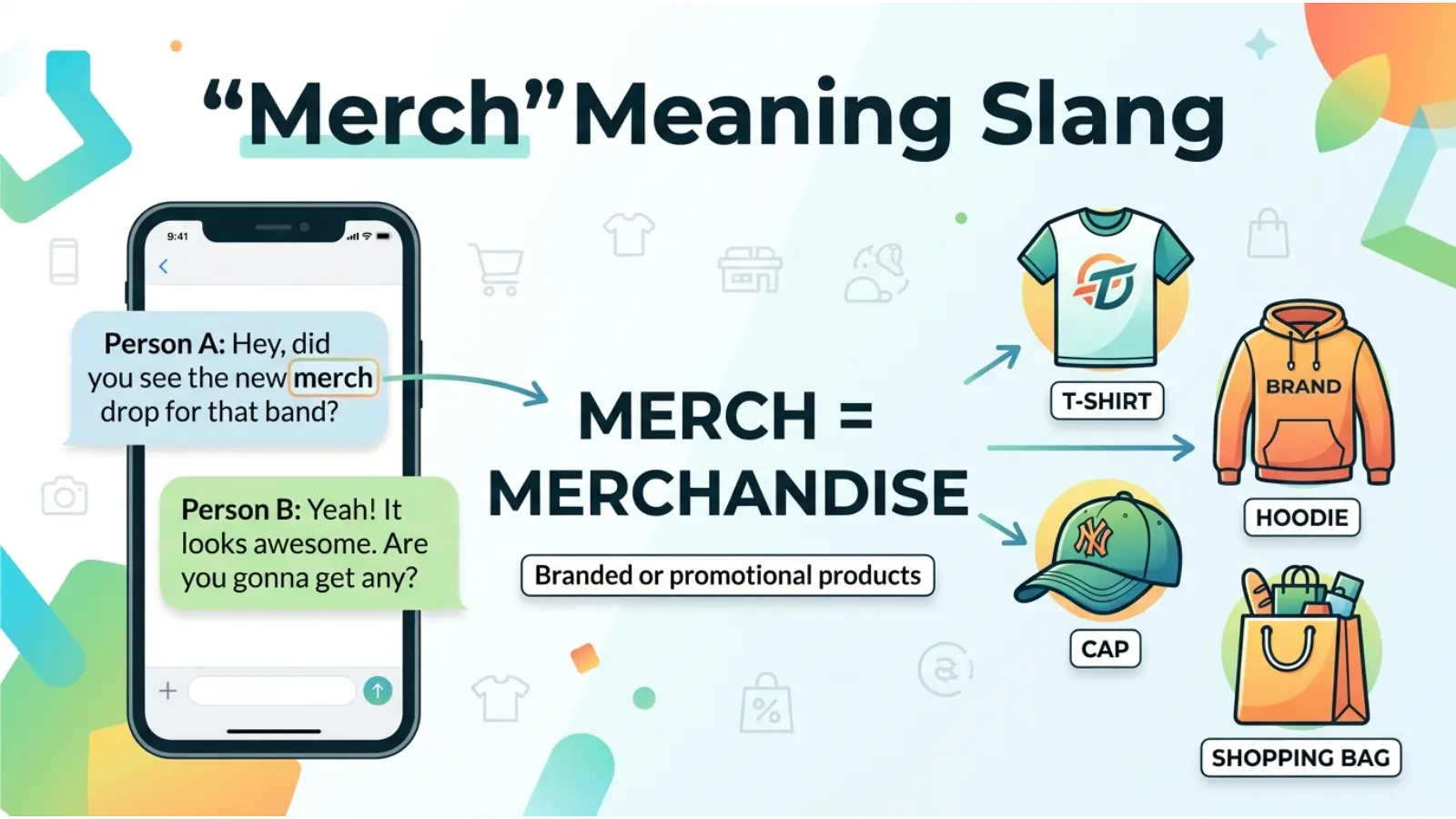
Merch meaning slang is a common search for people who see “merch” in texts, comments, videos, or social media posts.
You may hear someone say, “I bought their merch,” “Where can I get the merch?” or simply “Merch!” and wonder what they mean.
The word is especially common around musicians, influencers, YouTubers, sports teams, brands, and online communities.
While “merch” is technically a shortened form of merchandise, it can have slightly different meanings depending on the situation.
In casual communication, it usually refers to products connected to a person, brand, artist, team, or group. Understanding the context makes the meaning easy to recognize.
Quick Answer
“Merch” is slang or informal shorthand for “merchandise,” usually referring to branded or promotional products such as T-shirts, hoodies, hats, posters, or accessories.
What Does “Merch” Mean in Text?
In texting and online conversations, merch usually means merchandise.
Merchandise is something sold by a business, artist, creator, sports team, or other organization. When people shorten the word to “merch,” they are using a casual form that is quicker and easier to say.
For example:
“Did you see her new merch?”
This means:
“Did you see the new merchandise she is selling?”
The word is generally neutral and informal, rather than offensive or rude.
Merch Full Form
The merch full form is merchandise.
- Merch = merchandise
- It is an informal abbreviation or shortened form.
- It is commonly used in speech, texting, social media, and online shopping.
Merch Meaning Slang in Different Contexts
The exact meaning can depend on what is being discussed.
1. Music and Artists
Musicians often sell merchandise featuring their name, album artwork, lyrics, logos, or tour designs.
Example:
“I ordered the band’s new merch.”
The person means they bought products connected to the band.
2. YouTubers and Influencers
Online creators may have their own merchandise.
Example:
“His merch sold out in one day!”
Here, “merch” refers to products created or promoted by the influencer.
3. Sports
Sports teams and athletes can also have merch.
Example:
“I need some Lakers merch.”
This means the person wants merchandise related to the team.
4. Brands and Businesses
Companies may sell branded clothing, accessories, mugs, bags, and other products.
Example:
“The company released new merch.”
The sentence refers to newly released branded products.
Is “Merch” Rude or Offensive?
No. Merch is normally neutral and harmless.
It is simply an informal way to say “merchandise.” There is no inherently offensive meaning attached to the word.
However, the tone and context can change how a sentence feels.
For example:
- “I love your merch!” → friendly
- “Where’s the merch?” → casual
- “Your merch is overpriced.” → critical
The word itself is not rude. The surrounding statement determines the tone.
Where Is “Merch” Commonly Used?
You are most likely to see merch in informal environments, including:
- TikTok
- YouTube
- X and other social platforms
- Text messages
- Online communities
- Gaming communities
- Music fandoms
- Sports discussions
- Online stores
- Creator websites
It is especially popular among younger internet users and fan communities.
In formal business writing, however, merchandise is usually a better choice.
Real-Life Conversation Examples
Here are some natural examples of merch meaning slang in everyday communication.
Friendly
Alex: “Your favorite singer dropped new merch!”
Sam: “Really? I need to check it out!”
Here, merch means products associated with the singer.
Casual
Alex: “Where did you get that hoodie?”
Sam: “It’s from the band’s merch.”
The hoodie is official band merchandise.
Excited
Alex: “The new merch is finally available!”
Sam: “No way! I’m buying the hoodie.”
The word helps create a casual, enthusiastic tone.
Argumentative
Alex: “I don’t like the new merch.”
Sam: “Why? I think the designs are great.”
Again, “merch” simply means merchandise. The disagreement comes from the opinions around it.
Emotional and Psychological Meaning of “Merch”
Although merch does not have a special psychological definition, merchandise can have emotional meaning for people.
Fans sometimes buy merch because it represents:
- Their connection to an artist
- Support for a creator
- Membership in a community
- Memories of a concert or event
- Personal identity
- Loyalty to a sports team
- Belonging to a fandom
For example, someone might keep a concert T-shirt for years because it reminds them of a special experience.
So while merch meaning slang is simply “merchandise,” the products themselves can carry personal or emotional value.
Origin and Background of “Merch”
The word merch comes from merchandise. English speakers have a long history of shortening words to create casual forms.
“Merch” became particularly widespread through music, entertainment, sports, and eventually internet culture.
As artists, creators, gamers, and influencers began selling branded products online, the shortened word became even more common.
Today, phrases such as “new merch,” “buy merch,” “official merch,” and “merch drop” are widely understood.
What Does “Merch” Stand For?
If you are wondering what does merch stand for, the answer is straightforward:
Merch stands for merchandise.
It does not normally represent a longer phrase or acronym. It is simply a shortened informal form of the word.
Example
“I bought some merch from the concert.”
Means:
“I bought some merchandise from the concert.”
Merch vs. Merchandise vs. Swag
These words can overlap, but they are not always identical.
| Term | Meaning | Typical Use |
|---|---|---|
| Merch | Short form of merchandise | Casual conversations and social media |
| Merchandise | Products sold by a person, brand, or organization | Formal and general contexts |
| Swag | Promotional or branded items; sometimes stylish clothing | Casual/informal contexts |
| Goods | Items or products that are bought and sold | Business and general contexts |
For example, a company might officially call its products merchandise, while customers casually call them merch.
When Should You Use “Merch”?
Use merch when the conversation is casual and the meaning is clear.
It works well in:
- Text messages
- Social media posts
- Casual conversations
- Fan discussions
- Creator communities
- Informal marketing
- Online shopping conversations
Example
“I’m saving money for the new merch drop.”
This sounds natural in casual online communication.
When Should You Avoid “Merch”?
Avoid the word when you need a highly formal or professional tone.
For example, in a formal report, you might write:
“The company introduced a new merchandise collection.”
Instead of:
“The company introduced new merch.”
Neither is grammatically wrong, but merchandise sounds more professional.
Polite Alternatives to “Merch”
Because “merch” is not offensive, you do not need a polite replacement for safety reasons. However, you can use more formal alternatives when appropriate.
Depending on the situation, try:
- Merchandise
- Products
- Branded products
- Promotional items
- Official products
- Collection
- Goods
For example:
Casual:
“Where can I buy your merch?”
More formal:
“Where can I purchase your official merchandise?”
Why Do People Use “Merch”?
People use “merch” because it is:
- Shorter than “merchandise”
- Easy to pronounce
- Casual
- Common online
- Widely understood
- Popular among fan communities
Internet communication often favors short, simple words. “Merch” fits naturally into this style.
Impact of Using “Merch” in Communication
Using “merch” usually makes communication sound more relaxed and conversational.
Compare:
“I purchased merchandise from the artist.”
with:
“I bought the artist’s merch.”
The second sentence feels more casual and natural for a text or social media conversation.
The first is more appropriate for formal writing.
Is “Merch” Safe for Social Media?
Yes. “Merch” is generally safe and harmless to use on social media.
It is a normal word for merchandise and does not usually contain profanity, insults, or offensive language.
You can see it in:
- Captions
- Comments
- Videos
- Product announcements
- Fan posts
- Creator promotions
- Online advertisements
As always, the context of the complete message matters more than the word itself.
Examples of “Merch” in Different Tones
Friendly
“I love your new merch!”
Casual
“Did you buy any merch?”
Excited
“The merch drop is finally here!”
Promotional
“Check out our new merch collection.”
Critical
“I like the old merch better.”
Question
“Where can I get official merch?”
Fan-related
“I’m wearing my favorite band’s merch today.”
Common Misunderstandings About “Merch”
Some people may think “merch” is a completely different slang word. Usually, it is not.
Misunderstanding 1: It is an acronym
Not usually. Merch is simply a shortened form of merchandise.
Misunderstanding 2: It always means clothing
Not necessarily. Merch can include:
- Shirts
- Hoodies
- Hats
- Bags
- Posters
- Stickers
- Mugs
- Phone cases
- Accessories
Misunderstanding 3: It is internet-only slang
Not exactly. “Merch” is common in internet culture, but people also use it in everyday spoken English.
Variations and Types of Merch
You may encounter several phrases built around the word.
Official Merch
Products officially connected to a person, brand, team, or organization.
Fan Merch
Products connected to a fandom or fan community.
Artist Merch
Products sold by musicians, artists, or entertainers.
Custom Merch
Products designed or customized for a particular person or group.
Merch Drop
A new release or launch of merchandise, often used by creators and brands.
How to Respond When Someone Uses “Merch”
Your response depends on what the person is saying.
If someone says:
“I bought some new merch.”
You could respond:
“Nice! What did you get?”
If they ask:
“Do you like the new merch?”
You could say:
“Yeah, the hoodie looks great!”
If you are unsure what they mean, simply ask:
“Do you mean merchandise?”
Regional and Cultural Usage
“Merch” is widely understood in English-speaking internet culture, particularly in the United States, Canada, the United Kingdom, Australia, and other places where English-language social media is common.
However, the frequency of use can vary by community. People who follow musicians, influencers, gamers, sports teams, or online creators may encounter it much more often than people outside those communities.
The meaning remains essentially the same: merchandise or branded products.
FAQs About Merch Meaning Slang
1. What does “merch” mean in slang?
“Merch” is informal slang or shorthand for merchandise, especially branded products sold by artists, creators, teams, or companies.
2. What is the merch full form?
The full word behind “merch” is merchandise.
3. Is “merch” a bad word?
No. “Merch” is generally a neutral and harmless informal word.
4. What does “buy merch” mean?
“Buy merch” means purchase merchandise, such as a T-shirt, hoodie, poster, or other branded product.
5. What does “merch drop” mean?
A merch drop is the release or launch of new merchandise, often used by artists, influencers, and online creators.
6. Is “merch” formal English?
It is commonly accepted informal English, but merchandise is usually better for formal writing.
Conclusion
Understanding merch meaning slang is simple: merch is an informal shortened form of merchandise. It usually refers to branded or promotional products connected to an artist, creator, business, sports team, or community.
The word is neutral, casual, and widely used in texting, social media, music fandoms, sports, and online communities. You might see phrases such as “new merch,” “official merch,” or “merch drop.”
For casual conversations, “merch” sounds natural and friendly. For formal documents or professional communication, merchandise is usually the better choice. Ultimately, context and tone determine how the word fits into a sentence.



1 thought on “Merch Meaning Slang What Does Merch Mean in Text”