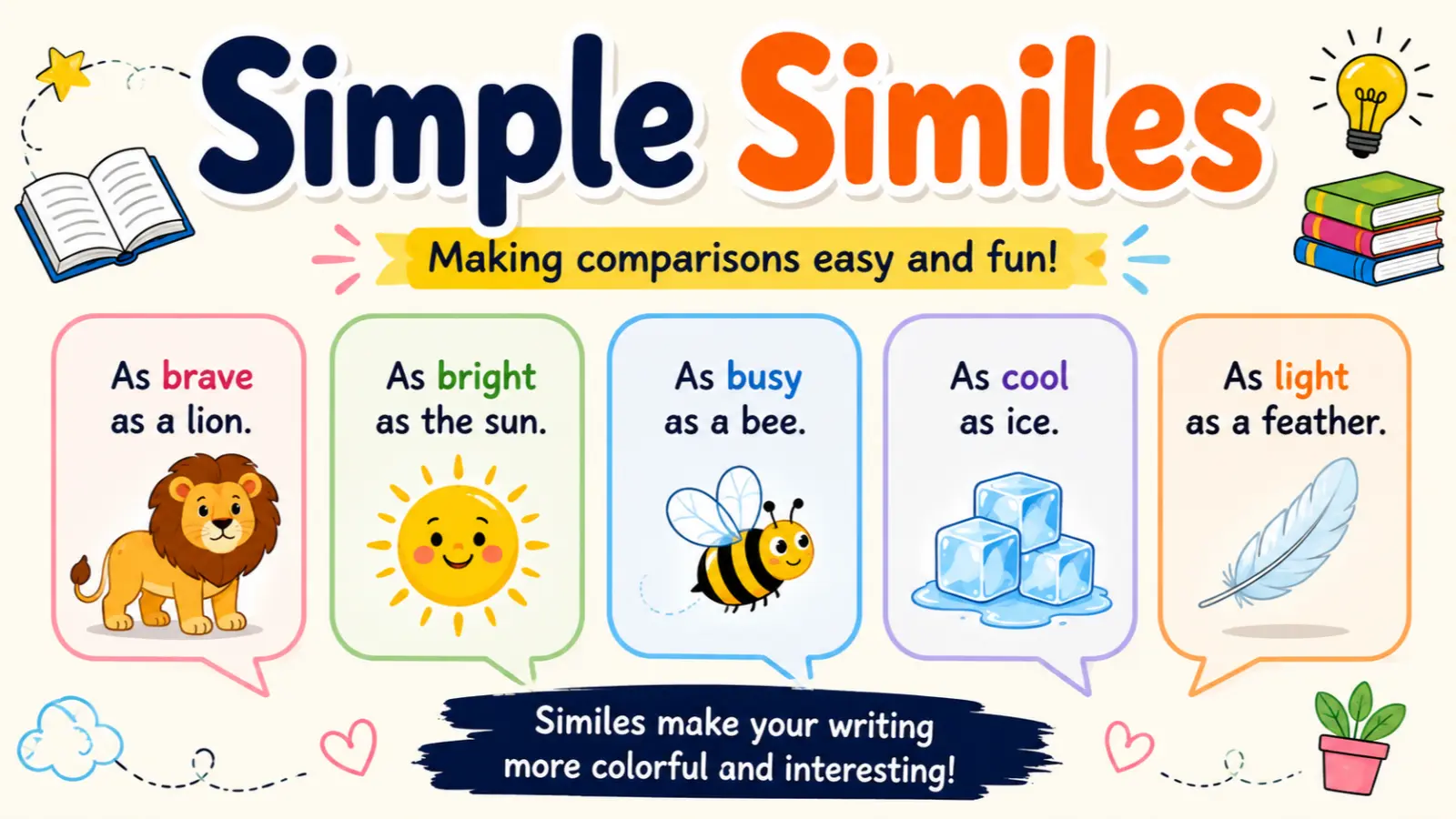
Simple similes are one of the easiest ways to make writing clearer, more colorful, and more memorable. Whether you’re writing a school assignment, a poem, a story, or even a social media post, a well-crafted simile helps readers picture exactly what you mean. A simile compares two different things using “like” or “as.” Instead of simply saying something is fast, bright, or quiet, a simile paints a picture that readers can instantly imagine. In this guide, you’ll discover original simple similes, learn why they work, avoid common mistakes, and practice creating your own creative comparisons.
Quick Answer: What Are Simple Similes?
Simple similes are easy-to-understand comparisons that use the words like or as to describe a person, place, object, or feeling. They help readers visualize ideas quickly without making sentences complicated.
Example:
The balloon floated like a feather riding the breeze.
Why Simple Similes Make Writing Better
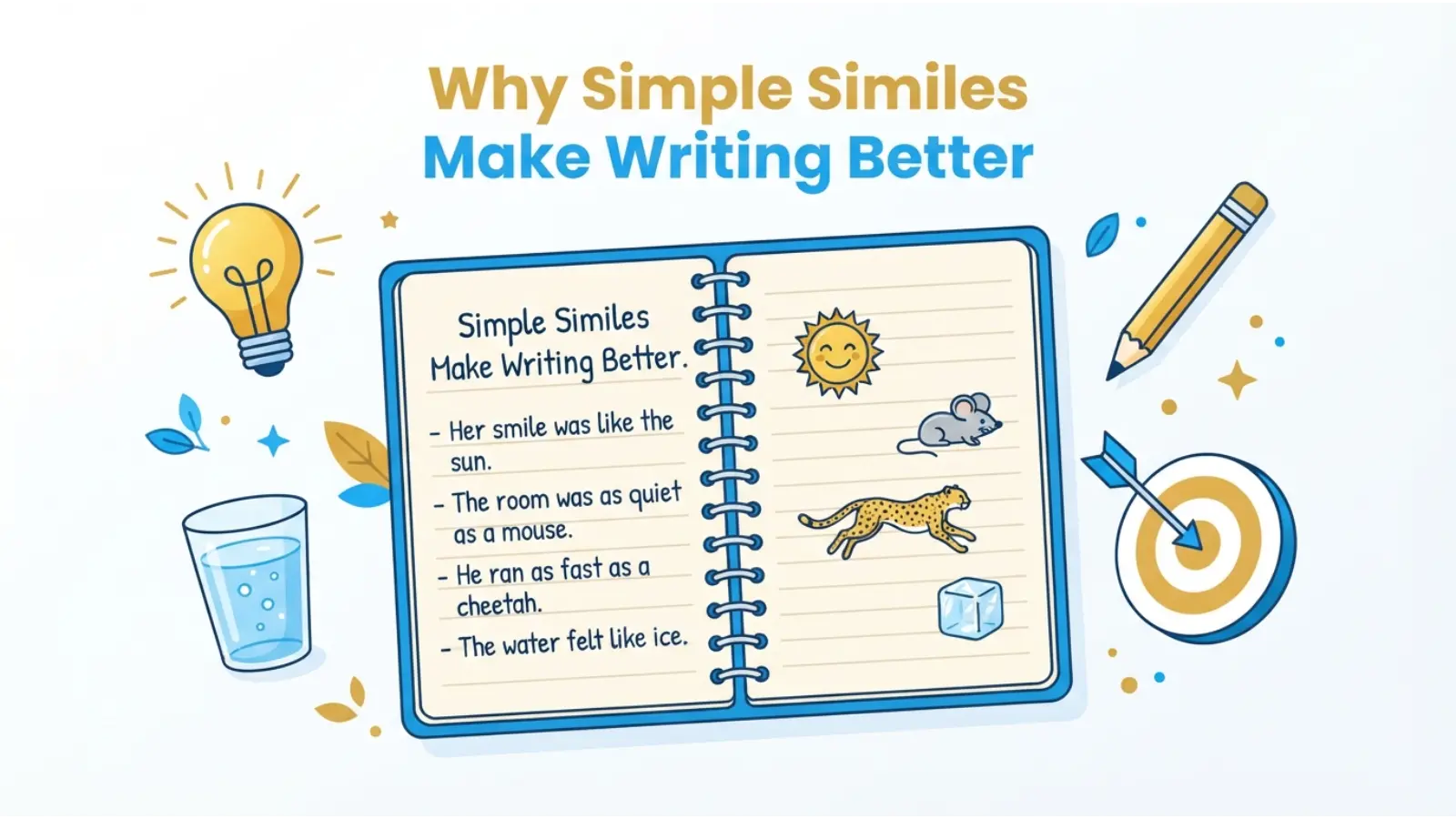
A strong simile does more than decorate a sentence.
It helps readers:
- Picture scenes clearly
- Understand emotions quickly
- Remember descriptions longer
- Connect with stories naturally
- Enjoy smoother, more engaging writing
Simple similes work because they use familiar images while adding a fresh perspective.
What Makes a Good Simple Simile?
The best simple similes have three qualities.
Easy to Understand
Readers shouldn’t stop to figure out the comparison.
Fresh but Natural
Avoid comparisons that everyone has heard hundreds of times.
Fits the Situation
Choose comparisons that match the mood and setting of your writing.
25 Original Simple Similes with Meanings and Examples
1. As cheerful as morning sunlight
Meaning: Bright and full of happiness.
Formal Example: Her smile was as cheerful as morning sunlight.
Conversation: You’re as cheerful as morning sunlight today!
Storytelling: She greeted every visitor as cheerful as morning sunlight.
Writing Tip: Great for describing positive characters.
2. Like a kite catching a gentle breeze
Meaning: Moving smoothly and effortlessly.
Poetry Example: His dreams rose like a kite catching a gentle breeze.
Conversation: Everything feels like a kite catching a gentle breeze today.
Best Context: Success and freedom.
3. As calm as a quiet lake at dawn
Meaning: Peaceful and relaxed.
Storytelling: Even during the storm, she remained as calm as a quiet lake at dawn.
Writing Tip: Ideal for emotional balance.
4. Like fresh paint on a blank wall
Meaning: New and full of possibilities.
Formal Example: The new semester felt like fresh paint on a blank wall.
Best Context: New beginnings.
5. As gentle as falling flower petals
Meaning: Soft and kind.
Conversation: Your voice is as gentle as falling flower petals.
Poetry: Her words drifted as gentle as falling flower petals.
6. Like a lantern in soft rain
Meaning: Providing hope in difficult times.
Storytelling: His encouragement shined like a lantern in soft rain.
Writing Tip: Works well in emotional scenes.
7. As steady as an old oak tree
Meaning: Reliable and dependable.
Formal Example: The coach remained as steady as an old oak tree.
8. Like a feather dancing in the wind
Meaning: Light and graceful.
Conversation: She moved like a feather dancing in the wind.
9. As curious as a child finding hidden treasure
Meaning: Eager to discover new things.
Best Context: Learning and exploration.
10. Like stars waking in the evening sky
Meaning: Slowly becoming noticeable.
Storytelling: Ideas appeared like stars waking in the evening sky.
11. As bright as fresh snow under sunshine
Meaning: Very bright or clear.
Writing Tip: Excellent for visual descriptions.
12. Like gentle waves kissing the shore
Meaning: Smooth and comforting.
Poetry Example: Her laughter flowed like gentle waves kissing the shore.
13. As patient as a gardener waiting for spring
Meaning: Calm while waiting.
Conversation: He’s as patient as a gardener waiting for spring.
14. Like warm soup on a cold evening
Meaning: Comforting and pleasant.
Storytelling: Her kindness felt like warm soup on a cold evening.
15. As colorful as autumn leaves after rain
Meaning: Full of beauty and variety.
Formal Example: The festival looked as colorful as autumn leaves after rain.
16. Like a bird discovering open skies
Meaning: Feeling free.
Writing Tip: Perfect for themes of freedom.
17. As clear as fresh mountain air
Meaning: Easy to understand.
Conversation: Your explanation is as clear as fresh mountain air.
18. Like tiny sparks in the darkness
Meaning: Bringing hope or excitement.
Storytelling: New ideas appeared like tiny sparks in the darkness.
19. As welcoming as an open doorway
Meaning: Friendly and inviting.
Best Context: Describing people or places.
20. Like a melody remembered forever
Meaning: Memorable and touching.
Poetry Example: Her words stayed like a melody remembered forever.
21. As light as drifting clouds
Meaning: Easy and effortless.
Formal Example: The fabric felt as light as drifting clouds.
22. Like sunshine after heavy rain
Meaning: Relief after difficulty.
Conversation: Seeing you was like sunshine after heavy rain.
23. As lively as birds greeting sunrise
Meaning: Energetic and active.
Storytelling: The playground became as lively as birds greeting sunrise.
24. Like footprints leading home
Meaning: Familiar and reassuring.
Writing Tip: Great for nostalgic writing.
25. As peaceful as moonlight on still water
Meaning: Deeply calm.
Poetry Example: The evening rested as peaceful as moonlight on still water.
Why These Similes Work
Effective similes create a clear mental picture without confusing readers.
Notice how each comparison:
- Uses familiar images.
- Matches the emotion being described.
- Feels believable.
- Supports the sentence instead of distracting from it.
A simple comparison often leaves a stronger impression than a complicated one.
How Professional Writers Create Strong Similes
Experienced writers rarely choose the first comparison that comes to mind.
Instead, they ask:
- What should the reader feel?
- What image creates that emotion?
- Is the comparison fresh?
- Does it match the setting?
Good similes grow naturally from the story rather than being added just for decoration.
Create Your Own Simple Similes
Making original similes becomes easier with practice.
Step 1: Choose Your Subject
Pick what you want to describe.
Example:
- Smile
- Rain
- Friend
- Forest
- Wind
Step 2: Think About Its Main Quality
Ask yourself:
- Bright?
- Quiet?
- Fast?
- Warm?
- Gentle?
Step 3: Find a Fresh Comparison
Look at nature, everyday life, seasons, music, food, or travel for inspiration.
Step 4: Connect with “Like” or “As”
Example:
Instead of:
The room was quiet.
Write:
The room was as quiet as snow settling over empty fields.
Common Mistakes to Avoid
Using Overused Comparisons
Readers have seen some comparisons so often that they no longer create strong images.
Try creating your own instead.
Mixing Different Images
Stay with one clear comparison.
Confusing imagery weakens your writing.
Making Similes Too Complicated
Simple language usually creates stronger pictures.
Avoid comparisons that require lengthy explanations.
Confusing Similes with Metaphors
A simile uses like or as.
A metaphor says one thing is another.
Example:
Simile:
Her smile was like sunrise.
Metaphor:
Her smile was sunrise.
Choosing Comparisons That Don’t Fit
Make sure the comparison matches the mood.
A funny simile may not belong in a serious scene.
Related Literary Devices
Metaphor
Metaphors make direct comparisons without using like or as.
Imagery
Imagery appeals to the senses and helps readers picture scenes more vividly.
Personification
Personification gives human qualities to non-human things.
Hyperbole
Hyperbole uses deliberate exaggeration for emphasis.
Alliteration
Alliteration repeats beginning sounds to make writing more musical.
Symbolism
Symbols represent deeper meanings beyond their literal sense.
Practice Exercises
Exercise 1
Write a simple simile describing:
- Rain
- Happiness
- A library
Exercise 2
Rewrite this sentence using a simile:
“The garden looked beautiful.”
Exercise 3
Describe someone’s laugh using a comparison from nature.
Exercise 4
Write one peaceful, one exciting, and one mysterious simile.
Frequently Asked Questions
What is a simple simile?
A simple simile is an easy comparison using like or as to describe something more clearly.
Why are similes useful?
They help readers imagine scenes, emotions, and actions more vividly.
Can children use simple similes?
Yes. They are excellent for helping children improve creative writing and descriptive language.
What’s the difference between a simile and a metaphor?
A simile uses like or as, while a metaphor makes a direct comparison without those words.
How can I make my similes more original?
Observe everyday life, nature, weather, music, food, and personal experiences instead of relying on familiar expressions.
Should every paragraph include a simile?
No. Similes are most effective when used thoughtfully. Too many can make writing feel crowded.
Conclusion
Simple similes prove that powerful writing doesn’t need complicated language. A fresh comparison can turn an ordinary sentence into one readers remember long after they’ve finished reading. The best way to improve is to observe the world around you, notice interesting details, and practice turning those observations into original comparisons. Over time, creating vivid similes will become a natural part of your writing style, helping your stories, essays, poems, and conversations feel more engaging and memorable.
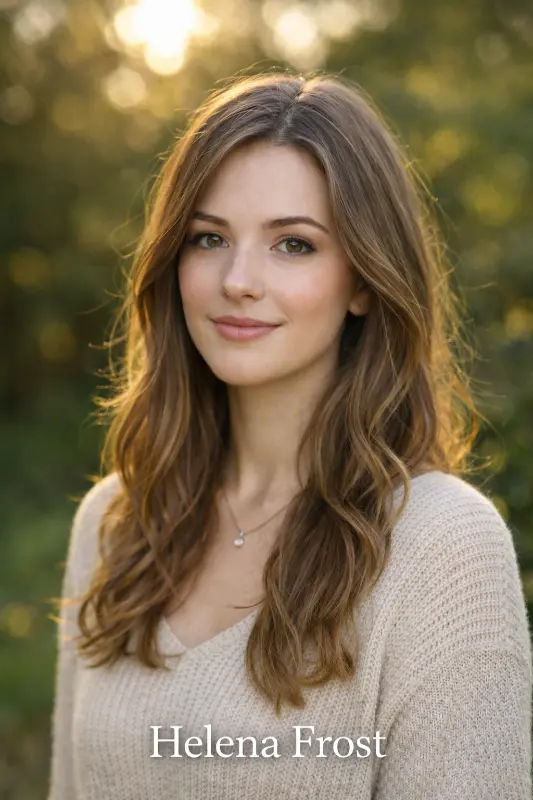
I am Helena Frost, a writer captivated by the beauty of language and the art of comparison. Through my words, I explore the world by turning ordinary moments into vivid similes and reflections. I enjoy crafting phrases that spark imagination, evoke emotion, and linger in the mind. My writing celebrates the subtle connections between people, nature, and the stories we live. For me, every sentence is an opportunity to reveal the extraordinary in the everyday.