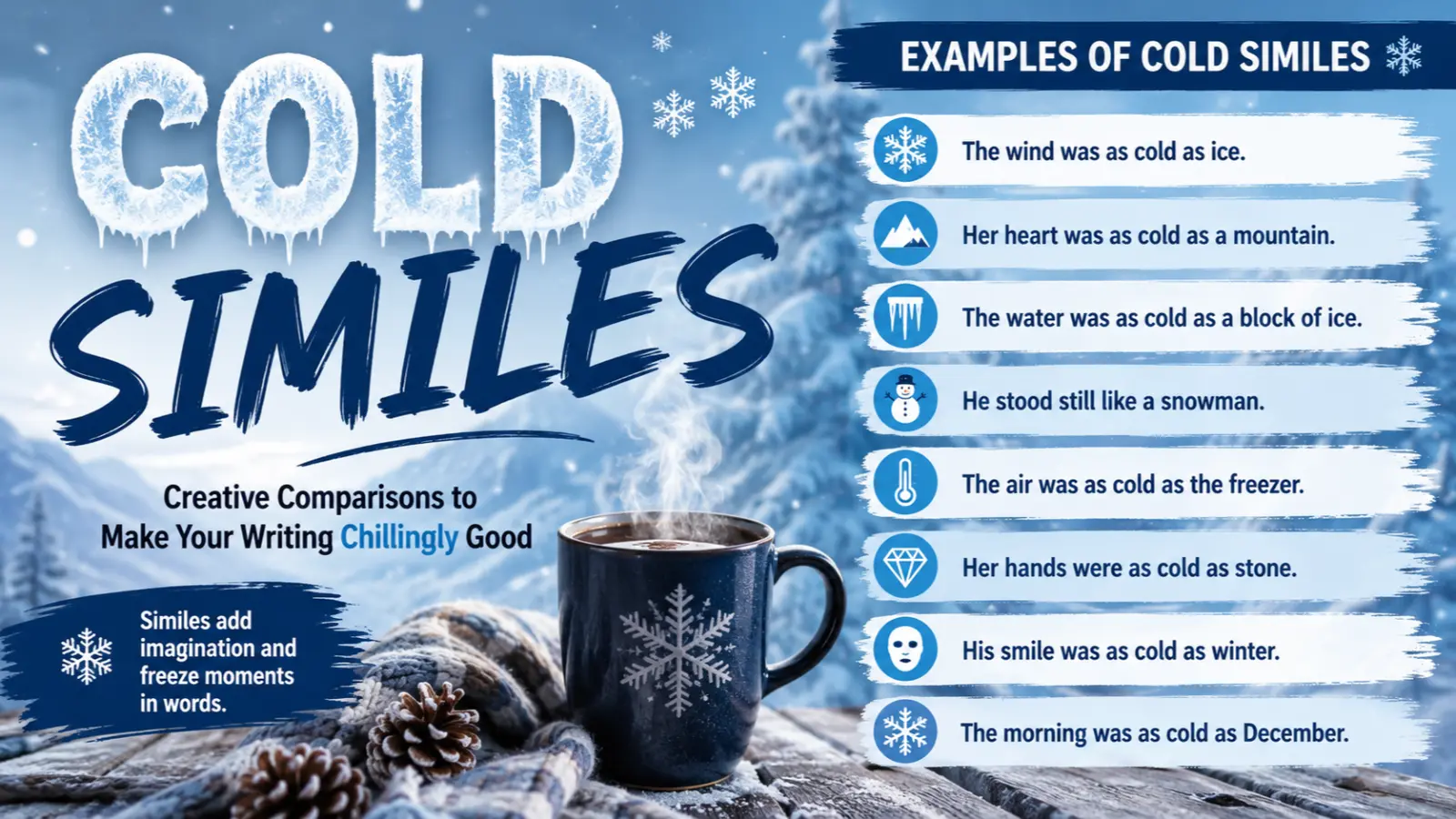
Cold can describe far more than temperature. It can reveal loneliness, fear, silence, distance, or even calmness. Similes help transform those feelings into images readers can instantly picture. Whether you’re writing fiction, poetry, essays, speeches, or everyday conversations, learning to use cold similes can make your descriptions more expressive and memorable. This guide explores original cold similes, explains why they work, and shows you how to create your own without relying on overused comparisons.
What Are Cold Similes?
A cold simile compares something to another object or experience associated with coldness by using words such as like or as.
Instead of simply saying someone felt cold, a simile paints a picture that readers can imagine.
Example:
The hallway was as quiet as a frozen lake before sunrise.
This comparison creates atmosphere rather than simply stating a fact.
Why Writers Use Cold Similes
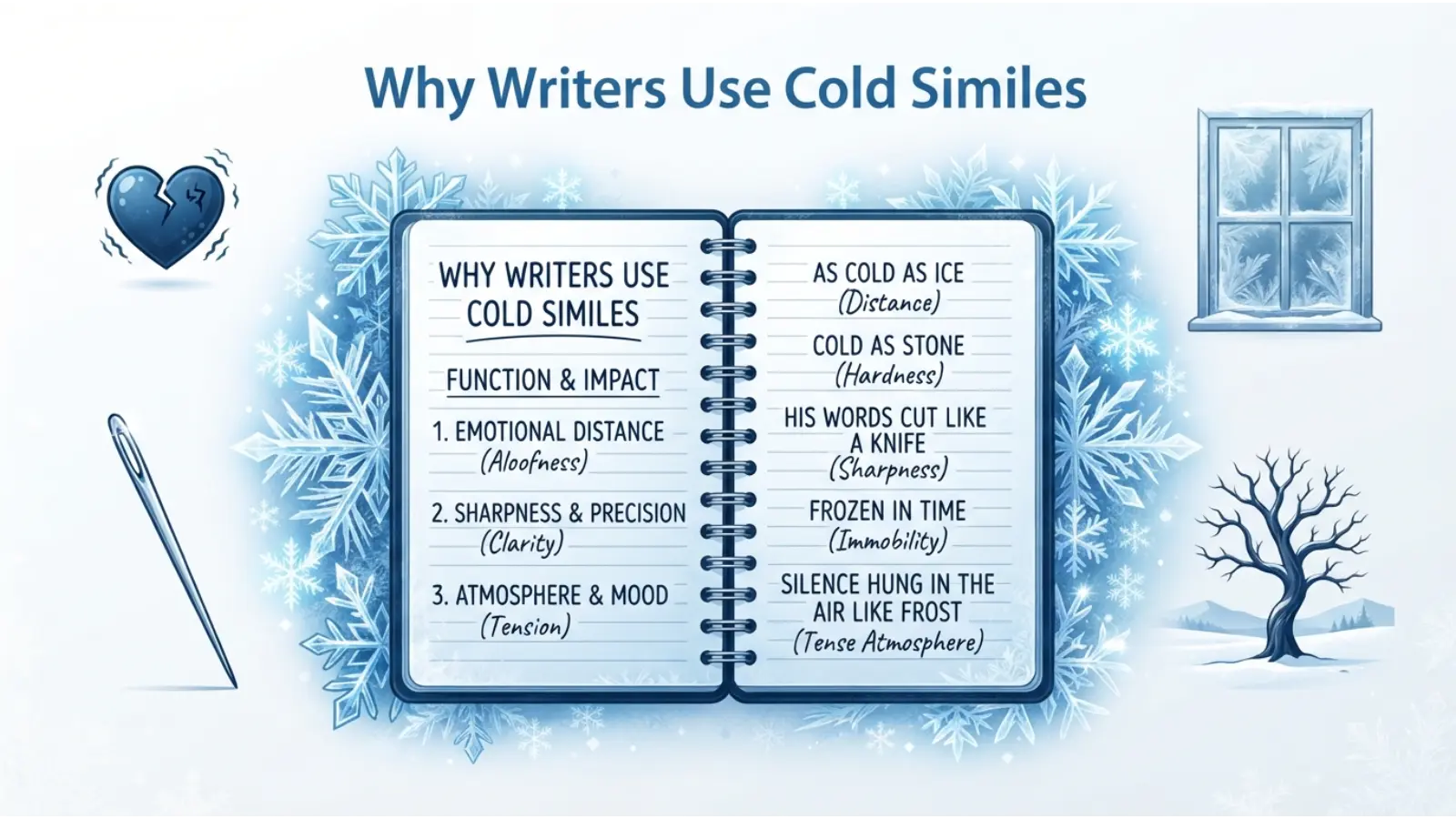
Cold imagery helps readers experience emotions instead of merely reading about them.
Writers often use cold similes to describe:
- Winter scenes
- Fear
- Loneliness
- Emotional distance
- Suspense
- Silence
- Calm mornings
- Empty places
- Nervous moments
- Magical settings
A thoughtful simile can change an ordinary sentence into one readers remember.
30 Original Cold Similes with Meanings and Examples
1. As cold as forgotten moonlight
Meaning: Beautiful but emotionally distant.
Formal Example
The castle walls stood as cold as forgotten moonlight.
Conversation
His welcome felt as cold as forgotten moonlight.
Storytelling
The abandoned tower waited as cold as forgotten moonlight beneath the stars.
Writing Tip
Use for mysterious settings instead of ordinary winter descriptions.
2. Like a window left open through winter
Meaning: A lingering, uncomfortable cold.
Poetry
Your silence drifted through me like a window left open through winter.
Best Context
Emotional conversations and reflective writing.
3. As cold as untouched marble before dawn
Meaning: Smooth, elegant, and lifeless.
Formal Example
The sculpture felt as cold as untouched marble before dawn.
Writing Purpose
Creates sophistication while emphasizing stillness.
4. Like frost settling over forgotten footsteps
Meaning: Quietly erasing memories.
Storytelling
Time covered the old friendship like frost settling over forgotten footsteps.
Writing Tip
Excellent for themes of loss.
5. As cold as an empty lighthouse
Meaning: Lonely and isolated.
Conversation
After everyone left, the house felt as cold as an empty lighthouse.
6. Like ice hiding beneath clear water
Meaning: Hidden danger.
Storytelling
His calm voice was like ice hiding beneath clear water.
Emotional Effect
Builds suspense.
7. As cold as a silent mountain shadow
Meaning: Calm but intimidating.
Best Context
Nature writing.
8. Like snow covering old secrets
Meaning: Concealing the past.
Poetry
Winter arrived like snow covering old secrets.
9. As cold as forgotten stone stairs
Meaning: Ancient and unwelcoming.
Formal Example
The hallway remained as cold as forgotten stone stairs.
10. Like frozen wind trapped in glass
Meaning: Beautiful but restrained.
Writing Purpose
Useful in fantasy writing.
11. As cold as dawn before the birds sing
Meaning: Quiet anticipation.
Conversation
The morning was as cold as dawn before the birds sing.
12. Like a lonely iceberg drifting at sea
Meaning: Emotional isolation.
Storytelling
He carried his grief like a lonely iceberg drifting at sea.
13. As cold as silver beneath snowfall
Meaning: Bright but chilling.
Poetry
The river shimmered as cold as silver beneath snowfall.
14. Like winter hiding inside old wood
Meaning: Deep, lingering cold.
Writing Tip
Works well in cabin or forest scenes.
15. As cold as clouds before a snowstorm
Meaning: Tense expectation.
Formal Example
The meeting became as cold as clouds before a snowstorm.
16. Like frozen echoes in an empty cave
Meaning: Lonely silence.
Storytelling
The laughter disappeared like frozen echoes in an empty cave.
17. As cold as untouched river stones
Meaning: Natural, quiet coolness.
Best Context
Landscape descriptions.
18. Like a winter breeze slipping under the door
Meaning: Gradual discomfort.
Conversation
The bad news arrived like a winter breeze slipping under the door.
19. As cold as stars above a sleeping forest
Meaning: Beautiful distance.
Poetry
Hope looked as cold as stars above a sleeping forest.
20. Like frozen leaves beneath fresh snow
Meaning: Hidden sadness.
Writing Purpose
Excellent for emotional storytelling.
21. As cold as the first breath of January
Meaning: Sharp freshness.
Formal Example
The morning air was as cold as the first breath of January.
22. Like mist wrapping an abandoned bridge
Meaning: Eerie atmosphere.
Storytelling
Silence settled like mist wrapping an abandoned bridge.
23. As cold as forgotten rain in winter
Meaning: Lingering melancholy.
Conversation
Her goodbye felt as cold as forgotten rain in winter.
24. Like a frozen feather floating through silence
Meaning: Gentle but chilling.
Poetry
The memory drifted like a frozen feather floating through silence.
25. As cold as pale dawn over empty fields
Meaning: Vast loneliness.
Writing Tip
Ideal for opening scenes.
26. Like crystal air after heavy snowfall
Meaning: Refreshingly cold.
Formal Example
The mountain breeze felt like crystal air after heavy snowfall.
27. As cold as winter hiding behind sunshine
Meaning: Unexpected emotional distance.
Conversation
His smile was as cold as winter hiding behind sunshine.
28. Like frost drawing pictures across glass
Meaning: Quiet beauty.
Poetry
Morning arrived like frost drawing pictures across glass.
29. As cold as silence between old friends
Meaning: Emotional separation.
Storytelling
The room became as cold as silence between old friends.
30. Like the last snowflake before spring
Meaning: A fading moment of coldness.
Writing Purpose
Perfect for endings and emotional transitions.
How to Make Cold Similes More Vivid
Strong similes come from observation rather than habit.
Instead of comparing everything to ice or snow, think about experiences that naturally feel cold. A forgotten train station, a quiet mountain lake, or an empty church on a winter morning may create stronger imagery than common comparisons.
Choose comparisons that also reflect the emotion of the scene. Physical cold and emotional cold are not always the same.
Why These Similes Work
Effective cold similes combine two ideas.
The first is the physical sensation of cold.
The second is an emotional layer such as fear, loneliness, peace, mystery, or anticipation.
Readers connect with both at once, making the description more memorable.
Cold Similes and Other Literary Devices
Metaphor
A metaphor says something is another thing.
Metaphor: The room was a freezer.
Simile: The room was like a forgotten freezer.
Imagery
Cold similes strengthen imagery by appealing to sight, touch, and emotion simultaneously.
Personification
Cold often appears alongside personification.
Example:
Winter reached through the trees like curious hands.
Hyperbole
Hyperbole exaggerates for effect.
Example:
The wind felt cold enough to freeze every thought.
Symbolism
Cold frequently symbolizes emotional distance, loneliness, fear, or endings.
Understanding symbolism helps writers choose similes that support a story’s deeper meaning.
Create Your Own Cold Similes
Creating original similes becomes easier with practice.
Step 1: Identify the Feeling
Ask yourself what kind of cold you’re describing.
- Peaceful
- Lonely
- Dangerous
- Refreshing
- Empty
- Sharp
Step 2: Think Beyond Ice
Brainstorm places, objects, memories, or weather that naturally suggest that feeling.
Step 3: Compare Carefully
Build the comparison with like or as.
Step 4: Read It Aloud
If it sounds forced or confusing, simplify it.
Creative Practice Exercises
Exercise 1
Describe a snowy forest using one original cold simile.
Exercise 2
Write three different similes for emotional coldness without mentioning snow or ice.
Exercise 3
Rewrite this sentence:
The room was cold.
Add one vivid simile that creates suspense.
Exercise 4
Choose one object—a mirror, river, mountain, or window—and compare its coldness to a human emotion.
Common Mistakes When Writing Cold Similes
Using Overused Comparisons
Readers have seen phrases like “as cold as ice” countless times. Fresh imagery leaves a stronger impression.
Mixing Unrelated Images
Avoid combining ideas that clash.
Example:
As cold as sunshine burning snow.
The images conflict and confuse the reader.
Forcing the Comparison
Every simile should fit the mood naturally. If it distracts from the scene, remove it.
Confusing Similes with Metaphors
A simile uses like or as.
A metaphor makes a direct comparison without those words.
Adding Too Many Similes
One strong comparison usually has more impact than several weak ones.
Frequently Asked Questions
What is a cold simile?
A cold simile compares something to a cold object, place, season, or experience using like or as to create vivid imagery.
Can cold similes describe emotions?
Yes. They often represent loneliness, fear, emotional distance, grief, or quiet reflection.
Are cold similes useful in poetry?
Absolutely. They help poets create mood, symbolism, and sensory detail without lengthy explanations.
How can I avoid cliché cold similes?
Observe real places and experiences, then create comparisons that readers have not encountered repeatedly.
What’s the difference between a cold simile and a cold metaphor?
A simile uses like or as, while a metaphor makes a direct comparison.
Can children use cold similes?
Yes. Simple, imaginative comparisons help young writers develop descriptive language and creative thinking.
Should every cold description include a simile?
No. Similes are most effective when used selectively to emphasize important moments.
Conclusion
Cold similes do more than describe temperature—they shape mood, reveal emotion, and help readers experience a scene through vivid imagery. The most memorable comparisons come from careful observation and originality rather than familiar phrases.Experiment with everyday winter scenes, quiet places, and personal experiences to build your own unique comparisons. As your collection grows, you’ll discover that the strongest similes aren’t just cold—they leave a lasting impression.

I am Helena Frost, a writer captivated by the beauty of language and the art of comparison. Through my words, I explore the world by turning ordinary moments into vivid similes and reflections. I enjoy crafting phrases that spark imagination, evoke emotion, and linger in the mind. My writing celebrates the subtle connections between people, nature, and the stories we live. For me, every sentence is an opportunity to reveal the extraordinary in the everyday.