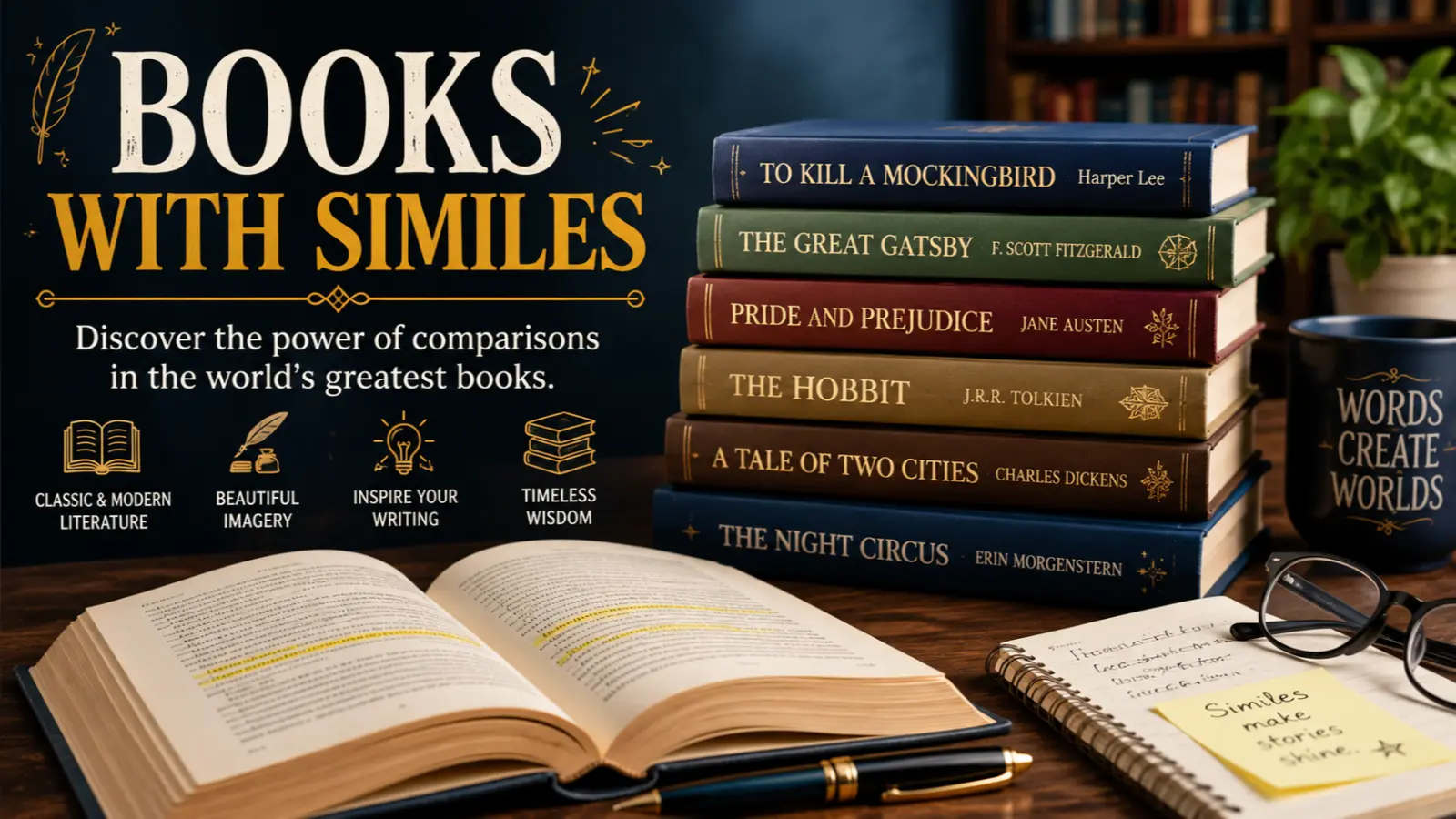
Books come alive through descriptive language, and one of the most effective tools authors use is the simile. A simile compares two different things using “like” or “as”, helping readers picture scenes, emotions, and characters more clearly. From children’s picture books to classic novels and modern fiction, books with similes make ordinary moments feel memorable. This guide explains how similes work in literature, why writers rely on them, and how you can create your own fresh comparisons.
Quick Answer
Books with similes use comparisons with “like” or “as” to create vivid imagery, deepen emotions, and make descriptions easier for readers to imagine. Skilled authors use similes to strengthen storytelling without interrupting the flow of the narrative.
Why Books Use Similes
Reading is an imaginative experience. Unlike movies, books cannot show pictures, so writers paint images with words.
A carefully chosen simile helps readers:
- Visualize settings
- Understand emotions
- Remember important scenes
- Connect with characters
- Enjoy more expressive language
Instead of saying someone was frightened, a writer might compare the feeling to something readers already know.
That comparison creates an instant mental picture.
What Makes a Great Literary Simile?
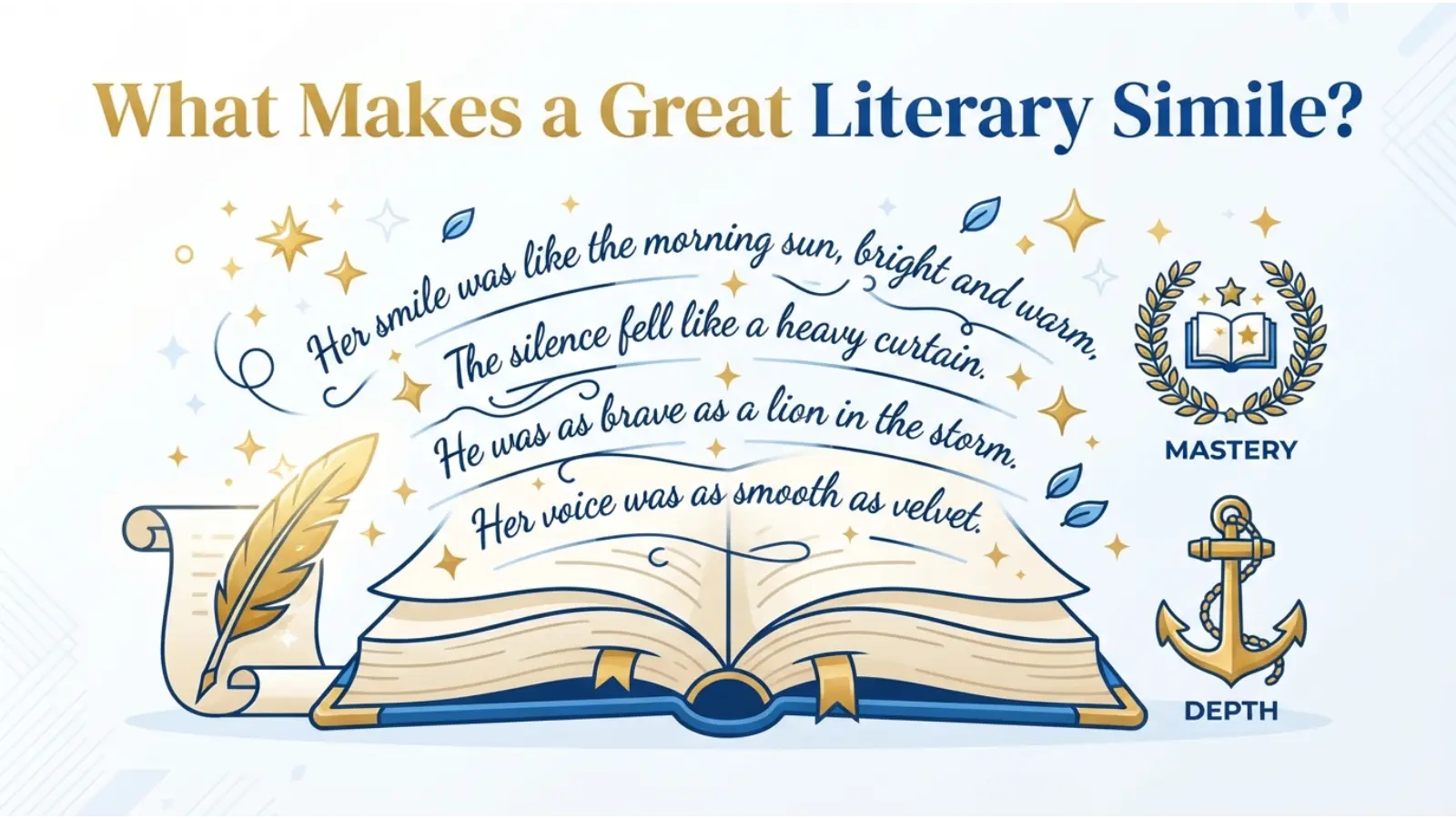
The strongest similes feel natural rather than forced.
Good literary similes usually:
- Compare unexpected but believable ideas
- Match the tone of the story
- Reveal something about a character
- Strengthen imagery
- Add emotion without distracting readers
Professional authors often spend time choosing comparisons that fit the exact mood of a scene.
25 Original Similes Inspired by Books
1. The pages fluttered like birds searching for home.
Meaning: The pages move lightly and gracefully.
Best Context: Opening an old novel.
Story Example:
The pages fluttered like birds searching for home when the window opened.
Writing Tip: Use movement to make objects feel alive.
2. Her curiosity grew like ivy climbing forgotten walls.
Meaning: Curiosity spreads steadily.
Emotion: Wonder.
Conversation Example:
“My curiosity grew like ivy after reading that chapter.”
3. His thoughts scattered like leaves before an autumn wind.
Meaning: Difficulty concentrating.
Best Context: Internal conflict.
4. The library stood as quiet as fresh snowfall.
Meaning: Complete silence.
Poetry Example:
The library waited, as quiet as fresh snowfall beneath winter skies.
5. The story unfolded like a sunrise over distant hills.
Meaning: Gradual discovery.
Writing Tip: Slow comparisons work well for pacing.
6. Every chapter felt like opening another hidden door.
Meaning: Constant discovery.
Formal Example:
Each chapter felt like opening another hidden door into an unfamiliar world.
7. Her imagination bloomed like wildflowers after spring rain.
Meaning: Creativity flourished naturally.
8. The mystery tightened like a knot pulled by invisible hands.
Meaning: Growing suspense.
Best Context: Mystery novels.
9. The hero’s courage burned like a steady lantern.
Meaning: Quiet determination.
Writing Purpose: Character development.
10. His memories drifted like paper boats on a slow river.
Meaning: Gentle reflection.
11. The ending arrived like the final note of a beautiful song.
Meaning: A satisfying conclusion.
12. Words spilled across the page like silver rain.
Meaning: Smooth, effortless writing.
13. Hope glimmered like a candle inside a storm.
Meaning: Small but powerful optimism.
14. The villain smiled like cracked glass catching sunlight.
Meaning: Beauty mixed with danger.
Writing Tip: Combine visual contrast with emotion.
15. The classroom buzzed like a beehive before the lesson began.
Meaning: Energetic conversation.
16. Her voice floated like mist over a quiet lake.
Meaning: Gentle speaking.
17. The adventure raced forward like a river after heavy rain.
Meaning: Fast-paced storytelling.
18. Every paragraph shimmered like stars reflected in water.
Meaning: Beautiful writing.
19. His promise stood like an ancient oak through every season.
Meaning: Reliability.
20. Questions gathered like clouds before a summer storm.
Meaning: Building uncertainty.
21. The castle rose like a dream carved from stone.
Meaning: Majestic appearance.
22. The old journal rested like a sleeping secret.
Meaning: Hidden knowledge.
23. The friendship grew like a garden tended every day.
Meaning: Relationships need care.
24. The plot twisted like winding mountain roads.
Meaning: Unexpected developments.
25. The final sentence echoed like footsteps in an empty hall.
Meaning: A lasting emotional impact.
Best Context: Dramatic endings.
How Authors Create Memorable Similes
Experienced writers rarely choose the first comparison that comes to mind.
Instead, they ask:
- What emotion should readers feel?
- What image matches that emotion?
- Is the comparison fresh?
- Does it fit the character’s perspective?
A fantasy novel may compare courage to dragons, while a coastal story might compare hope to tides.
The setting often shapes the similes.
Make Your Own Book-Worthy Similes
Creating original similes becomes easier with practice.
Step 1: Choose Your Subject
Pick one thing to describe.
Examples:
- A character
- A place
- An emotion
- Weather
- An object
Step 2: Identify Its Strongest Quality
Ask yourself:
- Fast?
- Quiet?
- Bright?
- Lonely?
- Powerful?
Step 3: Find an Unexpected Comparison
Avoid the obvious.
Instead of:
As busy as a bee
Try something more original:
As busy as a clock repairing forgotten hours.
Step 4: Read It Aloud
If it sounds awkward or confusing, simplify it.
The best similes read naturally.
Writing Exercises
Rewrite a Plain Sentence
Start with:
“The room was dark.”
Improve it using a simile.
Possible answer:
“The room was as dark as an unopened attic at midnight.”
Describe an Emotion
Choose one feeling:
- Excitement
- Fear
- Joy
- Regret
Create three different similes for it.
Build a Scene
Write one paragraph describing:
- A library
- A forest
- A school hallway
- A castle
Use no more than two similes so they remain effective.
Related Literary Devices
Metaphor
A metaphor compares without using like or as.
Simile: Her smile was like sunshine.
Metaphor: Her smile was sunshine.
Imagery
Imagery appeals to the senses through descriptive language.
Similes often strengthen imagery by giving readers familiar points of comparison.
Personification
Personification gives human qualities to non-human things.
Example:
“The wind whispered.”
A simile can work alongside personification to create even richer descriptions.
Hyperbole
Hyperbole intentionally exaggerates.
A simile may include exaggeration if it supports the story, but it should still fit the tone.
Symbolism
Some similes connect to larger themes.
Comparing hope to a lantern, for example, can symbolize guidance during difficult times.
Common Mistakes When Writing Similes
Using Overused Comparisons
Readers have seen familiar comparisons countless times.
Try creating fresh images that match your story.
Mixing Different Images
Avoid combining unrelated comparisons.
Example:
“The room was like an ocean and burned like the desert.”
Choose one consistent image.
Forcing Every Description
Not every sentence needs a simile.
Strategic use creates greater impact.
Confusing Similes with Metaphors
Remember:
- Similes use like or as.
- Metaphors compare directly.
Knowing the difference improves clarity.
Choosing Comparisons That Don’t Fit
A humorous simile may weaken a serious scene.
Always match your comparison to the mood.
Frequently Asked Questions
What are books with similes?
They are books that use comparisons with like or as to create stronger descriptions and richer storytelling.
Why do authors use similes?
They help readers imagine scenes, understand emotions, and remember important moments more easily.
Are similes only found in children’s books?
No. Similes appear in children’s literature, classic novels, fantasy, romance, mystery, historical fiction, and many other genres.
How many similes should a novel include?
There is no fixed number. Strong writing uses similes naturally where they improve clarity or emotion.
Can too many similes hurt a story?
Yes. Overusing comparisons can slow the pace and distract readers. Quality matters more than quantity.
What’s the difference between imagery and similes?
Imagery describes sensory experiences, while similes are one technique writers use to create that imagery.
How can beginners write better similes?
Observe everyday life, avoid clichés, match the comparison to the mood, and revise until the wording feels natural.
Conclusion
Books with similes invite readers to see familiar ideas in fresh ways. A well-crafted comparison can transform a simple description into a memorable image that stays with readers long after they finish the page. Whether you’re reading novels, writing short stories, or practicing creative writing, focus on comparisons that reveal emotion, fit the setting, and surprise the reader without feeling forced. The more you read thoughtfully and experiment with your own ideas, the more naturally vivid your writing will become.
I am Helena Frost, a writer captivated by the beauty of language and the art of comparison. Through my words, I explore the world by turning ordinary moments into vivid similes and reflections. I enjoy crafting phrases that spark imagination, evoke emotion, and linger in the mind. My writing celebrates the subtle connections between people, nature, and the stories we live. For me, every sentence is an opportunity to reveal the extraordinary in the everyday.