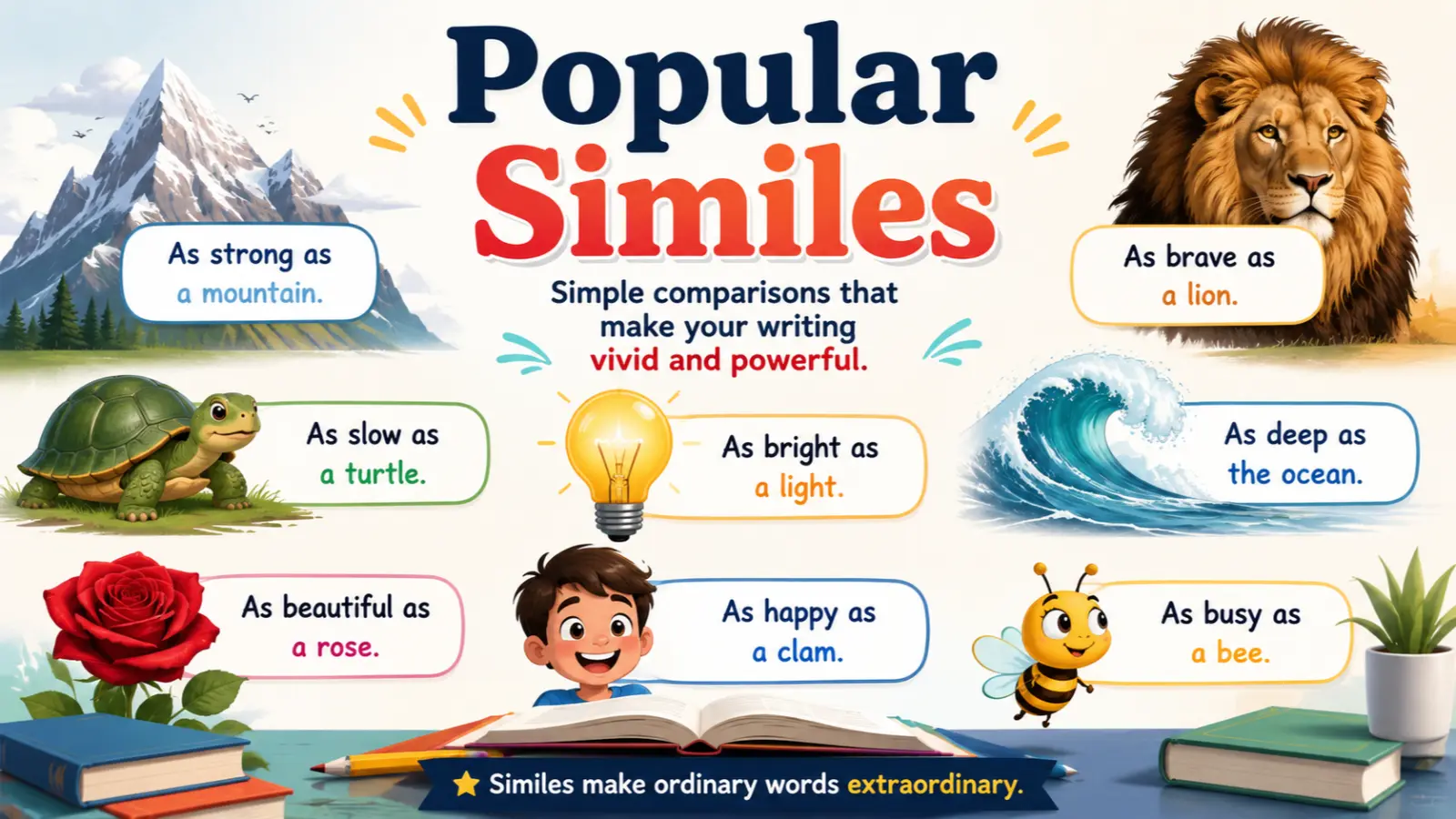
Similes are one of the easiest ways to make writing more colorful. By comparing one thing to another using “like” or “as,” they help readers picture scenes, understand emotions, and remember your words. You’ll find similes in novels, poems, speeches, classrooms, conversations, and even advertising because they make ordinary language more engaging. This guide explores popular similes in a fresh way. Instead of repeating familiar comparisons, you’ll discover original examples, learn why they work, and see how to use them naturally in your own writing.
Quick Answer
Popular similes are comparisons that use “like” or “as” to make ideas easier to imagine. They add emotion, clarity, and vivid imagery to writing. The best similes feel natural, suit the context, and help readers see ordinary things in a new way.
Why Popular Similes Continue to Work
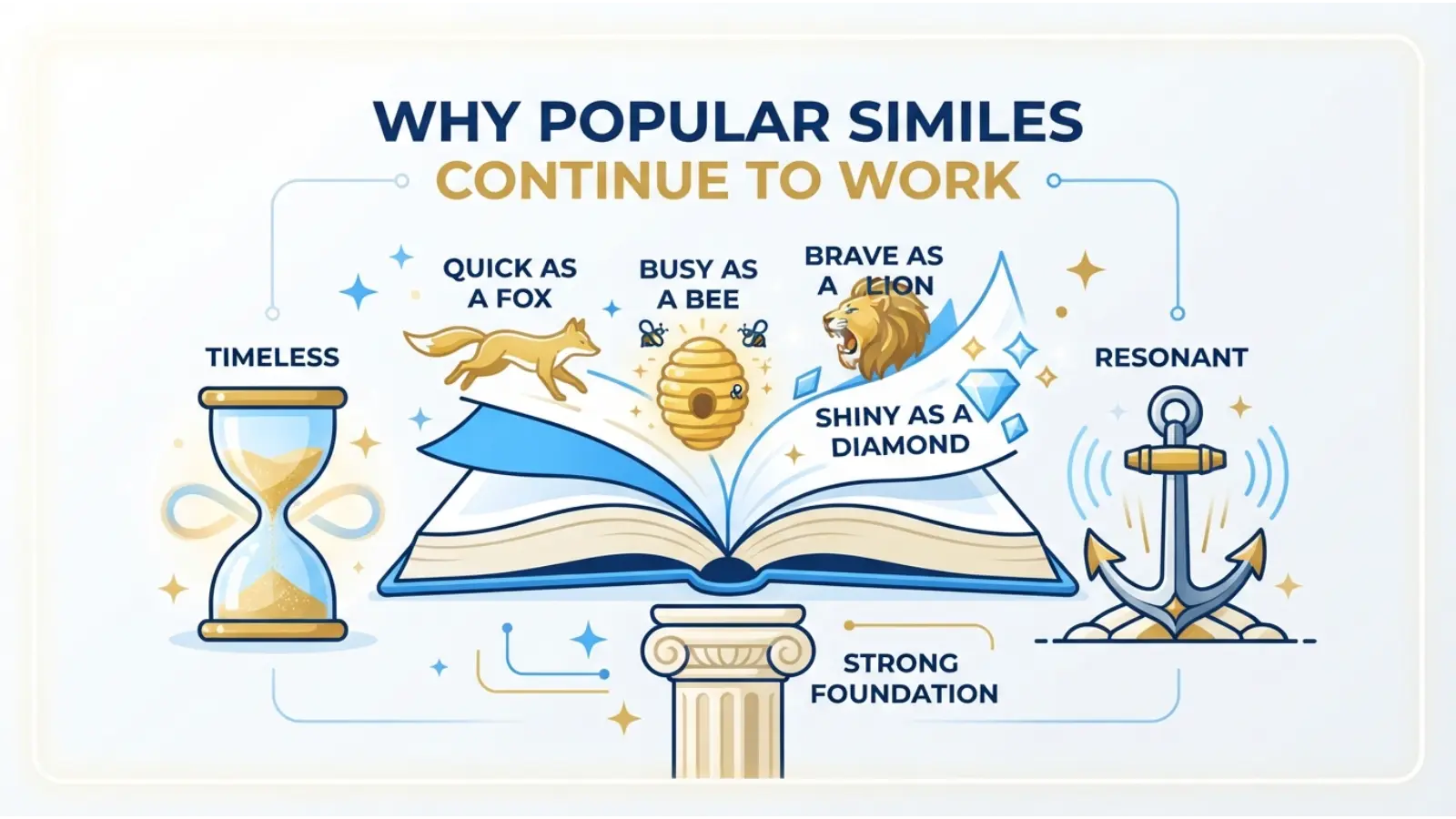
People remember images more easily than plain descriptions.
Compare these sentences:
- The room became quiet.
- The room became as quiet as snow settling on pine branches.
The second creates a picture and a feeling instead of simply stating a fact.
Effective similes can:
- Make descriptions memorable
- Add emotion without exaggeration
- Improve storytelling
- Strengthen poetry
- Make conversations more expressive
30 Original Popular Similes
1. As calm as a lake before sunrise
Meaning: Peaceful and completely relaxed.
Example:
She remained as calm as a lake before sunrise during the interview.
Best for: Emotional scenes and personal writing.
2. Like sunshine breaking through morning clouds
Creates a feeling of sudden hope.
Conversation:
Your message was like sunshine breaking through morning clouds.
3. As steady as an old lighthouse
Suggests reliability.
Story Example:
His advice stayed as steady as an old lighthouse through every challenge.
4. Like fresh paint brightening an empty room
Represents positive change.
Writing Tip: Great for describing new beginnings.
5. As curious as a child finding a hidden door
Shows excitement about discovering something new.
6. Like autumn leaves dancing across a sidewalk
Perfect for describing graceful movement.
7. As patient as roots beneath a tree
Suggests quiet endurance.
Poetry Example:
Her hope waited, as patient as roots beneath a tree.
8. Like stars appearing after a storm
Represents hope returning after difficulty.
9. As bright as laughter around a campfire
Works well for cheerful personalities.
10. Like waves polishing smooth stones
Describes slow but meaningful improvement.
11. As gentle as rain touching wildflowers
Ideal for kindness or soft emotions.
12. Like a compass finding north
Shows certainty or purpose.
13. As bold as the first step onto unknown ground
Perfect for courage.
14. Like fresh bread filling a quiet home
Creates feelings of comfort and warmth.
15. As quick as a sparrow changing direction
Describes fast movement.
16. Like moonlight spilling across still water
Beautiful for romantic or reflective writing.
17. As determined as a river finding the sea
Shows persistence.
18. Like tiny sparks waking a dark fireplace
Represents growing excitement.
19. As dependable as the morning sun
Suitable for describing trustworthy people.
20. Like soft music drifting through an open window
Creates peaceful imagery.
21. As welcoming as an open garden gate
Describes friendly people.
22. Like colorful kites lifting into spring skies
Represents freedom and happiness.
23. As thoughtful as someone choosing every word carefully
Excellent for character descriptions.
24. Like fresh snowfall hiding yesterday’s footprints
Symbolizes new beginnings.
25. As lively as birds greeting the sunrise
Perfect for energetic scenes.
26. Like a bridge connecting distant shores
Represents friendship or understanding.
27. As graceful as willow branches in the breeze
Works beautifully in descriptive writing.
28. Like lanterns glowing on a quiet evening path
Creates warmth and safety.
29. As hopeful as the first flower after winter
Excellent for inspirational writing.
30. Like clear water reflecting the open sky
Suggests honesty and clarity.
What Makes a Simile Memorable?
Strong similes do more than compare two things. They create an emotional connection.
Professional writers often ask themselves:
- Does this comparison create a picture?
- Does it fit the mood?
- Is it original?
- Would a reader immediately understand it?
If the answer is yes, the simile is probably doing its job.
How to Write Better Similes
Start with the feeling
Instead of searching for random comparisons, identify the emotion first.
Example:
Emotion: Confidence
Instead of:
“He was like a lion.”
Try:
“He stood like a mountain welcoming the wind.”
The second creates a fresher image.
Use everyday experiences
Readers connect with familiar sights:
- Rain on windows
- Morning coffee
- Autumn leaves
- Ocean waves
- Campfires
- Quiet libraries
Simple experiences often create the strongest imagery.
Focus on one clear comparison
Avoid combining unrelated images.
Weak:
She smiled like sunshine riding a waterfall inside a rainbow.
Better:
She smiled like the first light entering a dark room.
Popular Similes and Other Literary Devices
Simile vs. Metaphor
A simile uses like or as.
- Her voice was like gentle rain.
A metaphor compares directly.
- Her voice was gentle rain.
Imagery
Similes strengthen imagery because they help readers picture a scene using familiar experiences.
Personification
Personification gives human qualities to non-human things.
Example:
The wind whispered through the trees.
Combined carefully with similes, it creates vivid descriptions.
Hyperbole
Hyperbole intentionally exaggerates.
Example:
He ran faster than the wind.
Unlike hyperbole, similes usually work best when they remain believable.
Create Your Own Popular Similes
Follow this simple process.
Step 1
Choose what you want to describe.
Example:
A happy person.
Step 2
Choose the strongest quality.
Bright.
Energetic.
Warm.
Step 3
Think of something readers already recognize.
Sunrise.
Fireworks.
Fresh flowers.
Flowing rivers.
Step 4
Build the comparison.
“As cheerful as birds greeting the morning.”
Creative Exercise
Complete these yourself.
- As peaceful as ________
- Like ________ after heavy rain
- As fearless as ________
- Like ________ lighting a dark hallway
- As welcoming as ________
Try writing five different answers without using common clichés.
Common Mistakes to Avoid
Using overused comparisons
Readers have seen many classic similes countless times.
Fresh comparisons are usually more memorable.
Mixing unrelated images
Keep one clear picture throughout the sentence.
Making forced comparisons
If readers have to stop and decode the comparison, simplify it.
Confusing similes with metaphors
Remember:
Similes use like or as.
Metaphors do not.
Forgetting the purpose
Every simile should improve understanding, not simply decorate the sentence.
Frequently Asked Questions
What is a popular simile?
A popular simile is a comparison using like or as that helps readers quickly imagine a person, feeling, object, or event.
How do I make my similes more original?
Look beyond common comparisons. Draw inspiration from everyday life, nature, travel, seasons, sounds, and personal experiences.
Can similes improve storytelling?
Yes. They help readers visualize scenes, understand emotions, and connect more deeply with characters.
Should every paragraph contain a simile?
No. Similes are most effective when used selectively. Too many comparisons can distract readers.
What’s the difference between a simile and an idiom?
A simile directly compares two things using like or as. An idiom has a figurative meaning that often cannot be understood literally.
Are similes useful in professional writing?
Yes, when used sparingly. They can make presentations, speeches, blogs, and educational content more engaging.
Can children learn similes easily?
Absolutely. Similes encourage imagination and help young writers describe ideas more clearly.
Conclusion
Popular similes remain powerful because they transform ordinary language into memorable imagery. The strongest comparisons don’t rely on complicated words—they connect familiar experiences with fresh ideas. As you write, pay attention to the world around you. A sunrise, a quiet street, falling leaves, or a gentle breeze may become the inspiration for your next unforgettable simile. The more you observe, the more naturally creative comparisons will appear in your writing.
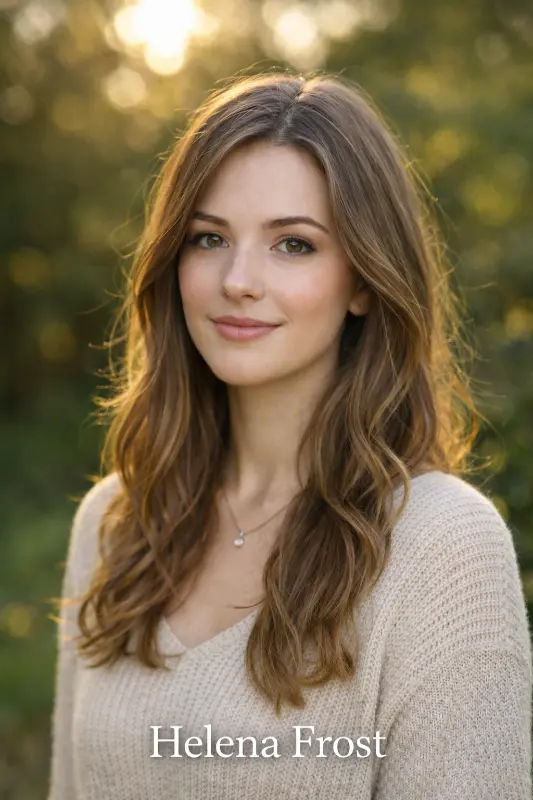
I am Helena Frost, a writer captivated by the beauty of language and the art of comparison. Through my words, I explore the world by turning ordinary moments into vivid similes and reflections. I enjoy crafting phrases that spark imagination, evoke emotion, and linger in the mind. My writing celebrates the subtle connections between people, nature, and the stories we live. For me, every sentence is an opportunity to reveal the extraordinary in the everyday.