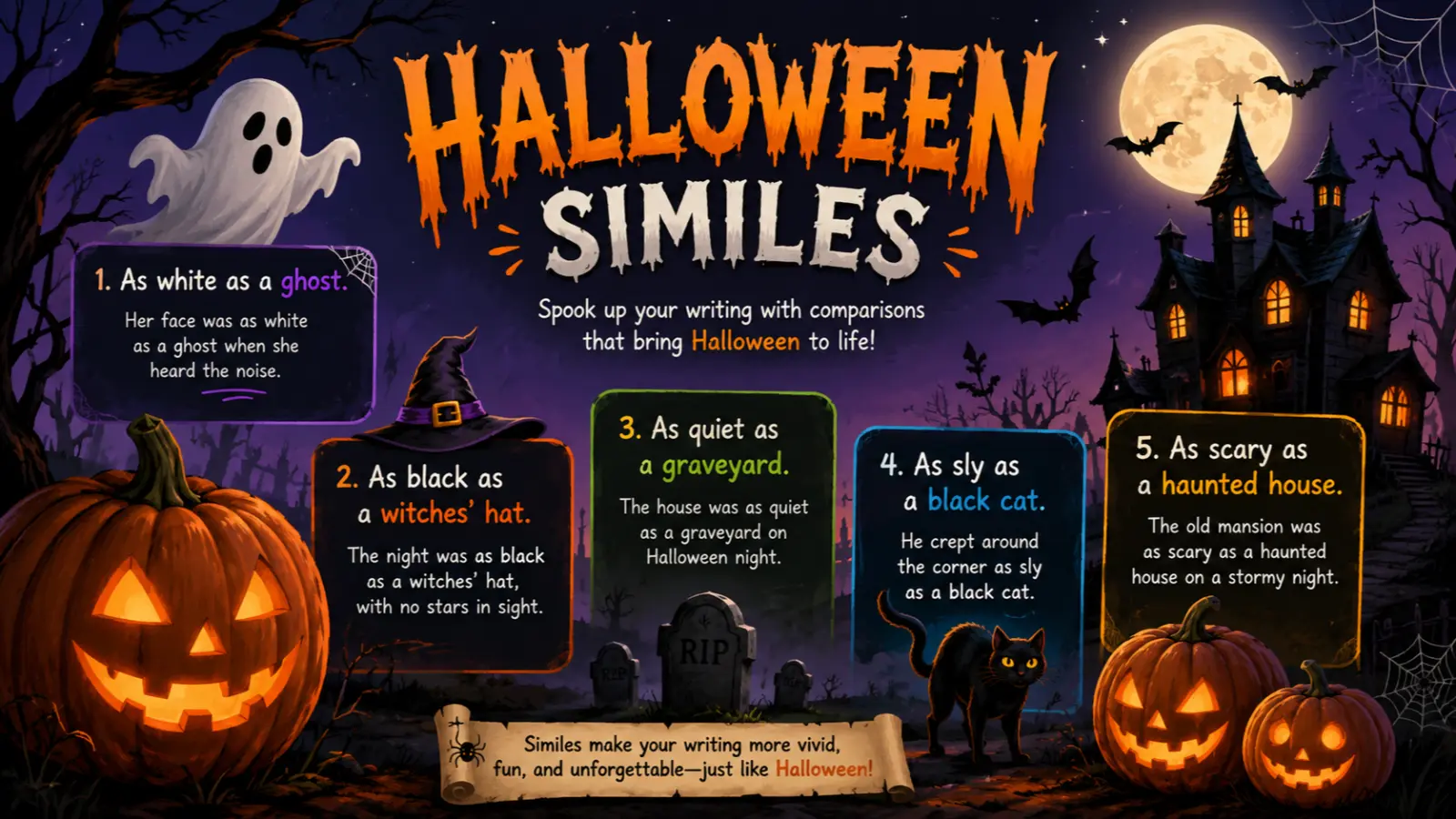
Halloween is full of mystery, imagination, and colorful imagery, making it the perfect season for creative comparisons. Whether you’re writing a spooky story, a classroom assignment, a festive poem, or a Halloween party invitation, similes can transform ordinary descriptions into memorable scenes. A simile compares two different things using words like “as” or “like.” Instead of saying someone was scared, you might write that they were “as jumpy as a candle flame in the wind.” That simple comparison paints a clearer picture in the reader’s mind. This guide explores original Halloween similes, explains why they work, and shows you how to create your own vivid comparisons without relying on overused expressions.
Quick Answer
Halloween similes are comparisons that use “like” or “as” to describe spooky characters, eerie places, creepy sounds, costumes, autumn nights, and Halloween emotions. They make writing more visual, imaginative, and engaging for readers of all ages.
Why Halloween Is Perfect for Similes
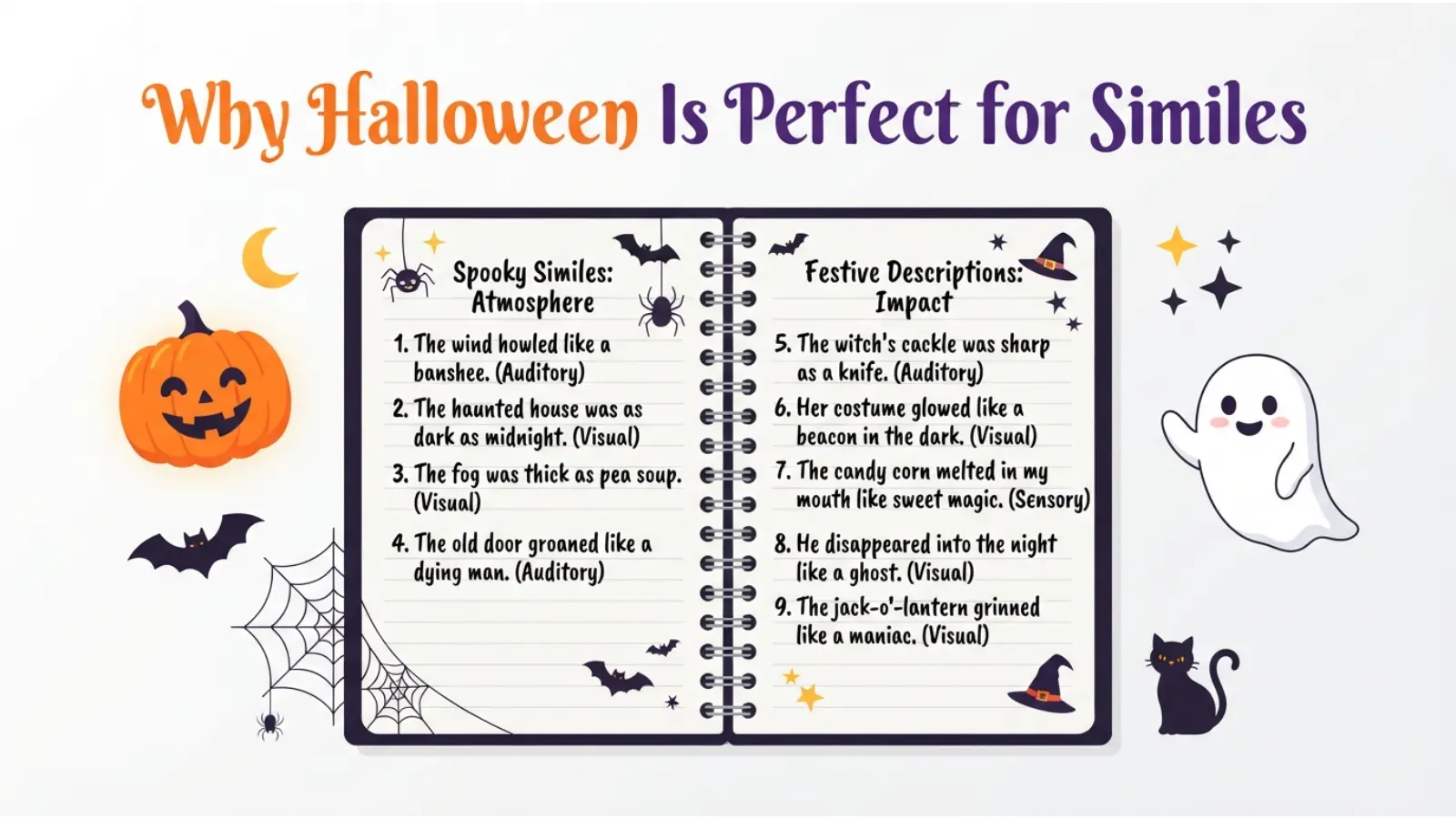
Halloween naturally blends imagination with emotion. It combines darkness and light, excitement and fear, fantasy and reality. That variety gives writers endless opportunities to create fresh comparisons.
You might describe:
- Haunted houses
- Pumpkins
- Ghosts
- Witches
- Skeletons
- Costumes
- Trick-or-treating
- Foggy nights
- Autumn leaves
- Magical creatures
Instead of simply describing them, similes help readers experience them.
Original Halloween Similes to Inspire Your Writing
Similes for Spooky Atmosphere
1. The fog drifted like forgotten whispers.
Meaning: Creates quiet mystery.
Story Example: The fog drifted like forgotten whispers across the old cemetery.
Writing Tip: Works well for haunted settings.
2. The moon hung like a cracked silver lantern.
Creates an eerie but beautiful nighttime image.
Poetry Example: The moon hung like a cracked silver lantern above silent rooftops.
3. The silence spread like a blanket woven from shadows.
Ideal for suspenseful scenes before something unexpected happens.
4. The wind cried like an invisible violin.
Adds emotion rather than simple sound.
5. The night stretched like a giant black curtain.
Useful for opening chapters or scene transitions.
Similes for Ghosts and Haunted Places
6. The ghost floated like smoke escaping a candle.
Soft, graceful, and mysterious.
7. The haunted house waited like an old secret refusing to disappear.
Creates curiosity instead of obvious horror.
8. The hallway echoed like footsteps trapped in time.
Excellent for haunted mansion stories.
9. The windows stared like sleepless eyes.
Adds personality through imagery.
10. The staircase groaned like an exhausted giant.
Perfect for suspense.
Similes for Pumpkins and Halloween Decorations
11. The jack-o’-lantern glowed like a tiny campfire smiling in the dark.
Creates warmth and mystery together.
12. Pumpkins rested like bright islands in an orange sea of leaves.
Works well for autumn descriptions.
13. The candle flickered like a nervous heartbeat.
Adds emotional tension.
14. Spiderwebs shimmered like silver threads catching moonlight.
Ideal for descriptive passages.
15. Decorations danced like playful spirits in the breeze.
Great for festive Halloween scenes.
Similes for Costumes and Trick-or-Treating
16. The children hurried like colorful comets racing through the neighborhood.
Captures excitement and movement.
17. The candy bucket filled like a treasure chest after an adventure.
Perfect for children’s writing.
18. Every costume sparkled like a page from a fairy tale.
Suitable for family-friendly Halloween stories.
19. The superhero cape flew like an autumn leaf caught in the wind.
Creates natural movement.
20. The witch’s hat leaned like a sleepy crow on a branch.
Adds personality and charm.
Similes for Fear and Surprise
21. My heartbeat raced like tiny drums inside a cave.
Shows fear without saying it directly.
22. I froze like a forgotten statue in moonlight.
Works well during suspense.
23. The scream burst out like a firework in a quiet sky.
Creates sudden contrast.
24. My hands shook like dry leaves before a storm.
Expresses nervousness naturally.
25. Everyone gasped like candles blown out together.
Excellent for dramatic moments.
Funny Halloween Similes
26. The skeleton danced like it had forgotten gravity.
Great for humorous stories.
27. The vampire smiled like someone who had found free dessert.
Adds playful humor.
28. The witch laughed like popcorn popping in a kettle.
Lighthearted and memorable.
29. The zombie wandered like a sleepy shopper searching every aisle.
Perfect for children and comedy.
30. My costume fit like a scarecrow borrowing someone else’s clothes.
A fun comparison for conversations or personal narratives.
Why These Similes Work
Strong Halloween similes do more than compare two things.
They help readers:
- Picture the scene immediately.
- Feel suspense or excitement.
- Connect emotionally with characters.
- Remember descriptions long after reading.
Professional writers often compare objects based on mood rather than appearance alone. A haunted house doesn’t simply look old—it may feel patient, lonely, or watchful.
That emotional layer makes imagery stronger.
How to Create Your Own Halloween Similes
Creating original similes becomes easier when you follow a simple process.
Step 1: Pick a Halloween subject.
Examples include:
- Ghost
- Pumpkin
- Costume
- Moon
- Haunted house
- Witch
- Fog
Step 2: Decide what feeling you want.
Maybe you want readers to feel:
- Wonder
- Fear
- Curiosity
- Humor
- Excitement
Step 3: Think beyond appearance.
Instead of comparing shapes, compare movement, sound, mood, or emotion.
For example:
Rather than:
“The ghost was like a cloud.”
Try:
“The ghost drifted like a memory nobody wanted to remember.”
The second comparison tells a story.
Creative Practice Exercises
Describe One Object Three Ways
Choose a pumpkin.
Write one simile that feels:
- Funny
- Scary
- Beautiful
Notice how the mood changes even though the object stays the same.
Turn Everyday Objects Into Halloween Images
Compare common objects to spooky scenes.
For example:
- A flashlight
- Fallen leaves
- An old fence
- Rain
- A bicycle
This exercise strengthens imagination.
Related Literary Devices
Metaphor
A metaphor compares without using “like” or “as.”
Simile: The fog moved like forgotten whispers.
Metaphor: The fog was forgotten whispers.
Imagery
Imagery appeals to the senses through vivid description.
Halloween writing often combines visual, sound, smell, and touch imagery with similes.
Personification
Giving human qualities to objects creates richer Halloween scenes.
Example:
“The house sighed as the wind passed.”
Hyperbole
Hyperbole exaggerates for dramatic effect.
Example:
“I collected enough candy to feed a monster.”
Symbolism
Objects often represent larger ideas.
- Pumpkin → Celebration
- Candle → Hope
- Fog → Mystery
- Raven → Omen
- Moon → Magic
Combining symbolism with similes adds depth to creative writing.
Common Mistakes to Avoid
Using Overused Comparisons
Readers have seen the same comparisons many times.
Try creating fresh imagery instead of relying on familiar phrases.
Mixing Images
Keep your comparison focused.
Instead of combining unrelated ideas, develop one clear picture.
Confusing Similes and Metaphors
Remember:
- Similes use like or as.
- Metaphors make direct comparisons.
Forcing Comparisons
Not every sentence needs a simile.
Use them where they add meaning rather than decoration.
Ignoring the Mood
A playful simile may not fit a terrifying scene.
Match your comparison to the emotion of the moment.
Frequently Asked Questions
What is a Halloween simile?
A Halloween simile compares spooky or seasonal subjects using “like” or “as” to create vivid imagery.
Are Halloween similes good for children?
Yes. Many Halloween similes are playful rather than frightening, making them suitable for school assignments, poems, and creative writing.
What’s the difference between a Halloween simile and a metaphor?
A simile uses “like” or “as,” while a metaphor states the comparison directly.
How can I write more original Halloween similes?
Focus on mood, movement, sounds, and emotions instead of copying familiar comparisons.
Can Halloween similes improve storytelling?
Absolutely. They help readers picture scenes, understand emotions, and remember important moments.
Should every paragraph contain a simile?
No. Similes are most effective when used selectively to highlight important descriptions.
Conclusion
Halloween offers endless opportunities for imaginative writing. Original similes can turn a simple autumn evening into a scene full of mystery, wonder, or laughter. Instead of relying on familiar comparisons, look for fresh connections that reflect the mood of your story. The more you observe the sights, sounds, and feelings of Halloween, the easier it becomes to craft comparisons that feel natural and memorable. With practice, your similes will become one of the strongest tools in your creative writing.
I am Helena Frost, a writer captivated by the beauty of language and the art of comparison. Through my words, I explore the world by turning ordinary moments into vivid similes and reflections. I enjoy crafting phrases that spark imagination, evoke emotion, and linger in the mind. My writing celebrates the subtle connections between people, nature, and the stories we live. For me, every sentence is an opportunity to reveal the extraordinary in the everyday.