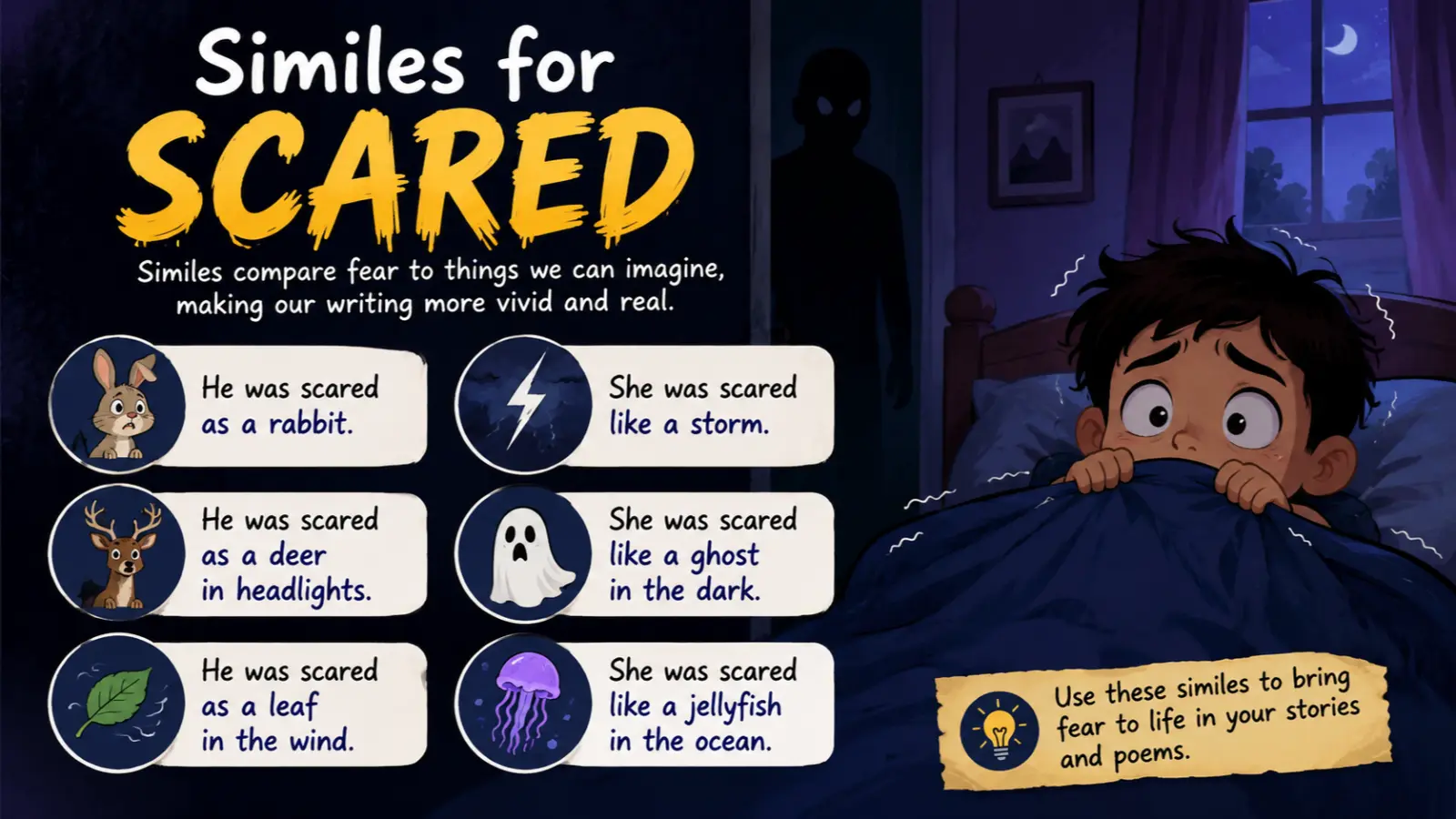
Fear is one of the strongest emotions people experience, yet simply writing “he was scared” rarely leaves a lasting impression. A well-crafted simile transforms ordinary descriptions into vivid moments readers can picture and feel. A simile compares one thing to another using the words like or as. These comparisons help readers understand emotions through familiar images. Writers use similes in novels, short stories, poetry, speeches, classroom assignments, and everyday conversations to make descriptions more memorable. This guide explores original similes for scared, explains why they work, shows how to use them naturally, and offers practical advice for creating your own.
Quick Answer
Similes for scared compare fear to familiar objects, animals, or situations using like or as. They make emotions easier to imagine and help readers connect with characters. For example:
- She was as still as a rabbit hearing footsteps.
- His courage melted like frost beneath the morning sun.
- They clung together like leaves in a storm.
Why Similes Make Fear Feel Real
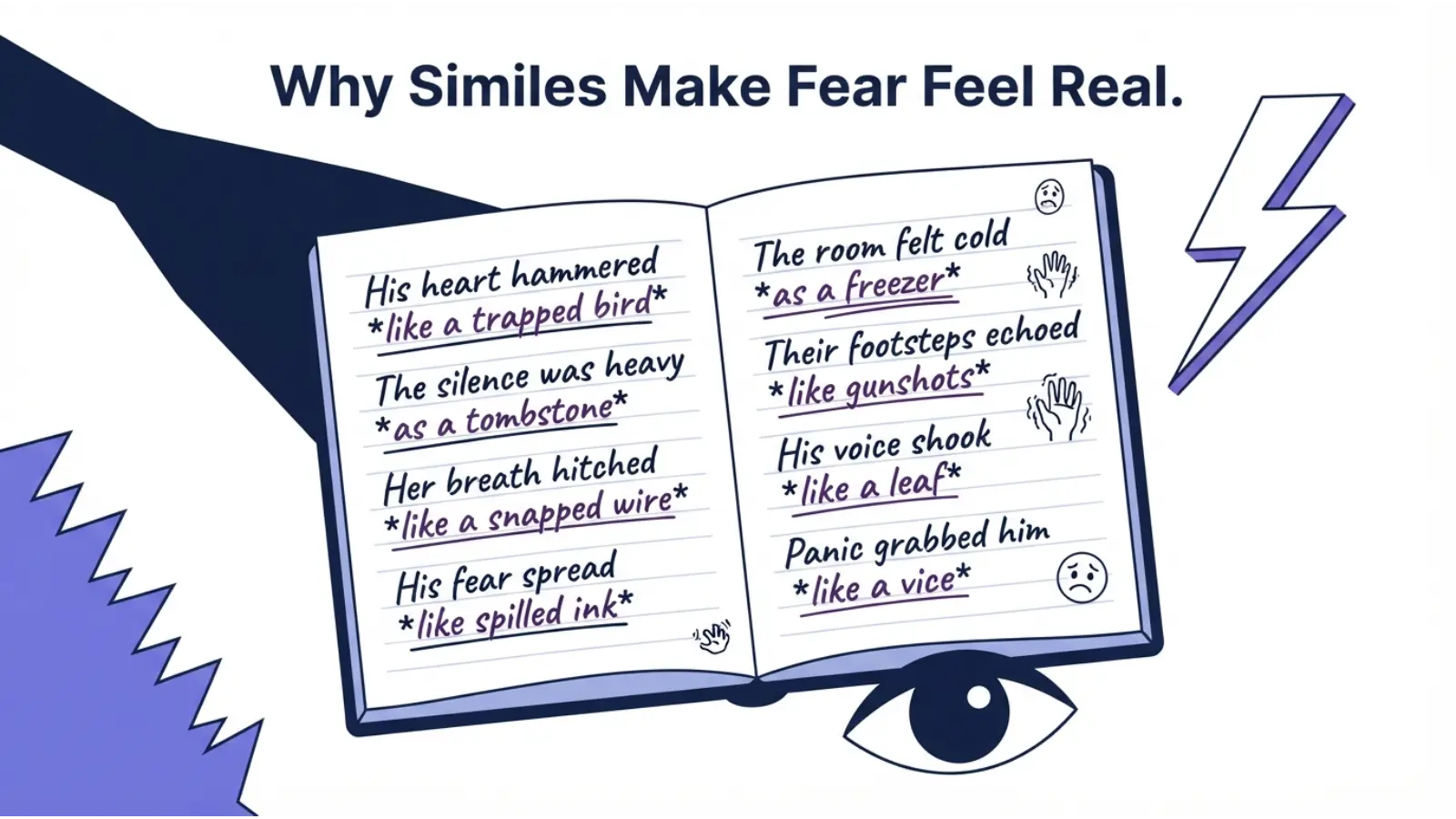
Fear is invisible. Readers cannot see it unless a writer shows its effects.
Instead of saying:
The boy was scared.
You might write:
The boy stood as stiff as a fence post while the footsteps drew closer.
The second sentence paints a picture. Readers imagine the character’s body language instead of simply being told how he feels.
Original Similes for Scared
Fear That Freezes Someone
1. As still as a rabbit hearing footsteps
Meaning: Frozen by sudden danger.
Story Example:
She became as still as a rabbit hearing footsteps outside the tent.
2. Like a candle trembling in a draft
Meaning: Quiet fear that could grow at any moment.
Conversation:
“I felt like a candle trembling in a draft before my interview.”
3. As silent as snow before an avalanche
Meaning: Fear mixed with tense anticipation.
Writing Tip: Best for suspense scenes.
4. Like a bird trapped inside a glass room
Meaning: Panicked but unable to escape.
Poetry:
His heartbeat fluttered like a bird trapped inside a glass room.
5. As stiff as frozen branches
Meaning: Fear causing the body to freeze.
Similes Showing Nervous Energy
6. Like popcorn jumping in a hot pan
Meaning: Restless, anxious movement.
7. As shaky as a paper bridge in the wind
Meaning: Physically trembling.
8. Like marbles rolling across a wooden floor
Meaning: Thoughts racing in every direction.
9. As unsteady as a chair with one leg shorter
Meaning: Feeling uncertain or insecure.
10. Like a kite caught in swirling winds
Meaning: Losing emotional control.
Similes for Deep Fear
11. As pale as moonlight on cold water
Formal Example:
He turned as pale as moonlight on cold water.
12. Like an echo lost in a cave
Meaning: Feeling isolated by fear.
13. As small as a pebble beneath a mountain
Story Example:
Standing before the giant gates, she felt as small as a pebble beneath a mountain.
14. Like a boat drifting into thick fog
Meaning: Fear of the unknown.
15. As fragile as thin ice in spring
Meaning: Emotionally vulnerable.
Similes for Sudden Fright
16. Like a balloon slipping from small hands
Fear arrives instantly and unexpectedly.
17. As startled as deer beneath flashing headlights
Ideal for action scenes.
18. Like lightning striking a quiet hill
Perfect for shocking news.
19. As quick as shadows crossing a wall
Useful when fear appears suddenly.
20. Like a bell ringing inside an empty tower
Creates a dramatic emotional image.
Similes for Children
21. As nervous as a kitten meeting a puppy
Gentle and easy to understand.
22. Like a turtle hiding inside its shell
Shows fear causing someone to withdraw.
23. As quiet as a mouse under the table
Great for school writing.
24. Like a little cloud hiding the sunshine
Soft emotional imagery.
25. As cautious as a squirrel crossing the road
Works well in children’s stories.
Creative Similes for Fiction
26. Like smoke searching for somewhere to disappear
Suggests fear mixed with uncertainty.
27. As hollow as an abandoned lighthouse
Creates loneliness and emotional depth.
28. Like glass ready to crack
Shows emotional pressure.
29. As distant as a star behind storm clouds
Represents hope hidden by fear.
30. Like ink spreading across clear water
Shows fear slowly taking over someone’s thoughts.
Choosing the Right Simile for Different Writing
Stories
Use body language and surroundings together.
Instead of:
He was scared.
Try:
He stood like glass ready to crack while the old door creaked open.
Poetry
Choose comparisons that create mood rather than explain everything directly.
Focus on rhythm, imagery, and emotional atmosphere.
Conversation
Simple similes sound the most natural.
Examples include:
- I was shaking like a leaf.
- I felt like my heart was trying to escape.
Avoid overly dramatic comparisons in everyday speech.
What Makes a Fear Simile Memorable?
Professional writers rarely choose random comparisons.
A strong simile usually:
- Matches the intensity of the scene.
- Uses imagery readers recognize.
- Reveals something about the character.
- Fits naturally within the sentence.
- Feels fresh instead of overused.
The goal is not to sound complicated. The goal is to help readers experience the emotion.
Related Literary Devices
Metaphor
A metaphor says something is another thing rather than comparing it with like or as.
Simile: She was like a frightened bird.
Metaphor: She was a frightened bird.
Imagery
Imagery appeals to the senses. Many fear similes also create visual, physical, or emotional imagery.
Personification
Fear can become more vivid when objects seem alive.
Example:
The darkness reached toward him.
Hyperbole
Hyperbole exaggerates emotion.
Example:
I was so scared my heart nearly jumped out of my chest.
Symbolism
Storms, shadows, broken mirrors, and empty roads often symbolize fear without stating it directly.
Create Your Own Similes for Scared
Creating original similes is easier when you follow a simple process.
Step 1: Identify the emotion
Is the fear sudden, quiet, overwhelming, or nervous?
Step 2: Think of something that behaves the same way
Examples:
- Animals
- Nature
- Weather
- Everyday objects
- Light and darkness
Step 3: Compare them
Instead of writing:
She was scared.
Try asking:
“What else behaves this way?”
Practice Exercise
Complete these ideas:
- As frightened as __________.
- Like __________ before a storm.
- As quiet as __________.
- Like __________ searching for shelter.
Challenge yourself to invent comparisons you have never heard before.
Common Mistakes When Writing Similes
Using Overused Comparisons
Classic similes can work, but relying on them too often makes writing predictable.
Mixing Imagery
Avoid combining unrelated comparisons.
Weak:
He was like a fish climbing a mountain of thunder.
The images don’t connect clearly.
Forcing a Comparison
A simile should feel natural, not inserted simply to sound creative.
Confusing Similes with Metaphors
Remember:
- Similes use like or as.
- Metaphors make direct comparisons.
Forgetting the Character
Choose comparisons your character would realistically notice based on their age, personality, and surroundings.
Frequently Asked Questions
What is a good simile for scared?
A good simile creates a clear mental picture, such as as still as a rabbit hearing footsteps or like glass ready to crack.
What are some unique similes for fear?
Original comparisons include like ink spreading across clear water, as fragile as thin ice in spring, and like smoke searching for somewhere to disappear.
Can similes make stories more emotional?
Yes. Similes help readers visualize emotions instead of simply reading emotional labels.
Are similes suitable for children’s writing?
Absolutely. Simple comparisons using animals, weather, or familiar objects make emotions easier for young readers to understand.
How many similes should I use in one story?
Use them purposefully. One strong simile often creates a greater impact than several weak ones.
Can I invent my own similes?
Yes. Original similes often make writing more distinctive and memorable, provided the comparison is easy for readers to understand.
Conclusion
The best similes for scared do more than describe fear—they allow readers to experience it. Fresh comparisons create stronger imagery, reveal character emotions, and make stories more engaging. Experiment with different images from nature, animals, everyday life, and the senses. The more you practice creating original comparisons, the more vivid and memorable your writing will become.
I am Helena Frost, a writer captivated by the beauty of language and the art of comparison. Through my words, I explore the world by turning ordinary moments into vivid similes and reflections. I enjoy crafting phrases that spark imagination, evoke emotion, and linger in the mind. My writing celebrates the subtle connections between people, nature, and the stories we live. For me, every sentence is an opportunity to reveal the extraordinary in the everyday.