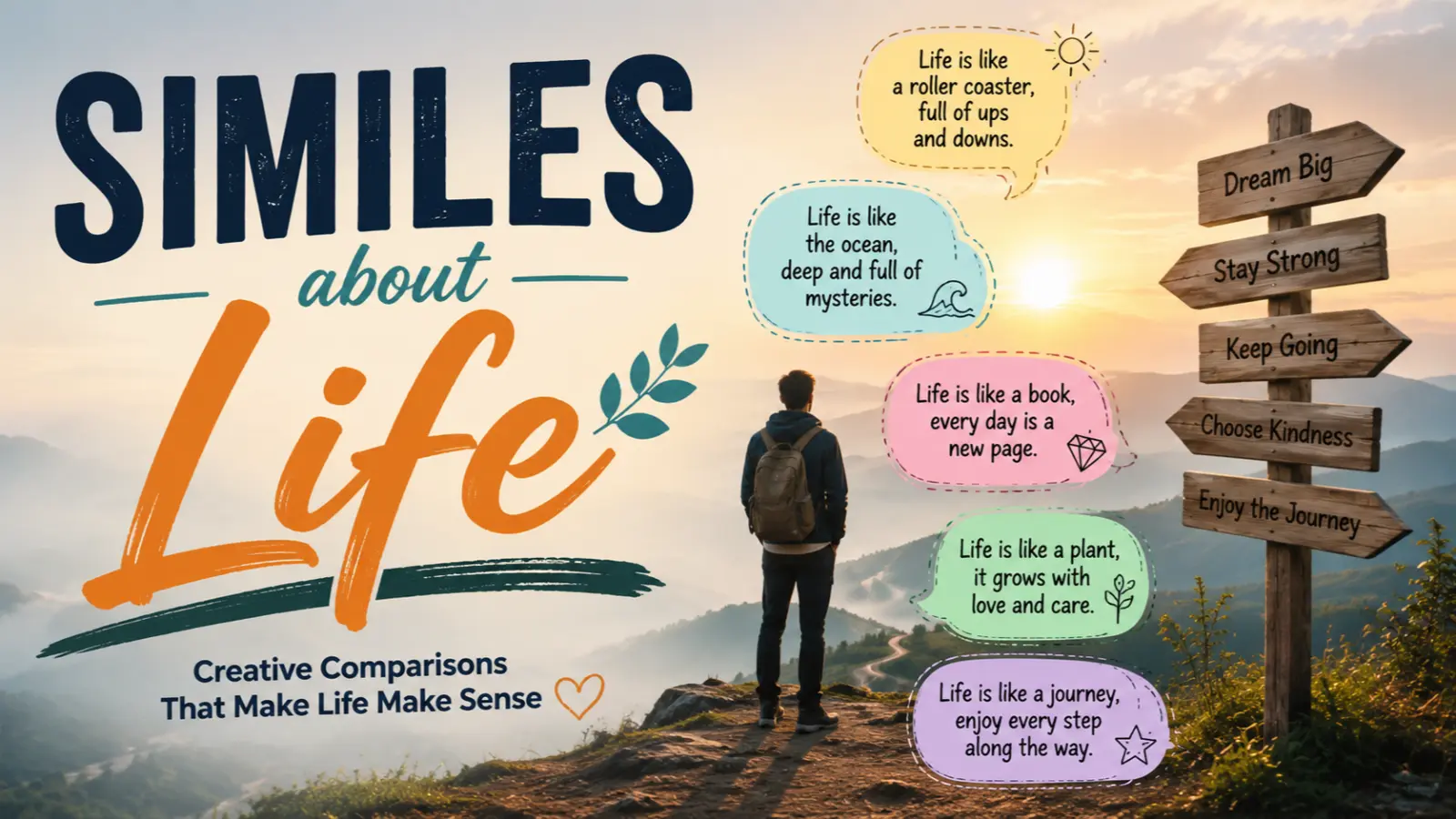
Life is difficult to describe because everyone experiences it differently. That is why writers often turn to similes—comparisons that help readers picture emotions, challenges, dreams, and personal growth in a fresh way. A simile compares two different things using words such as “like” or “as.” Instead of simply saying life is difficult or beautiful, a well-crafted simile paints a memorable picture that readers can feel. In this article, you’ll discover original similes about life, learn why they work, see them used in different kinds of writing, and pick up practical techniques for creating your own memorable comparisons.
What Are Similes About Life?
Similes about life compare life to familiar experiences, objects, or natural scenes using like or as. These comparisons help explain complex emotions, personal journeys, successes, failures, and everyday experiences in a way readers instantly understand.
For example:
Life is like a winding river, always finding a new path forward.
This comparison creates an image that feels more vivid than simply saying life changes over time.
Why Writers Use Similes to Describe Life
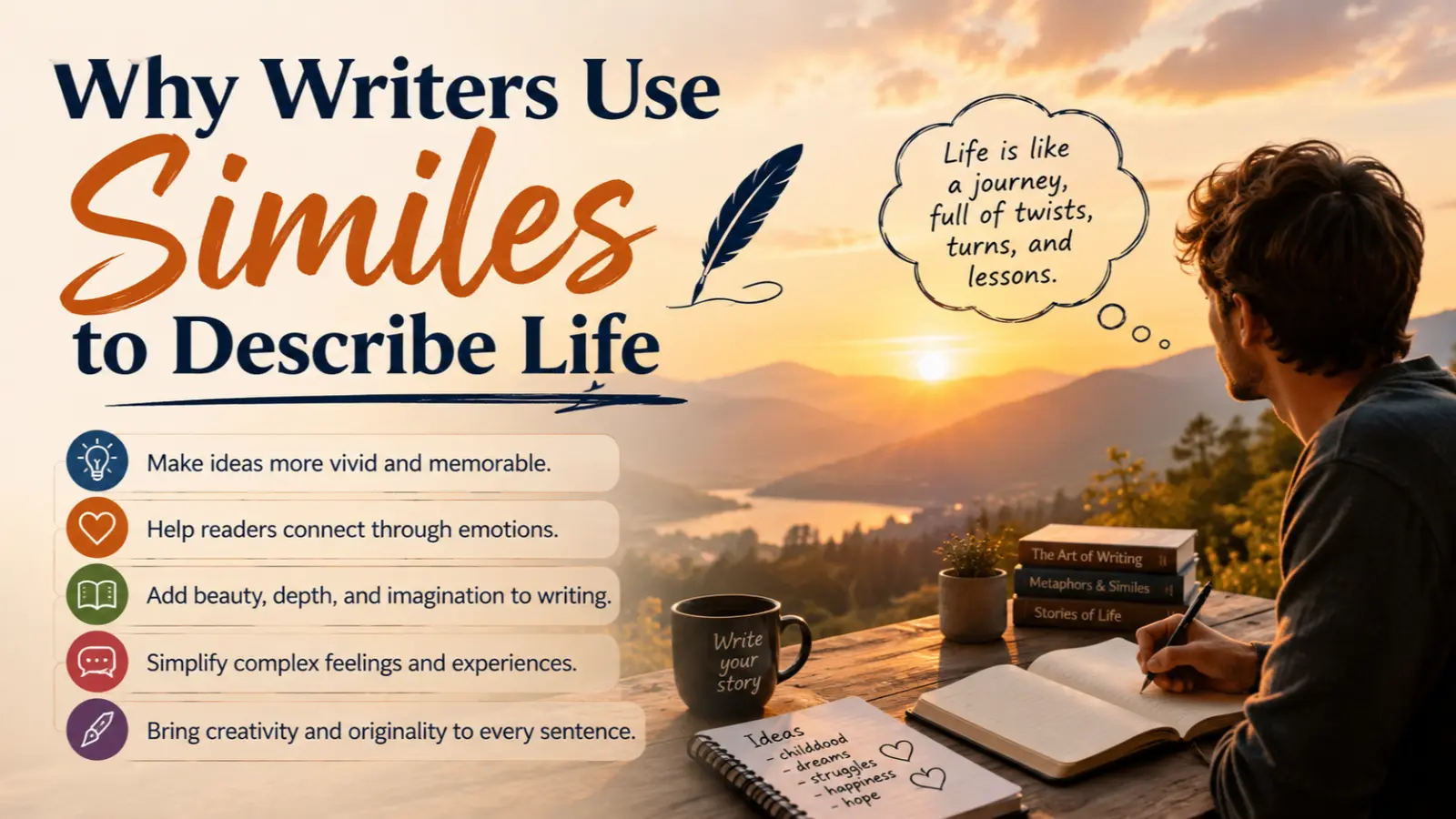
Life is one of the broadest topics in literature. A simple statement often feels too plain.
Strong similes can:
- Make abstract ideas easier to understand.
- Create emotional connections.
- Add beauty to poetry.
- Strengthen storytelling.
- Make speeches and conversations more memorable.
- Help readers imagine experiences they haven’t lived.
The best similes don’t just compare—they reveal something new.
30 Original Similes About Life
1. Life is like a lantern in thick fog.
Meaning: Hope often guides us even when we cannot see the future.
Examples
- Her faith made life feel like a lantern in thick fog.
- Sometimes life is like a lantern—you only need enough light for the next step.
Emotional Effect
Encouraging and hopeful.
Best For
Inspirational writing and speeches.
Writing Tip
Focus on the feeling of limited but meaningful progress.
2. Life is like an unfinished painting.
Meaning
We continue shaping our lives every day.
Examples
- Every decision added another brushstroke.
- My life feels like an unfinished painting with endless possibilities.
Storytelling Example
The old artist smiled because life, like his canvas, was never truly complete.
3. Life is like a bridge built one plank at a time.
Meaning
Success comes through steady effort.
Examples
- Small habits slowly changed his future.
- Life became stronger with every careful choice.
Best Context
Personal development.
4. Life is like rain on dry soil.
Meaning
Even difficult moments can bring growth.
Examples
- The hardship eventually helped her mature.
- Life sometimes nourishes us through unexpected storms.
5. Life is like a book with blank chapters waiting.
Meaning
The future has not been written.
Examples
- Graduation opened a new chapter.
- Every morning adds another page.
Writing Purpose
Hope and possibility.
6. Life is like climbing a hill before sunrise.
Meaning
The hardest work often comes before success.
Examples
- The struggle felt endless until opportunity appeared.
- Life rewards those who keep climbing.
7. Life is like a compass that needs constant adjustment.
Meaning
People must regularly reevaluate their direction.
Conversation Example
Life isn’t always about speed; sometimes it’s about adjusting your compass.
8. Life is like planting seeds in unseen soil.
Meaning
Today’s efforts produce tomorrow’s rewards.
Examples
- Every kind word planted something valuable.
- Life often grows quietly before success appears.
9. Life is like a kite dancing with the wind.
Meaning
Challenges can help us rise.
Poetry Example
Life flew like a kite, lifted by the very winds that tried to push it down.
10. Life is like an old map with hidden paths.
Meaning
Unexpected opportunities appear along the journey.
Writing Tip
Mystery makes this comparison memorable.
11. Life is like a cup of tea that changes as it cools.
Meaning
Time changes perspective.
Examples
- Problems looked different a week later.
- Life often softens sharp emotions.
12. Life is like a tree growing through stone.
Meaning
Strength develops through adversity.
13. Life is like music played without a rehearsal.
Meaning
We learn while living, not before.
14. Life is like a quilt stitched from small memories.
Meaning
Ordinary moments create extraordinary lives.
15. Life is like waves polishing rough stones.
Meaning
Experience shapes character.
16. Life is like a trail covered in autumn leaves.
Meaning
Beauty often hides uncertainty.
17. Life is like a candle that lights another without growing dim.
Meaning
Kindness spreads without reducing our own strength.
18. Life is like an echo across the mountains.
Meaning
Our actions eventually return to us.
19. Life is like a clock that never rushes but never stops.
Meaning
Time continues regardless of circumstances.
20. Life is like a suitcase that grows lighter when shared.
Meaning
Support makes burdens easier.
21. Life is like a garden after winter.
Meaning
New beginnings often follow hardship.
22. Life is like stars hidden behind clouds.
Meaning
Hope still exists during difficult times.
23. Life is like learning a new language every year.
Meaning
Growth requires continual learning.
24. Life is like a mountain trail with unexpected views.
Meaning
The journey offers surprises beyond the destination.
25. Life is like a mirror that reflects our choices.
Meaning
Our actions shape our future.
26. Life is like clay waiting for patient hands.
Meaning
We have the power to shape our future.
27. Life is like crossing stepping stones in a river.
Meaning
Progress comes one careful decision at a time.
28. Life is like sunrise after a sleepless night.
Meaning
Hope often follows hardship.
29. Life is like a sailboat learning from every wind.
Meaning
Challenges teach resilience.
30. Life is like a mosaic made from broken pieces.
Meaning
Past difficulties can become part of something beautiful.
Formal Example
Life became a mosaic whose beauty depended on every imperfect piece.
Conversation Example
Looking back, I realized every mistake helped complete the picture.
What Makes a Life Simile Memorable?
The strongest similes reveal an unexpected truth instead of using familiar comparisons.
Instead of comparing life to a road simply because many writers do, look for comparisons that highlight a specific experience. Ask yourself:
- What does life feel like right now?
- What object behaves in a similar way?
- What emotion do I want readers to experience?
Specific images are almost always more powerful than general ones.
Practical Writing Tips for Better Similes
Choose One Clear Idea
Avoid comparing life to several unrelated things in one sentence.
Weak
Life was like a river, a bird, and a computer.
Better
Life was like a river that quietly carved its own path.
Use Concrete Images
Readers connect more easily with objects they can picture.
Instead of abstract comparisons, think about lanterns, rivers, clocks, gardens, bridges, or mountains.
Surprise the Reader
Fresh comparisons hold attention longer than familiar ones.
Rather than saying life is “like a roller coaster,” ask what unique image captures your exact message.
Match the Mood
A hopeful scene deserves hopeful imagery.
A sad story should use quieter, more reflective comparisons.
The emotional tone matters just as much as the comparison itself.
Similes and Other Literary Devices
Simile vs. Metaphor
A simile uses like or as.
- Life is like a lantern.
A metaphor states the comparison directly.
- Life is a lantern.
Both create imagery, but similes feel slightly gentler because they invite comparison rather than declare it.
Simile and Imagery
Imagery appeals to the senses.
A simile becomes stronger when readers can see, hear, smell, or feel the comparison.
Simile and Personification
Personification gives human qualities to non-human things.
Example:
“The morning welcomed us.”
Combined with a simile:
“Life greeted us like an old friend.”
Simile and Symbolism
Many life similes naturally include symbols.
A bridge may symbolize opportunity.
A river may symbolize change.
A garden may symbolize growth.
These symbols deepen meaning without lengthy explanations.
Create Your Own Similes About Life
You don’t need to wait for inspiration. You can build original similes using a simple process.
Step 1
Choose one part of life.
Examples:
- Success
- Failure
- Friendship
- Change
- Growth
- Hope
Step 2
Find something that behaves the same way.
For hope, you might think of:
- A lantern
- Sunrise
- A growing seed
- A lighthouse
Step 3
Complete the comparison.
Life is like…
Then explain why the comparison works.
Creative Practice Exercises
Exercise One
Describe your life today without using the words happy, sad, busy, or hard.
Instead, create one original simile.
Exercise Two
Write three similes using nature.
Exercise Three
Rewrite an ordinary sentence like:
“Life changed.”
Transform it into a vivid comparison.
Exercise Four
Read one of your favorite books and notice how the author compares emotions with everyday objects. Ask yourself why each comparison works.
Common Mistakes to Avoid
Relying on Overused Comparisons
Well-known comparisons can still work, but fresh imagery is often more memorable.
Mixing Different Images
Don’t combine unrelated comparisons in the same sentence unless the effect is intentional.
Confusing Similes and Metaphors
Remember:
- Similes use like or as.
- Metaphors make a direct comparison.
Using Comparisons That Don’t Fit
Every simile should strengthen your message, not distract readers.
If the comparison requires too much explanation, choose a simpler image.
Forgetting the Reader
The goal isn’t simply to sound creative. The comparison should help readers understand an idea more clearly.
Frequently Asked Questions
What is a simile about life?
A simile about life compares life to another object, experience, or idea using like or as to make the meaning more vivid.
Why are similes useful in writing?
They help readers picture emotions, understand complex ideas, and remember descriptions more easily.
Can similes about life be used in speeches?
Yes. They make speeches more engaging because they turn abstract ideas into memorable images.
What’s the difference between a life simile and a life metaphor?
A simile uses like or as, while a metaphor makes the comparison directly.
How can I create original life similes?
Focus on one emotion or experience, think of something that behaves similarly, and explain the shared quality rather than choosing the first comparison that comes to mind.
Are life similes useful in poetry?
Absolutely. They help poets express emotions, create imagery, and connect readers to personal experiences through vivid comparisons.
Can students use life similes in essays?
Yes. When used naturally, they can make descriptive and narrative writing more engaging without distracting from the main point.
Conclusion
Life is constantly changing, which makes it one of the richest subjects for creative comparisons. The best similes about life don’t exist to sound clever—they help readers see familiar experiences from a fresh perspective. As you write stories, poems, speeches, or journal entries, experiment with images drawn from nature, everyday objects, and personal experiences. With practice, you’ll discover that your most meaningful similes often come from paying close attention to the world around you rather than searching for perfect words.

I am Helena Frost, a writer captivated by the beauty of language and the art of comparison. Through my words, I explore the world by turning ordinary moments into vivid similes and reflections. I enjoy crafting phrases that spark imagination, evoke emotion, and linger in the mind. My writing celebrates the subtle connections between people, nature, and the stories we live. For me, every sentence is an opportunity to reveal the extraordinary in the everyday.