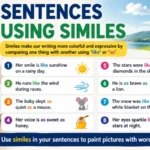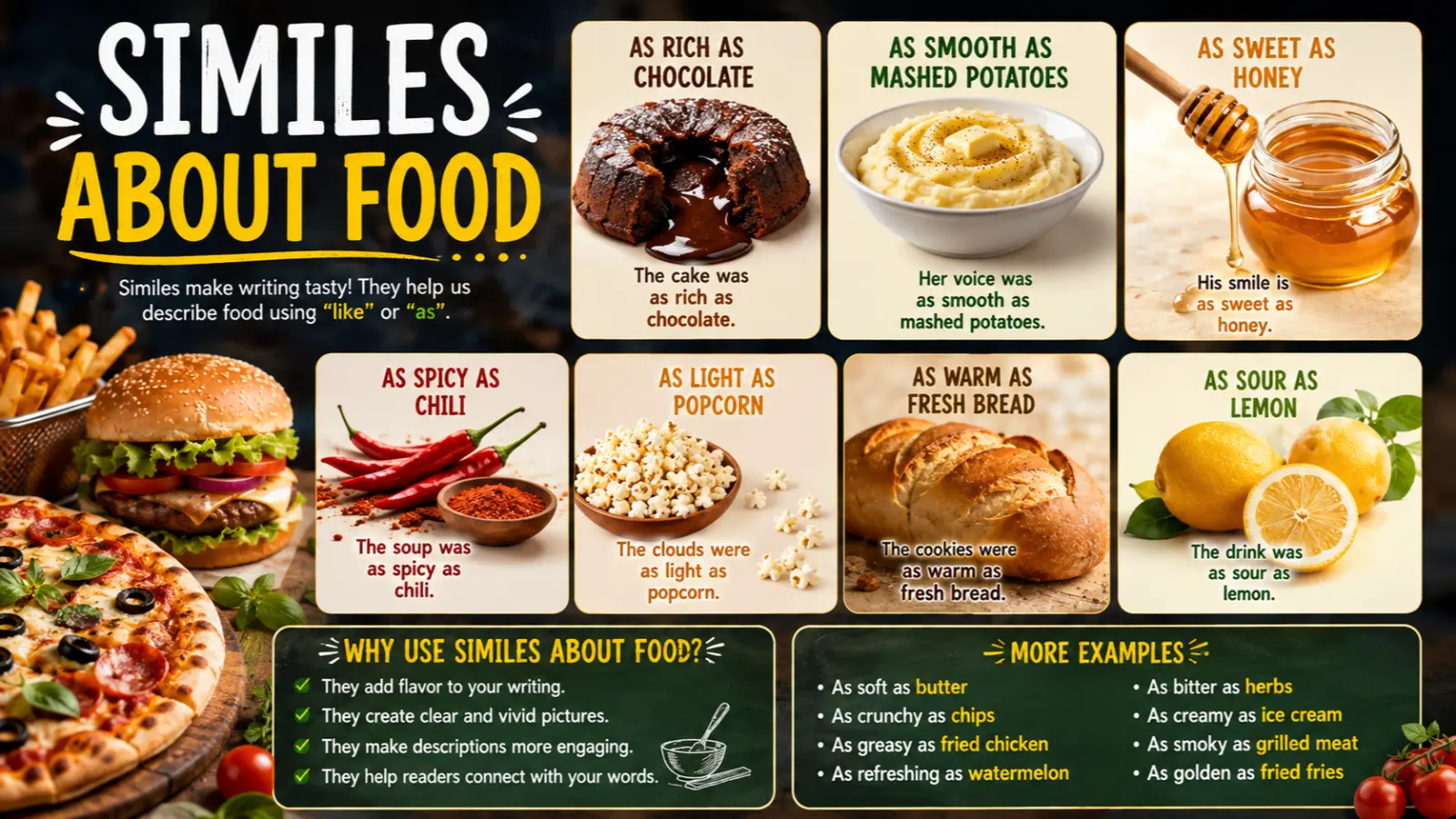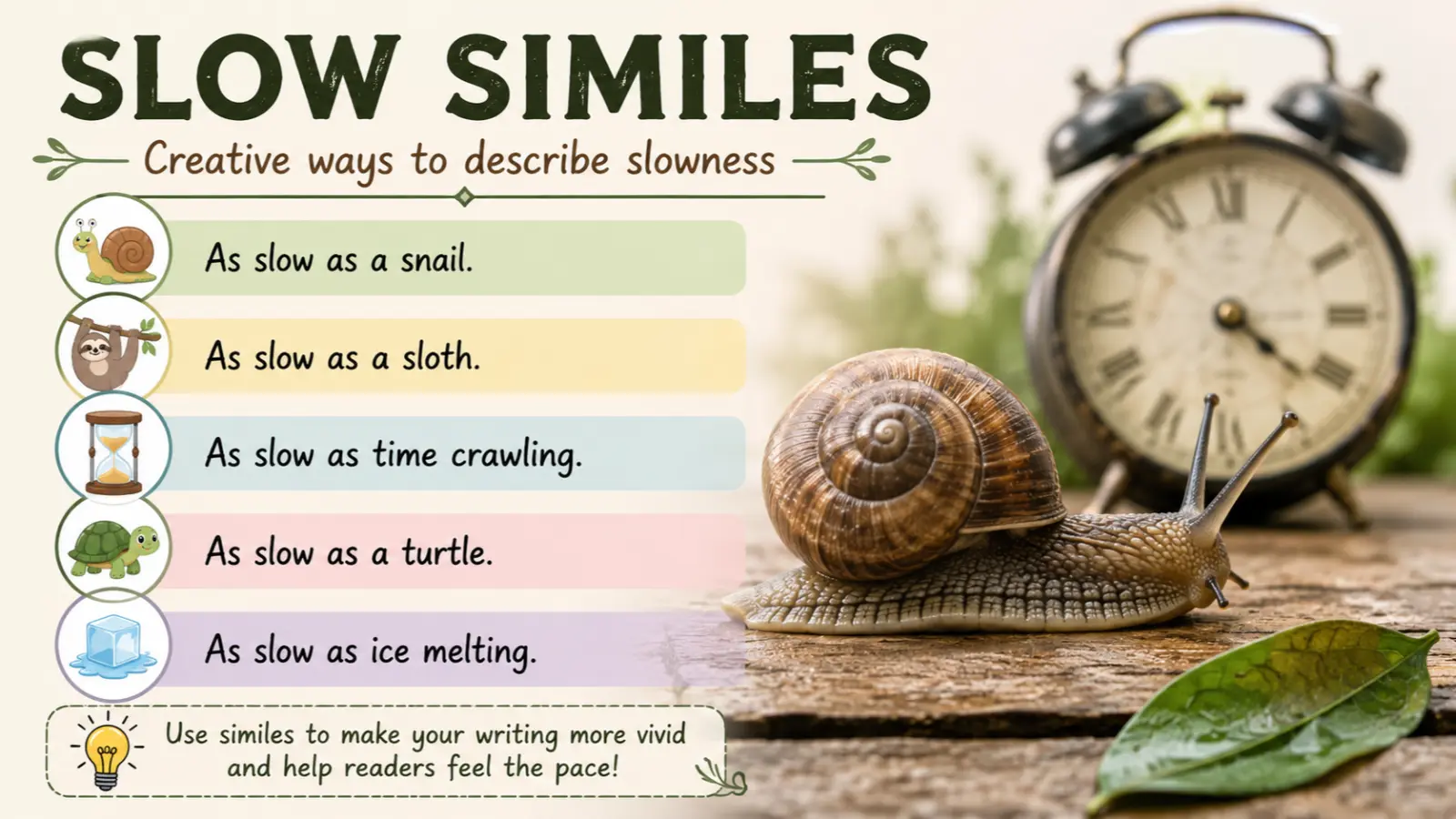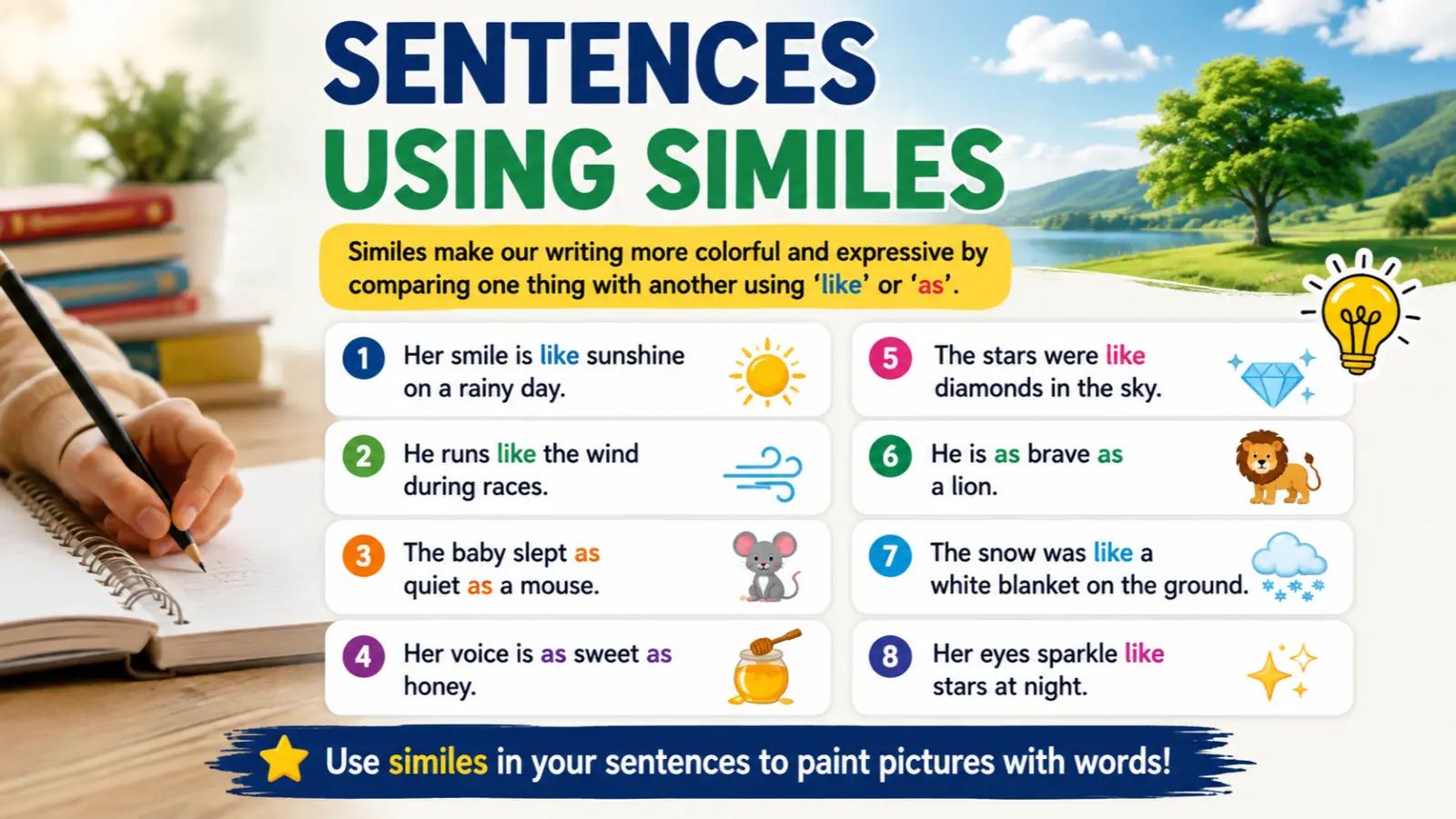
Sentences Using Similes are one of the simplest ways to make writing more vivid. By comparing one thing to another using words such as like or as, a simile helps readers picture an idea, emotion, person, place, or action.
For example, instead of writing The rain was heavy, you could write, The rain fell like a curtain of silver across the street. The Sentences Using Similes gives the reader something concrete to imagine.
You can find Sentences Using Similes in stories, poems, speeches, everyday conversation, advertising, music, and school assignments. Learning to build strong sentences using similes can make ordinary descriptions more memorable without making your writing complicated.
This guide explains how Sentences Using Similes work and provides original examples you can study, adapt, and use as inspiration for your own writing.
What Is a Simile?
A Sentences Using Similes is a comparison between two different things that share a particular quality. It usually uses like or as to connect the comparison.
Example:
Her laughter sounded like bells drifting through an open window.
The writer compares laughter to bells because both can create a bright, pleasant sound.
A Sentences Using Similes good simile does more than decorate a sentence. It gives the reader a clearer feeling or mental picture.
Quick Answer: What Are Sentences Using Similes?
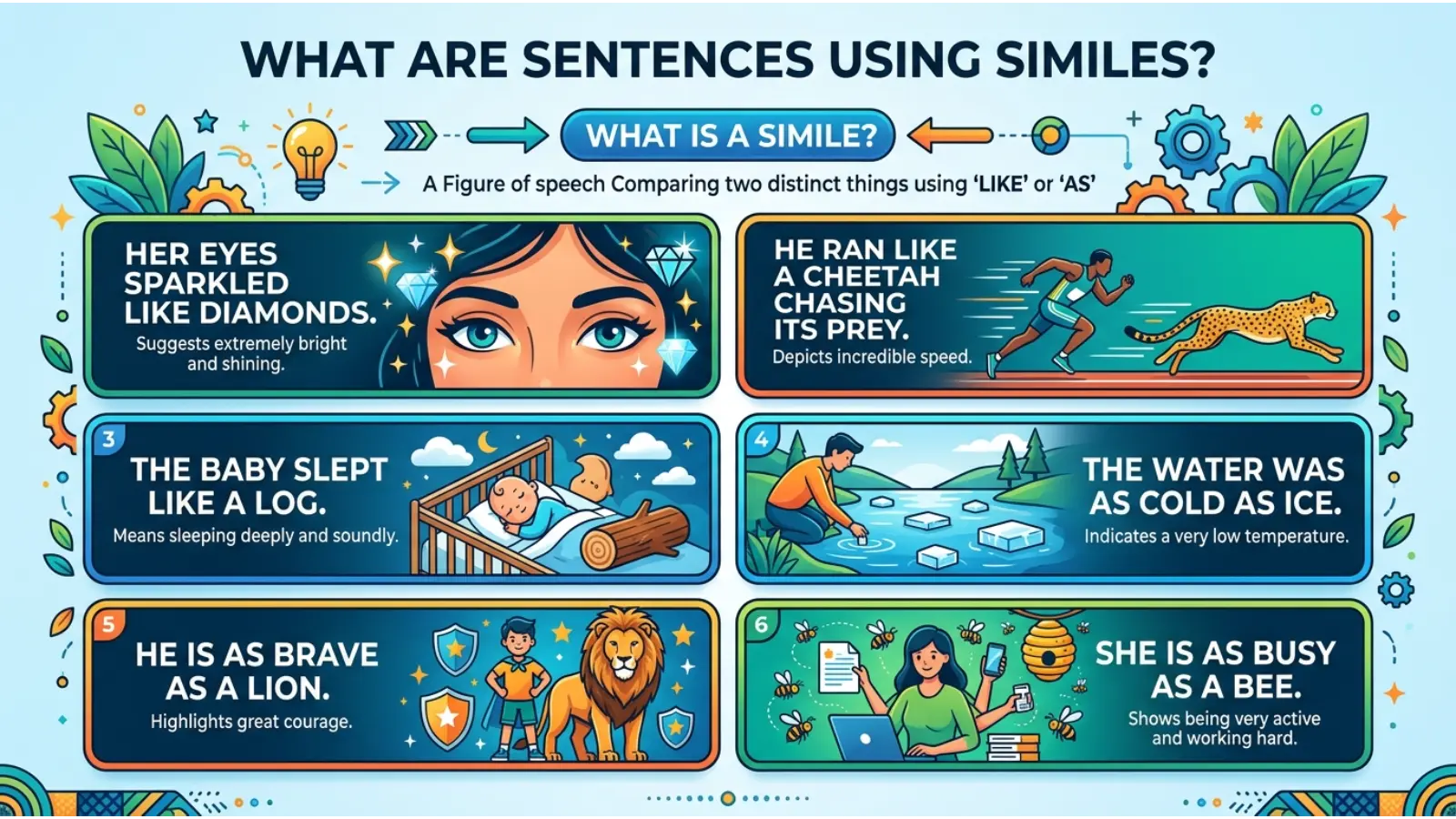
Sentences using similes compare one thing with another using words such as like or as to create a stronger image or feeling.
For example:
The child ran like a sparrow startled from a garden path.
The comparison makes the child’s movement easier to imagine than simply saying, The child ran quickly.
30 Original Sentences Using Similes
1. Her Smile Was Like Morning Light
Sentence:
Her smile was like morning light slipping through the curtains.
Meaning:
The smile is compared with soft morning light to suggest warmth, comfort, and hope.
Why it works:
The comparison connects a human expression with a familiar visual experience. It gives the reader an emotional response rather than simply stating that someone looked happy.
Best context:
Use it in personal narratives, fiction, poetry, or descriptions of happiness.
2. The River Moved Like a Blue Ribbon
Sentence:
The river moved like a blue ribbon through the quiet valley.
This simile emphasizes the river’s long, flowing shape.
Writing tip:
When describing nature, look for an object’s shape, movement, color, or sound. Those qualities often lead to stronger comparisons.
3. His Anger Rose Like a Storm
Sentence:
His anger rose like a storm gathering beyond the hills.
The comparison suggests that his anger is becoming stronger and more threatening.
Emotional effect:
It creates tension without directly explaining every detail of the character’s feelings.
Storytelling use:
This works especially well before an argument or important confrontation.
4. The Baby Slept Like a Cloud
Sentence:
The baby slept like a cloud floating above a quiet meadow.
The image suggests softness, calmness, and peaceful movement.
Writing purpose:
This is useful when you want a peaceful scene to feel gentle rather than simply saying that someone was asleep.
5. Her Voice Was Like Warm Tea
Sentence:
Her voice was like warm tea on a cold afternoon.
The comparison connects a voice with comfort and warmth.
Why it works:
Strong similes often involve more than sight. Here, the writer uses a familiar physical sensation to describe sound.
6. The Classroom Buzzed Like a Garden
Sentence:
The classroom buzzed like a garden filled with summer bees.
The sentence suggests that many students are talking, moving, and creating lively energy.
Best context:
School stories, descriptive essays, and scenes involving groups of people.
Adapt it:
Ask yourself what the sound reminds you of. A busy market, a train station, or a garden could create completely different moods.
7. The Old House Stood Like a Forgotten Guard
Sentence:
The old house stood like a forgotten guard at the edge of the road.
The house is given a watchful, almost human quality.
Writing purpose:
This creates atmosphere and makes an ordinary building feel important to the story.
8. Her Happiness Sparkled Like Sunlight on Water
Sentence:
Her happiness sparkled like sunlight on water.
This comparison turns an emotion into something readers can visualize.
Why it works:
Emotions are invisible, so writers often compare them with physical things such as light, weather, music, color, or movement.
9. The Rain Fell Like Beads From a Broken String
Sentence:
Rain fell like beads from a broken string, scattering across the pavement.
The image emphasizes separate drops arriving rapidly and unevenly.
Writing tip:
A simile becomes more vivid when you add a strong verb. Fell like beads is more dynamic than simply saying was like beads.
10. His Friendship Was Like a Steady Lantern
Sentence:
His friendship was like a steady lantern on a road he did not know.
The lantern represents dependable guidance.
Meaning:
The sentence suggests that a good friend provides reassurance during uncertain moments.
Best context:
Essays, stories, friendship descriptions, and reflective writing.
11. The Moon Hung Like a Silver Coin
Sentence:
The moon hung like a silver coin above the rooftops.
The comparison highlights the moon’s round shape and bright appearance.
Writing lesson:
Shape-based similes are simple but effective. Look at the object first instead of immediately searching for an emotional comparison.
12. The Runner Moved Like an Arrow
Sentence:
The runner moved like an arrow released toward its target.
This suggests speed and direction.
Why the longer comparison helps:
Adding released toward its target gives the reader more information about the movement instead of relying on the single word fast.
13. The Silence Was Like Snow
Sentence:
The silence settled over the room like fresh snow.
The comparison makes silence feel soft, gradual, and complete.
Emotional effect:
Depending on the surrounding scene, this could create peace, loneliness, suspense, or sadness.
That is an important lesson: the same simile can produce different emotions when the context changes.
14. Her Words Fell Like Stones
Sentence:
Her words fell like stones into the conversation.
The comparison suggests that the words feel heavy or difficult to accept.
Best context:
Serious dialogue, emotional fiction, and dramatic scenes.
Writing tip:
When writing about dialogue, compare words with objects that represent their emotional weight.
15. The Wind Whistled Like a Distant Train
Sentence:
The wind whistled like a distant train moving through the darkness.
The comparison gives the reader an audible image.
Why it works:
The writer uses sound to describe sound. This technique can make scenes feel more immersive.
16. His Confidence Was Like a Tall Bridge
Sentence:
His confidence was like a tall bridge stretching over every doubt.
The bridge suggests strength and the ability to move beyond obstacles.
Writing purpose:
Use this kind of comparison when describing personal growth, courage, or determination.
17. The Leaves Danced Like Tiny Green Flags
Sentence:
The leaves danced like tiny green flags in the afternoon wind.
The comparison emphasizes movement and color.
Related technique:
The word danced also gives the leaves a human action, making this sentence combine simile and personification.
18. The City Glowed Like a Box of Stars
Sentence:
The city glowed like a box of stars after sunset.
The comparison turns artificial lights into something bright and magical.
Best context:
Travel writing, fiction, poetry, and nighttime descriptions.
19. Her Excitement Bubbled Like Soda
Sentence:
Her excitement bubbled like soda when she heard the news.
The comparison makes the emotion feel energetic and difficult to contain.
Writing lesson:
For strong emotions, choose comparisons that have matching movement. Excitement might bubble, race, burst, or leap.
20. The Dog Watched Like a Patient Detective
Sentence:
The dog watched the open gate like a patient detective waiting for a clue.
The comparison gives the animal an alert and observant quality.
Why it works:
Comparing animals with familiar human roles can quickly communicate behavior without a long explanation.
21. The Snow Covered the Road Like a White Blanket
Sentence:
Snow covered the road like a white blanket laid across the earth.
The comparison emphasizes how completely the snow hides the surface.
Best context:
Winter descriptions and atmospheric storytelling.
Avoiding clichés:
Instead of stopping at white blanket, you can make the comparison more personal or specific by adding a detail from the scene.
22. His Joke Hit Like a Sudden Splash
Sentence:
His joke hit the quiet room like a sudden splash of cold water.
The comparison suggests that the joke abruptly changes the mood.
Writing purpose:
This is useful for describing an unexpected interruption or shift in atmosphere.
23. The Little Boat Rocked Like a Leaf
Sentence:
The little boat rocked like a leaf on the restless water.
The comparison communicates fragility and movement.
Why it works:
A leaf is small and easily moved, so the reader immediately understands how unstable the boat feels.
24. Her Memory Was Like an Old Photograph
Sentence:
The memory was like an old photograph, clear in places and faded in others.
This comparison is especially useful because it contains a built-in contrast.
Writing insight:
Strong similes do not always need to be beautiful. Sometimes the most effective comparison explains something complicated.
25. The Crowd Moved Like a Tide
Sentence:
The crowd moved like a tide toward the stadium entrance.
The comparison suggests a large group moving together in one direction.
Best context:
Sports writing, events, travel scenes, and descriptive narratives.
26. His Fear Was Like a Shadow
Sentence:
His fear followed him like a shadow he could never quite outrun.
The comparison suggests that fear remains close even when the character tries to escape it.
Writing purpose:
This is particularly effective for internal conflict.
27. The Guitar Sounded Like Rain on Glass
Sentence:
The guitar sounded like rain tapping gently against a window.
The comparison connects music with a familiar natural sound.
Why it works:
This is a useful technique when writing about similes in music. Instead of simply calling music beautiful, compare its sound, rhythm, texture, or emotional effect with something concrete.
28. The Friendship Grew Like a Garden
Sentence:
Their friendship grew like a garden, slowly becoming richer with every season.
The comparison emphasizes patience and gradual development.
Writing lesson:
A good simile can also provide a structure for an entire paragraph. Once you introduce the garden image, you can develop ideas such as care, growth, seasons, and shared experiences.
29. The Argument Spread Like Fire Through Dry Grass
Sentence:
The argument spread like fire through dry grass.
The comparison suggests that conflict moves rapidly from one person to another.
Best context:
Stories, news-style writing, dramatic scenes, and descriptions of social conflict.
Caution:
This kind of comparison is familiar, so use it thoughtfully. A fresh alternative may be stronger when the scene allows one.
30. The Idea Arrived Like a Door Opening
Sentence:
The idea arrived like a door opening into a room he had never seen.
The comparison presents discovery as an unexpected opportunity.
Best context:
Creative writing, reflective essays, stories about learning, and descriptions of inspiration.
How to Make a Simile More Vivid
A weak simile often compares something with an idea that is too general.
Compare:
The girl was happy like a nice person.
with:
The girl smiled like someone who had just found a forgotten letter from a dear friend.
The second comparison gives the reader a situation to imagine.
Focus on a Specific Quality
Do not ask only:
“What is this like?”
Ask:
- What does it sound like?
- What does it move like?
- What texture does it suggest?
- What color does it resemble?
- What would it feel like?
- What familiar experience creates the same emotion?
These questions produce more precise comparisons.
Choose the Right Image
A simile should match the quality you want to emphasize.
For example, comparing a person’s voice to thunder suggests power or intensity. Comparing it to a soft bell suggests gentleness.
The object itself is not automatically good or bad. Its effectiveness depends on the quality it represents.
Use Strong Verbs
Instead of:
The leaves were like dancers.
Try:
The leaves spun like dancers beneath the autumn wind.
The verb spun creates movement and gives the comparison more energy.
How to Avoid Cliché Similes
Some similes are so familiar that readers barely notice them.
Expressions such as busy as a bee or cold as ice can be useful in everyday speech, but original writing often benefits from a more specific image.
Instead of asking:
“What common simile describes this?”
ask:
“What unusual but believable thing behaves this way?”
If someone is extremely nervous, you might compare their thoughts to a drawer full of tangled wires. The image is more specific because it communicates confusion as well as tension.
Originality does not mean making a comparison strange just for the sake of being different. The image should still make sense.
Why Context Changes a Simile
A simile does not have one fixed emotional meaning.
Consider:
The room was silent like snow.
In a peaceful scene, the comparison can feel comforting.
In a suspense story, the same sentence can feel unsettling because the silence suggests that something is about to happen.
This is why experienced writers consider the surrounding scene, character, mood, and purpose before choosing an image.
Simile vs. Metaphor: What’s the Difference?
A simile makes a comparison using words such as like or as.
Simile:
The classroom was like a busy marketplace.
A metaphor makes the comparison directly.
Metaphor:
The classroom was a busy marketplace.
Both can create imagery, but they produce slightly different effects. The simile makes the comparison more explicit, while the metaphor can make the image feel more immediate.
Similes, Imagery, and Personification
Similes often work alongside other literary devices.
Imagery uses descriptive language to create sensory experiences.
Personification gives human qualities to nonhuman things.
Example:
The old trees leaned like tired travelers beside the road.
The sentence uses a simile because the trees are compared to travelers. It also uses personification because tired and leaned suggest human behavior.
Combining techniques can make a sentence richer, but each element should serve a purpose.
How to Create Your Own Similes
You do not need to wait for inspiration. You can build a simile systematically.
Step 1: Choose the Subject
Start with something you want to describe.
It could be:
- a person
- an emotion
- an animal
- weather
- a sound
- an object
- an action
- a place
Step 2: Identify Its Strongest Quality
Ask what you actually want readers to notice.
Maybe the subject is:
- extremely quiet
- unusually fast
- comforting
- unpredictable
- fragile
- bright
- mysterious
- overwhelming
Step 3: Brainstorm Five Images
For quiet, you might think of:
- fresh snow
- an empty library
- a sleeping garden
- a closed theater
- a distant field
Now choose the image that best fits your scene.
Step 4: Add a Precise Verb
Instead of:
The fog was like a blanket.
Try:
Fog curled around the houses like a blanket pulled across sleeping children.
The extra detail gives the image a specific atmosphere.
Step 5: Remove Anything That Does Not Help
A simile should strengthen the sentence. If removing it makes the sentence clearer and stronger, the comparison may not be necessary.
Good writing is not about adding as many literary devices as possible. It is about choosing the right device at the right moment.
Creative Exercises for Practicing Similes
Exercise 1: Describe an Emotion
Choose one emotion:
happiness, anger, fear, loneliness, excitement, or calmness.
Write three similes for it.
For example, do not simply describe happiness as sunshine. Think about what happiness does. Does it spread, bounce, glow, lift, or suddenly appear?
Exercise 2: Use the Five Senses
Describe the same object five different ways.
For example, describe rain through:
- sight
- sound
- touch
- movement
- emotion
This prevents every simile from relying on visual imagery.
Exercise 3: Turn a Weak Sentence Into a Strong One
Start with:
The wind was strong.
Then experiment:
The wind pushed against the windows like a crowd trying to enter.
The goal is not simply to make the sentence longer. The goal is to give the reader a clearer experience.
Exercise 4: Build a Simile From a Memory
Think of a familiar place or moment. Choose one small detail and compare it with something unrelated.
Specific memories often produce more original imagery than generic brainstorming because they contain unusual sensory details.
Common Mistakes Writers Make With Similes
Using Too Many Similes
A paragraph filled with comparisons can become exhausting.
If every sentence says something is like something else, none of the images gets enough attention.
Use your strongest comparisons and let ordinary sentences support them.
Mixing Images
Avoid combining unrelated comparisons:
His anger was like a volcano racing through a maze of thunder.
The sentence contains several competing images. The reader has to work too hard to understand the main idea.
Choose one strong image and develop it clearly.
Choosing a Forced Comparison
A simile should feel natural within the scene.
If a comparison attracts attention only because it is unusual, ask whether it actually improves the writing.
Confusing Similes With Metaphors
Remember:
Simile: The moon was like a lantern.
Metaphor: The moon was a lantern.
Both are comparisons, but only the first is a simile.
Using a Weak Image
Words such as nice, good, beautiful, and bad do not give readers much to visualize.
Replace vague qualities with concrete images.
Instead of:
The garden was beautiful like something nice.
Try:
The garden glowed like a hidden courtyard after rain.
Frequently Asked Questions
What is an example of a sentence using a simile?
The children raced across the field like startled birds. The comparison uses like to emphasize their quick, energetic movement.
How do I identify a simile in a sentence?
Look for a comparison between two different things, often connected by like or as. Then ask whether the comparison helps describe a quality, action, appearance, or feeling.
What are some easy similes for students?
Simple examples include:
- The moon looked like a silver coin.
- The baby slept like a cloud.
- The runner moved like an arrow.
- The classroom buzzed like a garden.
The best student examples are clear enough to understand but specific enough to create an image.
Can a simile describe emotions?
Yes. Similes are especially useful for emotions because feelings are often difficult to describe directly.
For example:
Her excitement bubbled like soda.
The comparison shows that the emotion is energetic and difficult to contain.
Do similes always use “like” or “as”?
Most traditional similes use like or as, although literary definitions can vary. In everyday writing and school assignments, identifying comparisons made with like or as is a reliable starting point.
How can I make my similes more original?
Focus on a specific quality and brainstorm unexpected but believable images. Personal memories, sensory details, nature, objects, sounds, and everyday experiences can all provide fresh comparisons.
Should I use similes in every sentence?
No. Similes are most effective when they have a clear purpose. Use them when a comparison makes an image, emotion, action, or idea easier to understand or remember.
Conclusion
Strong similes do not simply make sentences prettier. They help readers see, hear, feel, and understand what a writer means. The most effective comparisons are usually specific, purposeful, and connected to the quality being described. A fresh image can turn a plain sentence into one that stays in a reader’s mind. When writing your next story, poem, essay, or description, start with something simple. Identify the quality you want to show, brainstorm several possible images, and choose the one that feels both clear and surprising. The more you experiment with sentences using similes, the easier it becomes to create comparisons that sound natural, vivid, and distinctly your own.