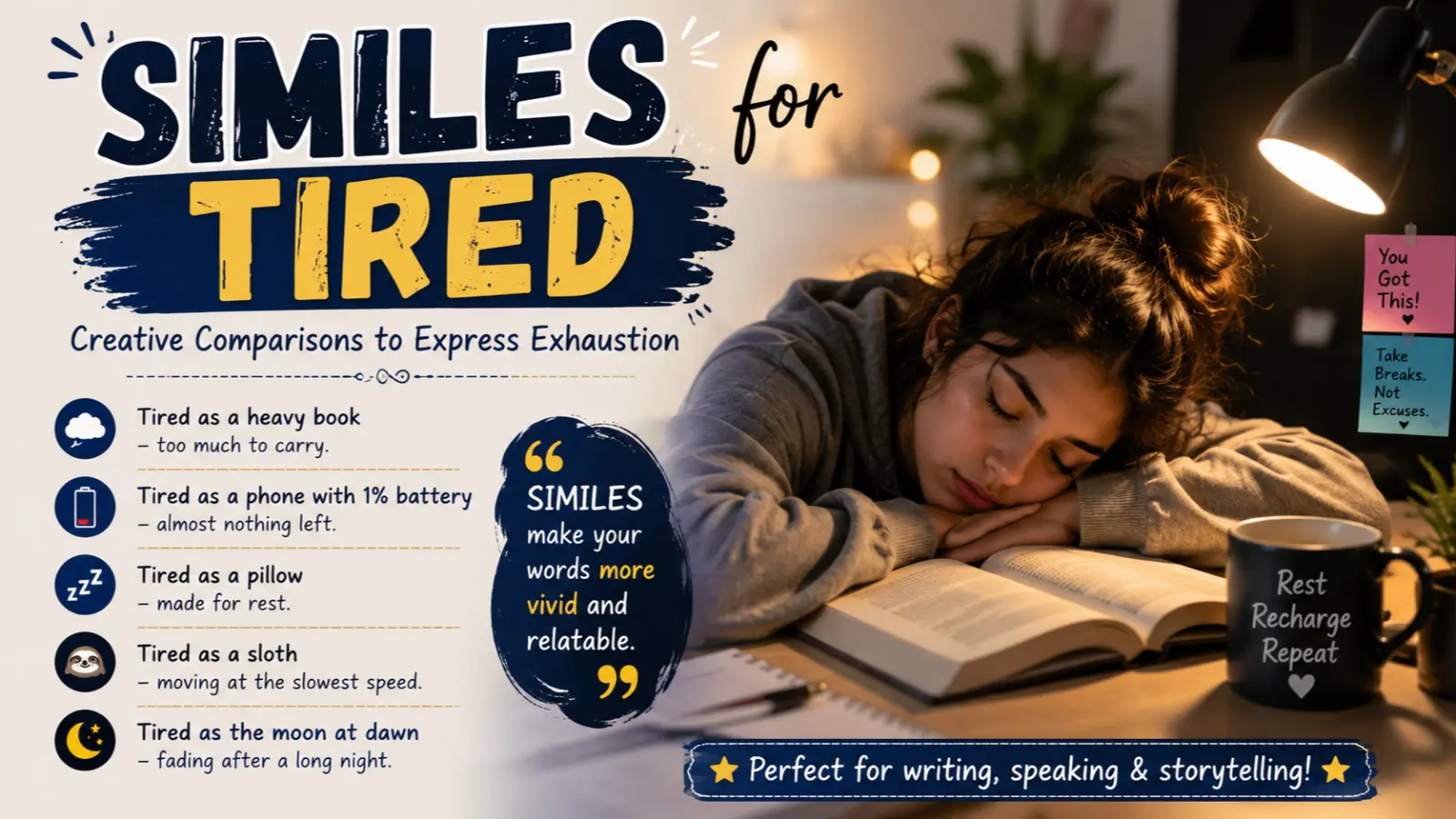
Feeling tired is something everyone experiences, but simply writing “he was tired” or “she felt exhausted” rarely paints a memorable picture. That’s where similes come in. A well-crafted simile helps readers see and feel a character’s fatigue instead of merely reading about it.Whether you’re writing a story, poem, essay, speech, or everyday conversation, choosing the right comparison can make your writing more expressive. This guide explores fresh similes for tired, explains why they work, and shows you how to create your own vivid comparisons.
What Is a Simile?
A simile compares two different things using like or as to highlight a shared quality.
For example:
She was as tired as a candle after burning through the night.
Instead of stating that someone is exhausted, the comparison creates an image readers can immediately imagine.
Quick Answer
Similes for tired compare exhaustion to familiar objects, people, or situations using like or as. They make writing more descriptive by helping readers picture physical or emotional fatigue through creative imagery.
Why Similes Make Exhaustion Feel Real
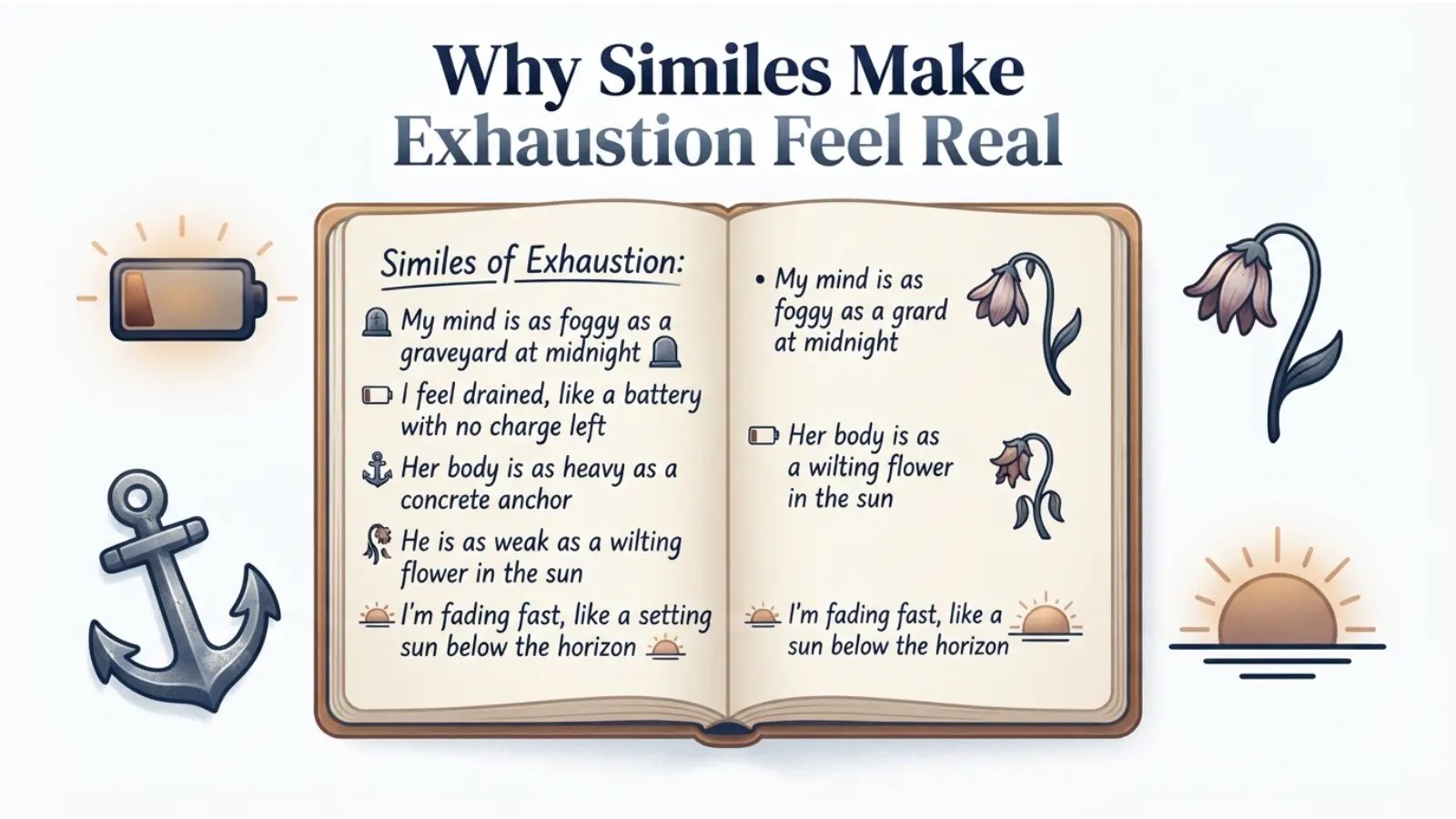
Tiredness isn’t always the same.
Someone may feel:
- Physically worn out
- Mentally drained
- Emotionally exhausted
- Sleepy
- Burned out after hard work
Different similes capture these different experiences, making your writing richer and more believable.
30 Original Similes for Tired
1. As tired as a lantern running out of oil
Meaning: Nearly out of energy.
Formal example:
After working all day, he was as tired as a lantern running out of oil.
Conversation:
“I’m as tired as a lantern running out of oil.”
Writing tip: Perfect for historical or rustic settings.
2. Like a bird flying against endless wind
This suggests someone has spent all their strength simply trying to keep going.
Story example:
She walked home like a bird flying against endless wind.
3. As tired as shoes after a thousand miles
A comparison that connects exhaustion with long journeys.
Best for: Adventure stories and travel writing.
4. Like a pencil worn down to its last inch
This represents someone who has almost nothing left to give.
Poetry:
His spirit felt like a pencil worn down to its last inch.
5. As tired as the last leaf holding to autumn
This creates a gentle image of quiet endurance.
Emotional effect: Peaceful exhaustion.
6. Like waves that have forgotten how to rise
Ideal for emotional fatigue.
Conversation:
Today I feel like waves that have forgotten how to rise.
7. As tired as a clock that never stopped ticking
Perfect for describing people who’ve been busy for a long time.
8. Like a backpack filled with invisible stones
Suggests both physical and emotional weight.
9. As tired as a bridge carrying endless traffic
Excellent for characters who constantly support others.
10. Like the final page of a well-read notebook
Shows someone who has given everything.
11. As tired as rain after a week of storms
Gentle yet expressive.
12. Like an old sweater stretched by many winters
Works well for emotional storytelling.
13. As tired as the moon waiting for sunrise
Creates calm nighttime imagery.
14. Like a phone running on one percent battery
A modern comparison readers instantly understand.
Conversation:
I’m basically running on one percent today.
15. As tired as boots left outside after a muddy hike
Best for outdoor adventures.
16. Like an empty coffee cup at midnight
Suggests long hours and fading energy.
17. As tired as snow melting beneath spring sunlight
A soft image of energy slowly disappearing.
18. Like a violin after the longest concert
Ideal for artistic or musical settings.
19. As tired as the final candle after a celebration
Suggests joyful but complete exhaustion.
20. Like a book whose pages have been turned all day
Perfect for students and readers.
21. As tired as a tree after weathering every season
Represents long-term endurance.
22. Like footsteps fading into evening
Creates quiet imagery suitable for poetry.
23. As tired as a kite after battling strong winds
Shows struggle followed by exhaustion.
24. Like a river slowing before the sea
Suggests peaceful surrender to rest.
25. As tired as sunlight at the end of winter
Evokes fading warmth and strength.
26. Like an actor after the final curtain
Excellent for performances or presentations.
27. As tired as a bicycle climbing its last hill
Shows determination despite exhaustion.
28. Like a painter after covering every wall
Represents satisfaction mixed with fatigue.
29. As tired as an old map folded a thousand times
Suggests years of use and experience.
30. Like a quiet fire becoming glowing embers
A calm, reflective comparison that suits emotional endings.
How to Make Similes for Tired More Powerful
Strong similes focus on a single clear image.
Instead of choosing random comparisons, ask yourself:
- Is the tiredness physical or emotional?
- What object naturally loses energy?
- What scene mirrors this feeling?
The clearer the image, the stronger the simile.
Avoid Overused Comparisons
Many writers rely on familiar expressions like:
- As tired as a dog
- As tired as a bear
- As tired as an old man
Readers have seen these many times.
Instead, compare exhaustion with unexpected but believable images. Originality helps readers remember your writing.
Related Literary Devices
Metaphor
A metaphor makes a direct comparison.
Metaphor:
His energy was a fading candle.
Simile:
His energy was like a fading candle.
Imagery
Imagery appeals to the senses.
When paired with similes, it allows readers to picture exhaustion rather than simply read about it.
Personification
Giving human qualities to non-human things can deepen a simile.
Example:
The road seemed tired after carrying travelers all day.
Hyperbole
Hyperbole exaggerates for effect.
Example:
I was so tired I could sleep for a century.
Use it sparingly when you want humor or dramatic emphasis.
Create Your Own Similes for Tired
Follow these simple steps:
Step 1: Identify the type of exhaustion
Is it:
- Physical?
- Mental?
- Emotional?
Step 2: Find something with similar qualities
Think about objects or scenes that:
- Lose power
- Slow down
- Wear out
- Fade
- Grow quiet
Step 3: Connect them naturally
Use like or as.
Example:
Instead of:
She was tired.
Write:
She was as tired as a violin after the longest concert.
Creative Exercise
Write one simile for each situation:
- A student after final exams
- A nurse after a night shift
- A marathon runner
- A parent caring for a newborn
- A traveler after a long flight
Try using fresh images rather than common expressions.
Common Mistakes
Using Clichés
Avoid comparisons readers have encountered countless times.
Mixing Images
Don’t combine unrelated ideas.
Weak example:
He was as tired as a mountain floating across the sea.
The image doesn’t make logical sense.
Confusing Similes and Metaphors
Remember:
- Similes use like or as.
- Metaphors make direct comparisons.
Forcing Comparisons
If readers have to stop and decode the image, the simile may be too complicated.
Forgetting the Tone
A humorous simile may not fit a serious novel, while a poetic comparison might feel out of place in casual dialogue.
Frequently Asked Questions
What is a good simile for tired?
A good simile compares exhaustion with something that naturally loses energy, such as a fading candle, slowing river, or nearly empty battery.
Why should writers use similes for tired?
They help readers visualize exhaustion, making descriptions more engaging and emotionally effective.
Can similes describe emotional exhaustion?
Yes. Images like fading waves, quiet embers, or a backpack filled with invisible stones can express emotional fatigue as well as physical tiredness.
Are similes useful in everyday conversation?
Absolutely. They make conversations more expressive and memorable without sounding overly formal.
How can I make my similes original?
Look for fresh comparisons from everyday life, nature, work, music, travel, or technology instead of relying on familiar sayings.
Should children use similes in school writing?
Yes. Similes encourage creativity and help young writers develop descriptive language while making stories more interesting.
Conclusion
Great writing doesn’t just tell readers that someone is tired—it lets them experience that feeling through vivid imagery. Original similes create emotional connection, strengthen storytelling, and make even ordinary moments memorable.As you practice writing, pay attention to the world around you. Everyday objects, changing seasons, quiet evenings, and simple routines all contain comparisons waiting to become memorable similes. The more you experiment with fresh imagery, the more distinctive and engaging your writing will become.
I am Helena Frost, a writer captivated by the beauty of language and the art of comparison. Through my words, I explore the world by turning ordinary moments into vivid similes and reflections. I enjoy crafting phrases that spark imagination, evoke emotion, and linger in the mind. My writing celebrates the subtle connections between people, nature, and the stories we live. For me, every sentence is an opportunity to reveal the extraordinary in the everyday.