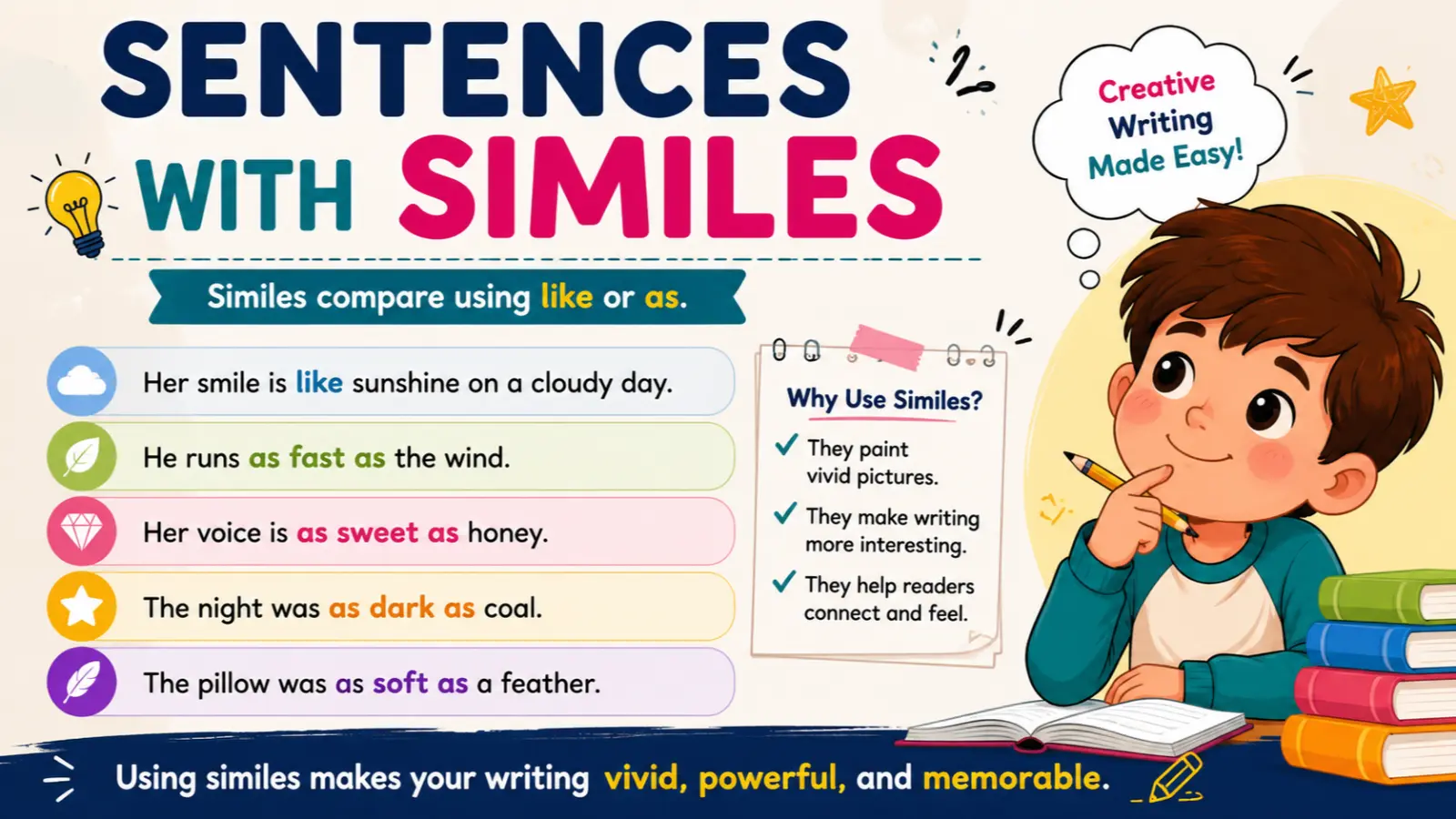
Similes help readers picture ideas, emotions, and actions by comparing one thing to another using “like” or “as.” They appear in novels, poems, speeches, conversations, andclassroom writing because they make ordinary sentences more engaging. If you’re looking for sentences with similes, this guide offers fresh examples, explains why they work,sentences with smile and shows you how to create your own original comparisons without relying on overused expressions.
Quick Answer
A sentence with a simile compares two different things using like or as to create a clearer mental image.
Example:
“The morning breeze moved through the trees like quiet music.”
This comparison sentences with smile helps readers imagine both the sound and the peaceful mood.
Why Similes Make Sentences Stronger
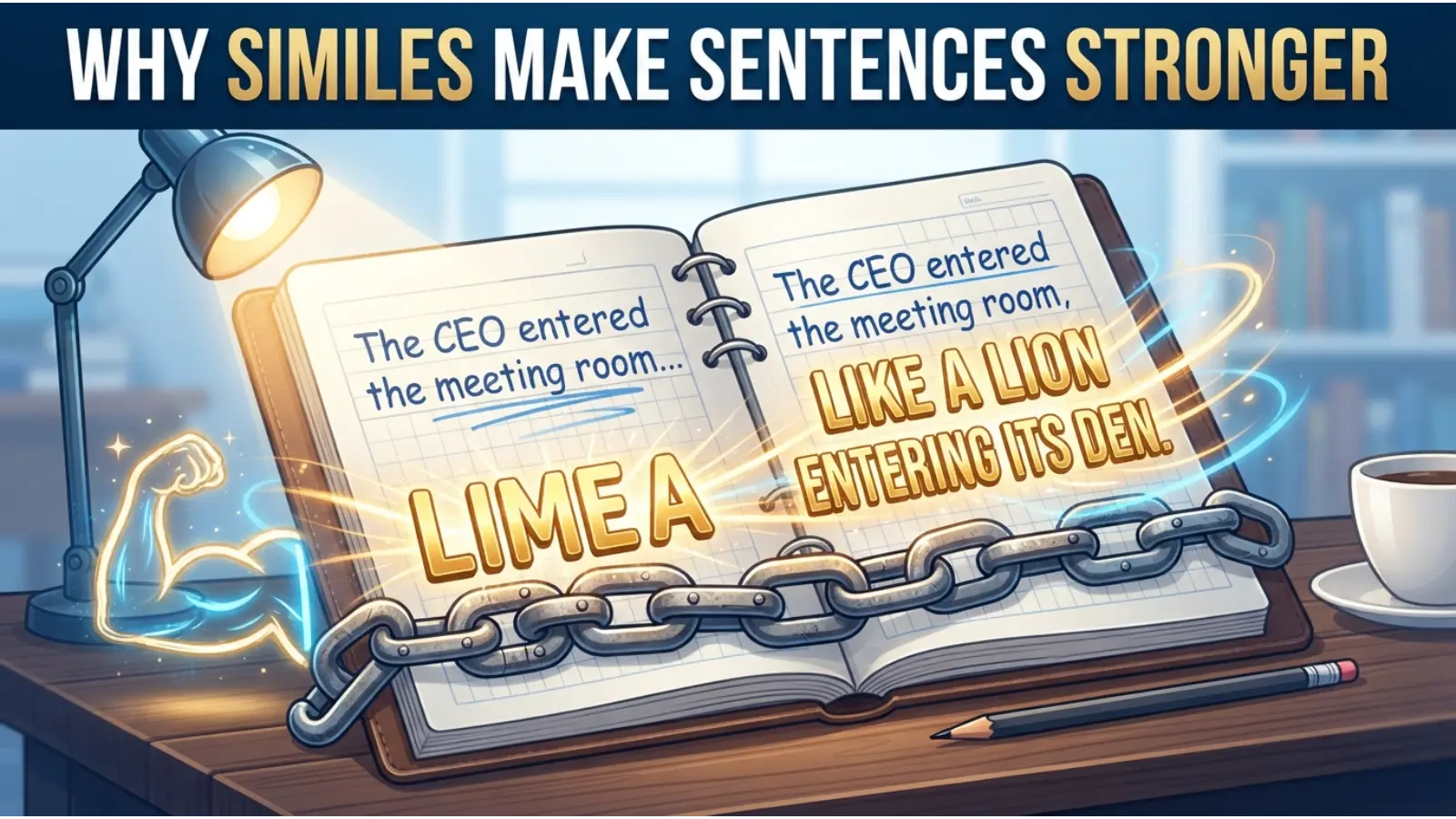
A simple sentence tells readers what happened.
A sentence with a simile helps readers experience what happened.
Instead of writing:
The child smiled.
You could write:
The child smiled like the first ray of sunrise touching a sleepy town.
The second sentence creates emotion and paints a picture.
Good similes can make writing feel more memorable because they appeal to imagination rather than simple description.
30 Original Sentences With Similes
1. Like a Lantern in Heavy Fog
Sentence
Her encouragement shone like a lantern in heavy fog, helping everyone find hope.
Meaning
A small act can guide people through uncertainty.
Best for
Motivational writing and emotional scenes.
2. As Calm as a Still Lake at Dawn
Sentence
He remained as calm as a still lake at dawn, even during the heated debate.
Why it works
The peaceful image sentences with smile contrasts with the stressful situation.
3. Like Fresh Paint on an Empty Wall
Sentence
The new idea spread through the team like fresh paint on an empty wall, changing everything.
Writing tip
Use similes to show transformation.
4. As Bright as Fireflies After Rain
Sentence
Her eyes sparkled as bright as fireflies after rain.
Creates
Wonder and beauty.
5. Like a Feather Dancing in the Wind
Sentence
The paper floated like a feather dancing in the wind.
Perfect for descriptive storytelling.
6. As Gentle as Falling Snow
Sentence
His voice became as gentle as falling snow while comforting his younger sister.
Shows kindness and warmth.
7. Like Ripples Across a Quiet Pond
Sentence
The exciting news spread like ripples across a quiet pond.
Best in conversations and narratives.
8. As Steady as an Old Oak Tree
Sentence
She stood as steady as an old oak tree when everyone else panicked.
Creates a feeling of strength.
9. Like Stars Scattered Across Velvet
Sentence
The diamonds glittered like stars scattered across velvet.
Ideal for vivid visual imagery.
10. As Light as Morning Mist
Sentence
The scarf felt as light as morning mist against my skin.
Excellent for sensory descriptions.
11. Like Rain Awakening Dry Earth
Sentence
His apology arrived like rain awakening dry earth.
Shows healing and renewal.
12. As Quick as a Flash of Silver Fish
Sentence
The little boy disappeared as quick as a flash of silver fish.
Adds movement and surprise.
13. Like Warm Bread From the Oven
Sentence
Her welcome felt like warm bread from the oven.
Suggests comfort and belonging.
14. As Silent as an Empty Theater
Sentence
The classroom became as silent as an empty theater.
Builds suspense.
15. Like Leaves Chasing the Wind
Sentence
The children raced across the playground like leaves chasing the wind.
Adds playful energy.
16. As Smooth as River Glass
Sentence
His explanation flowed as smooth as river glass.
Perfect for speeches.
17. Like a Candle in the Distance
Sentence
Hope remained like a candle in the distance.
Creates quiet optimism.
18. As Colorful as Spring Gardens
Sentence
The festival looked as colorful as spring gardens.
Ideal for travel writing.
19. Like Birds Greeting Sunrise
Sentence
The audience applauded like birds greeting sunrise.
Shows joyful excitement.
20. As Cool as Mountain Air
Sentence
The shade felt as cool as mountain air.
Excellent for nature writing.
21. Like Puzzle Pieces Finally Meeting
Sentence
Their ideas fit together like puzzle pieces finally meeting.
Works well in teamwork stories.
22. As Bright as a Fresh Rainbow
Sentence
Her imagination remained as bright as a fresh rainbow.
Creates optimism.
23. Like Tiny Boats on Gentle Waves
Sentence
The petals drifted like tiny boats on gentle waves.
Adds peaceful movement.
24. As Clear as Winter Sky
Sentence
His explanation became as clear as winter sky.
Useful in educational writing.
25. Like Threads Woven Into a Blanket
Sentence
Every memory connected like threads woven into a blanket.
Shows unity.
26. As Soft as Cloud Shadows
Sentence
The puppy’s ears felt as soft as cloud shadows.
Creates delicate imagery.
27. Like Sunrise Breaking the Night
Sentence
Her laughter arrived like sunrise breaking the night.
Expresses happiness.
28. As Strong as Flowing River Current
Sentence
His determination remained as strong as a flowing river current.
Works for inspirational writing.
29. Like Echoes Inside Ancient Hills
Sentence
Their promises lingered like echoes inside ancient hills.
Creates mystery.
30. As Fresh as the First Breeze of Spring
Sentence
The solution felt as fresh as the first breeze of spring.
Excellent for positive endings.
How Great Writers Build Memorable Similes
Professional writers rarely choose the first comparison that comes to mind.
Instead, they ask:
- What emotion should readers feel?
- What image best represents that emotion?
- Is the comparison fresh enough to surprise readers?
- Does it fit the setting and tone?
The strongest similes feel natural instead of forced.
How to Create Your Own Similes
Step 1: Pick the Main Idea
Choose the thing you want to describe.
Example:
- Smile
- Storm
- Voice
- Dream
- Mountain
Step 2: Identify Its Best Quality
Ask what stands out most.
Examples:
- Bright
- Loud
- Gentle
- Cold
- Fast
Step 3: Find an Unexpected Comparison
Instead of using a common object, think creatively.
Rather than:
As busy as a bee.
Try:
As busy as a train station before sunrise.
Step 4: Read It Aloud
A good simile should sound smooth and believable.
If it feels awkward, simplify it.
Practical Writing Exercises
Exercise 1
Write one sentence describing happiness without using the word happy.
Exercise 2
Describe a rainy afternoon using one original simile.
Exercise 3
Rewrite this sentence:
The cake smelled good.
Add your own simile.
Exercise 4
Describe someone’s courage using nature instead of animals.
Exercise 5
Write three different similes for the same object.
Notice how each changes the mood.
Common Mistakes Sentences with smile to Avoid
Using Overused Comparisons
Readers have seen many traditional similes countless times.
Fresh comparisons often leave a stronger impression.
Mixing Images
Avoid combining unrelated pictures.
Poor example:
Her smile was like sunshine swimming through thunder.
The images don’t work together.
Confusing Similes and Metaphors
Similes use like or as.
Metaphors compare directly without those words.
Simile:
The road stretched like a ribbon.
Metaphor:
The road was a ribbon.
Forcing Comparisons
Every comparison should improve understanding.
If it distracts readers, remove it.
Choosing Images That Don’t Match the Mood
A serious story usually needs thoughtful imagery.
A humorous story allows playful comparisons.
Always match your similes to the emotional tone.
Related Literary Devices
Metaphor
A metaphor compares two things directly without using like or as.
Imagery
Imagery appeals to the senses and helps readers see, hear, smell, taste, or feel a scene.
Personification
Personification gives human qualities to animals, objects, or ideas.
Hyperbole
Hyperbole uses intentional exaggeration for emphasis.
Alliteration
Alliteration repeats beginning sounds to make sentences more memorable.
Each of these devices can work alongside similes to create richer writing.
Frequently Asked Questions
What is a sentence with a simile?
It is a sentence that compares two different things using like or as.
Why are similes useful in writing?
They help readers visualize ideas, create emotion, and make descriptions more memorable.
Can similes be used in everyday conversation?
Yes. People naturally use similes to explain feelings, experiences, and observations more clearly.
What makes a good simile?
A good simile is original, easy to understand, and appropriate for the context.
Should every descriptive sentence include a simile?
No. Too many similes can overwhelm readers. Use them where they add meaning or emotion.
What’s the difference between a simile and an idiom?
A simile is a direct comparison using like or as. An idiom is a fixed expression whose meaning is not always literal.
Can children learn similes easily?
Yes. Starting with simple comparisons and encouraging creativity helps children understand how similes make writing more expressive.
Conclusion
Writing memorable sentences with similes is less about finding fancy words and more about making readers see familiar things in fresh ways. The best similes reveal emotion, sharpen description, and fit naturally within the story or conversation. Practice observing sentences with smile the world around you, experiment with unexpectedcomparisons, and don’t be afraid to revise until each simile feels vivid and authentic. Over time, these small creative choices will make every piece of your writing more engaging and memorable.
I am Helena Frost, a writer captivated by the beauty of language and the art of comparison. Through my words, I explore the world by turning ordinary moments into vivid similes and reflections. I enjoy crafting phrases that spark imagination, evoke emotion, and linger in the mind. My writing celebrates the subtle connections between people, nature, and the stories we live. For me, every sentence is an opportunity to reveal the extraordinary in the everyday.