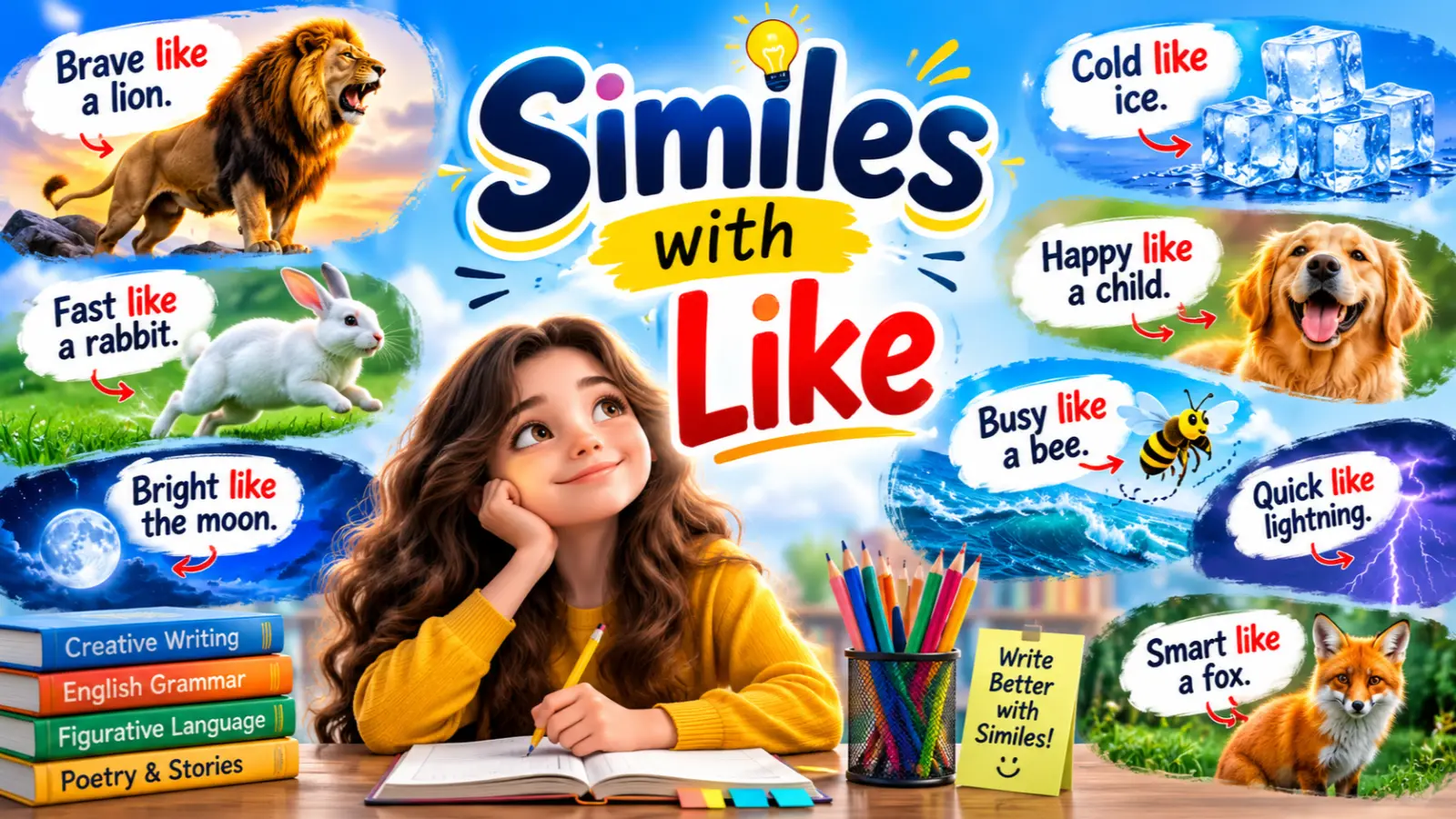
Similes are one of the easiest ways to make writing more colorful. They compare two different things using words such as like or as, helping readers picture an idea more clearly. Among these, similes with like are especially popular because they sound natural in conversation, stories, poems, essays, and everyday writing. A well-crafted comparison can turn an ordinary sentence into one readers remember. Whether you’re a student, teacher, creative writer, or simply someone who enjoys expressive language, this guide will help you understand how to write better similes with like while creating your own original comparisons.
What Are Similes With Like?
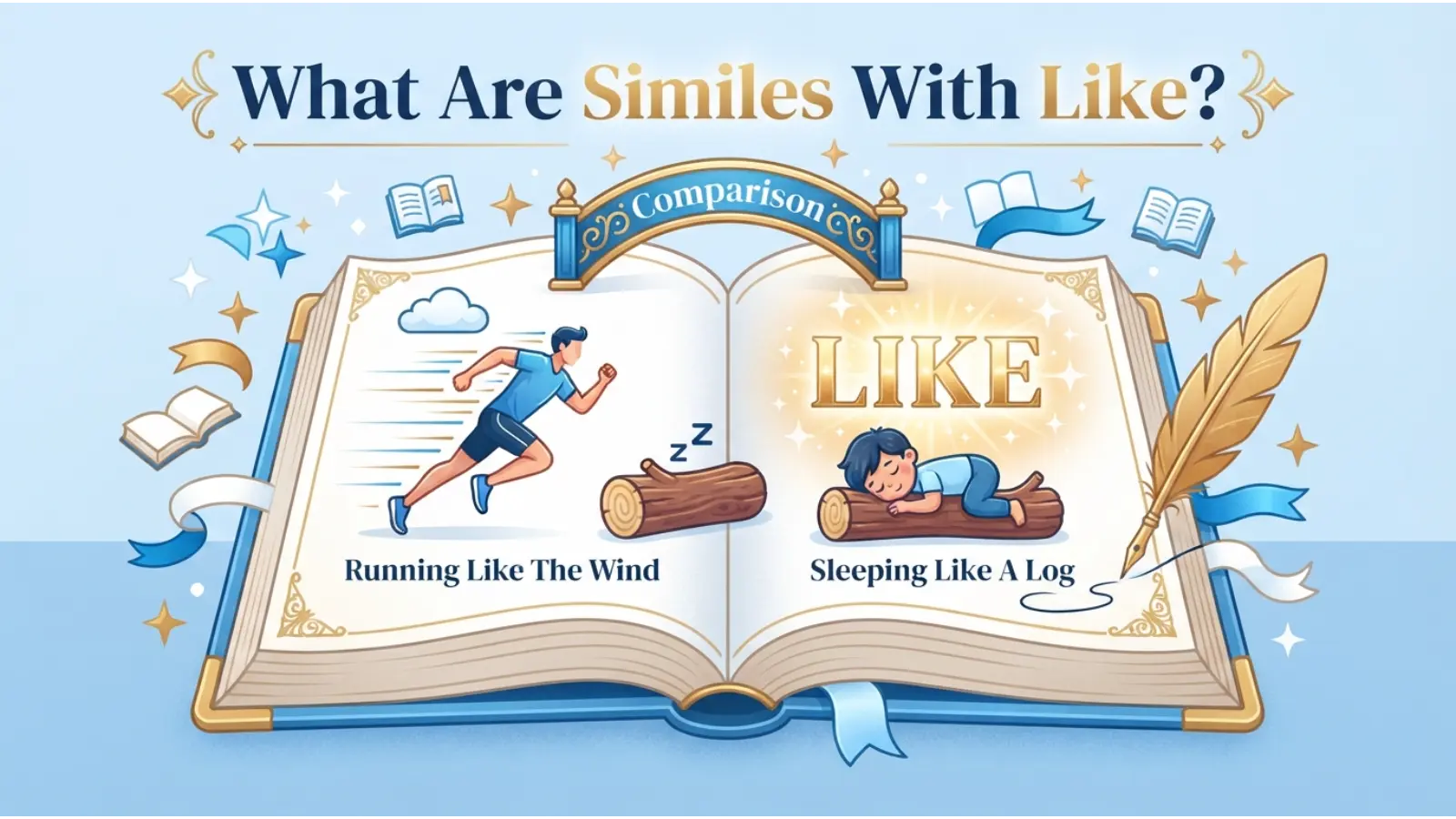
A simile with like compares one thing to another using the word like.
Formula
Subject + action/quality + like + comparison
Examples:
- The leaves danced like tiny green boats.
- Her laugh echoed like silver bells.
- The road twisted like a sleeping snake.
The comparison helps readers imagine something they already know, making descriptions more vivid and memorable.
Why Writers Love Using “Like” in Similes
Using like creates an instant mental picture without claiming two things are literally the same.
It can:
- Add emotion
- Strengthen imagery
- Improve storytelling
- Make descriptions easier to understand
- Give writing personality
Even a simple sentence becomes more engaging with the right comparison.
Instead of:
The room was quiet.
Try:
The room was quiet like a library after midnight.
The second sentence paints a stronger picture.
25 Original Similes With Like
Like a Lantern in Thick Fog
Simile
His advice was like a lantern in thick fog.
Meaning
Someone provides clarity during confusion.
Works Best In
Stories, speeches, reflective writing.
Conversation
“Your explanation was like a lantern in thick fog.”
Writing Tip
Choose comparisons that solve a problem rather than simply describing one.
Like Rain Waking a Dry Garden
Hope returned like rain waking a dry garden.
This creates a feeling of renewal after difficult times.
Ideal for emotional writing.
Like a Kite Searching for Wind
Her dreams floated like a kite searching for wind.
This suggests determination mixed with uncertainty.
Excellent for character development.
Like Fresh Paint on an Old Wall
His ideas spread like fresh paint on an old wall.
The comparison highlights transformation and new beginnings.
Like Pebbles Across a Quiet Lake
The rumors skipped like pebbles across a quiet lake.
Readers imagine how quickly information travels.
Like a Candle Refusing the Dark
She smiled like a candle refusing the dark.
This conveys courage and optimism.
Like Snow Landing on Warm Hands
His apology felt like snow landing on warm hands.
The moment is gentle yet short-lived.
Like a Compass Without North
I wandered like a compass without north.
Useful for expressing uncertainty.
Like Birds Leaving Before Dawn
The memories disappeared like birds leaving before dawn.
This creates peaceful imagery instead of dramatic loss.
Like a Window Opening After Winter
Relief arrived like a window opening after winter.
Perfect for hopeful moments.
Like Music Floating Through Trees
Her voice drifted like music floating through trees.
Ideal for poetic descriptions.
Like Ink Spreading Through Water
The excitement spread like ink spreading through water.
Shows gradual expansion.
Like a River Finding the Sea
His confidence grew like a river finding the sea.
This represents natural progress.
Like Leaves Following the Wind
The children ran like leaves following the wind.
Creates lively movement.
Like a Star Hidden by Clouds
His talent waited like a star hidden by clouds.
The ability exists even when unseen.
Like Glass Catching Morning Light
Her eyes sparkled like glass catching morning light.
Best for descriptive writing.
Like Fire Learning to Dance
The campfire flickered like fire learning to dance.
Adds personality without exaggeration.
Like Footprints in Fresh Snow
Her kindness remained like footprints in fresh snow.
Shows lasting impact.
Like a Book Waiting to Be Opened
Every stranger looked like a book waiting to be opened.
Excellent for reflective essays.
Like Clouds Borrowing the Sunset
The curtains glowed like clouds borrowing the sunset.
Creates beautiful visual imagery.
Like a Key Finding Its Lock
The solution fit like a key finding its lock.
Useful in educational and professional writing.
Like Waves Greeting the Shore
Their friendship returned like waves greeting the shore.
Suggests reliability and comfort.
Like Threads Weaving a Blanket
Small moments joined like threads weaving a blanket.
Shows how little events create something meaningful.
Like Seeds Waiting for Spring
Her ideas rested like seeds waiting for spring.
Represents future potential.
Like Morning Light Filling Empty Rooms
Kindness spread like morning light filling empty rooms.
Leaves readers with warmth and optimism.
Why These Similes Work
Strong similes don’t exist only to sound beautiful.
They:
- Connect emotions to familiar experiences.
- Help readers visualize scenes.
- Create memorable characters.
- Slow readers down at important moments.
- Add rhythm without becoming overly dramatic.
Professional writers often choose comparisons that reveal something about the character or situation—not just the object being described.
How to Create Your Own Similes With Like
Creating original similes becomes easier when you follow a simple process.
Step 1: Identify the Main Idea
Ask yourself:
- What feeling?
- What movement?
- What color?
- What sound?
Example:
Loneliness
Step 2: Think of Something Readers Know
Instead of forcing unusual objects, choose familiar experiences.
Examples:
- Empty playground
- Quiet road
- Forgotten letter
- Locked gate
Step 3: Connect the Feeling
Example:
Loneliness sat like an unopened letter on the table.
The comparison feels natural because both suggest something waiting.
Step 4: Keep It Believable
Readers should immediately understand the connection.
If they need to stop and decode it, simplify.
How Professional Writers Make Similes Feel Fresh
Great comparisons usually have three qualities:
They Avoid Obvious Choices
Instead of comparing speed to lightning every time, think about everyday experiences.
They Match the Mood
A sad scene deserves gentle imagery.
An action scene benefits from energetic comparisons.
They Reveal Character
Different characters notice different things.
A gardener compares with flowers.
A sailor compares with waves.
A musician compares with melodies.
The comparison reflects the person telling the story.
Common Mistakes to Avoid
Using Overused Comparisons
Readers have seen familiar expressions countless times.
Try creating comparisons from ordinary life instead.
Mixing Images
Example:
Her smile spread like lightning across blooming flowers.
The images compete rather than support one another.
Stay focused on one clear picture.
Comparing Unrelated Ideas
A comparison should make immediate sense.
If readers struggle to understand why two things belong together, choose another image.
Using Too Many Similes
One strong comparison usually has more impact than five weak ones.
Let important moments breathe.
Confusing Similes With Metaphors
Simile:
Her voice sounded like soft rain.
Metaphor:
Her voice was soft rain.
Both are useful, but they work differently.
Related Literary Devices
Metaphor
States one thing is another to create a stronger image.
Imagery
Uses sensory language to help readers see, hear, smell, taste, or feel a scene.
Personification
Gives human qualities to non-human things.
Example:
“The wind whispered.”
Hyperbole
Uses deliberate exaggeration.
Example:
“I waited forever.”
Symbolism
Uses objects or actions to represent deeper meanings.
Together, these techniques help writers create rich and memorable descriptions.
Practice Exercises
Exercise 1
Complete this sentence:
The sunset looked like __________.
Exercise 2
Describe happiness without using the words:
- happy
- joy
- smile
Instead, create one simile using like.
Exercise 3
Choose one everyday object and compare it with:
- courage
- fear
- friendship
- hope
Challenge yourself to avoid common comparisons.
Frequently Asked Questions
What is a simile with like?
A simile with like compares two different things to make a description clearer or more imaginative.
Why do writers use like in similes?
Using like helps readers visualize unfamiliar ideas through familiar experiences.
Can similes with like be used in formal writing?
Yes. They work well in speeches, essays, articles, and literature when used thoughtfully and sparingly.
What’s the difference between “like” and “as” in a simile?
Both introduce comparisons. The choice often depends on the sentence structure and the rhythm of the writing.
How many similes should I use in one paragraph?
Quality matters more than quantity. One vivid simile is usually more effective than several weak ones.
Can children learn similes with like?
Absolutely. They are often one of the first figurative language tools taught because they are easy to recognize and create.
How can I avoid cliché similes?
Observe everyday life closely and build comparisons from personal experiences instead of relying on familiar expressions.
Conclusion
Similes with like do far more than decorate sentences—they help readers experience your ideas through clear, memorable imagery. The strongest comparisons come from careful observation, fresh thinking, and an understanding of the emotion or scene you want to convey. As you write, experiment with unexpected yet believable connections. Read your similes aloud, refine them until they sound natural, and don’t be afraid to replace an ordinary comparison with one drawn from your own experiences. Over time, you’ll develop a unique writing style that feels vivid, authentic, and unmistakably your own.
I am Helena Frost, a writer captivated by the beauty of language and the art of comparison. Through my words, I explore the world by turning ordinary moments into vivid similes and reflections. I enjoy crafting phrases that spark imagination, evoke emotion, and linger in the mind. My writing celebrates the subtle connections between people, nature, and the stories we live. For me, every sentence is an opportunity to reveal the extraordinary in the everyday.