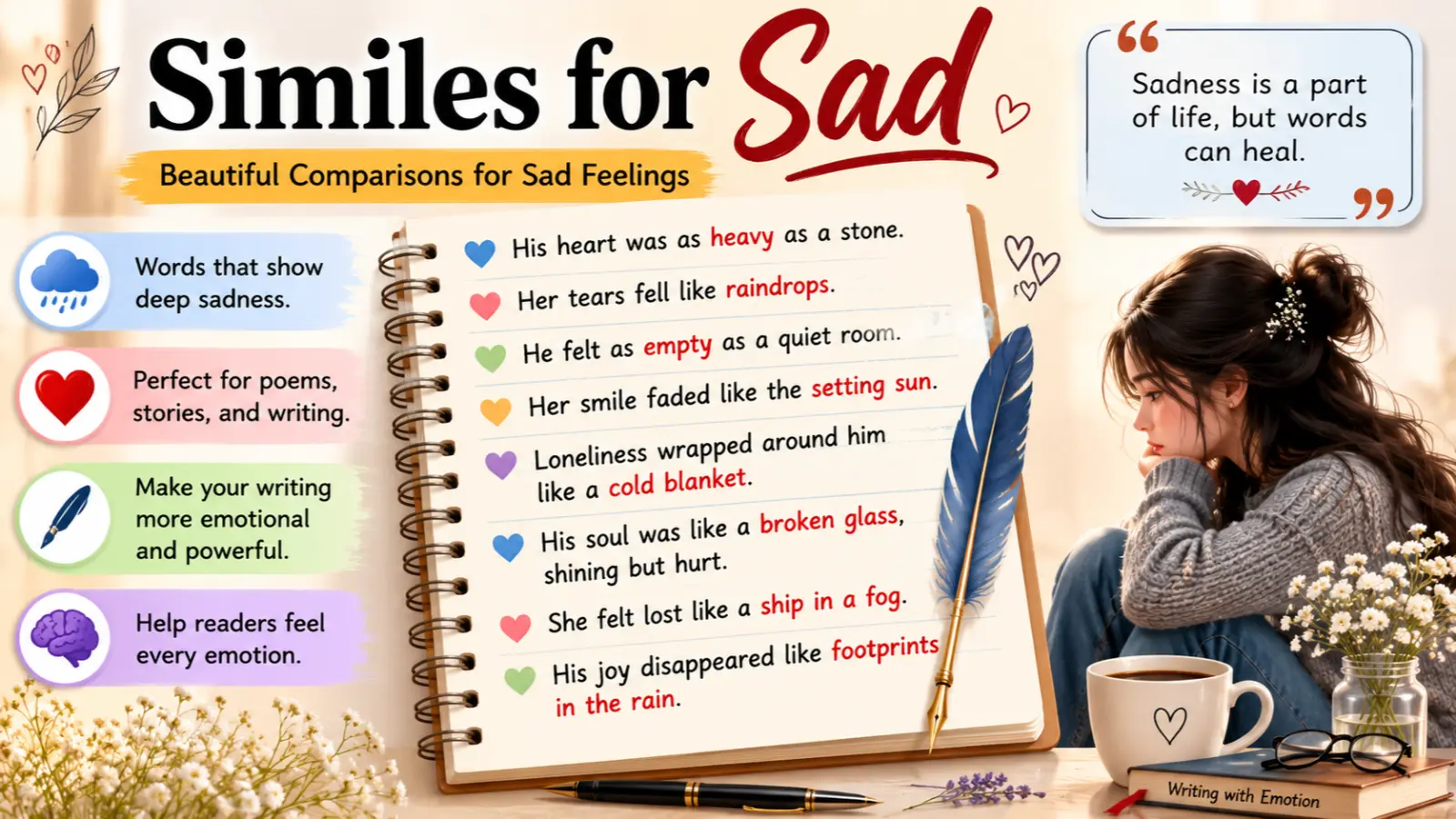
Sadness is one of the most powerful emotions a writer can express, but simply saying a character is sad rarely leaves a lasting impression. That’s where similes become valuable.
By comparing sadness to something familiar, A writer helps readers feel the emotion instead of merely reading about it. People use similes in stories, poems, journals,speeches, conversations, songs, and even everyday messages.
A thoughtful comparison can make a simple sentence unforgettable. This guide explores original similes for sad emotions, explains why they work, shows how to use them naturally, and helps you create your own meaningful comparisons.
What Is a Simile?
A simile compares two different things using the words like or as.
Instead of writing:
She felt sad.
You might write:
She felt like a candle fading in the rain.
The comparison paints a picture that readers can imagine and emotionally connect with.
Quick Answer
Similes for sad compare sadness to familiar experiences, objects, or scenes using like or as. They make emotions more vivid, helping readers understand how grief, disappointment, loneliness, or heartbreak feels through memorable imagery.
Why Similes Make Sadness Feel Real
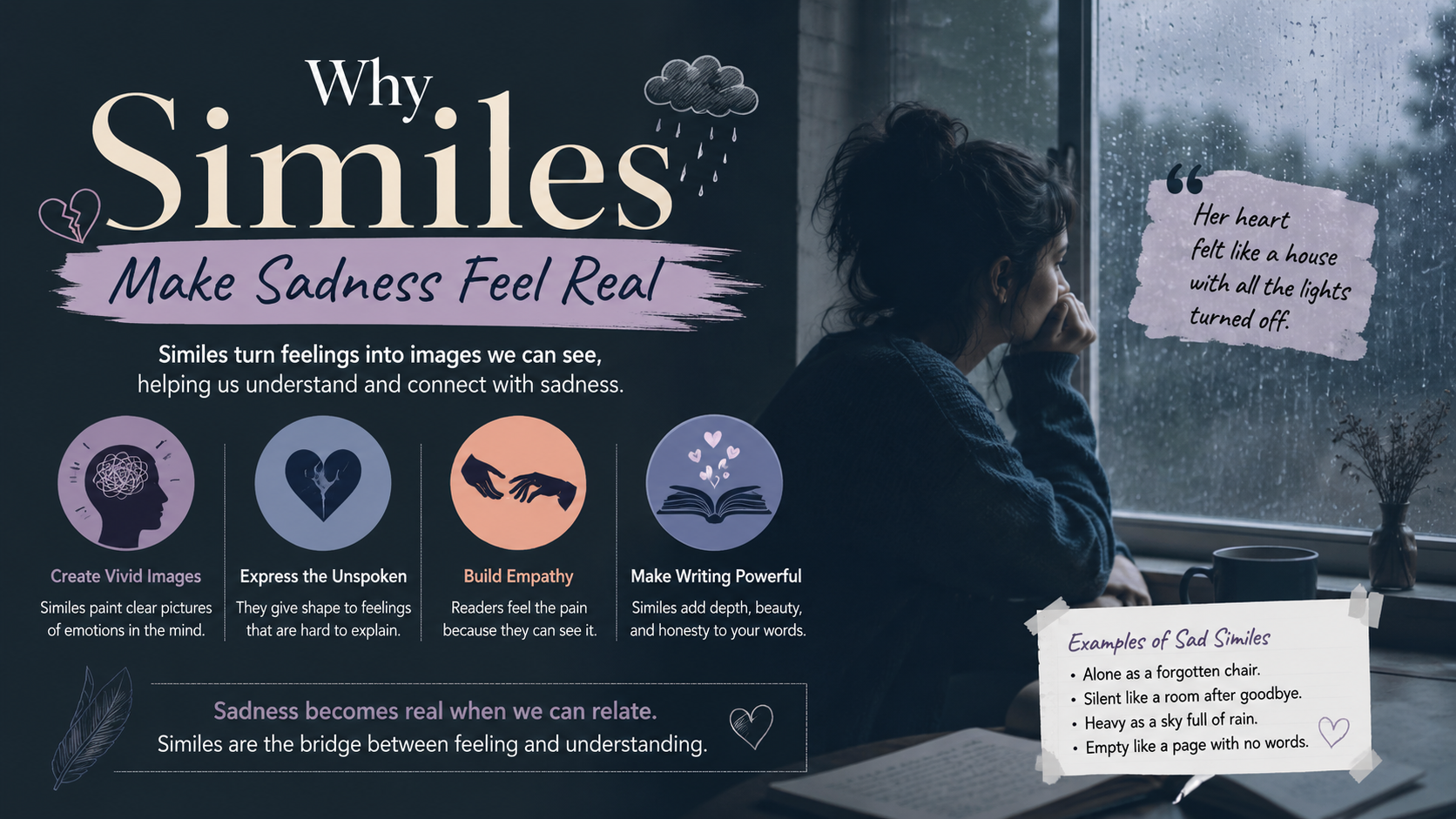
Readers connect with emotions through images rather than labels.
A thoughtful simile can show:
- Quiet loneliness
- Heartbreak
- Grief
- Disappointment
- Emotional exhaustion
- Regret
- Hopelessness
- Silent suffering
The strongest comparisons are specific enough to create a picture while remaining easy to understand.
Original Similes for Sad Feelings
1. Like a lantern losing its final glow
Meaning: Hope is slowly disappearing.
Story example: His smile faded like a lantern losing its final glow.
Best for: Quiet grief.
2. As silent as snowfall after midnight
Creates peaceful sadness instead of dramatic sorrow.
Conversation: She became as silent as snowfall after midnight.
3. Like a forgotten letter in an old drawer
Suggests feeling ignored or abandoned.
Writing tip: Excellent for loneliness.
4. As heavy as clouds before a storm
Shows emotional weight building over time.
5. Like waves pulling away from the shore
Represents someone emotionally withdrawing.
6. As empty as an abandoned playground
Creates a visual image of lost happiness.
Poetry: Her heart stood as empty as an abandoned playground.
7. Like autumn leaves drifting without direction
Perfect for uncertainty and emotional loss.
8. As fragile as thin ice in spring
Suggests someone trying not to break emotionally.
9. Like music fading into silence
Represents memories disappearing.
10. As lonely as one star before dawn
A gentle comparison for isolation.
11. Like a flower bending beneath endless rain
Shows emotional pressure over time.
12. As pale as the first winter morning
Works well for quiet sadness.
13. Like a bird searching for a missing nest
Expresses longing for comfort.
14. As distant as mountains hidden by fog
Shows emotional separation.
15. Like ink dissolving in water
Suggests fading confidence or identity.
16. As tired as an old clock that barely ticks
Represents emotional exhaustion.
17. Like footsteps disappearing in fresh snow
Shows memories slowly fading.
18. As hollow as an echo in an empty hall
Excellent for loneliness.
19. Like rain collecting on an unopened window
Represents emotions kept inside.
20. As quiet as a library after closing
A peaceful image of silence and sadness.
21. Like a kite tangled in bare branches
Shows dreams interrupted.
22. As gray as an afternoon without sunshine
Represents gloomy emotions.
23. Like a river that forgot its current
Suggests losing purpose.
24. As still as a photograph left untouched
Captures frozen emotions.
25. Like cracked porcelain carefully held together
Shows hidden emotional pain.
26. As faint as yesterday’s laughter
Perfect for nostalgia.
27. Like a candle waiting for the wind
Suggests fragile hope.
28. As slow as shadows stretching at sunset
Represents sadness arriving gradually.
29. Like frost covering a blooming garden
Shows happiness suddenly disappearing.
30. As lonely as a bench after the crowd has gone
A relatable image of solitude.
31. Like a book missing its final chapter
Suggests unfinished dreams.
32. As faded as paint beneath years of sunlight
Represents memories becoming distant.
33. Like a shell waiting for the sea to return
Shows longing.
34. As cold as forgotten footprints in winter
Creates emotional distance.
35. Like a window looking onto endless rain
A reflective image suitable for poetry and fiction.
Choosing the Right Simile for Different Kinds of Sadness
Heartbreak
Choose comparisons involving distance, broken objects, or fading light.
Example:
His heart felt like a bridge with one side missing.
Loneliness
Use quiet settings and empty places.
Example:
She stood as lonely as a lighthouse without ships.
Grief
Gentle natural imagery often feels more respectful than dramatic comparisons.
Example:
His sorrow settled like evening mist across the valley.
Disappointment
Choose images of interrupted progress.
Example:
Her excitement fell like a balloon losing its air.
Why These Similes Work
Strong similes succeed because they create both a picture and an emotion.
Instead of telling readers someone feels terrible, they allow readers to imagine:
- Empty places
- Quiet weather
- Fading light
- Slow movement
- Gentle silence
These images naturally evoke sadness without explaining it directly.
How Professional Writers Create Emotional Similes
Experienced writers rarely compare emotions to random objects.
Instead, they ask:
- What does sadness feel like?
- What moves slowly?
- What disappears?
- What loses brightness?
- What becomes quiet?
These questions lead to comparisons that feel authentic rather than forced.
Related Literary Devices
Metaphor
A metaphor states one thing is another.
Metaphor: His heart was winter.
Simile: His heart was like winter.
Imagery
Imagery appeals to the senses.
Combining imagery with similes creates stronger emotional writing.
Personification
Giving human qualities to nature can deepen emotional scenes.
Example:
The rain whispered against the windows.
Symbolism
Objects such as rain, fading candles, empty roads, or falling leaves often symbolize sadness without stating it directly.
Create Your Own Similes for Sadness
You don’t need to memorize dozens of comparisons. You can invent your own.
Step 1
Choose the emotion.
Example:
- Grief
- Regret
- Loneliness
- Heartbreak
Step 2
Think about what behaves similarly.
Ask yourself:
- Does it fade?
- Drift?
- Break?
- Freeze?
- Disappear?
Step 3
Build the comparison.
Pattern:
Emotion + like/as + vivid image
Example:
Her hope faded like footprints washed away by the tide.
Creative Exercise
Write five sad emotions.
Now match each one with:
- A season
- A weather scene
- A natural object
- A sound
- A place
Then combine them into original similes.
Common Mistakes Writers Make
Using Overused Comparisons
Phrases like “sad as a puppy” or “crying like a baby” often feel predictable.
Look for fresh images readers haven’t encountered repeatedly.
Mixing Imagery
Avoid combining unrelated pictures.
Weak:
Sad like a frozen flame.
The images conflict.
Confusing Similes and Metaphors
A simile uses like or as.
A metaphor does not.
Forcing Comparisons
Choose images that naturally reflect the emotion instead of sounding unusual for the sake of originality.
Explaining Too Much
After writing a strong simile, let readers experience it without immediately interpreting every detail.
Frequently Asked Questions
What are similes for sad emotions?
They are comparisons using like or as to describe sadness through vivid imagery instead of direct statements.
Can similes make emotional writing stronger?
Yes. They help readers visualize emotions and create a deeper emotional connection.
Should I avoid common sad similes?
Not always, but original comparisons often leave a stronger impression and make your writing stand out.
Are sad similes useful in poetry?
Absolutely. Poetry often relies on similes to express feelings through memorable images.
What’s the difference between a sad metaphor and a sad simile?
A simile compares using like or as. A metaphor makes a direct comparison without those words.
Can children use similes for sadness?
Yes. Simple comparisons help young writers express emotions more creatively and clearly.
Conclusion
Writing about sadness isn’t about choosing the darkest words—it’s about helping readers experience the emotion through meaningful images. A carefully crafted simile can transform an ordinary sentence into one that lingers in the reader’s mind long after the page is turned. Experiment with nature, light, weather, memories, and everyday objects. The more personal and believable your comparisons become, the more powerful your writing will feel. Don’t be afraid to create your own similes—some of the most memorable ones are the ones no one has written before.
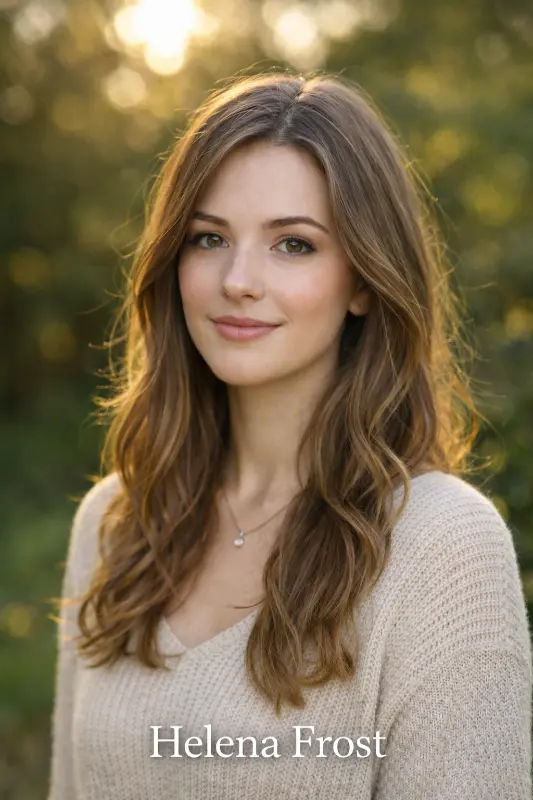
I am Helena Frost, a writer captivated by the beauty of language and the art of comparison. Through my words, I explore the world by turning ordinary moments into vivid similes and reflections. I enjoy crafting phrases that spark imagination, evoke emotion, and linger in the mind. My writing celebrates the subtle connections between people, nature, and the stories we live. For me, every sentence is an opportunity to reveal the extraordinary in the everyday.