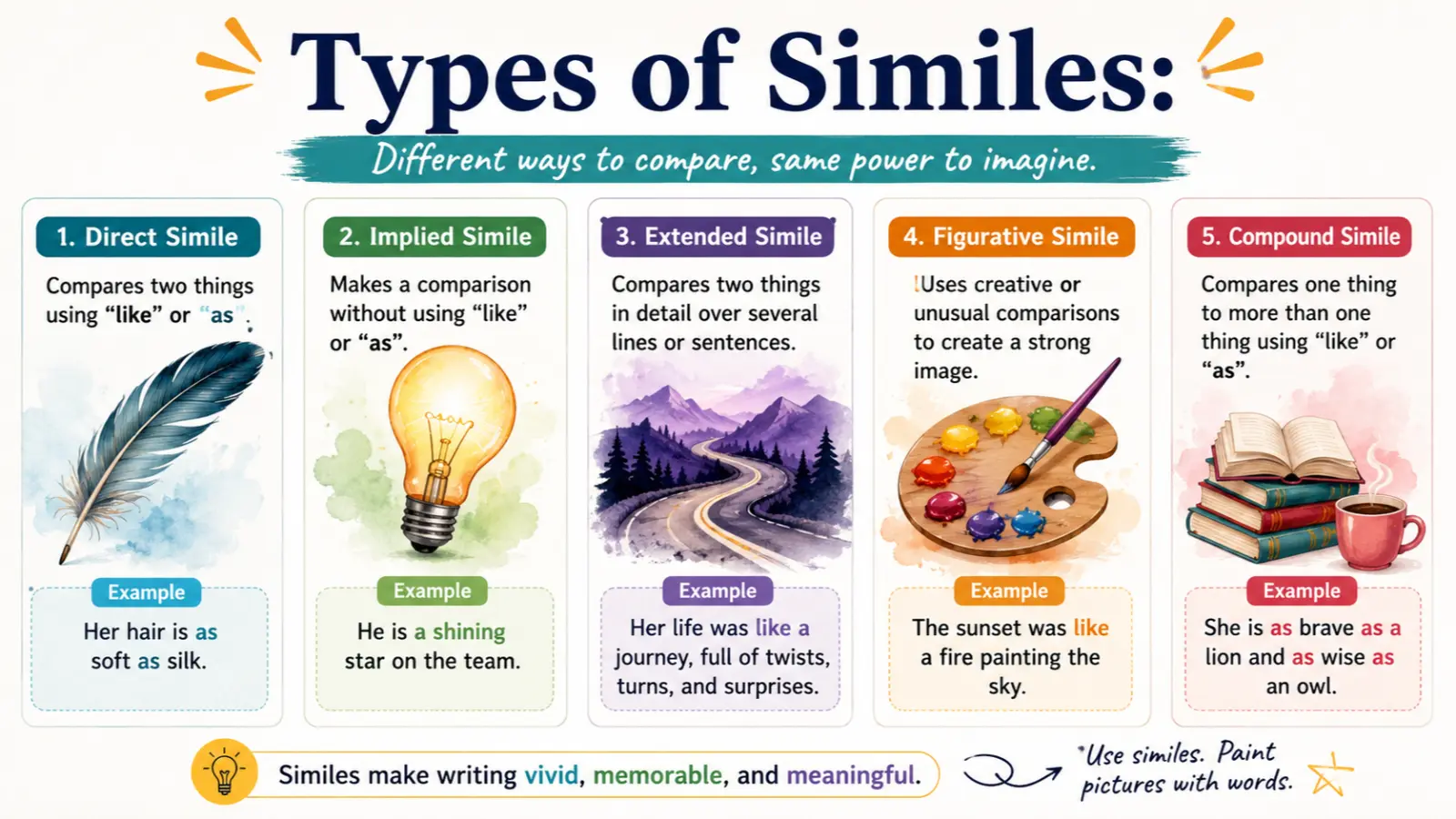
Similes are one of the easiest ways to make writing more colorful, memorable, and emotionally engaging. By comparing one thing to another using words like “as” or “like,” a writer helps readers picture an idea more clearly. But not all similes work the same way. Some create vivid images, while others express emotions, add humor, or strengthen storytelling. Understanding the different types of similes allows you to choose comparisons that fit your purpose instead of relying on familiar expressions. Whether you’re writing a story, poem, essay, speech, or social media caption, this guide will show you the major types of similes, how they work, and how to create your own original comparisons.
Quick Answer
Types of similes are different ways of making comparisons using “like” or “as.” They can describe appearance, emotions, actions, sounds, personality, nature, movement, or abstract ideas. Choosing the right type helps writers create stronger imagery and connect with readers more effectively.
Why Learning Different Types of Similes Matters
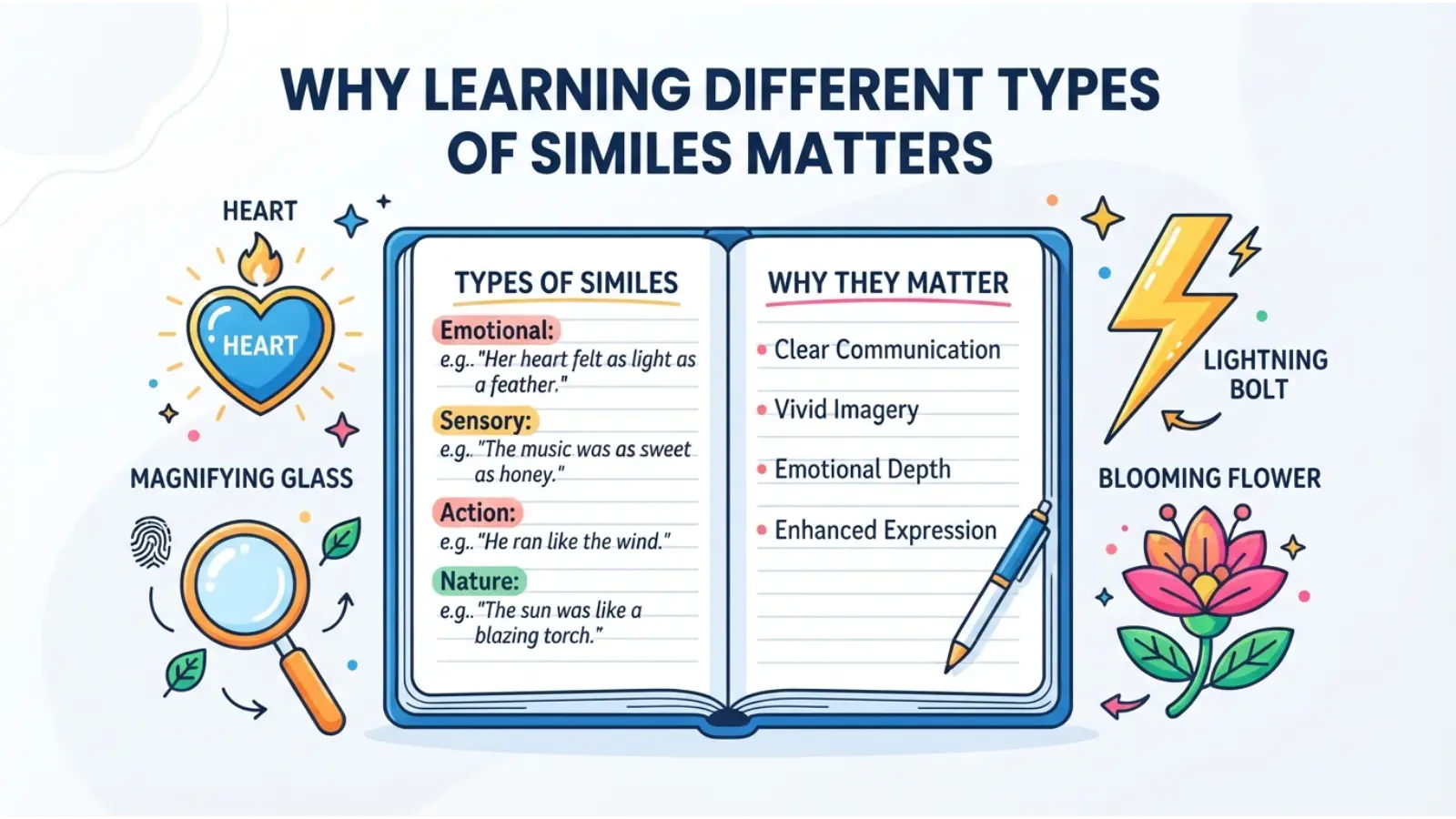
Many new writers think a simile is simply a comparison.
Experienced writers know something more important:
Every comparison creates a different emotional experience.
Compare these examples:
- Her smile was like sunrise after heavy rain.
- Her smile was like a bright flashlight.
Both compare a smile.
Only one creates warmth, hope, and emotion.
The goal isn’t simply to compare two things—it is to help readers feel something.
The Main Types of Similes
Appearance Similes
These describe how something looks.
They help readers visualize people, places, and objects.
Examples
- The lake shimmered like scattered diamonds.
- His jacket hung like folded wings.
- The clouds floated like painted feathers.
- The castle stood as proud as an old oak.
Best for: Descriptive writing, travel articles, fantasy, fiction.
Emotion Similes
These express feelings through vivid comparisons.
Examples
- Her hope grew like a candle in darkness.
- His worry spread like cracks across glass.
- My excitement danced like sparks in the wind.
- Their joy echoed like birds greeting the morning.
Writing Tip
Instead of naming an emotion, show how it behaves.
Action Similes
These describe movement and behavior.
Examples
- She climbed like someone chasing tomorrow.
- The horse raced like rolling thunder.
- Leaves twirled like tiny dancers.
- The child skipped like sunshine across water.
Action similes bring energy into scenes without lengthy descriptions.
Nature Similes
Nature offers endless inspiration because readers already recognize its sights and sounds.
Examples
- His patience was like a quiet forest.
- Her thoughts drifted like morning mist.
- The village rested like a sleeping valley.
- The air felt as fresh as mountain rain.
Nature comparisons often create peaceful imagery.
Character Similes
These compare personality traits rather than appearance.
Examples
- She remained as steady as a lighthouse.
- He was like an unopened book, full of mystery.
- Their teacher guided them like a gentle compass.
- My friend stayed loyal like roots holding a tree.
These comparisons reveal character without directly explaining it.
Sound Similes
Readers don’t only imagine pictures—they imagine sounds.
Examples
- Her laughter rang like silver bells.
- The crowd roared like crashing waves.
- The violin whispered like distant wind.
- His footsteps faded like falling leaves.
Good sound imagery creates atmosphere quickly.
Abstract Similes
Some ideas cannot be seen.
Similes make abstract concepts easier to understand.
Examples
- Time slipped away like sand through open fingers.
- Opportunity appeared like a doorway in fog.
- Curiosity spread like light entering a room.
- Memory rested like an old photograph.
These work especially well in essays and reflective writing.
Humorous Similes
Funny comparisons make writing entertaining without becoming silly.
Examples
- He organized his desk like a tornado filing paperwork.
- My cooking smelled like a science experiment on vacation.
- She danced like a confused flamingo wearing roller skates.
- His excuses multiplied like rabbits with calendars.
Humor works best when the comparison surprises readers.
24 Original Similes to Inspire Your Writing
| Simile | Best Use |
|---|---|
| Calm as snowfall before dawn. | Peaceful scenes |
| Like ink spreading across water. | Mystery |
| Bright as fresh copper in sunlight. | Appearance |
| Like hidden music beneath silence. | Emotion |
| Gentle as rain on autumn leaves. | Character |
| Like stars learning to sing. | Poetry |
| Sharp as frozen air. | Description |
| Like ivy finding old walls. | Growth |
| Warm as bread from the oven. | Comfort |
| Like paper boats chasing rivers. | Adventure |
| Silent as unopened letters. | Reflection |
| Like lanterns floating through memory. | Nostalgia |
| Brave as the first bloom after winter. | Courage |
| Like a river remembering the sea. | Hope |
| Patient as moss growing on stone. | Character |
| Like echoes searching empty halls. | Loneliness |
| Clear as polished crystal. | Clarity |
| Like rain teaching dust to breathe. | Renewal |
| Soft as moonlight on snow. | Romance |
| Like feathers carried by dreams. | Fantasy |
| Curious as a child discovering stars. | Wonder |
| Like fresh paint waiting for stories. | Creativity |
| Strong as roots beneath storms. | Determination |
| Like sunrise opening sleepy windows. | Optimism |
How Professional Writers Create Strong Similes
Professional writers rarely choose the first comparison that comes to mind.
Instead, they ask questions such as:
- What emotion should readers feel?
- Which image is unexpected but believable?
- Does the comparison fit the setting?
- Can one comparison replace three ordinary sentences?
Strong similes usually come from careful observation rather than complicated language.
Make Your Similes More Memorable
Instead of comparing everything to common objects, notice details around you.
For example:
Instead of:
Cold as ice.
Try:
Cold as a park bench before sunrise.
The second comparison creates a specific picture that readers can imagine.
Specific details make similes feel fresh.
Related Literary Devices
Simile vs. Metaphor
A simile uses like or as.
A metaphor states that one thing is another.
Simile: Her voice was like flowing water.
Metaphor: Her voice was flowing water.
Simile and Imagery
Imagery appeals to the senses.
Similes often strengthen imagery by making descriptions easier to picture.
Simile and Personification
Personification gives human qualities to non-human things.
A writer can combine both.
Example:
“The wind danced like a joyful child.“
Simile and Symbolism
Sometimes a comparison carries deeper meaning.
A lighthouse may symbolize hope.
A bridge may symbolize connection.
Choosing symbolic images adds another layer to your writing.
Create Your Own Similes
Building original similes is easier than many writers expect.
Step 1
Choose what you want to describe.
Example:
Fear
Step 2
Think about its behavior.
Does it grow?
Hide?
Spread?
Fade?
Step 3
Find something in everyday life that behaves the same way.
Example:
Fear spread like ink across clean paper.
Creative Exercise
Write one simile for each of these ideas:
- Morning
- Friendship
- Courage
- Curiosity
- Rain
- Success
Avoid using “ice,” “lion,” “bee,” or other well-known comparisons.
Challenge yourself to invent something readers have never seen before.
Common Mistakes to Avoid
Using Overused Comparisons
Readers quickly recognize clichés.
Fresh observations leave stronger impressions.
Mixing Images
Avoid combining unrelated pictures.
Example:
Her smile bloomed like thunder.
Flowers and thunder create conflicting imagery.
Forcing a Comparison
Not every sentence needs a simile.
Too many comparisons slow the pace and reduce their impact.
Confusing Similes with Metaphors
Remember:
Similes use like or as.
Metaphors do not.
Comparing Things That Don’t Relate
The best similes connect two ideas that share a believable quality.
If readers must stop and puzzle over the comparison, it probably needs revision.
Frequently Asked Questions
What are the main types of similes?
The most common categories include appearance, emotion, action, character, sound, nature, humorous, and abstract similes.
Why are similes important in writing?
They make descriptions more vivid, improve imagery, and help readers connect emotionally with the text.
Can a simile be used in formal writing?
Yes. Essays, speeches, and articles often use carefully chosen similes to explain complex ideas more clearly.
How can I make my similes original?
Observe everyday experiences, focus on specific details, and avoid comparisons that readers have seen countless times.
What is the difference between a simile and imagery?
Imagery describes sensory experiences, while a simile is one technique writers use to create that imagery through comparison.
Should every paragraph contain a simile?
No. Similes are most effective when used purposefully. Too many comparisons can distract readers.
Conclusion
Learning the different types of similes gives you more than a larger vocabulary—it gives you better creative choices. Each type serves a unique purpose, from painting vivid scenes and revealing emotions to adding humor or strengthening storytelling. As you practice, pay attention to the world around you. Ordinary moments often inspire the most memorable comparisons. With thoughtful observation and a willingness to experiment, you’ll begin creating similes that feel fresh, meaningful, and unmistakably your own.
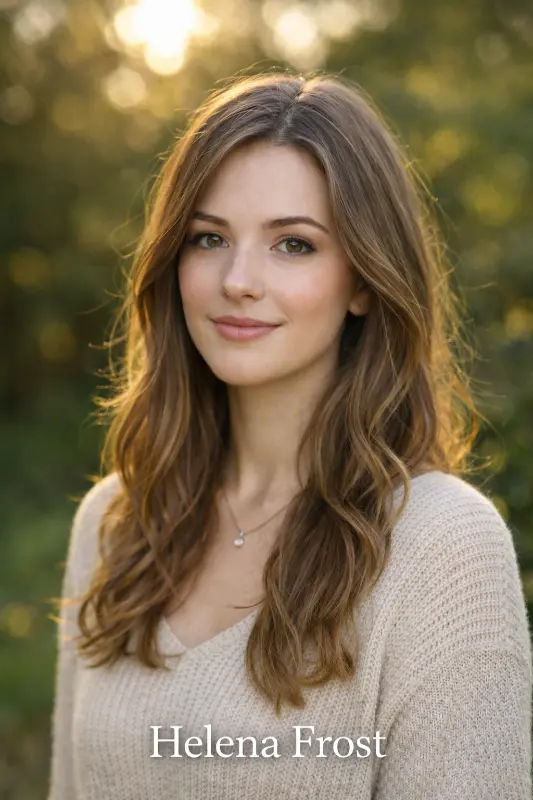
I am Helena Frost, a writer captivated by the beauty of language and the art of comparison. Through my words, I explore the world by turning ordinary moments into vivid similes and reflections. I enjoy crafting phrases that spark imagination, evoke emotion, and linger in the mind. My writing celebrates the subtle connections between people, nature, and the stories we live. For me, every sentence is an opportunity to reveal the extraordinary in the everyday.