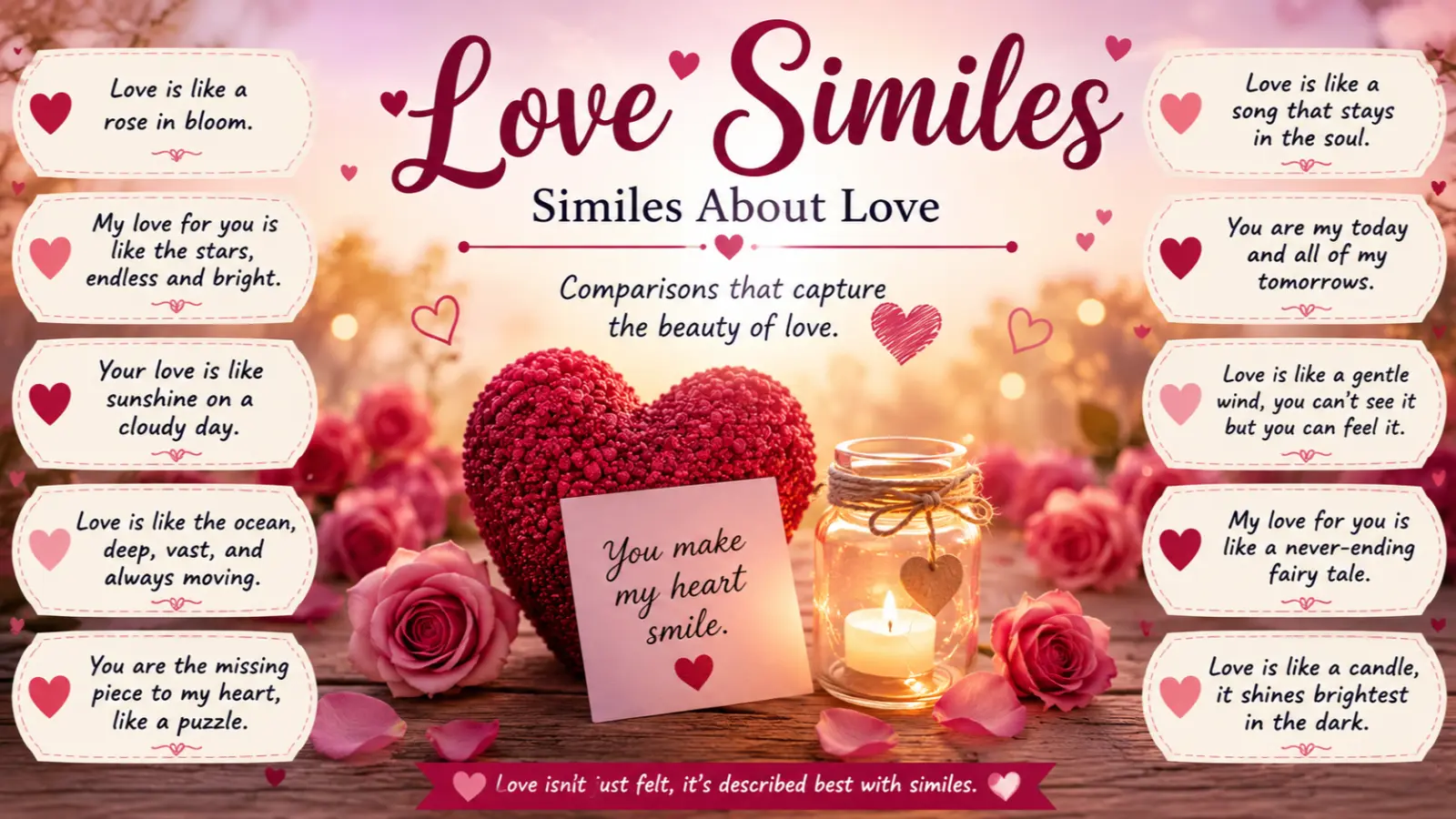
Love is one of the most powerful emotions people try to describe, yet it can also be one of the hardest. That is why writers often turn to similes. A well-crafted simile helps readers see, feel, and understand emotions through familiar images instead of plain descriptions. Whether you’re writing poetry, a romance novel, wedding vows, greeting cards, or heartfelt messages, the right comparison can make your words more vivid and memorable. In this guide, you’ll discover original similes about love, learn why they work, and find practical techniques to create your own meaningful comparisons.
What Is a Simile?
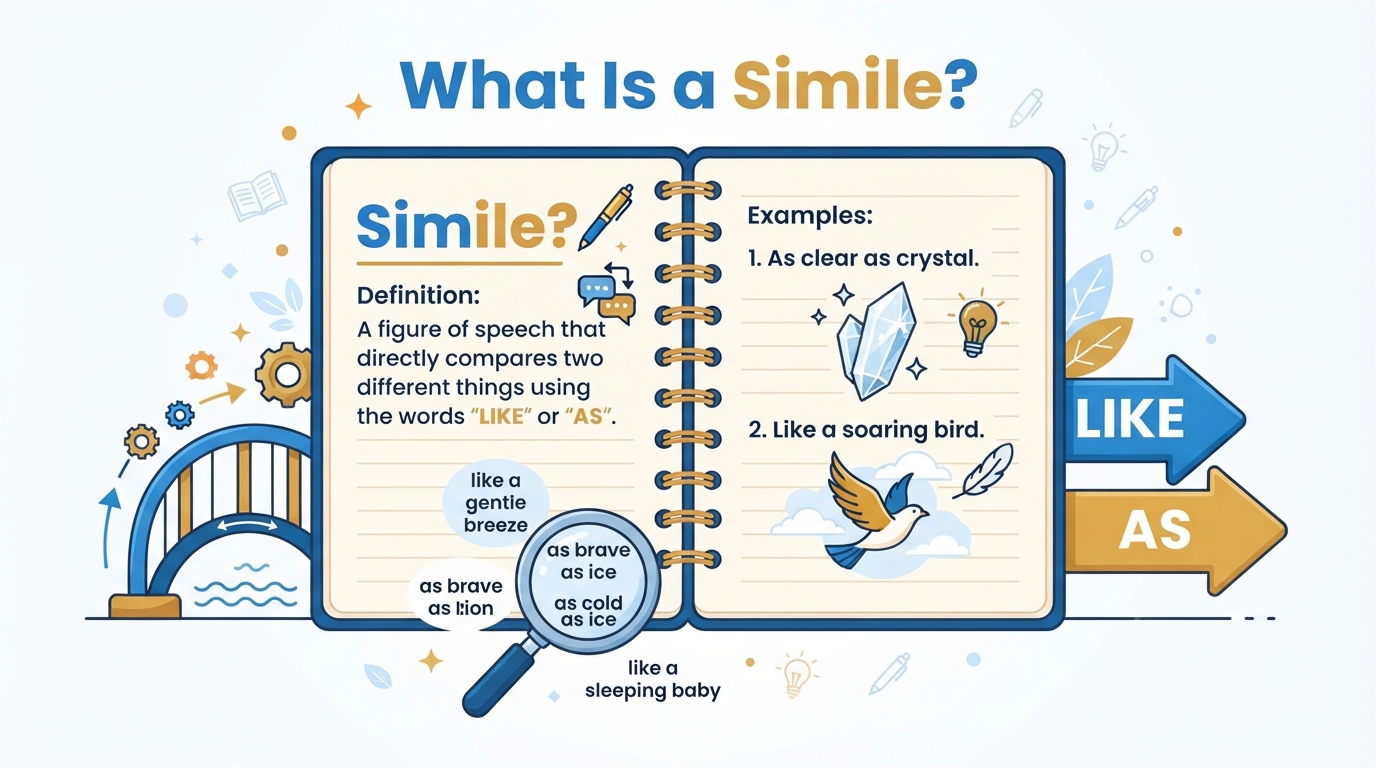
A simile compares two different things using words such as like or as.
Instead of saying someone loves deeply, you can compare that feeling to something readers already understand.
Example:
Her love stayed beside him like a lantern glowing through the darkest night.
The comparison creates an image while adding emotion and atmosphere.
Quick Answer
Similes about love compare love to familiar experiences, objects, or parts of nature using words like as or like. They help writers express affection, devotion, longing, comfort, excitement, or heartbreak in a way readers can instantly picture and feel.
Original Similes About Love
Love That Feels Safe
1. Love settled around them like a warm blanket on a winter evening.
Meaning: Comfort and security.
Story Example:
After years apart, her love settled around him like a warm blanket on a winter evening.
Writing Tip:
Perfect for peaceful romance scenes.
2. Their love stood like an old lighthouse during every storm.
Meaning: Dependability through difficult times.
Best For:
Marriage, lifelong friendships, family stories.
3. His kindness wrapped around her like a favorite sweater.
Meaning: Emotional warmth.
Conversation Example:
“Being with you feels like wearing my favorite sweater.”
4. Love rested between them like calm water beneath a sunrise.
Meaning: Peaceful affection without drama.
Love That Grows
5. Their love spread like ivy climbing an ancient wall.
Meaning: Gradual but unstoppable growth.
Writing Insight:
Growing imagery often makes relationships feel realistic.
6. Love unfolded like the first blossom of spring.
Meaning: A new beginning.
7. Her affection grew like a tree reaching toward sunlight.
Meaning: Healthy emotional growth.
8. Their trust bloomed like wildflowers after gentle rain.
Meaning: Trust develops naturally with care.
Love Full of Joy
9. His smile brightened her heart like sunrise touching snowy mountains.
Meaning: Pure happiness.
10. Love danced between them like sunlight on ocean waves.
Meaning: Playful romance.
11. Their laughter floated like colorful balloons into the summer sky.
Meaning: Shared happiness.
12. Her excitement sparkled like stars reflected in a quiet lake.
Meaning: Wonder and admiration.
Deep Emotional Love
13. Love echoed inside him like music filling an empty hall.
Meaning: Powerful emotional impact.
14. Her devotion ran as deep as an endless canyon.
Meaning: Extraordinary commitment.
15. Their connection fit together like two melodies becoming one song.
Meaning: Emotional harmony.
Poetry Example:
Two melodies met beneath the moon,
Like hearts discovering the same tune.
16. Love flowed through every memory like a quiet river.
Meaning: Lasting affection over time.
Gentle Romantic Similes
17. Her voice soothed him like rain tapping softly on leaves.
18. His words rested in her heart like treasured letters in a wooden box.
19. Their promises shone like candles in a quiet chapel.
20. Love lingered like the fragrance of fresh roses after sunset.
These comparisons create gentle, reflective imagery that works especially well in romantic fiction and poetry.
Passionate Love
21. Their love blazed like a bonfire beneath the autumn stars.
22. His heartbeat raced like wild horses across an open field.
23. Her kiss lingered like sunlight warming cool stone.
24. Love swept over them like a tide that refused to turn back.
These similes create energy without becoming overly dramatic.
Love Through Difficult Times
25. Their hope stood like an oak against fierce winds.
26. Love stitched broken moments together like careful hands repairing fine silk.
27. Their faith in each other glowed like a single candle through heavy darkness.
28. Love carried them like a sturdy bridge over rushing water.
These comparisons show resilience instead of perfection, making them believable.
Quiet Everyday Love
29. Love filled their home like the aroma of fresh bread.
Meaning: Comfort found in ordinary moments.
30. Her presence felt like morning light slipping through open curtains.
Meaning: Gentle happiness and optimism.
Why Strong Love Similes Work
The best similes do more than decorate a sentence. They connect emotion with imagery that readers already recognize.
A memorable comparison usually includes:
- A clear emotional purpose.
- Fresh imagery instead of worn-out phrases.
- Natural wording that fits the tone.
- Details readers can easily picture.
Instead of searching for the most dramatic comparison, look for one that feels honest.
How Professional Writers Create Memorable Similes
Experienced writers rarely choose the first comparison that comes to mind.
They often begin by asking:
- What emotion am I describing?
- What does that emotion feel like physically?
- What object, place, season, or memory creates that same feeling?
For example, if love feels dependable, compare it to something steady rather than something flashy.
Specific imagery almost always creates stronger writing than vague descriptions.
Related Literary Devices
Metaphor
A metaphor says one thing is another.
Metaphor: Love is a lighthouse.
Simile: Love is like a lighthouse.
Imagery
Imagery helps readers picture scenes through sensory details.
Example:
Her love smelled like fresh rain drifting through an open garden.
Personification
Personification gives human qualities to non-human things.
Example:
The evening breeze welcomed their love home.
Symbolism
Symbols add deeper meaning.
A lantern may symbolize hope.
A river may symbolize life’s journey.
A blooming flower may symbolize growing affection.
Using these devices alongside similes creates richer writing.
Create Your Own Love Similes
You don’t need poetic talent to invent original comparisons.
Try this simple method.
Step 1
Choose one feeling.
Examples:
- Comfort
- Excitement
- Trust
- Longing
- Gratitude
Step 2
Think of something that creates the same feeling.
Examples:
- Firelight
- Sunrise
- Ocean tide
- Mountain trail
- Garden
Step 3
Connect them naturally using like or as.
Example:
Her encouragement felt like sunrise after endless rain.
Creative Exercise
Complete these prompts using your own imagination.
- Love is like __________________________.
- His smile was as _____________________.
- Their friendship grew like ____________.
- My heart felt like ____________________.
- Her kindness arrived like _____________.
Avoid copying familiar sayings. Your own experiences often produce the strongest writing.
Common Mistakes When Writing Love Similes
Using Overused Comparisons
Comparisons such as “as red as a rose” or “like a beating heart” have appeared so often that they rarely surprise readers.
Look for fresh images from everyday life.
Mixing Imagery
Avoid combining unrelated pictures.
Weak:
Love was like a river climbing the mountain.
The images conflict.
Confusing Similes and Metaphors
Remember:
A simile uses like or as.
A metaphor does not.
Making Comparisons Too Complicated
Readers should understand the comparison immediately.
Simple images often create stronger emotional impact.
Comparing Things That Don’t Share a Clear Connection
Every simile should reveal something meaningful about love, not simply sound unusual.
Frequently Asked Questions
What is a simile about love?
A simile about love compares love to another object, experience, or image using words like as or like to create vivid emotional meaning.
Why are similes useful in romantic writing?
They help readers feel emotions instead of simply reading about them.
Can I use love similes in everyday conversation?
Yes. Simple, sincere comparisons can make compliments, letters, and speeches more memorable.
How do I avoid cliché love similes?
Choose personal experiences, natural settings, or everyday objects instead of famous comparisons that readers have seen many times.
What’s the difference between a simile and a metaphor?
A simile uses like or as, while a metaphor directly states that one thing is another.
Are similes good for poetry?
Absolutely. Similes add imagery, rhythm, and emotional depth, making poems more engaging.
Conclusion
Love is deeply personal, so the most memorable similes are often the ones that come from genuine observation rather than familiar expressions. Instead of reaching for the first comparison that comes to mind, pause and think about how love feels, sounds, moves, or changes over time. Those details lead to original writing that readers remember. Use the examples in this guide as inspiration, then experiment with your own comparisons. With practice, you’ll discover that the best similes don’t simply describe love—they help readers experience it.

I am Helena Frost, a writer captivated by the beauty of language and the art of comparison. Through my words, I explore the world by turning ordinary moments into vivid similes and reflections. I enjoy crafting phrases that spark imagination, evoke emotion, and linger in the mind. My writing celebrates the subtle connections between people, nature, and the stories we live. For me, every sentence is an opportunity to reveal the extraordinary in the everyday.