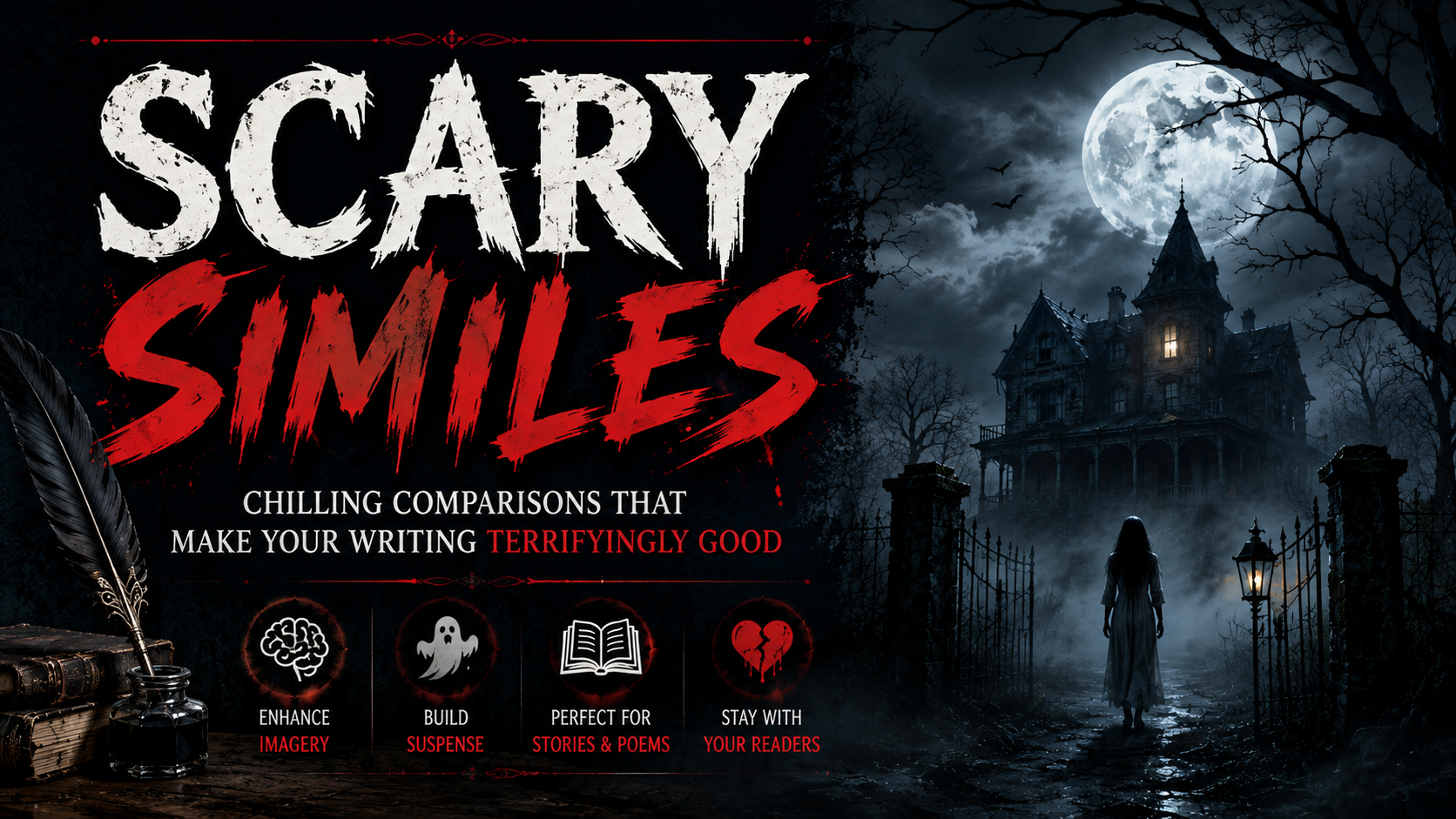
Fear is one of the strongest emotions a writer can create, but simply saying something was scary rarely leaves a lasting impression. That’s where similes become powerful. By comparing one thing to another using like or as, writers transform ordinary scenes into unforgettable moments. Scary similes appear in horror stories, thrillers, ghost tales, mysteries, Halloween writing, poems, games, and even everyday conversations. They help readers imagine fear instead of simply reading about it. Whether you’re writing fiction, crafting spooky poems, or looking for fresh comparisons, this guide will help you discover original scary similes while learning how to create your own.
What Are Scary Similes?
A scary simile compares a frightening feeling, object, place, or situation to something else using like or as to create suspense, unease, or tension.
For example:
The silence hung like a forgotten warning.
Rather than telling readers the silence felt creepy, the comparison encourages them to imagine the emotion themselves, making the scene far more vivid.
Why Writers Use Scary Similes
Fear grows stronger when readers picture it clearly.
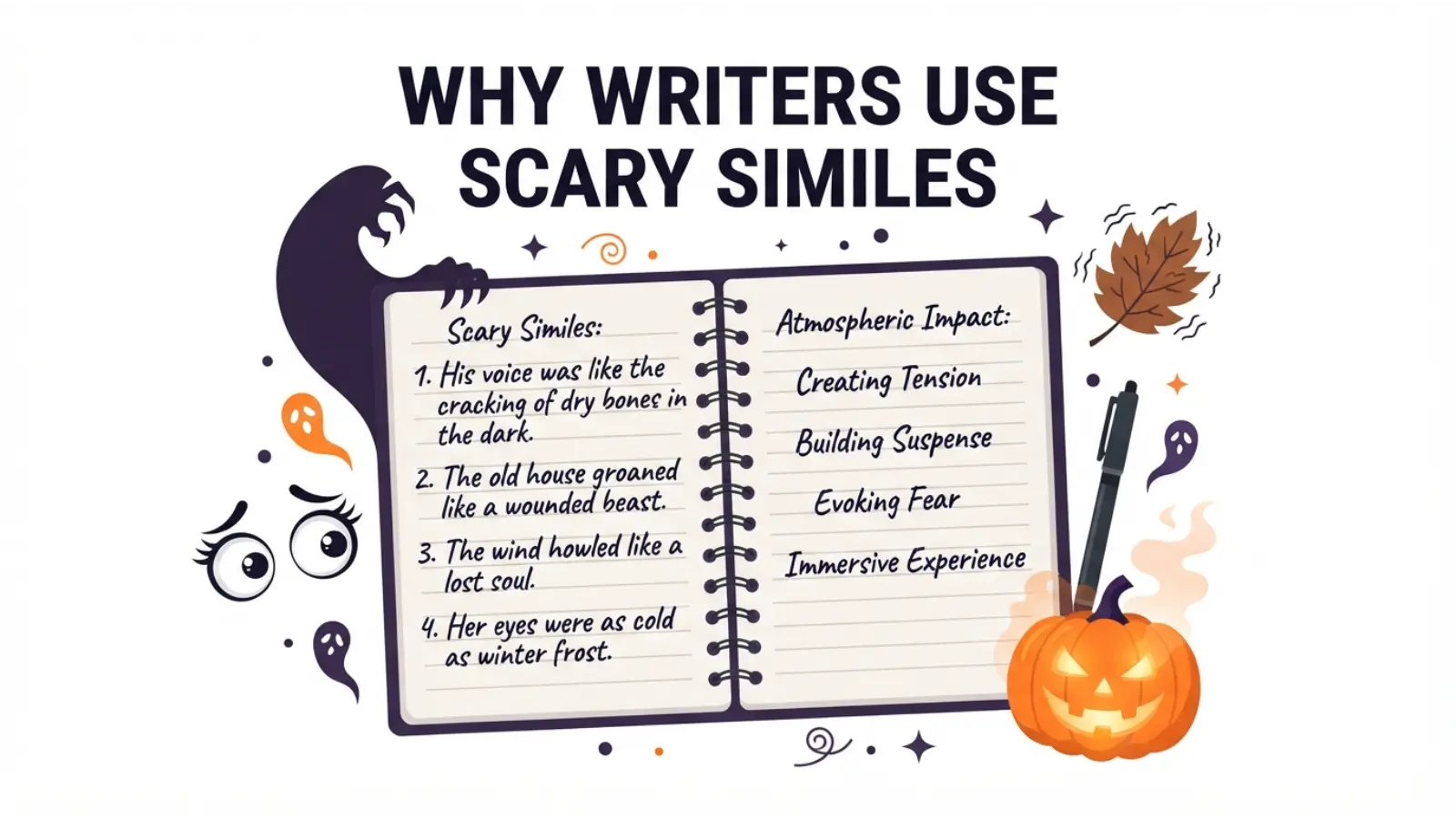
Well-crafted scary similes can:
- Build suspense before something happens.
- Create unsettling atmospheres.
- Reveal a character’s emotions.
- Make horror scenes memorable.
- Add depth to poetry and storytelling.
The best comparisons don’t rely only on monsters or darkness. Sometimes an ordinary object described in an unexpected way feels even more unsettling.
30 Original Scary Similes
1. Like footsteps following an empty hallway
Meaning: A fear that refuses to disappear.
Story Example:
The memory stayed behind him like footsteps following an empty hallway.
Writing Tip: Perfect for psychological suspense.
2. As cold as forgotten moonlight
Creates an eerie, lonely feeling.
Conversation:
“His handshake was as cold as forgotten moonlight.”
3. Like a door waiting to open by itself
Builds anticipation before danger appears.
Excellent for haunted house scenes.
4. As silent as a sleeping graveyard before dawn
Suggests unnatural stillness.
Poetry:
The village rested as silent as a sleeping graveyard before dawn.
5. Like shadows whispering secrets
Works well when describing uncertainty instead of visible danger.
6. As uneasy as a candle in a storm
Shows nervousness and vulnerability.
7. Like cracked glass hiding beneath your feet
Represents danger that isn’t immediately visible.
8. As pale as mist escaping a forgotten forest
Ideal for ghost stories or mysterious characters.
9. Like a smile carved from ice
Creates emotional discomfort.
10. As restless as ravens efore a storm
Useful when chaacters sense trouble approaching.
11. Like breathing inside someone else’s nightmare
A comparison for overwhelming fear.
12. As empty as abandoned carnival lights
Blends loneliness with unease.
13. Like rain tapping on a locked coffin
A haunting image that builds suspense without graphic detail.
14. As tense as a thread holding a falling bell
Shows a moment just before disaster.
15. Like echoes trapped beneath old stone
Suggests hidden memories or secrets.
16. As dark as smoke swallowing the stars
Creates dramatic visual imagery.
17. Like frozen breath hanging in frightened air
Ideal for winter horror scenes.
18. As distant as a warning no one believed
Works well in mystery stories.
19. Like broken clocks counting invisible hours
Adds surreal suspense.
20. As hollow as abandoned church bells
Creates emotional emptiness.
21. Like leaves running from unseen footsteps
Suggests invisible danger.
22. As sharp as fear behind closed eyes
Perfect for emotional descriptions.
23. Like fog covering forgotten names
Creates mystery instead of direct horror.
24. As heavy as silence before bad news
Useful beyond horror writing.
25. Like eyes hidden inside the woods
Creates immediate tension without revealing the threat.
26. As fragile as courage in the dark
Describes emotional fear beautifully.
27. Like smoke curling around old memories
Works well for supernatural themes.
28. As lonely as the last lantern before midnight
Creates quiet suspense.
29. Like thunder trapped underground
Suggests hidden danger waiting to emerge.
30. As endless as a nightmare without waking
An effective comparison for overwhelming fear and hopelessness.
What Makes a Scary Simile Effective?
The strongest scary similes do more than compare two things. They create an emotional response.
Good scary comparisons often include:
- Mystery instead of obvious danger.
- Familiar objects described in unusual ways.
- Sensory details like sound, temperature, or movement.
- Emotional tension rather than graphic imagery.
Readers often fear what they cannot fully see or explain.
Make Fear Feel Real Without Using Clichés
Many horror stories rely on comparisons such as:
- Cold as ice
- Quiet as a mouse
- Black as night
These expressions are familiar, but they rarely surprise readers.
Instead, look for fresh connections.
Rather than saying:
“The room was dark as night.”
Try:
“The room waited like a secret refusing to be discovered.”
The second version creates curiosity, not just description.
Related Literary Devices That Strengthen Fear
Imagery
Sensory details allow readers to hear, smell, and feel a frightening scene.
Personification
Giving human qualities to objects makes ordinary settings unsettling.
Example:
The staircase seemed to watch every step.
Metaphor
Unlike similes, metaphors make direct comparisons.
Simile: The wind sounded like whispers.
Metaphor: The wind was a chorus of whispers.
Symbolism
Objects such as abandoned houses, broken mirrors, or fading candles often symbolize fear, loss, or uncertainty.
How to Create Your Own Scary Similes
Creating original similes becomes easier with practice.
Step 1: Choose the emotion.
Examples:
- Fear
- Unease
- Suspense
- Panic
- Loneliness
Step 2: Think of an image.
Consider:
- Empty streets
- Storm clouds
- Old forests
- Flickering lights
- Locked doors
Step 3: Connect them naturally.
Example:
Fear + Flickering Candle
The hope trembled like a candle fighting the wind.
Step 4: Read it aloud.
If it sounds forced or confusing, simplify it.
The best similes feel effortless.
Creative Writing Exercise
Try completing these prompts with your own comparisons.
- The silence spread like __________.
- My heartbeat raced as __________.
- The forest stood like __________.
- Her shadow moved like __________.
- The house felt as __________.
Challenge yourself to avoid common comparisons. Look for images readers haven’t encountered before.
Common Mistakes When Writing Scary Similes
Using Overused Comparisons
Fresh imagery leaves a stronger impression than familiar expressions.
Mixing Unrelated Images
Avoid combining too many ideas in one comparison.
Weak:
The room was like thunder wrapped in frozen sunshine.
The images conflict instead of supporting one another.
Confusing Similes with Metaphors
Remember:
- Simile: uses like or as.
- Metaphor: makes a direct comparison.
Making Comparisons Too Long
If readers have to stop and decode the simile, it loses its impact.
Keep comparisons focused.
Describing Everything as Scary
Fear becomes stronger when contrasted with calm moments. Save your most vivid similes for important scenes.
Frequently Asked Questions
What is a scary simile?
A scary simile compares something frightening to another image using like or as to create suspense and stronger visual imagery.
Where are scary similes commonly used?
They appear in horror stories, mystery novels, Halloween writing, poems, screenplays, games, and creative writing assignments.
Can scary similes be used in children’s writing?
Yes. Writers can create spooky but age-appropriate comparisons without using graphic or disturbing imagery.
How do I avoid cliché scary similes?
Look beyond common expressions and compare emotions with unexpected but believable images from nature, everyday life, or architecture.
What’s the difference between a scary simile and a metaphor?
A simile uses like or as, while a metaphor states that one thing is another.
Should every horror scene include similes?
No. Similes are most effective when used selectively to highlight important moments rather than describing every sentence.
Conclusion
Scary similes do more than decorate your writing—they shape how readers experience fear. A fresh comparison can turn an ordinary hallway into a place of suspense or transform silence into something almost tangible. Instead of relying on familiar phrases, experiment with unusual images, focus on emotion, and let readers fill in the unknown with their imagination. The more original your comparisons become, the more memorable your writing will be.
I am Helena Frost, a writer captivated by the beauty of language and the art of comparison. Through my words, I explore the world by turning ordinary moments into vivid similes and reflections. I enjoy crafting phrases that spark imagination, evoke emotion, and linger in the mind. My writing celebrates the subtle connections between people, nature, and the stories we live. For me, every sentence is an opportunity to reveal the extraordinary in the everyday.