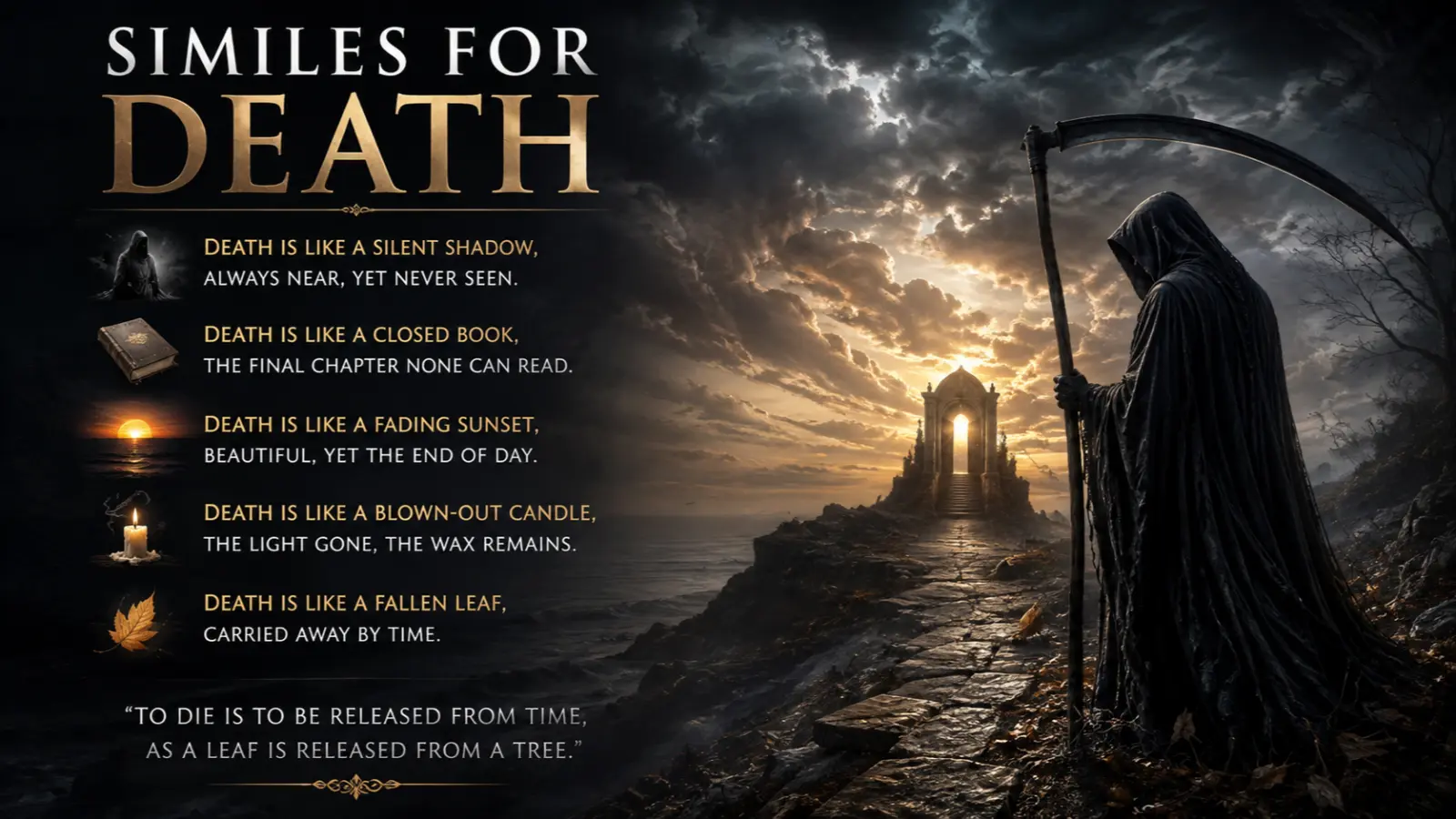
Death is one of the most difficult subjects to describe in writing. Whether you’re creating fiction, poetry, speeches, or reflective essays, finding the right comparison can help readers connect with emotion without relying on graphic or predictable language. A simile compares two different things using the words like or as. Instead of stating an idea directly, a simile paints a picture that readers can imagine and feel. Writers use similes to express grief, peace, mystery, fear, acceptance, sacrifice, and remembrance. The best similes for death don’t simply describe an ending—they reveal what that ending feels like. This guide offers original similes for death, explains why they work, and shows you how to use them naturally in different kinds of writing.
Quick Answer
Similes for death compare death to familiar experiences using like or as. They help writers express sorrow, peace, finality, or mystery in a vivid yet respectful way. Strong similes create emotion through imagery instead of direct explanation.
Why Writers Use Similes When Writing About Death
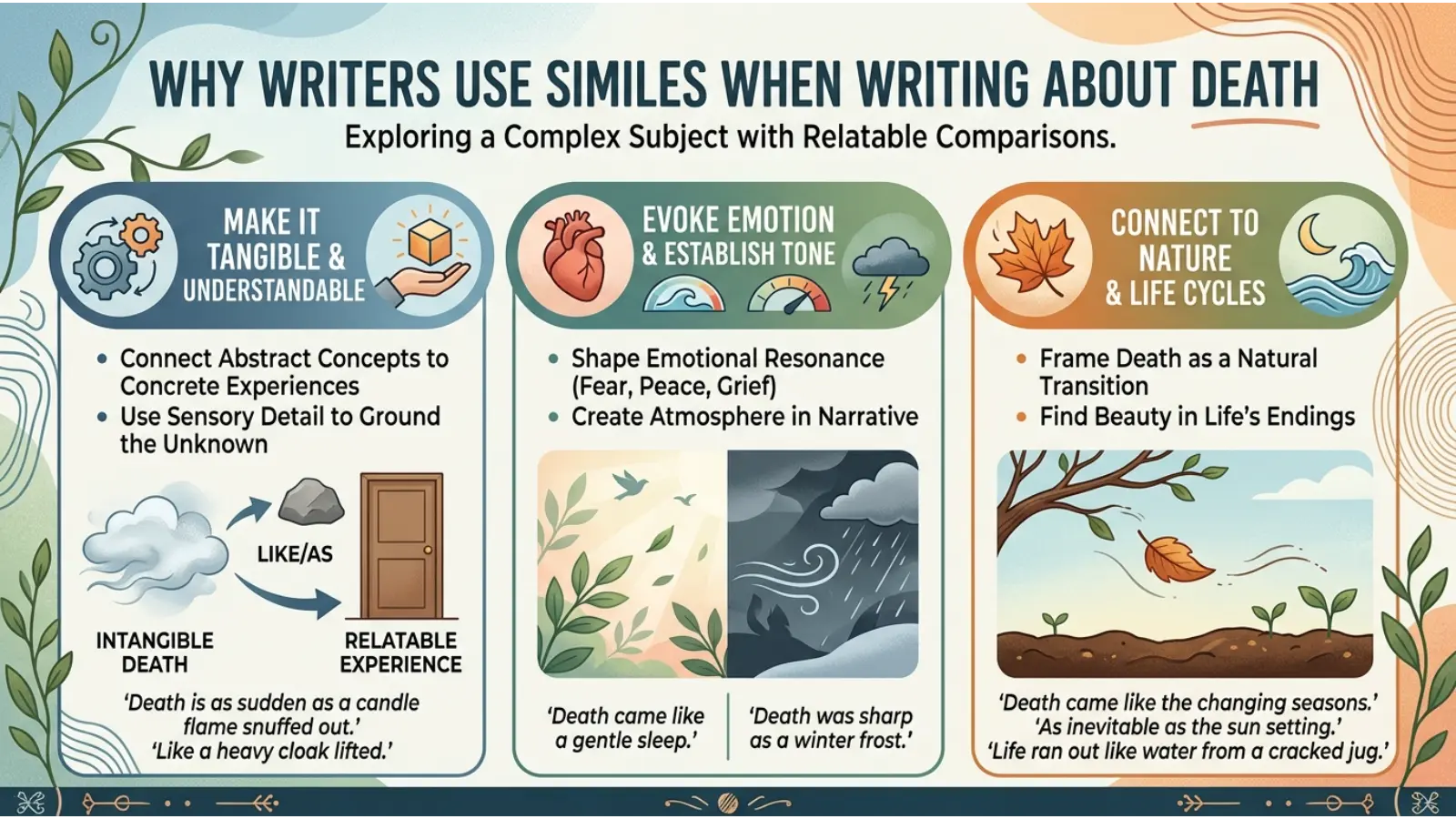
Death means different things depending on the story.
Sometimes it represents peace.
it marks sacrifice.
Sometimes it leaves unanswered questions.
Because emotions surrounding death are complex, similes help writers communicate feelings that ordinary descriptions often cannot.
A thoughtful comparison can soften difficult topics while making readers reflect more deeply on the moment.
Choosing the Right Tone
Before selecting a simile, decide how you want readers to feel.
Peaceful
Use images of quiet evenings, gentle snowfall, or calm waters.
Tragic
Choose fading light, broken music, or abandoned places.
Heroic
Compare death to a final flame or a bridge crossed for others.
Mysterious
Use fog, distant horizons, hidden doors, or silent forests.
Matching the emotional tone is more important than using dramatic language.
30 Original Similes for Death
1. As quiet as the last falling leaf
Meaning: A peaceful passing.
Examples
- Her final breath was as quiet as the last falling leaf.
- The old king slipped away as quietly as the last leaf of autumn.
Writing Tip: Ideal for reflective scenes rather than action.
2. Like a candle greeting the dawn
Meaning: Life ending naturally after fulfilling its purpose.
Examples
- His life faded like a candle greeting the dawn.
- The old lighthouse keeper disappeared like a candle greeting morning.
Best Context: Literary fiction and memoirs.
3. As gentle as snow covering forgotten footprints
Meaning: Death quietly erasing pain.
Examples
- Peace settled over him as gently as snow covering forgotten footprints.
- Her passing felt as gentle as fresh snow hiding yesterday’s path.
4. Like the tide pulling away from shore
Meaning: An inevitable departure.
Examples
- His spirit left like the tide pulling away from shore.
- Time carried her away like the evening tide.
Writing Purpose: Symbolizes acceptance.
5. As distant as a fading lighthouse
Meaning: Someone slowly slipping away.
Examples
- His voice became as distant as a fading lighthouse.
- Memory drifted away like a disappearing beacon.
6. Like the final page of an old journal
Meaning: A complete life story.
Examples
- Her journey closed like the final page of an old journal.
- His life ended like the last chapter written with care.
7. As silent as an empty chapel at dusk
Meaning: Deep stillness after loss.
Examples
- The room became as silent as an empty chapel at dusk.
- Their home felt as quiet as an abandoned sanctuary.
8. Like a bird disappearing beyond the clouds
Meaning: Leaving without knowing what lies ahead.
Examples
- He vanished like a bird beyond the clouds.
- Her soul seemed to soar beyond sight.
9. As calm as a lake before sunrise
Meaning: Peaceful acceptance.
Examples
- She rested as calmly as a lake before sunrise.
- His final moments felt calm and undisturbed.
10. Like autumn closing the garden gate
Meaning: The natural ending of life.
Examples
- Old age arrived like autumn closing the garden gate.
- Life ended with the certainty of changing seasons.
11. As soft as the fading echo of a bell
Meaning: Gradually disappearing.
Examples
- His laughter vanished as softly as a fading bell.
- Hope drifted away like an echo.
12. Like mist leaving the valley
Meaning: Quiet departure.
Examples
- She slipped away like morning mist.
- His presence dissolved like fog beneath sunlight.
13. As still as winter before sunrise
Meaning: Complete silence.
Examples
- Everything became as still as winter before sunrise.
- The battlefield rested in frozen silence.
14. Like the closing wings of a butterfly
Meaning: A delicate ending.
Examples
- Her final breath came like butterfly wings folding.
- Life settled gently into stillness.
15. As light as a feather carried by the wind
Meaning: Freedom from suffering.
Examples
- He seemed as light as a feather carried by the wind.
- Pain left him as easily as drifting feathers.
16. Like stars fading into morning
Meaning: Quiet disappearance.
Examples
- Their memories faded like stars at dawn.
- Life slipped away unnoticed.
17. As peaceful as rain ending after midnight
Meaning: Calm after hardship.
Examples
- His passing felt as peaceful as rain ending after midnight.
- Grief slowly settled into quiet acceptance.
18. Like a clock choosing silence
Meaning: Time finally stopping.
Examples
- His heart rested like a clock choosing silence.
- The room felt timeless afterward.
19. As gentle as a closing book
Meaning: A life completed.
Examples
- Her story ended as gently as a closing book.
- Every chapter had found its ending.
20. Like smoke dissolving into the sky
Meaning: Becoming part of something larger.
Examples
- His spirit rose like smoke into open skies.
- Memories drifted upward with quiet grace.
21. As quiet as moonlight on old stone
Meaning: Timeless peace.
22. Like the horizon swallowing the sun
Meaning: An inevitable farewell.
23. As gentle as evening folding into night
Meaning: A natural transition.
24. Like a river reaching the sea
Meaning: Completing life’s journey.
25. As fragile as the final note of a violin
Meaning: Beauty in an ending.
26. Like frost melting beneath spring light
Meaning: A peaceful release.
27. As steady as an old tree falling in the forest
Meaning: The end of a long, meaningful life.
28. Like a lantern dimming before dawn
Meaning: Hope giving way to rest.
29. As quiet as unopened letters
Meaning: Words left unsaid after loss.
30. Like the sea carrying away yesterday’s footprints
Meaning: Time gradually healing grief.
What Makes These Similes Effective?
Strong similes for death avoid sensational language.
Instead, they rely on familiar images—nature, seasons, light, music, and journeys—to communicate emotion.
Readers understand these experiences instinctively, making the comparison feel authentic rather than forced.
The goal is not to make death dramatic but meaningful.
Practical Writing Advice
Show Emotion Instead of Naming It
Rather than writing:
Everyone felt sad.
Try:
Grief settled over the family like evening mist covering a quiet field.
The image allows readers to experience the feeling.
Choose Fresh Imagery
Many writers overuse comparisons involving darkness or sleep.
Instead, explore:
- Weather
- Music
- Trees
- Rivers
- Books
- Seasons
- Birds
- Light
- Gardens
Fresh imagery creates memorable writing.
Keep the Comparison Natural
A simile should fit the surrounding scene.
A peaceful funeral benefits from calm imagery.
A battlefield may require stronger comparisons.
Context determines effectiveness.
Related Literary Devices
Metaphor
A metaphor states that one thing is another.
Metaphor: His life was a fading candle.
Simile: His life faded like a candle.
Imagery
Imagery appeals to the senses.
Combining imagery with similes creates richer descriptions.
Symbolism
Objects such as autumn leaves, rivers, sunsets, and birds often symbolize endings, making them excellent foundations for thoughtful similes.
Personification
Giving nature human qualities can deepen emotion.
Example:
“The wind whispered its final goodbye.”
Create Your Own Similes for Death
Follow this process:
Step 1
Choose an emotion.
Examples:
- Peace
- Fear
- Acceptance
- Grief
- Hope
Step 2
Think of something that naturally creates the same feeling.
Examples:
- Snow
- Ocean waves
- Fading music
- Sunset
- Falling leaves
Step 3
Connect them with like or as.
Example:
“His farewell was like a river finding the sea.”
Creative Exercise
Write five different similes describing the same character’s death.
Try making one peaceful, one tragic, one mysterious, one hopeful, and one symbolic.
Notice how each changes the reader’s emotional response.
Common Mistakes
Using Overused Comparisons
Phrases like “sleeping forever” often lack originality.
Look for fresh imagery instead.
Mixing Images
Avoid combining unrelated comparisons.
Example:
“He drifted away like a river while shining like thunder.”
The imagery conflicts.
Confusing Metaphors with Similes
Remember:
- Simile: uses like or as.
- Metaphor: makes a direct comparison.
Being Overly Dramatic
Powerful writing often comes from restraint rather than exaggeration.
Simple images usually carry greater emotional weight.
Forgetting the Story’s Tone
A humorous comparison rarely belongs in a serious scene about loss.
Always consider your audience and purpose.
Frequently Asked Questions
What is a simile for death?
A simile for death compares death to another experience using like or as to create emotion and imagery.
Are similes for death appropriate in poetry?
Yes. Poets frequently use similes to express grief, remembrance, hope, and transformation in imaginative ways.
Should similes about death always be sad?
No. They can express peace, acceptance, sacrifice, love, mystery, or even celebration of a meaningful life.
How can I avoid clichés?
Focus on original observations from nature, music, seasons, travel, or everyday experiences instead of familiar comparisons.
Can I use these similes in fiction?
Absolutely. They work well in novels, short stories, speeches, memoirs, and creative essays when they match the tone.
What’s the difference between a metaphor and a simile?
A simile uses like or as, while a metaphor makes a direct comparison without those words.
How many similes should I use in one scene?
Use only enough to strengthen the writing. One vivid simile is often more effective than several competing comparisons.
Conclusion
Writing about death requires care, empathy, and imagination. Similes allow writers to express difficult emotions through meaningful imagery rather than direct explanation. The strongest comparisons feel honest, fit the tone of the scene, and help readers experience the moment instead of simply reading about it. As you develop your own writing, experiment with nature, light, seasons, music, and personal memories to create fresh similes that reflect the emotions you want to share. Original comparisons not only make your work more memorable but also give readers a deeper emotional connection to every story, poem, or reflection you write.

I am Helena Frost, a writer captivated by the beauty of language and the art of comparison. Through my words, I explore the world by turning ordinary moments into vivid similes and reflections. I enjoy crafting phrases that spark imagination, evoke emotion, and linger in the mind. My writing celebrates the subtle connections between people, nature, and the stories we live. For me, every sentence is an opportunity to reveal the extraordinary in the everyday.