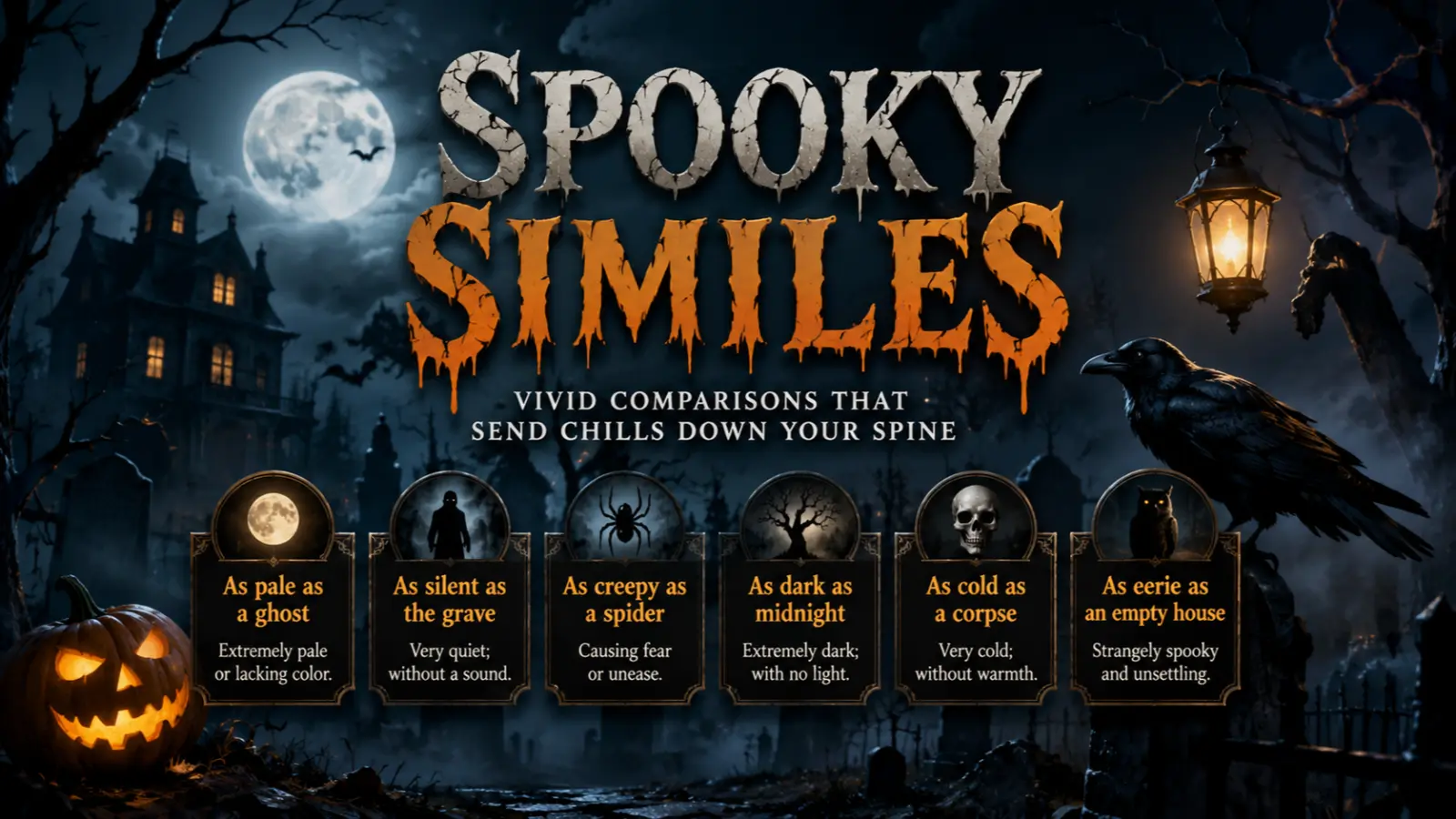
Spooky stories stay with us because they spark curiosity, suspense, and imagination. One of the easiest ways to create that feeling is through similes. A well-crafted simile paints a clear picture in the reader’s mind without overexplaining the scene. A simile compares one thing to another using “like” or “as.” Instead of saying a house was frightening, you might describe it as “silent like a forgotten chapel.” That comparison instantly creates atmosphere. Writers use spooky similes in horror stories, mystery novels, Halloween poems, ghost tales, games, creative writing assignments, and even everyday conversations when describing something unsettling. This guide explores original spooky similes, explains why they work, and shows you how to create your own vivid comparisons.
Quick Answer
Spooky similes are comparisons that use “like” or “as” to create eerie, mysterious, or unsettling imagery. They help writers build suspense, strengthen descriptions, and make scenes feel more immersive.
Why Spooky Similes Make Writing More Powerful
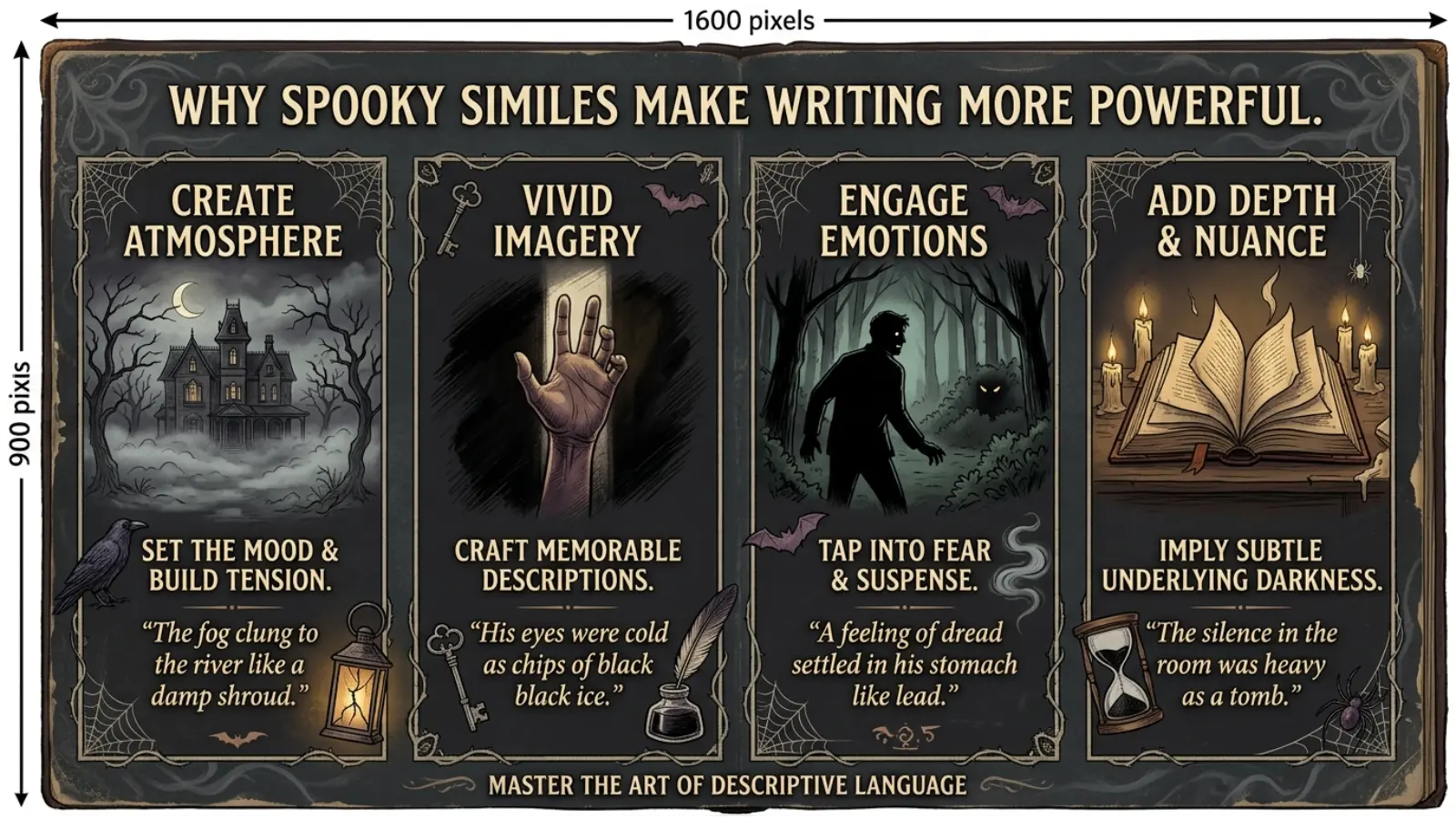
Fear often comes from imagination rather than direct description.
Compare these two sentences:
The hallway was dark.
Now compare:
The hallway stretched like an endless shadow waiting to breathe.
The second sentence gives readers something mysterious to imagine. Strong similes invite readers to participate in creating the scene inside their own minds.
30 Original Spooky Similes
1. As quiet as a candle that refuses to flicker
Meaning: An eerie silence that feels unnatural.
Example 1: The old church was as quiet as a candle that refuses to flicker.
Example 2: Everyone froze, as quiet as a candle that refuses to flicker.
Works best for: Haunted places, suspense scenes.
Writing Tip: Silence often feels scarier than loud noises.
2. Like footsteps stitched into the darkness
Meaning: Slow, mysterious movement.
Example 1: His boots echoed like footsteps stitched into the darkness.
Example 2: Every sound felt like footsteps stitched into the darkness.
Storytelling Use: Building suspense before revealing something.
3. As cold as forgotten moonlight
Meaning: Deep, unnatural cold.
Example 1: Her hands were as cold as forgotten moonlight.
Example 2: The cellar felt as cold as forgotten moonlight.
Poetic Effect: Creates emotional distance and mystery.
4. Like whispers hiding beneath old floorboards
Meaning: Secretive sounds that hint at unseen activity.
Conversation: The house creaked like whispers hiding beneath old floorboards.
Writing Tip: Pair with sensory details for stronger atmosphere.
5. As lonely as the last raven at sunset
Meaning: Deep isolation.
Formal Example: The abandoned tower stood as lonely as the last raven at sunset.
6. Like smoke curling through forgotten memories
Meaning: Ghostly movement.
Example 1: The fog drifted like smoke curling through forgotten memories.
Example 2: Her dress floated like smoke curling through forgotten memories.
7. As pale as dawn behind haunted woods
Meaning: Extremely pale or frightened.
Best Context: Ghost stories, supernatural encounters.
8. Like a clock that forgot how to breathe
Meaning: Time feels frozen.
Story Example: Midnight arrived like a clock that forgot how to breathe.
9. As hollow as an abandoned bell tower
Meaning: Empty and unsettling.
Emotional Effect: Creates loneliness and mystery.
10. Like frost climbing a forgotten window
Meaning: Slow, creeping movement.
Writing Purpose: Building tension gradually.
11. As watchful as an owl that never blinks
Meaning: Constant observation.
Conversation: He stared at me as watchful as an owl that never blinks.
12. Like shadows collecting forgotten secrets
Meaning: Darkness hiding unknown truths.
Poetry Example: Evening gathered like shadows collecting forgotten secrets.
13. As distant as a ghost beyond the fog
Meaning: Emotionally or physically unreachable.
14. Like an empty swing moving without wind
Meaning: Strange unexplained motion.
Storytelling: Excellent for haunted playground scenes.
15. As uneasy as leaves before a storm
Meaning: Feeling that something bad is coming.
16. Like eyes glowing beneath frozen water
Meaning: Hidden danger.
17. As silent as snow over forgotten graves
Meaning: Peaceful yet unsettling silence.
18. Like cobwebs wrapping forgotten dreams
Meaning: Something old, neglected, and mysterious.
19. As fragile as cracked stained glass at midnight
Meaning: Easily broken physically or emotionally.
20. Like a door remembering every knock
Meaning: A place filled with history and mystery.
21. As hidden as the moon behind storm clouds
Meaning: Difficult to discover.
22. Like echoes trapped inside stone walls
Meaning: Lingering memories or voices.
23. As restless as wind inside empty halls
Meaning: Constant movement without peace.
24. Like branches reaching for forgotten names
Meaning: Creepy, grasping movement.
25. As mysterious as a lantern with no flame
Meaning: Something impossible or unexplained.
26. Like rain tapping forgotten windows
Meaning: Gentle but unsettling suspense.
27. As nervous as a candle before the wind
Meaning: Expecting something dangerous.
28. Like a portrait watching every step
Meaning: Feeling constantly observed.
29. As ancient as dust beneath hidden stairs
Meaning: Extremely old.
30. Like midnight swallowing the last star
Meaning: Complete darkness and uncertainty.
Poetry Example: The forest closed around us like midnight swallowing the last star.
How Professional Writers Create Better Spooky Similes
The strongest spooky similes rarely mention monsters directly. Instead, they suggest danger through atmosphere.
Focus on sensory details:
- Silence instead of screams.
- Cold instead of violence.
- Shadows instead of obvious threats.
- Strange movement instead of clear explanations.
Readers become more engaged when they imagine what might be hiding in the darkness.
How to Avoid Clichés
Many horror comparisons have become predictable.
Instead of writing:
- Cold as ice
- White as a ghost
- Dark as night
Try creating fresh comparisons based on:
- Forgotten places
- Weather
- Nature
- Old buildings
- Time
- Light
- Sound
- Memory
Originality makes your descriptions more memorable.
Why These Similes Work
Each comparison creates a specific emotional response rather than simply describing appearance.
For example:
- Forgotten moonlight suggests loneliness.
- An empty swing hints at unseen movement.
- A portrait watching every step creates psychological tension.
- Shadows collecting secrets encourages readers to imagine hidden stories.
Effective similes leave room for the reader’s imagination.
Related Literary Devices
Metaphor
A metaphor states that one thing is another, while a simile compares using like or as.
- Simile: The hallway was like a sleeping beast.
- Metaphor: The hallway was a sleeping beast.
Imagery
Imagery appeals to the senses. Spooky similes strengthen imagery by making sounds, sights, smells, and textures more vivid.
Personification
Giving human qualities to objects can make ordinary settings feel unsettling.
Example:
“The wind whispered through the broken windows.”
Symbolism
Objects such as ravens, candles, mirrors, fog, or abandoned houses often symbolize mystery, fear, memory, or death depending on the story’s context.
Hyperbole
Occasionally exaggeration can increase dramatic effect, but it should not overwhelm the atmosphere.
Create Your Own Spooky Similes
You don’t need supernatural creatures to write effective spooky similes.
Try this process:
Step 1: Choose an emotion.
Examples:
- Fear
- Suspense
- Loneliness
- Curiosity
Step 2: Find an object connected to that feeling.
Examples:
- Fog
- Candle
- Raven
- Empty hallway
- Broken mirror
- Rusted gate
Step 3: Compare naturally.
Instead of forcing unusual combinations, ask yourself:
“What does this feeling remind me of?”
Practice Exercise
Write one simile for each prompt:
- A haunted forest
- An abandoned school
- A mysterious stranger
- A creaking staircase
- A moonlit cemetery
Then revise each one to make it more original by replacing common comparisons with unexpected but believable imagery.
Common Mistakes When Writing Spooky Similes
Using Overused Comparisons
Readers have seen phrases like “cold as ice” countless times. Fresh imagery is more engaging.
Mixing Different Images
Avoid combining unrelated comparisons in the same sentence. Consistent imagery creates a stronger mood.
Forcing the Comparison
A simile should feel natural. If the comparison distracts from the story, simplify it.
Confusing Similes and Metaphors
Remember that similes use like or as, while metaphors make a direct comparison.
Describing Instead of Evoking
Rather than telling readers something is scary, give them details that allow them to feel the tension for themselves.
Frequently Asked Questions
What is a spooky simile?
A spooky simile compares something to another object using like or as to create an eerie, mysterious, or suspenseful feeling.
Where can I use spooky similes?
They work well in horror stories, Halloween writing, mystery novels, poems, role-playing games, and creative writing exercises.
What makes a spooky simile effective?
Strong spooky similes use fresh imagery, connect to emotion, and help readers imagine the scene without relying on clichés.
Can spooky similes be used in children’s stories?
Yes. For younger readers, keep the imagery mysterious rather than frightening. Gentle suspense can be exciting without becoming overwhelming.
How many similes should I use in one story?
Use them thoughtfully. A few memorable similes usually create a stronger impact than filling every paragraph with comparisons.
What’s the difference between spooky imagery and graphic horror?
Spooky imagery builds atmosphere through suggestion, mystery, and mood, while graphic horror focuses on explicit details. Many readers find subtle suspense more effective.
Conclusion
Spooky similes bring mystery, suspense, and emotion to your writing without revealing every detail. By comparing ordinary scenes to unexpected images, you encourage readers to imagine what lies beyond the page. Focus on atmosphere, choose comparisons that match the mood, and avoid familiar clichés whenever possible. As you practice creating original similes, you’ll discover new ways to make haunted houses, eerie forests, silent hallways, and mysterious characters feel unforgettable. The best spooky writing doesn’t simply describe fear—it invites readers to experience it through vivid, imaginative language.
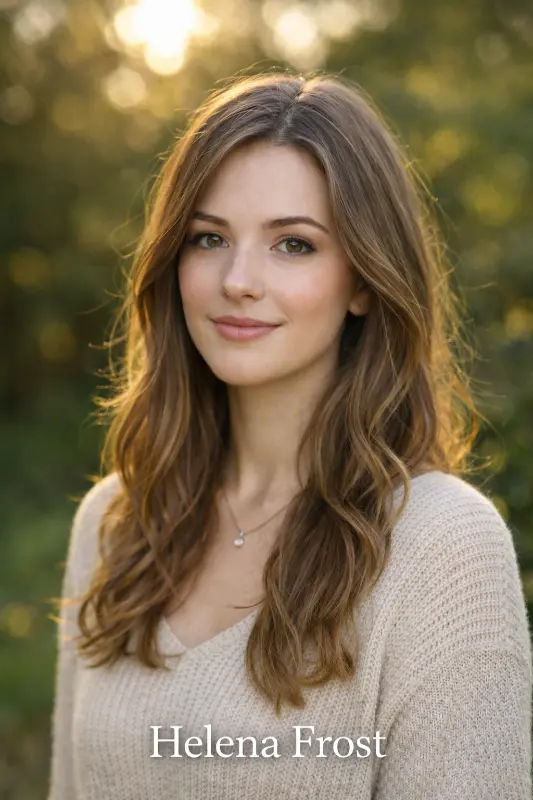
I am Helena Frost, a writer captivated by the beauty of language and the art of comparison. Through my words, I explore the world by turning ordinary moments into vivid similes and reflections. I enjoy crafting phrases that spark imagination, evoke emotion, and linger in the mind. My writing celebrates the subtle connections between people, nature, and the stories we live. For me, every sentence is an opportunity to reveal the extraordinary in the everyday.