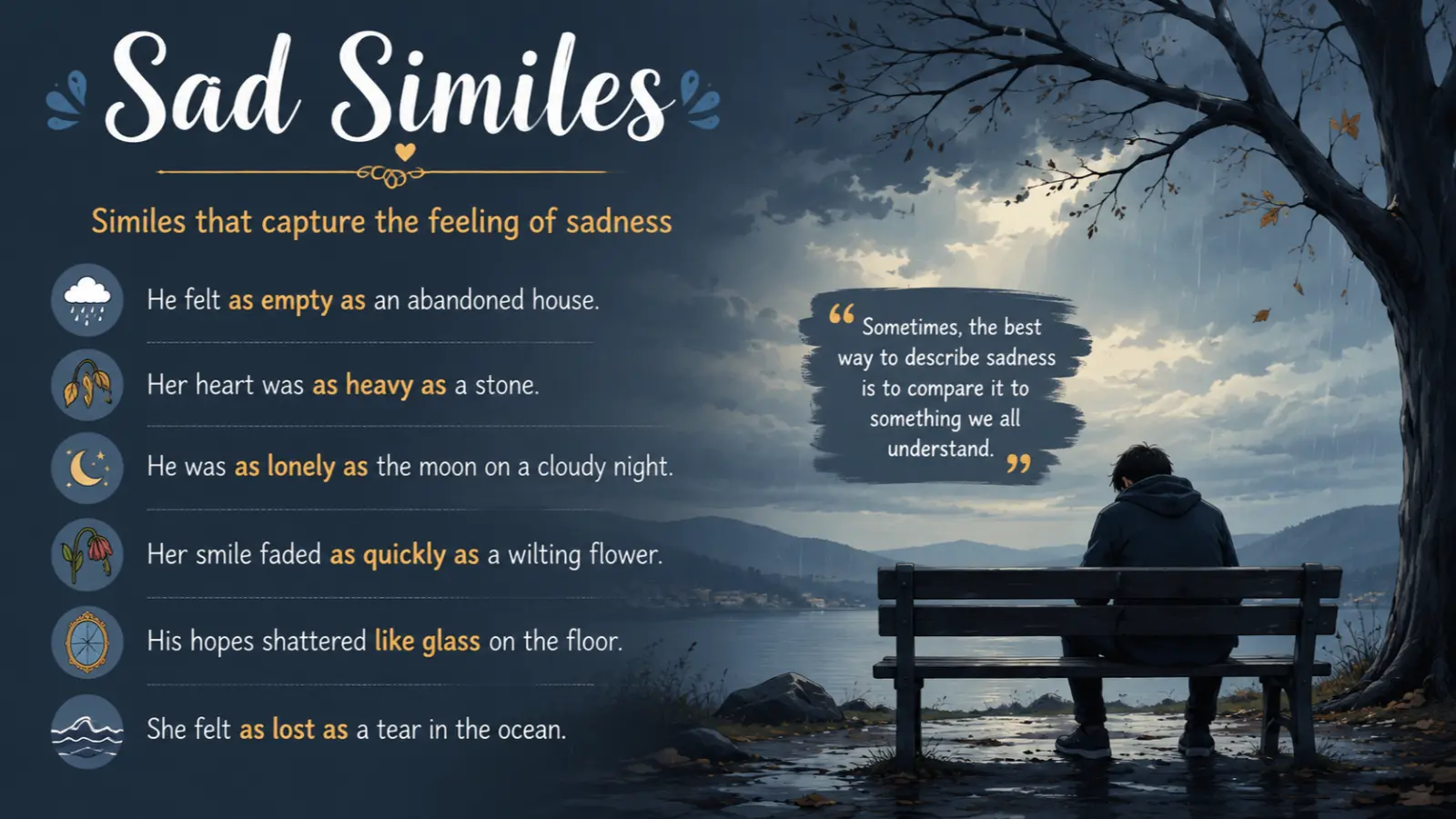
Sadness is one of the most powerful emotions a writer can explore. Whether you’re writing a novel, poem, personal journal, speech, or heartfelt message, The right comparison can make readers feel an emotion instead of simply reading about it. A simile compares two different things using the words like or as. These comparisons help readers imagine emotions more vividly and connect with a character’s experience. This guide explores sad similes that go beyond ordinary comparisons. You’ll discover original examples, learn why they work, and see how to use them naturally in conversation, storytelling, and creative writing.
Quick Answer
Sad similes compare sadness to familiar experiences using like or as. They help readers visualize emotions, making writing more memorable and emotionally engaging. A strong sad simile creates a clear image without feeling forced or overly dramatic.
Why Sad Similes Make Writing More Powerful
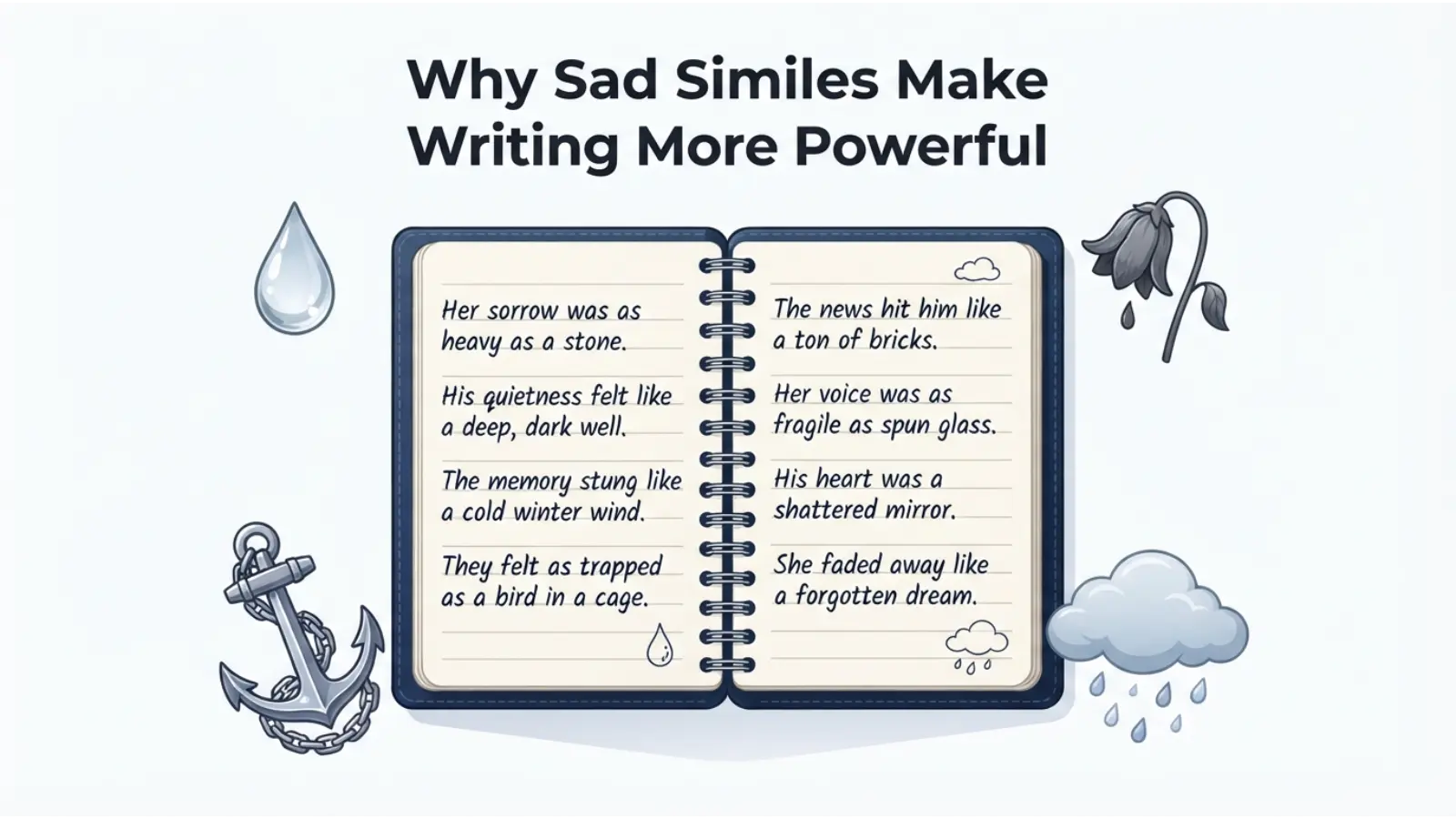
Simply saying someone was sad tells readers what happened.
A thoughtful simile helps readers experience that feeling.
Compare these two sentences:
She felt sad.
Now compare it with:
She felt like a candle fading before sunrise.
The second sentence creates an image, mood, and emotional depth.
Good sad similes help writers:
- Show emotion instead of explaining it
- Create memorable imagery
- Build stronger characters
- Add beauty to poems
- Make stories more immersive
Different Shades of Sadness
Not every sad feeling is the same.
A writer may want to describe:
- Quiet loneliness
- Heartbreak
- Grief
- Regret
- Disappointment
- Hopelessness
- Emotional exhaustion
- Missing someone
- Silent sorrow
Choosing a simile that matches the exact emotion makes writing much stronger.
Original Sad Similes With Meanings and Examples
Like rain trapped inside a cloud
Meaning: Holding back emotions.
Story example:
She walked through the crowd like rain trapped inside a cloud, carrying tears no one could see.
Writing tip:
Perfect for characters hiding their feelings.
As quiet as forgotten footsteps
Meaning: Feeling unnoticed or abandoned.
Conversation:
“I’ve been as quiet as forgotten footsteps lately.”
Like autumn leaves leaving their tree
Meaning: Gradually letting go.
Poetry:
My hopes drifted like autumn leaves leaving their tree.
As empty as a chair after goodbye
Meaning: Missing someone deeply.
Best used in stories about loss.
Like a lighthouse without its light
Meaning: Losing purpose after heartbreak.
Formal example:
After her father’s passing, she felt like a lighthouse without its light.
As fragile as melting frost
Meaning: Emotionally vulnerable.
Writing purpose:
Excellent for reflective writing.
Like music with no melody
Meaning: Life feels incomplete.
Conversation:
“My week has been like music with no melody.“
As distant as the last star before dawn
Meaning: Hope feels far away.
Works beautifully in poetry.
Like a river forgetting the sea
Meaning: Feeling lost.
Story example:
Without his family, he wandered like a river forgetting the sea.
As heavy as winter silence
Meaning: Deep emotional weight.
Creates a calm yet powerful mood.
Like an unopened letter
Meaning: Feelings left unspoken.
Ideal for romance and family stories.
As faded as an old photograph
Meaning: Painful memories growing distant but never disappearing.
Adds nostalgia to writing.
Like smoke disappearing into evening air
Meaning: Hope slowly fading.
Excellent for emotional endings.
As lonely as one bird after migration
Meaning: Isolation.
Creates vivid imagery without exaggeration.
Like waves returning to an empty shore
Meaning: Repeated sadness.
Best for stories about longing.
As cold as forgotten promises
Meaning: Emotional betrayal.
Works well in relationship writing.
Like a flower blooming in shadow
Meaning: Trying to remain hopeful despite sadness.
Shows resilience alongside sorrow.
As silent as snow before sunrise
Meaning: Quiet grief.
Especially effective in descriptive scenes.
Like a cracked mirror holding memories
Meaning: Emotional damage that still reflects the past.
Useful for reflective storytelling.
As slow as sunset leaving the sky
Meaning: Sadness that fades gradually.
Creates a peaceful emotional ending.
What Makes a Sad Simile Feel Genuine?
The strongest similes don’t rely on dramatic words.
Instead, they connect emotions with everyday experiences.
Notice how nature often reflects sadness:
- Falling leaves
- Quiet snowfall
- Empty rooms
- Fading light
- Gentle rain
These images feel believable because readers have experienced them.
Avoid comparing every sad moment to darkness or tears. Variety keeps your writing fresh and emotionally authentic.
Writing Tip: Show Emotion Through Surroundings
Instead of describing a person’s feelings directly, let the environment reinforce the mood.
For example:
Instead of:
He looked sad.
Try:
He stood like the last tree holding its leaves after autumn, refusing to let go.
Readers naturally understand the emotion without being told exactly what to feel.
More Original Sad Similes
Like a lantern flickering in the wind
Meaning: Holding onto hope despite overwhelming sadness.
Story example:
She smiled like a lantern flickering in the wind, bright for a moment before the silence returned.
Best context: Heartbreak, loss, emotional resilience.
As pale as the last page of an old diary
Meaning: A life drained of excitement or joy.
Writing tip: Works well in reflective memoirs and emotional fiction.
Like an echo searching for its voice
Meaning: Feeling unheard or ignored.
Conversation example:
“Ever since I moved away, I’ve felt like an echo searching for its voice.“
As restless as rain against a window
Meaning: Unable to find peace.
Creates a quiet, thoughtful atmosphere.
Like a bridge with no travelers
Meaning: Feeling disconnected from others.
Useful for stories about loneliness.
As dim as a star behind thick clouds
Meaning: Inner happiness hidden by sadness.
Poetry example:
Her laughter was as dim as a star behind thick clouds.
Like a feather drifting without the wind
Meaning: Having no direction after loss.
Perfect for character development.
As hollow as an abandoned nest
Meaning: Feeling empty after someone leaves.
Works beautifully in family stories.
Like a painting washed by rain
Meaning: Precious memories slowly fading.
Adds visual imagery to emotional scenes.
As uncertain as footsteps in fog
Meaning: Grief making the future unclear.
Great for coming-of-age stories.
Like a clock waiting for forgotten time
Meaning: Feeling stuck in the past.
Creates thoughtful symbolism.
As gentle as tears on morning glass
Meaning: Quiet sadness rather than dramatic grief.
Ideal for poetry.
Like a kite with a broken string
Meaning: Losing emotional support.
Formal example:
After graduation, he felt like a kite with a broken string, unsure where life would carry him.
As lonely as the final note of a song
Meaning: The emptiness that follows something beautiful.
Excellent for emotional endings.
Like moonlight hiding behind clouds
Meaning: Hope covered by sadness but not completely gone.
A balanced comparison that leaves room for optimism.
As still as a lake without ripples
Meaning: Silent grief beneath a calm appearance.
Useful when describing characters who hide emotions.
Like an unopened window in spring
Meaning: Missing opportunities for happiness.
Adds subtle emotional depth.
As faded as chalk after rain
Meaning: Dreams slowly disappearing.
Simple but memorable imagery.
Like a path no one walks anymore
Meaning: Feeling forgotten.
Works naturally in novels and short stories.
As soft as a goodbye whispered to the wind
Meaning: A quiet farewell filled with emotion.
Beautiful for poetry, letters, and reflective writing.
How Professional Writers Create Emotional Similes
Strong writers rarely compare sadness directly to tears or darkness. Instead, they observe ordinary moments and connect them to emotion.
For example:
- A fading sunset can suggest acceptance.
- A deserted playground can symbolize loneliness.
- A silent room can reflect grief.
- A broken branch can hint at emotional pain.
- A distant train can represent separation.
The comparison feels authentic because readers recognize the image before they interpret the emotion.
Build Your Own Sad Similes
Creating original similes is easier than it seems.
Step 1: Choose the emotion
Be specific.
Instead of simply “sad,” ask:
- Is it loneliness?
- Regret?
- Heartbreak?
- Missing someone?
- Quiet disappointment?
Step 2: Think of an image
Look around you.
Nature, weather, everyday objects, seasons, music, and places all provide inspiration.
Examples:
- Empty bench
- Falling snow
- Wilted flower
- Silent library
- Cracked window
- Distant lighthouse
Step 3: Connect them naturally
Use like or as only when the comparison feels believable.
Example:
Her hope faded like footprints disappearing beneath fresh snow.
Creative Writing Exercise
Choose one emotion:
- Missing home
- Losing a friend
- Saying goodbye
- Waiting for good news
Now write:
- One original sad simile.
- One sentence using it in dialogue.
- One sentence using it in a story.
- One sentence using it in a poem.
This practice helps you move beyond common comparisons and develop your own writing style.
Related Literary Devices
Metaphor
A metaphor says one thing is another.
Simile: His heart was like frozen glass.
Metaphor: His heart was frozen glass.
Imagery
Imagery appeals to the senses.
Sad similes become even stronger when readers can see, hear, or feel the scene.
Personification
Giving human qualities to non-human things can strengthen emotional writing.
Example:
The lonely wind whispered through the empty street.
Symbolism
Objects can represent emotions.
Examples include:
- Rain for sorrow
- Autumn for change
- Empty chairs for loss
- Fading light for hope disappearing
Using symbolism alongside similes creates richer descriptions.
Common Mistakes to Avoid
Using overused comparisons
Phrases like “as sad as a rainy day” or “crying like a baby” have lost much of their emotional impact. Look for fresher images.
Mixing unrelated imagery
Avoid combining comparisons that clash.
Example:
She was like a broken bird swimming through fire.
The images don’t work together.
Forcing a comparison
If the reader has to stop and figure out the simile, it may be too complicated.
Keep comparisons clear and believable.
Confusing similes with metaphors
Remember:
- Similes use like or as.
- Metaphors do not.
Explaining the simile too much
Trust the image. A strong comparison often speaks for itself without extra explanation.
Frequently Asked Questions
What is a sad simile?
A sad simile compares sadness to another image using like or as to create stronger emotional imagery.
Why should writers use sad similes?
They help readers experience emotions rather than simply being told how a character feels.
Can sad similes be used in everyday conversation?
Yes. They can make personal stories, speeches, and conversations more expressive when used naturally.
Are sad similes useful in poetry?
Absolutely. Poetry often relies on vivid comparisons to create emotional depth and memorable imagery.
How can I avoid cliché sad similes?
Observe everyday life, nature, memories, and ordinary objects. Fresh comparisons usually come from personal observation.
What’s the difference between a sad simile and a sad metaphor?
A simile uses like or as, while a metaphor states that one thing is another without those words.
Conclusion
Sadness is a complex emotion, and the best writing reflects that complexity. Instead of relying on familiar comparisons, try looking for images that reveal a specific feeling—whether it’s quiet loneliness, deep grief, fading hope, or gentle nostalgia. Original sad similes invite readers to connect with your words on a deeper level because they paint emotions rather than merely naming them. As you write, pay attention to the world around you. A changing season, an empty room, or the sound of distant rain can become the beginning of a memorable comparison. With practice, you’ll create similes that feel authentic, meaningful, and uniquely your own.
I am Helena Frost, a writer captivated by the beauty of language and the art of comparison. Through my words, I explore the world by turning ordinary moments into vivid similes and reflections. I enjoy crafting phrases that spark imagination, evoke emotion, and linger in the mind. My writing celebrates the subtle connections between people, nature, and the stories we live. For me, every sentence is an opportunity to reveal the extraordinary in the everyday.