Happiness Similes: to Describe Joy, Excitement, and Delight
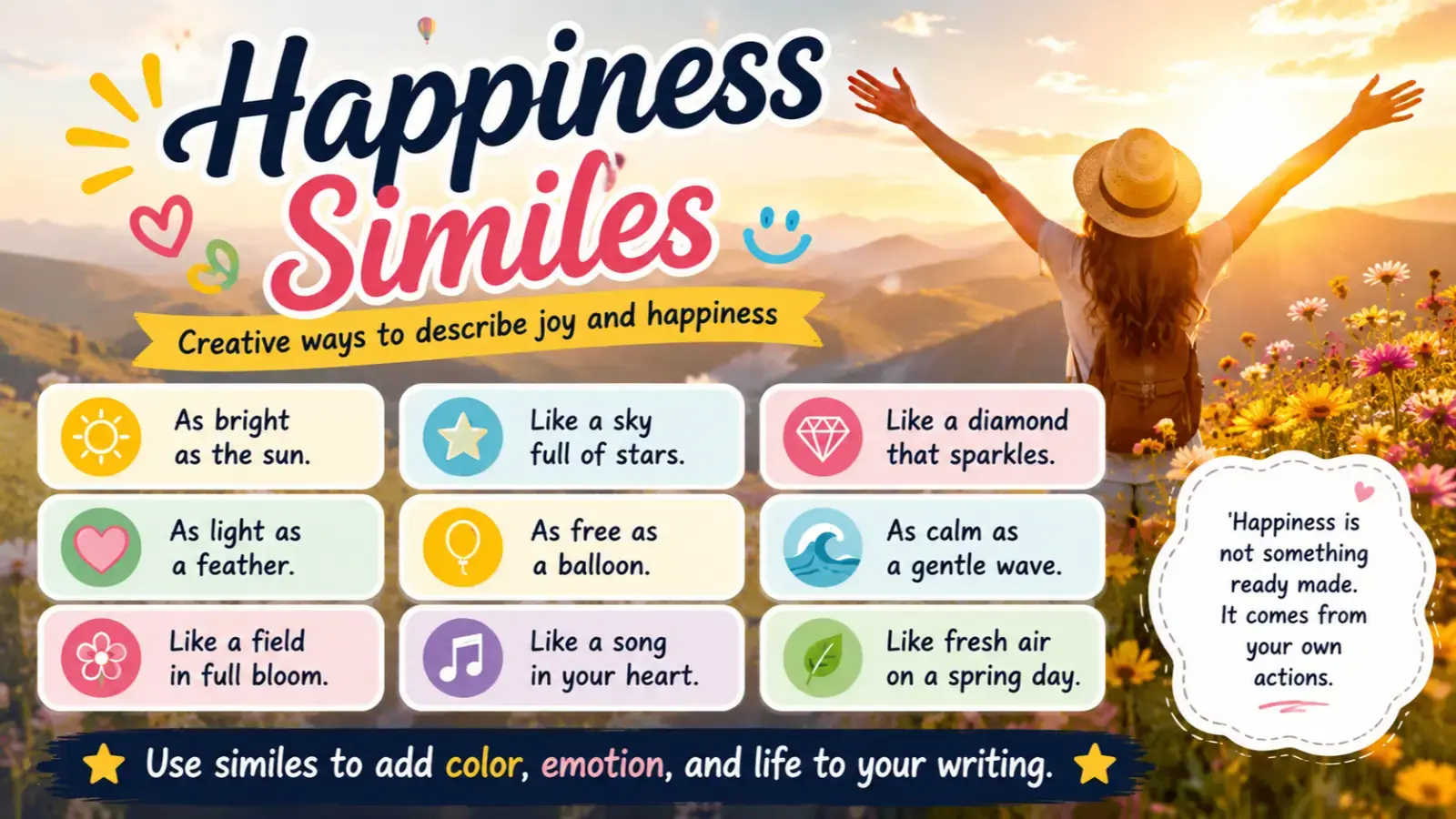
Happiness Similes can be difficult to describe because it is invisible. You can feel it instantly, but putting that feeling into words takes imagination. A well-crafted simile gives happiness a shape, sound, color, movement, or texture that readers can recognize. A Happiness Similes compares two different things using words ...
Read more
Similes from Books: That Make Characters,and Stories More Vivid
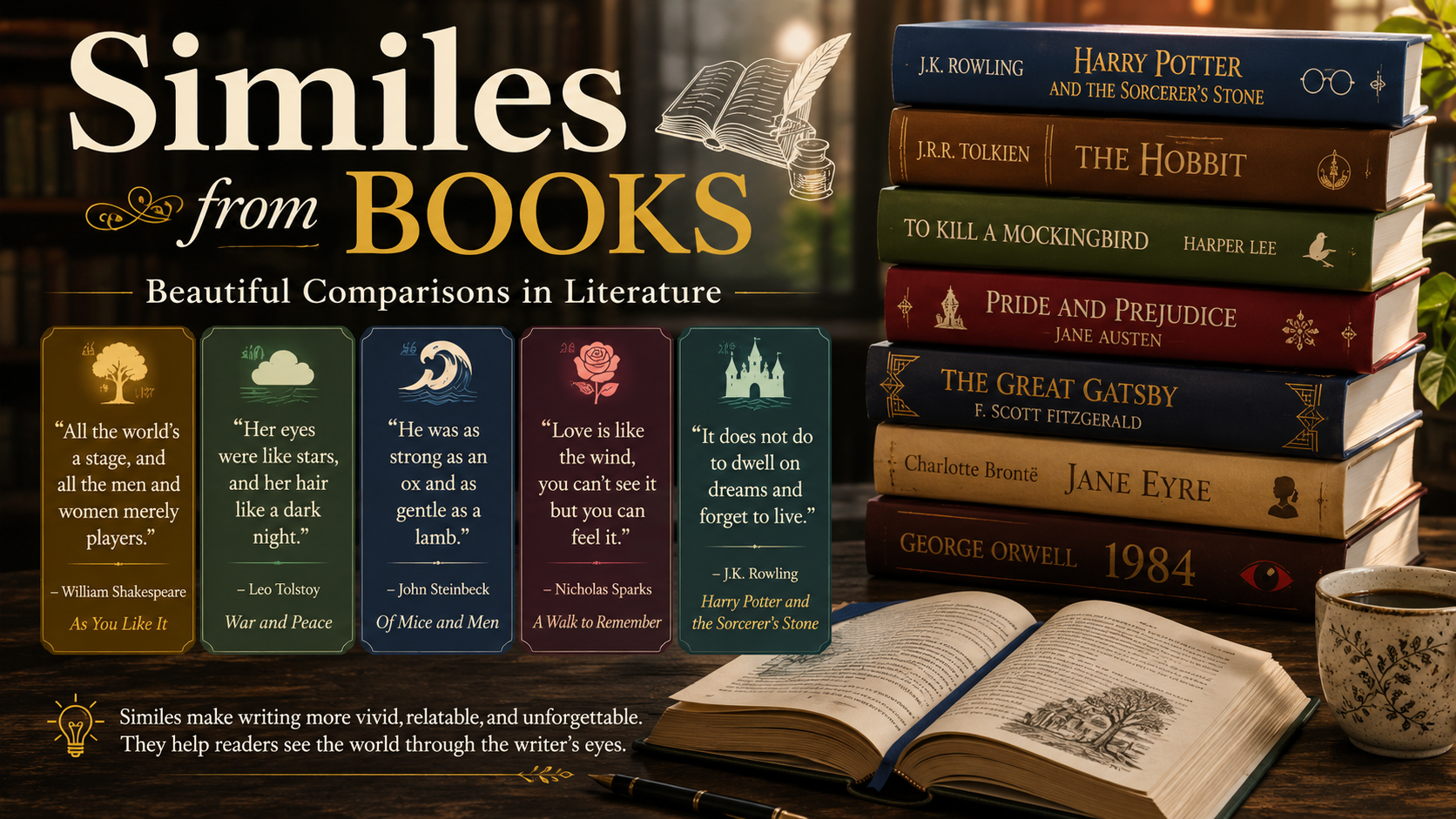
A Similes from Books does more than tell you what happens. It helps you see, hear, feel, and imagine the story. One of the simplest tools writers use to create that experience is the simile. A Similes from Books compares two different things using words such as like or ...
Read more
Life Similes: to Describe Life’s Journey and Lessons
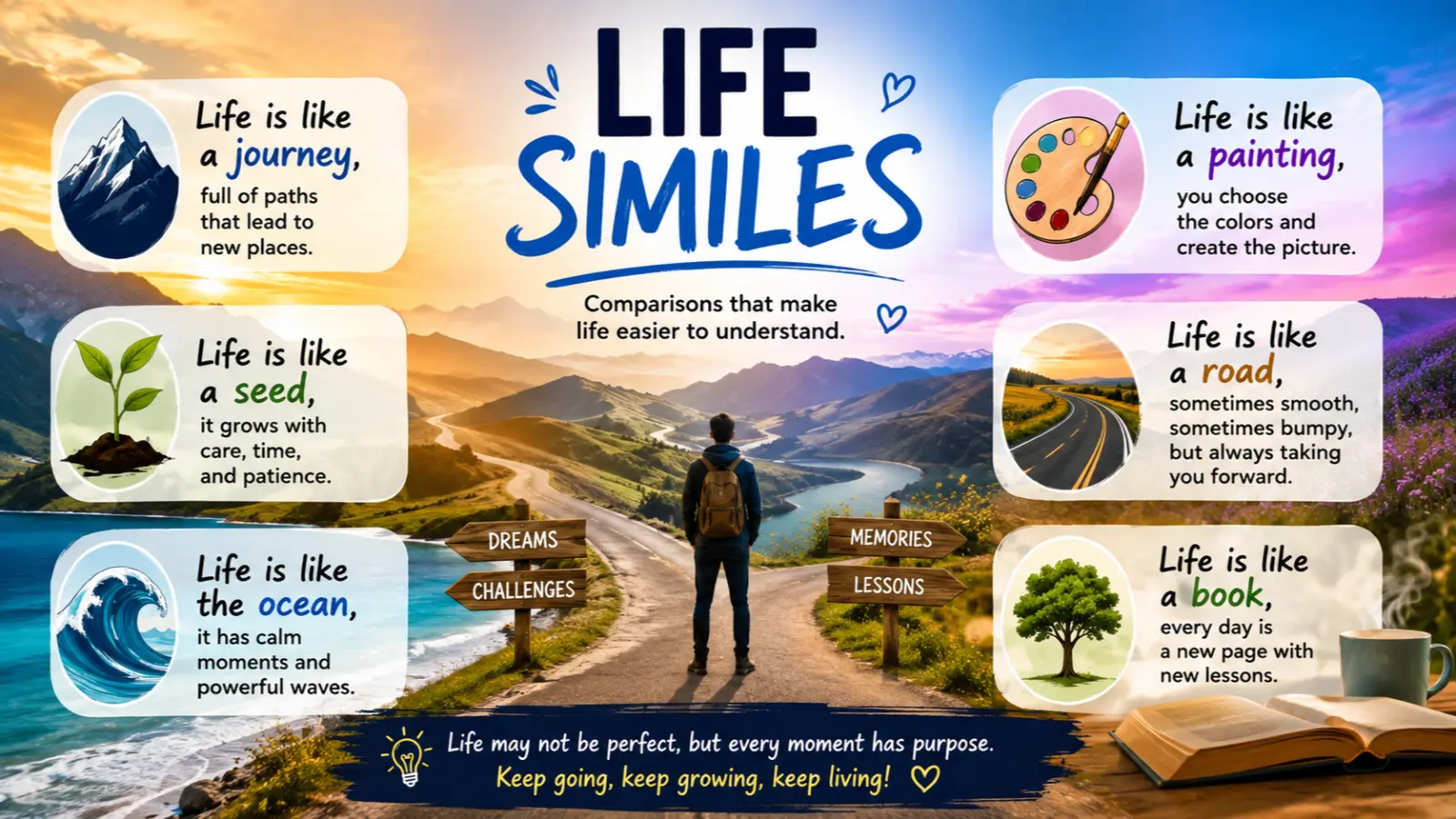
Life Similes is full of moments that can be difficult to describe directly. A Life Similes gives those moments shape by comparing one thing with another using words such as like or as. For example, instead of saying, “Life changes quickly,” a writer might say, “Life is like a ...
Read more
Similes About Winter: Snow, and Cold Weather
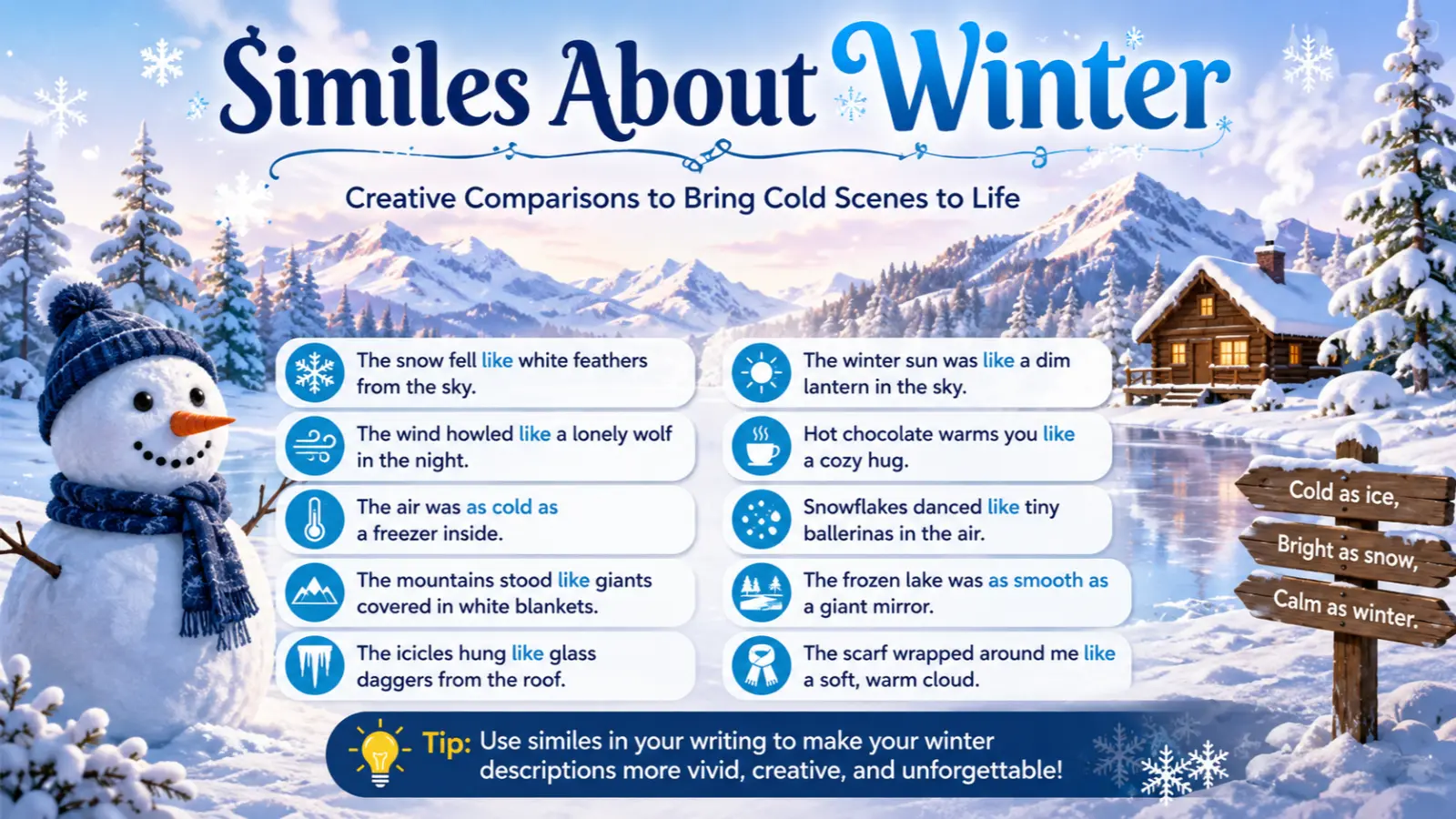
Similes About Winter gives writers a powerful collection of sensory details: icy sidewalks, pale sunlight, frosted windows, sharp winds, quiet streets, and snow-covered landscapes. A good simile turns those familiar details into something readers can picture and feel. A simile compares two different things using words such as like ...
Read more
Pain Similes: With Meanings and Easy Examples
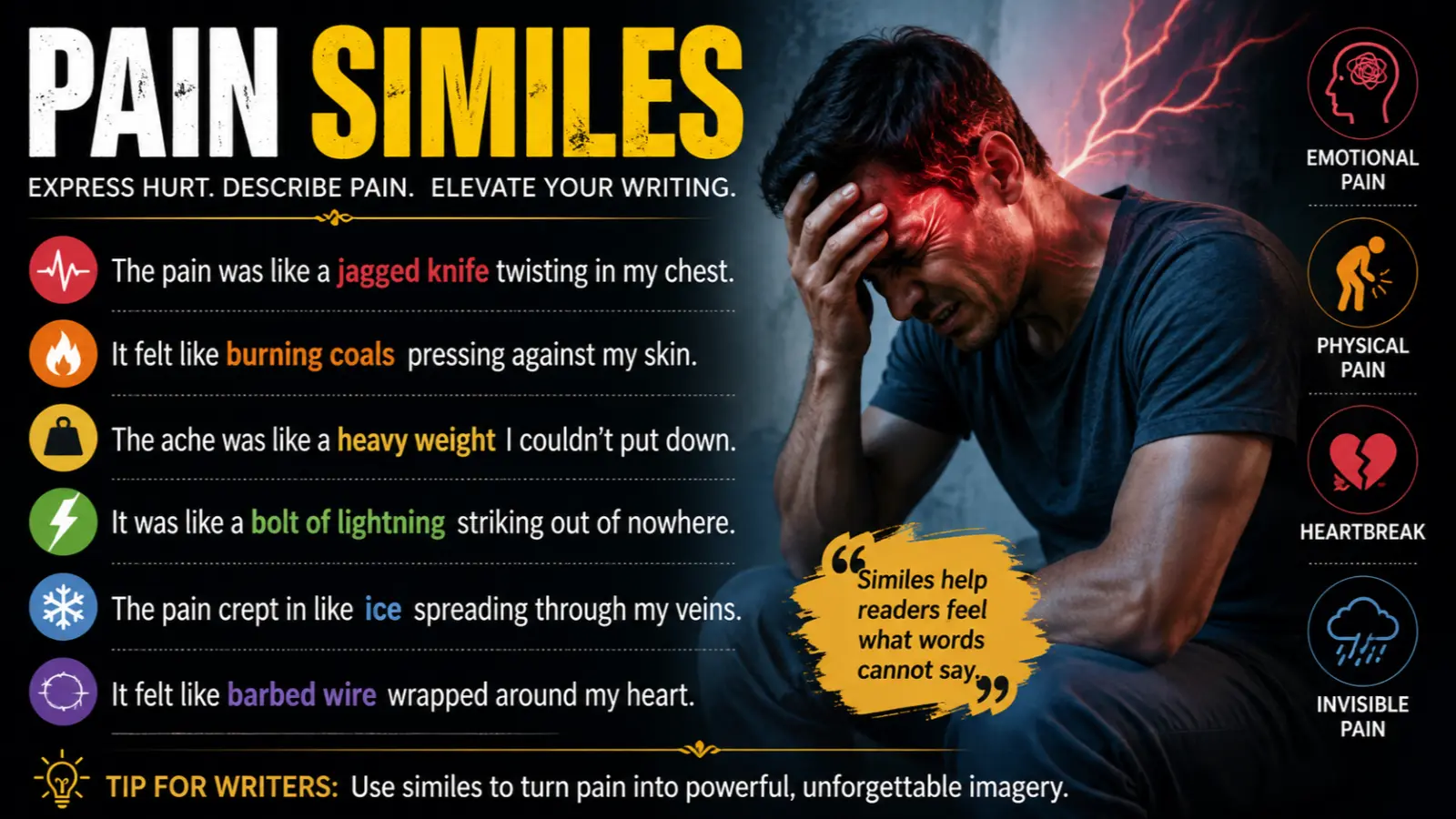
Pain Similes is difficult to describe because it is often invisible. A writer cannot simply point to pain and show the reader exactly what it feels like. Instead, strong writing gives pain a shape, movement, sound, or image. That is where pain similes become useful. A simile compares two ...
Read more
Wind Similes: for Poems, Stories, and Creative Writing
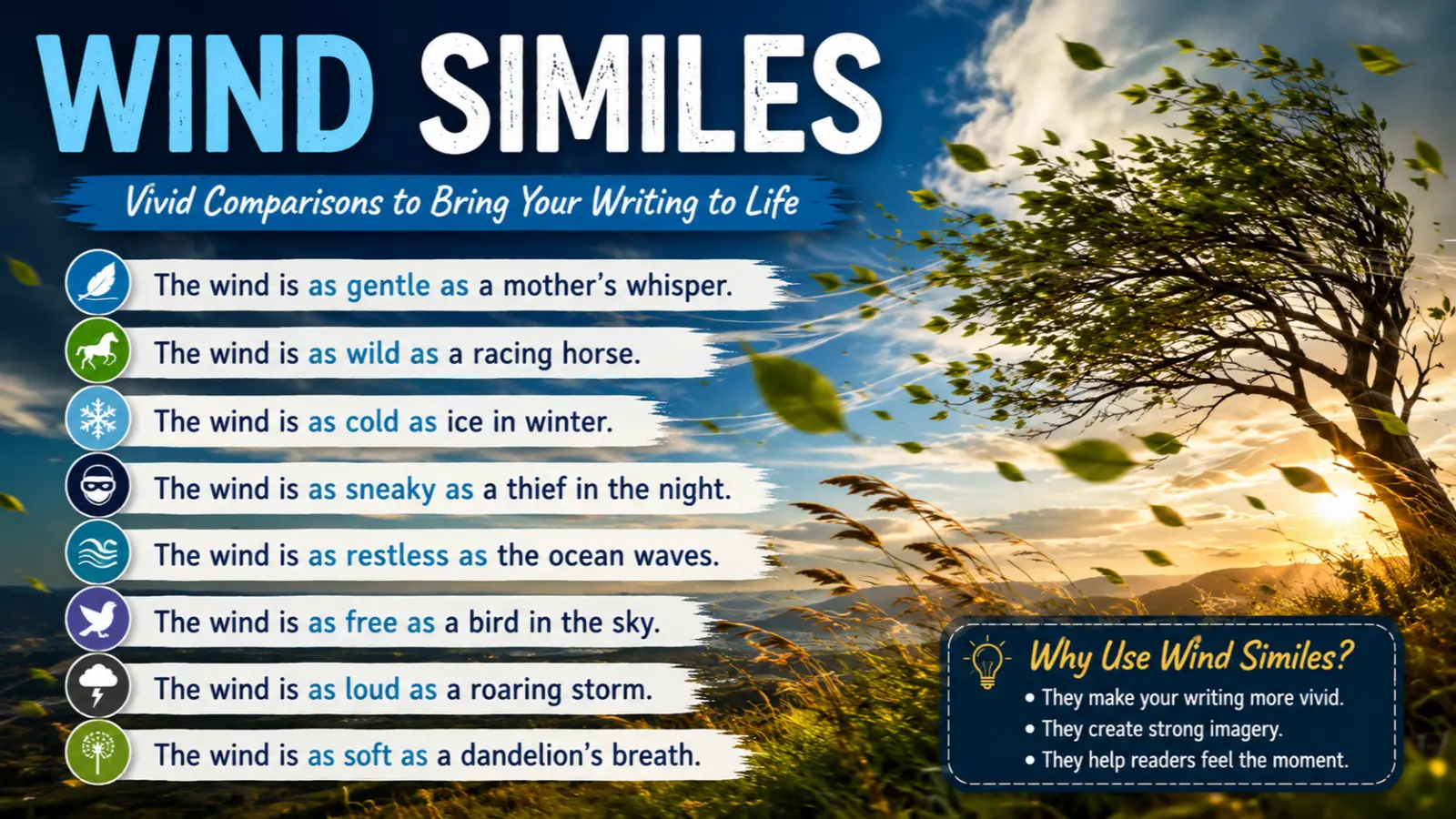
Wind Similes can be gentle, restless, playful, or powerful. Because you cannot see it directly, writers often use similes to help readers imagine how it moves, sounds, and feels. A strong wind simile compares the wind to something familiar, turning an invisible force into a vivid picture. A simile ...
Read more
Similes From Songs: That Make Lyrics More Powerful
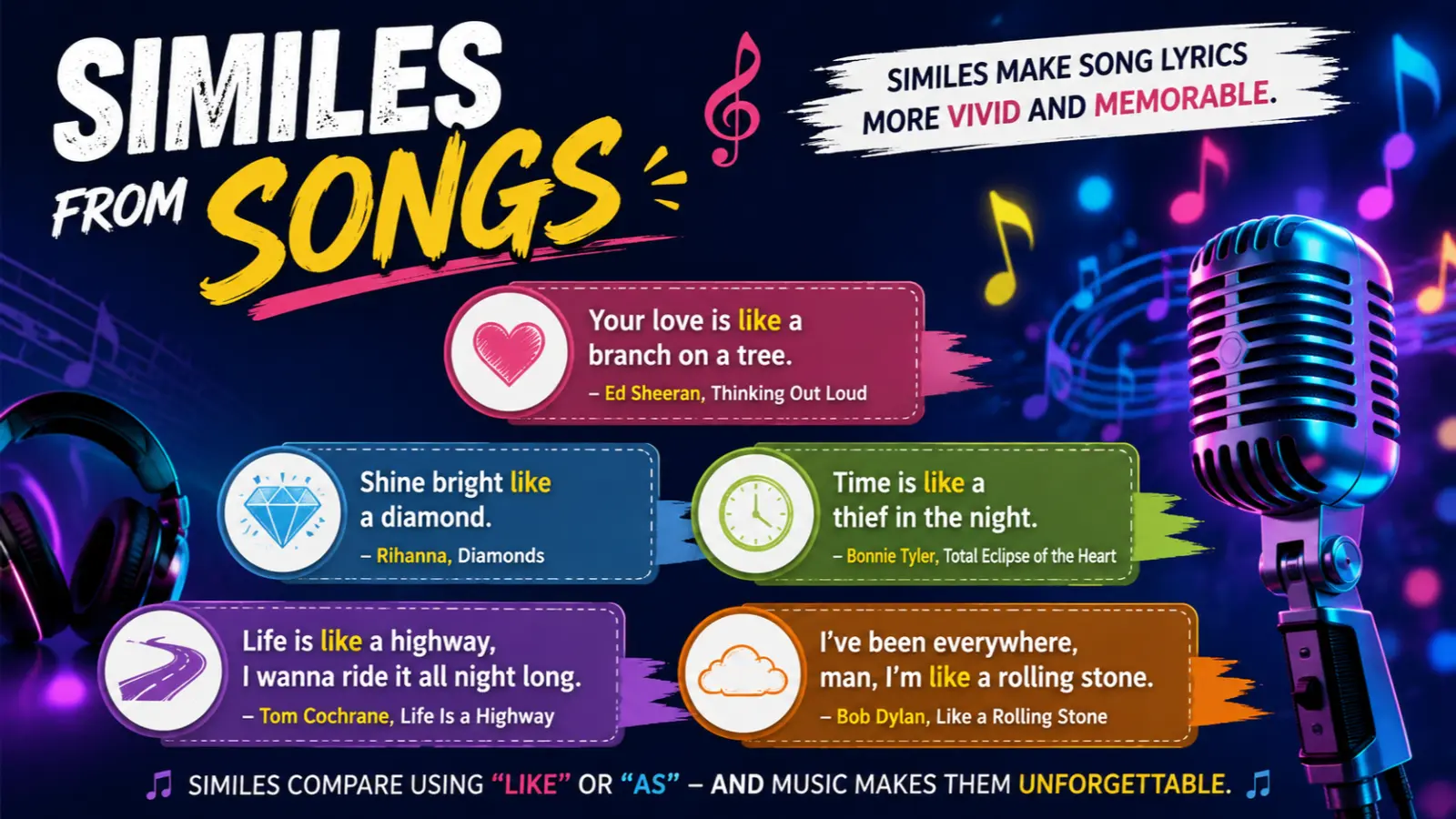
Similes from songs are comparisons that connect one idea, feeling, person, or experience to another using words such as “like” or “as.” Songwriters use them to turn abstract emotions into images listeners can easily picture. For example, instead of simply saying “I miss you,” a songwriter might compare missing ...
Read more
Interesting Similes: That Make Your Writing More Creative
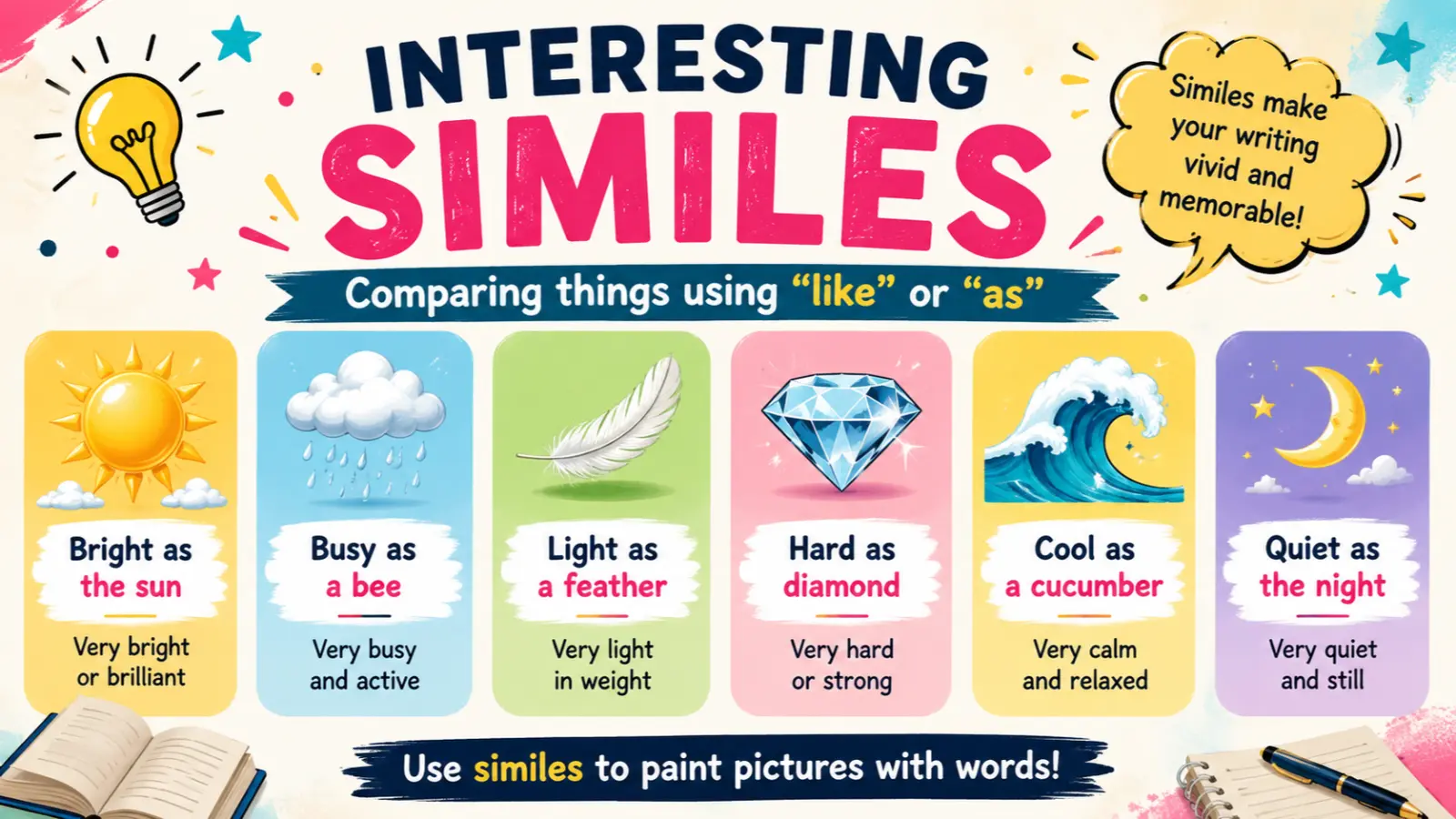
Interesting Similes s make ordinary descriptions more expressive by comparing one thing to another using words such as like or as. Instead of saying that a room was quiet, a writer might say it was as quiet as a library after closing time. The comparison gives the reader something ...
Read more
Kid Friendly Similes: Kids Can Use in Stories and School
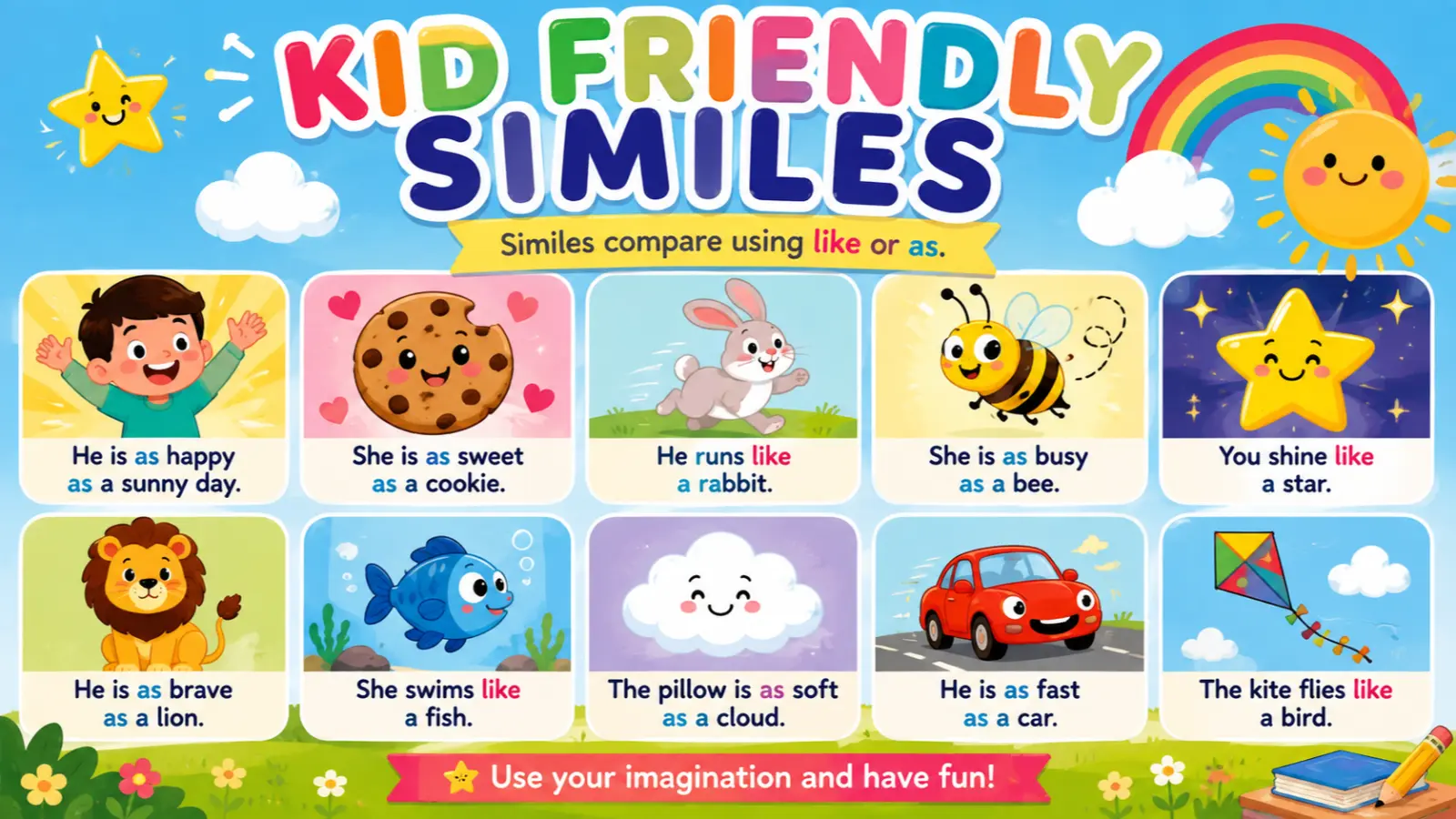
Kid Friendly Similes make ordinary writing more colorful by comparing one thing to another using words such as like or as. Instead of saying “the puppy was excited,” a writer might say, “The puppy bounced like a spring.” For children, similes are especially useful because they turn abstract feelings, ...
Read more
Similes vs Metaphors: Key Differences,and How to Use Them
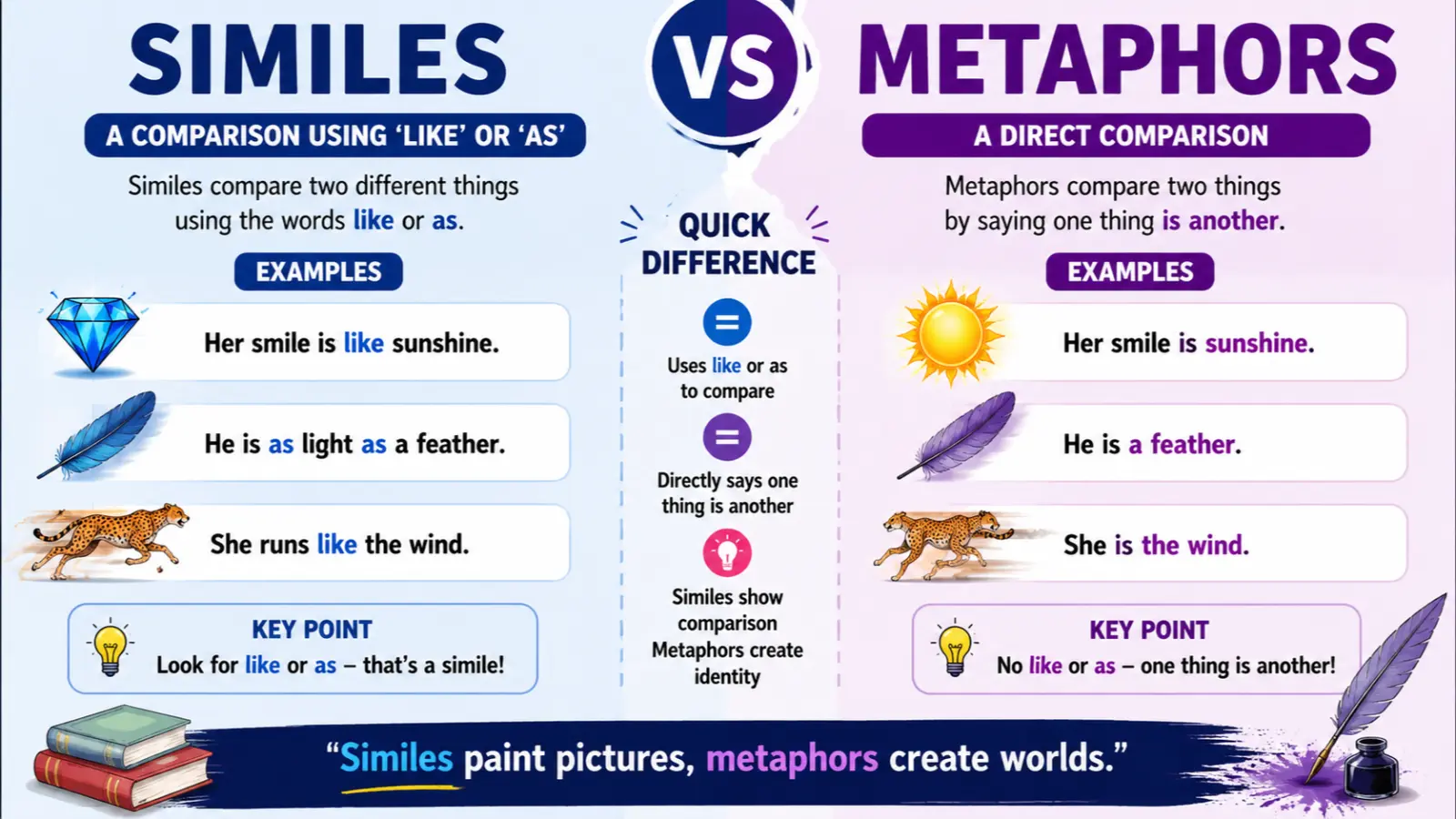
A Similes vs Metaphors compares two different things using words such as “like” or “as.” A Similes vs Metaphors makes a direct comparison by saying one thing is another. Both literary devices create imagery, but they produce different effects. For example: The Similes vs Metaphors signals the comparison clearly. ...
Read more