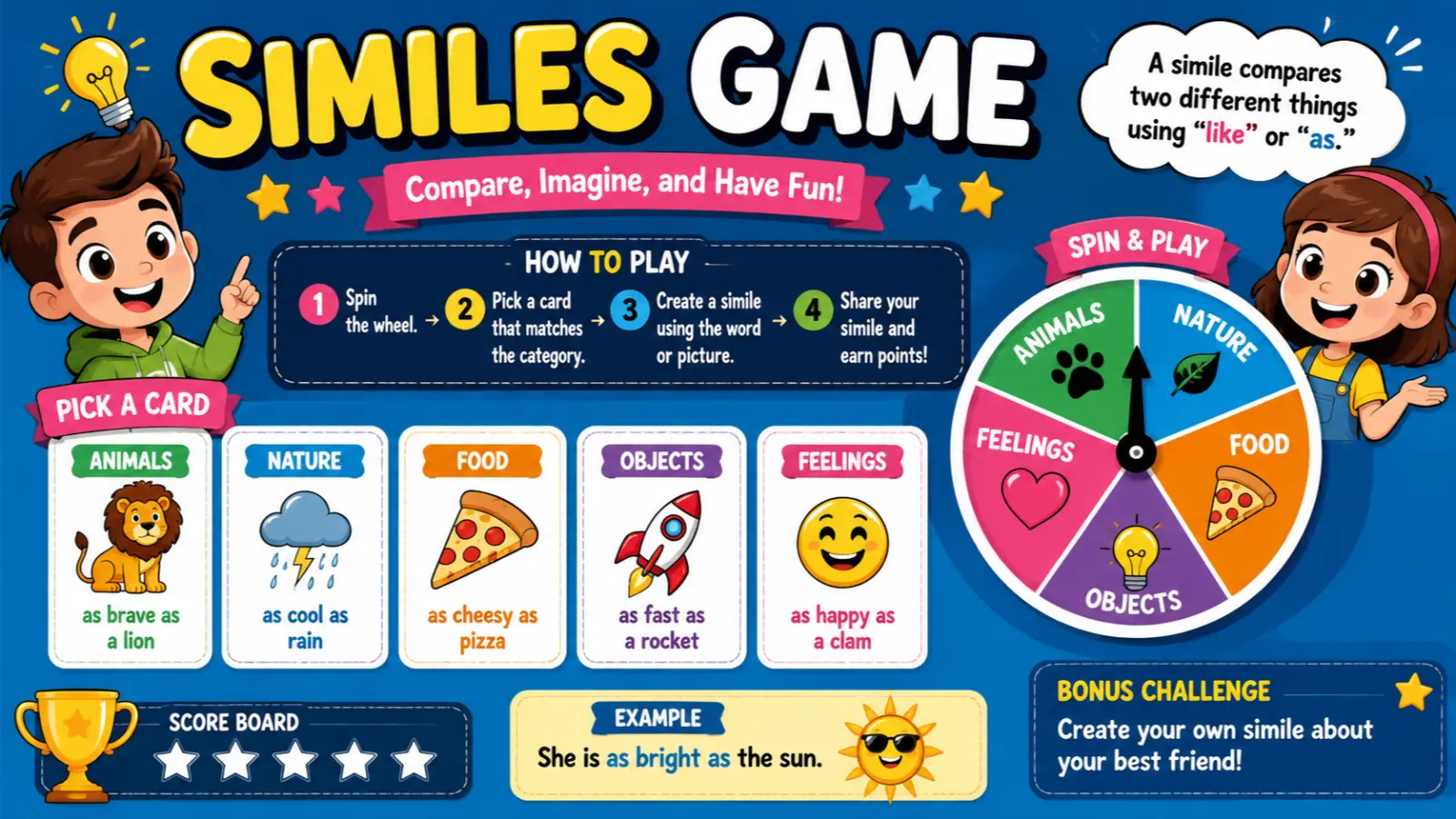
Learning similes does not have to feel like memorizing grammar rules. A good similes game transforms writing practice into a challenge where imagination takes center stage.Whether you’re a teacher planning a classroom activity, a parent helping a child learn, or Similes Games a writer looking to sharpen descriptive skills, games encourage creativity while making figurative language easier to remember. A simile compares two different things using like or as. These comparisons help readers picture scenes, understand emotions, and connect with characters. Throughout this guide, you’ll discover creative simile games, fresh examples, writing strategies, and practical exercises that help you invent your own original comparisons.
Quick Answer
A similes game is an interactive activity where players create, complete, identify, or improve similes using imagination and descriptive thinking. These games build vocabulary, strengthen creative writing, and help learners recognize how comparisons make language more vivid.
Why Similes Games Improve Writing
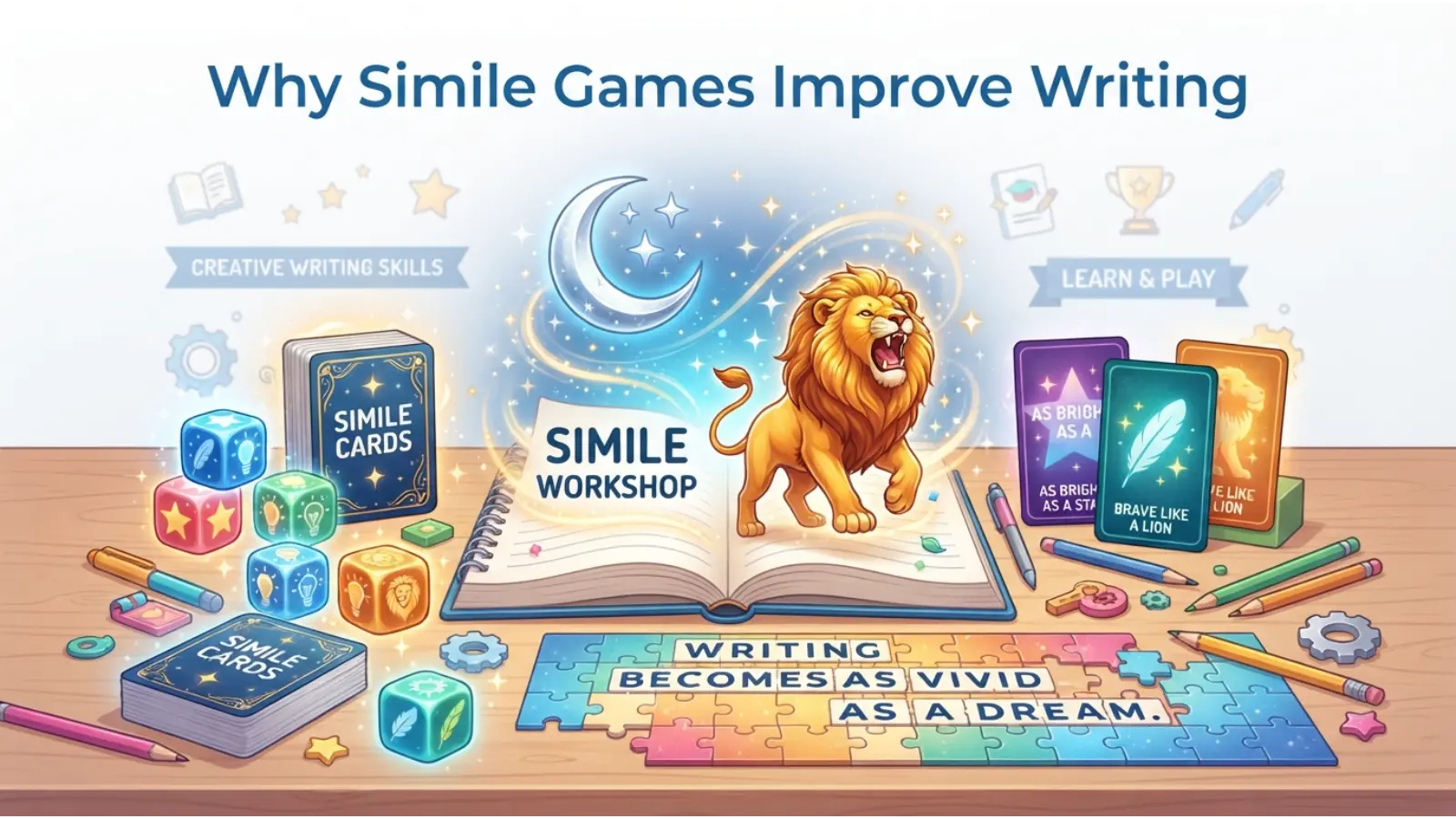
Writing becomes more memorable when readers can visualize an idea.
Instead of saying:
The room was quiet.
A writer might say:
The room was as silent as a library after midnight.
The second sentence paints a clearer picture because it invites the reader to imagine the scene.
Simile games encourage writers to:
- Think beyond ordinary descriptions.
- Expand vocabulary naturally.
- Practice creative thinking.
- Build confidence in storytelling.
- Make writing more engaging.
Best Similes Games to Try
The Mystery Object Game
Choose an everyday object.
Players describe it using an original simile without naming it.
Example:
It is as bright as a tiny sunrise in your hand.
Others guess:
Flashlight
Finish the Simile Challenge
Provide the first half.
Example:
- As calm as…
- Like a…
- As colorful as…
Players invent unique endings instead of using common ones.
Story Builder
Each player contributes one sentence.
Every sentence must include one original simile.
By the end, the group has created a complete short story filled with imaginative comparisons.
Picture Inspiration Game
Show a photograph.
Players write one simile inspired by the image.
A forest might inspire:
The branches stretched like welcoming arms reaching across the sky.
Speed Simile Race
Set a one-minute timer.
Players create as many original similes as possible for one topic.
Examples:
- Ocean
- Winter
- Happiness
- Adventure
Quality matters more than quantity.
25 Original Similes for Your Next Game
1. As curious as a key searching for its lock
Meaning: Someone eager to discover new things.
Creative use:
Maya explored every room, as curious as a key searching for its lock.
Writing tip: Pair curiosity with unusual objects instead of animals.
2. Like rain teaching dust to dance
Creates movement in descriptive scenes.
Conversation:
The first drops fell like rain teaching dust to dance.
3. As cheerful as sunlight finding a window
Best for optimistic characters.
Story:
His smile was as cheerful as sunlight finding a window.
4. Like a kite chasing invisible music
Perfect for describing freedom and excitement.
5. As patient as a tree counting seasons
Ideal for wise or calm characters.
6. Like fresh paint waking an old wall
Shows transformation.
7. As steady as a lighthouse greeting every storm
Creates confidence and reliability.
8. Like tiny stars hiding in morning dew
Useful in poetry and nature writing.
9. As playful as bubbles escaping a fountain
Excellent for children or joyful scenes.
10. Like footsteps whispering across snow
Builds peaceful imagery.
11. As bright as hope opening a curtain
Works well in inspirational writing.
12. Like feathers floating through quiet air
Adds softness to descriptions.
13. As determined as a river finding the sea
Represents persistence.
14. Like a compass smiling toward home
Ideal for adventure stories.
15. As gentle as moonlight touching a lake
Creates calm emotional scenes.
16. Like autumn painting every goodbye
Excellent for reflective storytelling.
17. As lively as popcorn in a warm pan
Fun for energetic characters.
Conversation:
The classroom became as lively as popcorn in a warm pan.
18. Like a lantern carrying tomorrow
Suggests optimism.
19. As smooth as pebbles shaped by time
Useful for describing speech or movement.
20. Like birds stitching songs into the morning
Beautiful for poetry.
21. As bold as thunder knocking on the sky
Shows confidence and courage.
22. Like waves applauding the shore
Great for nature writing.
23. As peaceful as clouds forgetting to hurry
Creates relaxing imagery.
24. Like crayons celebrating a blank page
Perfect for creativity.
25. As hopeful as the first flower after winter
Ideal for emotional stories about new beginnings.
Why These Similes Games Work
Strong similes do more than compare two things.
They:
- Create a mental picture.
- Suggest emotion.
- Reveal character.
- Strengthen atmosphere.
- Keep readers engaged.
Notice that each comparison introduces an unexpected but believable image. That surprise is what makes writing memorable.
How Professional Writers Create Better Similes
Instead of choosing the first comparison that comes to mind, experienced writers often ask:
- What feeling am I describing?
- What image creates that feeling?
- Can I compare it to something unexpected?
- Will readers immediately understand the picture?
The goal is clarity before cleverness.
Create Your Own Similes Games
Try this simple exercise.
Step 1
Pick one subject.
Examples:
- Wind
- Friend
- Pencil
- City
- Music
Step 2
List five qualities.
For example:
Wind
- Fast
- Invisible
- Cool
- Loud
- Changing
Step 3
Think of something else with the same qualities.
Step 4
Connect them using like or as.
Example:
The wind moved like an invisible painter brushing across the hills.
Repeat the exercise with different subjects until original comparisons come naturally.
Creative Classroom Activities
Simile Dice
Write different nouns, verbs, and adjectives on dice.
Roll them and create a simile using all three words.
Simile Detective
Read a short story.
Players highlight every simile and explain why it improves the description.
Rewrite the Sentence
Original:
The cake tasted good.
Challenge:
Rewrite it with an imaginative simile.
Possible answer:
The cake tasted like happiness wrapped in warm vanilla.
Common Mistakes to Avoid
Using Overused Comparisons
Readers have seen some comparisons countless times.
Challenge yourself to invent fresh imagery instead.
Mixing Different Images
Keep one comparison consistent.
Confusing images weaken the sentence.
Forgetting the Meaning
A clever comparison is only useful if readers understand it.
Always choose images that support your message.
Confusing Similes with Metaphors
A simile uses like or as.
Example:
Her voice was like flowing water.
A metaphor states one thing is another.
Example:
Her voice was flowing water.
Both are valuable, but they create different effects.
Adding Similes Everywhere
Too many comparisons slow the reader.
Use them where they add emotion, clarity, or atmosphere.
Related Literary Devices
Imagery
Imagery appeals to the senses. Similes often strengthen imagery by helping readers see, hear, or feel a scene more clearly.
Personification
Personification gives human qualities to non-human things. Combining it with similes can produce memorable descriptions.
Example:
The breeze moved like a friendly guide leading travelers home.
Hyperbole
Hyperbole uses deliberate exaggeration. A playful simile can include hyperbole when appropriate, but it should still fit the tone of the writing.
Symbolism
Sometimes the object used in a simile carries a deeper meaning. A lighthouse, for example, may symbolize hope, guidance, or safety.
Frequently Asked Questions
What is a similes game?
A similes game is an activity where players identify, create, or improve similes through creative challenges that make figurative language enjoyable.
Who can play simile games?
Students, teachers, parents, homeschoolers, and creative writers of all ages can benefit from simile games.
Do simile games improve writing?
Yes. They encourage descriptive thinking, expand vocabulary, and help writers create stronger mental images.
What age is best for Similes Games?
Simple matching games work well for younger children, while storytelling and creative writing challenges suit older students and adults.
Can simile games be played alone?
Absolutely. Timed writing prompts, picture challenges, and journal exercises are excellent solo activities.
How can I invent original similes?
Focus on the feeling or quality you want to describe, then compare it with something unexpected but easy to imagine.
What is the difference between a simile and a metaphor?
A simile compares using like or as, while a metaphor makes a direct comparison without those words.
Conclusion
A great similes game does more than entertain—it trains your imagination. Every comparison you create teaches you to notice details, think creatively, and describe ideas with greater precision. Rather than relying on familiar expressions, experiment with fresh images drawn from everyday life, nature, emotions, and personal experiences. The more you play with language, the more naturally original similes will become, enriching your stories, poems, conversations, and classroom activities.
I am Helena Frost, a writer captivated by the beauty of language and the art of comparison. Through my words, I explore the world by turning ordinary moments into vivid similes and reflections. I enjoy crafting phrases that spark imagination, evoke emotion, and linger in the mind. My writing celebrates the subtle connections between people, nature, and the stories we live. For me, every sentence is an opportunity to reveal the extraordinary in the everyday.