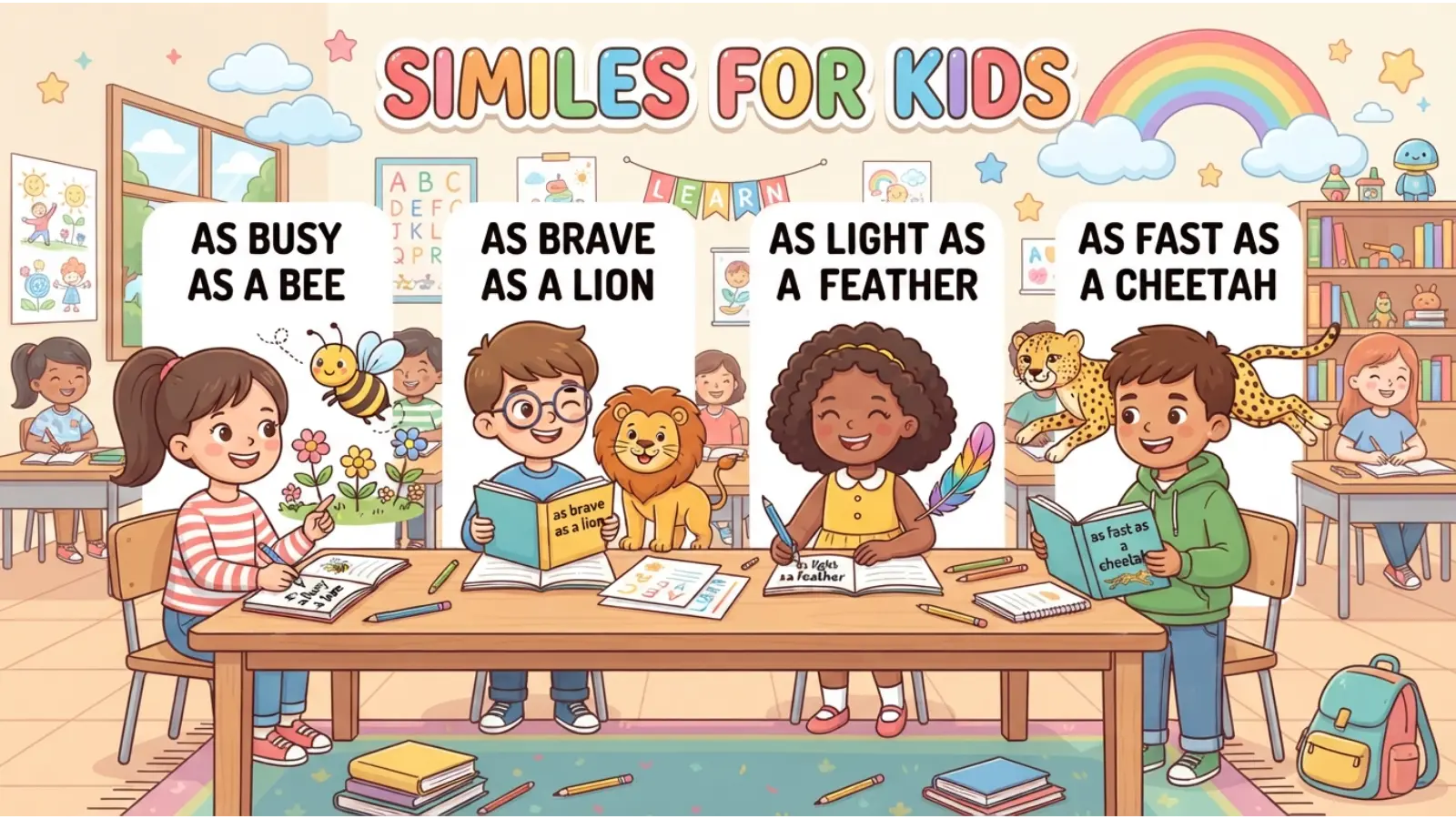
Learning to write is much more exciting when words create colorful pictures in the reader’s mind. That’s exactly what similes do. A simile compares two different things using words like “as” or “like” to make descriptions more vivid and memorable. Children use similes in school assignments, creative writing, poems, speeches, and everyday conversations. They help young writers express emotions, describe people, explain ideas, and tell better stories. This collection of Happy for kids offers fresh examples, practical explanations, and creative writing advice that will help children, parents, and teachers make writing more engaging and imaginative.
Quick Answer
Happiness for kids are simple comparisons that use “like” or “as” to describe something in a fun and imaginative way. For example, “The puppy was as playful as a bouncing ball.” They make writing easier to visualize and more enjoyable to read.
Why Similes Are Great for Young Writers
Children naturally notice patterns, colors, sounds, and feelings. Similes encourage them to connect those observations with familiar objects.
Using Happy helps kids:
- Build stronger vocabulary
- Improve descriptive writing
- Develop creativity
- Make stories more interesting
- Express emotions clearly
- Remember details more easily
Instead of saying:
The flower was pretty.
A child can write:
The flower smiled like a tiny sunrise.
The second sentence creates a much stronger image.
30 Original Simile for Kids
1. As cheerful as a kite on a windy day
Meaning: Very happy and full of energy.
Story Example: Emma skipped into school as cheerful as a kite on a windy day.
Conversation: You look as cheerful as a kite today!
Best for: Happy characters and joyful moments.
2. Like a squirrel gathering tiny treasures
Meaning: Collecting things carefully.
Example: Liam packed seashells like a squirrel gathering tiny treasures.
Writing Tip: Great for describing curious children.
3. As gentle as a floating feather
Meaning: Soft and careful.
Example: The baby rabbit felt as gentle as a floating feather.
Works beautifully in bedtime stories.
4. Like popcorn popping in a pan
Meaning: Full of excitement.
Example: Ideas popped into Mia’s mind like popcorn popping in a pan.
Excellent for energetic scenes.
5. As bright as a brand-new crayon
Meaning: Colorful and full of life.
Example: His drawing was as bright as a brand-new crayon.
6. Like a fish finding cool water
Meaning: Comfortable and relaxed.
Example: Jake settled into his favorite chair like a fish finding cool water.
7. As curious as a puppy at the park
Meaning: Always eager to explore.
Example: Ava looked around the museum as curious as a puppy at the park.
8. Like leaves dancing in autumn
Meaning: Moving lightly and freely.
Example: The children laughed like leaves dancing in autumn.
9. As quiet as fresh snow
Meaning: Extremely peaceful.
Poetry Example: The forest became as quiet as fresh snow.
10. Like sunshine through a window
Meaning: Bringing warmth and happiness.
Example: Her smile spread like sunshine through a window.
11. As busy as tiny ants building a hill
Meaning: Working hard.
Example: The students were as busy as tiny ants before the science fair.
12. Like bubbles floating to the sky
Meaning: Light and carefree.
Example: Their giggles floated like bubbles to the sky.
13. As colorful as a painter’s palette
Meaning: Filled with many colors.
Example: The garden looked as colorful as a painter’s palette.
14. Like a rainbow after the rain
Meaning: Bringing hope.
Example: Her kind words appeared like a rainbow after the rain.
15. As quick as a bouncing tennis ball
Meaning: Very fast.
Example: Ethan answered as quick as a bouncing tennis ball.
16. Like a hummingbird tasting flowers
Meaning: Moving from one thing to another quickly.
Example: Lily explored each activity like a hummingbird tasting flowers.
17. As brave as a child trying something new
Meaning: Courageous.
Example: Noah stood as brave as a child trying something new.
18. Like stars waking up at night
Meaning: Gradually becoming brighter.
Example: The campfire glowed like stars waking up at night.
19. As smooth as polished glass
Meaning: Very even.
Example: The lake looked as smooth as polished glass.
20. Like a clock that never forgets
Meaning: Reliable.
Example: Grandpa arrived like a clock that never forgets.
21. As sweet as homemade lemonade
Meaning: Kind and pleasant.
Example: Her voice sounded as sweet as homemade lemonade.
22. Like clouds playing hide-and-seek
Meaning: Constantly changing.
Example: Shadows moved like clouds playing hide-and-seek.
23. As light as a paper airplane
Meaning: Easy to lift.
Example: The little scarf felt as light as a paper airplane.
24. Like crayons filling a blank page
Meaning: Bringing creativity.
Example: New ideas arrived like crayons filling a blank page.
25. As calm as a sleeping kitten
Meaning: Peaceful.
Example: Oliver remained as calm as a sleeping kitten.
26. Like cookies fresh from the oven
Meaning: Warm and welcoming.
Example: Grandma’s hug felt like cookies fresh from the oven.
27. As shiny as a marble in sunlight
Meaning: Bright and polished.
Example: The toy sparkled as shiny as a marble in sunlight.
28. Like a butterfly finding flowers
Meaning: Naturally happy.
Example: Ella wandered through the garden like a butterfly finding flowers.
29. As steady as a tree in calm weather
Meaning: Dependable.
Example: Ben stood as steady as a tree in calm weather.
30. Like music filling a quiet room
Meaning: Bringing happiness.
Example: Their laughter spread like music filling a quiet room.
What Makes a Good Simile?
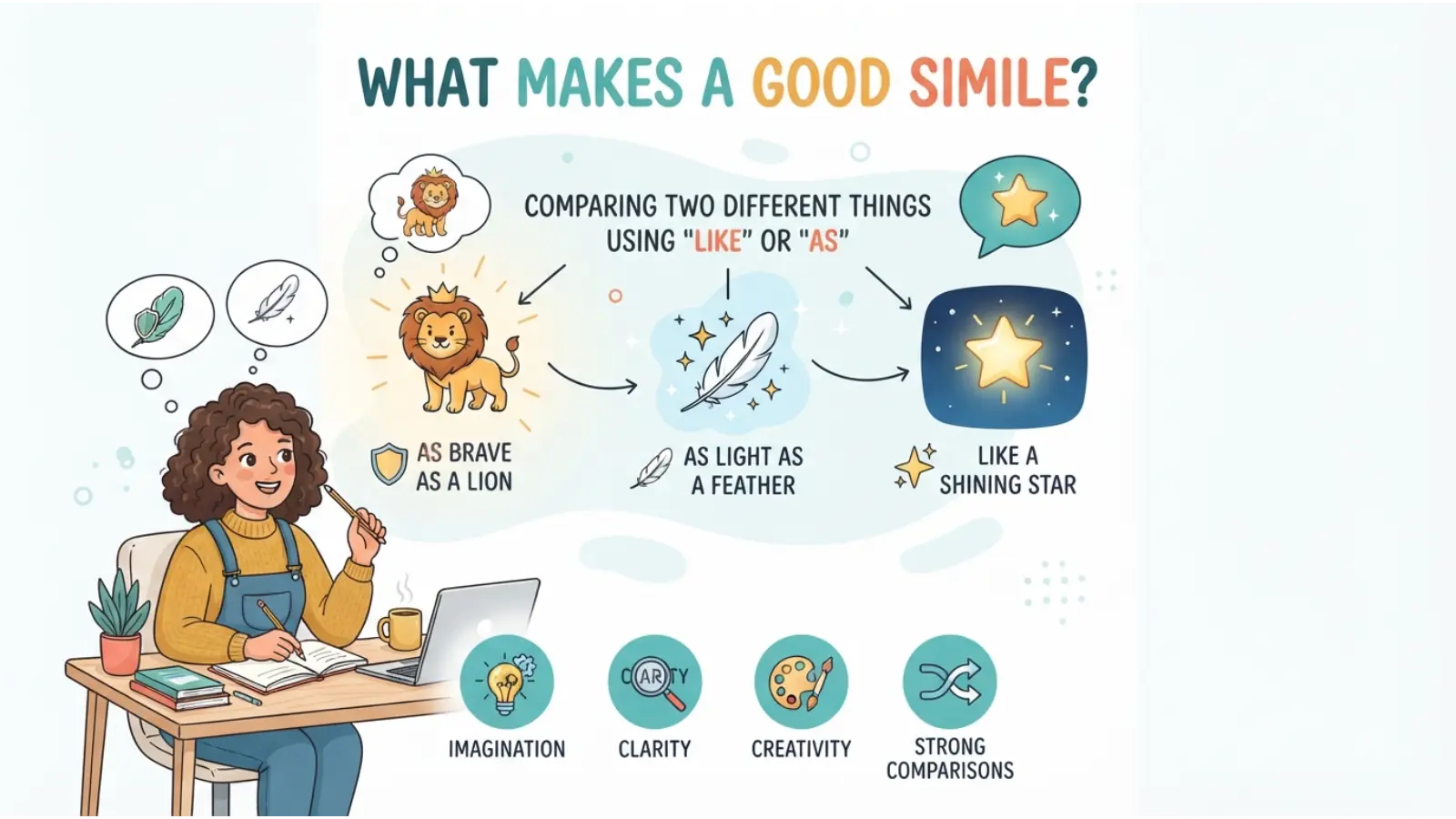
Strong similes compare two things that share one clear quality. The comparison should help readers picture, hear, feel, or imagine something more clearly.
Good writers avoid comparisons that feel random. Instead, they choose images that fit naturally with the mood of the sentence.
For example:
Weak:
The cookie was like a mountain.
Better:
The cookie smelled like warm happiness from the oven.
The second comparison creates emotion instead of confusion.
How Professional Writers Make Similes Feel Fresh
Many beginning writers repeat familiar comparisons such as “as busy as a bee” or “as cold as ice.” While these are correct, they no longer surprise readers.
To create original similes:
- Observe everyday life.
- Compare with objects children recognize.
- Focus on one shared quality.
- Keep comparisons simple.
- Think about the feeling you want readers to experience.
Fresh writing often comes from careful observation rather than unusual words.
Similes and Other Literary Devices
Simile vs. Metaphor
A simile uses like or as.
- The clouds were like cotton candy.
A metaphor makes a direct comparison.
- The clouds were cotton candy.
Simile and Imagery
Imagery appeals to the senses. Similes strengthen imagery by making descriptions easier to picture.
Example:
The pond shimmered like scattered diamonds.
Readers can immediately imagine the sparkling water.
Simile and Personification
Personification gives human qualities to non-human things.
Example:
The wind whispered through the trees.
You can even combine the two carefully:
The wind whispered like a friendly neighbor.
Create Your Own Similes
Writing original similes becomes easier with practice.
Step 1
Choose something you want to describe.
Example:
- Dog
- Rain
- School
- Smile
Step 2
Think of its strongest quality.
For a smile:
- Bright
- Friendly
- Warm
Step 3
Find something that shares that quality.
Bright:
- Sunrise
- Lantern
- Firefly
- Rainbow
Step 4
Join them with like or as.
- Her smile was like the first sunrise of spring.
- His grin was as bright as a firefly at dusk.
Fun Writing Exercises for Kids
Finish the Comparison
Complete these similes:
- As fast as __________
- Like __________ after a storm
- As soft as __________
- Like __________ in the sunshine
Nature Hunt
Go outside and find five things you could compare to:
- Happiness
- Kindness
- Speed
- Courage
- Curiosity
Story Challenge
Write a short story using:
- Two animal similes
- Two weather similes
- One friendship simile
Try making every comparison different.
Common Mistakes to Avoid
Using Too Many Similes
A few well-placed comparisons make writing stronger. Too many can distract readers.
Mixing Images
Avoid combining unrelated comparisons.
Confusing:
The bird flew like lightning while blooming like a flower.
Choose one clear comparison instead.
Choosing Unclear Comparisons
Readers should immediately understand the shared quality.
Instead of:
As strange as a calculator sandwich.
Try:
As surprising as snow in summer.
Confusing Similes with Metaphors
Remember:
- Similes use like or as.
- Metaphors do not.
Copying the Same Similes Repeatedly
Challenge yourself to invent new comparisons based on everyday experiences. Original similes make your writing stand out.
Frequently Asked Questions
What is a simile for kids?
A simile is a comparison using like or as that helps readers imagine something more clearly.
Why should children learn similes?
They improve creativity, vocabulary, descriptive writing, and storytelling skills.
What words are commonly used in similes?
Most similes use like or as.
Are similes used in poems?
Yes. Poets often use similes to create vivid images and emotions.
Can kids create their own Happiness?
Absolutely. Looking closely at everyday objects and feelings is the best way to invent original comparisons.
What’s the difference between a simile and a metaphor?
A simile compares using like or as, while a metaphor makes a direct comparison.
How many similes should children use in a story?
Quality matters more than quantity. A few meaningful similes usually have a greater impact than many repetitive ones.
Conclusion
Similes help young writers transform simple sentences into memorable descriptions. By comparing familiar things in fresh and thoughtful ways, children learn to paint vivid pictures with words, express emotions clearly, and make stories more engaging. The best similes come from careful observation and imagination. Encourage young writers to notice the world around them, experiment with new comparisons, and keep practicing. Every original simile is another step toward confident, creative writing.
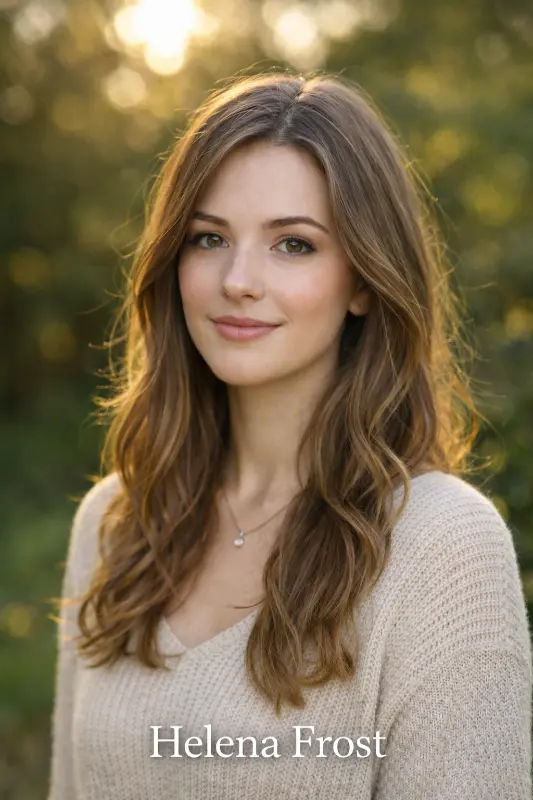
I am Helena Frost, a writer captivated by the beauty of language and the art of comparison. Through my words, I explore the world by turning ordinary moments into vivid similes and reflections. I enjoy crafting phrases that spark imagination, evoke emotion, and linger in the mind. My writing celebrates the subtle connections between people, nature, and the stories we live. For me, every sentence is an opportunity to reveal the extraordinary in the everyday.