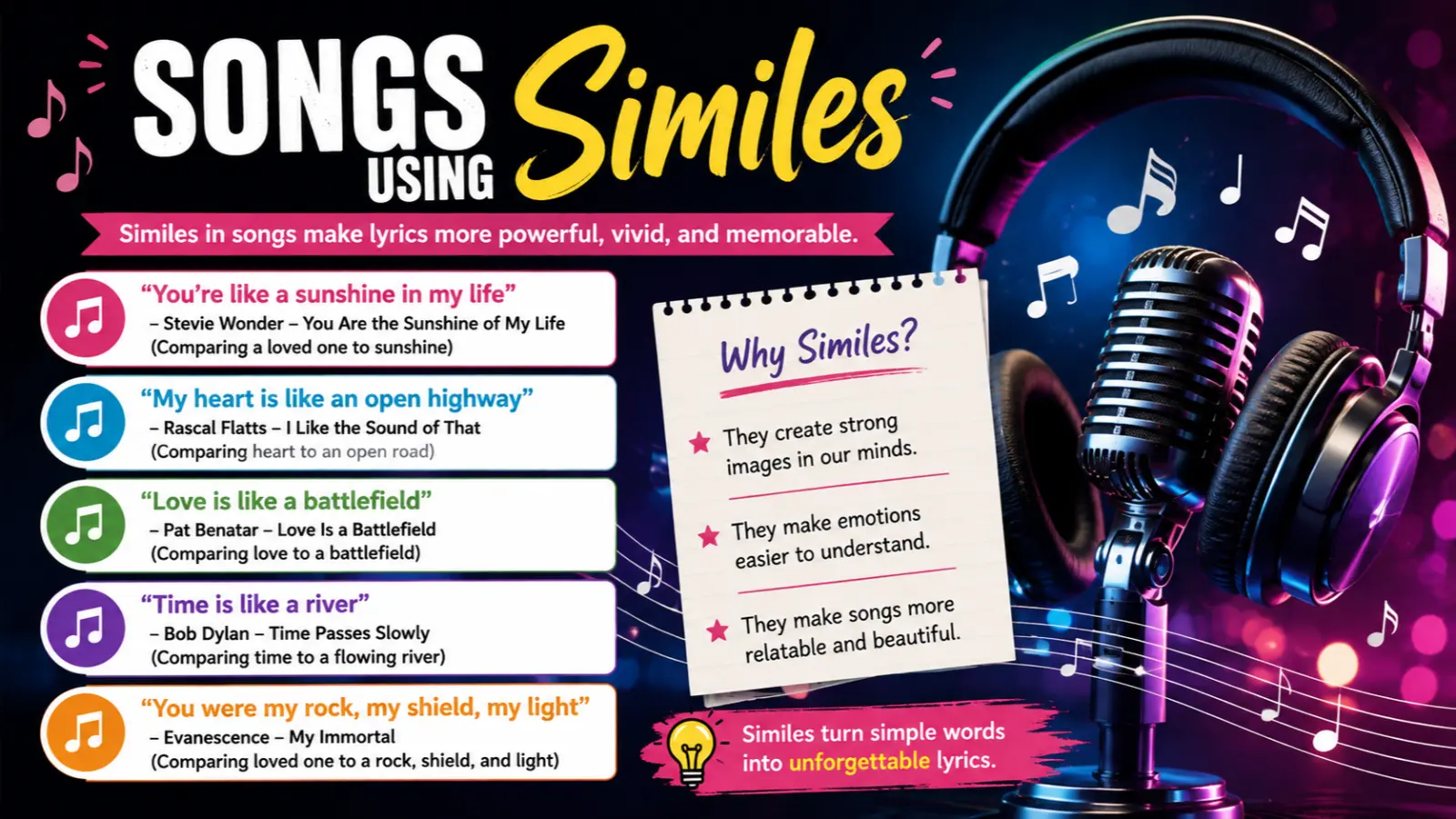
Mothers Day Similes is a natural occasion for expressive language. A simple sentence can become much more memorable when you compare a mother’s love, patience, kindness, or strength to something readers can picture.
A Mothers Day Similes compares two different things using words such as “like” or “as.” For example, “Her encouragement was like a warm lamp in a dark room” connects an emotional idea with a familiar image.
That makes Mothers Day Similes especially useful for Mothers Day Similes cards, poems, social posts, speeches, school assignments, and personal stories. Instead of simply saying that a mother is caring, a well-chosen comparison can help the reader feel what that care means.
This collection of Mothers Day Similes offers original examples while also showing how to build stronger comparisons of your own.
What Is a Simile?
A Mothers Day Similes is a figure of speech that directly compares two unlike things, usually with like or as.
For example:
Her laughter was like sunlight slipping through the curtains.
The laughter is not literally sunlight. The comparison suggests that it brings brightness and warmth.
Mothers Day Similes work best when the comparison adds an image, emotion, or idea that ordinary description cannot express as clearly.
Quick Answer: What Are Good Mother’s Day
Similes?
Good Mothers Day Similes Mothers Day Similes compare a Mothers Day Similes, guidance, patience, strength, or kindness with vivid and meaningful things. Examples include:
- A Mothers Day Similes love is like a lighthouse guiding a ship home.
- Her kindness was like rain reaching thirsty flowers.
- Her advice was like a compass on an unfamiliar road.
- A mother’s patience is as steady as a quiet river.
- Her smile was like morning light entering a tired room.
The strongest Mothers Day Similes feel personal rather than generic. Think about a quality that makes the mother in your writing special, then find an image that naturally represents it.
Heartfelt Similes About a Mothers Day Similes love
1. Her love was like a blanket around a child on a cold night.
Meaning: The comparison presents love as warmth, comfort, and protection.
This works because a blanket is something people physically associate with safety and warmth. It turns an abstract feeling into something readers can almost feel.
Example:
Her love was like a blanket around me on the coldest nights.
Best context: Mother’s Day cards, personal essays, and sentimental poems.
Writing tip: When writing about love, choose an object that provides the same emotional experience rather than simply calling the love “beautiful.”
2. A mother’s love can be like a lighthouse that never forgets the shore.
Meaning: This suggests dependable guidance and a lasting connection.
The lighthouse image is particularly effective for writing about a mother who helps someone find direction during difficult moments.
Example:
Even when I felt lost, her love was like a lighthouse that never forgot the shore.
Emotional effect: Reassuring and hopeful.
3. Her heart was as open as a window on a spring morning.
Meaning: The comparison emphasizes warmth, welcome, and generosity.
The image feels fresh because an open window suggests possibility as well as hospitality.
Poetry example:
Her heart was as open as a window
welcoming the first breeze of spring.
Writing tip: Use natural images when you want affection to feel gentle rather than dramatic.
4. Her care was like a quiet hand steadying a bicycle.
Meaning: A mother may provide support without taking control.
This simile captures an important kind of parenting: helping someone become independent while remaining close enough to offer support.
Best context: Personal stories and reflective writing.
5. A mother’s love can be as constant as the moon returning each night.
Meaning: The comparison emphasizes consistency.
Rather than saying “a mother always loves you,” the image creates a visual sense of something reliably returning.
Writing tip: Comparisons involving recurring natural patterns are useful when describing loyalty or permanence.
Similes for a Mother’s Kindness
6. Her kindness was like rain reaching thirsty flowers.
Meaning: Her kindness provides something deeply needed.
The flowers make the comparison especially useful because rain does not merely decorate them—it helps them grow.
Example:
Her kindness was like rain reaching flowers after a long dry season.
Best context: Poems, cards, and appreciation speeches.
7. Her words were like soft footsteps in a quiet hallway.
Meaning: Her words bring calm without demanding attention.
This is a quieter alternative to common comparisons involving sunshine or angels.
Emotional effect: Peaceful and intimate.
8. Her smile was like morning light entering a tired room.
Meaning: Her smile changes the emotional atmosphere.
The contrast between a tired room and morning light gives the simile movement. Something dull becomes brighter.
Example:
When everyone was exhausted, Mom’s smile was like morning light entering a tired room.
Writing tip: Strong similes often contain a small transformation.
9. Her generosity was like a garden that kept producing new flowers.
Meaning: Her giving nature seems abundant and continuous.
This works particularly well when describing someone who gives time, attention, advice, or encouragement.
10. Her kindness felt as warm as a cup held between cold hands.
Meaning: The comparison focuses on comfort rather than simply goodness.
Best context: Personal writing where you want the reader to experience kindness physically.
Similes About a Mother’s Strength
11. Her strength was like an old oak holding firm through a restless storm.
Meaning: She remains steady when circumstances become difficult.
The oak creates a sense of endurance without suggesting that strength means never struggling.
Example:
She faced every difficult season with strength like an old oak holding firm through a restless storm.
12. Her courage was as bright as a match struck in a dark room.
Meaning: A small act of courage can create immediate hope.
This comparison is useful when writing about someone who keeps going despite uncertainty.
Writing tip: Courage does not have to be compared with something enormous. Sometimes a small source of light creates a stronger image.
13. Her determination was like a river wearing a path through stone.
Meaning: Persistent effort can gradually overcome resistance.
The river does not break the stone instantly. That makes the comparison useful for describing patience combined with determination.
14. She stood as steady as a bridge over rushing water.
Meaning: Her presence provides stability while circumstances remain unsettled.
Best context: Speeches, biographies, and reflective essays.
15. Her resilience was like grass rising after a hard rain.
Meaning: She can recover and continue growing after difficult circumstances.
This simile works especially well when a Mother’s Day message celebrates perseverance rather than perfection.
Similes for a Mother’s Guidance
16. Her advice was like a compass on an unfamiliar road.
Meaning: Her guidance helps someone decide which direction to take.
This is a useful comparison because a compass does not walk the road for you. It simply helps you find your direction.
Example:
Whenever I was uncertain, her advice was like a compass on an unfamiliar road.
Writing insight: This distinction can make a simile more sophisticated: compare the exact function of the two things, not merely their general qualities.
17. Her lessons were like seeds tucked into the soil.
Meaning: Advice may remain unnoticed at first but grow in importance over time.
This is particularly effective for writing about lessons learned during childhood.
18. Her voice was like a map drawn from years of experience.
Meaning: Her guidance contains knowledge gained through life.
Best context: Graduation speeches, tribute essays, and Mother’s Day poems.
19. Her encouragement was like a hand pushing a kite higher into the wind.
Meaning: Encouragement gives someone the confidence to rise and attempt more.
The kite creates an image of freedom, movement, and support.
Example:
Her encouragement was like a hand pushing my kite higher into the wind.
20. Her wisdom was as clear as a trail after the fog lifted.
Meaning: Her words make confusing situations easier to understand.
Writing tip: Comparisons involving visibility work particularly well when describing wisdom or understanding.
Creative Mother’s Day Similes for Cards and Messages
21. Mom’s laugh was like bells dancing in a summer breeze.
This simile emphasizes brightness and liveliness.
Example:
Your laugh was like bells dancing in a summer breeze, filling ordinary moments with joy.
Best context: Warm, cheerful cards.
22. Her kitchen was like a small theater where ordinary days became celebrations.
Meaning: The kitchen becomes a place where food, conversation, and family memories come together.
This is especially effective when the writing focuses on family traditions.
23. Her stories were like windows opening onto places I had never seen.
Meaning: A mother’s stories can expand a child’s imagination and understanding.
Best context: Personal essays and literary-style Mother’s Day poems.
24. Her patience was like a clock that never hurried the hour.
Meaning: She gives people time to learn, make mistakes, or explain themselves.
This is more specific than simply calling someone “patient.”
25. Her hugs were like a doorway back to calm.
Meaning: A hug becomes a transition from emotional difficulty to comfort.
Emotional effect: Tender and reassuring.
26. Family memories gathered around her like birds around a familiar tree.
Meaning: The mother is portrayed as a central part of shared family memories.
This works particularly well in a longer tribute.
27. Her presence was like a lamp left glowing in the hallway.
Meaning: Even without doing anything dramatic, her presence makes a place feel welcoming.
Writing tip: Some of the strongest similes describe quiet influence rather than heroic action.
28. Her dreams for us were like stars pinned across a midnight sky.
Meaning: Her hopes for her children seem numerous, distant, and full of possibility.
Best context: Poetry and reflective Mother’s Day messages.
29. Her patience was as deep as a well beneath an old garden.
Meaning: Her patience seems to have a large and lasting supply.
The garden adds a sense of family, growth, and age.
30. A mother’s memory can be like a song that keeps playing after the room goes quiet.
Meaning: Memories of a mother can remain emotionally present long after a particular moment has passed.
This is especially suitable for reflective writing about memories and family history.
How to Make Mother’s Day Similes More Vivid
A weak simile usually connects two things because they share a broad quality:
Her love was like something beautiful.
That does not give the reader enough to imagine.
A stronger comparison identifies what the love actually does:
Her love was like a porch light glowing when I finally found my way home.
Now the reader can see the light, imagine the evening, and understand the feeling of being welcomed.
When creating your own simile, ask:
- What quality am I describing?
- What does that quality actually do?
- What familiar object does the same thing?
- What sensory detail can make the comparison visible?
- Does the comparison feel specific to this person?
The last question matters most. A personal simile often feels more meaningful than a dramatic one.
How to Avoid Cliché Mother’s Day Comparisons
Some comparisons have become so common that readers may barely notice them. Sunshine, angels, roses, stars, and diamonds can still work, but they need a fresh angle.
Instead of:
Mom was like the sun.
Try identifying the specific effect:
Her morning messages were like curtains opening on a difficult day.
The second version does more than say she is “bright.” It shows how her presence changes the writer’s experience.
A useful rule: If your comparison could describe almost anyone, make it more personal.
Think about a real detail:
- the sound of her morning routine
- a favorite family meal
- the way she gives advice
- a familiar phrase she uses
- a childhood memory
- the way she reacts when someone is nervous
- a family tradition
Real details give similes emotional credibility.
What Makes a Simile Emotionally Powerful?
A powerful simile usually combines familiarity with surprise.
The familiar part gives readers something they understand immediately. The surprising part makes them stop and think.
For example:
Her advice was like a key kept in a drawer until the right door appeared.
Most readers understand keys and locked doors. The unusual part is the idea that advice may remain unused until life presents the right situation.
That creates depth without making the language difficult.
Similes, Metaphors, and Other Literary Devices
Similes are closely related to several other literary devices, but they are not identical.
Simile vs. Metaphor
A simile makes an explicit comparison:
Her patience was like a quiet river.
A metaphor makes the comparison more directly:
Her patience was a quiet river.
Both create imagery, but the simile signals the comparison with like or as.
Simile vs. Imagery
Imagery uses descriptive language to create sensory experiences.
A simile can be one tool for creating imagery:
Her kitchen smelled like cinnamon after rain.
The comparison helps the reader imagine the atmosphere.
Simile vs. Personification
Personification gives human qualities to something nonhuman.
For example:
The old house welcomed every child through its doorway.
That is personification rather than a simile.
Using several devices together can make Mother’s Day writing richer, but each should have a purpose.
How to Create Your Own Mother’s Day Similes
Try this simple five-step method.
Step 1: Choose One Quality
Start with one specific quality:
patient, protective, funny, encouraging, wise, creative, generous, calm
Avoid trying to describe everything at once.
Step 2: Describe the Quality Without Figurative Language
For example:
She stays calm when everyone else is worried.
Now you know exactly what you want the simile to communicate.
Step 3: Find Something That Behaves Similarly
Think of:
- a lighthouse
- a bridge
- a tree
- a river
- a window
- a lamp
- a compass
Do not choose an image simply because it sounds pretty. Choose it because it performs a similar role.
Step 4: Add a Specific Detail
Instead of:
Her calmness was like a tree.
Try:
Her calmness was like an old tree standing quietly while the wind argued with every branch.
The added detail gives the image movement and personality.
Step 5: Read It Aloud
A simile can look good on a page but sound awkward when spoken.
Read your sentence aloud and ask:
- Does the comparison feel natural?
- Is it easy to understand?
- Does it create an image?
- Does it sound like something a real person might write or say?
- Does every word earn its place?
If not, simplify it.
Three Creative Exercises for Better Similes
Exercise 1: Memory to Image
Think of one specific memory involving your mother.
Write three facts about the moment without using figurative language.
Then choose one fact and compare it to something from nature or everyday life.
For example:
She waited outside my school when it was raining.
Possible direction:
Her patience was like an umbrella that never closed.
The goal is not to produce a perfect line immediately. Generate several possibilities and keep the one that feels most personal.
Exercise 2: Five Senses
Choose one quality such as kindness.
Now find a comparison connected to:
- sight
- sound
- touch
- smell
- taste
You might discover that kindness can be compared to much more than sunlight or flowers.
This exercise helps writers escape predictable imagery.
Exercise 3: Reverse the Comparison
Start with an object:
lighthouse
Ask:
What quality of a lighthouse could describe my mother?
Possible answers include:
- guidance
- steadiness
- visibility
- protection
- hope
Then turn one answer into a sentence.
This method is useful when you know the image you want but are unsure what emotion it should represent.
Common Mistakes When Writing Mother’s Day Similes
Using Too Many Comparisons
A paragraph packed with similes can become exhausting.
One precise comparison can be more memorable than five ordinary ones.
Mixing Images
Avoid combining unrelated comparisons in a confusing way:
Her love was a lighthouse, a river, a blanket, and a rocket.
Each image may work individually, but together they compete for attention.
Choose the image that best matches the specific idea.
Forcing a Simile
If a comparison feels unnatural, remove it.
Not every sentence needs figurative language. Clear writing is often stronger than decorative writing.
Explaining the Simile Too Much
Once the image is clear, trust the reader.
For example:
Her advice was like a compass. It was like a compass because a compass helps people know which direction to go.
The second sentence may be unnecessary if the context already makes the meaning obvious.
Choosing Pretty Images Without a Connection
A rose may sound poetic, but that does not automatically make it a good comparison.
Ask what the rose actually contributes:
beauty, delicacy, growth, thorns, fragrance, or something else?
Specific function creates stronger writing.
Mother’s Day Similes for Cards, Poems, and Speeches
The best simile depends on the kind of writing you are creating.
For a card: Keep it warm and immediately understandable.
Your kindness is like a light that makes ordinary days feel special.
For a poem: You can use more unusual imagery.
Her memories gathered like rainwater in the quiet corners of my childhood.
A speech: Choose a comparison that listeners can understand quickly.
A mother’s guidance is like a compass: it helps us find our direction even when she cannot walk every road with us.
For a personal essay: Use a specific memory and let the simile grow naturally from it.
The same idea does not need to sound identical in every format.
Frequently Asked Questions
What is a good simile for Mother’s Day?
A good Mother’s Day simile compares a mother’s specific quality with a vivid image. For example, “Her advice was like a compass on an unfamiliar road” connects guidance with direction.
What are some similes for a mother’s love?
You can compare a mother’s love to a blanket, lighthouse, porch light, open window, or another image associated with comfort, guidance, welcome, or protection. The strongest choice depends on the particular relationship or memory you are describing.
How do I write a Mother’s Day simile?
Choose one quality, such as patience or kindness. Describe what that quality does, find something that behaves similarly, and connect the two with “like” or “as.” Then make the image more specific with a sensory detail.
What is a simile for a mother’s kindness?
“Her kindness was like rain reaching thirsty flowers” is one original example. It suggests that her kindness provides something needed and helps others grow.
What is a simile for a mother’s strength?
“Her strength was like an old oak holding firm through a restless storm” presents strength as steadiness during difficult circumstances.
Can I use similes in a Mother’s Day speech?
Absolutely. Similes can make speeches more memorable by turning abstract qualities such as love, patience, and wisdom into concrete images. Keep the comparisons clear enough for listeners to understand immediately.
Are Mother’s Day similes useful for children’s writing?
Yes. Similes can help children practice descriptive writing while giving them a simple structure for expressing feelings. Encourage them to compare their mother with familiar objects, animals, places, or things they see every day.
Should every Mother’s Day message include a simile?
No. A simile should serve the message rather than decorate it. A sincere, specific sentence without figurative language can be more powerful than a forced comparison.
Conclusion
Mother’s Day writing becomes more memorable when it moves beyond general praise and captures something specific. Instead of simply saying that a mother is loving, patient, strong, or kind, think about how that quality feels in real life. Then find an image that behaves in a similar way. A lighthouse can suggest guidance. A window can suggest welcome. A river can suggest persistence. A lamp can suggest quiet comfort. But the most effective comparison will often come from a personal memory that nobody else could describe in quite the same way. That is the real value of a simile: it does not merely tell readers what you feel. It gives them a picture through which they can experience the feeling.