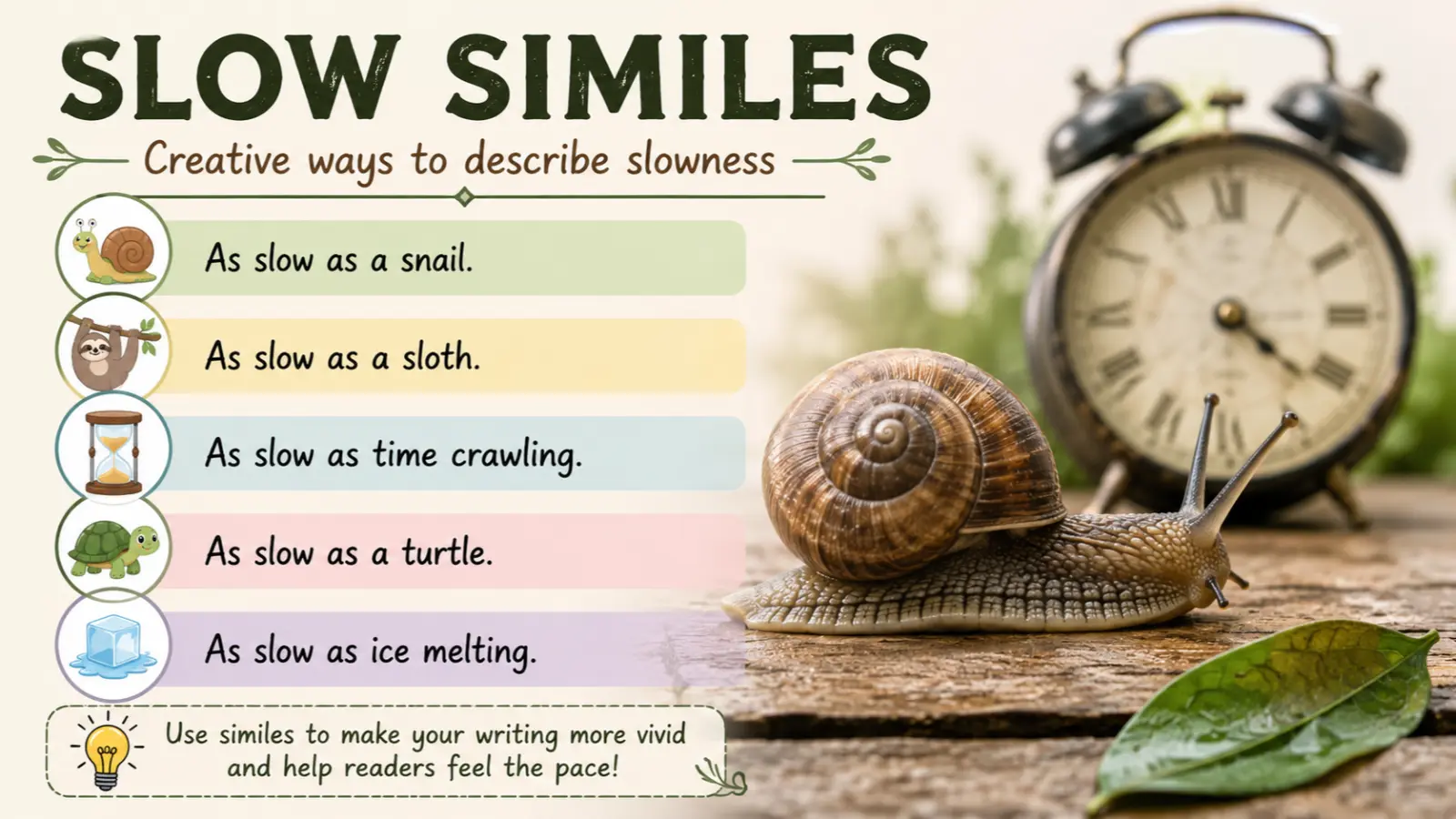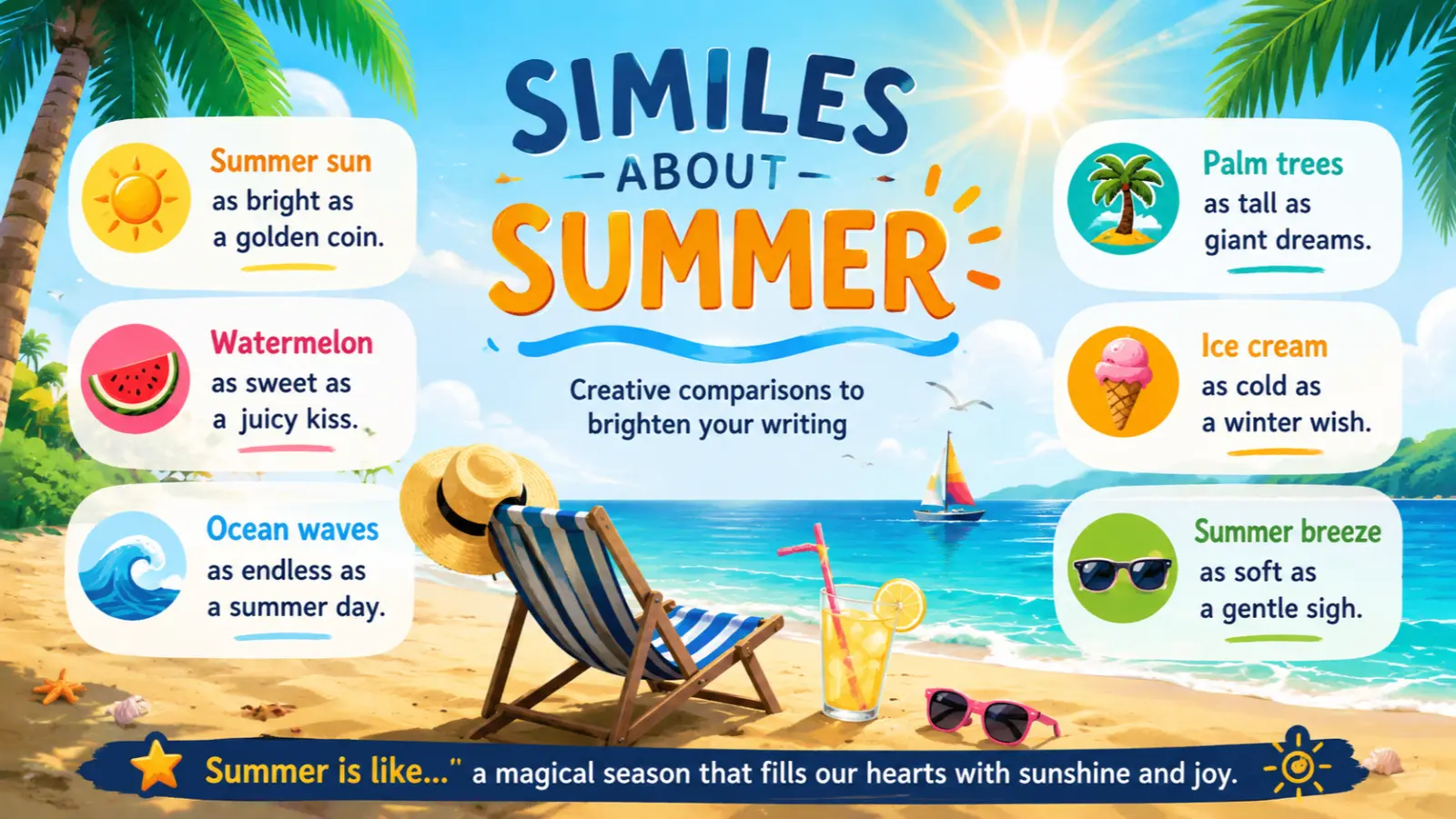
Similes About Summer is a season full of contrasts. It can feel bright and carefree, but it can also be restless, humid, noisy, or surprisingly quiet. A good simile helps readers experience those details instead of simply being told that summer is “hot” or “beautiful.”
A simile compares two different things using words such as like or as. For example, “The afternoon heat clung to the town like a heavy blanket” connects an abstract feeling of heat with something readers can easily imagine.
Writers use similes in stories, poems, essays, songs, advertisements, speeches, and everyday conversation. In this guide, you’ll find original similes about summer, along with explanations and practical ways to use them without making your writing sound forced.
What Are Similes About Summer?
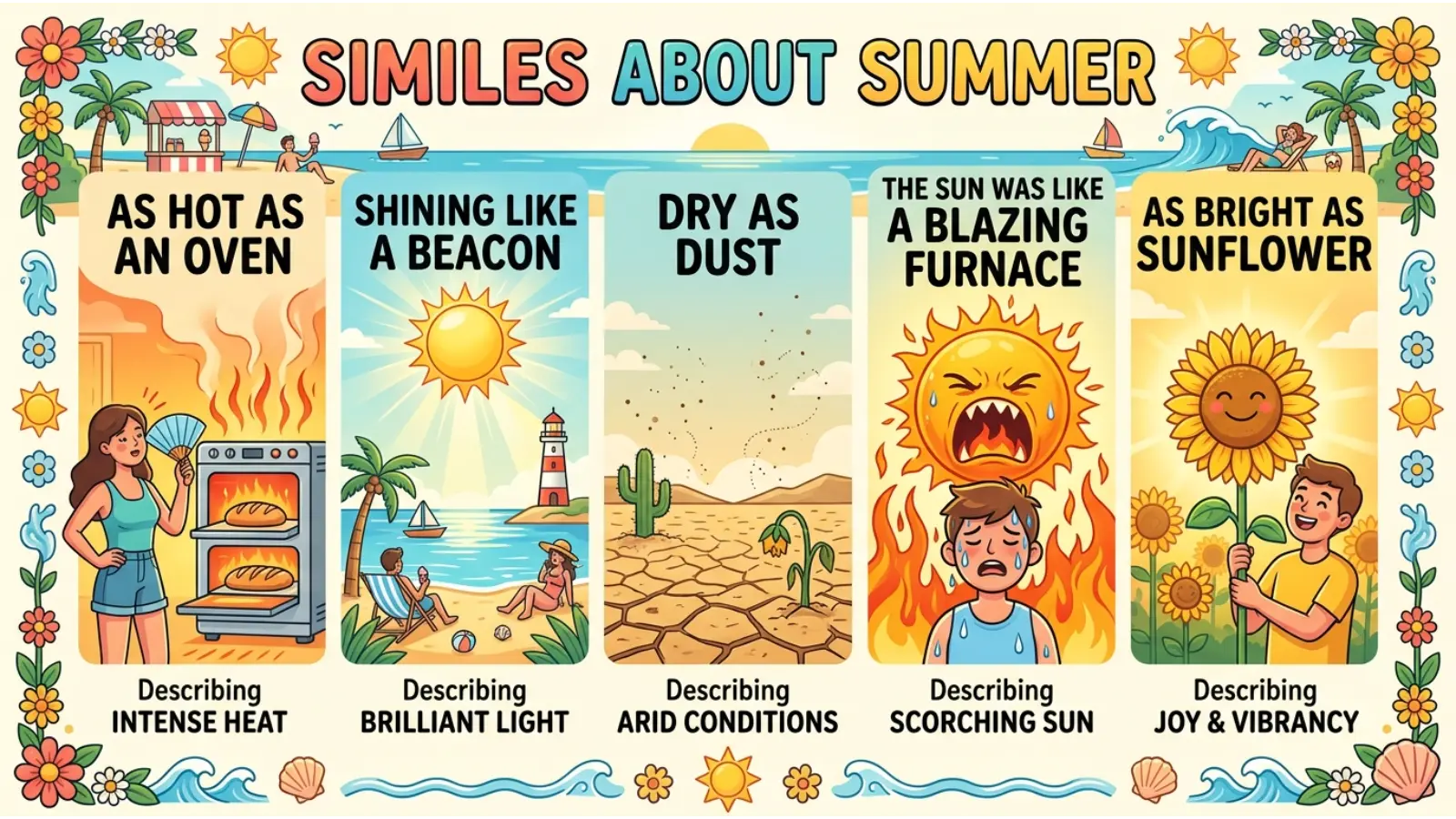
Similes about summer compare summer-related experiences—such as sunlight, heat, beaches, storms, evenings, vacations, or summer memories—to something familiar.
For example:
The summer sky stretched above us like an endless blue canvas.
The comparison makes the sky easier to visualize while giving the sentence a more creative quality.
Quick Answer
Similes about summer are comparisons that use “like” or “as” to describe summer weather, scenery, feelings, activities, and experiences more vividly. For example, “The sun burned like a golden coin fresh from a furnace.”
30 Original Similes About Summer
The strongest summer similes do more than say something is hot, bright, or beautiful. They give the reader a specific image, sensation, sound, or emotion.
1. The Summer Sun Was Like a Copper Lantern
Meaning: The sun looks warm, glowing, and slightly reddish, especially during early morning or evening.
Example:
The summer sun hung above the fields like a copper lantern.
By sunset, the whole valley seemed to glow beneath it.
Writing purpose: This comparison works especially well for descriptions of dawn or dusk because it gives sunlight a warm visual quality.
Best context: Nature writing, poetry, reflective stories.
2. The Afternoon Heat Wrapped Around Us Like a Wool Scarf
This simile creates an interesting contrast because wool is associated with warmth and thickness.
Example:
The afternoon heat wrapped around us like a wool scarf.
Even standing still felt exhausting.
The comparison makes heat feel almost physical. Instead of merely describing temperature, it gives readers the sensation of being surrounded by it.
Writing tip: When describing uncomfortable weather, compare it to something that physically touches or surrounds the body.
3. The Pool Sparkled Like a Pocketful of Tiny Mirrors
Sunlight bouncing from moving water can create hundreds of bright reflections.
Example:
The pool sparkled like a pocketful of tiny mirrors.
Every ripple flashed for a second before disappearing.
This is useful when you want to emphasize light and movement, rather than simply saying that the pool was shiny.
4. The Beach Was as Busy as a Marketplace
This comparison focuses on activity rather than appearance.
Example:
By noon, the beach was as busy as a marketplace.
Children ran between towels while families searched for empty patches of sand.
Best context: Travel writing and storytelling.
Writing lesson: A strong simile can describe an entire scene. You don’t always need to compare one physical object with another.
5. The Summer Breeze Felt Like a Cool Hand on My Forehead
This simile emphasizes relief.
Example:
After an hour beneath the blazing sun, the summer breeze felt like a cool hand on my forehead.
The comparison works because readers understand the comfort of something cool against warm skin.
Best context: Emotional or sensory descriptions.
6. The Cicadas Buzzed Like Tiny Electric Engines
Summer insects often create a continuous background sound.
Example:
The cicadas buzzed like tiny electric engines in the trees.
Their chorus followed us all the way home.
This simile turns an ordinary natural sound into something energetic and mechanical.
Writing tip: For sound-based similes, choose a comparison that matches the rhythm and intensity of the noise.
7. The Road Shimmered Like a Ribbon of Glass
Hot pavement can appear to ripple or shine in the distance.
Example:
The road shimmered like a ribbon of glass beneath the afternoon sun.
The comparison gives the road a smooth, reflective quality.
Best context: Road trips, rural scenes, travel stories.
8. The Sunset Spread Across the Sky Like Melted Peach Paint
This comparison combines color and movement.
Example:
The sunset spread across the sky like melted peach paint.
Clouds caught the color along their edges.
The simile works because “melted” suggests that the colors are flowing rather than sitting still.
Writing tip: Try combining a color word with a material or substance when creating sunset imagery.
9. The Lemonade Was Cold as a Stream in the Mountains
This comparison highlights refreshing temperature.
Example:
The lemonade was cold as a stream in the mountains after our long walk.
Unlike a generic comparison such as “cold as ice,” this one creates a specific setting and mood.
10. Summer Vacation Disappeared Like a Soap Bubble
This simile describes how quickly a vacation seems to end.
Example:
Our summer vacation disappeared like a soap bubble.
One morning we were making plans, and the next we were packing our bags.
The comparison adds a gentle sense of impermanence.
Emotional effect: Nostalgic and slightly bittersweet.
11. The Garden Smelled Like a Sweet Shop at Noon
This comparison focuses on scent rather than appearance.
Example:
After the flowers opened, the garden smelled like a sweet shop at noon.
The reader isn’t told exactly what every flower smells like. Instead, the scent is connected to something familiar and pleasant.
Writing lesson: Similes can engage all five senses, not just sight.
12. The Thunderclouds Gathered Like Dark Ships on the Horizon
This simile makes an approaching summer storm feel dramatic.
Example:
The thunderclouds gathered like dark ships on the horizon.
The wind changed before the first drop of rain arrived.
The “ships” comparison gives the clouds direction and movement.
Best context: Adventure stories, storm scenes, dramatic poetry.
13. The Rain Fell Like Beads From a Broken Necklace
This image works especially well for a sudden summer shower.
Example:
Rain fell like beads from a broken necklace, scattering across the pavement.
The comparison focuses on individual drops rather than the entire rainfall.
Writing tip: If your image feels ordinary, zoom in. Describe one small part of the scene.
14. The Evening Air Was Soft as Fresh Cotton
This simile creates a calm sensory impression.
Example:
The evening air was soft as fresh cotton after the day’s heat.
It works well for peaceful summer nights.
Best context: Quiet stories, reflective writing, poetry.
15. The Fireflies Flickered Like Little Messages in the Grass
Instead of treating fireflies as simple points of light, this comparison gives them a sense of communication.
Example:
Fireflies flickered like little messages in the grass.
We watched them without speaking.
Writing purpose: This type of simile can create mystery and wonder.
16. The Sand Was Hot Like a Freshly Baked Pan
This comparison makes the discomfort of hot sand immediately recognizable.
Example:
The sand was hot like a freshly baked pan beneath our feet.
Writing tip: When writing about temperature, compare it with something that produces a recognizable physical reaction.
17. The Ocean Rolled Like a Giant Blue Breathing Creature
This simile gives the sea movement and life without literally calling it a creature.
Example:
The ocean rolled like a giant blue breathing creature beneath the morning sun.
The repeated rise and fall of waves makes the comparison especially effective.
Best context: Descriptive fiction and poetry.
18. The Boardwalk Glowed Like a String of Candles
This works well for summer evenings when lights begin to appear.
Example:
After sunset, the boardwalk glowed like a string of candles along the shore.
The image creates warmth and atmosphere.
19. The Picnic Blanket Felt Like Our Own Tiny Island
This comparison shifts attention from the physical blanket to the feeling of having a private space.
Example:
The picnic blanket felt like our own tiny island in the middle of the crowded park.
Emotional effect: Cozy, playful, and intimate without needing a long explanation.
Writing lesson: A simile can describe what an object means to characters, not just what it looks like.
20. The Summer Morning Opened Like a Bright Window
This simile gives the beginning of the day a feeling of possibility.
Example:
The summer morning opened like a bright window after a long night.
It works particularly well as an opening sentence because it creates movement from darkness into light.
21. The Grass Smelled Like Green Rain
This is an unusual sensory comparison. It connects the fresh scent of grass with the feeling of rain.
Example:
After the storm, the grass smelled like green rain.
Writing tip: Unexpected sensory combinations can make descriptions more memorable, but they should still feel understandable.
22. The Heat Hummed Like a Distant Machine
Summer heat can sometimes seem to create a strange atmosphere of constant vibration.
Example:
The heat hummed like a distant machine over the empty parking lot.
This simile is useful when creating an isolated or slightly uneasy summer scene.
23. The Clouds Were as White as Torn Pieces of Paper
This gives summer clouds a light, irregular appearance.
Example:
The clouds were as white as torn pieces of paper against the blue sky.
Best context: Children’s writing, simple descriptive prose, classroom exercises.
24. The Night Was Warm Like a Blanket Fresh From the Dryer
This comparison emphasizes comfort rather than oppressive heat.
Example:
The night was warm like a blanket fresh from the dryer, and nobody wanted to go indoors.
The same summer temperature can feel uncomfortable in one scene and comforting in another. Context determines the emotional effect of the simile.
25. The Bicycle Tires Whispered Like Mice Along the Sidewalk
This simile focuses on the quiet sound of riding.
Example:
Our bicycle tires whispered like mice along the sidewalk while the town slept.
Writing purpose: It creates a peaceful, almost secretive atmosphere.
26. The Lake Was Still as a Sleeping Mirror
The comparison emphasizes unusually calm water.
Example:
At sunrise, the lake was still as a sleeping mirror.
This works because a mirror suggests reflection while “sleeping” adds a gentle person-like quality.
27. The Watermelon Was Red Like a Painted Heart
This simile emphasizes the vivid interior color of the fruit.
Example:
The watermelon was red like a painted heart when we cut it open.
Best context: Food writing, summer memories, children’s stories.
28. The Summer Night Filled With Music Like a Small Theater
This comparison captures an evening filled with natural and human sounds.
Example:
The summer night filled with music like a small theater—crickets in the grass, voices on porches, and distant cars on the road.
Notice that the simile is followed by concrete details. That’s an important writing technique: let the image lead into evidence.
29. The First Day of Summer Felt Like Opening a New Notebook
This simile connects summer with possibility and fresh experiences.
Example:
The first day of summer felt like opening a new notebook.
Every page seemed ready for something unexpected.
Emotional effect: Hopeful and optimistic.
Best context: Personal essays, school writing, coming-of-age stories.
30. Summer Memories Glow Like Coins at the Bottom of Clear Water
This comparison works especially well for nostalgic writing.
Example:
Years later, those summer memories glowed like coins at the bottom of clear water.
The memories seem distant but still visible and valuable.
Writing purpose: Reflection, nostalgia, endings, memoir-style writing.
How to Make Summer Similes More Vivid
A weak simile often happens when the writer chooses the first comparison that comes to mind.
For example:
The sun was like a ball.
The sentence is understandable, but it doesn’t tell the reader much.
A more specific comparison might be:
The late-afternoon sun hung over the rooftops like a copper lantern.
The second version gives the reader color, shape, position, and atmosphere.
Choose a Specific Image
Instead of asking:
“What is summer like?”
ask:
- What does the heat touch?
- What does the sunlight resemble?
- What sound fills the air?
- What does the evening feel like?
- What object has a similar movement?
- What familiar experience creates the same emotion?
Specific questions produce stronger comparisons.
Use the Five Senses
Don’t make every summer simile visual.
Compare:
- Heat to something physically warm
- Sounds to familiar noises
- Scents to recognizable smells
- Textures to objects people can touch
- Flavors to familiar foods or drinks
For example:
The air smelled like wet earth after a garden hose had soaked the soil.
This gives readers something they can almost smell.
Match the Simile to the Mood
The same summer setting can support very different emotions.
A peaceful scene might use:
The evening breeze moved like a slow breath through the trees.
A tense scene could use:
The storm clouds gathered like a warning written across the sky.
The subject is still summer, but the emotional effect changes because the comparison changes.
How Professional Writers Avoid Cliché Similes
Some comparisons are so familiar that they barely create an image anymore.
Examples such as “hot as an oven” or “busy as a bee” may be perfectly understandable, but they often lack surprise.
That doesn’t mean familiar similes are always wrong. They can be useful in casual speech or simple writing. The problem occurs when every description relies on familiar comparisons.
Try asking:
What unusual but believable object shares this quality?
Instead of:
The sun was hot like fire.
Try:
The sun pressed against the rooftops like a heated metal plate.
The second image gives the reader a more specific physical sensation.
When a Summer Simile Feels Forced
A simile should clarify or intensify an image. If the comparison makes the reader stop and wonder why two things were connected, it may need revision.
For example:
The beach was like a purple calculator.
The grammar is correct, but the comparison has no obvious relationship to the scene.
A useful comparison usually shares at least one meaningful quality:
- color
- shape
- movement
- sound
- texture
- temperature
- emotion
- atmosphere
Before keeping a simile, ask:
“What exact quality do these two things share?”
If you can’t answer, choose another comparison.
Simile vs. Metaphor: What’s the Difference?
A simile makes an explicit comparison using words such as like or as.
The clouds moved like ships.
A metaphor makes the comparison directly.
The clouds were ships sailing across the sky.
Both can create strong imagery. The choice depends on the effect you want.
A simile often feels more explanatory or conversational, while a metaphor can feel more immediate and symbolic.
Simile vs. Personification
Personification gives human qualities to something nonhuman.
The summer breeze whispered through the trees.
The breeze isn’t literally speaking.
You can combine personification with a simile:
The summer breeze whispered like a child sharing a secret.
Here, “whispered” gives the breeze a human action, while “like a child” creates the simile.
Imagery Makes Similes Stronger
A simile becomes more powerful when the surrounding sentence supplies concrete details.
Compare:
The beach was like a painting.
with:
The beach looked like a watercolor painting, with pale clouds above the blue water and tiny figures moving along the shore.
The second version doesn’t rely on the comparison alone. It gives the reader actual visual information.
A useful rule: Use a simile to open the reader’s imagination, then give them details to explore.
How to Create Your Own Summer Similes
You don’t need to wait for inspiration. You can build similes deliberately.
Step 1: Pick One Summer Detail
Choose something specific:
sunlight
sand
humidity
waves
fireflies
ice cream
summer rain
evening air
Step 2: Identify Its Strongest Quality
Ask what you actually want to describe.
For example:
Summer rain → sudden
Sunlight → golden
Sand → hot
Fireflies → flickering
Ocean → restless
Step 3: Find a Familiar Comparison
Think of objects or experiences that share that quality.
For sudden rain:
like someone suddenly opening a faucet
For flickering fireflies:
like tiny signals in the grass
Step 4: Test the Image
Write the sentence and ask:
Can a reader picture it immediately?
If not, make the comparison more specific.
Step 5: Remove Extra Words
A strong simile usually doesn’t need a long explanation afterward.
Instead of:
The summer breeze was like a cool hand, which means that it was very refreshing and made me feel better.
Try:
The summer breeze felt like a cool hand on my forehead.
The image does most of the work.
Creative Exercises for Better Summer Similes
Exercise 1: Five Senses
Choose one summer afternoon and write one simile for each sense.
Sight: What does the sunlight resemble?
Sound: What does the neighborhood sound like?
Smell: What does the air smell like?
Touch: What does the heat feel like?
Taste: What does a cold summer drink taste like?
This exercise prevents your writing from depending entirely on visual descriptions.
Exercise 2: Change the Mood
Describe the same summer evening three ways:
- Happy
- Lonely
- Mysterious
Keep the setting the same but change the similes.
This teaches an important creative-writing skill: imagery can control mood.
Exercise 3: Replace the Cliché
Start with:
The sun was as hot as ______.
Write five unusual but believable endings.
Then choose the one that gives the clearest physical sensation.
Exercise 4: Write Without “Beautiful”
Describe a summer sunset without using:
beautiful, pretty, amazing, gorgeous, stunning
Instead, use color, movement, texture, light, and comparison.
This forces your writing to show beauty rather than simply label it.
Common Mistakes When Writing Summer Similes
Using Too Many Similes
A paragraph filled with comparisons can become tiring.
The sun was like gold, the clouds were like cotton, the water was like glass, and the sand was like flour.
Each comparison may work individually, but together they compete for attention.
Choose the strongest image and let the rest of the description remain straightforward.
Mixing Images
Avoid combining unrelated comparison systems.
For example:
The sunset was a golden ocean climbing a staircase.
The image may be imaginative, but the comparison becomes difficult to visualize.
Give the reader one strong image at a time.
Explaining the Simile Too Much
If you write:
The breeze felt like a cool hand because it was refreshing and made us feel comfortable.
The explanation weakens the image.
Usually, this is enough:
The breeze felt like a cool hand on my forehead.
Trust the reader to understand the sensation.
Confusing Similes With Metaphors
Remember:
Simile: The waves moved like dancers.
Metaphor: The waves were dancers.
Both are literary comparisons, but they are constructed differently.
Choosing a Comparison That Says Nothing New
If your simile merely repeats the original idea, it doesn’t add much.
The summer was hot like something hot.
A useful comparison should give readers a new way to understand the subject.
Where Can You Use Summer Similes?
Summer similes can fit naturally into many forms of writing.
In Stories
Use them to establish setting quickly:
Heat hovered over the empty road like a transparent roof.
In Poetry
Similes can create rhythm, emotion, and layered imagery:
The evening drifted in like a quiet song.
In Personal Essays
They can make memories more vivid:
My first summer away from home felt like stepping into an unfamiliar book.
In Children’s Writing
Simple, concrete comparisons are often easiest to understand:
The clouds were as white as cotton.
In Everyday Conversation
Similes don’t have to sound literary:
That lemonade was cold as a mountain stream.
The best comparison depends on the audience and purpose.
Frequently Asked Questions About Summer Similes
What is a good simile for summer?
A good summer simile connects a familiar object or experience with a specific quality of the season. For example, “The summer breeze felt like a cool hand on my forehead” emphasizes relief after heat.
What is a simile for a hot summer day?
One option is:
The afternoon heat wrapped around us like a wool scarf.
It makes the heat feel thick, close, and physically noticeable.
What is a simile for a summer sunset?
Try:
The sunset spread across the sky like melted peach paint.
The comparison emphasizes flowing color and warmth.
What is a simile for summer vacation?
A reflective choice is:
Summer vacation disappeared like a soap bubble.
It suggests that the enjoyable period ended quickly.
What are some similes for summer weather?
Summer weather can be compared in different ways depending on the mood. Heat might feel like a heavy fabric, rain might fall like scattered beads, and a cool breeze might feel like a refreshing touch.
How do I make a summer simile more creative?
Start with a specific quality rather than the entire season. Instead of asking what summer is like, ask what its heat, sunlight, rain, sounds, smells, or evenings are like. Then choose a concrete comparison that shares that quality.
Can similes about summer be used in poems?
Absolutely. Summer similes work especially well in poetry because they can combine sensory imagery with emotion. A carefully chosen comparison can suggest mood without explaining it directly.
What is the difference between a summer simile and a summer metaphor?
A summer simile makes a comparison using like or as, such as “The sun glowed like a lantern.” A metaphor makes the comparison directly, such as “The sun was a lantern.”
Conclusion
The most memorable summer writing isn’t necessarily the writing with the most similes. It’s the writing that chooses the right comparison at the right moment. A fresh simile can turn heat into something readers feel, make a sunset move across the page, or transform an ordinary childhood memory into a scene readers can picture. When creating your own similes about summer, begin with a real detail. Notice its color, sound, temperature, movement, texture, or emotional effect. Then search for something familiar that shares that quality. Don’t worry about making every comparison spectacular. A simple, precise image is often stronger than an elaborate one. Write the comparison, read it aloud, and ask one final question: Does this help the reader experience the moment? If the answer is yes, your simile is doing its job.
I am Helena Frost, a writer captivated by the beauty of language and the art of comparison. Through my words, I explore the world by turning ordinary moments into vivid similes and reflections. I enjoy crafting phrases that spark imagination, evoke emotion, and linger in the mind. My writing celebrates the subtle connections between people, nature, and the stories we live. For me, every sentence is an opportunity to reveal the extraordinary in the everyday.