Night Similes: Beautiful, Dark, and Poetic Examples
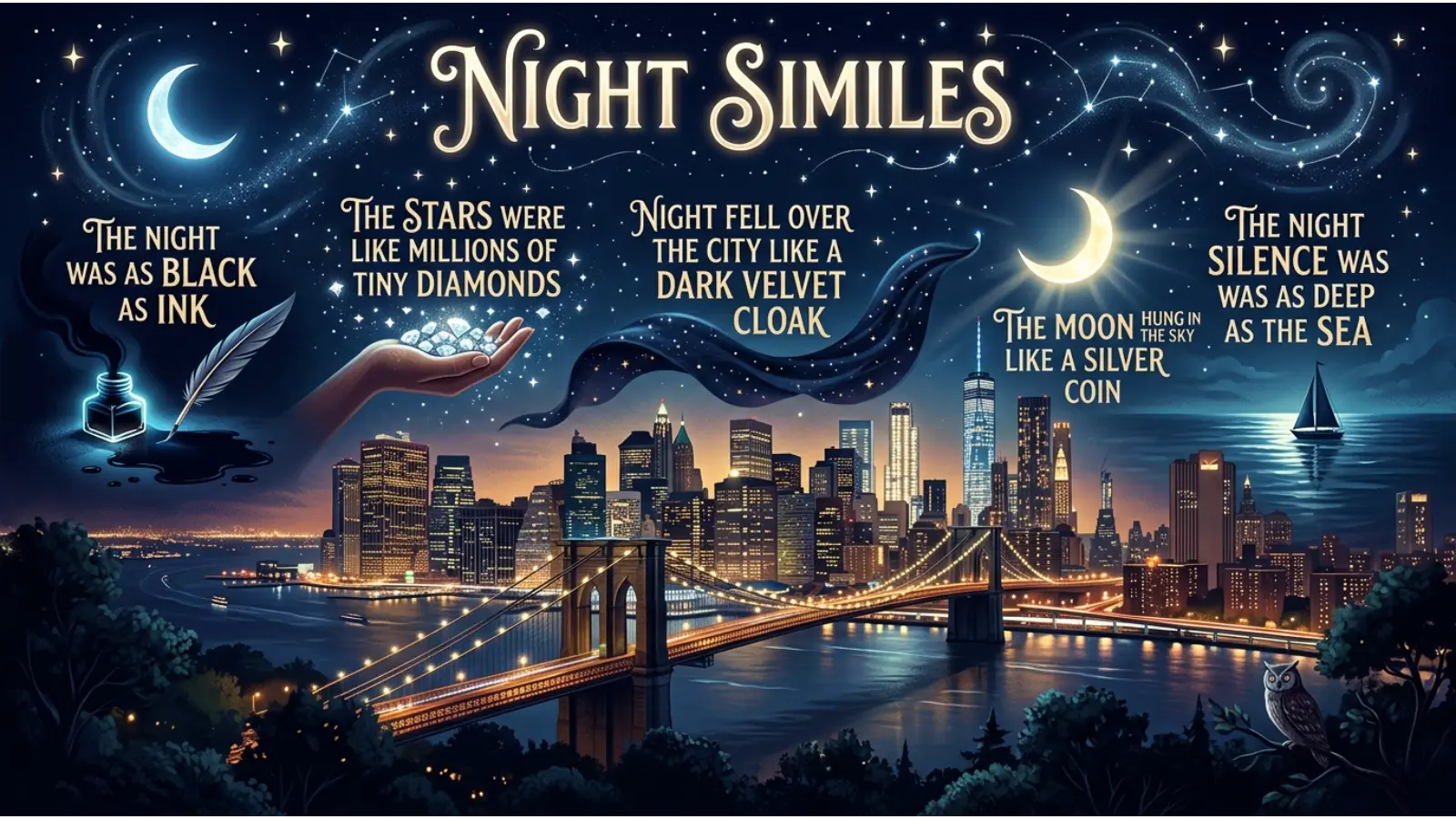
Night Similes has a special quality that daylight cannot reproduce. It can feel peaceful, mysterious, lonely, exciting, comforting, or even unsettling. A well-chosen comparison can turn a simple sentence about darkness into an image readers can almost see. A simile compares two different things using words such as “like” ...
Read more
Similes About Snow: Beautiful, Creative & Easy Examples
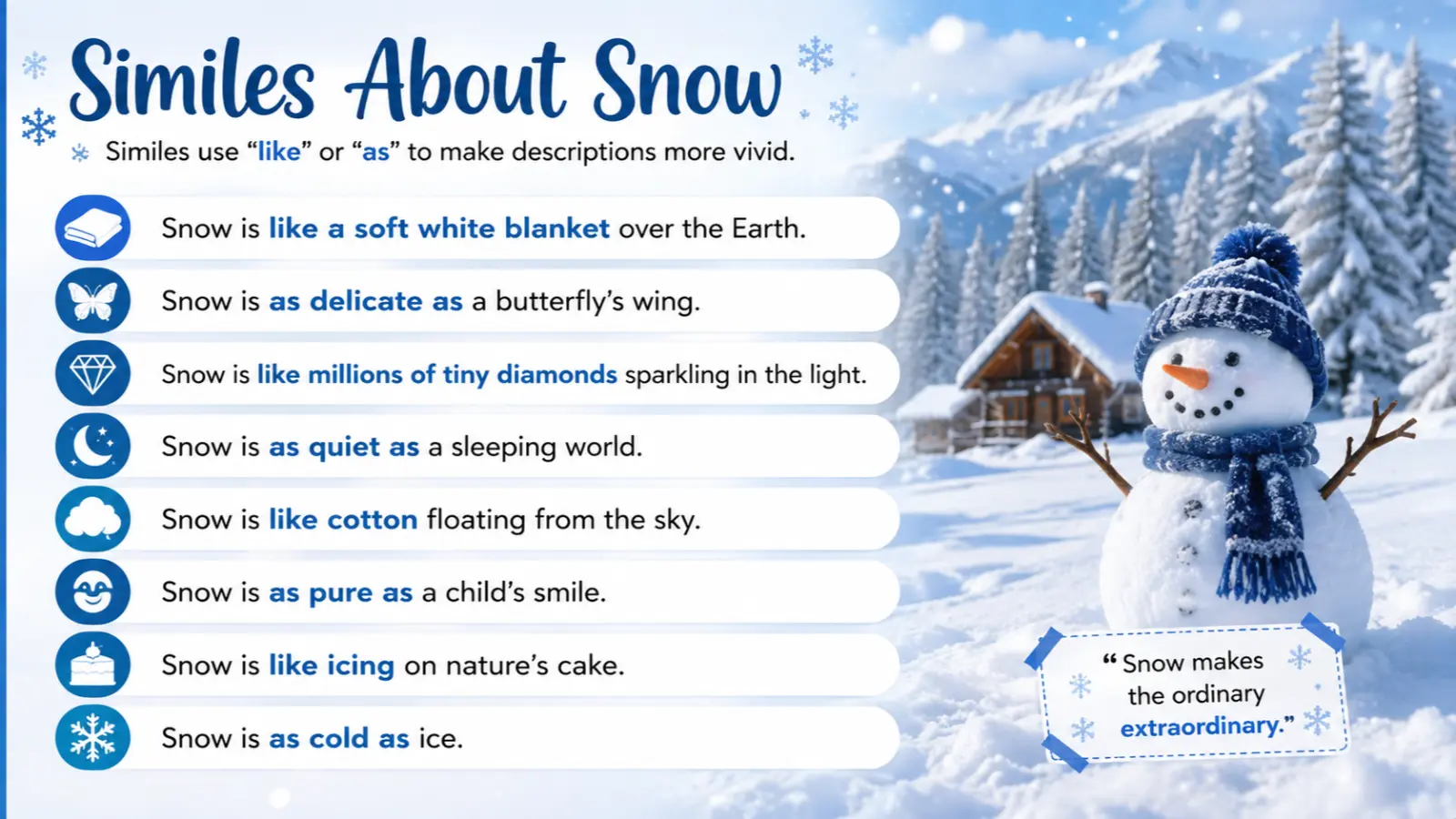
Similes About Snow can transform an ordinary scene into something quiet, mysterious, playful, or breathtaking. A writer can simply say that snow is white, but a well-chosen comparison can help readers see, hear, and feel the winter scene. A simile compares two different things using words such as “like” ...
Read more
Sunset Similes: for Stories, Poems, and Captions
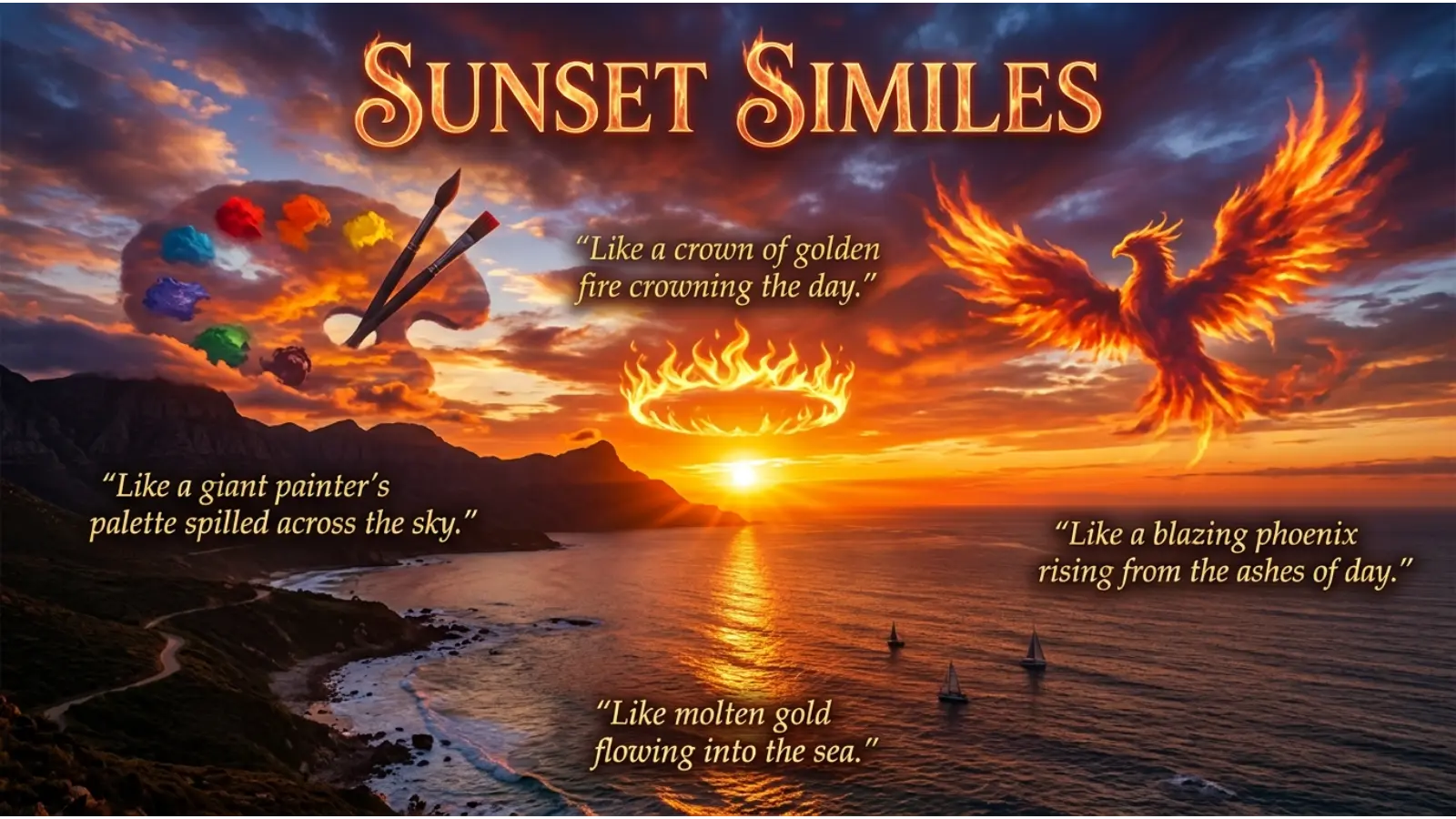
Sunset Similes naturally invite comparison. A sky can seem painted, glowing, melting, or quietly changing as daylight disappears. A well-crafted simile gives those colors and emotions a sharper shape by connecting them to something familiar. A simile compares two different things using words such as like or as. Instead ...
Read more
Similes for Hot: Weather Powerful Comparisons for Scorching Heat
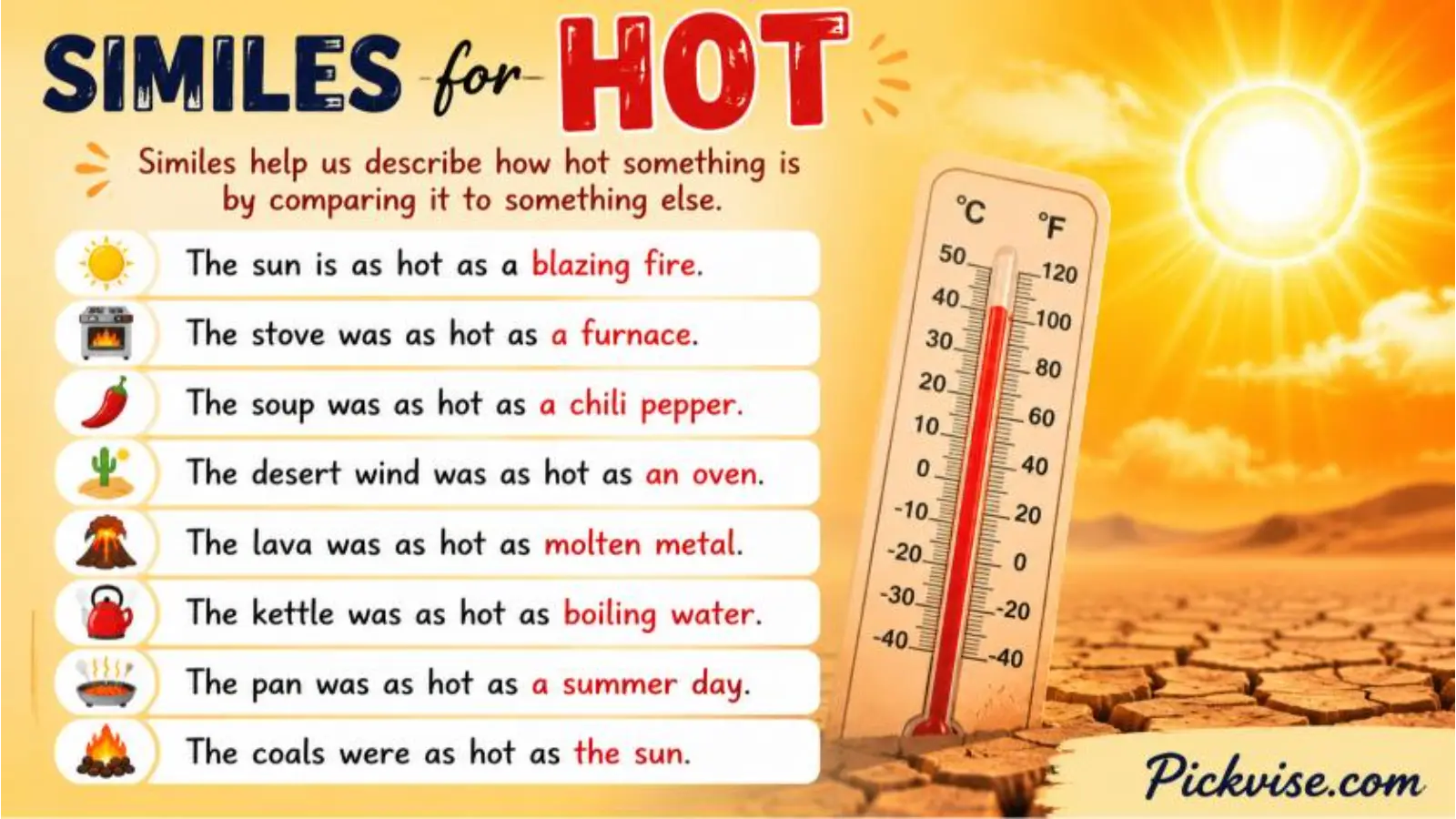
Similes for Hot make ordinary descriptions more vivid by comparing one thing to another using words such as like or as. Instead of simply saying that something is hot, happy, angry, beautiful, or loud, a strong simile helps readers picture the feeling. For example, “The pavement was hot” gives ...
Read more
Weather Similes: Creative Examples for Every Type of Weather
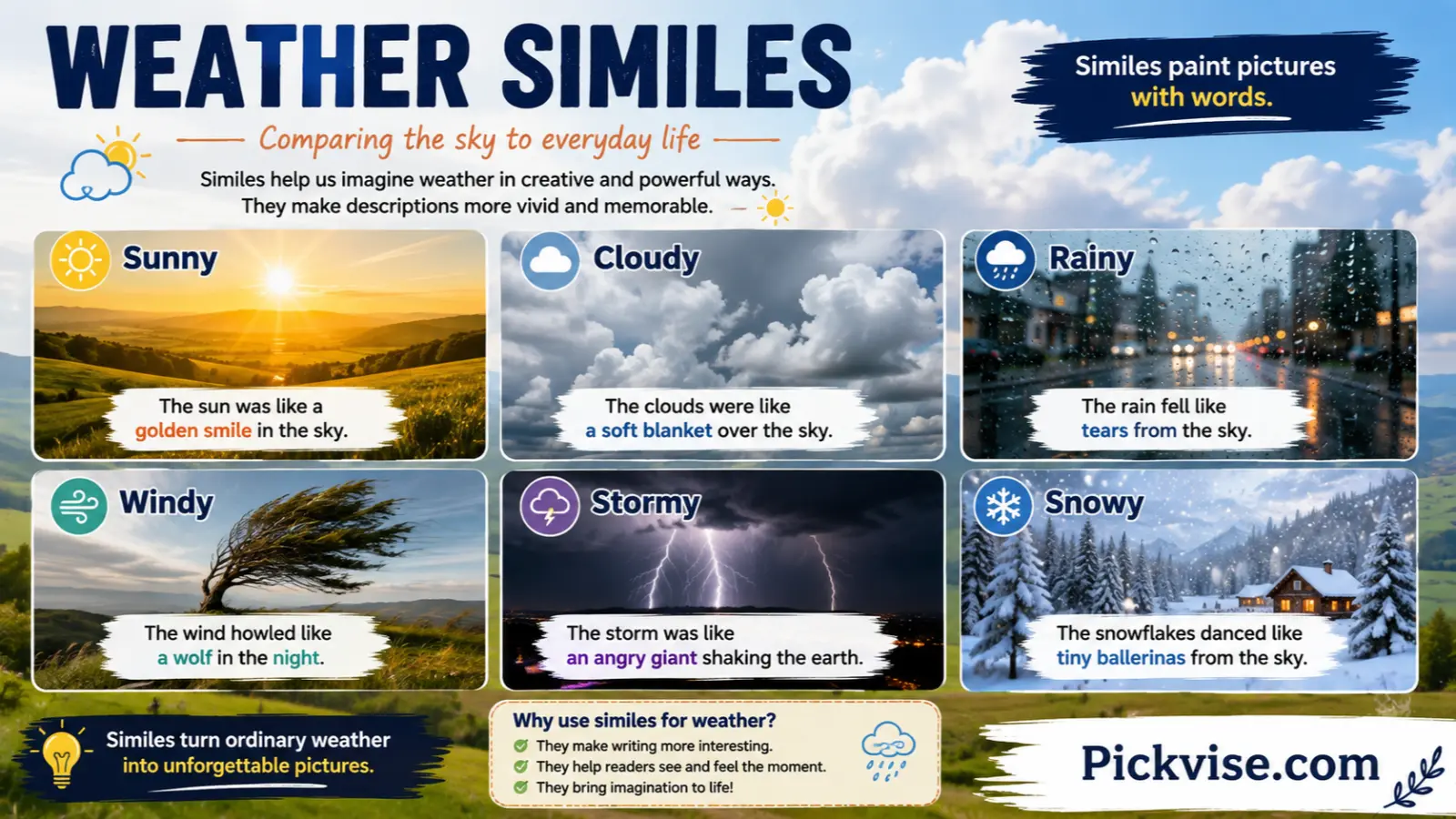
Weather Similes is one of the easiest subjects to describe and one of the easiest to describe badly. Saying that the rain was “heavy” tells readers what happened, but a carefully chosen simile can help them feel the scene. A simile compares two different things using words such as ...
Read more
Similes About Winter: Snow, and Cold Weather
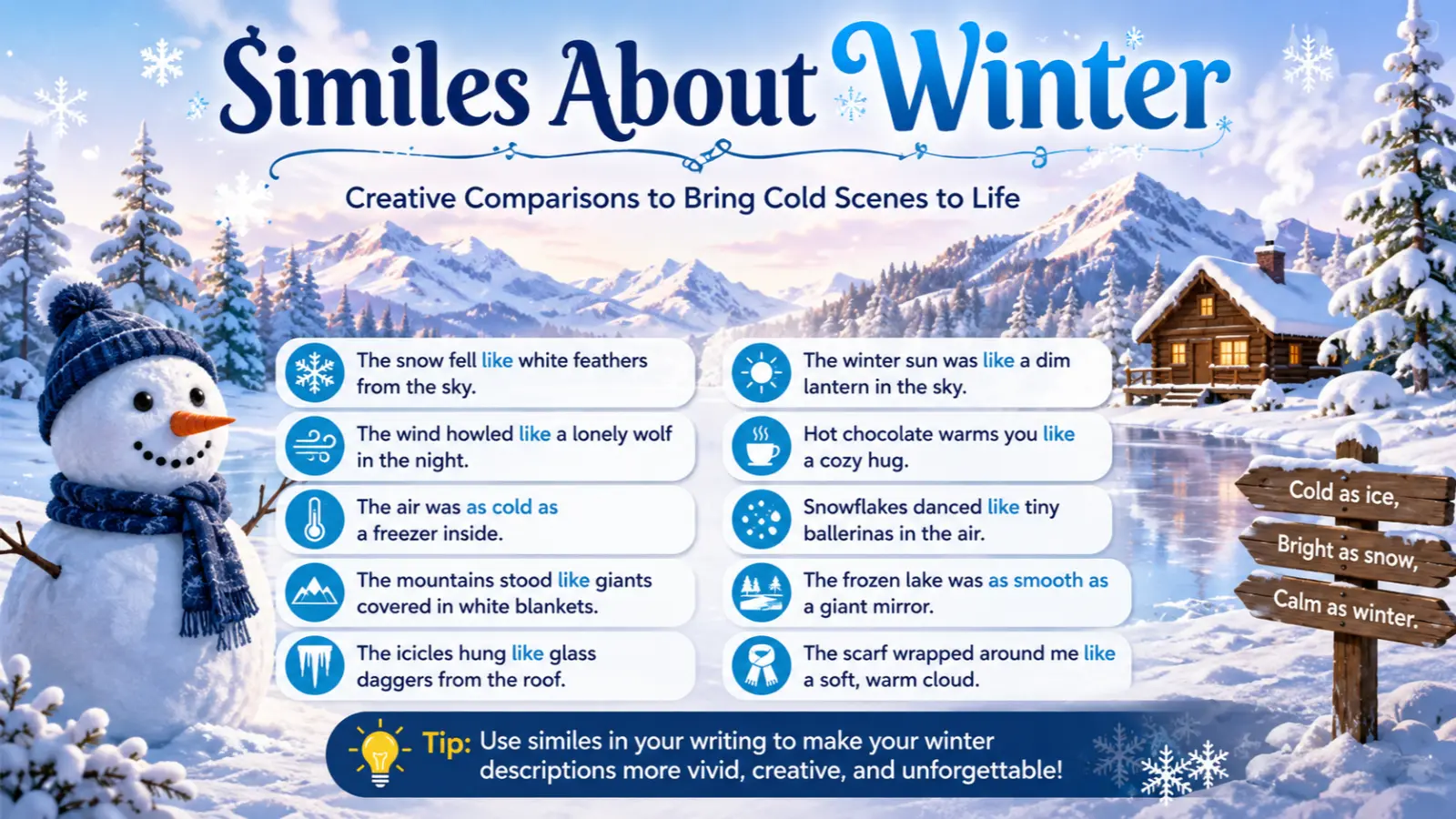
Similes About Winter gives writers a powerful collection of sensory details: icy sidewalks, pale sunlight, frosted windows, sharp winds, quiet streets, and snow-covered landscapes. A good simile turns those familiar details into something readers can picture and feel. A simile compares two different things using words such as like ...
Read more
Wind Similes: for Poems, Stories, and Creative Writing
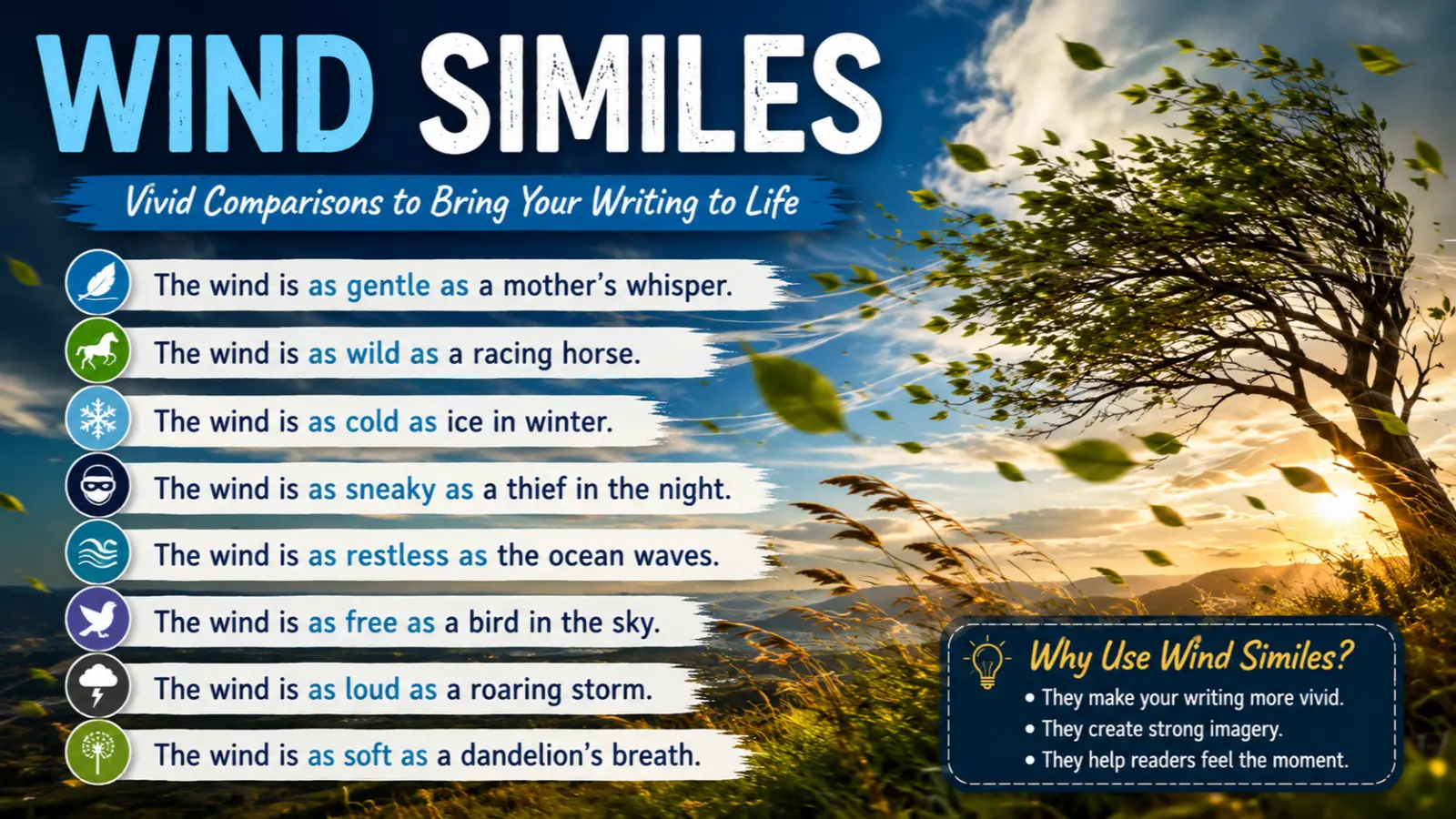
Wind Similes can be gentle, restless, playful, or powerful. Because you cannot see it directly, writers often use similes to help readers imagine how it moves, sounds, and feels. A strong wind simile compares the wind to something familiar, turning an invisible force into a vivid picture. A simile ...
Read more
Similes for Wind: Powerful, Poetic, and Creative Examples
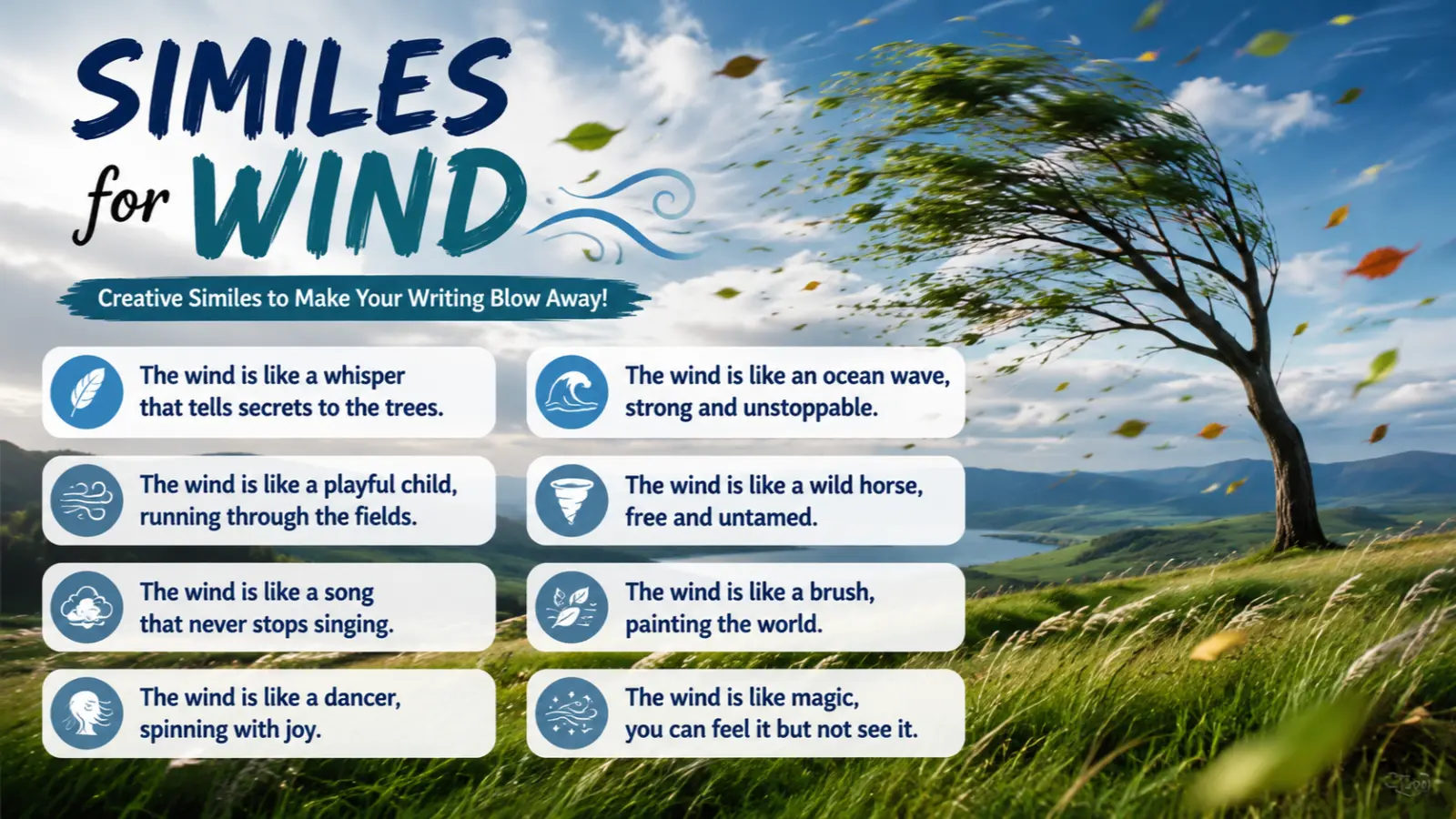
Similes for Wind is invisible, but good writing can make readers feel it, hear it, and almost see it moving through a scene. Similes for wind turn an ordinary breeze into something memorable by comparing it to a familiar person, object, animal, sound, or action. A simile uses words ...
Read more
Similes About Summer: for Poems, Stories, and Creative Writing
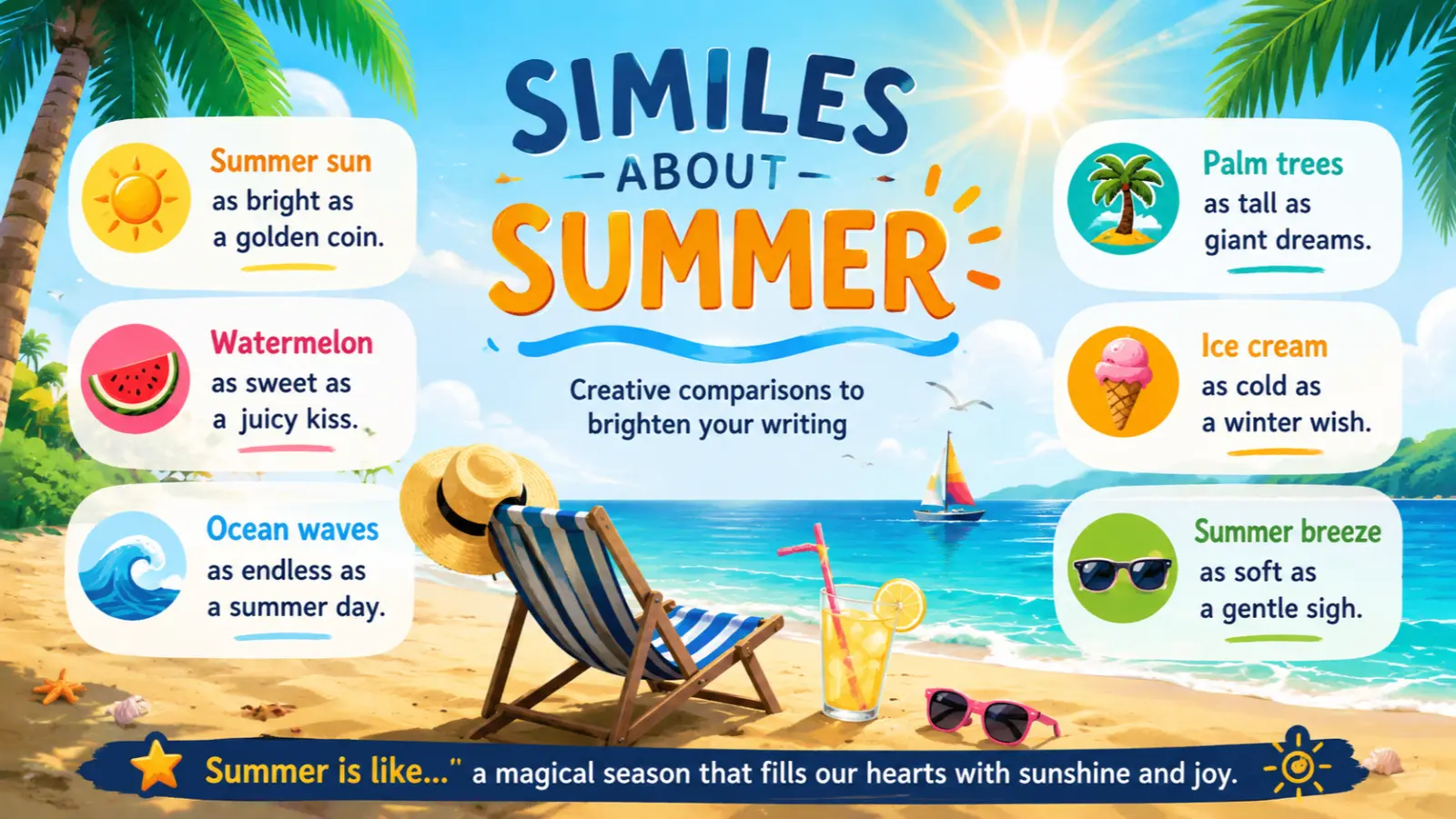
Similes About Summer is a season full of contrasts. It can feel bright and carefree, but it can also be restless, humid, noisy, or surprisingly quiet. A good simile helps readers experience those details instead of simply being told that summer is “hot” or “beautiful.” A simile compares two ...
Read more
Beach Similes: with Meanings and Easy Examples
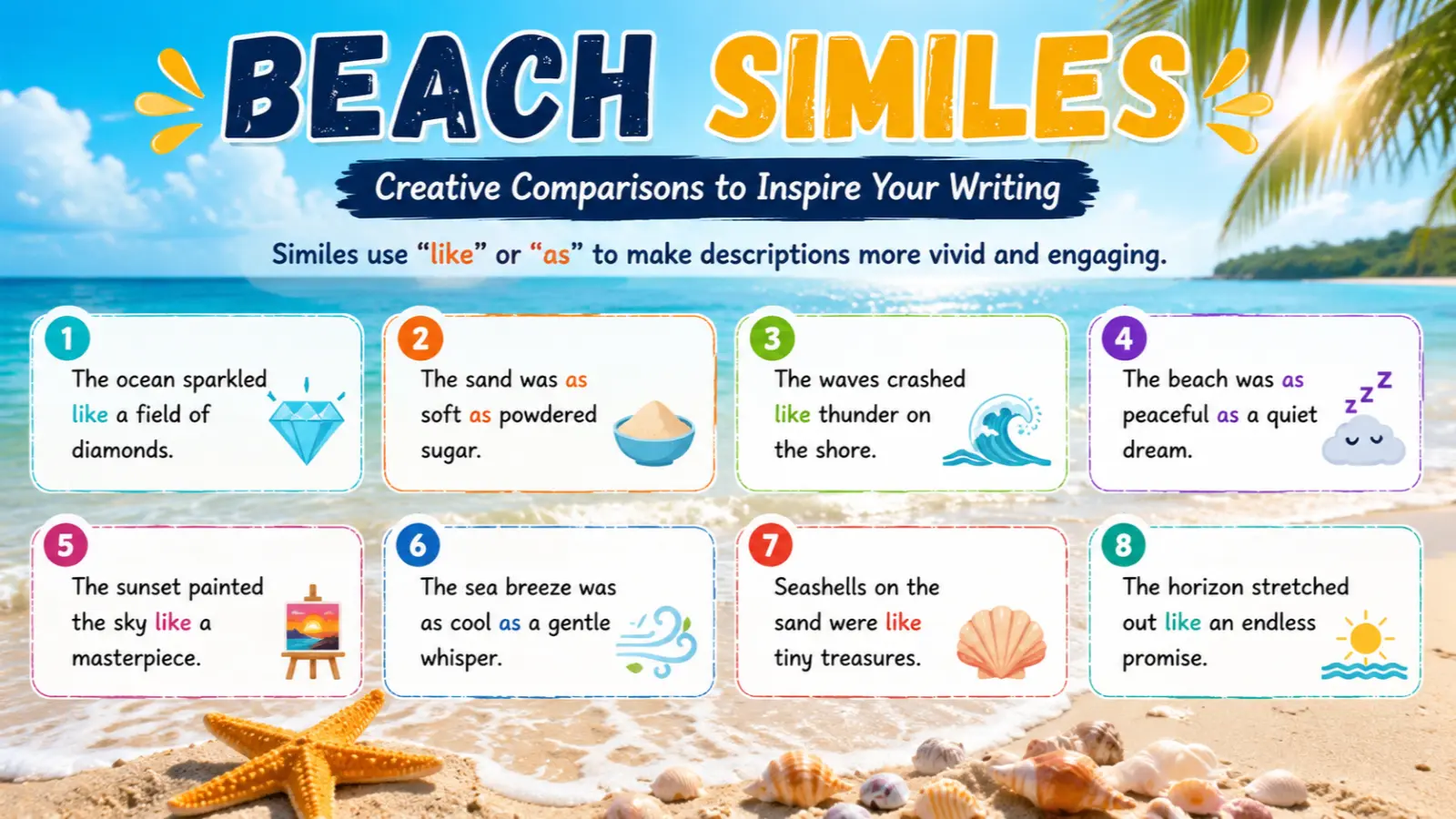
The Beach Similes is one of the richest settings for creative writing. It combines movement, sound, color, light, weather, and emotion in a single place. Whether you’re describing a peaceful sunrise, a crowded shoreline, or a violent storm at sea, the right simile can make readers feel as if ...
Read more