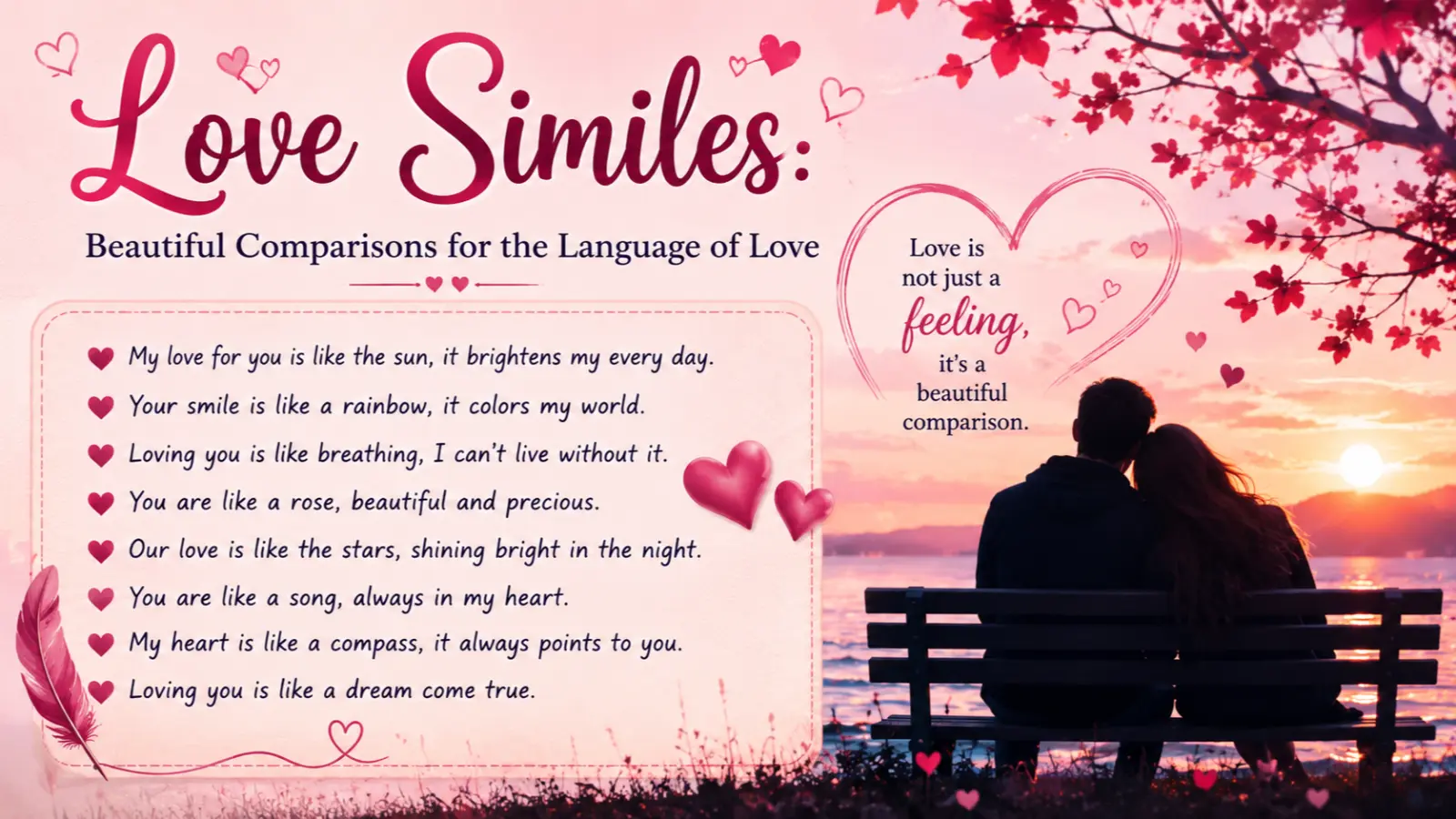
Love is one of the hardest emotions to describe because it looks different for everyone. That is why writers often turn to similes. A well-crafted simile compares love to something familiar, helping readers feel an emotion instead of simply reading about it. Whether you’re writing a poem, romance novel, wedding speech, journal entry, or heartfelt message, the right love similes can make your words more memorable. This guide explores original love similes, explains why they work, and shows you how to create your own without relying on tired comparisons.
What Is a Love Simile?
A love simile compares love or a loving feeling to something else using words such as like or as.
For example:
Her love was as steady as a lighthouse through every storm.
Instead of saying someone was deeply in love, the comparison paints a picture that readers can immediately imagine.
Why Love Similes Make Writing More Powerful
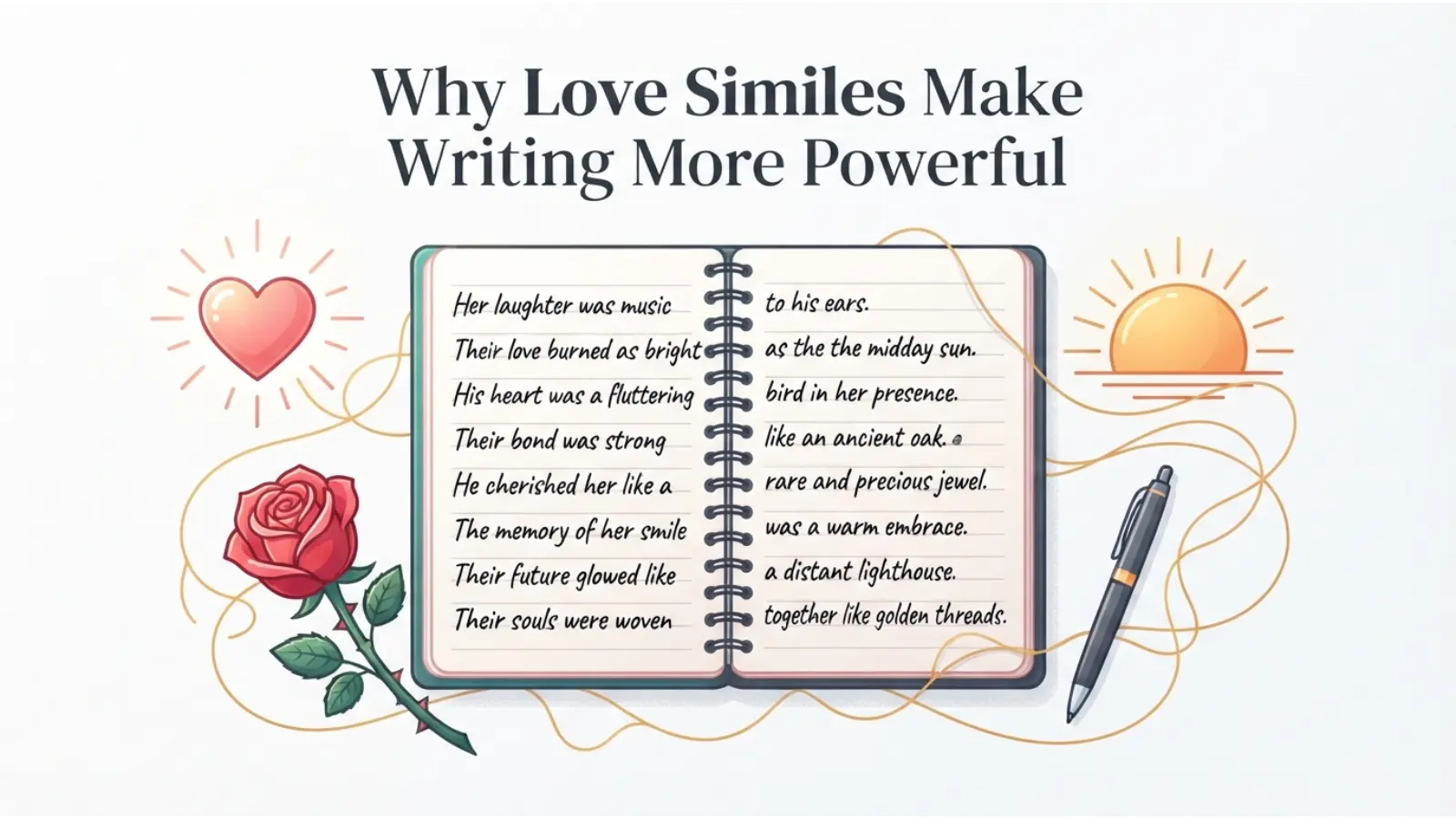
Love is an emotion, but readers connect more deeply with images than abstract words.
A thoughtful simile can:
- Make romantic scenes feel authentic.
- Add warmth to personal letters.
- Create memorable poetry.
- Strengthen dialogue.
- Help readers experience emotions rather than simply understand them.
The strongest love similes reveal something unique about the relationship instead of repeating familiar expressions.
30 Original Love Similes
1. As comforting as sunlight through a bedroom window
Meaning: Love brings peace and warmth.
Story example:
Her voice felt as comforting as sunlight through a bedroom window after a long night.
2. Like a river finding its way home
This suggests a love that naturally returns no matter how far life wanders.
Conversation:
“Being with you feels like a river finding its way home.”
3. As patient as an old oak tree
Perfect for describing lasting commitment rather than excitement.
4. Like the first warm breeze after winter
This simile captures hope, renewal, and emotional healing.
5. As dependable as the morning sunrise
Best used when describing loyalty.
6. Like a favorite song remembered by heart
This works well because love often becomes part of everyday life.
7. As gentle as rain on spring flowers
Ideal for tender affection.
8. Like stars quietly guiding lost travelers
Shows love offering direction during difficult times.
9. As bright as a lantern in deep fog
A wonderful image for supportive relationships.
10. Like fresh bread filling a quiet home
This comparison creates feelings of comfort and belonging.
11. As calming as waves reaching the shore
Excellent for emotional reassurance.
12. Like roots holding a tree through every storm
Represents stability and resilience.
13. As refreshing as cool water after a long journey
Shows how love restores hope.
14. Like moonlight resting on a peaceful lake
A poetic choice for quiet romance.
15. As welcoming as an open doorway
Perfect for unconditional acceptance.
16. Like a campfire shared beneath countless stars
Suggests closeness, warmth, and shared memories.
17. As steady as a heartbeat
Useful for describing dependable affection.
18. Like a handwritten letter kept for years
Highlights treasured memories and emotional value.
19. As soft as clouds drifting across the evening sky
Works beautifully in romantic poetry.
20. Like a compass pointing true north
Shows unwavering devotion.
21. As rare as rainbows after gentle rain
Expresses appreciation for a special relationship.
22. Like a candle glowing through darkness
Represents hope during difficult times.
23. As peaceful as birds greeting the sunrise
Creates calm, optimistic imagery.
24. Like ivy growing around ancient stone
Suggests love becoming stronger over time.
25. As warm as cocoa on a snowy evening
A cozy comparison perfect for heartfelt writing.
26. Like a bridge joining two distant shores
Represents connection despite differences.
27. As welcoming as home after a long trip
Ideal for describing emotional security.
28. Like gentle wind carrying flower petals
Conveys delicate affection.
29. As reliable as the changing seasons
Shows lasting commitment through life’s changes.
30. Like an unfinished melody waiting to be completed
Perfect for stories about growing relationships and hope.
What Makes a Great Love Simile?
The best comparisons do more than sound beautiful—they reveal something meaningful.
Ask yourself:
- Does the image match the emotion?
- Is it specific rather than generic?
- Could readers easily picture it?
- Does it fit the character or situation?
For example:
Weak:
Love is like candy.
Stronger:
Love was like warm tea shared during a cold evening—simple, comforting, and quietly unforgettable.
Specific details create stronger emotional responses.
How Professional Writers Keep Love Similes Fresh
Many beginner writers rely on comparisons that readers have encountered hundreds of times.
Instead of writing:
- Like a rose
- Like an angel
- Like the moon
- Like a diamond
Look for unexpected but believable images.
Think about:
- Everyday moments
- Nature
- Memories
- Music
- Weather
- Home
- Travel
- Seasons
- Light
- Sound
Original imagery feels more personal and memorable.
Related Literary Devices
Metaphor
A metaphor makes a direct comparison without using like or as.
Simile:
Love is like a lighthouse.
Metaphor:
Love is a lighthouse.
Imagery
Imagery appeals to the senses. Combining imagery with similes helps readers see, hear, and feel your descriptions.
Personification
Giving human qualities to non-human things can strengthen emotional scenes.
The morning welcomed them with smiling sunlight.
Symbolism
Objects such as keys, bridges, rivers, and lanterns often symbolize trust, hope, or commitment when paired with similes.
Create Your Own Love Similes
You don’t need poetic talent to create memorable comparisons.
Step 1
Choose one feeling.
Examples:
- Comfort
- Joy
- Trust
- Excitement
- Longing
- Gratitude
Step 2
Think of something that naturally creates the same feeling.
For example:
Comfort → blanket, sunrise, fireplace, warm tea
Hope → lighthouse, dawn, stars
Strength → mountain, oak tree, roots
Step 3
Join them with like or as.
Example:
Her kindness was as comforting as fresh bread baking on a rainy afternoon.
Creative Exercise
Complete these prompts:
- Love feels like __________.
- My heart was as __________ as __________.
- Their friendship grew like __________.
- His smile was as __________ as __________.
Then replace your first idea with something more personal or unexpected.
Common Mistakes When Writing Love Similes
Using Overused Comparisons
Readers have seen many classic comparisons countless times.
Look for fresh imagery instead.
Mixing Images
Avoid combining unrelated comparisons.
Confusing:
Love was like a river climbing mountains.
Choose one clear image and stay with it.
Forcing the Comparison
Every simile should fit naturally within the sentence.
If it feels awkward, simplify it.
Confusing Similes and Metaphors
Remember:
- Similes use like or as.
- Metaphors make direct comparisons.
Choosing Images That Don’t Match the Emotion
A peaceful love scene shouldn’t suddenly compare affection to explosions or chaos unless the contrast is intentional.
Frequently Asked Questions
What is a love simile?
A love simile compares love to something else using like or as to create vivid imagery.
Why are similes useful in romantic writing?
They help readers visualize emotions and make relationships feel more believable.
Can love similes be used outside poetry?
Yes. They work well in novels, speeches, greeting cards, journals, songs, and everyday conversations.
Should I avoid common love comparisons?
Not always, but original comparisons usually leave a stronger impression.
How many similes should I use in one paragraph?
Use only as many as the writing naturally needs. Too many comparisons can distract readers.
What’s the difference between a romantic simile and a friendship simile?
Romantic similes emphasize affection and intimacy, while friendship similes often focus on trust, support, and shared experiences.
Conclusion
Love is deeply personal, so the language we use to describe it should feel personal too. Instead of relying on familiar comparisons, look for images drawn from everyday life, nature, memories, and meaningful experiences. A thoughtful simile doesn’t just decorate a sentence—it helps readers feel the emotion behind it. Experiment with different comparisons, revise them until they sound natural, and let your own experiences inspire fresh imagery. The most memorable love similes are often the ones that could only have come from your perspective.

I am Helena Frost, a writer captivated by the beauty of language and the art of comparison. Through my words, I explore the world by turning ordinary moments into vivid similes and reflections. I enjoy crafting phrases that spark imagination, evoke emotion, and linger in the mind. My writing celebrates the subtle connections between people, nature, and the stories we live. For me, every sentence is an opportunity to reveal the extraordinary in the everyday.