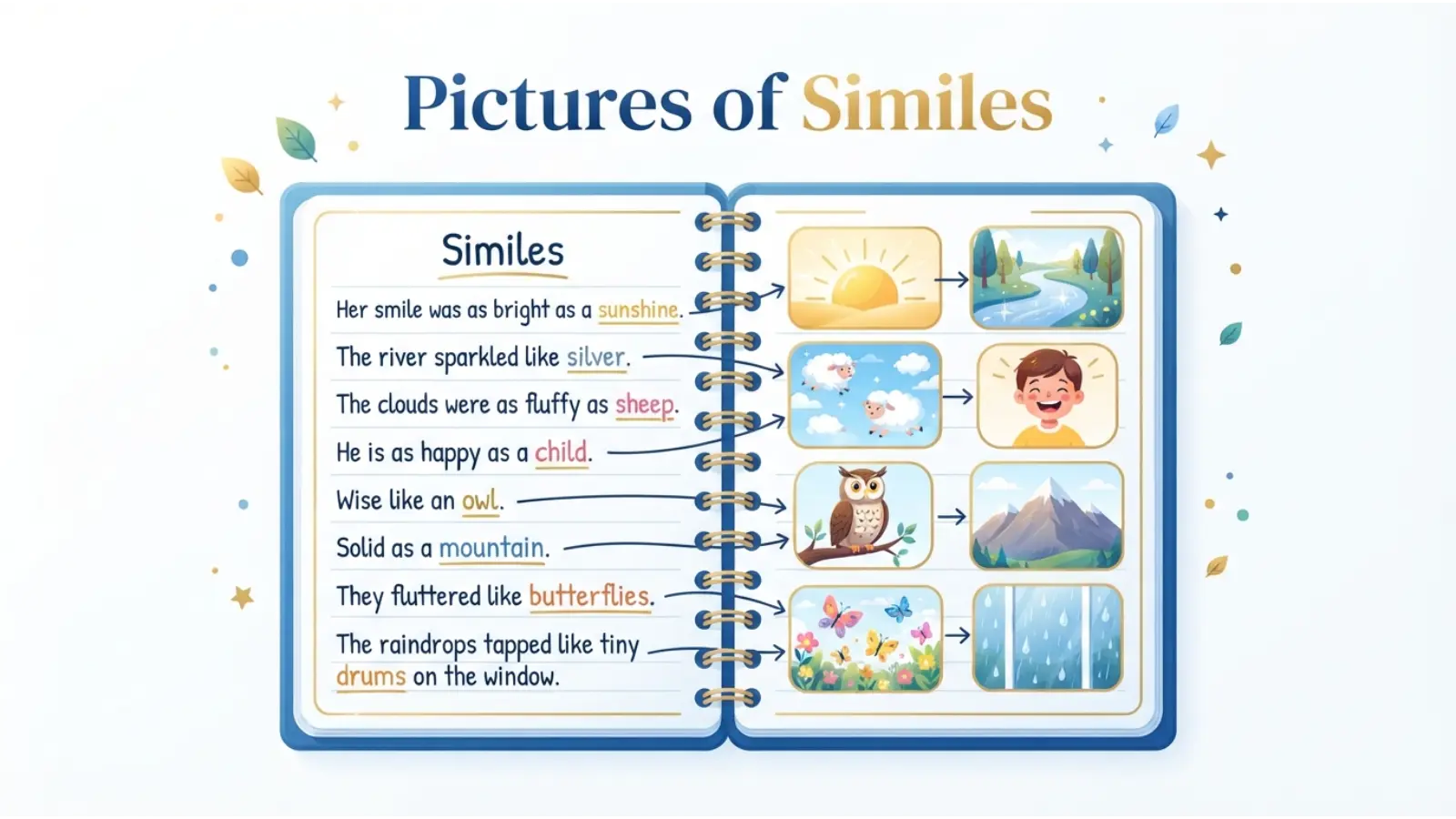
Words can paint pictures, but similes make those pictures easier to imagine. A simile compares one thing to another using “like” or “as,” helping readers visualize emotions, people, places, and actions in a memorable way. When people search for pictures of similes, they often want visual examples that make figurative language easier to understand. Whether you’re a student, teacher, parent, or writer, seeing a comparison alongside an image helps ideas stick. In this guide, you’ll discover original similes, learn why they work, and find practical tips for creating vivid imagery in your own writing.
Quick Answer
Pictures of similes are visual illustrations paired with comparisons that use “like” or “as.” They help readers quickly understand figurative language by showing what the comparison looks like in real life. They are especially useful in classrooms, creative writing, storytelling, and children’s education.
Why Pictures Make Similes Easier to Learn
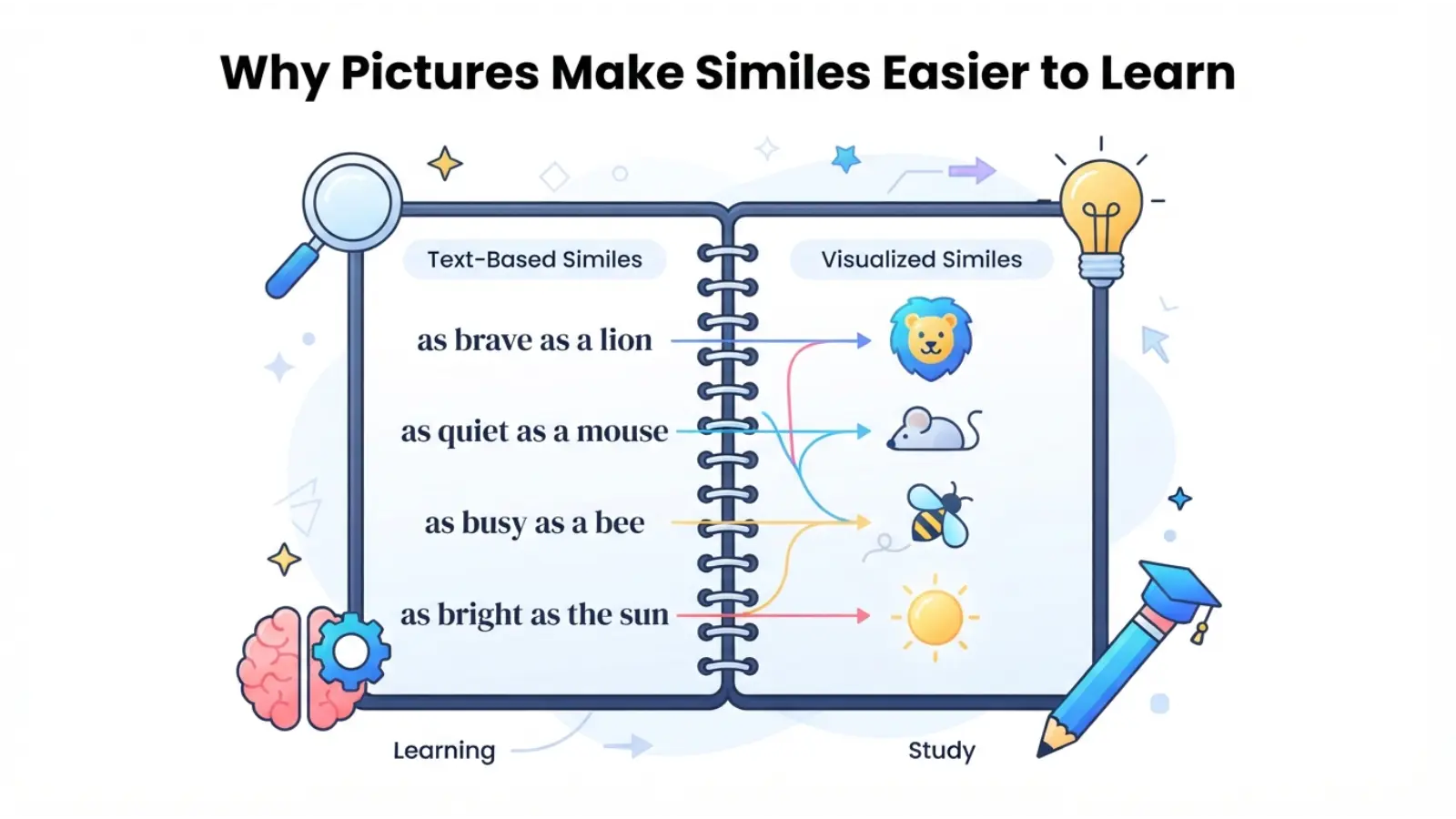
Reading a simile is helpful, but seeing it represented visually creates a stronger mental image.
For example:
The clouds floated like sleepy sheep.
A picture of fluffy sheep drifting across a blue sky immediately reinforces the comparison.
Visual learning also helps readers:
- Remember similes longer
- Improve descriptive writing
- Understand abstract ideas
- Build stronger vocabulary
- Enjoy reading more
Original Pictures of Similes with Examples
Nature-Inspired Similes
1. The sunrise spread like golden paint across the sky.
Meaning: The colors gradually covered the horizon.
Writing Tip: Great for travel writing and descriptive scenes.
2. The river curled like a silver ribbon.
Creates: Calm, elegant imagery.
Story Example:
The river curled like a silver ribbon through the quiet valley.
3. Leaves danced like tiny butterflies.
Perfect for autumn stories and poems.
4. Rain tapped like gentle fingers on the window.
Adds peaceful atmosphere.
5. The mountain stood like an ancient guardian.
Best used in adventure writing.
Animal Similes That Create Clear Pictures
6. The puppy bounced like a rubber ball.
Conversation:
“My puppy bounced like a rubber ball all afternoon.”
7. The owl watched like a patient teacher.
Creates wisdom and quiet observation.
8. The deer moved like flowing water.
Excellent for graceful movement.
9. The fox smiled like it knew every secret.
Adds mystery to storytelling.
10. The hummingbird hovered like a tiny helicopter.
Easy for children to visualize.
Similes That Show Emotions
11. Her happiness sparkled like morning dew.
Creates fresh, joyful imagery.
12. His worry clung like a heavy backpack.
Shows emotional weight.
13. Excitement raced through her like fireworks.
Perfect for celebrations.
14. Hope glowed like a candle in the dark.
Useful in inspirational writing.
15. Sadness drifted over him like evening fog.
Creates a quiet emotional mood.
Similes About People
16. His smile opened like sunshine after rain.
Warm and welcoming.
17. She spoke like calm ocean waves.
Suggests confidence and peace.
18. The teacher guided us like a lighthouse.
Ideal for educational writing.
19. My grandfather laughed like rolling thunder.
Shows loud, joyful laughter.
20. The child wondered like an explorer finding a new world.
Excellent for children’s stories.
Creative Similes for Storytelling
21. The old house waited like a forgotten memory.
Creates mystery.
22. The hallway stretched like an endless tunnel.
Builds suspense.
23. Time slipped away like melting snow.
Works well in reflective writing.
24. The secret hid like a pearl inside a shell.
Suggests something valuable.
25. Her thoughts fluttered like colorful paper kites.
Shows imagination.
Similes for Everyday Conversations
26. My phone battery disappeared like ice in the sun.
Funny and relatable.
27. He eats like a machine after practice.
Good for casual speech.
28. The weekend passed like a fast train.
Expresses how quickly time goes.
29. Coffee woke me up like opening every window.
Fresh and modern.
30. My ideas arrived like birds returning in spring.
Perfect for creative writing.
Why These Similes Work
Strong similes connect familiar experiences with new ideas.
Instead of saying:
The room was quiet.
You could write:
The room was quiet like fresh snow before sunrise.
The comparison invites readers to imagine the silence instead of simply reading about it.
How Professional Writers Create Better Similes
Professional writers rarely choose the first comparison that comes to mind.
Instead they ask:
- What feeling should the reader experience?
- What image is unexpected but believable?
- Does the comparison fit the scene?
- Will readers immediately understand it?
The best similes feel effortless while creating vivid mental pictures.
How to Create Your Own Similes
Step 1: Pick the Main Subject
Example:
- Wind
- Smile
- River
- City
Step 2: Choose Its Strongest Quality
Ask yourself:
- Fast?
- Quiet?
- Bright?
- Cold?
- Gentle?
Step 3: Find Something Readers Already Know
For example:
Fast →
- Arrow
- Falcon
- Lightning
- Racing bicycle
Step 4: Compare Using “Like” or “As”
Instead of:
“The wind was fast.”
Write:
“The wind rushed like invisible horses.”
Creative Practice Exercises
Try finishing these yourself.
- The moon looked like __________.
- My backpack felt as heavy as __________.
- The classroom buzzed like __________.
- Her ideas spread like __________.
- The forest sounded like __________.
Challenge yourself to avoid common comparisons.
Common Mistakes When Writing Similes
Using Overused Comparisons
Instead of:
- Busy as a bee
- Cold as ice
Try creating fresh images from everyday life.
Mixing Different Images
Avoid:
Her voice floated like thunder.
The comparison combines soft and loud imagery that clashes.
Forcing Comparisons
If the comparison feels unnatural, simplify it.
Every simile should help readers imagine something more clearly.
Confusing Similes and Metaphors
Simile
The lake shone like glass.
Metaphor
The lake was glass.
Both compare ideas, but similes use like or as.
Adding Too Many Similes
One vivid comparison often creates a stronger impression than five ordinary ones.
Give readers room to imagine.
Related Literary Devices
Metaphor
A direct comparison without using like or as.
Imagery
Language that appeals to the senses through detailed description.
Personification
Giving human qualities to animals, objects, or ideas.
Example:
The wind whispered through the trees.
Hyperbole
An intentional exaggeration for dramatic effect.
Symbolism
Using one object or image to represent a deeper meaning.
Frequently Asked Questions
What are pictures of similes?
They are illustrations paired with similes to help readers visualize figurative language more easily.
Why are pictures useful when learning similes?
Images strengthen understanding by connecting words with memorable visual scenes.
Can children learn similes through pictures?
Yes. Visual examples make abstract comparisons much easier for young learners to understand.
Are pictures of similes useful for creative writing?
Absolutely. Studying visual comparisons helps writers create stronger descriptions and more engaging stories.
What’s the difference between a simile and a metaphor?
A simile uses like or as, while a metaphor makes a direct comparison without those words.
How can I make my similes more original?
Look beyond common expressions. Compare ideas using everyday objects, personal experiences, or surprising but believable images.
Conclusion
Pictures and similes work together because both tell stories through imagery. A thoughtful comparison helps readers see, hear, and feel what you’re describing, while a visual example makes that comparison even more memorable.Rather than relying on familiar expressions, experiment with fresh observations from everyday life. The most effective similes aren’t the fanciest—they’re the ones that create a clear, lasting picture in the reader.
I am Helena Frost, a writer captivated by the beauty of language and the art of comparison. Through my words, I explore the world by turning ordinary moments into vivid similes and reflections. I enjoy crafting phrases that spark imagination, evoke emotion, and linger in the mind. My writing celebrates the subtle connections between people, nature, and the stories we live. For me, every sentence is an opportunity to reveal the extraordinary in the everyday.