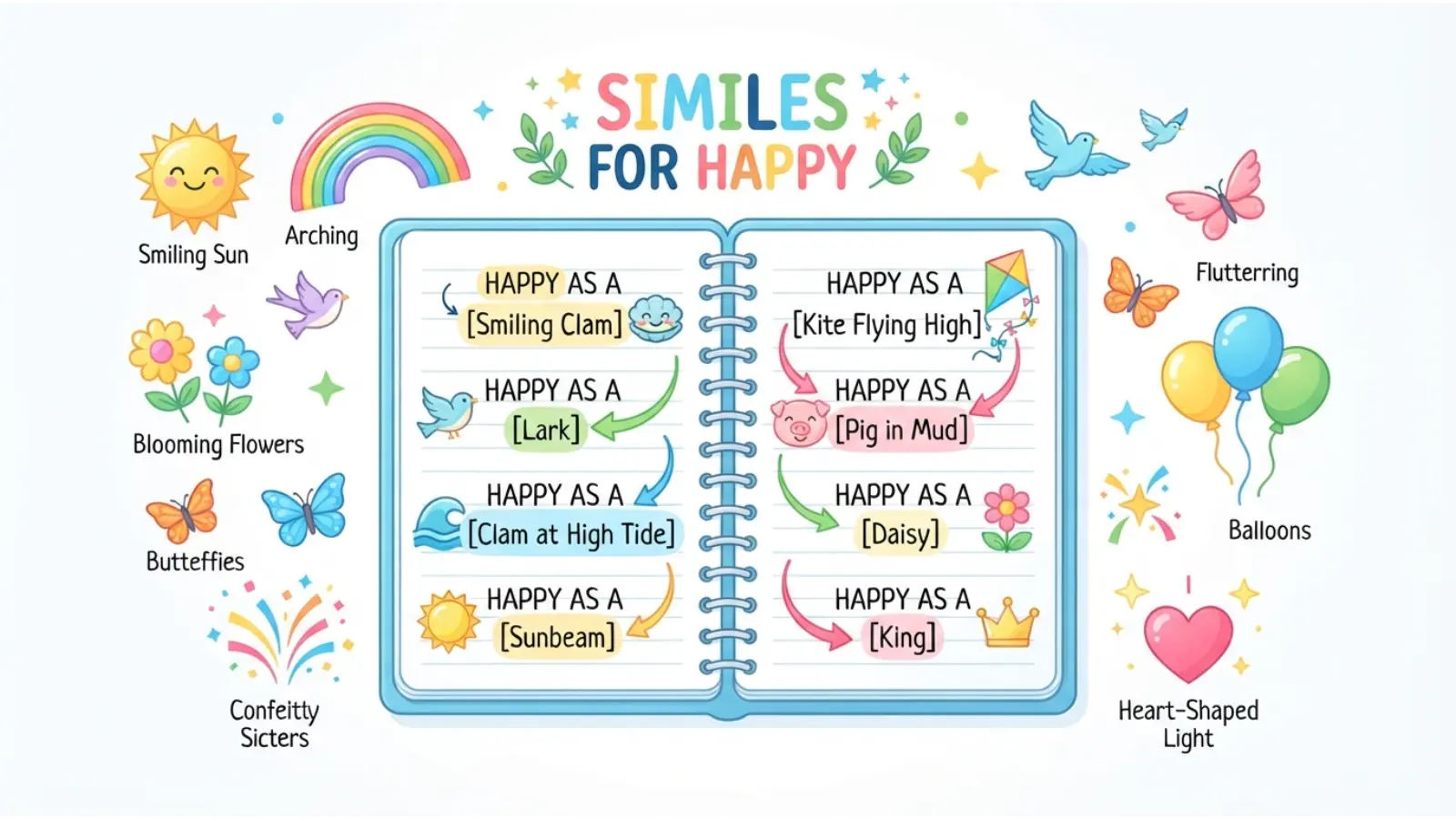
Happiness can be difficult to describe with ordinary words. Saying someone is “very happy” tells readers how a person feels, but it rarely helps them picture the emotion. That’s where similes become powerful. A simile compares one thing to another using “like” or “as.” These comparisons create vivid mental images that make writing more expressive and memorable. Writers use similes in stories, poems, speeches, conversations, journals, and even everyday social media posts. If you’re looking for similes for happy, this guide offers fresh, original comparisons along with practical advice for using them naturally in your own writing.
Quick Answer
Similes for happy compare happiness to something bright, light, warm, or energetic using words like “like” or “as.” For example:
- As cheerful as the first bird at sunrise.
- Like sunshine spilling through an open window.
- As bright as a lantern on a dark path.
Good similes help readers feel happiness instead of simply reading about it.
Why Happy Similes Make Writing Stronger
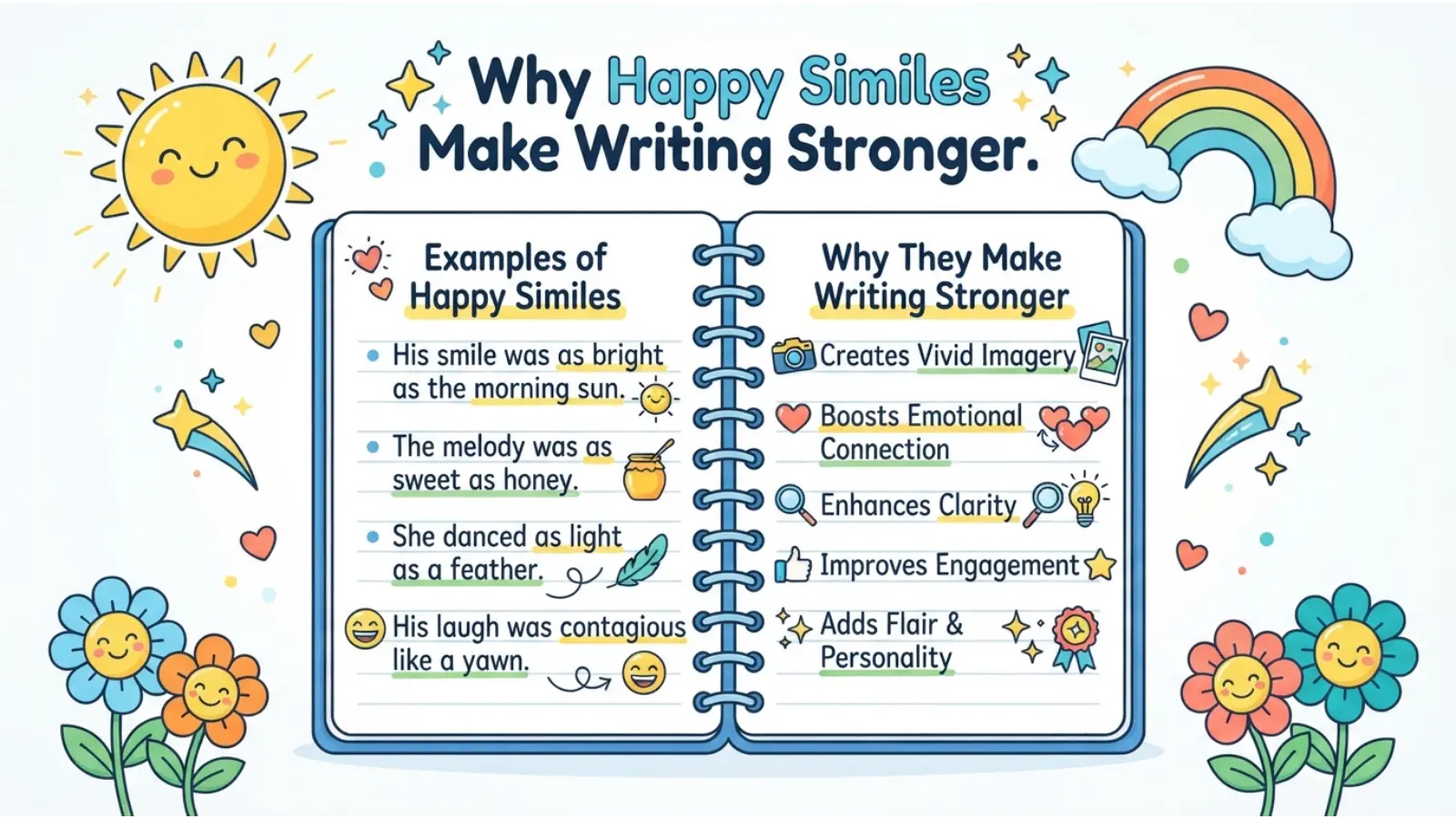
Happy moments deserve more than ordinary descriptions.
Instead of saying,
Emma was happy.
You could write,
Emma was as bright as a sunrise after weeks of rain.
The second sentence creates imagery. Readers don’t just understand the emotion—they experience it.
Strong similes also:
- Add personality to characters
- Create memorable scenes
- Improve poetry and storytelling
- Make conversations sound more expressive
- Help young writers develop descriptive skills
35 Original Similes for Happy
1. As cheerful as the first bird at sunrise
Meaning: A fresh, joyful beginning.
Story Example:
She was as cheerful as the first bird at sunrise, greeting everyone she met.
2. Like sunshine spilling through an open window
Creates warmth and comfort.
Conversation:
Your smile is like sunshine spilling through an open window.
3. As light as a feather floating on a breeze
Suggests carefree happiness.
4. Like a garden waking after spring rain
Perfect for describing renewed joy.
5. As bright as lanterns during a celebration
Works well in festive scenes.
6. Like laughter dancing across a room
Shows happiness spreading from person to person.
7. As warm as fresh bread from the oven
Expresses comforting happiness.
8. Like stars appearing after sunset
Ideal for hope returning.
9. As glowing as autumn leaves in golden light
Adds rich visual imagery.
10. Like a kite finding the perfect wind
Suggests freedom and excitement.
11. As peaceful as a calm lake at dawn
Shows quiet happiness instead of excitement.
12. Like a candle brightening a dark corner
Best for gentle optimism.
13. As lively as leaves dancing in the breeze
Excellent for energetic characters.
14. Like fresh rain washing away dusty streets
Represents emotional relief.
15. As colorful as a rainbow after a storm
Shows happiness following difficulty.
16. Like music filling an empty house
Creates emotional warmth.
17. As sparkling as morning dew
Perfect for children’s writing.
18. Like fireworks blooming across the night sky
Best for exciting celebrations.
19. As refreshing as cool water on a hot afternoon
Suggests welcome happiness.
20. Like butterflies swirling through a flower field
Represents joyful excitement.
21. As gentle as a puppy’s welcome
Shows affectionate happiness.
22. Like waves laughing against the shore
Creates playful imagery.
23. As glowing as polished amber in sunlight
Ideal for descriptive fiction.
24. Like confetti carried by the wind
Expresses celebration.
25. As joyful as children chasing bubbles
Excellent for family stories.
26. Like blossoms opening to the morning sun
Represents emotional growth.
27. As hopeful as the first green shoot of spring
Combines happiness with optimism.
28. Like a melody everyone remembers
Suggests lasting joy.
29. As free as clouds drifting across blue skies
Shows peaceful contentment.
30. Like a lighthouse shining across calm water
Represents reassuring happiness.
31. As welcoming as a familiar front porch
Ideal for homecoming scenes.
32. Like fresh paint adding color to an old wall
Shows happiness bringing new energy.
33. As radiant as moonlight on quiet snow
Creates elegant poetic imagery.
34. Like birds soaring above open fields
Suggests limitless happiness.
35. As comforting as finding an old friend in a crowd
Shows heartfelt emotional joy.
How Professional Writers Create Better Happy Similes
Great similes rarely compare emotions directly. Instead, they compare happiness with experiences people can easily imagine.
Ask yourself:
- What does happiness look like?
- What moves the same way happiness feels?
- What colors represent joy?
- What sounds create the same emotion?
The answers often become your best comparisons.
How to Make Your Similes More Vivid
Instead of choosing obvious comparisons, look for specific details.
Rather than writing:
Happy as the sun.
Try:
Happy like sunlight warming cold stone after winter.
Specific imagery creates stronger emotional impact because readers can picture the moment.
Related Literary Devices
Metaphor
A metaphor compares without using “like” or “as.”
Simile:
Her smile was like sunshine.
Metaphor:
Her smile was sunshine.
Imagery
Imagery appeals to the senses.
Pair happy similes with descriptions of light, color, sound, or movement to make scenes feel alive.
Personification
Give human qualities to objects.
Example:
The breeze welcomed everyone with happy whispers.
Hyperbole
Use exaggeration carefully.
Example:
I was so happy I could have hugged the whole world.
Symbolism
Objects like birds, blooming flowers, dawn, rainbows, and open skies often symbolize happiness and hope.
Create Your Own Happy Similes
Building original similes is easier than it seems.
Step 1
Choose the emotion.
Example:
Happy
Step 2
Think of something that naturally shares that feeling.
Examples:
- Sunrise
- Rainbow
- Warm fire
- Birdsong
- Blooming flowers
Step 3
Connect them using “like” or “as.”
Example:
She was as joyful as blossoms greeting spring.
Practice Exercise
Write one simile using each of these:
- Ocean
- Music
- Light
- Wind
- Stars
Then ask yourself whether the comparison helps readers imagine happiness more clearly.
Common Mistakes
Using Overused Comparisons
Readers have seen familiar expressions countless times. Fresh comparisons leave a stronger impression.
Mixing Imagery
Avoid combining unrelated images.
Weak:
She was as happy as sunshine swimming through thunder.
Choose one clear image instead.
Forcing Comparisons
If the comparison feels confusing, simplify it.
Good similes feel natural.
Confusing Similes and Metaphors
Remember:
- Simile uses like or as
- Metaphor compares directly
Forgetting the Context
A playful simile may not fit a serious novel, while a gentle comparison may not suit an exciting sports story.
Always match the tone to your audience.
Frequently Asked Questions
What is a simile for happy?
A simile for happy compares happiness to something joyful using “like” or “as,” helping readers imagine the emotion more vividly.
What makes a happy simile effective?
Specific imagery, natural wording, and an emotional connection make a simile memorable.
Can happy similes be used in professional writing?
Yes. They work well in speeches, children’s books, creative essays, fiction, and inspirational writing when used sparingly.
Are similes better than adjectives?
Not always. Adjectives explain emotions quickly, while similes help readers experience those emotions through imagery.
How do I avoid cliché similes?
Choose personal observations from nature, everyday life, or memorable experiences instead of relying on familiar comparisons.
Can children use happy similes?
Absolutely. Similes encourage creativity and help young writers describe emotions more clearly.
Conclusion
The best similes for happy don’t simply tell readers someone feels joyful—they paint a picture that brings the emotion to life. Whether you’re writing a poem, a short story, a classroom assignment, or a heartfelt message, original comparisons make your words more engaging and memorable. Keep observing the world around you. A sunrise, a gentle breeze, a blooming flower, or the sound of laughter can all inspire fresh similes. The more you practice creating your own comparisons, the more natural and expressive your writing will become.
I am Helena Frost, a writer captivated by the beauty of language and the art of comparison. Through my words, I explore the world by turning ordinary moments into vivid similes and reflections. I enjoy crafting phrases that spark imagination, evoke emotion, and linger in the mind. My writing celebrates the subtle connections between people, nature, and the stories we live. For me, every sentence is an opportunity to reveal the extraordinary in the everyday.