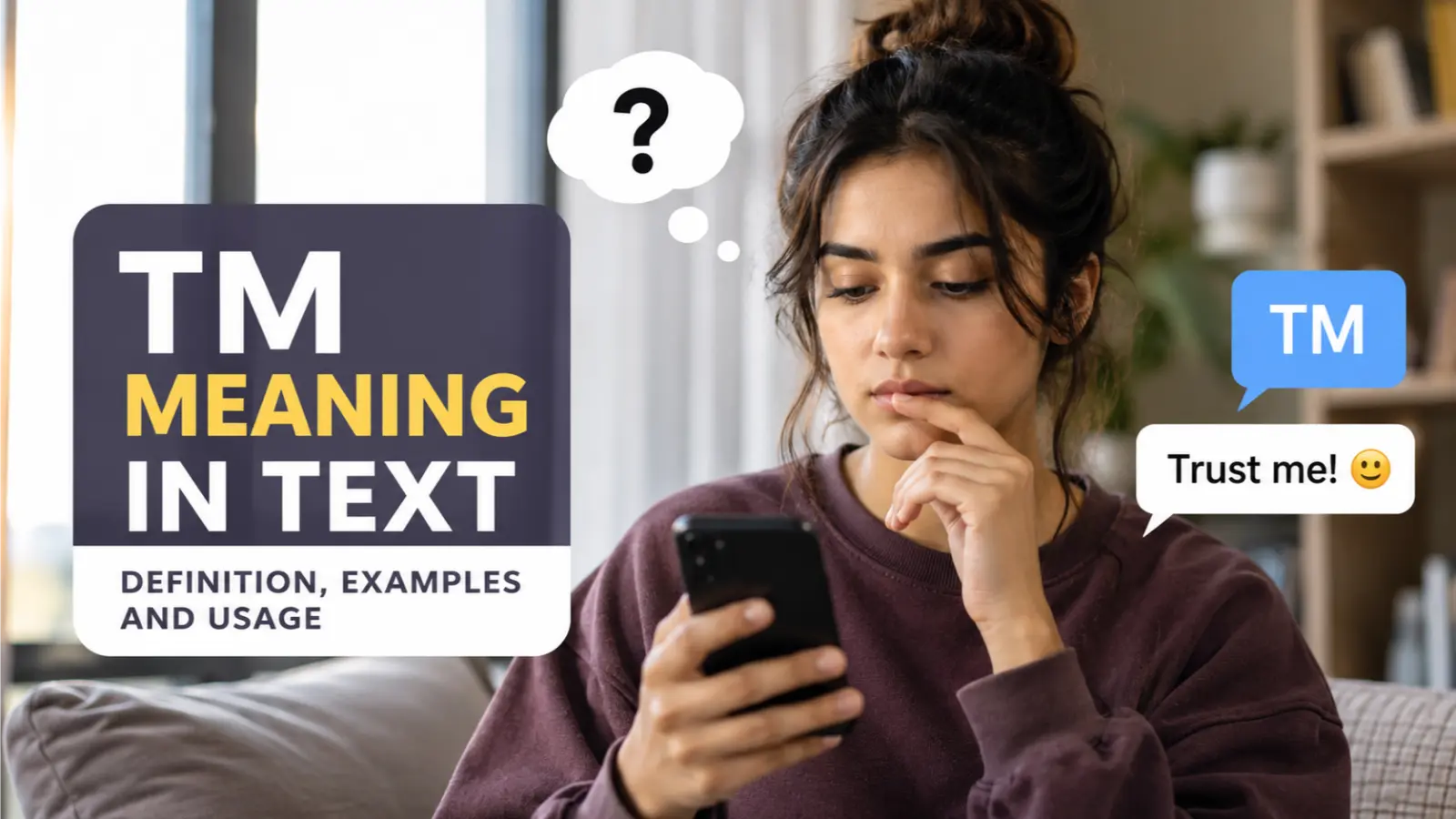
TM meaning in text is one of the many internet abbreviations people use in texting, social media, gaming, and online conversations. If you’ve received a message containing “TM,” you might wonder what it means because this short abbreviation has more than one definition.
Its meaning depends on the conversation, the platform, and the relationship between the people chatting.
Like many online slang terms, “TM” saves time while typing and makes conversations faster. However, understanding the context is important because the same abbreviation can represent different ideas.
If you’re chatting with friends, reading comments on social media, or texting someone new, knowing what “TM” means helps you avoid confusion.
Quick Answer
TM meaning in text most commonly stands for “Trust Me.” In some situations, it can also mean “Text Message,” “Trademark,” or other less common phrases depending on the conversation.
What Does TM Mean in Text?
The most common TM meaning in text is:
TM = Trust Me
People use it when they want someone to believe what they are saying or reassure them that something is true.
Example:
Alex: Is that restaurant really that good?
Jamie: TM, you’ll love it!
In other situations, TM may also mean:
- Text Message
- Trademark (™)
- Tomorrow (less common in casual chats)
- Team (in gaming or work conversations)
The intended meaning always depends on the surrounding conversation.
TM Full Form
Depending on the context, the TM full form can include:
| Abbreviation | Full Form | Common Usage |
|---|---|---|
| TM | Trust Me | Texting, chats |
| TM | Text Message | Mobile conversations |
| TM | Trademark | Business and branding |
| TM | Team | Gaming and workplace |
| TM | Tomorrow | Informal texting (rare) |
Among these, Trust Me is the most common meaning in modern online conversations.
Meaning in Different Contexts
TM in Casual Texting
Friends often use TM to reassure each other.
Example:
“I’ve seen the movie already. TM, it’s worth watching.”
TM on Social Media
People use TM in comments, captions, or replies to emphasize their opinion.
Example:
“TM, this is the best coffee in town.”
TM in Gaming
Gamers may use TM to refer to a team.
Example:
“Our TM played really well today.”
TM in Business
Businesses use TM as the abbreviation for Trademark (™) to show ownership of a brand name or logo.
Example:
“BrandName™”
Is TM Rude, Offensive, or Neutral?
TM is generally neutral.
It is not considered offensive or rude. Instead, it usually expresses confidence or reassurance.
However, tone matters.
Positive Example
“TM, everything will be fine.”
Negative Example
“TM, you’re wrong.”
Even though the abbreviation itself isn’t rude, the message around it may sound sarcastic or dismissive.
Where Is TM Commonly Used?
You may see TM on:
- Text messages
- Snapchat
- Facebook Messenger
- Discord
- TikTok comments
- Gaming chats
- Online forums
It is especially common among younger internet users who prefer shorter messages.
Real-Life Conversation Examples
Friendly
Emma: Is your recipe easy?
Sarah: TM, anyone can make it.
Casual
Jake: Is the concert fun?
Chris: TM, it’s amazing.
Encouraging
Friend: I’m nervous.
You: TM, you’ll do great.
Gaming
Player 1: Need help?
Player 2: My TM has me covered.
Business
“Our company recently registered its new TM.”
Emotional and Psychological Meaning
When someone says TM (Trust Me), they usually want to:
- Build confidence
- Reassure another person
- Show certainty
- Reduce someone’s worries
- Strengthen trust
Psychologically, using “Trust Me” encourages confidence between people. It suggests the speaker feels sure about what they are saying.
Origin and Background of TM
The abbreviation TM has existed for many years.
Originally, TM was widely recognized as the abbreviation for Trademark in business and legal settings.
As texting became more popular, internet users began using TM as shorthand for Trust Me because it was faster to type. Today, both meanings remain common, with the correct interpretation depending on context.
Why People Use TM
People use TM because it:
- Saves typing time
- Makes conversations quicker
- Sounds casual
- Shows confidence
- Fits character limits on social media
- Is widely understood among frequent internet users
Short abbreviations like TM help conversations feel faster and more natural.
Comparison with Similar Slang
| Slang | Meaning | Purpose |
|---|---|---|
| TM | Trust Me | Reassurance |
| IMO | In My Opinion | Personal opinion |
| TBH | To Be Honest | Honest statement |
| FR | For Real | Emphasis or agreement |
| NGL | Not Gonna Lie | Honest confession |
| FYI | For Your Information | Sharing information |
Although these abbreviations are similar, TM specifically encourages someone to believe or trust the speaker.
When to Use TM
Use TM when:
- Talking with friends
- Texting casually
- Posting on social media
- Giving recommendations
- Reassuring someone
Examples
- TM, you’ll enjoy this game.
- TM, it’s easier than it looks.
- TM, I’m telling the truth.
When to Avoid Using TM
Avoid using TM in:
- Job applications
- Academic writing
- Legal documents
- Business reports
- Professional emails
- Formal presentations
In professional communication, writing “Trust me” in full is usually clearer and more appropriate.
Polite Alternatives
If you prefer more formal language, try:
- I assure you.
- You can trust me.
- I’m confident.
- I believe this is correct.
- In my experience…
- I’m certain.
These alternatives sound more professional than using TM.
Impact of Using Slang in Communication
Using slang like TM has both benefits and drawbacks.
Benefits
- Faster communication
- Friendly conversations
- Builds online connection
- Saves typing
Drawbacks
- May confuse older readers
- Different meanings create misunderstandings
- Less suitable for professional settings
The best approach is to know your audience before using slang.
Is TM Safe for Social Media?
Yes.
TM is generally safe to use on:
- TikTok
- Snapchat
- X (Twitter)
- Discord
Since it is not offensive, most platforms have no issues with its use. However, always make sure your message cannot be misunderstood.
Common Misunderstandings
Some people think TM always means Trademark because they have seen the ™ symbol.
Others assume it only means Text Message.
In reality, the most common TM meaning slang in texting today is Trust Me.
Always read the surrounding conversation before deciding which meaning applies.
Variations and Types
You may also encounter:
- TM = Trust Me
- TM = Text Message
- TM = Trademark
- TM = Team
- TM = Tomorrow (rare)
Some people write:
- tm
- T.M.
- TM!
All usually carry the same intended meaning.
How to Respond When Someone Uses TM
Your response depends on the conversation.
If they mean “Trust Me”
You could reply:
- I trust you.
- Okay!
- Sounds good.
- I’ll believe you.
- Thanks for letting me know.
If you’re unsure
Ask politely:
“Do you mean Trust Me or something else?”
Clarifying avoids misunderstandings.
Regional and Cultural Usage
TM is widely understood in:
- United States
- Canada
- United Kingdom
- Australia
- India
- Pakistan
- Many English-speaking online communities
Because internet slang spreads quickly, TM has become familiar across many countries. However, people who are new to online culture may not recognize it immediately.
Frequently Asked Questions
What does TM stand for in text?
TM most commonly stands for Trust Me, although it can also mean Text Message, Trademark, or Team depending on the context.
Is TM positive or negative?
TM is generally positive and neutral. It usually reassures someone or expresses confidence.
What does TM mean on Snapchat?
On Snapchat, TM usually means Trust Me in conversations between friends.
Does TM always mean Trademark?
No. In legal and business contexts, TM means Trademark, but in texting it more commonly means Trust Me.
Is TM internet slang?
Yes. When used to mean Trust Me, TM is considered internet and texting slang.
Should I use TM in professional emails?
No. It’s better to write the full phrase instead of using slang in formal communication.
Conclusion
Understanding TM meaning in text helps you communicate more confidently online. While TM most often stands for “Trust Me,” it can also mean “Text Message,” “Trademark,” or “Team” depending on the context. Reading the surrounding conversation is the easiest way to identify the correct meaning.
Using TM is perfectly acceptable in casual texting, social media, and conversations with friends. However, it’s best to avoid slang in formal or professional communication where clarity matters most. By understanding its different meanings, origins, and proper usage, you can interpret and use TM naturally in everyday digital conversations.