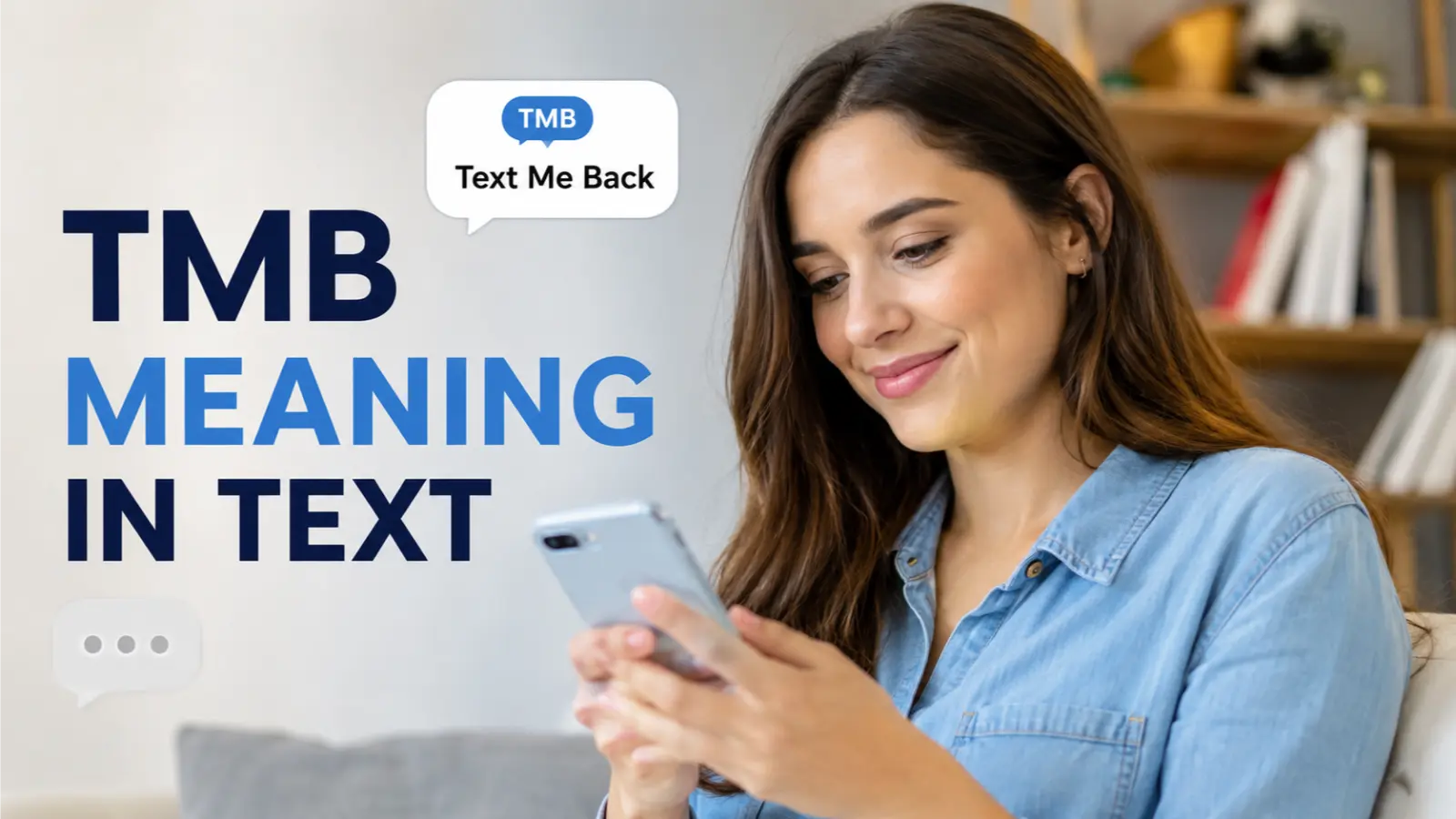
TMB meaning in text is something many people search for after seeing it in a text message, social media post, or online conversation.
Internet slang changes quickly, and abbreviations often have multiple meanings depending on the situation. If someone sends you “TMB,” it can be confusing if you’re unfamiliar with the context.
If you’re chatting with friends, reading comments on TikTok, scrolling through X (formerly Twitter), or messaging on Snapchat, understanding texting abbreviations helps you communicate more naturally and avoid misunderstandings.
The meaning of TMB depends on who is using it, where it’s being used, and the tone of the conversation. In most cases, it is informal and commonly used among younger internet users.
⚡ Quick Answer
TMB meaning in text usually stands for “Text Me Back.” It’s a casual way of asking someone to reply to a message. In some situations, TMB can also have other meanings depending on the platform or community.
What Does TMB Mean in Text?
The most common meaning of TMB is:
TMB = Text Me Back
People use it when they want the other person to respond after reading a message.
Example
Alex: Did you get home safely?
Sam: Yeah! Busy right now.
Alex: Okay, TMB when you’re free.
Here, “TMB” simply means “Text Me Back.”
TMB Full Form
The most widely accepted TMB full form in texting is:
- Text Me Back
However, like many internet abbreviations, TMB can also represent different phrases in specific communities or industries.
Some less common meanings include:
- Text Me Bro
- Trust Me Bro
- Too Much Bro (informal)
- Team Member Badge (workplace)
- The Money Bag (gaming or finance communities)
The intended meaning depends entirely on the conversation.
Meaning in Different Contexts
1. Text Messaging
Most commonly:
TMB = Text Me Back
Example:
“I’m heading out now. TMB later.”
2. Social Media
On platforms like Instagram, Snapchat, or TikTok, users often write:
“TMB when you see this.”
It simply asks someone to reply.
3. Friend Conversations
Friends may use TMB casually without sounding demanding.
Example:
“I’m offline for class. TMB after school.”
4. Gaming
Some gamers jokingly use TMB to mean:
Trust Me Bro
Example:
“This strategy works. TMB.”
This meaning is much less common.
5. Workplace Messages
Occasionally, TMB may refer to internal company abbreviations, but this is uncommon outside professional settings.
Is TMB Rude, Offensive, or Neutral?
TMB is generally neutral.
Its tone depends on how it is written.
| Usage | Tone |
|---|---|
| TMB when free | Friendly |
| TMB ASAP | Urgent |
| Why didn’t you TMB? | Slightly frustrated |
| Please TMB when you can | Polite |
Adding words like please, thanks, or when you have time makes it sound friendlier.
Where Is TMB Commonly Used?
You’ll often see TMB on:
- Text messages
- Snapchat
- Instagram DMs
- TikTok comments
- Facebook Messenger
- Discord
- iMessage
It’s most popular in casual conversations rather than formal communication.
Real-Life Conversation Examples
Friendly
Emma: I’m going shopping.
Lily: Sounds fun! TMB when you’re done.
Casual
Jake: Phone’s almost dead.
Ryan: No problem. TMB later.
Argumentative
Chris: I’ve been waiting all day.
Jordan: Sorry.
Chris: Next time just TMB.
Romantic
Taylor: Have a good meeting ❤️
Morgan: Thanks! I’ll TMB after it’s over.
Family
Mom: Call Grandma today.
Son: Okay. I’ll TMB after work.
Emotional and Psychological Meaning
Although TMB is only three letters, it often communicates more than a request.
It may express:
- Wanting attention
- Caring about someone
- Expecting communication
- Maintaining a relationship
- Checking on someone’s well-being
When someone says “TMB,” they’re usually hoping to continue the conversation rather than end it.
Origin and Background of TMB
TMB became popular as texting grew in the early 2000s.
People wanted shorter ways to type common phrases.
Instead of writing:
“Please text me back when you get a chance.”
They simply wrote:
“TMB.”
As smartphones, SMS, and social media expanded, abbreviations like LOL, BRB, IMO, and TMB became common in everyday communication.
Comparison with Similar Slang
| Slang | Meaning | Usage |
|---|---|---|
| TMB | Text Me Back | Asking for a reply |
| BRB | Be Right Back | Leaving temporarily |
| TTYL | Talk To You Later | Ending a conversation |
| LMK | Let Me Know | Asking for information |
| IDK | I Don’t Know | Expressing uncertainty |
| IMO | In My Opinion | Sharing an opinion |
Unlike BRB or TTYL, TMB encourages the other person to respond later.
When to Use TMB
TMB works well when:
- Messaging close friends
- Chatting with family
- Talking with classmates
- Sending casual texts
- Using social media DMs
Examples:
- TMB tonight.
- TMB after class.
- TMB when you’re free.
When to Avoid Using TMB
Avoid using TMB in:
- Job applications
- Business emails
- Academic writing
- Professional reports
- Formal customer support
Instead, write:
- Please reply when convenient.
- Let me know when you’re available.
- I look forward to your response.
Polite Alternatives
If you want to sound more professional, try these instead of TMB:
- Please reply when you can.
- Let me know when you’re available.
- I’d appreciate your response.
- Feel free to message me later.
- Please get back to me.
These phrases are appropriate in formal situations.
Why People Use TMB
People prefer TMB because it is:
- Short
- Easy to type
- Easy to understand
- Faster than full sentences
- Common in texting culture
It helps keep conversations quick and informal.
Impact of Using Slang in Communication
Using slang like TMB has advantages and disadvantages.
Benefits
- Saves time
- Makes conversations feel relaxed
- Fits modern texting habits
- Creates a friendly tone
Drawbacks
- Older users may not understand it.
- It may confuse people from other countries.
- It can sound too informal in professional settings.
- Some people may misunderstand its meaning.
Knowing your audience is important.
Is TMB Safe for Social Media?
Yes.
TMB is considered safe for:
- Snapchat
- TikTok
- Discord
- X
It does not contain offensive language and generally follows normal online communication.
However, avoid overusing abbreviations if your audience may not understand them.
Common Misunderstandings
People sometimes think TMB means:
- Trust Me Bro
- Text My Brother
- Too Much Bro
- Tell Me Back
In everyday texting, Text Me Back remains the most common interpretation.
Always consider the surrounding conversation before deciding what it means.
Variations and Types
Similar expressions include:
- Text me.
- Message me.
- Hit me up.
- DM me.
- Reply later.
- Ping me.
- Get back to me.
These phrases serve a similar purpose but differ slightly in tone.
How to Respond When Someone Uses TMB
Here are a few natural responses:
If you’re busy:
“Sure, I’ll text you later.”
If you’re available:
“I’m free now.”
If you forgot:
“Sorry! Just saw your message.”
If you’re ending the conversation:
“Will do. Talk soon!”
Regional and Cultural Usage
TMB is mostly used in English-speaking countries, including:
- United States
- Canada
- United Kingdom
- Australia
- New Zealand
It is also widely recognized among English-speaking internet users worldwide.
In countries where English is a second language, younger users often understand TMB because of social media and online gaming.
Frequently Asked Questions
What does TMB stand for in texting?
TMB usually stands for Text Me Back, meaning the sender wants you to reply later.
Is TMB rude?
No. TMB is generally polite and neutral, although the tone depends on the wording and context.
Is TMB only used in texting?
Mostly, yes. It is common in text messages, social media chats, and messaging apps.
Can TMB have other meanings?
Yes. In some communities, TMB may mean Trust Me Bro or other phrases, but Text Me Back is the most common meaning.
Should I use TMB in professional emails?
No. In professional communication, use complete phrases like “Please reply when convenient.”
Is TMB popular among young people?
Yes. Teenagers and young adults commonly use TMB in casual digital conversations.
Conclusion
Understanding the tmb meaning in text makes online conversations much easier. In most situations, TMB stands for “Text Me Back,” a simple and friendly request asking someone to respond when they have time. While it may have a few alternative meanings in certain communities, context almost always reveals the intended interpretation.
As with any internet slang, use TMB in casual conversations with friends, family, or on social media, but avoid it in formal or professional communication. Knowing what does TMB stand for, its common uses, and its tone will help you communicate clearly and confidently in today’s digital world.