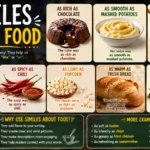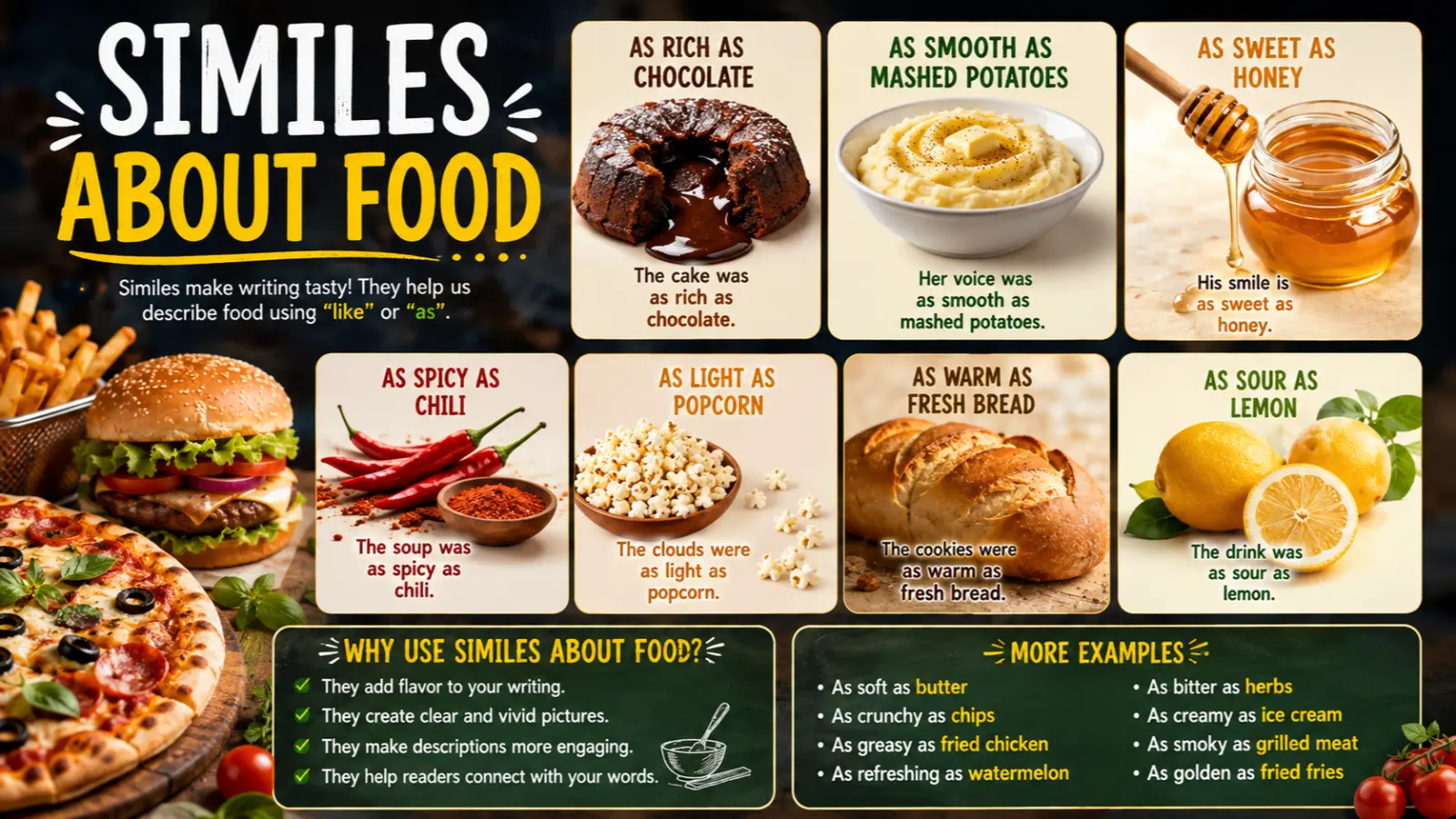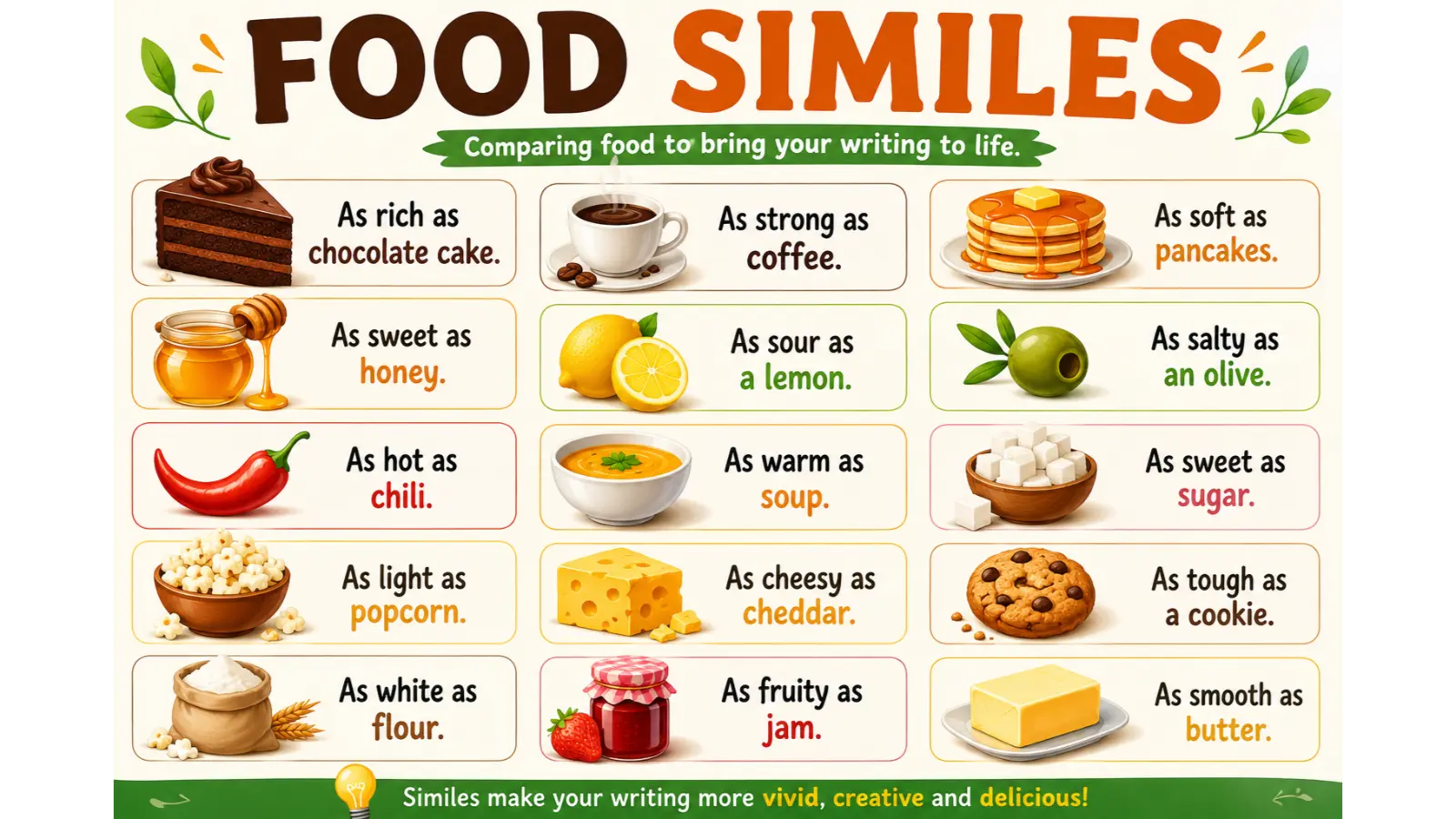
Food is something everyone understands. A single bite can remind us of home, celebration, comfort, or adventure. That makes food one of the best sources of inspiration for similes. A simile compares two different things using the words like or as. Good similes help readers see, taste, and feel what you’re describing instead of simply reading about it.
Whether you’re writing stories, poems, essays, speeches, or everyday conversations, food similes can make your language more colorful and memorable. In this guide, you’ll discover original food similes, learn why they work, and find practical techniques for creating your own.
What Are Food Similes?
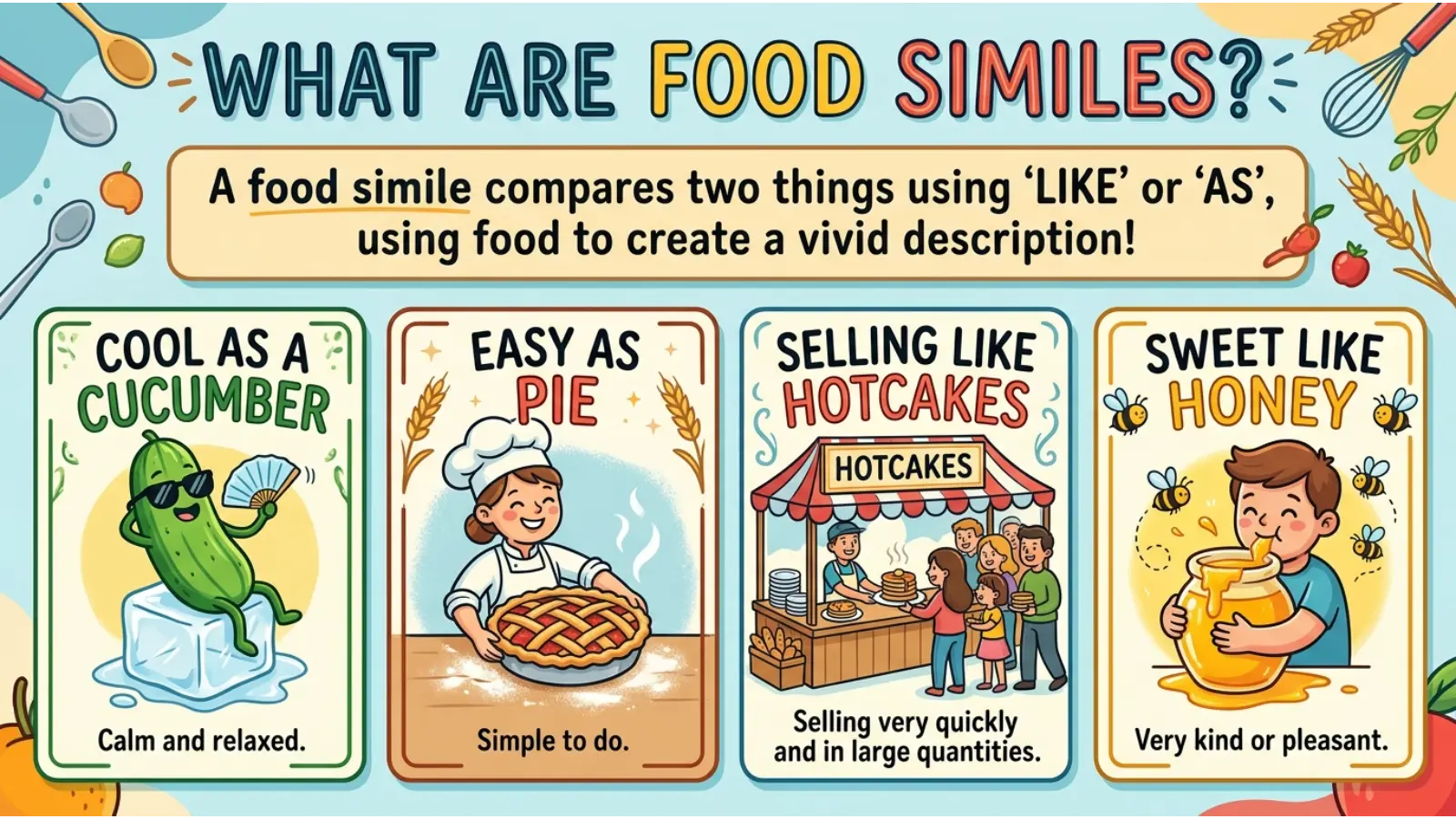
Food similes compare a person, object, feeling, or situation to food or something related to cooking and eating.
Instead of saying:
“She smiled warmly.”
You could write:
“Her smile spread like warm butter over fresh bread.”
The second version paints a stronger picture because readers can imagine the warmth and softness.
30 Original Food Similes
1. As comforting as warm soup on a rainy afternoon
Meaning: Extremely comforting and calming.
Example Sentences
- Her voice was as comforting as warm soup on a rainy afternoon.
- The old library felt as comforting as warm soup after a long day.
Writing Tip
Perfect for describing safety, kindness, or home.
2. Like honey melting into hot tea
Meaning: Gentle, smooth, and effortless.
Example Sentences
- His words flowed like honey melting into hot tea.
- The music blended like honey in tea.
Best Context
Poetry, romance, reflective writing.
3. As fresh as a bowl of garden berries
Meaning: Bright, lively, and full of energy.
Example Sentences
- Her ideas were as fresh as a bowl of garden berries.
- The design looked as fresh as morning fruit.
4. Like bread rising in the oven
Meaning: Gradually growing stronger or better.
Example Sentences
- His confidence grew like bread rising in the oven.
- Hope returned like dough slowly lifting.
Writing Purpose
Shows natural progress.
5. As sweet as ripe peaches in summer
Meaning: Kind, lovable, and pleasant.
Example Sentences
- The little girl was as sweet as ripe peaches in summer.
- His thank-you note sounded as sweet as fresh peaches.
6. Like cinnamon drifting through the kitchen
Meaning: Warm, welcoming, and inviting.
Example Sentences
- Laughter filled the house like cinnamon drifting through the kitchen.
- Her kindness spread like the scent of cinnamon.
7. As crisp as a freshly picked apple
Meaning: Clear, clean, or refreshing.
Example Sentences
- The morning air was as crisp as a freshly picked apple.
- His explanation was as crisp as fresh fruit.
8. Like caramel slowly pouring over ice cream
Meaning: Smooth, rich, and satisfying.
Example Sentences
- Her compliments rolled out like caramel over ice cream.
- The melody flowed like warm caramel.
9. As colorful as a fruit market at sunrise
Meaning: Full of variety and life.
Example Sentences
- The festival was as colorful as a fruit market at sunrise.
- Her imagination was as colorful as fresh produce.
10. Like popcorn bursting in a hot pan
Meaning: Sudden excitement or activity.
Example Sentences
- Ideas popped like popcorn in a hot pan.
- The audience laughed like popcorn bursting.
11. As smooth as whipped cream
Meaning: Gentle and effortless.
Example Sentences
- His presentation was as smooth as whipped cream.
- The dance moves felt as smooth as cream.
12. Like sparkling sugar under sunlight
Meaning: Bright and eye-catching.
Example Sentences
- Her dress shimmered like sparkling sugar.
- Snow glittered like sugar crystals.
13. As rich as melted chocolate
Meaning: Deep, luxurious, or intense.
Example Sentences
- The singer’s voice was as rich as melted chocolate.
- The colors looked as rich as dark cocoa.
14. Like fresh herbs after the rain
Meaning: Clean and refreshing.
Example Sentences
- The breeze smelled like fresh herbs after rain.
- His ideas felt wonderfully fresh.
15. As balanced as a well-seasoned meal
Meaning: Carefully organized.
Example Sentences
- The essay was as balanced as a well-seasoned meal.
- Their teamwork felt perfectly balanced.
16. Like butter melting on warm pancakes
Meaning: Relaxing or effortless.
Example Sentences
- Her worries disappeared like butter on pancakes.
- The tension faded almost instantly.
17. As bright as a bowl of citrus fruit
Meaning: Cheerful and energetic.
Example Sentences
- His smile was as bright as citrus fruit.
- The room looked cheerful.
18. Like sugar dissolving in lemonade
Meaning: Blending naturally.
Example Sentences
- She joined the group like sugar dissolving in lemonade.
- His ideas blended perfectly.
19. As satisfying as homemade bread
Meaning: Deeply rewarding.
Example Sentences
- Finishing the novel felt as satisfying as homemade bread.
- Helping others was equally rewarding.
20. Like steam rising from fresh coffee
Meaning: Quietly appearing or growing.
Example Sentences
- New ideas rose like steam from fresh coffee.
- Hope slowly returned.
21. As juicy as a perfectly ripe orange
Meaning: Full of life or interesting details.
Example Sentences
- The story was as juicy as a ripe orange.
- The interview revealed fascinating details.
22. Like frosting on a celebration cake
Meaning: The perfect finishing touch.
Example Sentences
- Her speech was like frosting on a celebration cake.
- The sunset completed the day beautifully.
23. As light as cotton candy
Meaning: Soft and carefree.
Example Sentences
- Her laugh felt as light as cotton candy.
- The clouds floated gently.
24. Like herbs sprinkled over fresh pasta
Meaning: Adding beauty without overpowering.
Example Sentences
- Small details improved the painting like herbs on pasta.
- Humor enhanced the story naturally.
25. As warm as fresh cookies from the oven
Meaning: Friendly and welcoming.
Example Sentences
- Their greeting was as warm as fresh cookies.
- The community welcomed everyone.
26. Like sparkling cider at a celebration
Meaning: Joyful and festive.
Example Sentences
- Excitement bubbled like sparkling cider.
- The announcement energized everyone.
27. As delicate as a paper-thin pastry
Meaning: Fragile and elegant.
Example Sentences
- Her artwork looked as delicate as thin pastry.
- The flower petals seemed fragile.
28. Like ripe tomatoes in summer sunlight
Meaning: Healthy, vibrant, and full of color.
Example Sentences
- The garden glowed like ripe tomatoes.
- Her cheeks turned bright.
29. As satisfying as the first bite of homemade pie
Meaning: Deeply enjoyable.
Example Sentences
- Solving the puzzle felt as satisfying as homemade pie.
- Crossing the finish line felt wonderful.
30. Like spices waking up a simple meal
Meaning: Bringing excitement or personality.
Example Sentences
- Humor woke up the speech like spices in a simple meal.
- A few details transformed the story.
Why These Food Similes Work
Strong food similes appeal to the senses.
Readers don’t just understand the comparison—they can almost taste, smell, or feel it.
Professional writers often choose foods that readers already recognize because familiar experiences create stronger mental images.
Instead of comparing something to an abstract idea, compare it to something people have actually experienced.
Food Similes and Other Literary Devices
Metaphor
A metaphor makes a direct comparison without using like or as.
Simile: Her smile was like warm bread.
Metaphor: Her smile was warm bread for tired hearts.
Imagery
Food naturally creates sensory imagery through taste, smell, texture, and color.
Combining imagery with similes helps readers experience a scene rather than simply observe it.
Personification
Food similes often work well with personification.
Example:
“The kitchen welcomed us like fresh bread waiting on the table.”
Hyperbole
Sometimes exaggeration creates a stronger emotional effect.
Example:
“His appetite was like a bakery that never closed.”
How to Create Your Own Food Similes
Creating original similes doesn’t require unusual vocabulary.
Follow these steps:
Step 1: Pick an emotion
Examples:
- Comfort
- Joy
- Excitement
- Peace
- Surprise
Step 2: Think of a food connected to that feeling
Comfort → Soup
Celebration → Cake
Energy → Citrus
Warmth → Fresh bread
Step 3: Identify one memorable quality
Ask yourself:
- Is it warm?
- Sweet?
- Crispy?
- Bright?
- Smooth?
- Fragrant?
Step 4: Build the comparison
Example:
“Her kindness spread like butter over warm toast.”
Instead of copying common expressions, look for fresh sensory details.
Creative Practice Exercises
Exercise 1
Describe happiness using only breakfast foods.
Exercise 2
Write five similes about desserts without mentioning sweetness.
Exercise 3
Describe a storm using vegetables or spices.
Exercise 4
Rewrite a plain sentence by adding one food simile.
Original:
“The room felt welcoming.”
Improved:
“The room felt as welcoming as fresh cookies cooling on the counter.”
Common Mistakes to Avoid
Using Overused Comparisons
Readers remember fresh ideas more than familiar clichés.
Mixing Imagery
Avoid combining unrelated comparisons.
Example:
“She floated like soup while roaring like popcorn.”
The images clash instead of supporting each other.
Confusing Similes with Metaphors
A simile uses like or as.
A metaphor makes the comparison directly.
Forcing the Comparison
Choose foods that naturally match the feeling you want to describe.
Ignoring the Reader’s Senses
The best food similes include taste, smell, texture, temperature, or color.
Frequently Asked Questions
What are food similes?
Food similes compare something to food using the words like or as to create vivid imagery.
Why are food similes effective?
They connect writing to familiar sensory experiences, making descriptions easier to imagine and remember.
Can food similes be used in formal writing?
Yes. They work well in speeches, essays, creative nonfiction, and descriptive writing when used thoughtfully.
What’s the difference between a food simile and a food metaphor?
A simile uses like or as, while a metaphor states the comparison directly.
How can I avoid cliché food similes?
Focus on specific sensory details instead of common comparisons. Think about texture, aroma, temperature, or the emotions associated with a particular dish.
Are food similes useful in poetry?
Absolutely. They create vivid imagery and can evoke emotion through familiar tastes, smells, and memories.
Conclusion
Food connects deeply with memory, culture, and emotion, making it a powerful source of creative comparisons. The best food similes do more than describe—they invite readers to experience a scene through their senses. As you practice, look beyond obvious comparisons. Notice the aroma of fresh bread, the sparkle of citrus, the warmth of soup, or the texture of whipped cream. Those everyday details can become unforgettable images in your writing. The more you observe the world around your table, the richer and more original your similes will become.

I am Helena Frost, a writer captivated by the beauty of language and the art of comparison. Through my words, I explore the world by turning ordinary moments into vivid similes and reflections. I enjoy crafting phrases that spark imagination, evoke emotion, and linger in the mind. My writing celebrates the subtle connections between people, nature, and the stories we live. For me, every sentence is an opportunity to reveal the extraordinary in the everyday.