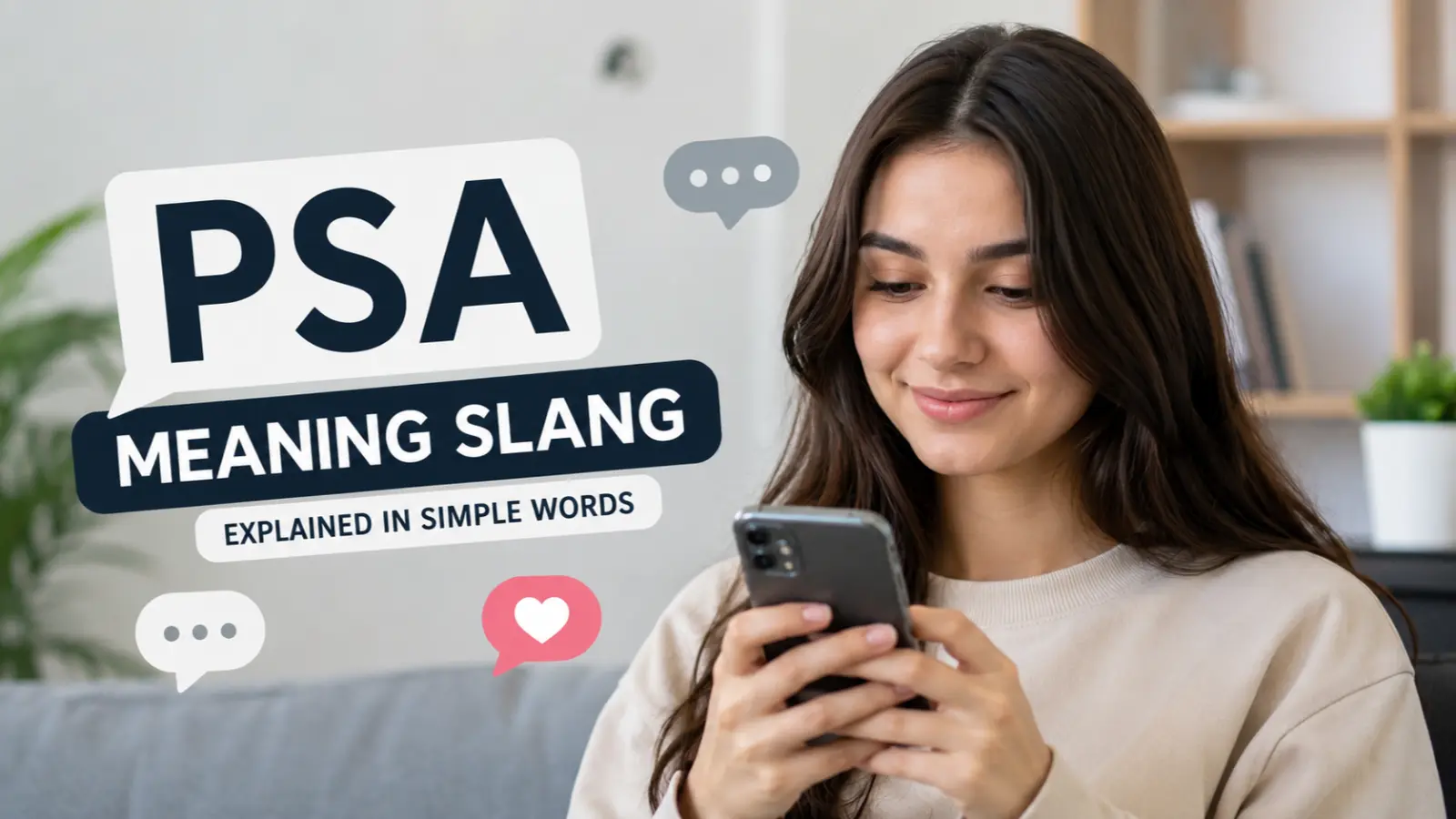
PSA meaning slang is a common search because people often see “PSA” in text messages, social media posts, TikTok videos, Reddit discussions, or online comments without understanding what it means.
While PSA originally had a formal meaning, internet users have turned it into a casual slang expression that grabs attention before sharing useful advice, warnings, opinions, or important information.
If you’re chatting with friends, scrolling through Instagram, or reading posts on X (formerly Twitter), you’ll likely come across someone beginning a sentence with “PSA.”
Understanding its meaning helps you avoid confusion and communicate more naturally online.
Unlike many internet abbreviations, PSA is generally friendly, informative, and rarely offensive. However, its meaning can slightly change depending on the situation and tone.
Quick Answer
PSA meaning slang refers to “Public Service Announcement.” In texting and social media, people use it to introduce helpful information, reminders, warnings, opinions, or advice that they think others should know.
What Does PSA Mean in Text?
The PSA full form is Public Service Announcement.
Traditionally, a public service announcement was an official message shared by governments or organizations to educate the public about health, safety, or community issues.
In internet slang, however, PSA has become much more casual.
Instead of being an official announcement, it simply means:
- Here’s something important.
- Friendly reminder.
- Useful advice.
- A helpful tip.
- Something everyone should know.
Example
Friend: PSA: Don’t update your phone yet. The latest version has bugs.
Here, the person is simply giving helpful advice.
PSA Full Form
| Abbreviation | Full Form | Meaning |
|---|---|---|
| PSA | Public Service Announcement | An important message, reminder, warning, or useful information shared with others. |
When people search “what does PSA stand for”, this is the most common answer.
PSA Meaning in Different Contexts
The meaning of PSA depends on where it’s used.
In Text Messages
People use PSA before sharing advice or reminders.
Example:
PSA: Bring an umbrella tomorrow. It’s supposed to rain.
On Social Media
Creators use PSA to attract attention before sharing opinions or tips.
Example:
PSA: Drinking enough water really does improve your skin.
On TikTok
TikTok users often begin videos with PSA when giving beauty hacks, life advice, or warnings.
Example:
PSA: Stop sleeping with wet hair if you want healthier hair.
At School or Work
People may use PSA humorously.
Example:
PSA: The meeting starts at 9 AM, not 10.
In Gaming
Players sometimes use PSA to warn teammates.
Example:
PSA: Don’t leave the safe zone too early.
Is PSA Rude, Offensive, or Neutral?
In most situations, PSA is completely neutral.
It is generally considered:
- Helpful
- Informative
- Friendly
- Respectful
However, the tone matters.
Sometimes people use PSA sarcastically.
Example
PSA: Maybe read the instructions before asking questions.
Although it starts like helpful advice, it can sound passive-aggressive.
Where Is PSA Commonly Used?
You’ll often see PSA on:
- Text messages
- TikTok
- X (Twitter)
- Discord
- Snapchat
- YouTube comments
- Workplace chats
- School group chats
It’s popular because it quickly signals that important information is coming.
Real-Life Conversation Examples
Friendly
Emma: PSA: The coffee shop gives free refills today.
Casual
Jake: PSA: This movie has an after-credit scene.
Family Chat
Mom: PSA: Dinner is ready in 15 minutes.
Workplace
Manager: PSA: Please save your files before restarting your computers.
Argumentative
User A: PSA: Facts matter more than opinions.
This may sound more confrontational depending on the discussion.
Emotional and Psychological Meaning
Using PSA often shows that someone wants to help others.
Psychologically, people use PSA because they want to:
- Share knowledge.
- Prevent mistakes.
- Warn others.
- Feel helpful.
- Gain attention before giving advice.
- Build credibility.
Sometimes, people also use PSA to express frustration indirectly.
For example:
PSA: Returning shopping carts takes less than a minute.
This isn’t just advice—it may express annoyance.
Origin and Background of PSA
The phrase Public Service Announcement became popular through radio and television broadcasts.
Governments and nonprofit organizations used PSAs to inform the public about topics like:
- Health
- Road safety
- Fire prevention
- Emergency alerts
- Community awareness
As social media grew, internet users adopted “PSA” as shorthand for sharing personal advice instead of official announcements.
Today, it’s one of the most recognized online abbreviations.
Comparison with Similar Slang
| Slang | Meaning | Tone | Common Use |
|---|---|---|---|
| PSA | Public Service Announcement | Helpful | Advice or reminders |
| FYI | For Your Information | Neutral | Sharing information |
| IMO | In My Opinion | Personal | Expressing opinions |
| TBH | To Be Honest | Honest | Giving truthful thoughts |
| Heads Up | Friendly warning | Casual | Preparing someone |
Although these expressions are similar, PSA usually introduces information that the speaker believes benefits everyone.
When to Use PSA
Use PSA when you want to:
- Share useful information.
- Give reminders.
- Warn friends.
- Offer life tips.
- Announce important updates.
- Share community information.
Good Example
PSA: Remember to back up your files before updating your computer.
When to Avoid Using PSA
Avoid using PSA:
- During serious emergencies where official communication is needed.
- When talking to someone unfamiliar with internet slang.
- In highly formal business documents.
- If it might sound sarcastic or passive-aggressive.
Professional emails are usually better without internet slang.
Polite Alternatives to PSA
If you want a more professional tone, you can say:
- Just a reminder…
- Please note…
- For your information…
- Important update…
- Friendly reminder…
- Here’s a helpful tip…
- Keep in mind…
These alternatives work well in workplaces and formal communication.
Why Do People Use PSA?
People like PSA because it’s:
- Short
- Easy to recognize
- Attention-grabbing
- Friendly
- Efficient
Instead of writing:
I want everyone to know something important.
People simply write:
PSA:
It immediately tells readers that useful information follows.
Impact of Using Slang in Communication
Using PSA can make communication:
More engaging
Readers pay attention quickly.
More conversational
It feels natural in online communities.
More memorable
The message stands out.
However, excessive slang may confuse people who aren’t familiar with internet abbreviations.
Knowing your audience is always important.
Is PSA Safe for Social Media?
Yes.
PSA is considered one of the safest internet slang terms.
It contains:
- No offensive language
- No inappropriate meaning
- No hidden adult references
- No harmful content
It’s widely accepted across nearly all social media platforms.
Usage in Different Contexts
School
PSA: The assignment deadline is Friday.
Workplace
PSA: The office will be closed on Monday.
Friends
PSA: This new café has amazing desserts.
Gaming
PSA: Save your ammo for the final boss.
Travel
PSA: Arrive at the airport two hours early.
Common Misunderstandings
Some people mistakenly believe PSA only refers to government announcements.
While that is its original meaning, internet users now use it much more casually.
Others may think it’s always serious, but many PSAs are humorous.
For example:
PSA: Fries taste better when they’re stolen from your friend’s plate.
Variations and Types
Although “PSA” is the standard form, people use it in different ways:
- Funny PSA
- Serious PSA
- Health PSA
- Gaming PSA
- Travel PSA
- Relationship PSA
- Beauty PSA
- Study PSA
Each follows the same idea of sharing useful information.
How to Respond When Someone Uses PSA
Here are natural responses:
- Thanks for the reminder!
- Good to know.
- I didn’t know that.
- Appreciate the tip.
- That’s really helpful.
- I’ll keep that in mind.
- Thanks for sharing!
Regional and Cultural Usage
PSA is understood in many English-speaking countries, including:
- United States
- Canada
- United Kingdom
- Australia
- New Zealand
It’s also widely recognized by English learners because of its popularity on social media.
In professional settings, however, some regions still associate PSA with official public announcements, so context is important.
Frequently Asked Questions (FAQs)
What does PSA mean in slang?
PSA means Public Service Announcement. In slang, it’s used to introduce helpful advice, reminders, warnings, or useful information.
What does PSA stand for in text messages?
PSA stands for Public Service Announcement, but in texting it usually means “Here’s something important you should know.”
Is PSA offensive?
No. PSA is generally neutral, respectful, and safe to use in conversations and social media.
Can PSA be sarcastic?
Yes. Some people use PSA sarcastically to criticize behavior or make humorous observations, depending on the tone.
Is PSA popular on TikTok and Instagram?
Yes. Many creators use PSA before giving tips, opinions, beauty advice, study hacks, or life recommendations.
Should I use PSA in professional emails?
Generally, no. It’s better to use phrases like “Please note,” “Friendly reminder,” or “Important update” in formal communication.
Conclusion
Understanding PSA meaning slang helps you recognize one of the internet’s most useful abbreviations. Although PSA originally stood for Public Service Announcement, it has evolved into a casual way to introduce helpful reminders, advice, warnings, or important information in texts and social media.
Whether you’re posting on TikTok, chatting with friends, or sharing a useful tip online, PSA is a simple and effective way to capture attention. Just remember to consider your audience and tone—it’s perfect for casual communication but may be better replaced with more formal phrases in professional settings. Used appropriately, PSA makes your messages clearer, more engaging, and easier for others to notice.