Friendship is one of the easiest emotions to recognize but one of the hardest to describe well. Simply saying two people are “close friends” rarely captures trust, loyalty, humor, or shared history. That’s where friendship similes become powerful. A well-crafted simile compares friendship to something familiar, helping readers instantly picture and feel the relationship. Whether you’re writing a story, poem, speech, school assignment, or heartfelt message, the right comparison can make your words memorable.In this guide, you’ll discover original friendship similes, learn why they work, avoid common mistakes, and practice creating your own comparisons with confidence.
What Are Friendship Similes?
Friendship similes compare a friendship or a friend’s qualities to something else using words like “like” or “as.”
Instead of telling readers that two people are loyal, a simile shows that loyalty through a vivid comparison.
For example:
Their friendship was like a lighthouse guiding each other through every storm.
The comparison creates a stronger emotional image than simply saying they supported one another.
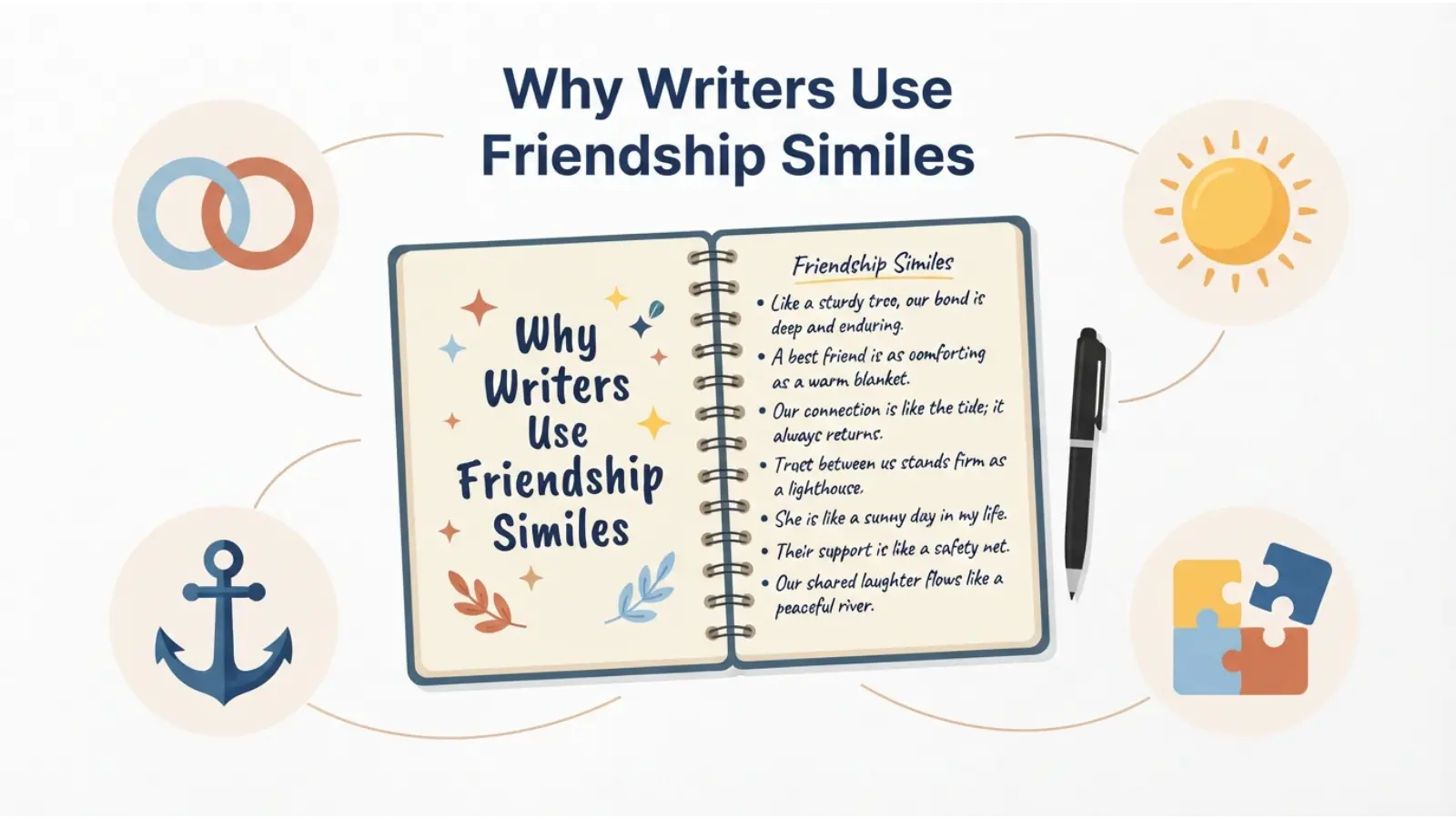
Why Writers Use Friendship Similes
Friendship appears in nearly every kind of writing.
You might use friendship similes in:
- Short stories
- Novels
- Children’s books
- Poetry
- Personal letters
- Graduation speeches
- Social media captions
- School essays
- Greeting cards
Good similes help readers understand relationships without lengthy explanations.
30 Original Friendship Similes
1. Friendship Like a Campfire
Simile
Their friendship was like a campfire warming everyone nearby.
Meaning
A friendship that brings comfort.
Formal Example
Their friendship was like a campfire, offering warmth during difficult seasons.
Conversation
“You always make things better. You’re like a campfire.”
Writing Tip
Works well in emotional or family-centered stories.
2. As Reliable as Sunrise
Meaning
Someone who never lets others down.
Story Example
She arrived exactly when needed, as reliable as sunrise.
Best Context
Loyal characters.
3. Like Two Birds Sharing the Same Sky
Meaning
Friends with different lives but shared dreams.
Poetry Example
They flew like two birds sharing the same endless sky.
Writing Tip
Excellent for reflective writing.
4. Like Roots Beneath the Same Tree
Meaning
Deep connection that remains unseen.
Conversation
“Our friendship runs like roots beneath one tree.”
5. As Comfortable as an Old Sweater
Meaning
Relaxed and familiar friendship.
Example
Being with him felt as comfortable as an old sweater.
6. Like Rain After a Long Drought
Meaning
A friend who brings hope and relief.
Story Example
Her visit felt like rain after a long drought.
7. Like a Compass Pointing Home
Meaning
A friend who helps you stay on the right path.
Writing Purpose
Ideal for stories about guidance.
8. As Bright as Morning Windows
Meaning
Cheerful friendship.
Example
Their laughter was as bright as morning windows.
9. Like Two Puzzle Pieces
Meaning
Different strengths that fit perfectly together.
Conversation
“We’re like puzzle pieces.”
10. Like Music Without Needing Words
Meaning
Understanding each other without speaking.
Poetry Example
Their friendship moved like music beyond language.
11. As Steady as Mountain Stone
Meaning
Unshakable loyalty.
Writing Tip
Great for fantasy and adventure.
12. Like Fresh Air After Rain
Meaning
Refreshing presence.
Example
Talking to her felt like fresh air after rain.
13. Like a Favorite Bookmark
Meaning
A friend who helps you return to what matters.
14. As Gentle as Falling Leaves
Meaning
Kind, patient friendship.
15. Like Stars Sharing the Same Night
Meaning
Friends who shine together.
16. Like a Bridge Across a River
Meaning
Helping each other overcome challenges.
17. As Strong as Braided Rope
Meaning
Strength grows when friends work together.
18. Like Tea on a Cold Morning
Meaning
Comforting friendship.
19. Like Lanterns Along a Dark Road
Meaning
Friends who guide each other.
20. As Calm as a Quiet Harbor
Meaning
Peaceful friendship during stressful times.
21. Like Ink on Meaningful Pages
Meaning
Friendship that leaves lasting memories.
22. Like Wind Filling a Sail
Meaning
A friend who motivates growth.
23. As Lasting as Ancient Oaks
Meaning
Long-lasting friendship.
24. Like Shared Footprints on a Trail
Meaning
Growing together through experiences.
25. Like Sunshine Through Tall Trees
Meaning
Hope appearing during difficult moments.
26. As Honest as a Clear Mirror
Meaning
Friends who tell the truth kindly.
27. Like Hands Building the Same Home
Meaning
Working toward shared goals.
28. Like a Thread Holding a Quilt Together
Meaning
The quiet strength that keeps relationships united.
29. As Refreshing as Spring Water
Meaning
A friend who renews your energy.
30. Like a Garden Growing with Every Season
Meaning
Friendship that becomes richer over time.
Writing Tip
Perfect for stories covering many years.
What Makes a Friendship Simile Memorable?
The strongest friendship similes do more than compare two things.
They reveal something specific about the relationship.
Instead of saying:
Friendship is like glue.
Try describing the exact quality:
Their friendship was like carefully stitched fabric, stronger because it had been repaired together.
Specific details create stronger imagery than broad comparisons.
How to Create Your Own Friendship Similes
Step 1: Choose the Quality
Ask yourself what makes the friendship special.
Examples:
- Trust
- Loyalty
- Humor
- Patience
- Encouragement
- Adventure
Step 2: Find Something That Shares That Quality
Think about nature, objects, places, or everyday experiences.
For loyalty:
- Lighthouse
- Oak tree
- Anchor
- Compass
For comfort:
- Blanket
- Warm tea
- Fireplace
- Familiar song
Step 3: Keep the Comparison Natural
Good:
Her friendship was like fresh bread shared at the end of a long day.
Less Effective:
Her friendship was like twelve exploding rainbows made of diamonds.
The second comparison distracts instead of helping readers imagine.
How Professional Writers Make Similes Feel Real
Experienced writers usually avoid comparing friendship to the first idea that comes to mind.
Instead, they ask:
- What emotion should readers feel?
- What image creates that emotion?
- Is the comparison believable?
- Does it fit the character’s voice?
The best similes often come from ordinary experiences because readers recognize them immediately.
Friendship Similes and Other Literary Devices
Metaphor
A metaphor makes a direct comparison.
Simile: Their friendship was like a bridge.
Metaphor: Their friendship became a bridge.
Imagery
Imagery appeals to the senses.
Adding sensory details strengthens similes.
Example:
Their friendship felt like warm sunlight resting on tired shoulders.
Personification
Objects or ideas receive human qualities.
Example:
Hope smiled between them like an old friend.
Symbolism
Certain objects can represent friendship.
Common symbols include:
- Trees
- Bridges
- Stars
- Lanterns
- Gardens
- Rivers
Using these symbols thoughtfully can deepen your writing.
Common Mistakes to Avoid
Using Overused Comparisons
Readers have seen the same examples many times.
Look for fresh, believable images instead.
Mixing Different Images
Avoid combining unrelated comparisons.
Weak:
Their friendship was like a lighthouse growing wings.
Stay with one clear image.
Making Similes Too Complicated
Long comparisons often lose their impact.
Simple images usually stay with readers longer.
Confusing Similes with Metaphors
Remember:
- Similes use like or as.
- Metaphors compare directly.
Knowing the difference improves clarity.
Choosing Comparisons That Don’t Match the Emotion
Every image should reinforce the feeling you want readers to experience.
A humorous comparison may not fit an emotional farewell.
Practice Exercises
Exercise 1
Describe a childhood friend using one original simile.
Exercise 2
Write three different friendship similes based on:
- Nature
- Music
- Food
Exercise 3
Replace this sentence:
They were good friends.
With a vivid simile that reveals why they were close.
Exercise 4
Choose one friendship simile from this article and rewrite it using your own imagery.
Frequently Asked Questions
What is a friendship simile?
A friendship simile compares friendship to another object, experience, or idea using like or as to create vivid imagery.
Why are friendship similes useful?
They help readers understand emotions, loyalty, trust, and connection more clearly than plain descriptions.
Can friendship similes be used in poetry?
Yes. Poetry often relies on similes to express feelings through memorable images and emotional comparisons.
What’s the difference between a friendship simile and a metaphor?
A simile uses like or as, while a metaphor makes a direct comparison without those words.
How do I avoid cliché friendship similes?
Look for comparisons inspired by everyday experiences, nature, memories, or personal observations instead of familiar sayings.
Are friendship similes appropriate for children’s writing?
Absolutely. Simple, colorful comparisons help young readers understand relationships and make stories more engaging.
How many similes should I use in one piece of writing?
Use only enough to strengthen your message. Too many comparisons can distract readers and reduce their impact.
Conclusion
The best friendship similes don’t simply decorate your writing—they reveal something meaningful about the people you’re describing. Whether your goal is to express loyalty, comfort, joy, or lifelong connection, thoughtful comparisons help readers experience those emotions instead of merely reading about them. Practice noticing the small moments that make friendships unique. A shared laugh, quiet support, or years of trust can inspire original similes that feel authentic. As you experiment with your own comparisons, you’ll develop a writing style that is both vivid and unmistakably your own.

I am Helena Frost, a writer captivated by the beauty of language and the art of comparison. Through my words, I explore the world by turning ordinary moments into vivid similes and reflections. I enjoy crafting phrases that spark imagination, evoke emotion, and linger in the mind. My writing celebrates the subtle connections between people, nature, and the stories we live. For me, every sentence is an opportunity to reveal the extraordinary in the everyday.