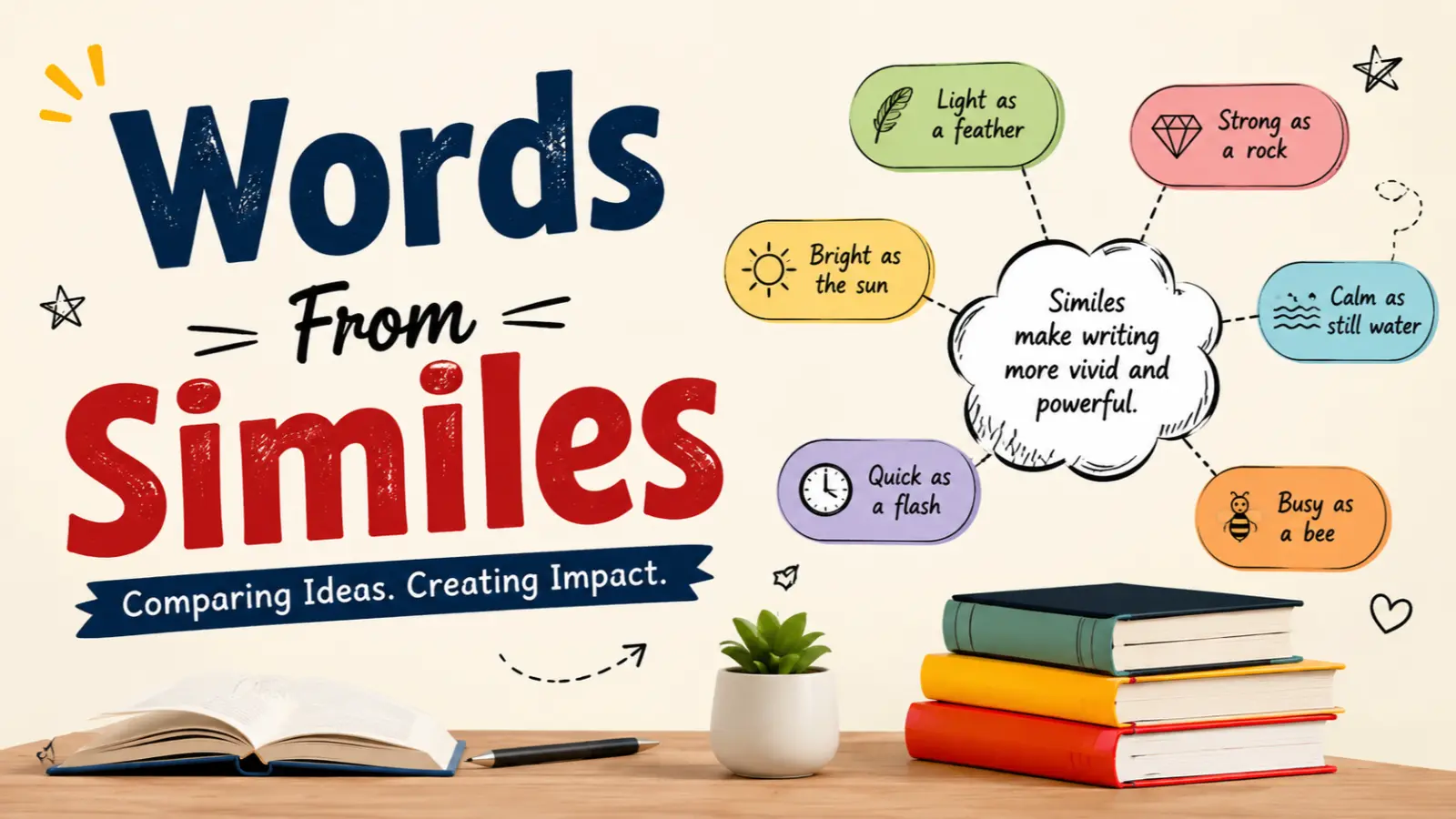
Words From Similes are one of the easiest ways to make writing more colorful and memorable. Instead of simply describing something, a simile compares it with something familiar to create a vivid image in the reader’s mind.
If you’ve searched for words from similes, you’re probably looking for the words that help build a simile or the descriptive words commonly used in them. Understanding these words will help you write stronger stories, essays, poems, speeches, and everyday conversations. In this guide, you’ll learn how similes work, discover original simile examples, understand why certain comparison words are effective, and practice creating your own.
Quick Answer
The most important words from similes are comparison words such as like and as. These connect two different things to highlight a shared quality.
Examples:
- Brave as a mountain climber.
- Bright like the first morning star.
- Calm as still water.
- Gentle like falling petals.
These comparison words make descriptions more expressive without saying the two things are literally the same.
What Are Similes?
A simile is a figure of speech that compares two unlike things using like or as.
Instead of writing:
The classroom was quiet.
You could write:
The classroom was as quiet as snowfall at dawn.
The second sentence creates an image, making the description easier to imagine and remember.
Writers use similes in:
- Stories
- Poetry
- Speeches
- Songs
- Children’s books
- Everyday conversation
- Personal essays
- Creative writing
The Most Common Words Used in Similes
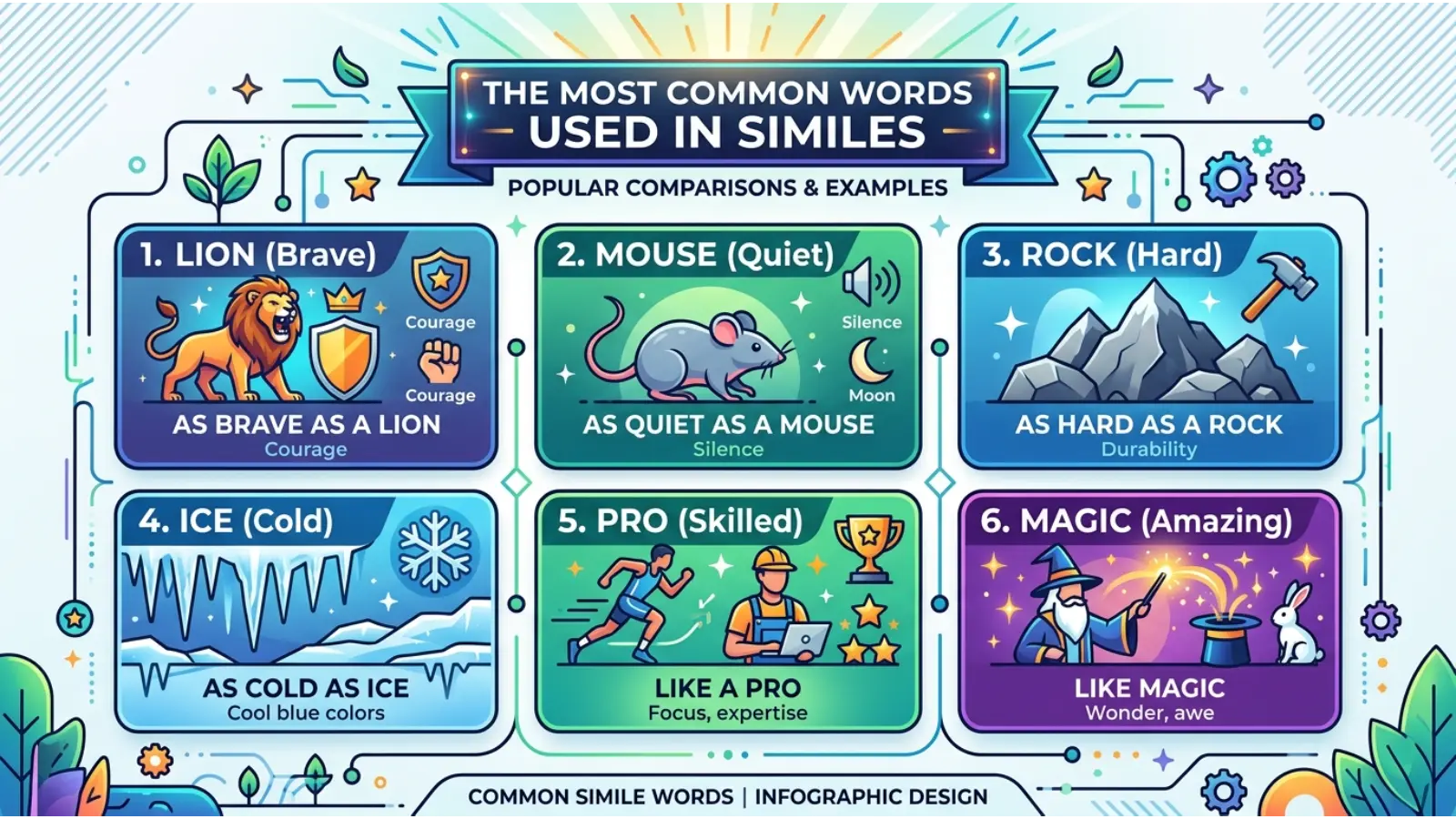
Although like and as are the foundation of most similes, descriptive adjectives give them life.
Common descriptive words include:
- Bright
- Cold
- Warm
- Gentle
- Fast
- Slow
- Sharp
- Soft
- Loud
- Quiet
- Heavy
- Light
- Smooth
- Rough
- Calm
- Wild
- Happy
- Lonely
- Strong
- Fragile
These words become much more vivid when paired with an imaginative comparison.
Original Similes Using Powerful Descriptive Words
Bright Like a Window Full of Morning
Meaning: Extremely bright and welcoming.
Example 1: Her smile was bright like a window full of morning.
Example 2: The new library looked bright like a window full of morning.
Writing Effect: Creates warmth and optimism.
Conversation: “Your ideas are bright like a window full of morning.”
Storytelling: The castle glowed bright like a window full of morning after the storm.
Writing Tip: Use this when describing hope or fresh beginnings.
Calm As a Floating Leaf
Meaning: Completely peaceful.
Example 1: She stayed calm as a floating leaf during the interview.
Example 2: The lake remained calm as a floating leaf at sunrise.
Emotion: Peaceful confidence.
Best Use: Nature writing and character descriptions.
Gentle Like Fresh Rain
Meaning: Kind and soothing.
Example 1: His voice was gentle like fresh rain.
Example 2: Her advice arrived gentle like fresh rain after a difficult day.
Poetry: Gentle like fresh rain, your words healed hidden worries.
Writing Tip: Excellent for emotional scenes.
Strong As an Old Oak Root
Meaning: Deep inner strength.
Example 1: Their friendship was strong as an old oak root.
Example 2: She remained strong as an old oak root despite every challenge.
Storytelling: Ideal for determined characters.
Quiet Like Snow on Pine Trees
Meaning: Peacefully silent.
Example 1: The village became quiet like snow on pine trees.
Example 2: His thoughts settled quiet like snow on pine trees.
Effect: Creates a relaxing atmosphere.
Curious As a Lantern Searching Darkness
Meaning: Eager to discover.
Example 1: The child was curious as a lantern searching darkness.
Example 2: Scientists remain curious as lanterns searching darkness.
Writing Purpose: Shows exploration rather than simple interest.
Soft Like Fresh Cotton Clouds
Meaning: Extremely soft.
Example 1: The blanket felt soft like fresh cotton clouds.
Example 2: Her voice sounded soft like fresh cotton clouds.
Best Context: Comfort and relaxation.
Brave As the First Bird at Sunrise
Meaning: Courageous despite uncertainty.
Example 1: He stepped forward brave as the first bird at sunrise.
Example 2: She answered confidently, brave as the first bird greeting dawn.
Busy Like Bees Building Tomorrow
Meaning: Productive and energetic.
Example 1: The office was busy like bees building tomorrow.
Example 2: Students became busy like bees before graduation.
Writing Insight: Suggests meaningful work instead of chaos.
Happy Like a Garden After Rain
Meaning: Refreshed and joyful.
Example 1: She looked happy like a garden after rain.
Example 2: The children returned happy like gardens after rain.
Sharp As Winter Air
Meaning: Highly alert or intelligent.
Example 1: His memory stayed sharp as winter air.
Example 2: Her observations were sharp as winter air.
Smooth Like River Glass
Meaning: Graceful and effortless.
Example 1: The dancer moved smooth like river glass.
Example 2: His speech flowed smooth like river glass.
Warm As Fresh Bread
Meaning: Welcoming and comforting.
Example 1: Their home felt warm as fresh bread.
Example 2: Her laughter remained warm as fresh bread.
Fast Like Wind Between Hills
Meaning: Very fast.
Example 1: The runner moved fast like wind between hills.
Example 2: Time disappeared fast like wind between hills.
Hopeful As the First Green Leaf
Meaning: Full of new possibilities.
Example 1: She felt hopeful as the first green leaf of spring.
Example 2: Their plans grew hopeful as the first green leaf.
Clear Like Mountain Air
Meaning: Easy to understand.
Example 1: His explanation was clear like mountain air.
Example 2: The instructions remained clear like mountain air.
Patient As a Growing Tree
Meaning: Willing to wait.
Example 1: Grandfather stayed patient as a growing tree.
Example 2: Success often belongs to people patient as growing trees.
Cheerful Like Sunlight on Water
Meaning: Bright and uplifting.
Example 1: Her personality was cheerful like sunlight on water.
Example 2: His greeting sounded cheerful like sunlight dancing across a lake.
Lonely As an Empty Harbor
Meaning: Deeply isolated.
Example 1: The old house stood lonely as an empty harbor.
Example 2: He felt lonely as an empty harbor after everyone left.
Creative Like Stars Drawing Patterns
Meaning: Highly imaginative.
Example 1: Her ideas were creative like stars drawing patterns.
Example 2: Young writers become creative like stars drawing patterns when they observe everyday life.
Why Good Similes Work
Strong similes do more than compare two things. They help readers experience a feeling.
Professional writers often ask:
- Does the comparison surprise the reader?
- Does it fit the mood?
- Is it easy to imagine?
- Does it strengthen the description?
If the answer is yes, the simile is probably effective.
Related Literary Devices
Metaphor
A metaphor says one thing is another instead of using “like” or “as.”
Simile: Her smile was like sunshine.
Metaphor: Her smile was sunshine.
Imagery
Imagery appeals to the senses. Similes often strengthen imagery by creating vivid mental pictures.
Personification
Personification gives human qualities to non-human things.
Example:
The wind whispered through the trees.
Hyperbole
Hyperbole exaggerates intentionally.
Example:
I waited forever.
A simile can also include exaggeration when used creatively.
Symbolism
Some similes compare objects that carry symbolic meaning, such as light representing hope or storms representing conflict.
How to Create Your Own Similes
Creating original similes becomes easier with practice.
Step 1
Choose something you want to describe.
Example:
- A smile
- A storm
- A teacher
Step 2
Identify its strongest quality.
Examples:
- Bright
- Gentle
- Powerful
- Quiet
Step 3
Think of something that naturally shares that quality.
Instead of using an overused comparison, look for fresh inspiration from:
- Nature
- Music
- Seasons
- Architecture
- Sports
- Everyday life
Step 4
Join them using like or as.
Example:
The classroom felt as welcoming as a neighborhood garden in spring.
Creative Practice Exercises
Exercise 1
Describe a sunset using one original simile.
Exercise 2
Write three similes about friendship without using “heart” or “gold.”
Exercise 3
Replace a simple sentence such as:
“The child was excited.”
with an original simile.
Exercise 4
Observe something outside your window and compare it to something unexpected but believable.
Common Mistakes When Writing Similes
Using Overused Comparisons
Phrases like “as busy as a bee” or “as cold as ice” are familiar but often lack originality. Try creating fresh images instead.
Mixing Imagery
Avoid combining unrelated comparisons.
Poor example:
His voice was like thunder and as soft as a feather in the same sentence.
Choose one clear image.
Confusing Metaphors and Similes
Remember:
- Similes use like or as.
- Metaphors do not.
Forcing Comparisons
A comparison should feel natural. If readers stop to figure it out, it may be too complicated.
Forgetting the Purpose
Every simile should strengthen the writing, not simply decorate it.
Frequently Asked Questions
What are the main words used in similes?
The primary comparison words are like and as, supported by descriptive adjectives and vivid nouns.
Why are similes important in writing?
They help readers visualize ideas, create emotion, and make descriptions more memorable.
Can similes be used in formal writing?
Yes. Well-chosen similes can improve speeches, essays, articles, and presentations when used sparingly.
How can I write original similes?
Observe everyday life, focus on one clear quality, and compare it with something unexpected yet believable.
What is the difference between a simile and a metaphor?
A simile uses like or as, while a metaphor makes a direct comparison without those words.
Should children learn similes?
Yes. Similes encourage creativity, improve descriptive writing, and help young writers communicate ideas more clearly.
Conclusion
Understanding the words from similes is the first step toward becoming a stronger writer. Simple comparison words like like and as, combined with thoughtful descriptive language, can transform ordinary sentences into memorable ones. Rather than relying on familiar comparisons, experiment with fresh observations from everyday life, nature, and personal experiences. The more original your similes become, the more vivid and engaging your writing will feel to every reader.
I am Helena Frost, a writer captivated by the beauty of language and the art of comparison. Through my words, I explore the world by turning ordinary moments into vivid similes and reflections. I enjoy crafting phrases that spark imagination, evoke emotion, and linger in the mind. My writing celebrates the subtle connections between people, nature, and the stories we live. For me, every sentence is an opportunity to reveal the extraordinary in the everyday.