Similes in Rap is built around language that has rhythm, attitude, imagery, and personality. A strong line can make listeners picture a scene, understand an emotion, or remember an idea long after the song ends. One of the most useful literary devices for creating that effect is the simile.
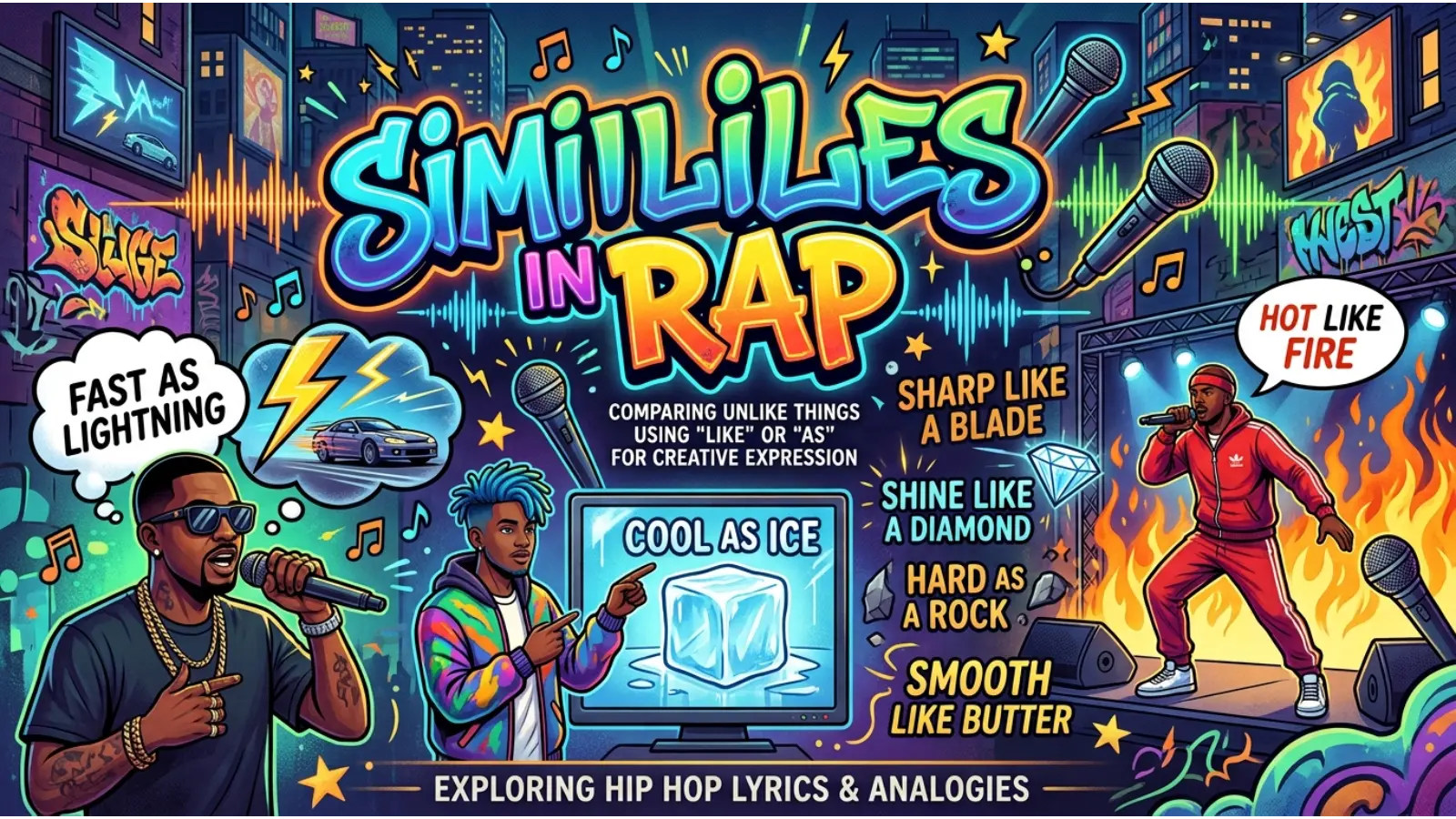
A similes in rap compares two different things using words such as like or as. In rap, comparisons can make confidence sound larger, sadness feel heavier, movement seem faster, or a story become easier to visualize.
For example:
“My thoughts move like headlights cutting through the fog.”
The line does more than say the speaker is thinking clearly. It creates a visual image of light moving through something unclear.
This article explores similes in rap, how they work in music, what makes a comparison effective, and how you can create original similes for your own lyrics, poems, stories, or everyday writing.
What Is a Simile in Rap?
A simile in rap is a comparison between two unlike things, usually connected with like or as, to create a stronger image or emotion.
For example:
“The beat hits like rain against a window.”
The beat is not literally rain. The comparison helps the listener imagine its repeated, noticeable impact.
Similes in Rap are especially useful in rap because they can communicate an idea quickly while leaving room for rhythm, rhyme, and personality.
Why Do Rappers Use Similes?
Rappers use comparisons to:
- Make lyrics more visual
- Express complicated emotions simply
- Strengthen descriptions
- Add personality to a verse
- Create memorable lines
- Build a particular mood
- Make abstract ideas easier to understand
- Connect ordinary experiences with surprising images
A good simile should not exist merely because a writer wants to use a literary device. It should make the line more specific, more memorable, or more emotionally effective.
25 Original Similes for Rap Lyrics
The following examples are original writing prompts and demonstrations. They are designed to show different ways a simile can function in a rap verse.
1. “My focus is like a locked door in a storm.”
Meaning: The speaker remains determined despite pressure or distractions.
Why it works: A locked door suggests resistance, while the storm represents outside difficulty.
Best context: Confidence, ambition, perseverance, or motivational rap.
Writing tip: Pair an internal quality such as focus with something physical that demonstrates it.
2. “The city glows like a secret nobody wrote down.”
Meaning: The city feels mysterious and full of hidden stories.
Emotional effect: Curiosity and wonder.
This comparison works because it avoids simply saying that the city is “mysterious.” Instead, it gives mystery a human quality: something known but never recorded.
Example:
The city glows like a secret nobody wrote down,
Every corner got a story underneath the sound.
3. “My heartbeat drums like sneakers on a hallway floor.”
Meaning: Nervousness or excitement produces a quick, noticeable rhythm.
Best context: Performance, competition, anticipation, or emotional storytelling.
The comparison also fits naturally with rap because both a heartbeat and footsteps can suggest rhythm.
4. “Her laughter broke through the room like sunlight through blinds.”
Meaning: Someone’s laughter suddenly changed the atmosphere.
Why it works: Sunlight entering a dark room suggests warmth, relief, and sudden brightness.
This type of simile can work especially well in reflective or relationship-focused lyrics.
5. “My memories sit like photographs in an unopened box.”
Meaning: The speaker has memories that remain stored away and unexplored.
Writing purpose: This is useful for reflective storytelling.
Notice that the comparison creates a visual object. Instead of saying “I remember the past,” the writer gives memory a physical location.
6. “The bass rolls like thunder beneath the floor.”
Meaning: The low sound of the music feels powerful and physical.
Best context: Performance, concert, party, or music-focused lyrics.
This demonstrates how similes can describe sound through another sense, creating a stronger experience for the reader or listener.
7. “I kept my dreams like matches in a rainstorm.”
Meaning: The speaker protected fragile hopes despite difficult circumstances.
Emotional effect: Determination mixed with vulnerability.
The comparison is effective because matches can be useful but easily extinguished. That tension gives the line emotional depth.
8. “His words were like coins thrown across a quiet room.”
Meaning: His words were noticeable, sharp, and impossible to ignore.
Writing insight: An unusual comparison can make a lyric more distinctive than a familiar one.
9. “The pressure climbed like ivy over an old wall.”
Meaning: Pressure gradually spread until it became difficult to escape.
Best context: Stress, ambition, family expectations, or personal conflict.
The slow growth of ivy gives the comparison a sense of time.
10. “My ideas spark like wires touching in the dark.”
Meaning: The speaker experiences sudden bursts of creativity.
Why it works: The image is quick, visual, and energetic.
For creative writing, verbs often make similes stronger. Spark, crash, crawl, rush, and drift can give a comparison movement.
11. “The crowd moved like waves around a stone.”
Meaning: People moved around a person or central point.
Best context: Concerts, battles, celebrations, or crowded city scenes.
This is an example of using nature to explain human movement.
12. “My patience stretched like a bridge over deep water.”
Meaning: The speaker is enduring a difficult situation without giving up.
Emotional effect: Endurance and tension.
A bridge suggests connection and distance at the same time, making it useful for describing difficult transitions.
13. “The silence fell like snow on an empty street.”
Meaning: The environment became extremely quiet.
Writing purpose: Creating atmosphere.
The comparison slows the scene down and gives silence a physical presence.
14. “I chase every goal like a train chasing sunrise.”
Meaning: The speaker relentlessly pursues ambitions.
Best context: Motivational rap.
The image combines movement, distance, and urgency without simply saying, “I work hard.”
15. “His confidence stood like a tower above the crowd.”
Meaning: His confidence made him stand out.
Writing tip: When describing confidence, avoid relying only on words such as strong, powerful, or fearless. Show those qualities through an image.
16. “My doubts followed like footsteps behind me.”
Meaning: Uncertainty remained difficult to escape.
Emotional effect: Unease and introspection.
This is especially useful when a rap verse moves from confidence into vulnerability.
17. “The rhythm moves like a bicycle downhill.”
Meaning: The rhythm feels fast, smooth, and increasingly energetic.
Best context: Describing flow or beat progression.
18. “Her voice floated like paper boats on a quiet stream.”
Meaning: Her voice sounded gentle and delicate.
Writing purpose: This comparison focuses on softness rather than volume.
It also demonstrates an important technique: choose an image based on the specific quality you want readers to notice.
19. “My anger burned like a streetlight left on all night.”
Meaning: Anger remained active for a long time.
Why it works: Instead of comparing anger with the usual fire imagery, the comparison creates a quieter, more persistent kind of heat.
20. “The truth landed like a key inside a locked room.”
Meaning: Discovering the truth provided access to something previously inaccessible.
Best context: Storytelling, personal growth, or reflective lyrics.
21. “My words cut through doubt like chalk across a blackboard.”
Meaning: The speaker’s words make an impression and overcome uncertainty.
Writing insight: Not every strong simile needs to be dramatic. Familiar objects can create memorable images when the connection is unexpected.
22. “The night stretched like an unfinished verse.”
Meaning: The night seemed long and incomplete.
Best context: Loneliness, creativity, sleeplessness, or late-night storytelling.
This comparison also connects the subject of the scene with the craft of songwriting.
23. “Hope flickered like a porch light at the edge of town.”
Meaning: Hope remains present but feels distant or uncertain.
Emotional effect: Quiet optimism.
24. “My flow moves like water finding every crack.”
Meaning: The rapper’s delivery adapts and continues without being easily stopped.
Best context: Confidence and technical rap.
The comparison emphasizes flexibility rather than simply claiming that the flow is “great.”
25. “I carry old lessons like stones in a pocket.”
Meaning: Past experiences remain with the speaker and influence the present.
Writing purpose: Reflection and storytelling.
The physical weight of stones makes an abstract idea—experience—feel tangible.
How Similes Make Rap Lyrics More Powerful
A comparison becomes valuable when it adds something that a straightforward statement cannot.
Compare:
“I am very confident.”
with:
“My confidence stands like a tower above the noise.”
The second version gives the reader a visual structure. The tower suggests height, stability, and visibility.
That is the central advantage of imagery: it lets readers experience an idea instead of simply being told about it.
Strong Similes Usually Have a Specific Target
Before writing a comparison, ask:
What exact quality am I describing?
Suppose you want to describe someone’s voice.
Do you mean:
- soft?
- deep?
- threatening?
- comforting?
- energetic?
- distant?
- unforgettable?
Each quality deserves a different comparison.
A voice that is “like velvet” suggests softness. A voice “like a warning bell across an empty station” creates a completely different feeling.
The better you understand the target, the easier it becomes to choose an effective image.
Similes in Music: Beyond Rap
Similes are not limited to hip-hop. They appear naturally across songwriting, pop, rock, country, R&B, folk, and other forms of music.
Songwriters use them to express emotions that can be difficult to explain directly.
For example:
“The melody drifted like smoke beneath the door.”
The comparison suggests something soft, gradual, and difficult to contain.
Music already works through sound, so combining musical language with visual or physical imagery can create a richer experience.
Similes for Happiness
Happiness can be described through brightness, movement, warmth, or openness.
“Her happiness spread like sunlight across a kitchen table.”
This makes happiness feel warm and expansive.
Another example:
“His excitement bounced like a rubber ball down the stairs.”
Here, happiness becomes energetic and unpredictable.
The lesson is important: do not automatically use sunshine for every happy emotion. Think about the particular kind of happiness first.
Similes for Friendship
Friendship can be compared with things that suggest trust, support, familiarity, or reliability.
“Our friendship grew like roots beneath an old tree.”
The comparison suggests something that develops quietly and becomes stronger over time.
Another possibility:
“A true friend can feel like a porch light when the road gets dark.”
The image communicates guidance and welcome without directly explaining either quality.
Similes for Rain
Rain offers many possibilities because it can create different moods.
“Rain tapped the roof like impatient fingers.”
This makes the weather feel restless.
For a peaceful scene:
“The rain fell like soft beads against the window.”
The key writing lesson is that the same subject can produce completely different emotions depending on the comparison.
Similes for Love
Love is often described with familiar comparisons, so originality matters.
Instead of automatically writing that love is “like a rose,” consider what kind of love you mean.
For example:
“Their love was like a small lamp kept burning through winter.”
This suggests warmth, persistence, and comfort rather than simply beauty.
A strong emotional simile should reveal something about the relationship, not merely decorate it.
Similes for Anger
Anger can be explosive, controlled, growing, or hidden.
For controlled anger:
“His anger waited like a train behind a closed gate.”
For sudden anger:
“Her temper flashed like a camera in a dark room.”
These comparisons create different emotional temperatures.
When writing about emotions, decide whether the feeling is building, breaking, fading, or remaining hidden. That choice can guide your imagery.
Common Similes
Some similes have become so familiar that readers barely notice them.
Examples include comparisons involving:
- being busy as a bee
- being cold as ice
- being fast as lightning
- being quiet as a mouse
These expressions are not grammatically wrong. They can be useful when clarity matters more than originality.
However, creative writing often becomes more memorable when the writer develops a fresher comparison.
Instead of:
“He was as busy as a bee.”
Try identifying the exact kind of busyness:
“He moved through the office like a pinball trapped in a machine.”
The second comparison gives the reader a more specific sense of frantic movement.
Funny Similes for Rap and Creative Writing
Humor often comes from an unexpected comparison.
Here are a few original examples:
“I was as organized as socks after a washing machine explosion.”
“He ran like his shoelaces had declared war.”
“My brain was like a browser with forty-seven tabs open.”
“She stared at the homework like it had personally offended her.”
Funny similes work because the comparison creates a surprising mental picture.
The important part is not simply choosing something ridiculous. The comparison should still connect to the behavior you are describing.
How to Write Better Similes
Start With the Feeling, Not the Comparison
Writers sometimes begin with an interesting object and try to force it into a sentence.
Reverse the process.
First decide:
What do I want the reader to feel?
Then brainstorm objects that naturally create that feeling.
For loneliness, think about:
- empty rooms
- distant lights
- abandoned places
- unanswered sounds
- objects left behind
For excitement, consider:
- sparks
- racing feet
- opening doors
- rising music
- sudden movement
This method produces comparisons with a clear emotional purpose.
Use Concrete Images
Abstract words such as sadness, confidence, fear, and hope can be difficult to visualize.
Concrete objects help.
Instead of:
“My fear was intense.”
Try:
“My fear sat in my chest like a stone that refused to move.”
The emotion becomes something readers can imagine.
Avoid Mixed Imagery
A mixed metaphor or simile combines images that do not belong together clearly.
For example:
“My anger was a rocket swimming through the ocean like a burning mountain.”
The images compete rather than cooperate.
A cleaner comparison gives the reader one strong picture.
Don’t Explain Too Much
If the image is clear, you usually do not need several sentences explaining it.
For example:
“The room went quiet like a theater after the final curtain.”
The image already communicates silence and ending.
Trust the reader to make the connection.
How Professional Writers Make Similes Memorable
A memorable simile often contains three ingredients:
A clear subject + a precise quality + an unexpected image
For example:
“His apology arrived like a letter with the wrong address.”
Subject: apology
Quality: disconnected or too late
Image: wrongly addressed letter
The comparison works because the image does more than decorate the sentence. It adds interpretation.
When creating your own simile, ask:
What does this comparison help the reader understand that the original statement could not?
If the answer is “nothing,” the line probably needs revision.
Simile vs. Metaphor
A simile openly compares two things using words such as like or as.
“The beat moves like thunder.”
A metaphor makes the comparison more directly.
“The beat is thunder.”
Both devices create imagery, but they produce different effects.
Similes can feel more exploratory because they invite the reader to compare two images. Metaphors can feel more immediate and forceful.
Simile vs. Hyperbole
Hyperbole deliberately exaggerates something for emphasis.
“I have a million things to do.”
A simile compares:
“My to-do list is like a mountain with no trail.”
A line can contain both devices, but they serve different purposes.
Similes and Imagery
Imagery is the broader use of language that helps readers imagine sights, sounds, textures, smells, tastes, movements, or sensations.
Similes are one tool for creating imagery.
A strong rap lyric might combine:
sound + movement + comparison
For example:
“The bass rolled like thunder beneath the floor.”
The reader can almost hear and feel the sound.
Create Your Own Rap Similes in Five Steps
1. Choose the subject
Pick one thing you want to describe:
my confidence
2. Identify its quality
Ask what specifically makes it interesting:
steady, visible, difficult to shake
3. Brainstorm concrete images
Think of objects that share those qualities:
- lighthouse
- bridge
- mountain
- anchor
- tower
4. Make the comparison specific
Instead of:
“My confidence is like a mountain.”
Try:
“My confidence stands like a lighthouse above rough water.”
Now the image communicates stability and visibility.
5. Read the line aloud
Rap is meant to be heard.
A simile that looks impressive on the page may sound awkward when spoken. Check its rhythm, syllable balance, and surrounding words.
If the comparison interrupts your flow, shorten or reshape it.
A Simple Simile Exercise for Writers
Choose one emotion:
anger, happiness, loneliness, excitement, fear, or hope.
Write five concrete objects associated with it.
Then complete:
“My ______ feels like ______.”
Do not stop at the first comparison.
Write at least five possibilities and choose the one that creates the clearest image.
For example:
Loneliness
- empty station
- unplugged phone
- dark window
- single chair
- distant streetlight
You might eventually write:
“Loneliness waited like a streetlight at the edge of an empty road.”
The goal is not to find the most complicated comparison. The goal is to find the one that communicates the feeling most precisely.
Common Mistakes When Writing Similes
Using the First Cliché That Comes to Mind
A familiar comparison can make a lyric predictable.
Fix: Write five alternatives before choosing one.
Making the Comparison Too Complicated
A simile should clarify or intensify an idea, not make readers decode it.
Fix: Remove unnecessary images.
Choosing an Image That Does Not Match the Emotion
A peaceful object may not communicate rage, while an aggressive image may overwhelm a gentle scene.
Fix: Check whether the comparison creates the emotion you intended.
Confusing Similes With Metaphors
Remember:
Simile: “Her voice was like rain.”
Metaphor: “Her voice was rain.”
Both compare, but the structure differs.
Using a Simile Without a Purpose
A clever comparison is not automatically a useful one.
Before keeping a simile, ask:
Does this line reveal character, emotion, setting, action, or attitude?
If it does none of these, consider cutting it.
Frequently Asked Questions
What is a simile in rap?
A simile in rap is a comparison between two different things, usually using like or as, to make lyrics more vivid, emotional, or memorable.
Why are similes common in rap?
Rap relies heavily on imagery, wordplay, storytelling, and concise expression. Similes allow rappers to communicate complex ideas through recognizable images.
What is an example of a simile in music?
An original example is: “The bass rolls like thunder beneath the floor.” It compares the physical impact of bass to the powerful sound and movement of thunder.
How do I write a good rap simile?
Start with the exact emotion or quality you want to describe. Then choose a concrete image that shares that quality and connect the two with like or as.
Are similes and metaphors the same?
No. Both compare ideas, but a simile usually uses like or as, while a metaphor makes a more direct comparison.
Can similes be funny?
Absolutely. Funny similes often work by connecting ordinary behavior with an unexpected image. The surprise creates the humor.
Should rap similes rhyme?
They do not have to. A strong comparison can work without rhyme. In a finished verse, however, you can revise the wording so the simile fits your rhyme scheme and rhythm naturally.
How can I avoid cliché similes?
Instead of using the first familiar comparison, brainstorm several alternatives. Focus on specific details, personal observations, and unusual but believable connections.
Conclusion
Similes give rap and other forms of music a way to turn ordinary statements into memorable images. They can make confidence feel solid, sadness feel physical, music feel alive, and personal experiences easier for listeners to imagine. The strongest simile is not necessarily the strangest one. It is the one that adds meaning. When writing your next verse, poem, story, or song, start with the emotion you want to communicate. Find a concrete image that shares that feeling. Then shape the comparison until it sounds natural when spoken aloud. A simple comparison can become a powerful lyric when the image is precise, the emotion is genuine, and every word has a reason to be there.
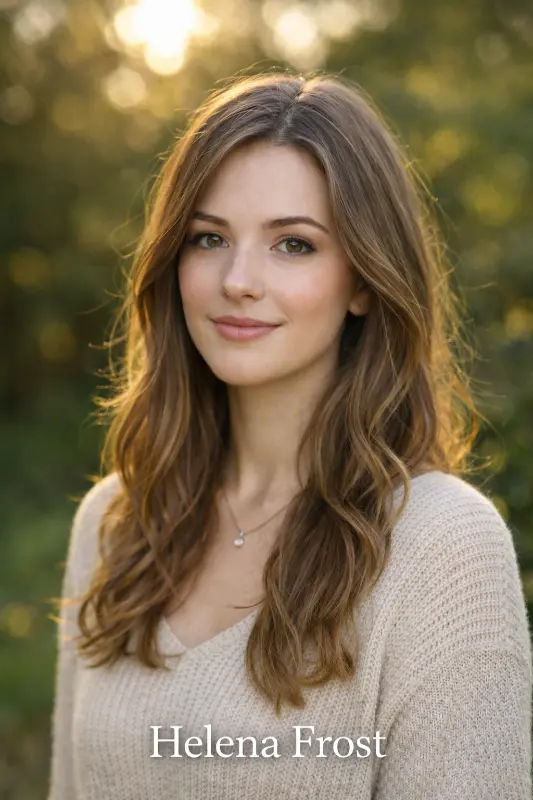
I am Helena Frost, a writer captivated by the beauty of language and the art of comparison. Through my words, I explore the world by turning ordinary moments into vivid similes and reflections. I enjoy crafting phrases that spark imagination, evoke emotion, and linger in the mind. My writing celebrates the subtle connections between people, nature, and the stories we live. For me, every sentence is an opportunity to reveal the extraordinary in the everyday.