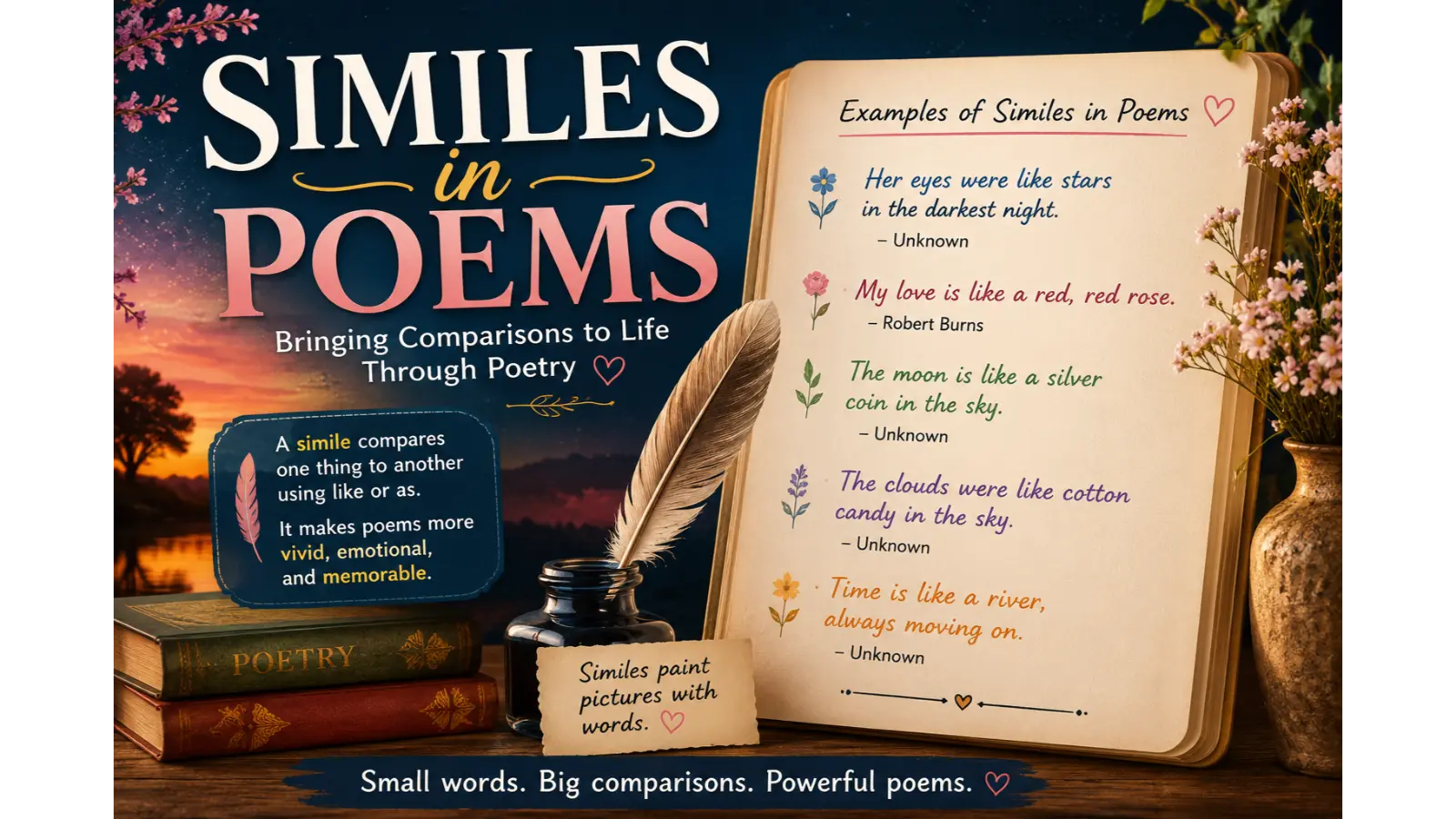
Poetry has a special way of helping readers see, hear, and feel emotions. One of the most powerful tools poets use is the simile. A well-crafted simile turns an ordinary description into a memorable image by comparing two different things using “like” or “as. You’ll find similes in classic poetry, modern poems, spoken word performances, and even song lyrics. They help writers express emotions, create vivid scenes, and make ideas easier to imagine. In this guide, you’ll discover original similes in poems, learn why they work, avoid common mistakes, and practice writing your own comparisons with confidence.
What Are Similes in Poems?

A simile is a figure of speech that compares two unlike things using like or as.
Rather than simply describing something, a simile paints a picture in the reader’s mind.
Example:
The moon floated like a silver lantern across the silent sky.
This comparison helps readers visualize both the appearance and mood of the scene.
Why Poets Love Using Similes
Similes make poems stronger because they:
- Create vivid mental images
- Express emotions with greater depth
- Make abstract ideas easier to understand
- Add rhythm and beauty to language
- Help readers connect personally with the poem
A memorable simile often becomes the line readers remember long after finishing a poem.
30 Original Similes in Poems
1. Quiet as snowfall on forgotten rooftops
Meaning
Describes complete silence with a peaceful feeling.
Poetry Example
The evening rested, quiet as snowfall on forgotten rooftops.
Writing Tip
Perfect for reflective or winter-themed poems.
2. Bright like a lighthouse before dawn
Meaning
Represents hope during uncertain times.
Storytelling Example
Her smile appeared like a lighthouse before dawn.
Best Context
Hope, courage, and inspiration.
3. Gentle as rain touching wildflowers
Emotional Effect
Creates warmth and tenderness.
Conversation Example
His words were gentle as rain touching wildflowers.
4. Fast like wind racing through mountain passes
Meaning
Shows unstoppable movement.
Poetry Example
Dreams rushed like wind racing through mountain passes.
5. Fragile as frost on autumn leaves
Meaning
Represents delicate beauty.
Writing Purpose
Ideal for poems about change or loss.
6. Warm like sunlight through old windows
Meaning
Suggests comfort and nostalgia.
Poetry Example
Your laughter felt like sunlight through old windows.
7. Lonely as a single star before sunrise
Emotional Effect
Expresses quiet isolation.
Best Context
Personal reflection and emotional poetry.
8. Calm as a sleeping lake beneath the moon
Meaning
Shows inner peace.
Formal Example
Her thoughts became calm as a sleeping lake beneath the moon.
9. Sharp like winter air before sunrise
Meaning
Describes intense emotions or observations.
Writing Tip
Works well for dramatic scenes.
10. Soft as feathers drifting across still water
Meaning
Represents grace and gentleness.
Poetry Example
Her voice floated soft as feathers drifting across still water.
11. Brave like an oak standing through every storm
Meaning
Shows lasting courage.
Storytelling Example
He remained brave like an oak standing through every storm.
12. Light as a feather carried by spring wind
Meaning
Suggests freedom and happiness.
13. Restless as waves chasing the shoreline
Emotional Effect
Captures anxiety or excitement.
14. Clear like mountain air after rain
Meaning
Represents honesty and clarity.
15. Sweet as fresh berries beneath summer sun
Best Context
Love poems and joyful memories.
16. Empty as an abandoned garden in winter
Meaning
Creates a feeling of loneliness.
17. Bright as dew sparkling at sunrise
Emotional Effect
Symbolizes hope and fresh beginnings.
18. Steady like the tide returning each morning
Meaning
Represents loyalty and consistency.
19. Free as birds above endless valleys
Writing Purpose
Ideal for poems about dreams and adventure.
20. Delicate like spider silk in morning light
Meaning
Highlights beauty and vulnerability.
21. Cold as forgotten stone beneath the river
Emotional Effect
Suggests emotional distance.
22. Patient as roots growing beneath ancient trees
Meaning
Shows quiet perseverance.
23. Gentle like clouds hugging distant hills
Best Context
Nature poetry and peaceful scenes.
24. Hopeful as the first bloom after winter
Meaning
Represents renewal.
25. Fierce like wildfire crossing dry hills
Emotional Effect
Conveys unstoppable determination.
26. Smooth as glass beneath moonlight
Meaning
Describes calm surfaces or peaceful emotions.
27. Curious like sparrows exploring fresh snowfall
Writing Tip
Excellent for children’s poetry.
28. Heavy as rain-soaked branches
Meaning
Expresses emotional burden.
29. Joyful like rivers dancing over stones
Emotional Effect
Creates movement and happiness.
30. Endless as the stars beyond the horizon
Meaning
Represents infinite dreams, love, or imagination.
What Makes a Strong Poetic Simile?
A powerful simile does more than compare two things. It creates an emotional experience.
Professional poets often ask themselves:
- Does this comparison surprise the reader?
- Does it fit the poem’s mood?
- Can readers easily picture it?
- Does it reveal something new?
The strongest similes feel both fresh and believable.
How to Write Better Similes for Poems
Start With a Clear Emotion
Instead of describing an object, think about the feeling you want readers to experience.
Ask yourself:
- Is the moment peaceful?
- Is it exciting?
- Is it heartbreaking?
- Is it hopeful?
The emotion should guide your comparison.
Look Closely at Nature
Many memorable similes come from careful observation.
Notice:
- Clouds
- Rivers
- Trees
- Birds
- Rain
- Mountains
- Light
- Shadows
Nature offers endless inspiration because readers already recognize these images.
Compare Feelings to Physical Objects
Instead of saying:
She was sad.
Try:
Her sadness settled like mist over a quiet valley.
The image makes the emotion easier to imagine.
Related Literary Devices
Metaphor
A metaphor compares two things without using like or as.
Simile: Her smile was like sunshine.
Metaphor: Her smile was sunshine.
Imagery
Imagery appeals to the senses through descriptive language. Similes often strengthen imagery by creating vivid comparisons.
Personification
Personification gives human qualities to non-human things.
Example:
The wind whispered through the trees.
Hyperbole
Hyperbole is deliberate exaggeration for emphasis.
Example:
I waited for ages.
Unlike hyperbole, similes focus on comparison rather than exaggeration.
Alliteration
Alliteration repeats beginning consonant sounds.
Example:
Silent seas shimmered softly.
It adds musical rhythm to poetry and pairs well with similes.
Symbolism
Symbols represent deeper meanings beyond their literal sense. A simile can include symbolic images, such as comparing hope to a sunrise or resilience to an ancient tree.
Create Your Own Similes
Follow these simple steps:
Step 1
Choose one emotion.
Step 2
Think of something in nature or everyday life that shares that feeling.
Step 3
Connect them using like or as.
Step 4
Read the line aloud.
Step 5
Ask whether the comparison creates a clear picture.
Practice Exercise
Write a simile for each topic:
- Joy
- Fear
- Rain
- Friendship
- Night
- Childhood
- Autumn
- Dreams
Challenge yourself to avoid comparisons you’ve heard before.
Common Mistakes to Avoid
Using Overused Comparisons
Phrases like “as busy as a bee” or “as cold as ice” are familiar but often lack originality. Look for fresh images instead.
Mixing Imagery
Avoid combining unrelated images in the same comparison.
Example:
Her voice flowed like thunder through blooming flowers.
The images clash rather than support each other.
Forcing Comparisons
Every simile should feel natural. If a comparison requires too much explanation, choose a clearer image.
Confusing Similes With Metaphors
Remember:
- Similes use like or as.
- Metaphors do not.
Choosing Weak Images
A comparison should add meaning, not simply repeat an idea in different words. Aim for images that reveal something unexpected.
Frequently Asked Questions
What is a simile in poetry?
A simile is a comparison using like or as to create vivid imagery and strengthen emotional expression.
Why are similes important in poems?
They help readers visualize scenes, understand emotions, and remember important lines.
Can a poem contain many similes?
Yes, but each should serve a purpose. Too many comparisons can distract readers.
What’s the difference between a simile and a metaphor?
A simile uses like or as, while a metaphor states that one thing is another.
How can I write original similes?
Observe nature, focus on emotions, avoid clichés, and compare ideas in fresh but believable ways.
Are similes only used in poetry?
No. They also appear in novels, speeches, songs, creative nonfiction, and everyday conversation.
Should every poem include similes?
Not necessarily. Use them when they deepen the poem’s meaning or imagery rather than adding them simply for decoration.
Conclusion
Similes are among the most effective tools for bringing poetry to life. A thoughtful comparison can transform a simple line into one readers remember long after the poem ends. By observing the world closely, choosing meaningful images, and experimenting with fresh ideas, you can create similes that feel vivid, natural, and uniquely your own. Keep practicing, revise with intention, and let each new poem become an opportunity to discover original ways of seeing the world through language.
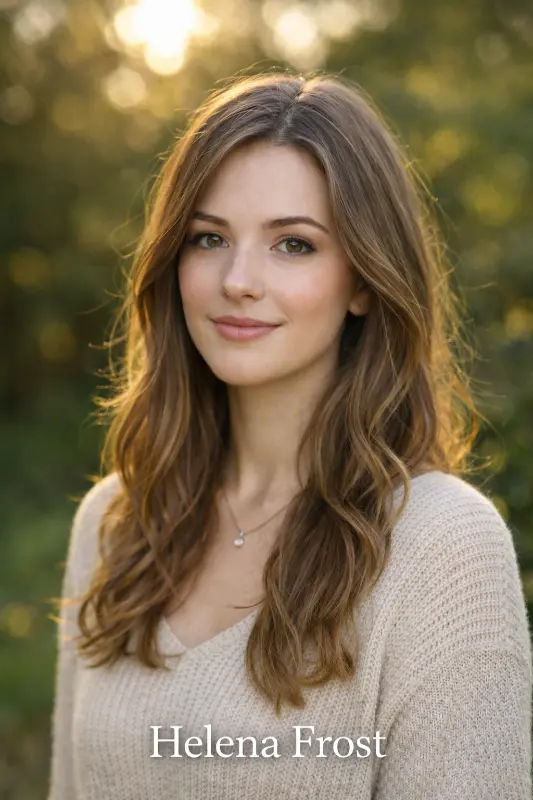
I am Helena Frost, a writer captivated by the beauty of language and the art of comparison. Through my words, I explore the world by turning ordinary moments into vivid similes and reflections. I enjoy crafting phrases that spark imagination, evoke emotion, and linger in the mind. My writing celebrates the subtle connections between people, nature, and the stories we live. For me, every sentence is an opportunity to reveal the extraordinary in the everyday.