Similes for Courage: Powerful Comparisons to Inspire Bravery

Similes for Courage is easy to recognize but surprisingly difficult to describe. We know what courage looks like—a person stepping forward despite fear, speaking up when silence feels safer, or continuing when giving up seems easier. Yet simply writing “She was brave” often does not give readers much to ...
Read more
Similes for Success:Achievement, and Winning

Similes for Success can be difficult to describe because it means something different to everyone. For one person, it is reaching a long-term goal. For another, it is finally overcoming fear, finishing a difficult project, or watching years of effort begin to pay off. A good simile can make ...
Read more
Hard Similes: for Creative Writing, Stories, and Poems
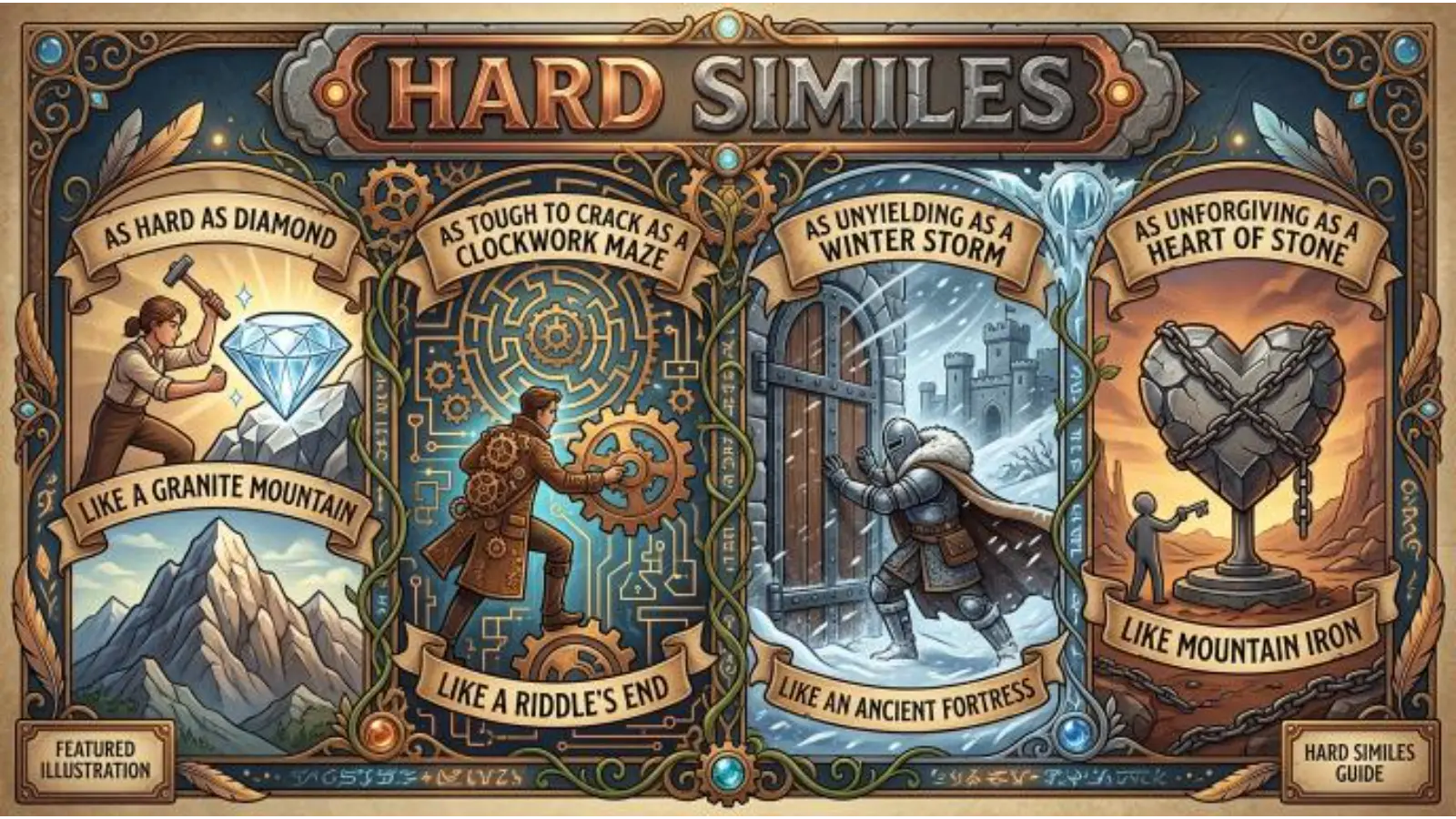
Hard similes make ordinary descriptions more vivid by connecting one thing to another with words such as like or as. A strong simile does more than decorate a sentence—it gives readers something concrete to imagine. Hard similes are especially useful when you want to describe difficult experiences, intense emotions, ...
Read more
Interesting Similes: That Make Your Writing More Creative
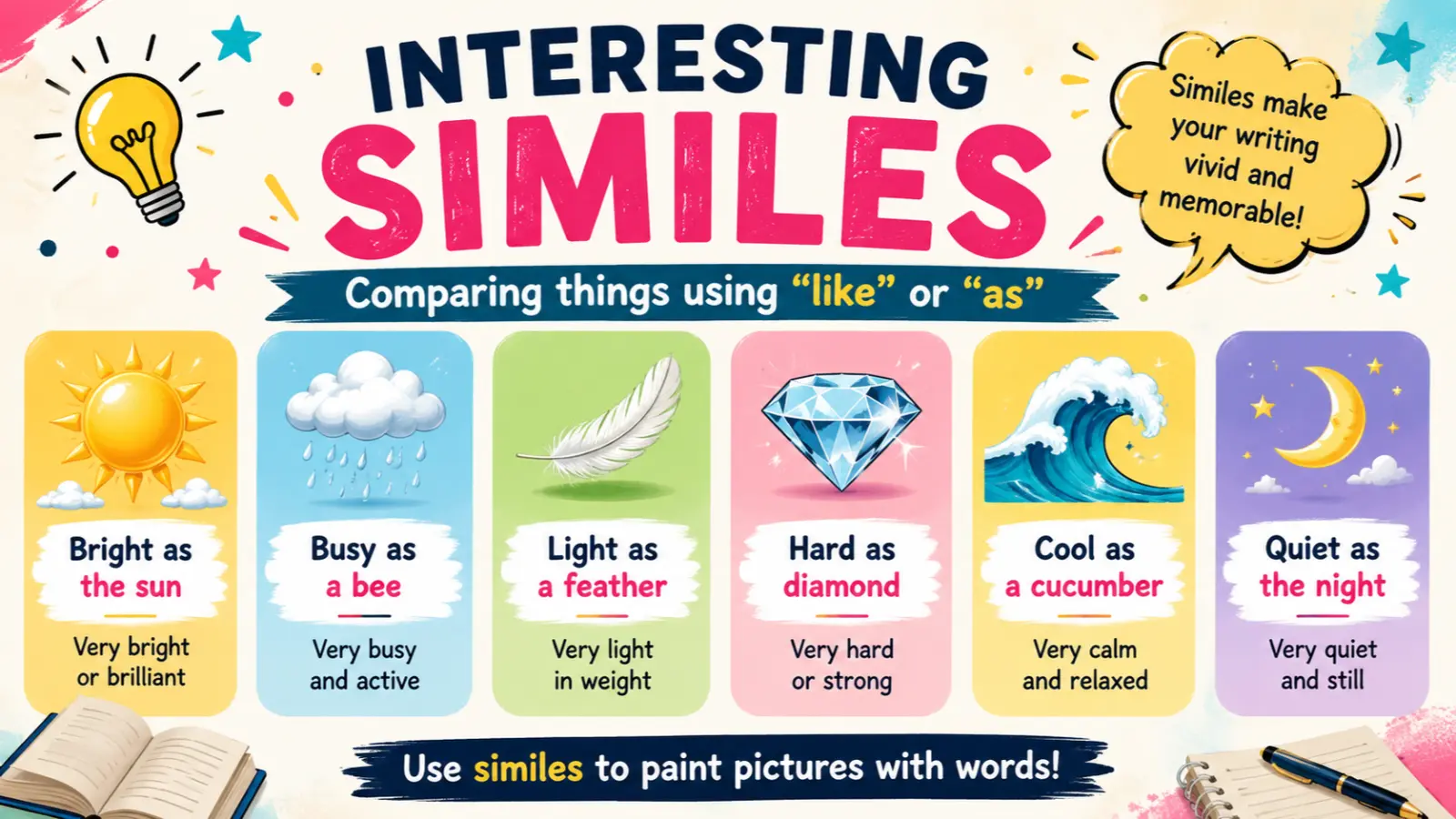
Interesting Similes s make ordinary descriptions more expressive by comparing one thing to another using words such as like or as. Instead of saying that a room was quiet, a writer might say it was as quiet as a library after closing time. The comparison gives the reader something ...
Read more
Excited Similes:to Describe Joy, Energy, and Enthusiasm
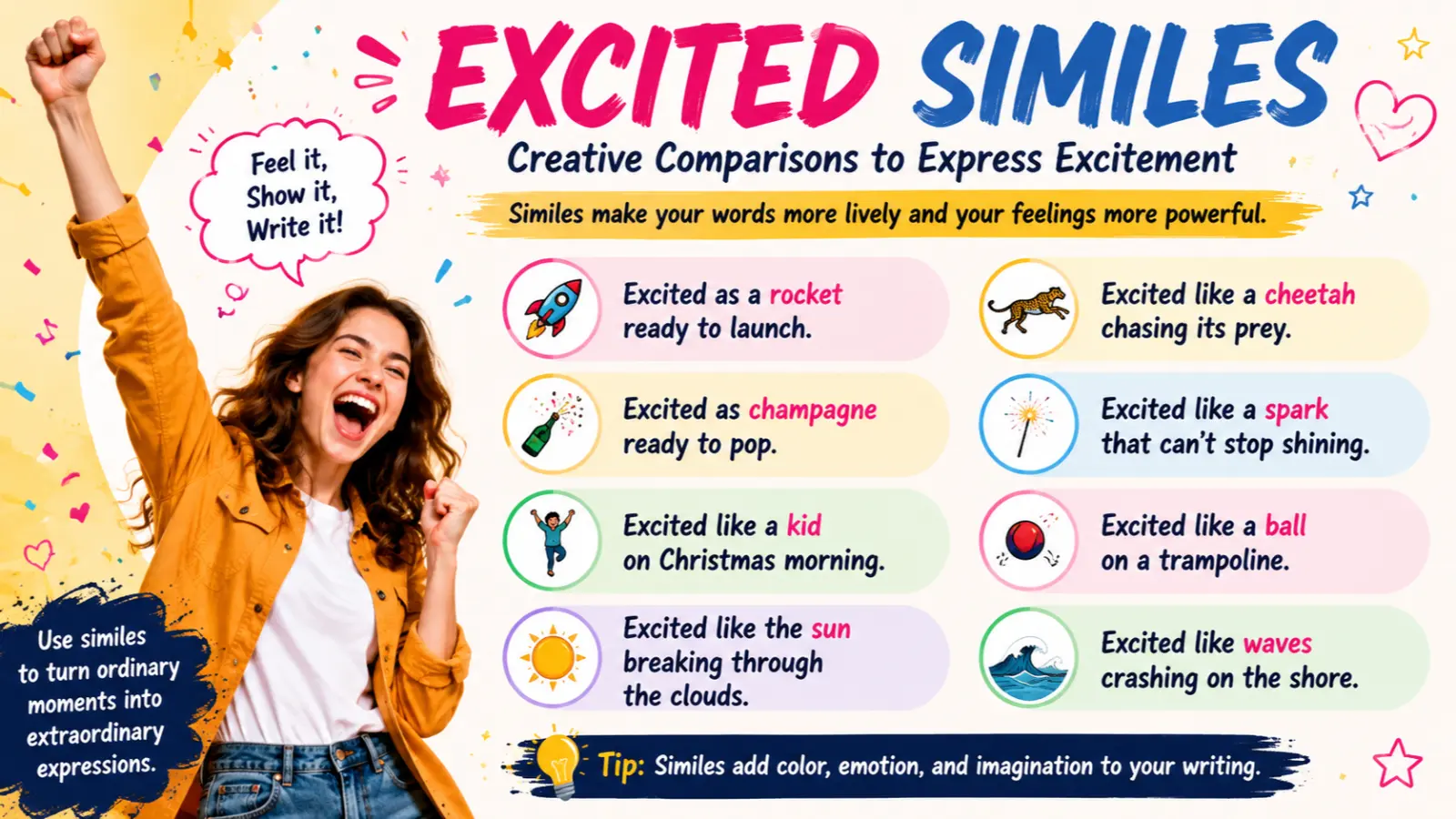
Excited Similes Excitement can be difficult to describe with ordinary words. Saying someone was “very excited” tells readers the emotion, but it does not let them experience it. A strong simile can turn that feeling into something visible, energetic, and memorable. An excited simile compares excitement to something familiar, ...
Read more
Strong Similes: Powerful Examples for Better Writing
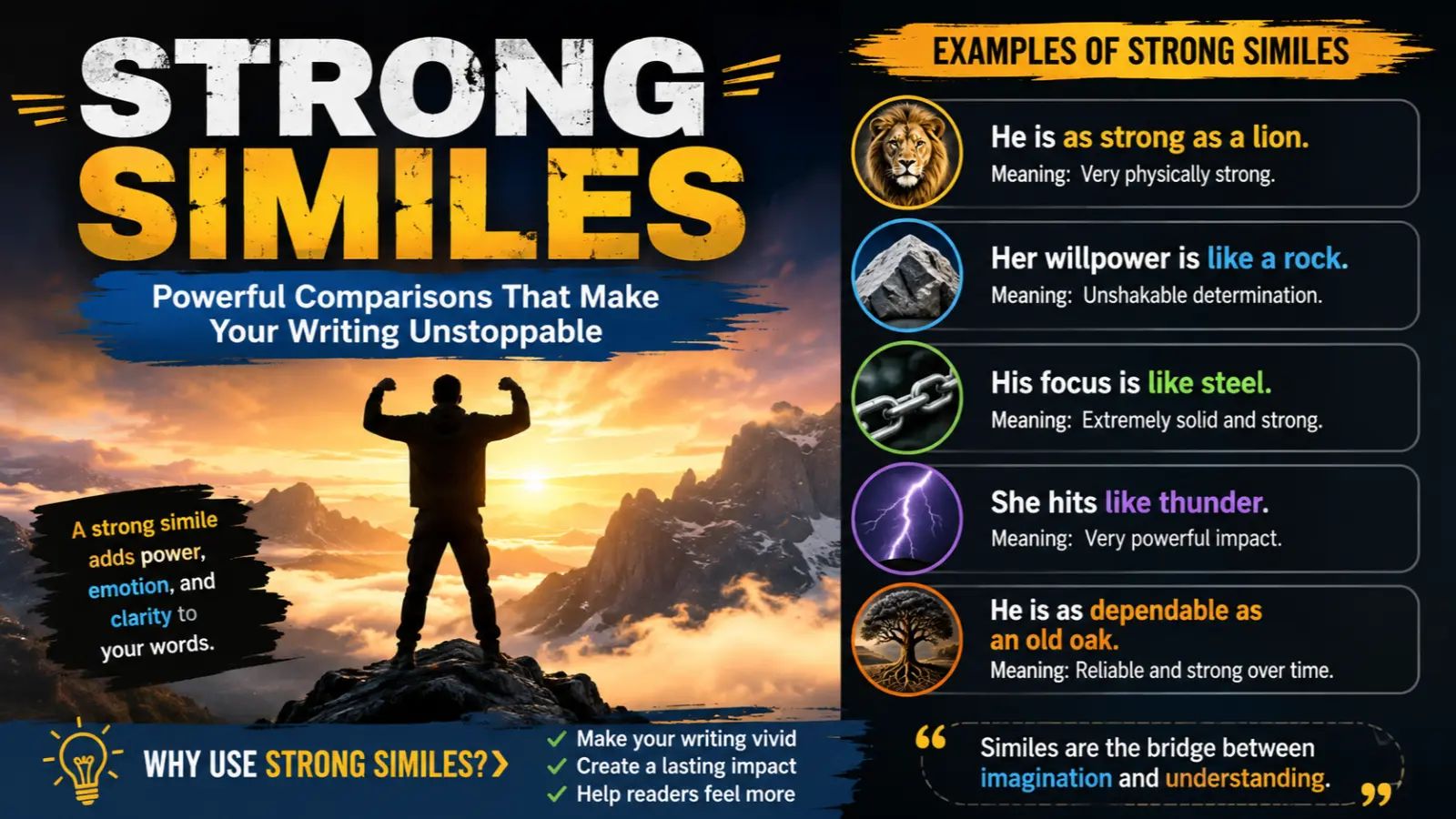
Strong similes help ordinary descriptions feel sharper, more emotional, and easier to picture. Instead of simply saying that someone is confident, tired, angry, or excited, a well-chosen comparison gives the reader something concrete to imagine. A Strong Similes usually compares two different things using words such as “like” or ...
Read more
Silent Similes: for Stories, Poems, and Creative Writing
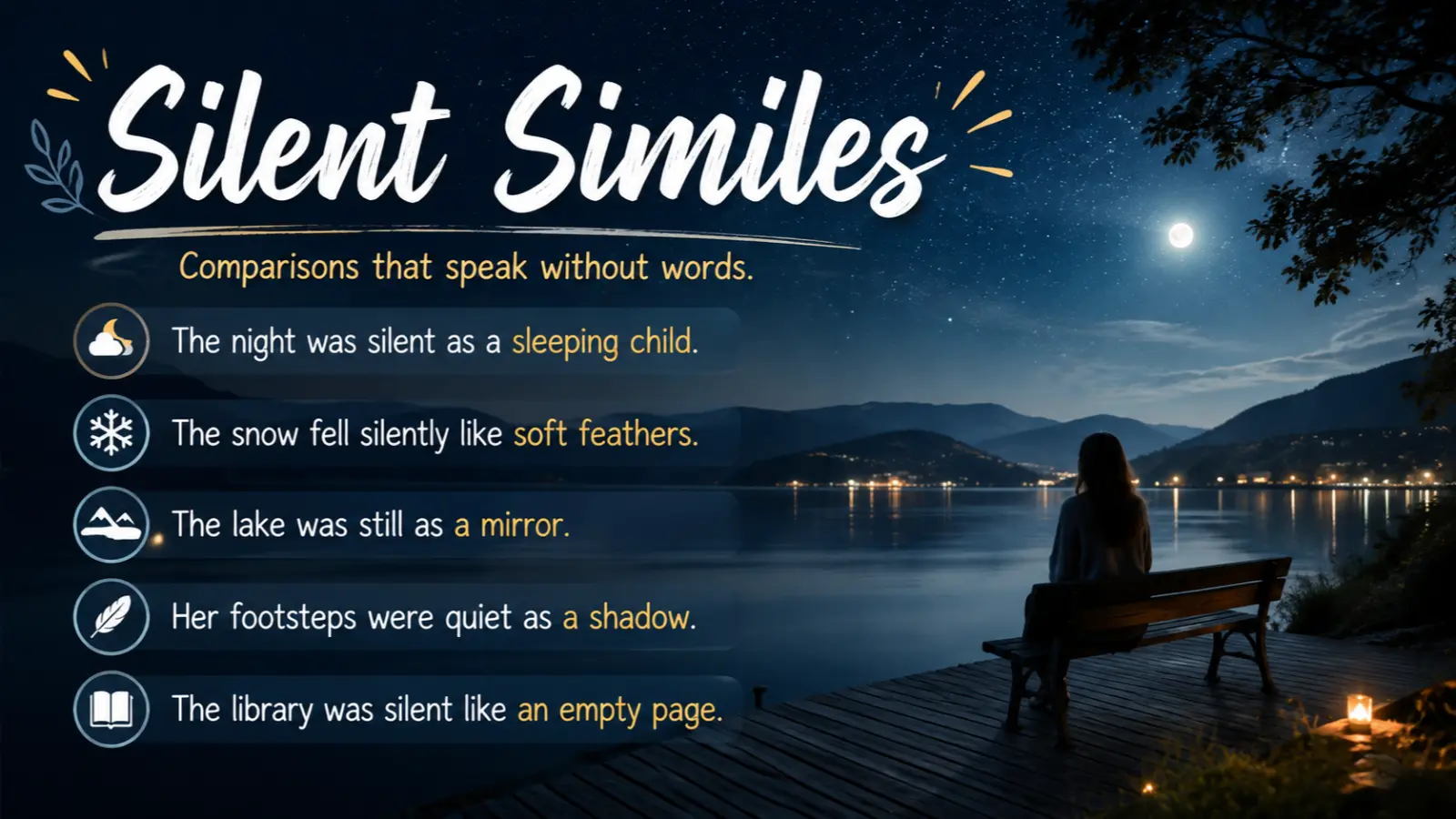
Silence can be difficult to describe. Unlike a storm, a shout, or a bright color, silence does not always announce itself. Sometimes it feels peaceful. Sometimes it feels uncomfortable, heavy, mysterious, or full of emotion. That is where silent similes can make writing more vivid. A simile compares two ...
Read more
Similes With As: Fresh Examples That Make Your Writing
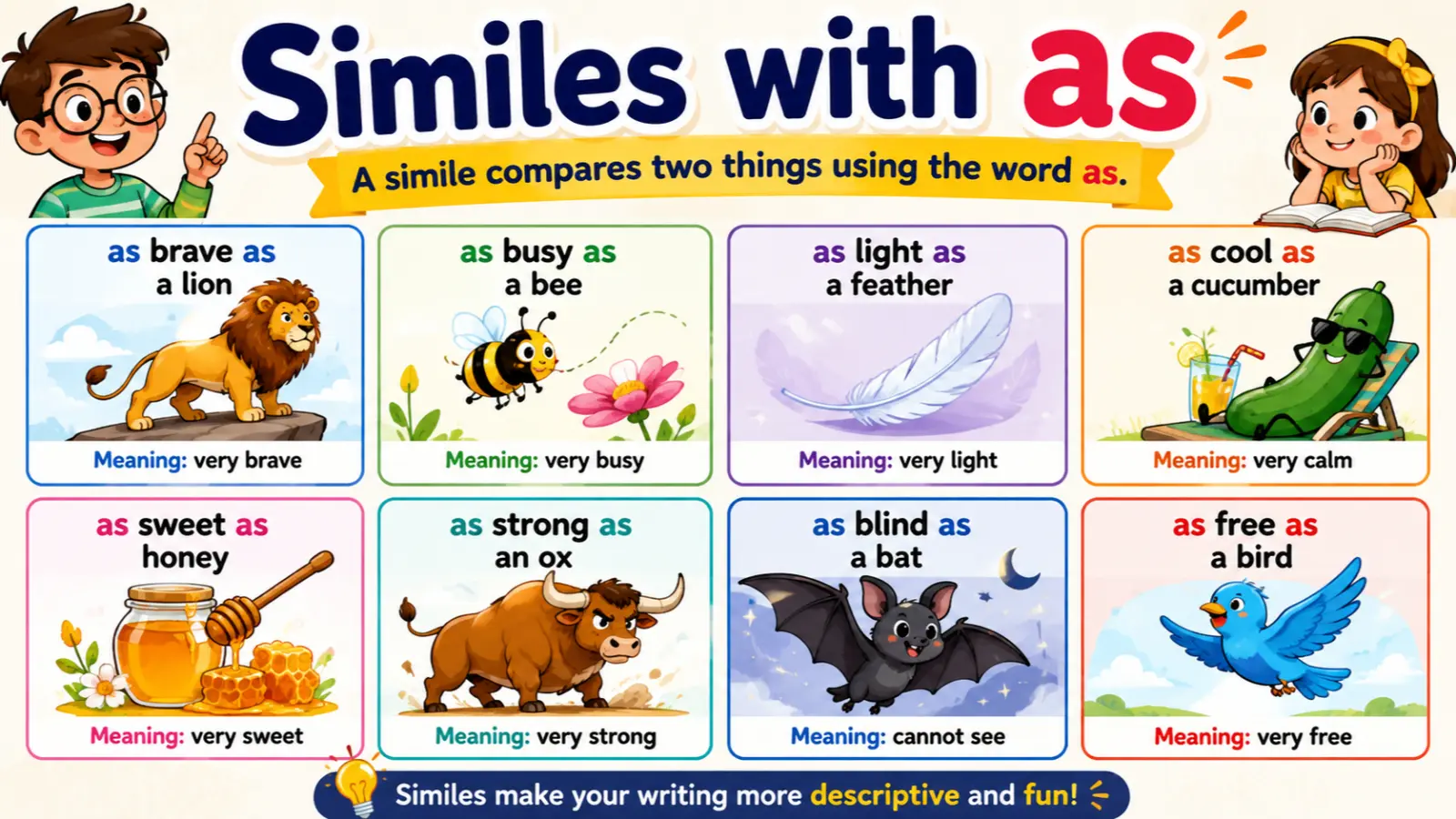
Every great writer knows that a simple comparison can turn an ordinary sentence into one readers remember. One of the easiest ways to create that effect is by using similes with “as.” These comparisons help readers picture emotions, actions, sounds, colors, and personalities with greater clarity. A simile compares ...
Read more
Similes for Friendship: to Make Your Writing Shine
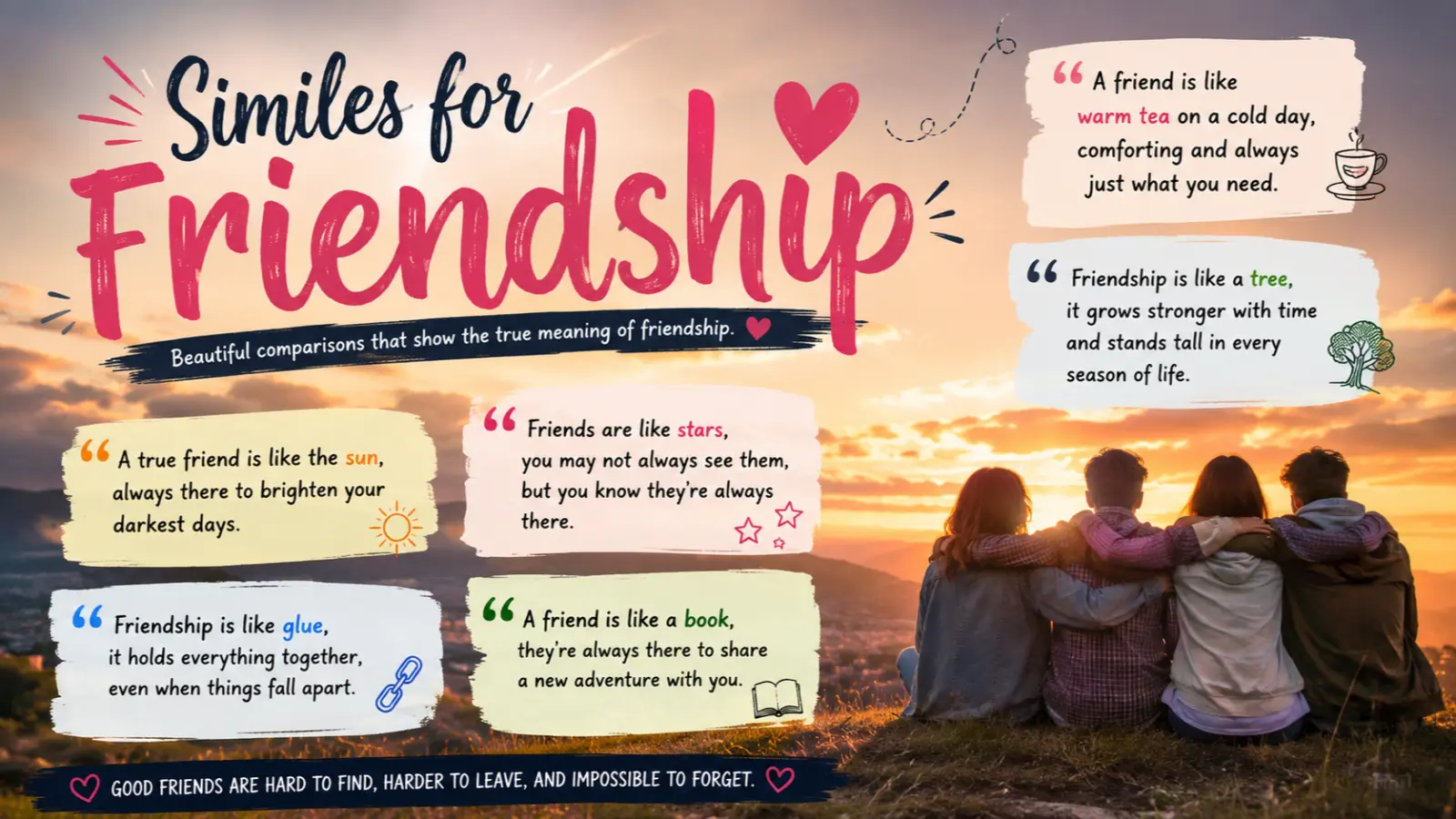
Friendship is one of the richest subjects in writing because it is built on trust, loyalty, laughter, and shared experiences. Yet describing friendship in fresh, memorable ways can be challenging. That’s where similes become valuable. A simile compares two different things using “like” or “as” to create vivid imagery. ...
Read more
Similes in Macbeth: Literary Devices, Examples, and Themes
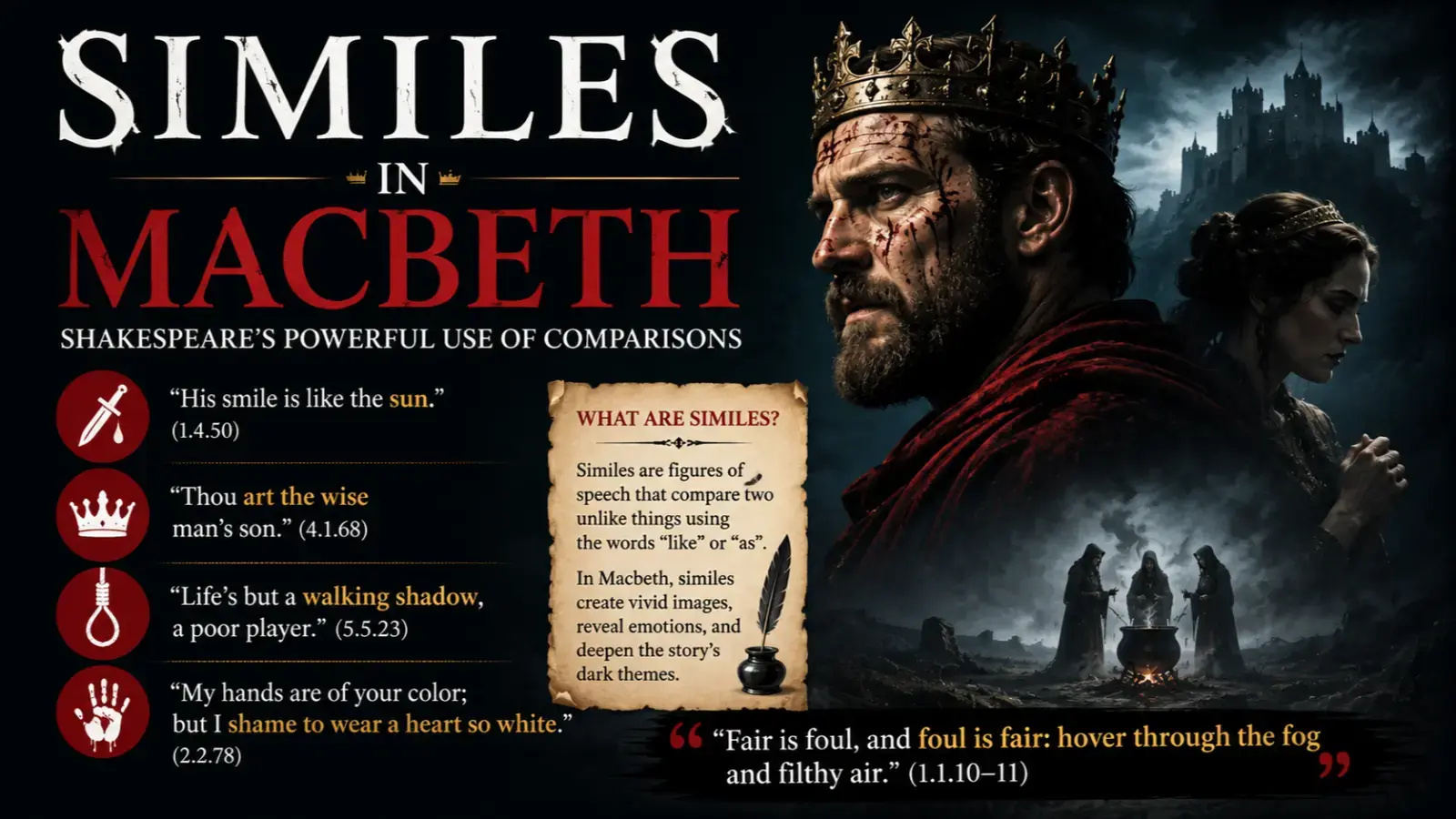
Smiles in Macbeth is famous for its dark imagery, memorable metaphors, and powerful language. While readers often remember the play for its symbolism and metaphors, similes also help create vivid pictures of ambition, guilt, fear, violence, and fate. A simile compares two unlike things using “like” or “as.” These ...
Read more