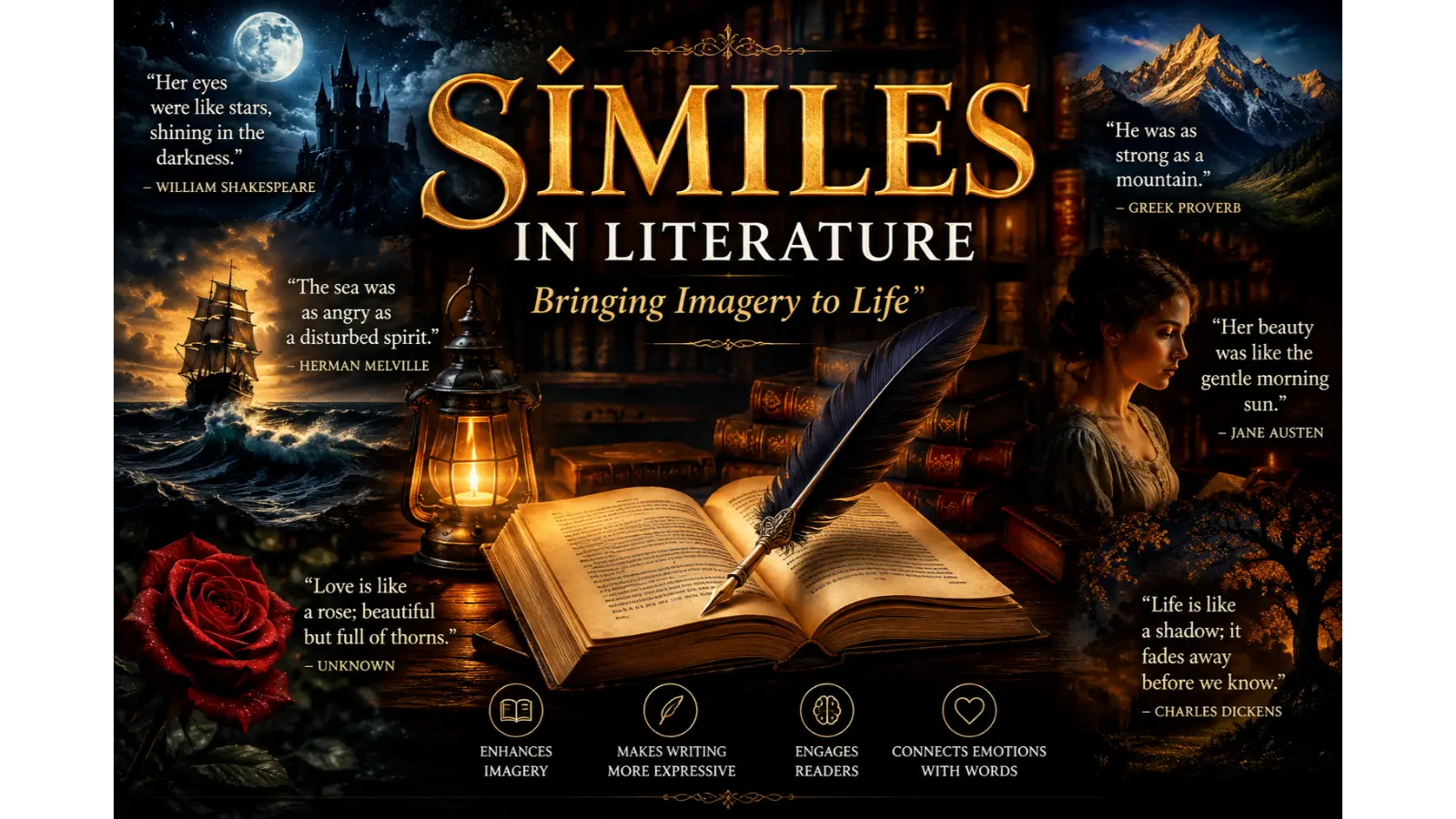
Literature has always relied on vivid language to make readers see, hear, and feel every moment. One of the most effective tools writers use is the simile. By comparing one thing to another using words like “like” or “as,” similes transform ordinary descriptions into memorable images. From classic novels to modern poetry, similes help readers understand emotions, settings, characters, and actions in a deeper way. They can make a joyful moment brighter, a frightening scene more intense, or a quiet landscape unforgettable. In this guide, you’ll discover what similes in literature are, why skilled authors use them, and how you can create your own. You’ll also explore 25 original literary-style similes with meanings, examples, and practical writing advice.
What Are Similes in Literature?
A simile is a figure of speech that compares two different things using the words like or as.
Rather than simply describing something, a simile paints a picture that readers can immediately imagine.
Example:
“The library was as peaceful as snowfall before dawn.”
The comparison helps readers feel the calm atmosphere without directly stating it.
Unlike metaphors, similes keep the comparison clear by using connecting words.
Why Writers Use Similes in Literature
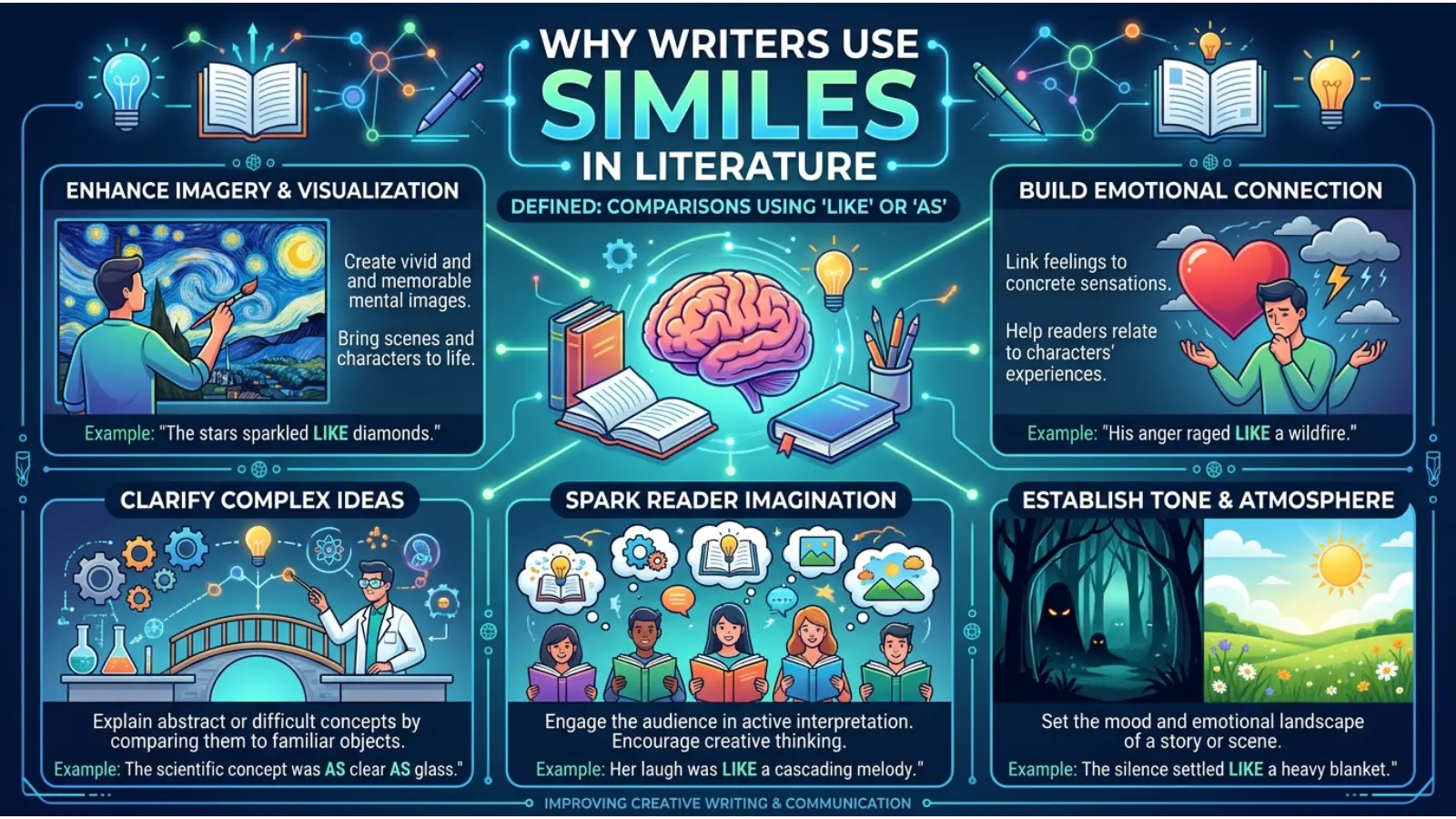
Similes do much more than decorate sentences.
They help writers:
- Build vivid imagery
- Express emotions clearly
- Reveal character personalities
- Strengthen descriptions
- Make stories memorable
- Create rhythm in poetry
- Help readers connect emotionally
A well-crafted simile often stays in the reader’s mind long after the story ends.
25 Original Similes in Literature
1. As patient as a lighthouse through endless storms
Meaning
Represents unwavering patience despite difficulties.
Examples
Formal
The old teacher remained as patient as a lighthouse through endless storms.
Conversation
She’s as patient as a lighthouse through endless storms with new employees.
Storytelling
The grandmother smiled, as patient as a lighthouse through endless storms, while the children argued.
Poetry
Patience stood,
like a lighthouse through endless storms.
Writing Tip
Use this when showing quiet strength instead of dramatic endurance.
2. Like autumn leaves chasing forgotten memories
Meaning
Suggests nostalgia and the passing of time.
Examples
The letters drifted like autumn leaves chasing forgotten memories.
His thoughts scattered like autumn leaves chasing forgotten memories.
Best Context
Reflective stories and emotional essays.
3. As gentle as rain touching sleeping flowers
Meaning
Describes kindness or tenderness.
Examples
Her voice was as gentle as rain touching sleeping flowers.
He closed the door as gently as rain touching sleeping flowers.
Emotional Effect
Comfort and peace.
4. Like a candle arguing with darkness
Meaning
Symbolizes hope against overwhelming odds.
Story Example
The child smiled like a candle arguing with darkness despite the difficult journey.
5. As curious as a river searching for the sea
Meaning
Represents an eager desire to learn.
Examples
She explored every book as curious as a river searching for the sea.
6. Like stars whispering across winter skies
Meaning
Describes quiet beauty or distant communication.
Poetry
Dreams floated
like stars whispering across winter skies.
7. As fearless as dawn climbing the mountains
Meaning
Represents courage and new beginnings.
Writing Purpose
Ideal for heroic characters.
8. Like a feather dancing with invisible music
Meaning
Describes graceful movement.
Conversation
The ballerina moved like a feather dancing with invisible music.
9. As lonely as an unopened letter
Meaning
Expresses isolation and silence.
Storytelling
He stood as lonely as an unopened letter in the crowded station.
10. Like moonlight folding over quiet water
Meaning
Suggests calm elegance.
Best Context
Nature writing and poetry.
11. As hopeful as seeds beneath spring soil
Meaning
Hope waiting to grow.
Examples
Their plans remained as hopeful as seeds beneath spring soil.
12. Like laughter escaping an old piano
Meaning
Unexpected happiness.
Emotional Effect
Warm nostalgia.
13. As steady as ancient oak roots
Meaning
Dependability and resilience.
Writing Tip
Perfect for mentors and leaders.
14. Like fog hiding forgotten dreams
Meaning
Mystery and uncertainty.
Example
The valley rested like fog hiding forgotten dreams.
15. As bright as sunrise on untouched snow
Meaning
Fresh optimism.
Formal Example
Her ideas appeared as bright as sunrise on untouched snow.
16. Like waves writing stories on the shore
Meaning
Constant change.
Storytelling
Time passed like waves writing stories on the shore.
17. As quiet as ink waiting for a poem
Meaning
Creative silence before inspiration.
Best Context
Writing scenes.
18. Like ivy embracing forgotten walls
Meaning
Slow, lasting affection.
Emotional Effect
Gentle attachment.
19. As determined as roots finding water
Meaning
Persistence despite obstacles.
Conversation
She’s as determined as roots finding water.
20. Like clouds carrying unfinished dreams
Meaning
Uncertainty mixed with hope.
Poetry
Clouds wandered,
like carriers of unfinished dreams.
21. As warm as sunlight inside old books
Meaning
Comfort through memories and learning.
Writing Purpose
Ideal for nostalgic scenes.
22. Like birds stitching morning into the sky
Meaning
Beginning of a new day.
Story Example
The village awakened like birds stitching morning into the sky.
23. As fragile as frost on wild grass
Meaning
Delicate beauty.
Best Context
Romantic and emotional writing.
24. Like echoes searching empty valleys
Meaning
Longing for connection.
Emotional Effect
Loneliness mixed with hope.
25. As timeless as mountains greeting the sunrise
Meaning
Enduring wisdom and permanence.
Formal Example
Their friendship remained as timeless as mountains greeting the sunrise.
What Makes a Literary Simile Effective?
Strong literary similes share several qualities:
They Surprise the Reader
Fresh comparisons attract attention because they avoid predictable language.
They Match the Mood
A joyful scene deserves bright imagery, while suspense benefits from darker comparisons.
They Fit the Character
A scientist, artist, and child may each describe the same object differently.
They Stay Specific
Specific details create stronger mental pictures than vague comparisons.
Similes and Other Literary Devices
Simile vs. Metaphor
A simile compares using like or as.
A smile spread like morning light.
A metaphor makes a direct comparison.
Her smile was morning light.
Simile and Imagery
Imagery appeals to the senses, while similes often strengthen imagery by creating vivid comparisons.
Simile and Personification
Personification gives human qualities to non-human things.
Example:
“The wind whispered through the trees.”
A simile may combine with personification for richer descriptions.
Simile and Hyperbole
Hyperbole exaggerates intentionally.
A simile may be realistic, while hyperbole often stretches reality for dramatic effect.
Simile and Symbolism
Symbols represent larger ideas.
A simile can include symbolic images to deepen meaning without becoming confusing.
How to Create Your Own Literary Similes
Creating memorable similes is easier when you follow a thoughtful process.
Step 1: Choose the Main Subject
What are you describing?
- A person
- An emotion
- A place
- An object
Step 2: Identify the Strongest Quality
Ask yourself:
- Is it quiet?
- Powerful?
- Lonely?
- Hopeful?
Step 3: Find an Unexpected Comparison
Instead of comparing bravery to a lion, think about natural scenes, everyday objects, weather, music, architecture, or memories.
Step 4: Test It
Ask:
- Does it create a clear image?
- Does it fit the mood?
- Is it original?
- Would a reader understand it?
Creative Practice Exercises
Exercise 1
Describe happiness without mentioning smiling.
Exercise 2
Write three similes inspired by weather.
Exercise 3
Create a simile for silence using something found indoors.
Exercise 4
Rewrite a plain sentence using one original simile.
Plain:
“The room was quiet.”
Possible revision:
“The room rested like a closed music box waiting to be opened.”
Common Mistakes to Avoid
Using Overused Comparisons
Phrases like “as busy as a bee” or “as brave as a lion” can feel predictable. Challenge yourself to invent fresh images.
Mixing Imagery
Avoid combining unrelated comparisons in one sentence.
Poor example:
“She floated like a feather while roaring like thunder.”
The images compete instead of supporting each other.
Forcing a Simile
If the comparison doesn’t strengthen the description, leave it out.
Confusing Similes with Metaphors
Remember:
- Similes use like or as.
- Metaphors compare directly.
Choosing Weak Comparisons
A comparison should reveal something meaningful, not simply state the obvious.
Frequently Asked Questions
What are similes in literature?
They are comparisons using like or as that help readers imagine people, places, emotions, or events more vividly.
Why do authors use similes?
Authors use similes to create imagery, express emotions, improve descriptions, and make writing more memorable.
Are similes only used in poetry?
No. Similes appear in novels, short stories, essays, speeches, songs, children’s books, and everyday conversations.
What’s the difference between a simile and a metaphor?
A simile uses like or as, while a metaphor makes a direct comparison without those words.
How can I write original similes?
Focus on the emotion or quality you want to describe, then compare it with something unexpected but believable.
Can a story have too many similes?
Yes. Too many comparisons can distract readers. Use them where they add clarity, emotion, or imagery.
Are literary similes always serious?
No. They can be humorous, playful, dramatic, mysterious, or heartfelt depending on the tone of the writing.
Conclusion
Similes are among the most versatile tools in literature because they turn ordinary descriptions into memorable experiences. A carefully chosen comparison helps readers see beyond the words on the page, making emotions more relatable, settings more vivid, and characters more believable. The best literary similes aren’t the longest or the most complex—they’re the ones that feel fresh, fit the moment naturally, and leave a lasting impression. Practice observing the world around you, experiment with unexpected comparisons, and don’t be afraid to revise until your imagery feels authentic. Over time, you’ll develop a style that is both original and engaging, enriching every story, poem, or essay you write.
I am Helena Frost, a writer captivated by the beauty of language and the art of comparison. Through my words, I explore the world by turning ordinary moments into vivid similes and reflections. I enjoy crafting phrases that spark imagination, evoke emotion, and linger in the mind. My writing celebrates the subtle connections between people, nature, and the stories we live. For me, every sentence is an opportunity to reveal the extraordinary in the everyday.