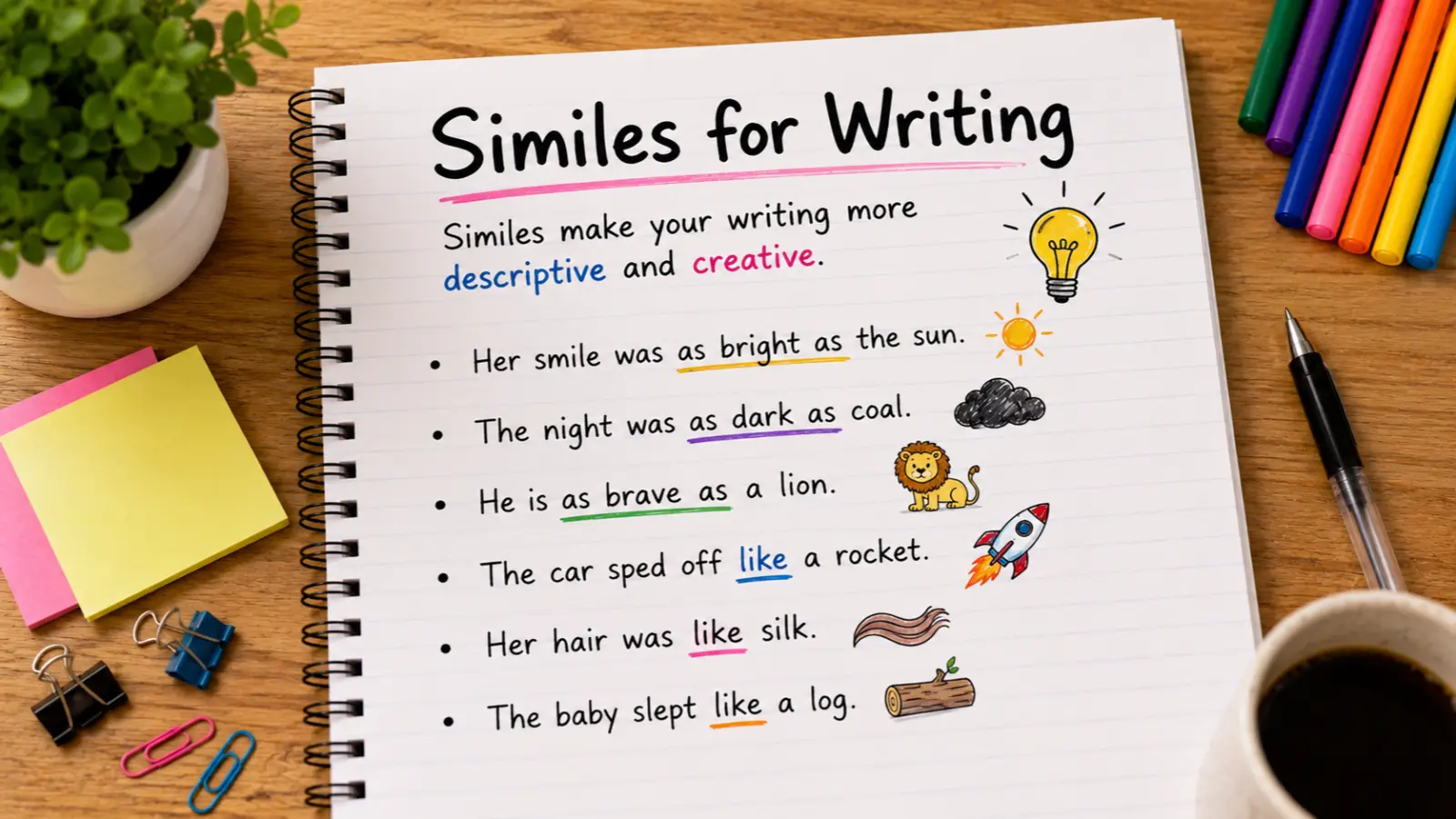
Few literary devices are as versatile and effective as similes. Whether you’re writing a novel, poem, blog post, speech, or short story, a well-crafted simile can transform ordinary language into memorable imagery. By comparing one thing to another using words such as like or as, similes help readers visualize emotions, settings, characters, and experiences more clearly.
Many experienced writers discover that similes act as bridges between abstract ideas and concrete images. For example, describing a nervous character as “as shaky as a leaf in the wind” instantly creates a stronger mental picture than simply stating they were nervous. From classic literature to modern storytelling, similes remain one of the most powerful tools for creating emotional impact and reader engagement.
In this guide, you’ll discover 25 creative similes, their meanings, prose examples, poetic applications, and practical writing tips to help elevate your craft.
Quick Reference Table of Similes
| # | Simile | Meaning |
|---|---|---|
| 1 | As bright as the morning sun | Full of energy and positivity |
| 2 | As calm as a still lake | Peaceful and composed |
| 3 | As sharp as a freshly honed blade | Intelligent and perceptive |
| 4 | As busy as a beehive | Extremely active |
| 5 | As gentle as falling snow | Soft and kind |
| 6 | As strong as an ancient oak | Resilient and powerful |
| 7 | As quick as lightning | Very fast |
| 8 | As quiet as a sleeping baby | Completely silent |
| 9 | As free as a bird in the sky | Independent and unrestricted |
| 10 | As steady as a lighthouse | Reliable and dependable |
| 11 | As warm as a summer afternoon | Welcoming and comforting |
| 12 | As cold as winter frost | Emotionally distant |
| 13 | As colorful as a rainbow | Vibrant and diverse |
| 14 | As deep as the ocean | Profound and thoughtful |
| 15 | As light as a feather | Weightless or effortless |
| 16 | As stubborn as a mule | Unwilling to change |
| 17 | As cheerful as spring blossoms | Joyful and optimistic |
| 18 | As restless as the tide | Unable to settle |
| 19 | As smooth as polished glass | Elegant and flawless |
| 20 | As fierce as a storm | Intense and powerful |
| 21 | As patient as a gardener | Willing to wait for results |
| 22 | As curious as a child | Eager to learn |
| 23 | As loyal as a faithful companion | Devoted and trustworthy |
| 24 | As fragile as a soap bubble | Easily damaged |
| 25 | As timeless as the stars | Enduring and unforgettable |
1. As Bright as the Morning Sun
Meaning
Represents optimism, energy, and positivity.
Example in Prose
Formal: Her presentation was as bright as the morning sun, inspiring confidence throughout the room.
Casual: She walked in smiling, as bright as the morning sun.
Example in Poetry
The dawn arrived without a warning,
Her laughter brightened every morning,
As bright as the morning sun,
A new day had begun.
Tip for Writers
Use this simile when describing cheerful personalities, hopeful beginnings, or uplifting moments.
2. As Calm as a Still Lake
Meaning
Describes serenity, patience, and emotional balance.
Example in Prose
Formal: Despite the crisis, the manager remained as calm as a still lake.
Casual: He was as calm as a still lake during the argument.
Example in Poetry
No ripple stirred the silent shore,
The winds forgot what storms were for,
As calm as a still lake,
The world began to wake.
Tip for Writers
Ideal for characters who maintain composure under pressure.
3. As Sharp as a Freshly Honed Blade
Meaning
Suggests intelligence and quick thinking.
Example in Prose
Formal: Her analytical skills were as sharp as a freshly honed blade.
Casual: Trust her—she’s as sharp as a freshly honed blade.
Example in Poetry
Thoughts flashed swift and clear and bright,
Cutting through confusion’s night,
As sharp as a freshly honed blade,
No truth remained delayed.
Tip for Writers
Useful when describing clever protagonists or insightful observations.
4. As Busy as a Beehive
Meaning
Extremely active and productive.
Example in Prose
Formal: The newsroom was as busy as a beehive before publication.
Casual: The office was as busy as a beehive today.
Example in Poetry
Voices hummed from wall to wall,
Answering every urgent call,
As busy as a beehive,
Keeping dreams alive.
Tip for Writers
Perfect for workplace scenes, bustling cities, and crowded events.
5. As Gentle as Falling Snow
Meaning
Soft, kind, and comforting.
Example in Prose
Formal: Her approach to mentoring was as gentle as falling snow.
Casual: His voice was as gentle as falling snow.
Example in Poetry
Whispers drifted through the night,
Floating softly out of sight,
As gentle as falling snow,
Teaching hearts to grow.
Tip for Writers
Works well in emotional scenes and character descriptions.
6. As Strong as an Ancient Oak
Meaning
Represents endurance and strength.
Example in Prose
Formal: The community remained as strong as an ancient oak through hardship.
Casual: My grandmother is as strong as an ancient oak.
Example in Poetry
Through countless storms it chose to stay,
Standing firm through every day,
As strong as an ancient oak,
Rooted in every word it spoke.
Tip for Writers
Excellent for portraying resilience.
7. As Quick as Lightning
Meaning
Exceptionally fast.
Example in Prose
Formal: The athlete reacted as quick as lightning.
Casual: He answered as quick as lightning.
Example in Poetry
Across the clouds a silver streak,
A glimpse so brief you couldn’t speak,
As quick as lightning’s flight,
Gone within the night.
Tip for Writers
Ideal for action sequences.
8. As Quiet as a Sleeping Baby
Meaning
Completely silent.
Example in Prose
Formal: The auditorium became as quiet as a sleeping baby.
Casual: The house was as quiet as a sleeping baby.
Example in Poetry
The moon looked down without a cry,
Soft shadows wandered slowly by,
As quiet as a sleeping baby,
Dreaming sweetly, maybe.
Tip for Writers
Creates contrast before dramatic events.
9. As Free as a Bird in the Sky
Meaning
Independent and unrestricted.
Example in Prose
Formal: After retirement, she felt as free as a bird in the sky.
Casual: Once exams ended, I felt as free as a bird.
Example in Poetry
Above the hills where breezes fly,
No chains beneath the endless sky,
As free as a bird in flight,
Welcoming the light.
Tip for Writers
Useful for themes of freedom and personal growth.
10. As Steady as a Lighthouse
Meaning
Reliable and dependable.
Example in Prose
Formal: His leadership remained as steady as a lighthouse.
Casual: She’s as steady as a lighthouse when things get tough.
Example in Poetry
Waves may crash and tempests rise,
Yet guidance shines through darkened skies,
As steady as a lighthouse beam,
Protecting every dream.
Tip for Writers
Great for mentors and trusted friends.
How Similes Improve Writing
Professional writing instructors often encourage writers to “show, not tell.” Similes help accomplish this goal by transforming abstract descriptions into vivid imagery.
Instead of writing:
- The room was noisy.
You could write:
- The room buzzed as busy as a beehive.
Instead of:
- She was happy.
You could write:
- She seemed as cheerful as spring blossoms after rain.
The second examples create stronger mental images and emotional engagement.
Practical Tips for Creating Original Similes
1. Use Familiar Images
Readers connect best with imagery they recognize from everyday life.
2. Match the Tone
A humorous story benefits from playful comparisons, while literary fiction may require more nuanced imagery.
3. Avoid Overused Expressions
Fresh similes make writing memorable.
4. Engage Multiple Senses
Think about sight, sound, touch, smell, and movement.
5. Keep Comparisons Relevant
The image should enhance understanding rather than distract readers.
Common Mistakes Writers Make with Similes
Overusing Similes
Too many comparisons can slow pacing.
Mixing Incompatible Images
Maintain consistency within a scene.
Choosing Unclear Comparisons
Readers should instantly understand the connection.
Using Clichés Excessively
Well-known similes can be effective occasionally, but original imagery often leaves a stronger impression.
What Literary Experts Say About Similes
Many respected writing guides emphasize the importance of concrete imagery. Creative writing instructors frequently recommend using similes to make descriptions more sensory and memorable.
A useful principle is:
“The best similes help readers see something familiar in a new way.”
When a comparison feels natural yet surprising, it often becomes one of the most memorable parts of a piece of writing.
Frequently Asked Questions
What is a simile?
A simile is a figure of speech that compares two different things using words such as “like” or “as.” It helps readers understand qualities, emotions, or experiences through vivid imagery.
How do similes improve writing?
Similes create stronger mental pictures, increase emotional impact, and make descriptions more engaging for readers.
What are some creative examples of similes?
Examples include:
- As calm as a still lake
- As strong as an ancient oak
- As patient as a gardener
- As bright as the morning sun
- As timeless as the stars
When should writers use similes?
Use similes when introducing characters, describing settings, expressing emotions, or emphasizing important moments in storytelling.
Can similes be used in professional writing?
Yes. While common in creative writing, carefully chosen similes can also enhance speeches, presentations, marketing content, and educational materials.
Conclusion
Similes remain one of the most valuable tools in a writer’s toolkit. They transform simple descriptions into vivid experiences, helping readers visualize scenes, understand emotions, and connect more deeply with stories. Whether you’re writing fiction, poetry, essays, blogs, or personal narratives, the right comparison can make your words more memorable and impactful.
The best way to master similes is through experimentation. Observe nature, daily life, relationships, and ordinary moments. Look for unexpected connections and turn them into creative comparisons. Over time, you’ll develop a unique voice filled with imagery that resonates with readers.
See Also
- Metaphors vs. Similes: Understanding the Difference
- Descriptive Writing Techniques for Beginners
- Sensory Imagery in Creative Writing
- Character Description Examples for Fiction Writers
- Literary Devices Every Writer Should Know