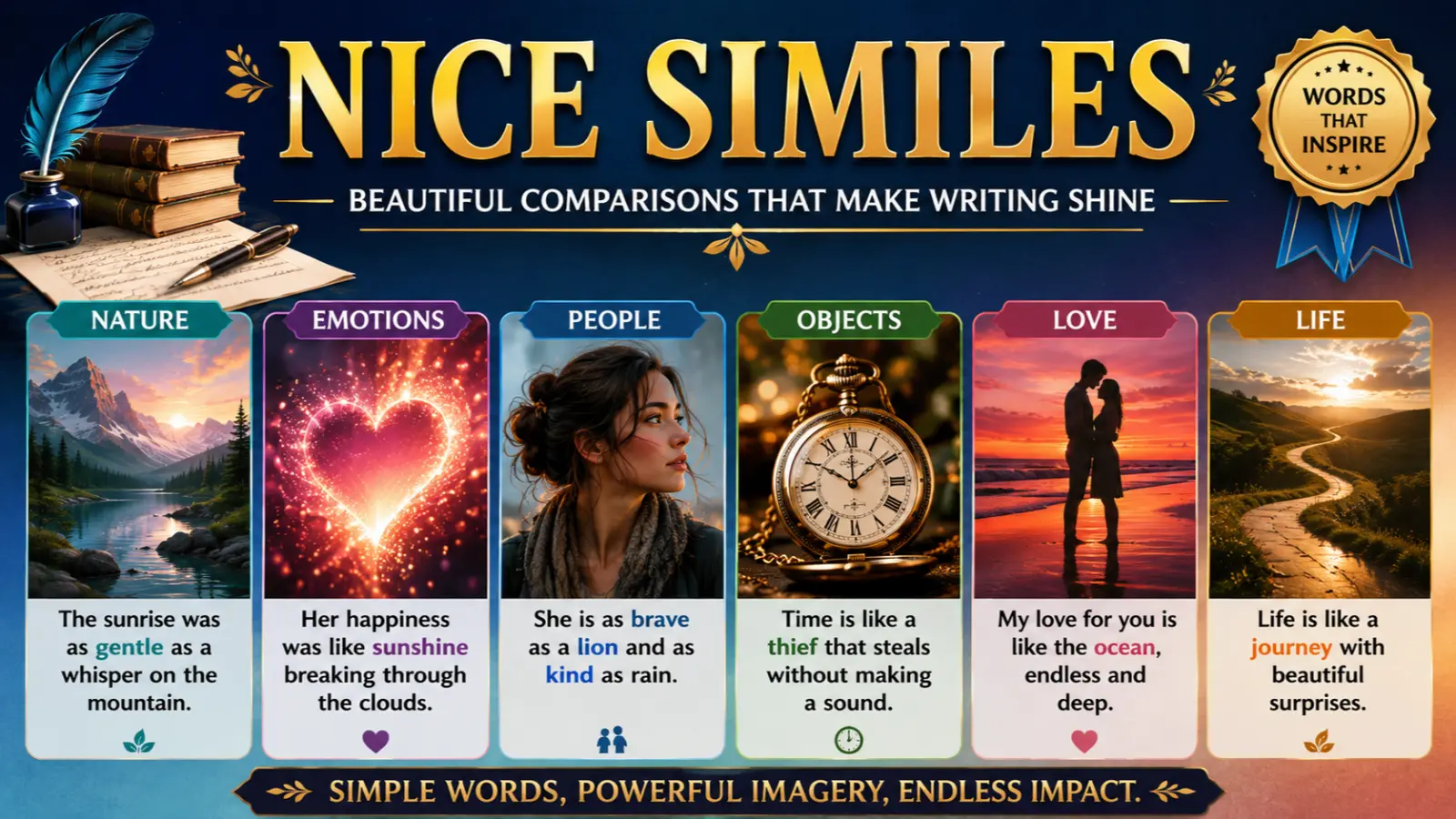
Nice similes bring warmth, charm, and personality to your writing. They help readers picture people, places, feelings, and moments through creative comparisons. Whether you’re writing a story, poem, speech, essay, or even a friendly message, the right simile can make ordinary words feel memorable. In this guide, you’ll discover original nice similes, learn why they work, see them in context, and pick up practical techniques for creating your own fresh comparisons.
What Is a Nice Simile?
A simile compares two different things using like or as.
A nice simile creates a pleasant, positive, or gentle image that makes writing more expressive without sounding exaggerated.
For example:
Her smile spread like sunrise across the room.
The comparison helps readers imagine warmth and happiness in a simple way.
Why Nice Similes Improve Writing
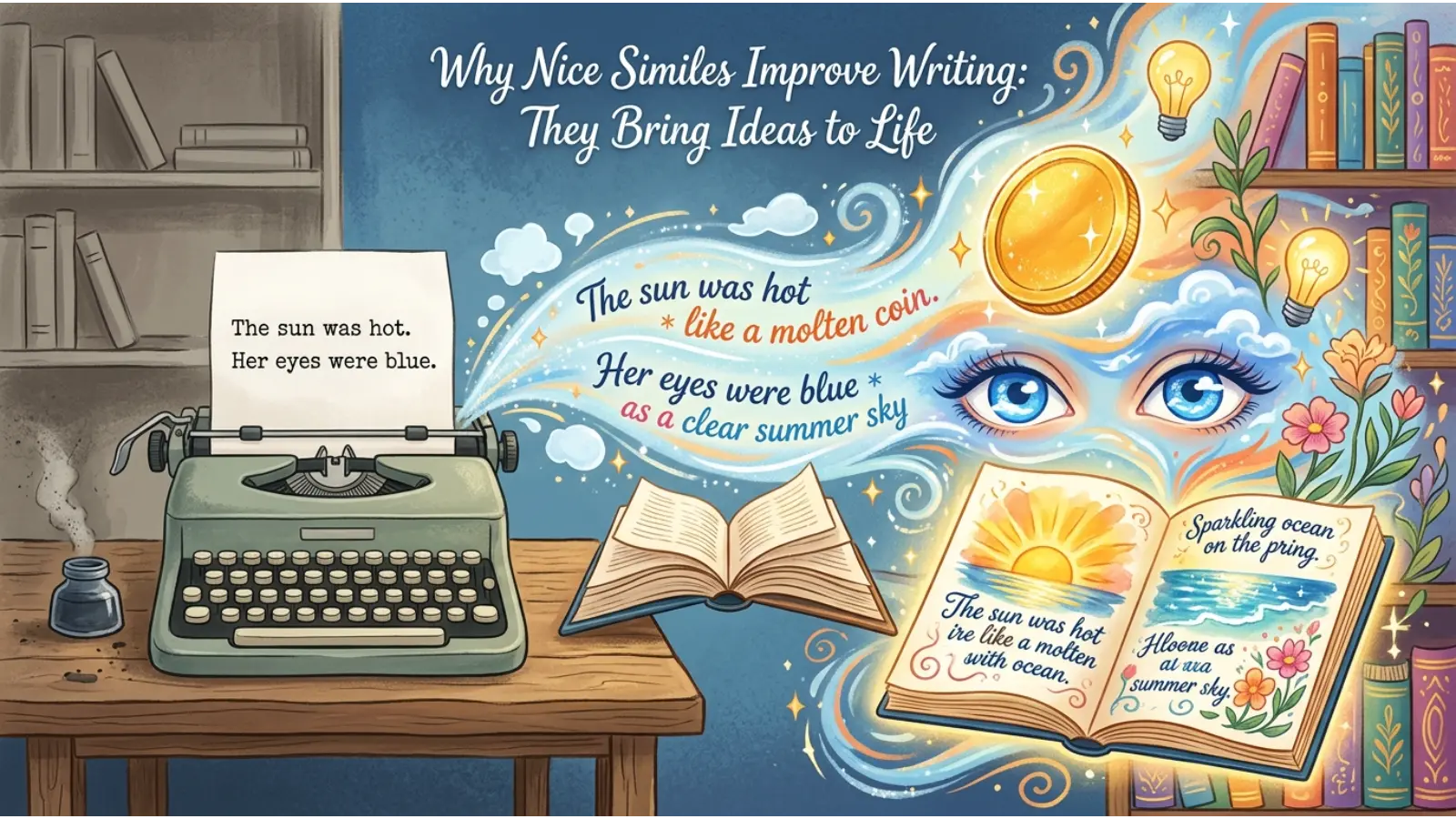
Good similes help readers:
- Visualize scenes more clearly.
- Connect emotionally with characters.
- Make descriptions feel original.
- Replace plain adjectives with vivid imagery.
- Add rhythm and creativity to sentences.
Professional writers rarely choose comparisons at random. They select images that naturally fit the mood of the scene.
30 Original Nice Similes
1. As welcoming as an open garden gate
Meaning: Warm and inviting.
Examples
- Her smile was as welcoming as an open garden gate.
- The café felt as welcoming as an open garden gate.
Best for: Friendly people and cozy places.
Writing Tip: Pair it with descriptions of hospitality.
2. Like sunshine finding a quiet window
Meaning: Gentle kindness arriving naturally.
Examples
- His encouragement came like sunshine finding a quiet window.
- Her laughter entered the room like sunshine finding a quiet window.
Storytelling Use
Perfect for calm emotional scenes.
3. As peaceful as a sleeping lake at dawn
Meaning: Completely calm.
Examples
- The village was as peaceful as a sleeping lake at dawn.
- She looked as peaceful as a sleeping lake at dawn.
Emotional Effect
Creates relaxation and comfort.
4. Like fresh bread warming a kitchen
Meaning: Comforting and familiar.
Examples
- Her words felt like fresh bread warming a kitchen.
- Their friendship was like fresh bread warming a kitchen.
Conversation Example
“Talking with Grandma is like fresh bread warming a kitchen.”
5. As cheerful as birds greeting the morning
Meaning: Full of happiness.
Examples
- The children were as cheerful as birds greeting the morning.
- He stayed as cheerful as birds greeting the morning despite the rain.
6. Like a lantern on a dark trail
Meaning: Offering hope and guidance.
Examples
- Her advice was like a lantern on a dark trail.
- Good teachers are like lanterns on dark trails.
Writing Purpose
Excellent for inspirational writing.
7. As dependable as the morning sunrise
Meaning: Reliable.
Examples
- My brother is as dependable as the morning sunrise.
- Their support remained as dependable as the morning sunrise.
8. Like cool shade on a summer afternoon
Meaning: Refreshing and comforting.
Examples
- Her calm voice was like cool shade on a summer afternoon.
- The vacation felt like cool shade on a summer afternoon.
9. As gentle as falling flower petals
Meaning: Soft and caring.
Examples
- She spoke as gentle as falling flower petals.
- His touch was as gentle as falling flower petals.
10. Like music drifting through open windows
Meaning: Pleasant and uplifting.
Examples
- Her laughter floated like music drifting through open windows.
- The memory returned like music drifting through open windows.
11. As bright as fresh spring blossoms
Meaning: Full of life.
Examples
- Her ideas were as bright as fresh spring blossoms.
- The classroom looked as bright as fresh spring blossoms.
12. Like a favorite book waiting on a shelf
Meaning: Comfortingly familiar.
Examples
- Home felt like a favorite book waiting on a shelf.
- Their friendship was like a favorite book waiting on a shelf.
13. As kind as rain after a dry season
Meaning: Deeply appreciated kindness.
Examples
- His generosity was as kind as rain after a dry season.
- The gift arrived as kind as rain after a dry season.
14. Like stars quietly appearing at dusk
Meaning: Beauty that grows naturally.
Examples
- Hope returned like stars quietly appearing at dusk.
- Confidence arrived like stars quietly appearing at dusk.
15. As smooth as polished river stones
Meaning: Calm and graceful.
Examples
- Her speech flowed as smooth as polished river stones.
- His explanation was as smooth as polished river stones.
16. Like a warm blanket after the rain
Meaning: Comfort during difficult times.
Examples
- Her hug felt like a warm blanket after the rain.
- Their kindness arrived like a warm blanket after the rain.
17. As graceful as leaves dancing in autumn
Meaning: Elegant movement.
Examples
- The dancer moved as graceful as leaves dancing in autumn.
- She walked as graceful as leaves dancing in autumn.
18. Like a calm breeze across a meadow
Meaning: Relaxing.
Examples
- His voice was like a calm breeze across a meadow.
- Peace settled like a calm breeze across a meadow.
19. As thoughtful as a handwritten letter
Meaning: Sincere and meaningful.
Examples
- Her gift was as thoughtful as a handwritten letter.
- His apology felt as thoughtful as a handwritten letter.
20. Like a rainbow after soft rain
Meaning: Hope following difficulty.
Examples
- Their success arrived like a rainbow after soft rain.
- The good news came like a rainbow after soft rain.
21. As refreshing as mountain air
Meaning: Energizing.
Examples
- Her honesty was as refreshing as mountain air.
- The conversation felt as refreshing as mountain air.
22. Like candles lighting a quiet room
Meaning: Gentle encouragement.
Examples
- Their smiles were like candles lighting a quiet room.
- Kind words spread like candles lighting a quiet room.
23. As steady as an old oak tree
Meaning: Strong and dependable.
Examples
- Her confidence remained as steady as an old oak tree.
- His leadership stayed as steady as an old oak tree.
24. Like fresh paint brightening an old wall
Meaning: Bringing new energy.
Examples
- Her creativity was like fresh paint brightening an old wall.
- The redesign felt like fresh paint brightening an old wall.
25. As comforting as familiar footsteps
Meaning: Safe and reassuring.
Examples
- His return was as comforting as familiar footsteps.
- The sound felt as comforting as familiar footsteps.
26. Like honey stirred into warm tea
Meaning: Naturally soothing.
Examples
- Her kindness spread like honey stirred into warm tea.
- His words settled like honey stirred into warm tea.
27. As joyful as children chasing bubbles
Meaning: Pure happiness.
Examples
- They celebrated as joyful as children chasing bubbles.
- She laughed as joyful as children chasing bubbles.
28. Like gentle waves touching the shore
Meaning: Calm and steady.
Examples
- Her encouragement came like gentle waves touching the shore.
- Time passed like gentle waves touching the shore.
29. As lovely as morning dew on roses
Meaning: Delicate beauty.
Examples
- The garden looked as lovely as morning dew on roses.
- Her artwork appeared as lovely as morning dew on roses.
30. Like a compass pointing home
Meaning: Providing direction and comfort.
Examples
- His advice was like a compass pointing home.
- True friendship is like a compass pointing home.
Writing Tip
Works especially well in stories about growth and relationships.
How Professional Writers Create Strong Similes
Great similes don’t compare random objects. They connect two things that naturally share a quality.
Instead of writing:
Happy as a clown.
Try something more original:
Happy like sunlight spilling across fresh snow.
Notice how the second comparison creates a stronger visual image.
How to Make Your Similes More Vivid
Choose specific images
Specific details create stronger mental pictures than general descriptions.
Match the mood
A peaceful scene deserves peaceful comparisons. Exciting scenes need energetic imagery.
Appeal to the senses
Think about sight, sound, touch, smell, and taste.
Surprise the reader
Fresh comparisons are often more memorable than familiar ones.
Common Mistakes to Avoid
Overused Comparisons
Readers have seen many traditional similes countless times. Whenever possible, create something fresh.
Mixed Imagery
Don’t combine unrelated images in one sentence.
Example:
She floated like a feather while roaring like thunder.
The images clash unless there is a clear reason.
Confusing Similes with Metaphors
Similes use like or as.
Metaphors make direct comparisons without those words.
Forcing a Comparison
If the comparison feels unnatural, readers notice immediately.
Choose images that genuinely fit the description.
Related Literary Devices
Metaphor
States one thing is another rather than comparing them.
Imagery
Uses sensory language to create vivid mental pictures.
Personification
Gives human qualities to non-human things.
Hyperbole
Uses deliberate exaggeration for emphasis.
Symbolism
Uses objects or actions to represent deeper meanings.
Create Your Own Nice Similes
Follow these simple steps:
- Pick the quality you want to describe.
- Think of something that naturally shares that quality.
- Connect them with like or as.
- Read it aloud.
- Replace ordinary comparisons with more specific images.
Practice Exercise 1
Describe kindness without using the words kind or nice.
Practice Exercise 2
Write three similes inspired by nature.
Practice Exercise 3
Rewrite a plain sentence using one original simile.
Original:
The room felt comfortable.
Possible revision:
The room felt like warm sunlight resting on old wooden floors.
Frequently Asked Questions
What makes a simile “nice”?
A nice simile creates pleasant, positive, or comforting imagery while sounding natural and meaningful.
Should I avoid common similes?
Not always. Familiar similes can work, but original comparisons often make writing more memorable.
Can nice similes be used in essays?
Yes. They work well in narrative essays, speeches, creative assignments, and descriptive writing. Use them sparingly in formal academic papers.
How many similes should I use in one paragraph?
Usually one or two are enough. Too many comparisons can distract readers.
What’s the difference between a simile and imagery?
A simile is one type of imagery. Imagery includes any language that helps readers experience a scene through the senses.
Are similes useful in conversation?
Yes. Natural similes can make stories, compliments, and everyday conversations more colorful.
Conclusion
Nice similes add warmth, personality, and imagination to writing. Instead of relying on familiar comparisons, try creating images that reflect your own experiences and observations. The most memorable similes are not the most complicated—they’re the ones that feel authentic, fit the moment, and help readers see something in a fresh way. With practice, you’ll begin noticing creative comparisons everywhere, turning ordinary descriptions into writing that readers remember.
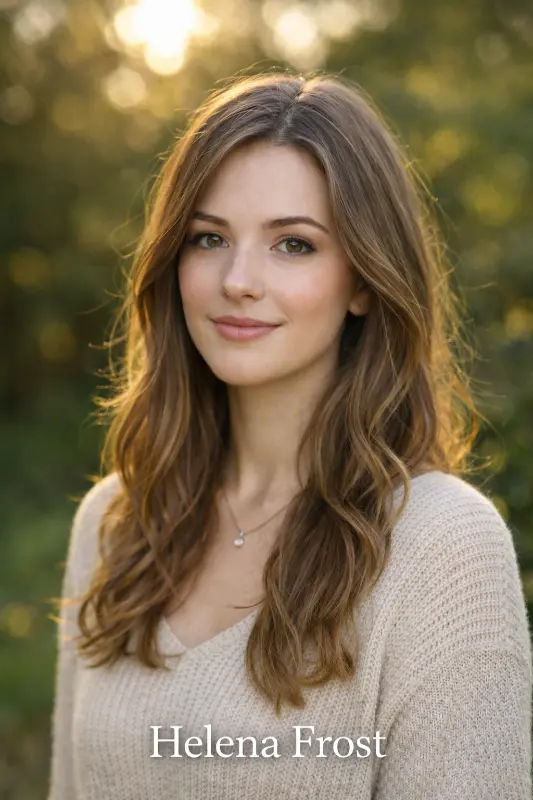
I am Helena Frost, a writer captivated by the beauty of language and the art of comparison. Through my words, I explore the world by turning ordinary moments into vivid similes and reflections. I enjoy crafting phrases that spark imagination, evoke emotion, and linger in the mind. My writing celebrates the subtle connections between people, nature, and the stories we live. For me, every sentence is an opportunity to reveal the extraordinary in the everyday.