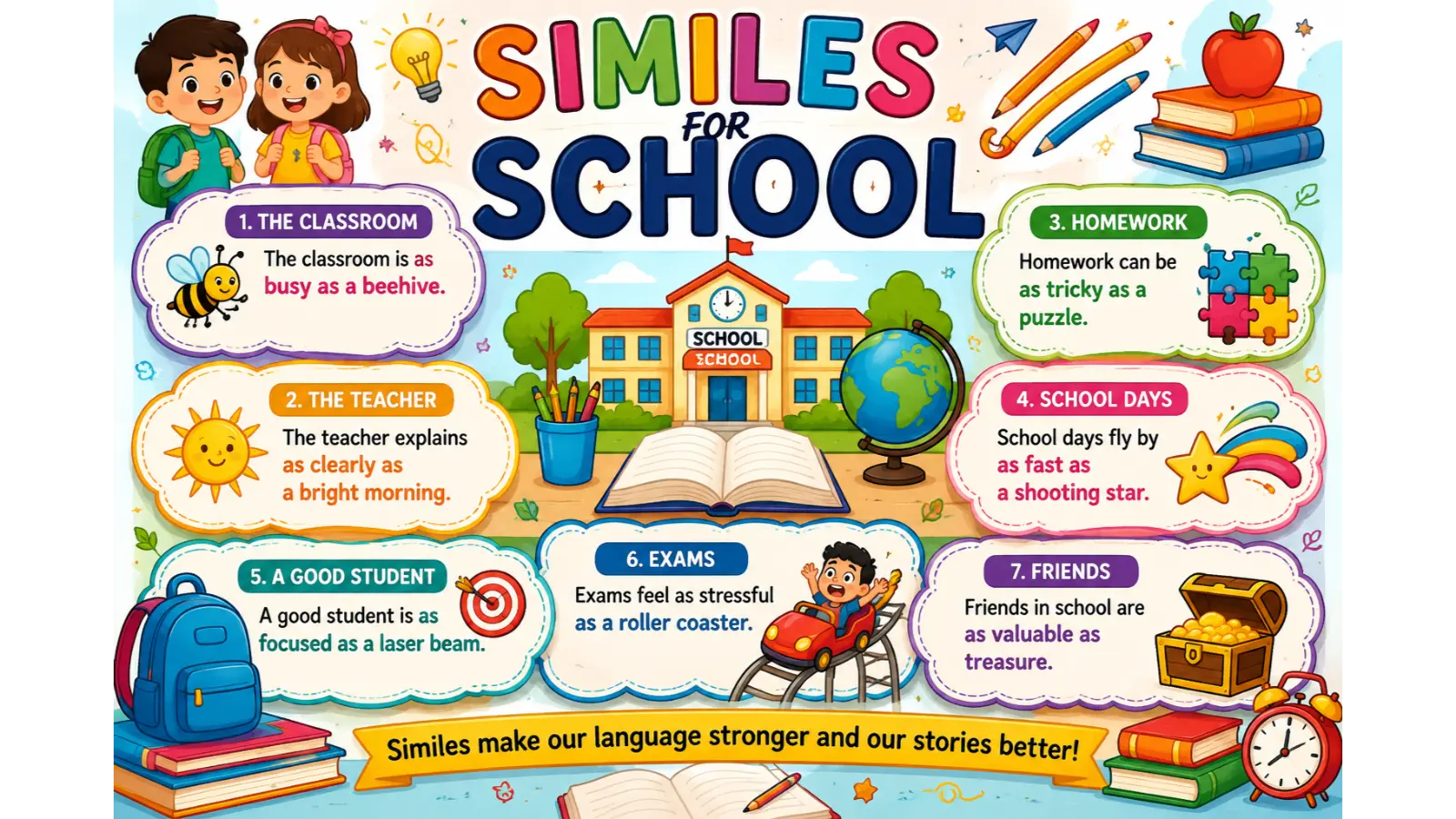
School is more than a building where students attend classes. It is a place filled with curiosity, friendships, challenges, achievements, and unforgettable memories. One of the easiest ways to describe these experiences more vividly is by using similes. A simile compares two different things using words such as “like” or “as.” It helps readers picture ideas more clearly and gives ordinary writing greater emotion and personality. Whether you’re writing a classroom essay, a short story, a poem, or a personal journal, learning to use similes for school can make your descriptions more memorable. This guide introduces fresh, original comparisons while showing you how to use them naturally in different kinds of writing.
What Are Similes for School?
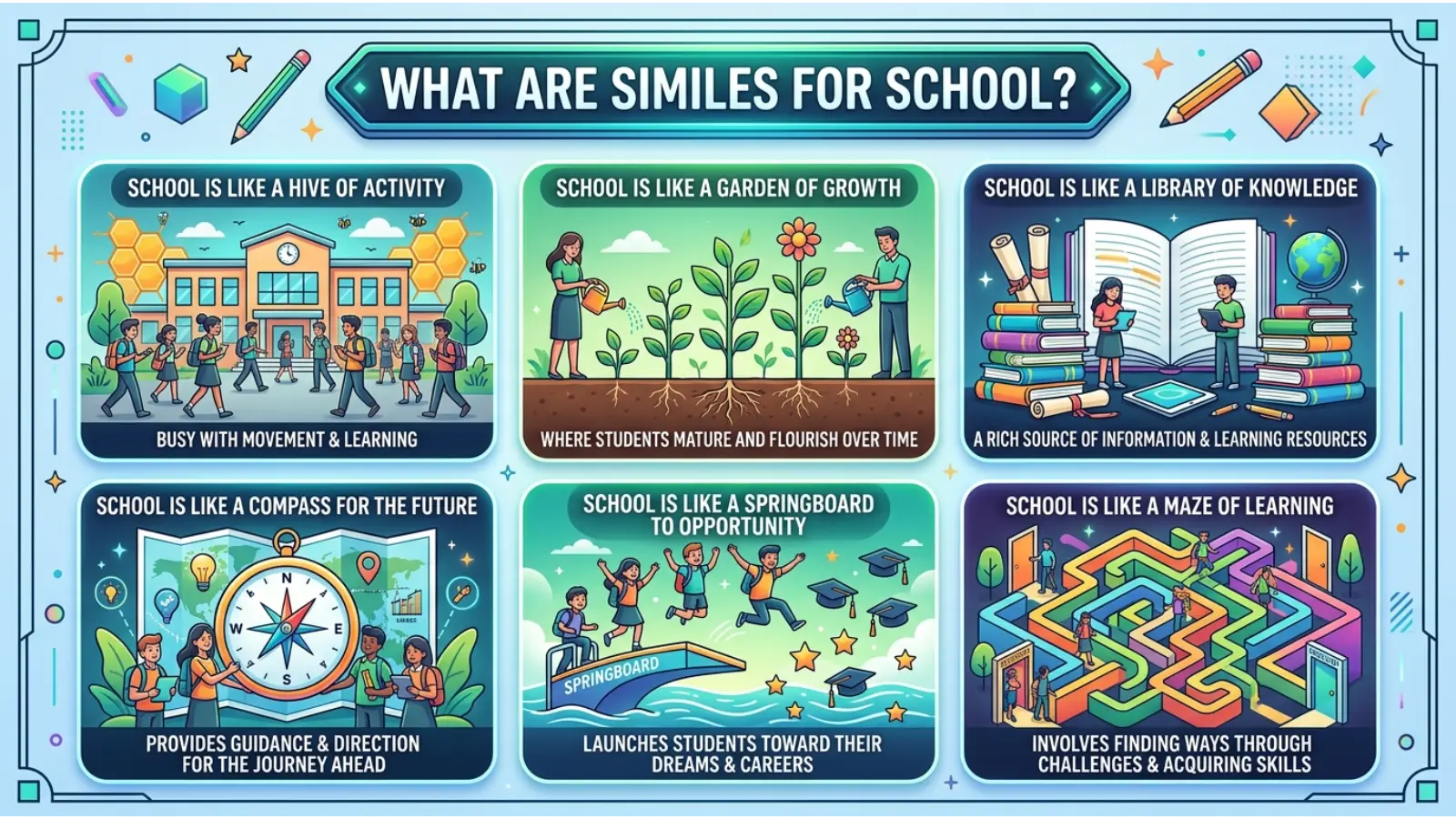
School similes are comparisons inspired by classrooms, learning, teachers, students, homework, playgrounds, and everyday school life.
They can describe:
- Learning
- Friendship
- Exams
- Classrooms
- Teachers
- School routines
- School emotions
- Student experiences
A good school simile helps readers imagine the scene instead of simply reading about it.
25 Original Similes for School
1. Busy like a hallway before the first bell
Meaning: Full of movement and excitement.
Examples
- The cafeteria became busy like a hallway before the first bell.
- Our science fair was busy like a hallway before the first bell.
Writing Tip
Perfect for describing energetic school scenes.
2. Curious as a student opening a brand-new textbook
Meaning: Eager to learn something new.
Examples
- Maya was curious as a student opening a brand-new textbook.
- The young inventor examined the machine with endless curiosity.
Best Context
Character descriptions.
3. Quiet like a classroom during a surprise quiz
Meaning: Extremely silent.
Examples
- The library became quiet like a classroom during a surprise quiz.
- Everyone froze as the announcement began.
Conversation
“It suddenly got quiet like a classroom during a surprise quiz.”
4. Bright as fresh chalk on a clean blackboard
Meaning: Clear, noticeable, and fresh.
Examples
- Her ideas were bright as fresh chalk on a clean blackboard.
- The mural looked bright as fresh chalk on a clean blackboard.
Writing Purpose
Describing creativity and clarity.
5. Steady like a teacher writing on the board
Meaning: Calm, confident, and consistent.
Examples
- His hands stayed steady like a teacher writing on the board.
- She answered every question without rushing.
6. Fast like students racing to recess
Meaning: Extremely quick.
Examples
- Time passed fast like students racing to recess.
- The announcement spread through school in seconds.
7. Organized as books on a classroom shelf
Meaning: Neat and well arranged.
Examples
- Her desk was organized as books on a classroom shelf.
- The project folders looked perfectly arranged.
8. Colorful like artwork covering a classroom wall
Meaning: Bright and full of creativity.
Examples
- The festival looked colorful like artwork covering a classroom wall.
- His imagination was full of colorful ideas.
9. Focused as a student solving the final exam question
Meaning: Completely concentrated.
Examples
- She remained focused as a student solving the final exam question.
- The artist ignored every distraction.
10. Friendly like classmates sharing lunch
Meaning: Warm and welcoming.
Examples
- The neighbors were friendly like classmates sharing lunch.
- Everyone greeted the new student kindly.
11. Nervous as a student waiting for report cards
Meaning: Feeling anxious.
Examples
- He felt nervous as a student waiting for report cards.
- The team waited for the results.
12. Strong like a backpack carrying every subject
Meaning: Able to handle many responsibilities.
Examples
- She stayed strong like a backpack carrying every subject.
- The small bridge held the heavy weight.
13. Hopeful as a child raising a hand
Meaning: Expecting a positive opportunity.
Examples
- Emma looked hopeful as a child raising a hand.
- The volunteers waited for their names to be called.
14. Patient like a teacher helping every student
Meaning: Calm and understanding.
Examples
- Grandfather was patient like a teacher helping every student.
- The coach explained each step carefully.
15. Excited like the final bell on Friday
Meaning: Filled with happiness and anticipation.
Examples
- We were excited like the final bell on Friday.
- The travelers celebrated the beginning of vacation.
16. Calm as morning sunlight through classroom windows
Meaning: Peaceful and relaxing.
Examples
- The garden felt calm as morning sunlight through classroom windows.
- Her voice eased everyone’s worries.
17. Determined like a student finishing the last homework problem
Meaning: Refusing to give up.
Examples
- Liam stayed determined until the race ended.
- She kept practicing every evening.
18. Sharp as a freshly sharpened pencil
Meaning: Intelligent or precise.
Examples
- His observations were sharp as a freshly sharpened pencil.
- The detective noticed every clue.
19. Cheerful like children entering art class
Meaning: Joyful and energetic.
Examples
- The guests arrived cheerful like children entering art class.
- The park buzzed with happy laughter.
20. Reliable like the morning school bell
Meaning: Always dependable.
Examples
- She was reliable like the morning school bell.
- Our captain never missed practice.
21. Confident as a student presenting a favorite project
Meaning: Self-assured and proud.
Examples
- He walked confidently into the interview.
- Mia smiled before beginning her speech.
22. Gentle like turning the pages of a library book
Meaning: Soft and careful.
Examples
- Her voice was gentle like turning the pages of a library book.
- The breeze moved through the trees quietly.
23. Persistent as a student practicing difficult math
Meaning: Never giving up.
Examples
- The inventor stayed persistent despite many failures.
- She continued learning every day.
24. Welcoming like an open classroom door
Meaning: Inviting and friendly.
Examples
- Their home felt welcoming like an open classroom door.
- The community greeted newcomers warmly.
25. Inspiring as a teacher praising honest effort
Meaning: Encouraging and motivating.
Examples
- Her speech was inspiring as a teacher praising honest effort.
- The coach celebrated improvement instead of perfection.
Why These Similes Work
Strong similes do more than compare two things. They connect readers with familiar experiences.
School is something almost everyone understands. Comparing emotions, actions, and places to common classroom moments makes descriptions easier to picture and remember.
Instead of writing:
“The room was noisy.”
You could write:
“The room was busy like a hallway before the first bell.”
The second sentence creates a stronger mental image because it shows the feeling rather than simply naming it.
How to Write Better School Similes
Start with a Clear Image
Think about moments people instantly recognize:
- A ringing bell
- Students raising hands
- A crowded hallway
- A quiet library
- A colorful bulletin board
These familiar scenes make your comparisons feel natural.
Compare Feelings, Not Just Objects
Instead of comparing one object to another, compare emotions.
For example:
- Hopeful as a child raising a hand
- Nervous as a student waiting for report cards
- Excited like the final bell on Friday
Emotional comparisons often leave a stronger impression.
Keep the Comparison Believable
Creative doesn’t mean confusing.
A reader should immediately understand why the comparison works.
If they have to stop and decode it, simplify the image.
Related Literary Devices
Metaphor
A metaphor says something is another thing instead of saying it is like another thing.
- Simile: She was calm like morning sunlight through classroom windows.
- Metaphor: She was the morning sunlight in the classroom.
Imagery
Imagery uses descriptive language that appeals to the senses. Similes strengthen imagery by giving readers familiar comparisons.
Personification
Personification gives human qualities to non-human things.
Example:
“The old school bell welcomed everyone.”
Hyperbole
Hyperbole intentionally exaggerates.
Example:
“The homework weighed a thousand pounds.”
Using hyperbole together with similes can make humorous writing more entertaining, but use both sparingly.
Create Your Own School Similes
Follow these simple steps.
Step 1
Choose something from school.
Examples:
- Pencil
- Teacher
- Playground
- Locker
- Bell
- Notebook
Step 2
Think about its strongest quality.
Examples:
- Loud
- Quiet
- Organized
- Colorful
- Busy
- Helpful
Step 3
Compare it with another familiar image.
Example:
“The hallway was busy like a train station at sunrise.”
Creative Exercise
Write one simile for each topic:
- A classroom
- A teacher
- Homework
- Recess
- Graduation
Then rewrite each simile using a different comparison. Notice how changing the image changes the mood.
Common Mistakes to Avoid
Using Overused Comparisons
Avoid comparisons readers have seen countless times unless you give them a fresh twist.
Mixing Images
Stay with one clear comparison instead of combining unrelated ideas in the same sentence.
Confusing Metaphors and Similes
Remember:
- Similes use like or as.
- Metaphors do not.
Forcing Comparisons
If the comparison doesn’t make the description clearer, leave it out.
The best similes sound effortless.
Frequently Asked Questions
What are similes for school?
They are comparisons using “like” or “as” that describe school experiences, classrooms, teachers, learning, or students in a vivid way.
Why should students use similes?
Similes make writing more descriptive, engaging, and memorable while helping readers visualize ideas.
Can school similes be used in essays?
Yes. They work well in personal narratives, creative essays, speeches, and descriptive writing. Use them sparingly in formal academic essays unless the assignment encourages creative language.
What makes a good school simile?
A good simile is original, easy to understand, and connected to a familiar school experience.
Are similes only for poetry?
No. Similes are useful in stories, classroom assignments, speeches, journals, and everyday conversation.
How can I make my similes more original?
Observe real school moments, focus on one strong quality, and compare it with an unexpected but believable image instead of relying on familiar clichés.
Conclusion
School offers countless moments worth describing, from the quiet focus of a classroom to the excitement of the final bell. Thoughtful similes transform these ordinary experiences into memorable scenes that readers can easily imagine. The best similes are clear, fresh, and purposeful. As you practice, pay attention to the details around you—the sound of a hallway, the feeling of opening a new notebook, or the encouragement of a great teacher. Those everyday moments can become the inspiration for comparisons that make your writing stand out. Keep experimenting, revise your comparisons, and don’t be afraid to replace ordinary descriptions with vivid images that bring your words to life.
I am Helena Frost, a writer captivated by the beauty of language and the art of comparison. Through my words, I explore the world by turning ordinary moments into vivid similes and reflections. I enjoy crafting phrases that spark imagination, evoke emotion, and linger in the mind. My writing celebrates the subtle connections between people, nature, and the stories we live. For me, every sentence is an opportunity to reveal the extraordinary in the everyday.