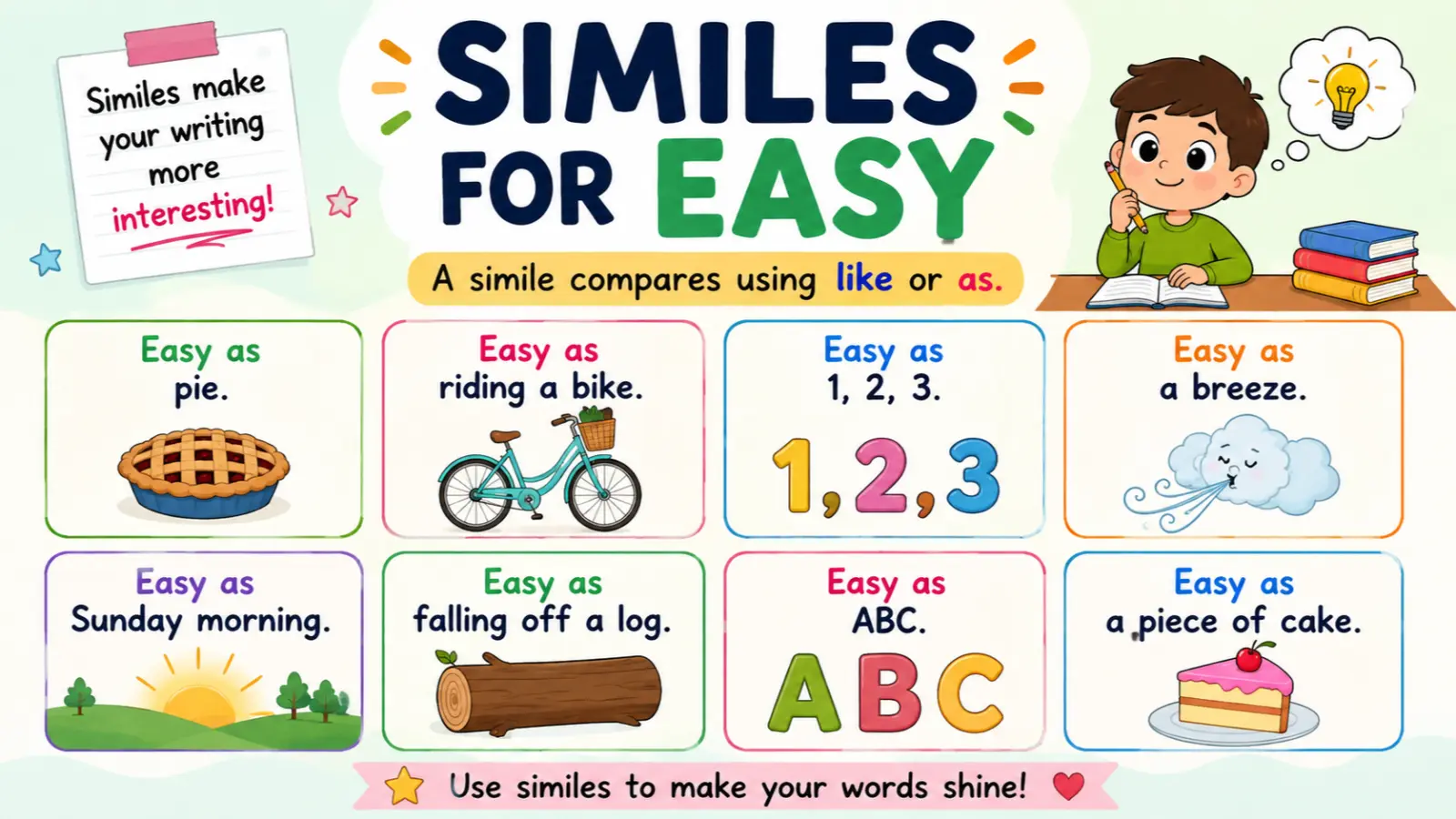
Writing becomes more enjoyable when ideas are simple to understand. One of the easiest ways to make your writing more engaging is by using similes. A simile compares two different things using the words like or as, helping readers picture your meaning more clearly.
Whether you’re writing a school assignment, a story, a poem, or simply trying to improve your English, learning similes for easy ideas can make your sentences more expressive without becoming complicated.
This guide introduces fresh, original similes, explains how they work, and shows you practical ways to use them naturally in everyday writing.
Quick Answer
Similes for easy are comparisons that describe something as simple, effortless, or uncomplicated by comparing it to another familiar object or experience using like or as. They help readers quickly understand an idea while making writing more vivid and memorable.
Why Simple Similes Improve Your Writing
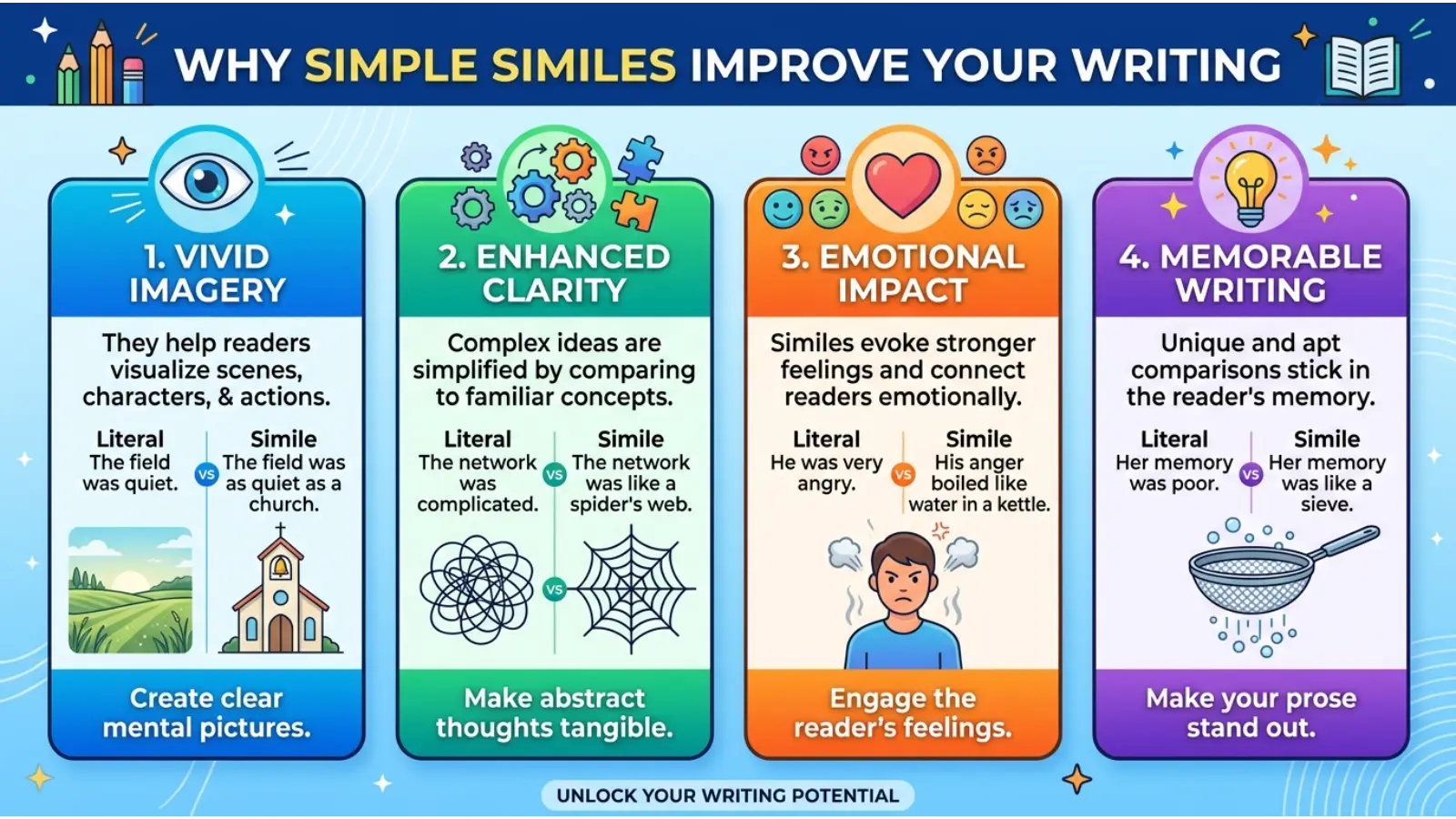
Good writing is not about using difficult words.
Professional writers often choose clear comparisons because readers understand them immediately. A simple simile paints a picture without slowing the reader down.
Effective similes can:
- Improve clarity
- Make descriptions memorable
- Add emotion naturally
- Help readers visualize ideas
- Strengthen storytelling
How to Choose the Right Simile
Before adding a simile, ask yourself:
- Does it make the sentence easier to imagine?
- Does it sound natural?
- Does it match the mood?
- Is it original instead of overused?
If the answer is yes, it will probably improve your writing.
30 Original Similes for Easy
1. As easy as opening a sunny window
Meaning: Very simple and refreshing.
Example 1: Learning the shortcut was as easy as opening a sunny window.
Example 2: Once I understood the rule, it became as easy as opening a sunny window.
Writing Tip: Great for positive situations.
2. Like a leaf floating downstream
Meaning: Requires almost no effort.
Example 1: The project moved like a leaf floating downstream.
Example 2: The conversation flowed like a leaf floating downstream.
Best Context: Stories and creative essays.
3. As easy as following footprints in fresh sand
Meaning: Clear directions.
Example 1: The instructions were as easy as following footprints in fresh sand.
Example 2: The lesson felt as easy as following footprints in fresh sand.
4. Like a bird catching the morning breeze
Meaning: Smooth and effortless.
Example 1: She solved the puzzle like a bird catching the morning breeze.
Example 2: The team adapted like a bird catching the morning breeze.
5. As easy as turning a page
Meaning: Quick and uncomplicated.
Formal Example: The transition was as easy as turning a page.
Conversation Example: Relax—it’ll be as easy as turning a page.
6. Like warm sunlight on a spring morning
Meaning: Comfortable and natural.
Example 1: Making friends felt like warm sunlight on a spring morning.
Example 2: Reading the guide was like warm sunlight on a spring morning.
7. As easy as tying a ribbon
Meaning: Simple with little effort.
Storytelling Example: She finished the task as easy as tying a ribbon.
8. Like water finding its path
Meaning: Naturally flowing.
Writing Purpose: Excellent for describing smooth progress.
9. As easy as picking ripe berries
Meaning: Pleasant and uncomplicated.
Example: The final decision was as easy as picking ripe berries.
10. Like a feather riding the wind
Meaning: Effortless movement.
Poetry Example: My thoughts drifted like a feather riding the wind.
11. As easy as humming your favorite tune
Meaning: Familiar and enjoyable.
Conversation Example: Don’t worry—it’s as easy as humming your favorite tune.
12. Like a candle lighting another candle
Meaning: Naturally simple to share or teach.
13. As easy as finding stars on a clear night
Meaning: Very obvious.
Example: The answer became as easy as finding stars on a clear night.
14. Like a river greeting the sea
Meaning: Smooth conclusion.
15. As easy as slipping into comfortable shoes
Meaning: Comfortable from the beginning.
16. Like clouds drifting across the sky
Meaning: Gentle and effortless.
17. As easy as catching a friendly smile
Meaning: Naturally pleasant.
18. Like a key fitting its lock
Meaning: Perfectly simple.
19. As easy as drawing circles in the sand
Meaning: Requires very little skill.
20. Like rain refreshing thirsty flowers
Meaning: Brings natural improvement.
21. As easy as folding a paper boat
Meaning: Simple enough for beginners.
22. Like morning light filling a room
Meaning: Gradual but effortless.
23. As easy as tasting fresh fruit
Meaning: Pleasant and uncomplicated.
24. Like stepping onto a quiet path
Meaning: Calm and simple.
25. As easy as watching clouds drift
Meaning: Relaxed and stress-free.
26. Like a breeze through open curtains
Meaning: Smooth and natural.
27. As easy as stacking smooth stones
Meaning: Straightforward with patience.
28. Like laughter spreading through friends
Meaning: Naturally effortless.
29. As easy as planting a single seed
Meaning: Small first step with simple effort.
30. Like sunlight finding every corner
Meaning: Happens naturally without difficulty.
Why These Similes Work
Each comparison connects the idea of “easy” with experiences people already understand.
Instead of simply saying something was easy, these similes create an image that readers can picture immediately. That mental image makes the writing more memorable.
Fresh comparisons also help your work stand out because they avoid the tired expressions readers have seen countless times.
Make Your Own Original Similes
Creating original similes is easier than many writers think.
Step 1
Choose the feeling or quality you want to describe.
Example:
- Easy
- Fast
- Quiet
- Happy
Step 2
Think of something in nature or daily life that naturally shares that quality.
Step 3
Connect the two ideas using like or as.
Example:
- As easy as…
- Like…
Step 4
Read it aloud.
If it sounds natural and creates a clear picture, you’ve created an effective simile.
Creative Practice
Try finishing these prompts:
- As easy as __________.
- Like __________ on a peaceful afternoon.
- As easy as __________ after practice.
- Like __________ finding its way home.
- As easy as __________ in spring.
Challenge yourself to avoid comparisons you’ve heard many times before.
Common Mistakes to Avoid
Using Overused Comparisons
Readers notice fresh imagery more than familiar expressions. Aim for originality while keeping your comparison believable.
Mixing Images
Avoid combining unrelated ideas in one sentence.
Weak: Like a bird swimming through fire.
The picture becomes confusing instead of vivid.
Forcing a Simile
Only use a simile when it improves understanding. If it distracts from your message, leave it out.
Confusing Similes with Metaphors
A simile uses like or as.
A metaphor says one thing is another.
Understanding the difference helps you choose the best literary device.
Choosing Weak Images
Generic comparisons create weak descriptions. Specific images make stronger writing.
Related Literary Devices
Metaphor
A metaphor compares without using like or as.
Example:
“The classroom was a beehive.”
Imagery
Imagery appeals to the senses, helping readers see, hear, smell, taste, or feel a scene.
Personification
Personification gives human qualities to non-human things.
Example:
“The wind whispered through the trees.”
Hyperbole
Hyperbole uses intentional exaggeration for emphasis.
Example:
“I waited forever.”
Alliteration
Alliteration repeats beginning sounds to create rhythm.
Example:
“Soft summer sunshine.”
Idiom
An idiom has a figurative meaning that differs from the literal words.
Symbolism
A symbol represents a deeper idea beyond its literal meaning.
Frequently Asked Questions
What is a simile for easy?
A simile for easy compares something simple to another familiar experience using like or as to create a clearer mental picture.
Why should I use similes?
They make writing more descriptive, memorable, and engaging without making it difficult to read.
Can students use similes in school writing?
Yes. Similes are commonly used in essays, stories, poems, speeches, and classroom assignments.
How do I avoid cliché similes?
Look for everyday experiences instead of repeating famous comparisons. Original imagery makes your writing stronger.
Are similes only used in poetry?
No. They appear in novels, speeches, conversations, journalism, advertising, and everyday communication.
What makes a good simile?
A good simile is clear, believable, original, and relevant to the idea you’re describing.
Should every paragraph contain a simile?
No. Use similes only when they improve clarity or create stronger imagery.
Conclusion
Learning similes for easy is about more than collecting comparisons. It’s about understanding how vivid language helps readers connect with your ideas. By choosing fresh, natural images and avoiding overused expressions, you can make your writing clearer, more memorable, and more enjoyable to read. Practice creating your own comparisons, experiment with different settings and emotions, and remember that the strongest similes are the ones that feel effortless while leaving a lasting impression.

I am Helena Frost, a writer captivated by the beauty of language and the art of comparison. Through my words, I explore the world by turning ordinary moments into vivid similes and reflections. I enjoy crafting phrases that spark imagination, evoke emotion, and linger in the mind. My writing celebrates the subtle connections between people, nature, and the stories we live. For me, every sentence is an opportunity to reveal the extraordinary in the everyday.