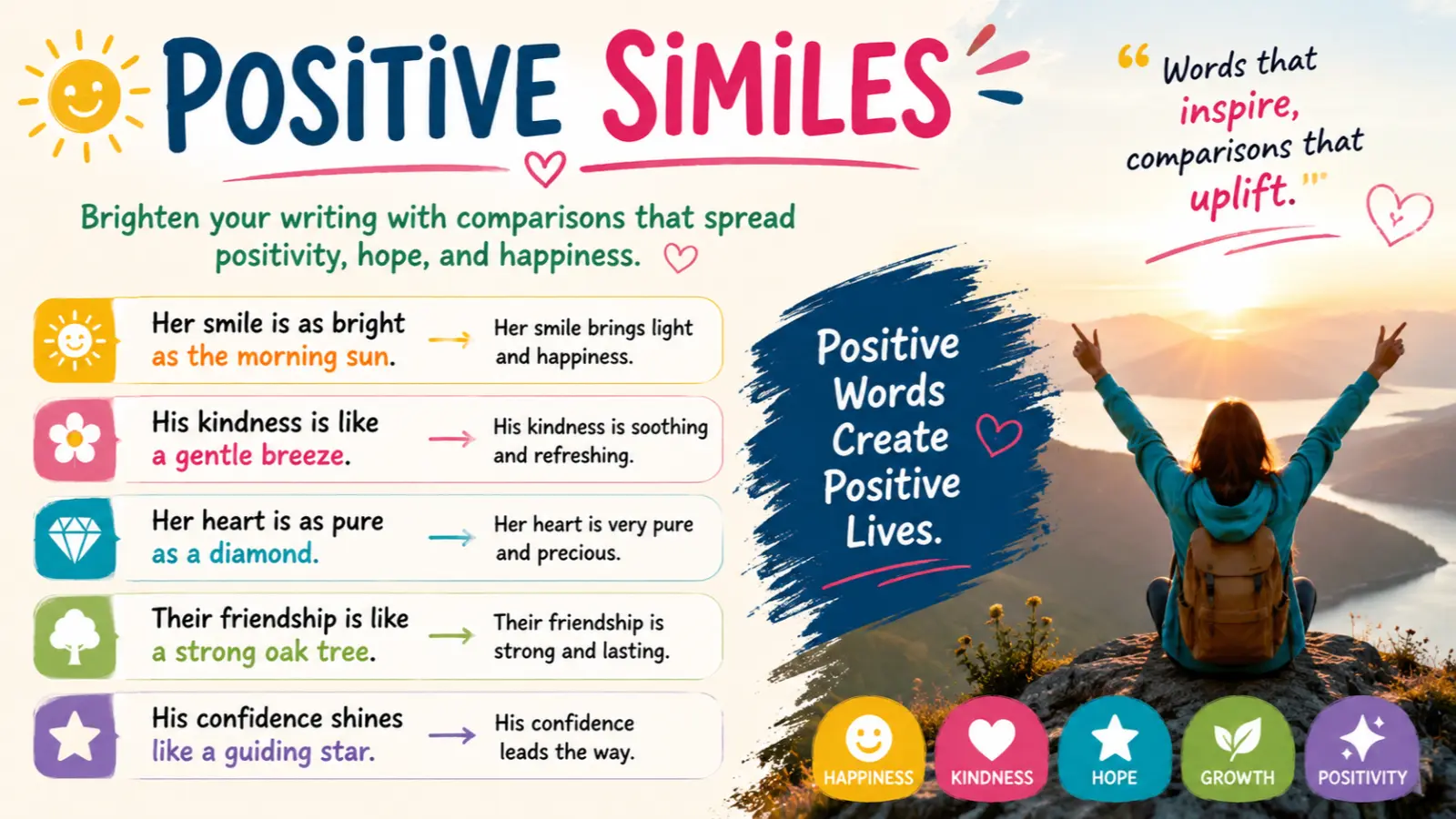
Positive similes help writers express hope, kindness, confidence, and joy through vivid comparisons. Instead of simply saying someone is “happy” or “nice,” a well-crafted simile paints a picture that readers can easily imagine and feel. Whether you’re writing a story, poem, speech, school assignment, or social media caption, positive similes make your words more memorable. This guide explores original positive similes, explains why they work, and shows you how to create your own.
What Are Positive Similes?
A positive simile is a comparison that highlights an uplifting quality by using words such as like or as.
Examples:
- Her smile was like sunrise after a rainy week.
- He stayed as steady as a lighthouse during a calm evening.
These comparisons create encouraging, hopeful, and emotionally engaging imagery.
Why Positive Similes Matter in Writing
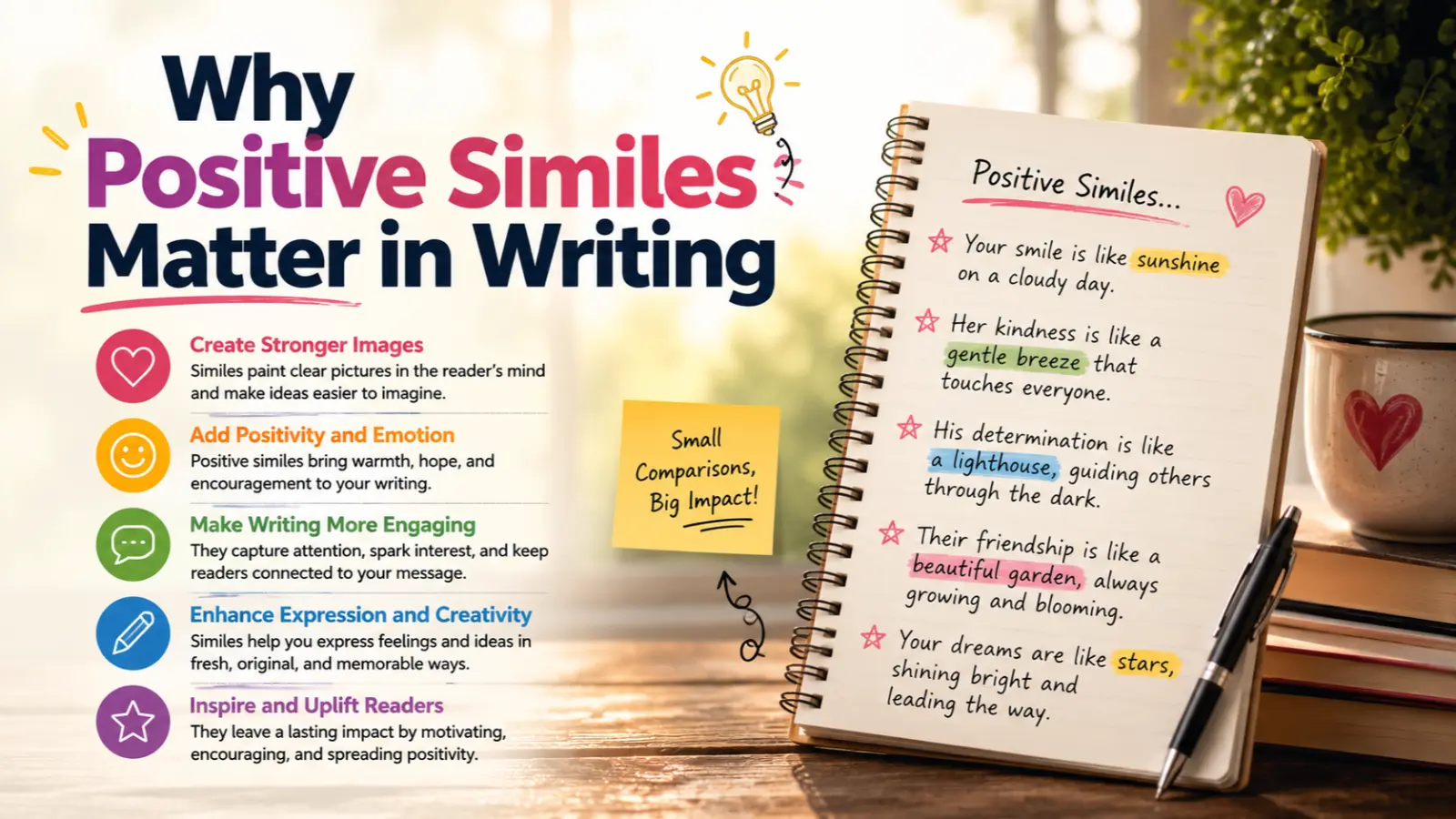
Positive similes do much more than decorate sentences.
They help readers:
- Picture emotions clearly.
- Connect with characters.
- Remember important descriptions.
- Feel warmth and optimism.
- Enjoy more colorful language.
Writers often use positive similes in:
- Stories
- Poetry
- Children’s books
- Graduation speeches
- Wedding speeches
- Personal journals
- Everyday conversations
25 Original Positive Similes to Brighten Your Writing
1. As welcoming as an open garden gate
Meaning: Friendly and inviting.
Examples
- The new teacher was as welcoming as an open garden gate.
- Our neighbors greeted us as welcoming as an open garden gate.
Best for: Friendly people and first impressions.
Writing Tip: Use this when introducing kind characters.
2. Like sunshine finding every window
Meaning: Spreading happiness everywhere.
Examples
- Her laughter was like sunshine finding every window.
- His encouragement was like sunshine finding every window.
Emotional Effect: Warmth and hope.
Storytelling: Perfect for uplifting scenes.
3. As dependable as the morning light
Meaning: Reliable and trustworthy.
Examples
- Emma remained as dependable as the morning light.
- His advice was as dependable as the morning light.
Conversation
“I know she’ll help. She’s as dependable as the morning light.”
4. Like a fresh breeze after summer heat
Meaning: Refreshing and comforting.
Examples
- Your idea felt like a fresh breeze after summer heat.
- Their kindness arrived like a fresh breeze after summer heat.
5. As bright as hope in a new beginning
Meaning: Full of optimism.
Examples
- His future looked as bright as hope in a new beginning.
- The children’s dreams were as bright as hope in a new beginning.
Poetry
“The sky grew as bright as hope in a new beginning.”
6. Like a song remembered at the perfect moment
Meaning: Comforting and uplifting.
Examples
- Her words were like a song remembered at the perfect moment.
- The letter arrived like a song remembered at the perfect moment.
7. As gentle as morning mist
Meaning: Soft and caring.
Examples
- His voice was as gentle as morning mist.
- She held the puppy as gentle as morning mist.
Writing Purpose: Describing kindness.
8. Like stars celebrating the night
Meaning: Joyful and inspiring.
Examples
- Their smiles sparkled like stars celebrating the night.
- The children laughed like stars celebrating the night.
9. As encouraging as a finish-line cheer
Meaning: Motivating.
Examples
- Her advice was as encouraging as a finish-line cheer.
- His smile felt as encouraging as a finish-line cheer.
10. Like rain waking a thirsty garden
Meaning: Bringing renewal.
Examples
- Your kindness was like rain waking a thirsty garden.
- Good news arrived like rain waking a thirsty garden.
11. As peaceful as a quiet sunrise
Meaning: Calm and reassuring.
Examples
- The room felt as peaceful as a quiet sunrise.
- Her expression remained as peaceful as a quiet sunrise.
12. Like a lantern guiding travelers home
Meaning: Providing guidance.
Examples
- His wisdom was like a lantern guiding travelers home.
- Her example became like a lantern guiding travelers home.
13. As cheerful as birds greeting dawn
Meaning: Full of joy.
Examples
- She sounded as cheerful as birds greeting dawn.
- Their reunion was as cheerful as birds greeting dawn.
14. Like fresh paint on an old fence
Meaning: Giving new life.
Examples
- His enthusiasm was like fresh paint on an old fence.
- The celebration felt like fresh paint on an old fence.
15. As comforting as warm soup on a cold day
Meaning: Deeply reassuring.
Examples
- Grandma’s hug was as comforting as warm soup on a cold day.
- Your message felt as comforting as warm soup on a cold day.
16. Like a path opening through the forest
Meaning: Offering hope and direction.
Examples
- The solution appeared like a path opening through the forest.
- Her advice felt like a path opening through the forest.
17. As steady as an old oak
Meaning: Strong and dependable.
Examples
- Dad remained as steady as an old oak.
- Her confidence stood as steady as an old oak.
18. Like colorful kites in a clear sky
Meaning: Free and joyful.
Examples
- Their dreams floated like colorful kites in a clear sky.
- The children ran like colorful kites in a clear sky.
19. As refreshing as cool spring water
Meaning: Energizing.
Examples
- His honesty was as refreshing as cool spring water.
- The conversation felt as refreshing as cool spring water.
20. Like blossoms after a long winter
Meaning: New hope.
Examples
- Their friendship grew like blossoms after a long winter.
- Success arrived like blossoms after a long winter.
21. As patient as a tree growing each season
Meaning: Calm and persistent.
Examples
- She taught as patient as a tree growing each season.
- He waited as patient as a tree growing each season.
22. Like a candle lighting another candle
Meaning: Kindness that spreads.
Examples
- Her generosity was like a candle lighting another candle.
- His encouragement spread like a candle lighting another candle.
23. As joyful as children chasing bubbles
Meaning: Pure happiness.
Examples
- They celebrated as joyful as children chasing bubbles.
- She skipped down the path as joyful as children chasing bubbles.
24. Like golden leaves dancing in autumn
Meaning: Beautiful and graceful.
Examples
- Her dress moved like golden leaves dancing in autumn.
- Their celebration felt like golden leaves dancing in autumn.
25. As hopeful as the first seedling of spring
Meaning: Filled with promise.
Examples
- The project looked as hopeful as the first seedling of spring.
- Their future appeared as hopeful as the first seedling of spring.
Why These Positive Similes Work
Strong similes don’t just compare two things—they connect emotions with images readers already understand.
Notice how these comparisons rely on familiar experiences:
- Sunlight suggests warmth.
- Gardens suggest growth.
- Spring suggests renewal.
- Morning suggests fresh beginnings.
- Lanterns suggest guidance.
Choosing images that naturally carry positive feelings makes your writing more believable and memorable.
How to Write Better Positive Similes
Start with the Emotion
Decide whether you want to express:
- Happiness
- Kindness
- Confidence
- Hope
- Peace
- Gratitude
- Success
The emotion should guide the comparison.
Choose Fresh Images
Instead of repeating famous comparisons, look for scenes from everyday life:
- A blooming flower bed
- A freshly opened window
- A rainbow after rain
- A well-loved book
- A glowing campfire
Specific images create stronger mental pictures.
Keep the Comparison Natural
A simile should feel believable. If readers stop to figure out what it means, the comparison may be too complicated.
Simple, meaningful imagery often has the greatest impact.
Positive Similes and Other Literary Devices
Metaphor
A metaphor compares without using “like” or “as.”
- Simile: Her smile was like sunrise.
- Metaphor: Her smile was sunrise.
Imagery
Imagery appeals to the senses. Positive similes often strengthen imagery by helping readers see, hear, or feel an emotion.
Personification
Personification gives human qualities to non-human things.
Example:
“The breeze welcomed every visitor.”
Pairing personification with a positive simile can make descriptions even more engaging.
Symbolism
Objects such as light, gardens, bridges, or spring often symbolize hope, growth, or renewal. Using symbolic images in similes adds extra layers of meaning.
Common Mistakes to Avoid
Relying on Overused Comparisons
If readers have seen the same comparison hundreds of times, it loses its impact. Look for fresh images from everyday experiences.
Mixing Unrelated Images
Avoid combining comparisons that point in different directions.
Confusing:
Her smile was like sunshine and as sharp as thunder.
Keep your imagery consistent.
Using Similes Too Frequently
A few memorable similes have greater impact than filling every paragraph with comparisons.
Confusing Similes with Metaphors
Remember:
- Similes use like or as.
- Metaphors make direct comparisons.
Create Your Own Positive Similes
Try this simple process:
Step 1
Choose a positive emotion.
Example:
Hope
Step 2
Think of something that naturally represents it.
Examples:
- Sunrise
- New leaves
- Flowing water
- Open doors
- Bright stars
Step 3
Connect them with like or as.
Example:
“Her confidence was like sunrise reaching every hill.”
Creative Exercise
Write one simile for each of these qualities:
- Courage
- Patience
- Gratitude
- Friendship
- Success
Then revise each one by replacing a common image with a more specific, original one.
Frequently Asked Questions
What is a positive simile?
A positive simile compares something to an uplifting image using like or as to create hopeful, kind, or encouraging descriptions.
Why should I use positive similes?
They make writing more vivid, memorable, and emotionally engaging while helping readers visualize ideas.
Are positive similes only used in poetry?
No. They are useful in stories, essays, speeches, classroom writing, social media posts, and everyday conversation.
Can positive similes improve creative writing?
Yes. Original similes help create stronger imagery, reveal character emotions, and make scenes more memorable.
How do I avoid cliché similes?
Look beyond familiar comparisons. Draw inspiration from nature, daily life, personal experiences, and meaningful moments rather than repeating well-known expressions.
Should every descriptive sentence include a simile?
No. Use similes selectively. Thoughtful comparisons stand out more when they are not overused.
Conclusion
Positive similes transform ordinary descriptions into memorable moments by connecting emotions with vivid, relatable images. Whether you’re writing fiction, poetry, speeches, or everyday messages, fresh comparisons can add warmth, optimism, and personality to your words. The best positive similes are original, clear, and meaningful. Observe the world around you, notice moments that inspire hope or joy, and turn those observations into comparisons that feel authentic. With practice, you’ll create similes that not only describe a scene but also leave a lasting impression on your readers.
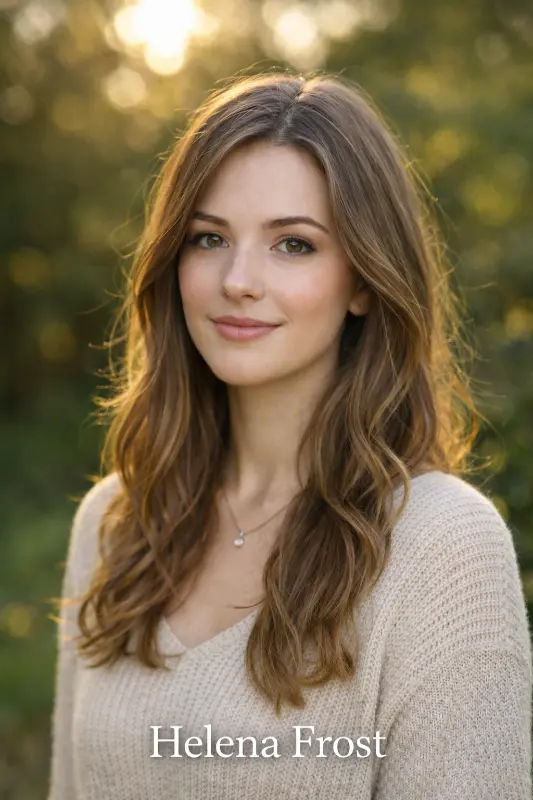
I am Helena Frost, a writer captivated by the beauty of language and the art of comparison. Through my words, I explore the world by turning ordinary moments into vivid similes and reflections. I enjoy crafting phrases that spark imagination, evoke emotion, and linger in the mind. My writing celebrates the subtle connections between people, nature, and the stories we live. For me, every sentence is an opportunity to reveal the extraordinary in the everyday.