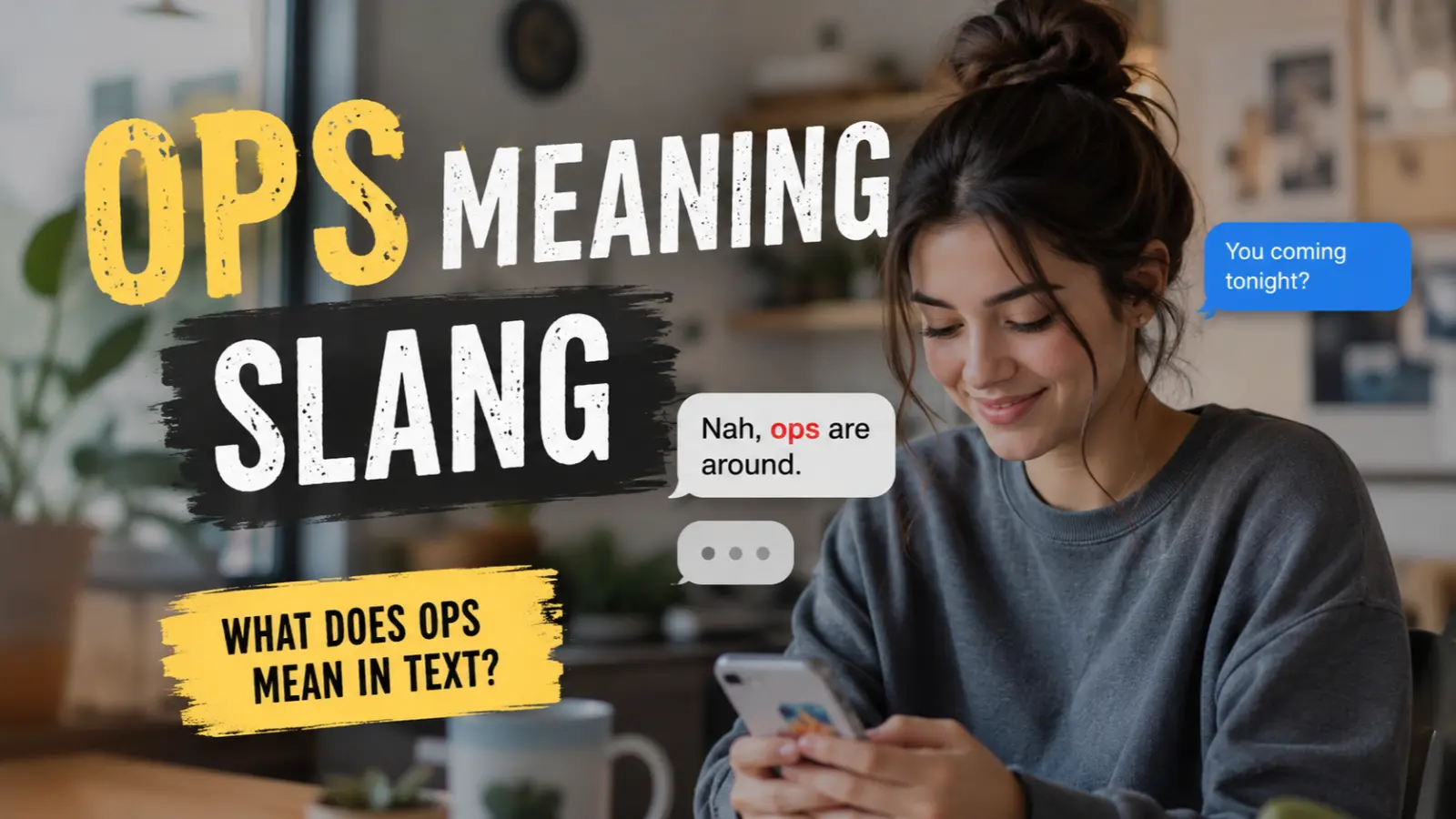
Ops meaning slang is a popular search because people often see the word “ops” in text messages, TikTok videos, rap lyrics, gaming chats, and social media posts.
At first glance, it may look like a typing mistake for “oops,” but in modern slang, ops has a completely different meaning depending on the conversation.
The term has become especially common among younger users, online communities, and hip-hop culture. Understanding its meaning can help you avoid confusion and respond appropriately in conversations.
Like many internet slang words, “ops” changes meaning based on context, making it important to know how and where it is used.
Quick Answer
Ops is slang for opposition or opponents. It usually refers to enemies, rivals, or people someone considers against them. In some conversations, it may simply refer to people who are not on someone’s side.
What Does Ops Mean in Text?
In texting and internet slang, ops usually means opposition or opponents.
People use it when talking about:
- Rivals
- Enemies
- Competitors
- People they dislike
- Someone working against them
Example
Person A: Stay safe tonight.
Person B: Yeah, I heard the ops are around.
Here, “ops” means people they consider enemies or rivals.
Ops Full Form
Many people search for the ops full form, but it is not an official acronym.
Instead, ops is a shortened version of:
Opposition
or
Opponents
It became popular in street slang before spreading to music, social media, and texting.
What Does Ops Stand For?
If you’re wondering what does ops stand for, the answer is:
| Term | Meaning |
|---|---|
| Ops | Opposition |
| Ops | Opponents |
| Ops | Rival group |
| Ops | Enemy |
Unlike abbreviations such as LOL or BRB, “ops” is a shortened word rather than initials.
Meaning in Different Contexts
Social Media
On TikTok, Instagram, Snapchat, and X (Twitter), “ops” often refers to people someone dislikes.
Example:
“Don’t let the ops see this post.”
Meaning:
The speaker does not want their rivals or critics to see it.
Gaming
Gamers sometimes use “ops” to describe opposing teams.
Example:
“The ops pushed from the left.”
Meaning:
The enemy team attacked.
Rap and Hip-Hop
Rap music helped make “ops” popular worldwide.
Artists often use it when referring to rival groups or enemies.
Example:
“We don’t trust the ops.”
Everyday Texting
Friends sometimes use it jokingly.
Example:
“My little brother ate my fries. He’s officially an op.”
This is usually humorous rather than serious.
Is Ops Rude, Offensive, or Neutral?
It depends on the situation.
| Situation | Tone |
|---|---|
| Joking with friends | Neutral |
| Talking about rivals | Negative |
| Gang-related discussions | Offensive or serious |
| Gaming | Neutral |
Always consider the context before using it.
Where Is Ops Commonly Used?
You’ll often see “ops” on:
- TikTok
- Snapchat
- Discord
- Gaming chats
- Rap lyrics
- Group messages
- Online communities
It is especially popular among teenagers and young adults.
Real-Life Conversation Examples
Friendly
Alex: My sister keeps stealing my snacks.
Jake: Sounds like she’s an op now.
Casual
Sarah: Don’t tell the ops where we’re going tonight.
Emma: Don’t worry, I won’t.
Argumentative
Person A: They’re spreading rumors again.
Person B: Yeah, they’re definitely the ops.
Gaming
Player 1: Where are the ops?
Player 2: Behind the building.
Social Media
Comment:
Ignore the ops and keep posting.
Meaning:
Ignore your critics or haters.
Emotional and Psychological Meaning
Calling someone an “op” often creates a feeling of separation between “us” and “them.”
Psychologically, the term can:
- Build group identity
- Show loyalty
- Express distrust
- Strengthen friendships against a common rival
- Sometimes exaggerate minor disagreements for humor
In many online communities, the word is used playfully rather than literally.
Origin and Background of Ops
The slang originated in American street culture.
The word comes from opposition, describing rival groups.
Later, hip-hop artists frequently used it in lyrics, helping spread the term across social media.
Today, millions of people use “ops” online, often without any connection to its original meaning.
Comparison with Similar Slang
| Slang | Meaning | Similar to Ops? |
|---|---|---|
| Ops | Enemies or rivals | Yes |
| Hater | Someone who constantly criticizes | Somewhat |
| Rival | Competitor | Yes |
| Enemy | Someone against you | Very similar |
| Snitch | Someone who tells secrets | No |
| Troll | Someone who provokes online | Different |
When to Use Ops
You can use it when:
- Talking casually with friends
- Referring to gaming opponents
- Making jokes
- Discussing competition
- Talking about online critics
When to Avoid Using Ops
Avoid using it:
- In professional emails
- At work
- In school assignments
- During formal presentations
- Around people unfamiliar with internet slang
Because the word can have gang-related meanings, be careful using it in serious situations.
Polite Alternatives
If “ops” sounds too aggressive, try:
- Rivals
- Competitors
- Opponents
- Critics
- Other side
- People against us
These alternatives work better in professional settings.
Why People Use This Slang
People like using “ops” because it is:
- Short
- Trendy
- Easy to type
- Popular on social media
- Common in music
- Recognized by younger audiences
Slang also helps people feel connected to online communities.
Impact of Using Slang in Communication
Using slang like “ops” can:
Positive
- Make conversations sound natural
- Build friendships
- Show cultural awareness
- Create humor
Negative
- Cause misunderstandings
- Confuse older readers
- Sound inappropriate in formal situations
- Be interpreted as more serious than intended
Understanding your audience is the key to using slang effectively.
Is Ops Safe for Social Media?
Generally, yes.
However:
- Avoid using it to threaten people.
- Don’t use it in bullying or harassment.
- Remember that some people associate it with violence or gang culture.
When used jokingly among friends, it is usually harmless.
Common Misunderstandings
Many people mistakenly believe:
- Ops means “oops.”
- Ops is an acronym.
- Ops always refers to gangs.
In reality, its meaning depends entirely on context.
Sometimes it simply means a rival or someone on the opposite side.
Variations and Types
Common variations include:
- Op
- Ops
- The ops
- My ops
- Their ops
Each version refers to opposition or opponents.
How to Respond When Someone Uses It
If someone says:
“The ops are watching.”
Possible responses:
- “Stay careful.”
- “Who are the ops?”
- “Ignore them.”
- “Hope everything’s okay.”
If they’re joking, you can respond playfully.
Example:
“Guess I’m an op now.”
Regional and Cultural Usage
The slang is most popular in:
- United States
- United Kingdom
- Canada
- Australia
Because of social media, it has spread worldwide.
People may use it differently depending on local culture, age group, and online community.
Frequently Asked Questions
What does ops mean in slang?
It usually means opposition or opponents, referring to rivals or enemies.
Is ops an abbreviation?
Not exactly. It is a shortened form of the word opposition rather than a true acronym.
Is ops always negative?
No. Many people use it jokingly with friends, while others use it seriously to describe rivals.
What does ops mean on TikTok?
On TikTok, it usually refers to haters, critics, or people someone considers against them.
Is ops related to gaming?
Yes. Gamers often use “ops” to describe enemy players or the opposing team.
Can I use ops in professional writing?
No. It’s best to use words like opponents, competitors, or rivals in formal communication.
Conclusion
Understanding ops meaning slang makes it much easier to follow conversations on social media, in gaming, and in modern texting. In most cases, ops means opposition, opponents, or people on the other side. While it often refers to enemies or rivals, many people also use it humorously among friends.
As with any internet slang, context matters. Before using “ops,” think about your audience and the situation. In casual conversations, it can sound natural and trendy, but in professional settings, choosing clearer alternatives such as opponents, competitors, or critics is usually the better choice. By understanding its meaning and tone, you can communicate more confidently and avoid common misunderstandings.