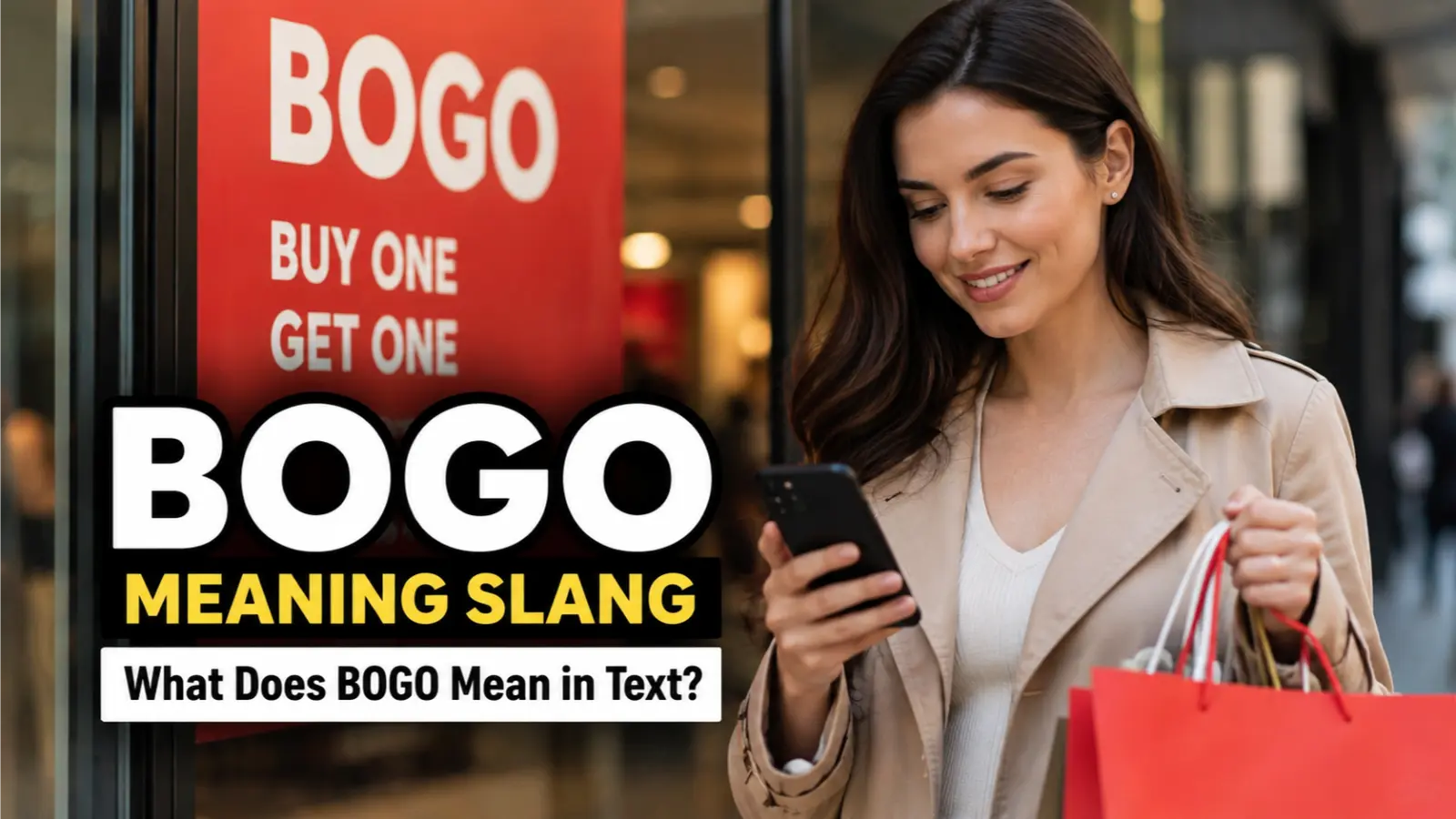
Bogo meaning slang is a phrase many people search for after seeing “BOGO” in online chats, social media posts, shopping ads, or text messages.
At first glance, it may look like internet slang with a hidden meaning, but in most cases, it has a practical purpose rather than an emotional or humorous one.
If you’re scrolling through Instagram, reading promotional emails, or chatting with friends about a sale, understanding what BOGO means helps you avoid confusion.
Although it is often grouped with internet slang, BOGO is actually a widely recognized marketing abbreviation that has become part of everyday online language.
In this guide, you’ll learn the BOGO full form, what it means in text, where it came from, how people use it, common misunderstandings, and the best ways to respond when someone uses it.
Quick Answer
BOGO stands for “Buy One, Get One.” It usually refers to a promotional offer where buying one item gives you another item for free or at a discount.
What Does BOGO Mean in Text?
In text messages and online conversations, BOGO simply means “Buy One, Get One.”
It is most commonly used when talking about:
- Shopping deals
- Discounts
- Restaurant promotions
- Online sales
- Retail advertisements
Unlike many internet slang terms, BOGO doesn’t express emotions or opinions. Instead, it tells someone about a special offer.
Example
Friend: The shoe store has a BOGO sale today.
You: Nice! Let’s go before it ends.
BOGO Full Form
The BOGO full form is:
Buy One, Get One
Depending on the promotion, it may mean:
- Buy One, Get One Free
- Buy One, Get One 50% Off
- Buy One, Get One at a Discount
- Buy One, Get One of Equal or Lesser Value
Businesses often shorten these offers to simply BOGO because it’s easier to remember.
Meaning in Different Contexts
Shopping
This is the most common meaning.
Example:
All T-shirts are BOGO this weekend.
Restaurants
Restaurants frequently advertise BOGO meals.
Example:
Pizza tonight! They’re offering BOGO pizzas.
Online Stores
Many e-commerce websites use BOGO during seasonal sales.
Example:
The skincare products are BOGO today only.
Social Media
Influencers often share BOGO promotions with followers.
Example:
Don’t miss this BOGO beauty deal before midnight!
Text Messages
Friends sometimes use BOGO casually when sharing bargains.
Example:
I found a BOGO coffee deal near campus.
Is BOGO Rude, Offensive, or Neutral?
BOGO is completely neutral.
It is:
- Not offensive
- Not rude
- Family-friendly
- Safe for work
- Appropriate for all ages
Because it’s a marketing abbreviation, there’s no negative meaning attached to it.
Where Is BOGO Commonly Used?
You’ll often see BOGO in:
- Retail stores
- Grocery stores
- Clothing brands
- Restaurant menus
- Fast-food promotions
- Online shopping websites
- Promotional emails
- Instagram captions
- Facebook advertisements
- SMS marketing campaigns
It is recognized in many English-speaking countries and is increasingly understood worldwide.
Real-Life Conversation Examples
Friendly
Alex: Want to grab burgers?
Sam: Sure! They’re BOGO today.
Casual
Emma: I bought one hoodie and got another free.
Lily: Was it a BOGO deal?
Family
Mom: We should buy cereal today.
Dad: Good idea. It’s BOGO at the supermarket.
Shopping Chat
Friend: Don’t buy it tomorrow.
You: Why?
Friend: Today is BOGO.
Online Message
“I used the BOGO offer and saved $30.”
Emotional and Psychological Meaning
Unlike emotional slang such as LOL or FOMO, BOGO has little emotional meaning.
However, marketers use BOGO because it creates feelings of:
- Excitement
- Saving money
- Getting extra value
- Urgency
- Satisfaction
People often respond positively because they feel they’re receiving a better deal.
Origin and Background of BOGO
BOGO originated in retail marketing decades ago.
Instead of writing lengthy phrases like:
Buy One, Get One Free
advertisers shortened it to:
BOGO
Over time, it became one of the most recognizable promotional abbreviations in the retail industry.
Today, both businesses and customers casually use BOGO in conversations, advertisements, and social media posts.
Comparison with Similar Slang and Marketing Terms
| Term | Meaning | Common Use |
|---|---|---|
| BOGO | Buy One, Get One | Retail promotions |
| BOGOF | Buy One, Get One Free | UK marketing |
| FOMO | Fear Of Missing Out | Social media |
| OGO | One Get One (rare) | Limited promotions |
| Deal | General discount | Everyday shopping |
| Sale | Reduced prices | Retail advertising |
While FOMO is emotional internet slang, BOGO is mainly a shopping abbreviation.
When to Use BOGO
Use BOGO when talking about:
- Store promotions
- Shopping discounts
- Restaurant specials
- Retail advertisements
- Sharing deals with friends
Good Example
“This café has a BOGO coffee offer every Friday.”
When to Avoid Using BOGO
Avoid using BOGO when:
- The other person may not understand shopping abbreviations.
- Writing formal academic papers.
- Preparing legal or professional documents unless the promotion is officially named BOGO.
Instead, write:
Buy One, Get One Free
for maximum clarity.
Polite Alternatives
If you want clearer wording, you can say:
- Buy One, Get One Free
- Buy One, Get One Half Price
- Special Offer
- Promotional Deal
- Limited-Time Offer
- Buy One, Receive One Free
These alternatives work well in formal writing and professional communication.
Why People Use BOGO
People use BOGO because it is:
- Short
- Easy to remember
- Recognized worldwide
- Convenient for texting
- Popular in advertising
- Quick to read
Businesses also prefer BOGO because it grabs attention without using many words.
Impact of Using Slang in Communication
Although BOGO is technically an abbreviation rather than traditional slang, it influences communication by:
- Making promotions easier to understand
- Saving space in advertisements
- Encouraging quick decisions
- Creating excitement among shoppers
Since most internet users recognize BOGO, it improves communication instead of confusing readers.
Is BOGO Safe for Social Media?
Yes.
BOGO is perfectly safe to use on:
- TikTok
- Snapchat
- X (Twitter)
- Messenger
Brands use it daily in advertisements and promotional posts.
Common Misunderstandings
Some people mistakenly think:
- BOGO is texting slang like LOL.
- BOGO has a hidden romantic meaning.
- BOGO is only used in America.
Actually:
- It is primarily a shopping abbreviation.
- It has no secret emotional meaning.
- Many countries understand and use BOGO promotions.
Variations and Types
Common versions include:
- BOGO Free
- BOGO 50% Off
- BOGO Half Price
- BOGO Deal
- BOGO Sale
- BOGO Offer
- BOGO Week
All refer to promotions where purchasing one item provides another item for free or at a reduced price.
How to Respond When Someone Uses BOGO
Here are some natural responses:
If you’re interested
“Sounds like a great deal!”
If you want more details
“Is it Buy One, Get One Free or discounted?”
If you’re shopping together
“Let’s take advantage of it.”
If you’re not interested
“Thanks for letting me know.”
Regional and Cultural Usage
BOGO is most common in:
- United States
- Canada
- Australia
- New Zealand
The UK often uses:
- BOGOF (Buy One, Get One Free)
However, because of online shopping and social media, BOGO is becoming familiar worldwide.
Frequently Asked Questions
What does BOGO mean in slang?
BOGO means Buy One, Get One. It usually refers to a promotional shopping offer.
What does BOGO stand for?
The BOGO full form is Buy One, Get One.
Is BOGO internet slang?
It is better described as a marketing abbreviation that has become part of everyday online language rather than traditional internet slang.
Is BOGO always free?
No. Sometimes it means Buy One, Get One 50% Off or another discount instead of a free item.
Is BOGO appropriate in professional writing?
Yes, if you’re referring to a retail promotion. Otherwise, writing the full phrase may be clearer for formal documents.
Why do businesses use BOGO?
Businesses use BOGO because it attracts customers, increases sales, and encourages shoppers to purchase more items.
Conclusion
Understanding the bogo meaning slang is simple once you know its purpose. BOGO stands for Buy One, Get One and is one of the most common promotional abbreviations used in shopping, advertising, text messages, and social media.
Although many people search for it as internet slang, BOGO is primarily a retail and marketing term rather than an emotional texting abbreviation. It’s neutral, family-friendly, and widely recognized across the internet. By knowing what BOGO means in text, when to use it, and how it differs from other abbreviations, you’ll be able to understand promotions more easily and communicate clearly when discussing deals online.